From Four WordPress Sites to One Fast Vue Platform

Dayan Ramly Ramadhan


Overview
Role: Frontend Developer. Stack: Vue.js, Gridsome, SCSS, jQuery for legacy parts.
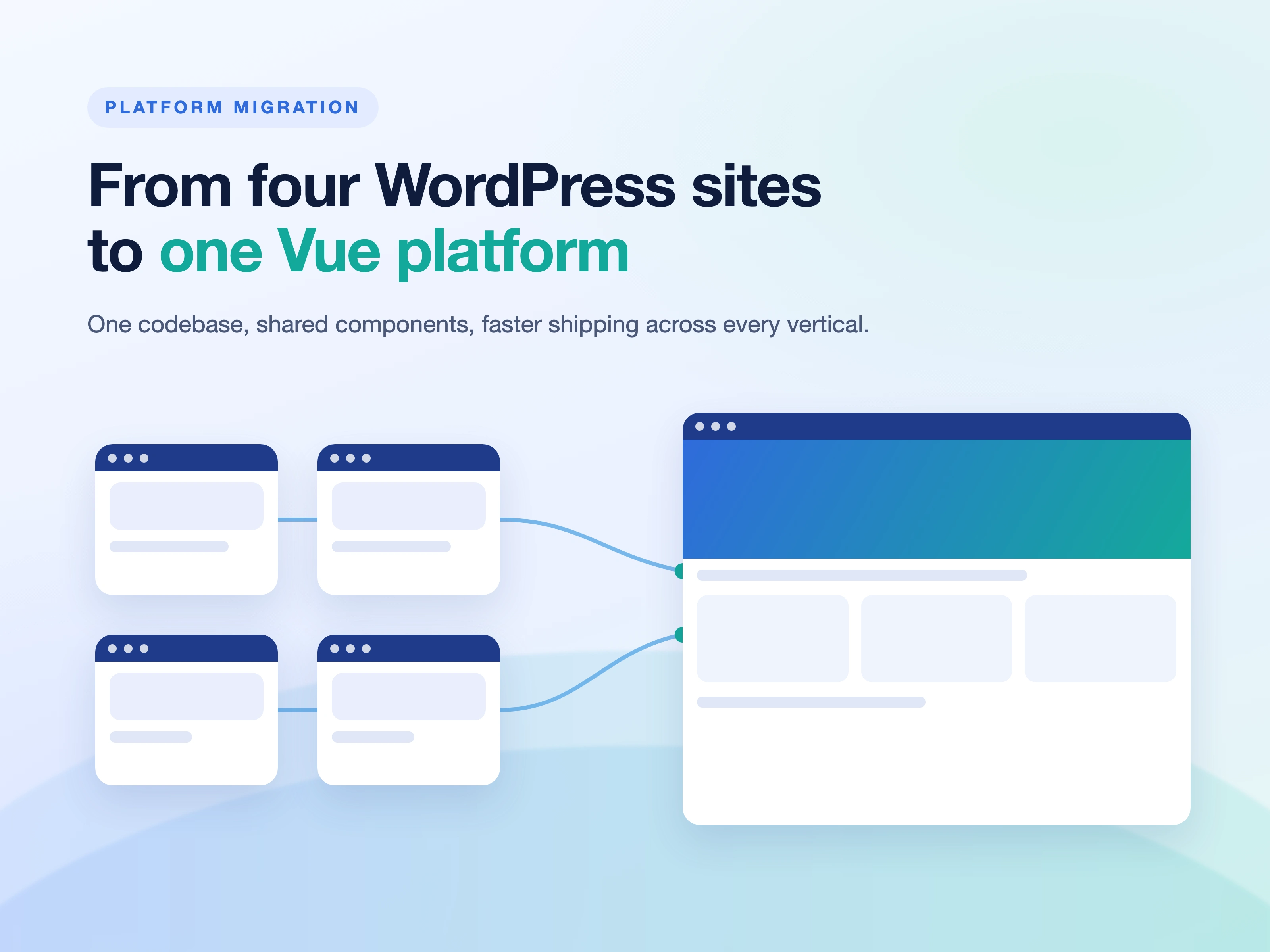
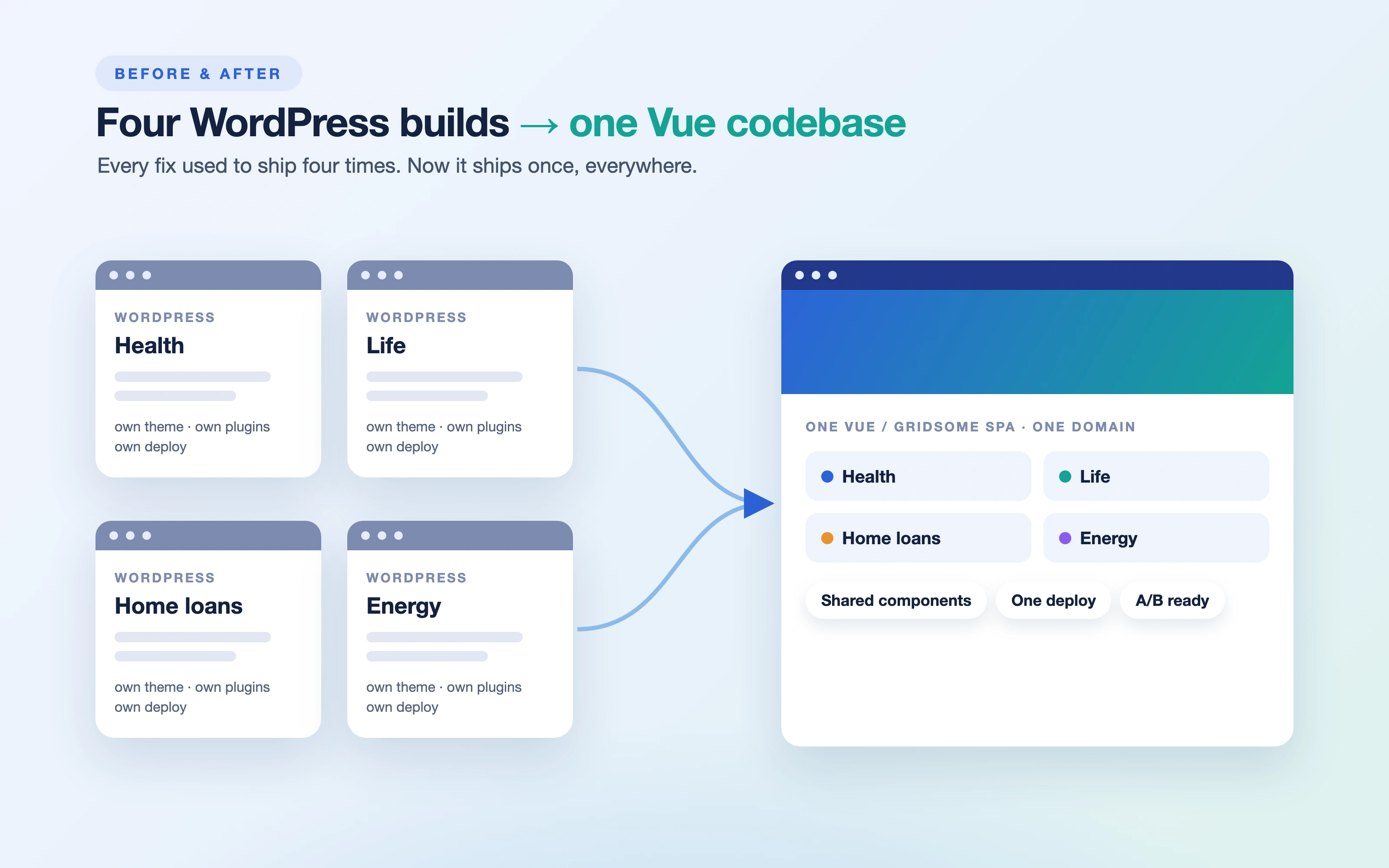
A comparison brand ran several verticals (health, life, home loans, energy) as separate WordPress-based sites. I led the frontend migration to a single Vue-based SPA and consolidated those sites under one primary domain with a modern, shared tech stack.
The Problem
Multiple sites meant duplicated work, since every fix or improvement had to be repeated.
A WordPress frontend limited page performance and flexibility.
Content and SEO teams needed faster iteration without developer bottlenecks.
There was no clean base for experimentation such as A/B testing.
The Approach
1. Rebuild the frontend as a SPA
I migrated the frontend from WordPress to a full Vue.js SPA, moving to a component-based structure.
2. Consolidate the sites
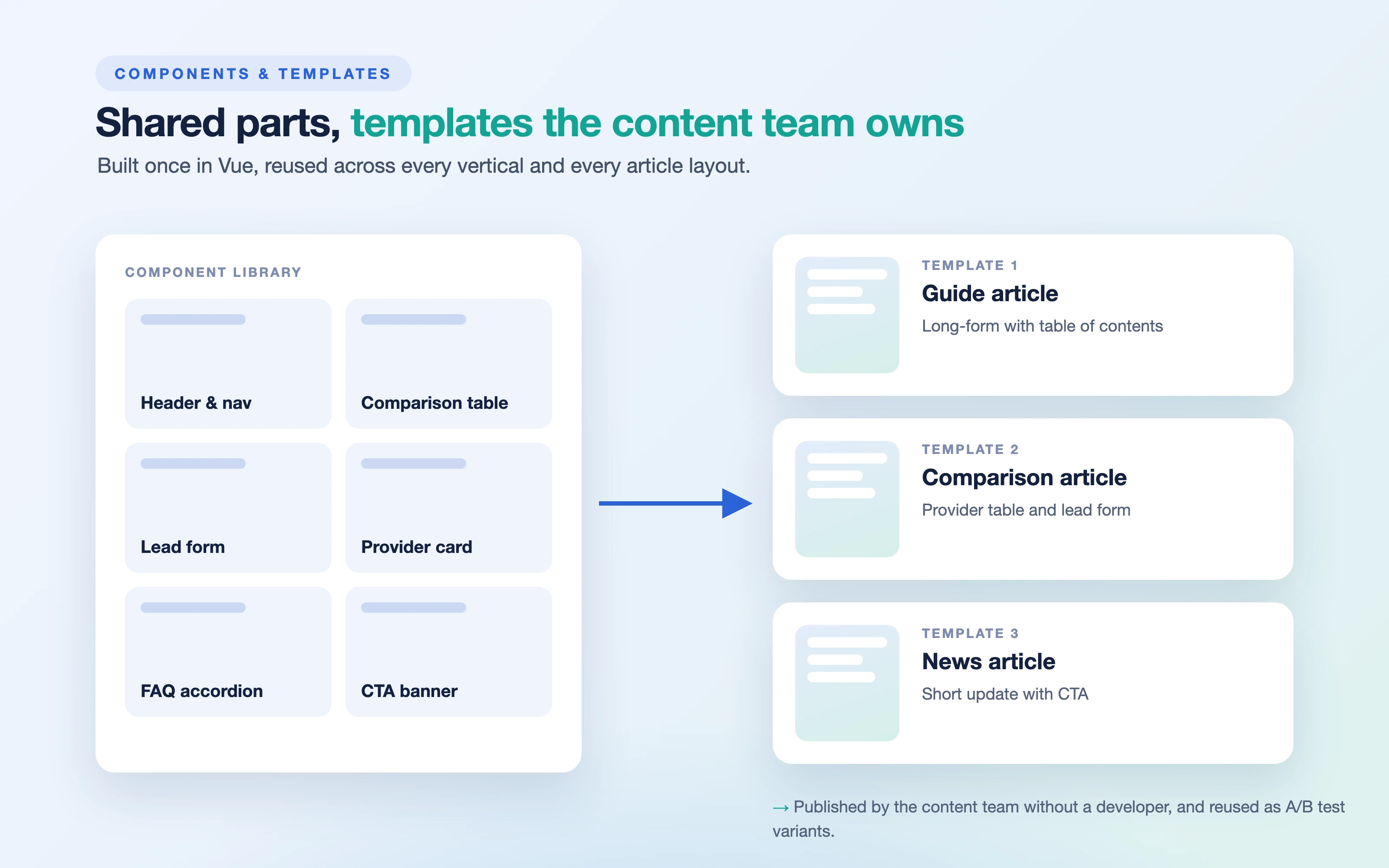
I migrated each vertical site under the main domain using the new stack, reusing shared components instead of rebuilding per site.
3. Build a flexible template system
I created multiple article templates so the content team could publish different layouts, and so the same templates could be used for A/B testing.
4. Work with content and SEO
I worked closely with the content team to keep structure, metadata, and page quality aligned with SEO goals through the migration.
5. Ship and maintain
I took the new platform from build to live production, then handled ongoing maintenance, bug fixes, and feature improvements.
The Results
Four separate sites consolidated into one platform and one codebase.
Faster feature delivery across all verticals through shared components.
A foundation that later enabled systematic A/B testing and funnel optimization.
Key Takeaways
Consolidation pays off most when shared components replace per-site copies.
Migration is also a chance to build the infrastructure for future experimentation.
Close work with content teams protects SEO during large rebuilds.
Like this project
Posted Oct 8, 2026
Merged four WordPress comparison sites into one Vue/Gridsome SPA with shared components and article templates the content team runs on its own.
Likes
0
Views
1