Built with Webflow
Genesis Lab | Webflow Template Development

Milan Bundalo
Verified


Genesis Laboratory | A Multi-Layout Webflow Template for Modern Healthcare
Genesis Laboratory is a Webflow template created for longevity clinics, diagnostic labs, biotech companies, and healthcare innovators.
The visual direction was designed by BYQ Studio, while I handled the complete Webflow developmen, turning the design into a responsive, CMS-powered template with more than 20 pages, multiple layout directions, and a detailed interaction system.
The goal wasn’t simply to build a medical website. It was to create a flexible product that could work for different parts of the healthcare industry without falling into the usual cold, corporate look.
One template, multiple directions
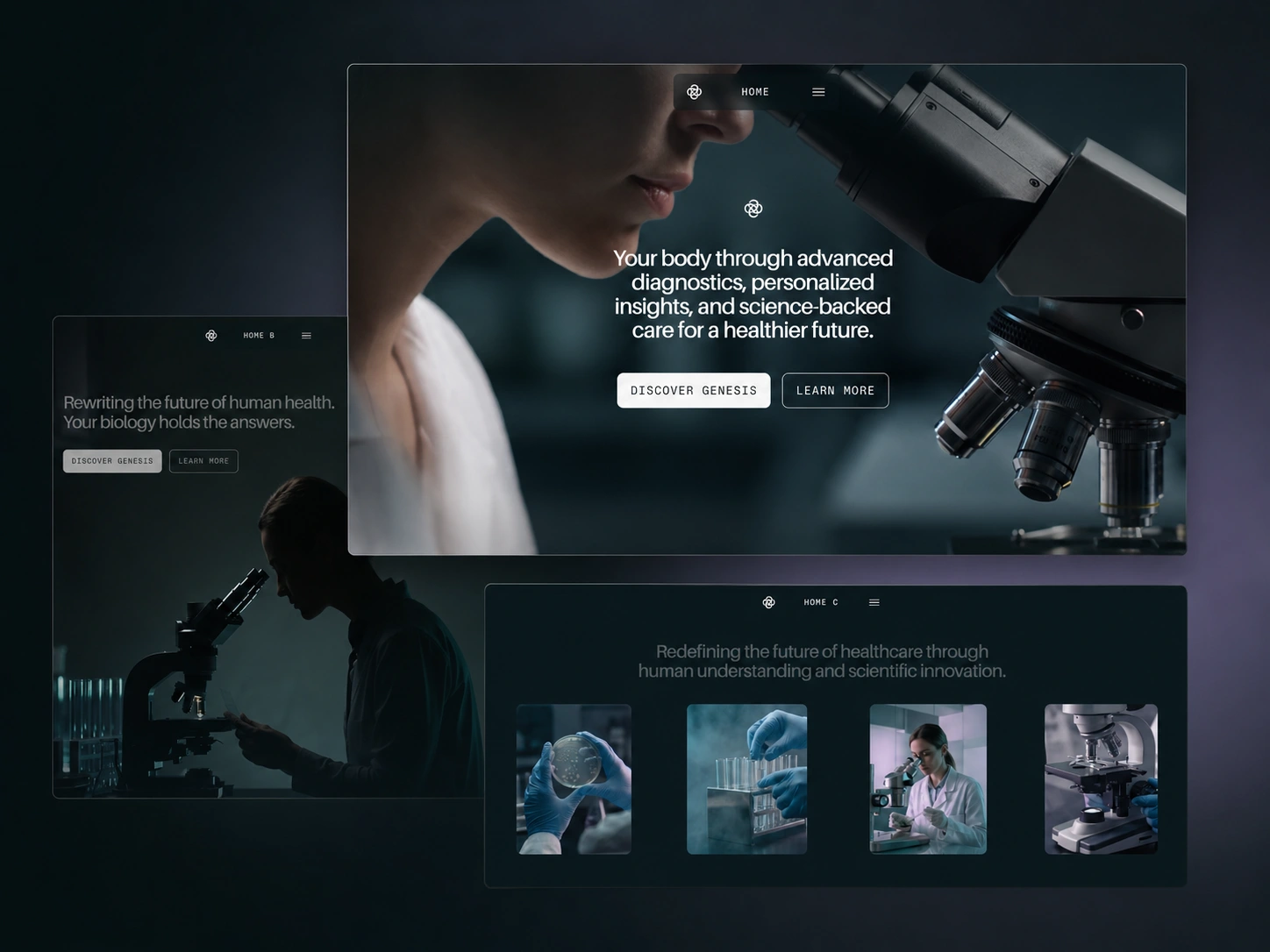
Genesis includes three homepage layouts, three About pages, and three Blog layouts.
Each variation needed enough character to work as a genuine alternative, not just the same page with sections rearranged. At the same time, everything still had to feel like part of one template.
I built the project around a shared system of components, variables, typography rules, spacing, buttons, navigation patterns, and reusable sections. This keeps the experience consistent while making it much easier for users to combine layouts or adapt the template to their own brand.
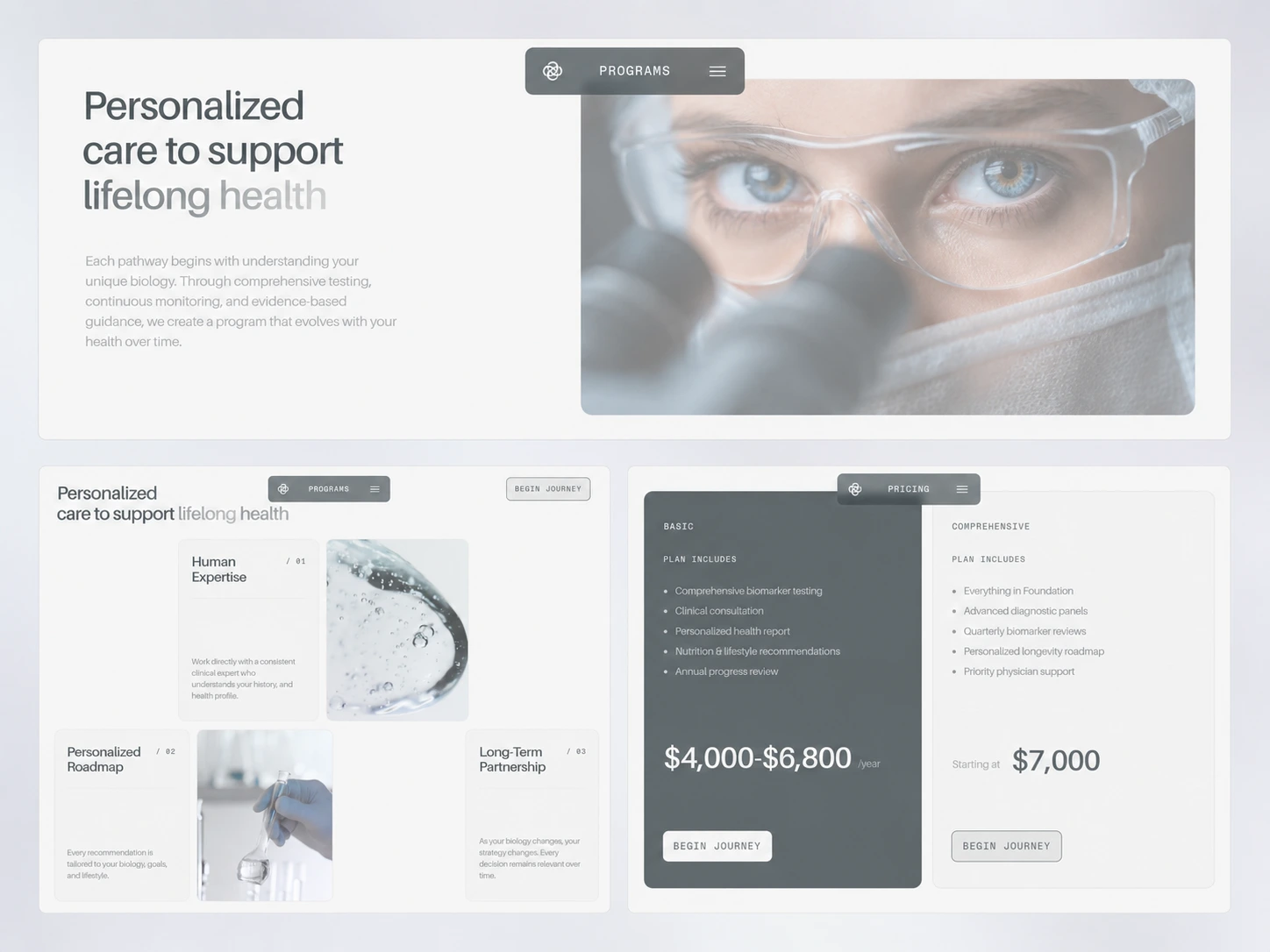
Beyond the main variations, the template includes dedicated pages for services, programs, pricing, FAQs, contact, legal content, blog articles, and all the necessary utility pages.
Developing for complex healthcare content
Healthcare websites often need to communicate a lot at once: services, diagnostics, research, treatment programs, pricing, statistics, medical expertise, and educational content.
The challenge was keeping all of that information structured without making the pages feel dense.
A large part of the development work went into typography, spacing, responsive behavior, and content hierarchy. Large editorial headlines were balanced with smaller technical information, while cards, image layouts, statistics, and content grids were built to remain clear across every breakpoint.
The desktop layouts are intentionally spacious, but I didn’t simply compress them for smaller screens. Content order, line breaks, card proportions, image crops, and interaction behavior were adjusted individually for tablet and mobile.
Motion that supports the design
Genesis uses motion throughout the experience, but it was never meant to feel like an animation showcase.
I developed the interactions using Webflow’s GSAP-powered IX3 system, including text reveals, scroll-based transitions, expandable feature cards, image sequences, marquees, sliders, navigation effects, and smaller button details.
The movement is controlled and understated. Its purpose is to guide attention, make long pages feel more fluid, and give the template a polished finish without getting in the way of the content.
CMS and editorial content
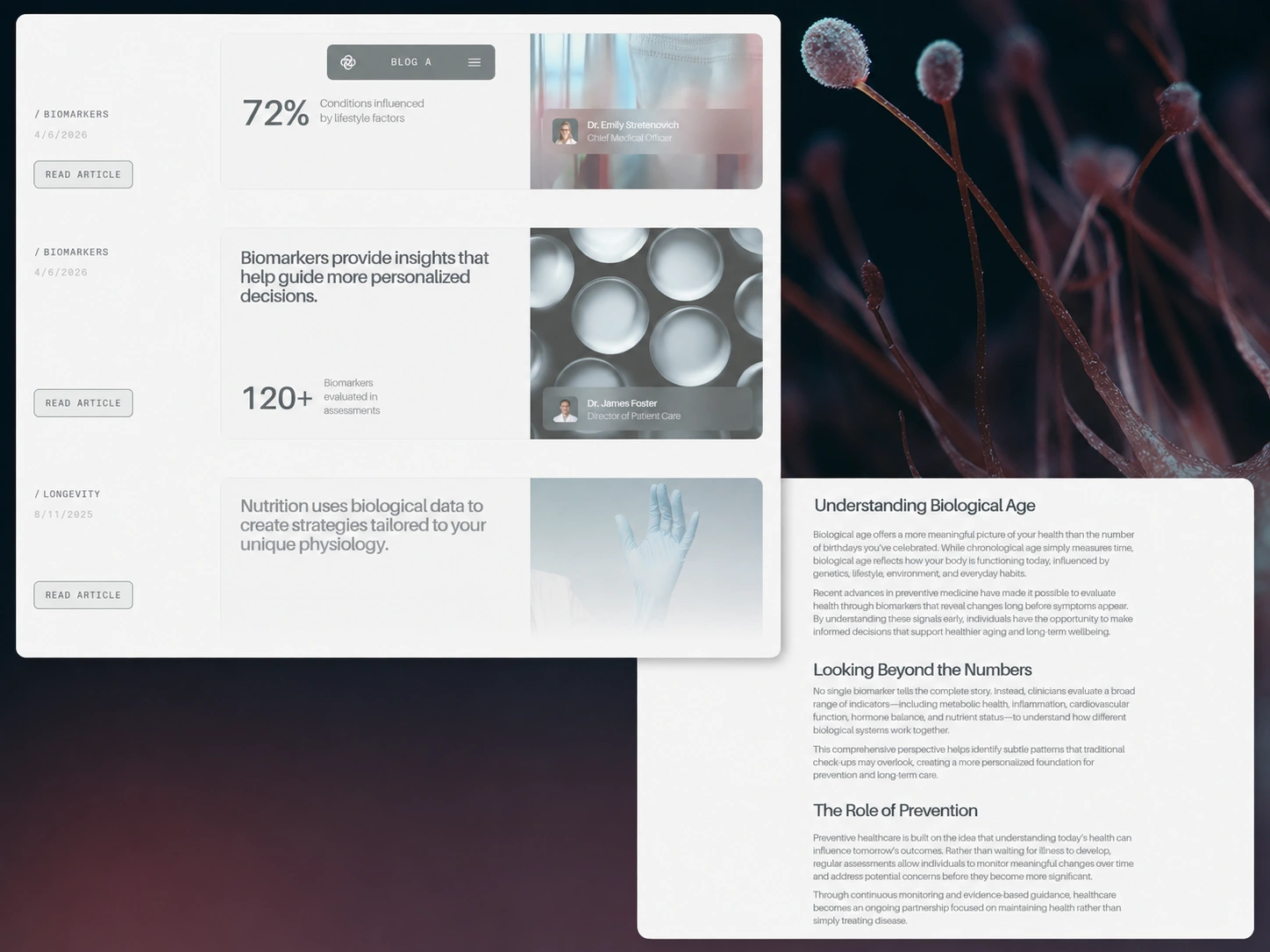
The blog was treated as an important part of the template rather than an additional page added at the end.
Genesis includes three different Blog index layouts and a complete CMS article template. Articles can include categories, authors, dates, statistics, featured imagery, and long-form written content while keeping everything manageable through Webflow CMS.
This gives clinics and research teams a practical way to publish medical insights, company news, educational resources, and research-related content without creating new pages manually.
Built for customization
Because Genesis is a marketplace template, the structure needed to work for someone opening the project for the first time.
I organized the build around reusable components, global variables, consistent class naming, and clearly separated CMS content. Colors, typography, spacing, imagery, and repeated sections can be changed without working through every page individually.
My development work included:
More than 20 responsive Webflow pages
Three homepage, About, and Blog variations
Reusable components and global variables
CMS-powered articles and authors
Native IX3 and GSAP interactions
Responsive layouts for desktop, tablet, and mobile
Template documentation and utility pages
Cross-browser testing and final quality assurance
The final result
Genesis Laboratory combines a clinical foundation with a darker, more editorial visual style.
It gives healthcare and biotech teams several ways to shape their website while keeping the underlying system consistent and manageable. Every layout, CMS collection, component, and interaction was developed as part of one connected product.
The result is a Webflow template that feels closer to a custom healthcare website than a collection of prebuilt pages, flexible enough to adapt, but complete enough to launch from.
Like this project
Posted Aug 14, 2026
Developed a versatile Webflow template for healthcare sector with responsive layouts and CMS integration.
Likes
1
Views
10
Clients
BYQ® Studio