Inclusafe

Rachana Gone

Inclusafe
IoT Device • UX Designer
A dual-purpose IoT device that doubles as a digital photo frame, transforming into an emergency hub to help families prepare for, respond to, and recover from natural disasters.
Quick summary
Seamless daily use, life-saving in emergencies.
For families in disaster-prone areas, emergencies bring more than just danger; they bring constant anxiety, disrupted communication, and uncertainty about what to do next. Existing alert systems often fail when they’re needed most, leaving people unprepared and disconnected.
So we created Inclusafe.
A dual-purpose IoT device that lives quietly as a digital photo frame, Inclusafe transforms in an instant into a life-saving emergency hub, delivering clear alerts, enabling family check-ins, and guiding recovery, all in one reliable, offline-ready system.
Impact
73%
of users felt reduced disaster anxiety with calming cues and clear action steps.
84%
increase in perceived family safety with reliable offline communication and one-touch check-ins.
100%
of participants valued neighbor-to-neighbor coordination during outages.
the problem
So, where did we start?
We began by looking at how families in disaster-prone areas prepare for, respond to, and recover from emergencies.
Through surveys and cultural probes, we explored the tools they rely on, the challenges they face, and the emotions that shape their decisions.
What did we observe?
Our research revealed consistent pain points:
Anxiety at every stage: 73% of participants reported feeling anxious before disasters, and many remained stressed even after. Communication breakdowns: 21% experienced connectivity issues during disasters; 27% struggled with them in recovery. Resource shortages: 27% faced food, water, or supply shortages after disasters. Mixed trust in current systems: IoT and social media alerts often felt unreliable or unclear. Community disconnect: Limited tools for checking in on neighbors or sharing resources offline.
Problem Statement
How might we create a reliable system that reduces anxiety, ensures communication, and supports families before, during, and after disasters?
Design process
What did we do?
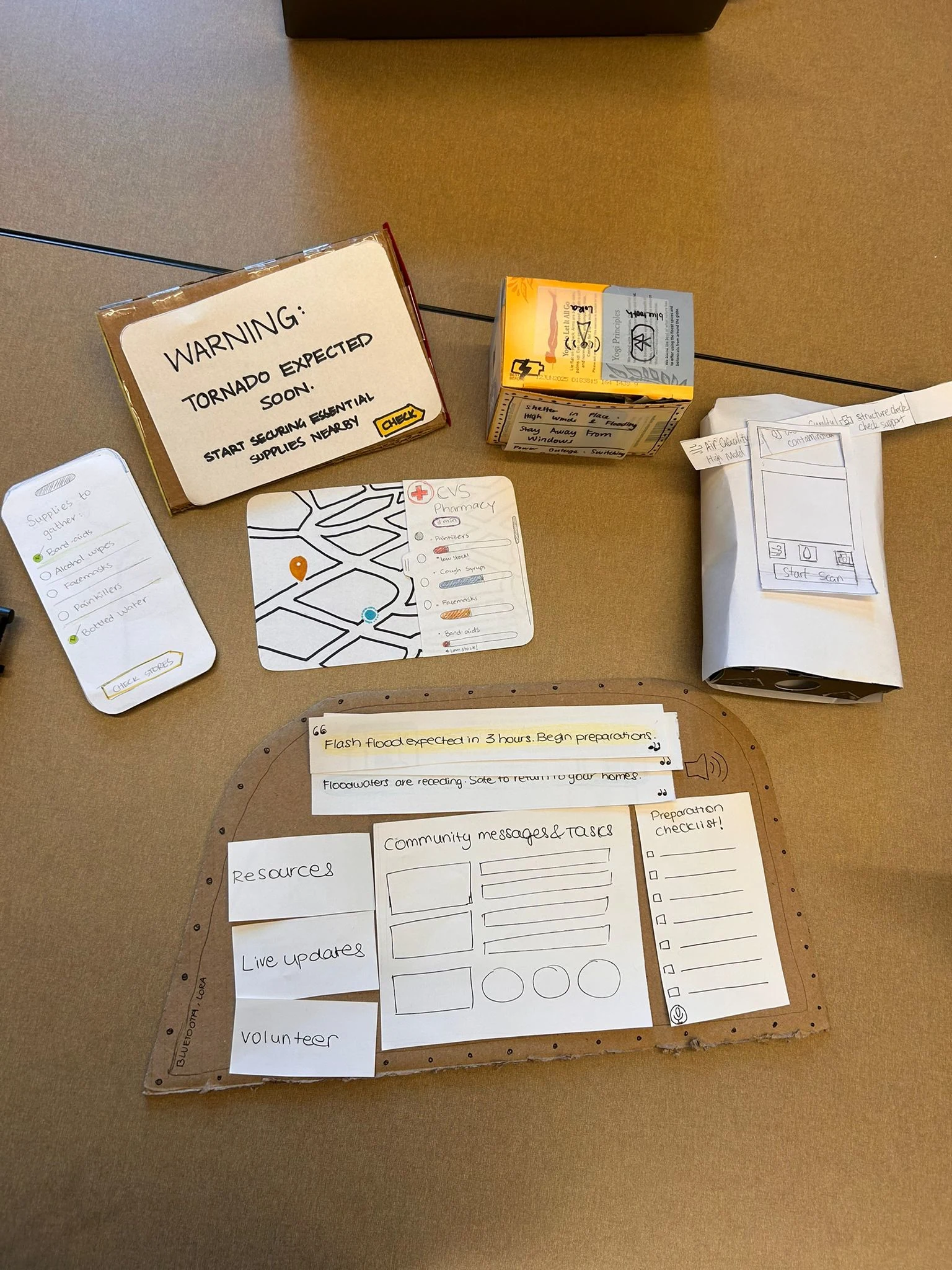
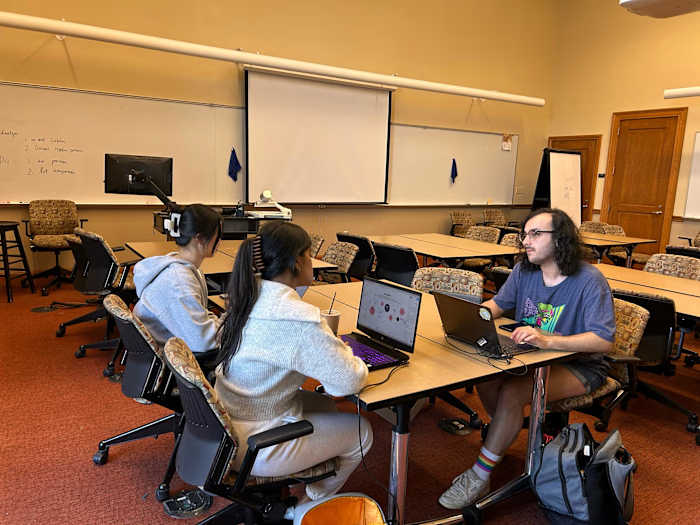
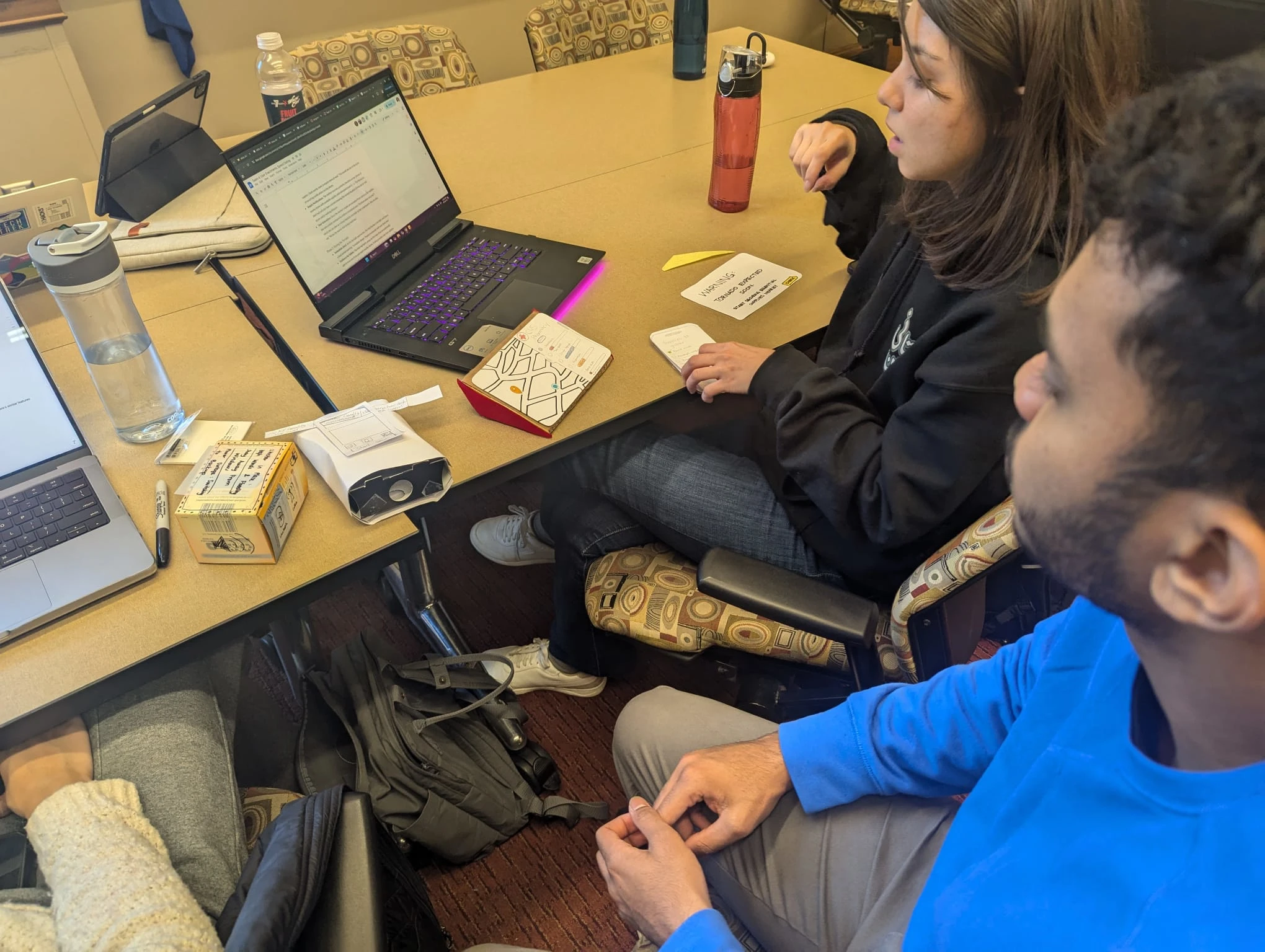
We combined surveys, cultural probes, speed dating, and user enactments to understand user needs and test concepts.
Design process
What didn't work?
Not every idea resonated with our users. Our early prototypes revealed what to avoid when designing for high-stress situations:
Generic wellness tracking felt irrelevant. Users wanted disaster-specific tools, not apps that duplicated features they already had on phones.
Bluetooth and internet-only communication were unreliable in testing. Participants stressed that these systems would fail during outages.
Overly complex features overwhelmed older users, especially in scenarios where speed and clarity were critical.
Passive alerts (like soft notifications) went unnoticed. Users needed strong, visual, and unavoidable signals in a crisis.
These insights pushed us to simplify interactions, prioritize reliability over novelty, and focus on features that directly reduced anxiety and improved coordination.
final dESIGN
What DID work?
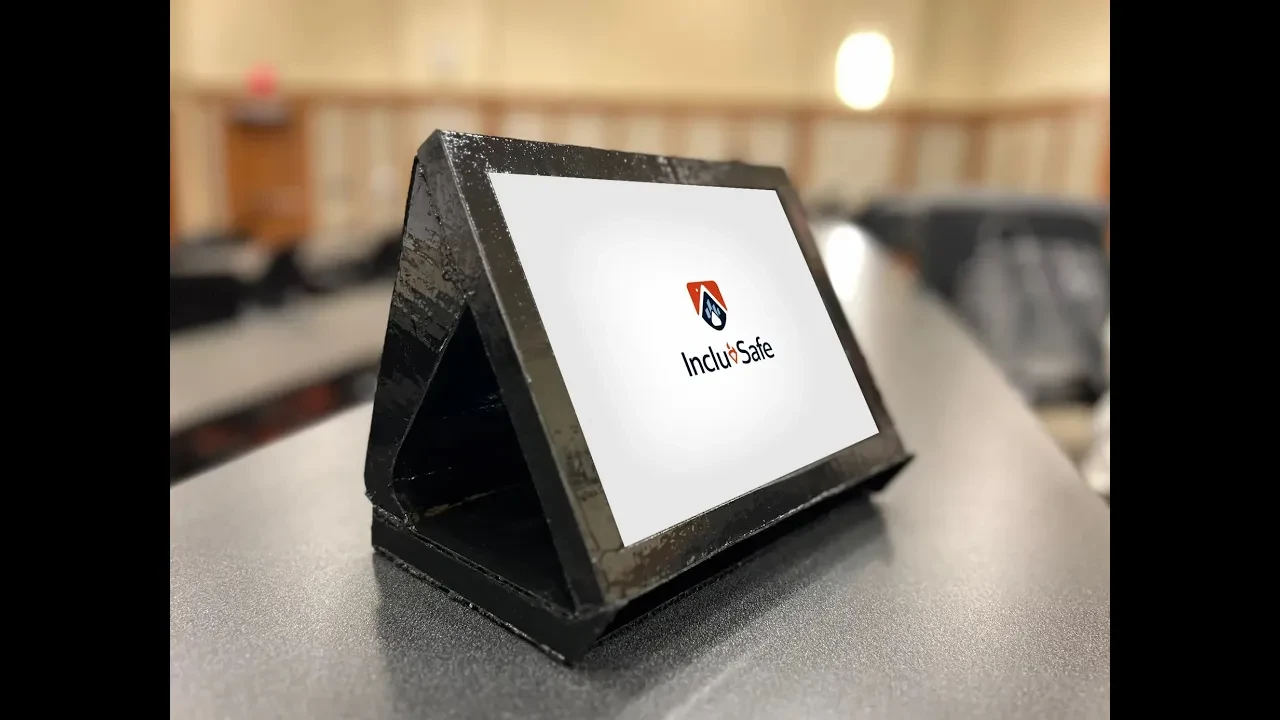
Our final solution was Inclusafe, a digital photo frame that transforms into an emergency hub when disaster strikes. It supports families across all three phases of a disaster—before, during, and after—by combining everyday familiarity with life-saving functionality.
Watch Inclusafe in Action
Key Features
Pre-Disaster
Functions as a digital photo frame with subtle readiness indicators.
Guided drills help families rehearse evacuation routes together.
Smart reminders prompt emergency kit checks and supply tracking.
During Disaster
Color-coded LED alerts deliver urgent, easy-to-understand notifications.
One-touch check-ins share safety status and location with family.
Offline mesh network enables neighbor-to-neighbor communication when infrastructure fails.
Post-Disaster
Interactive recovery checklist simplifies next steps for families.
Local resource mapping points to shelters, medical aid, and relief services.
Community board supports resource sharing, volunteer coordination, and neighborhood resilience.
Why It Works By blending into daily life as a photo frame yet transforming into a reliable emergency hub, Inclusafe ensures families are not just warned, but supported through the entire disaster cycle.
Reflection
What did I learn?
Inclusafe showed us how pervasive technology can be, both invisible in daily life and indispensable in emergencies. Designing for disaster contexts reminded us that reliability, simplicity, and emotional reassurance are just as important as core functionality.
What we learned:
Design for calm, not just utility. Anxiety is a constant in disasters, and even small features like calming cues or clear checklists can make a big difference.
Simplicity wins in high-stress moments. Features that required too many steps or felt generic (like wellness tracking) didn’t resonate with users.
Community is as critical as family. Neighborhood coordination tools proved to be one of the most valued features during testing.
Next Steps
To expand Inclusafe beyond a concept, we would:
Build stronger inter-device communication using mesh networks.
Integrate with authoritative disaster data sources for real-time accuracy.
Enhance accessibility with voice and motion inputs, ensuring inclusivity for all users.
Like this project
Posted Apr 7, 2026
A dual-purpose IoT device that helps families prepare for, respond to, and recover from natural disasters.
Likes
0
Views
6