
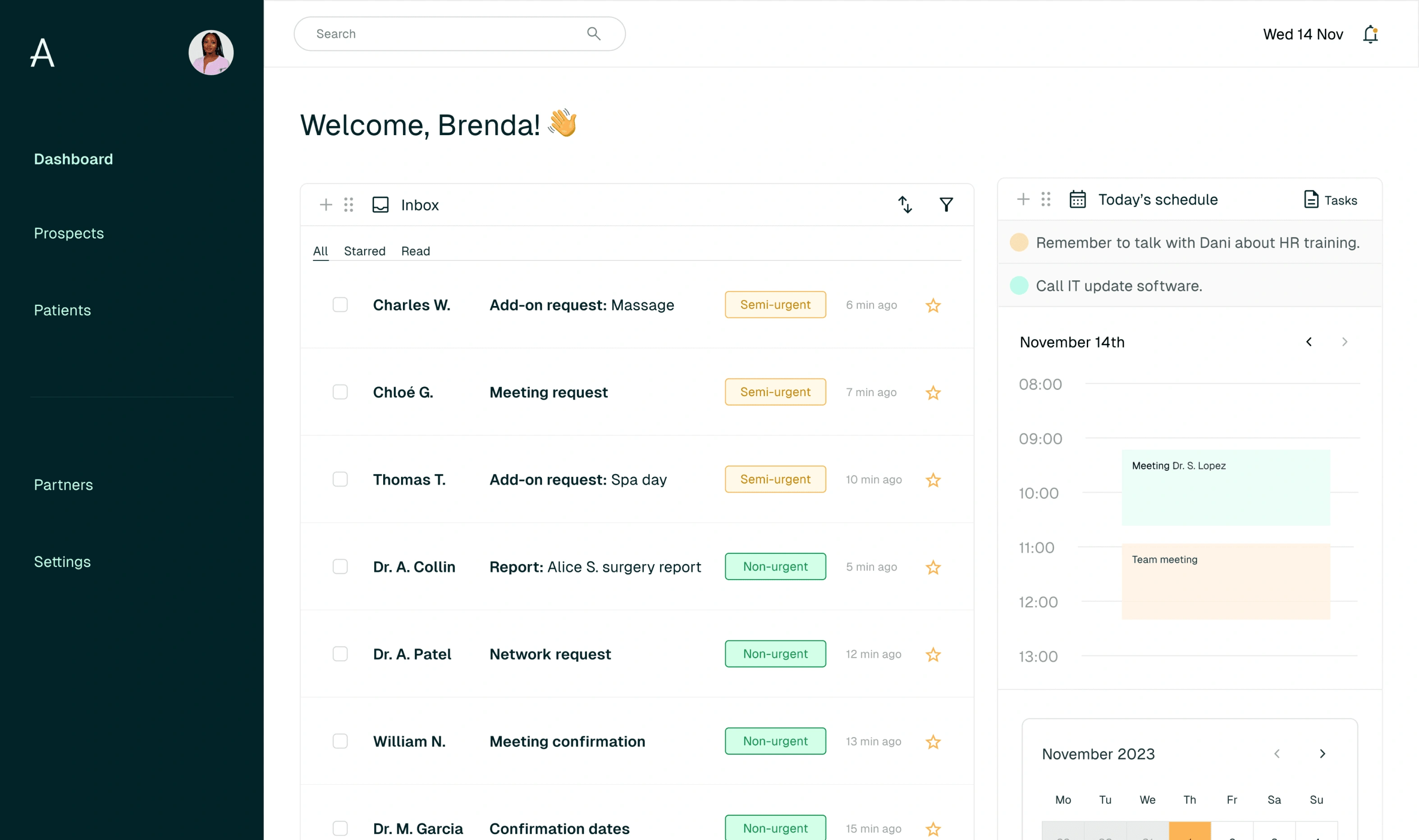
A healthcare concept project for a potential Start-Up: validating market fit and user needs, crafting an end-to-end platform, including branding, user interfaces, and admin functionalities.
I worked with other 3 designers on this project in an agile way, with a fast-paced environment, implementing and iterating quicky to create a viable product that could attract investors and secure funding for the founder's vision.
Background
We had a meeting with the company’s stakeholder to understand the problems and its mission.
Goal
To provide health conscious individuals the access to preventative healthcare.
Aim
To organize annual patient check-ups with trusted laboratories at their holiday destinations, creating a hassle-free experience.
Design challenges
To build a MVP that offers the key deliverables for the later expansion of the brand.
To develop a clean, neutral aesthetic brand identity that aligns with the healthcare industry and resonates quality and trust.
User Research
Surveys & Interviews
Before we started brainstorming design solutions, we wanted to know how customers felt about their relationship with their healthcare services and their willingness to go abroad for medical check-ups.
We gathered 73 survey responses which gave us an overview of what people generally do, and what concerns they have around seeking preventive care abroad.
We followed up with 36 detailed interviews. By having these one-on-one conversations, we were able to gather more specific and in-depth information, which was super valuable in understanding our users on a deeper level.
Outcome
The information gathered from the interviews and surveys revealed that the proposed business goal had a low probability of success. People are not willing to travel for just for medical screening. If they are currently going abroad to do so, it’s because it’s their home country, and they have already the contact there.
Reshaping the concept
Our research showed that the majority of interviewees were familiar with people travelling abroad for medical or cosmetic treatments.
Desk research
We wanted to dive in and find more information about medical tourism before presenting the idea to the stakeholder. We found that there’s a high increased by the rapid expansion of the medical tourism industry.
NHS waiting list
NHS waiting list hit record of 7.8 million in September 2023, delaying operations like joint replacements and cancer tumour removal.
Booming industry
The global medical tourism market was valued at $19.28 billion in 2022, projected to be $93.38 billion by 2030 at 21.3% CAGR.
We held a meeting with the stakeholder to present our findings and after discussing a few options proposed. We decided to iterated the mission to craft a product that balances users pain points, business viability and technical feasibility.
New goal
To provide a concierge service that provides tailored packages for individuals seeking treatments in the UK and abroad.
Target audience

Based on our research and mission, our target audience was clear:
People who are on the NHS waiting list, seeking faster access to treatment, who can't afford private treatment in the UK or want more affordable cosmetic treatments.
Competitor analysis
To evaluate Afia's potential position in the market, we analysed 9 competitors that offer medical procedures in the UK and abroad.
Conclusions
Some characteristics of these competitors that helped guide us through the design creation process and determine how Afia would fit into the market were:
Questionable Clinic Appearances
Suspicious Price Reductions
Lack of Online Reviews and Ratings
Impersonal Website Experience
Concierge Service Offering
What differentiates Afia from the rest?
A strong and trustworthy impression online
A streamline experience
Transparent service
Clear and continue communication
Tailored service
On-the-go platform
The evolution of the brand
Logo
We designed Afia’s logo to represent the fusion of relationships and healthcare, which are the core focus areas of Afia’s company.
Relationships + Healthcare
Colour palette
We aimed to choose colours that reflected the warmth of the service while also representing the healthcare industry, which was the business focus.
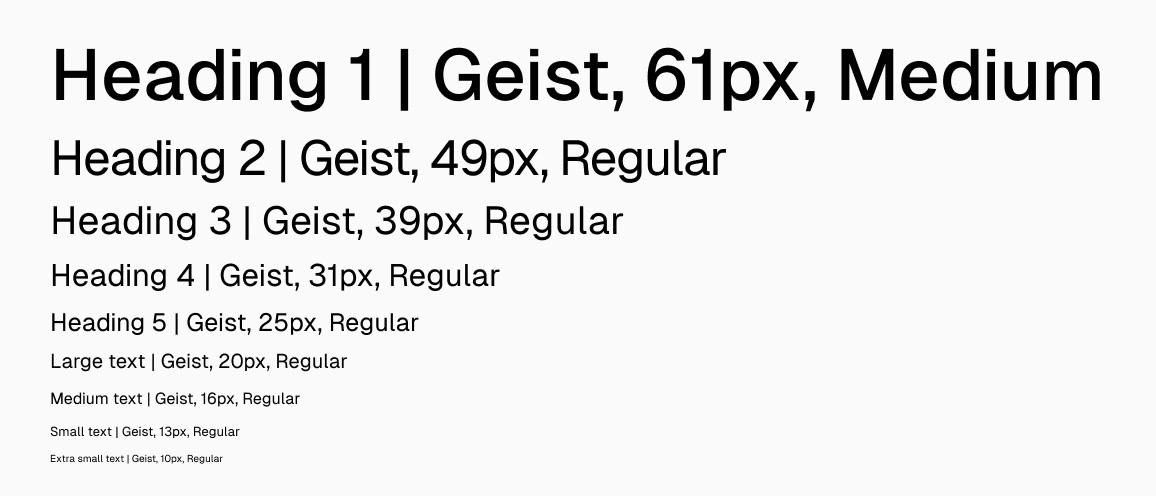
Typography
Customer experience map
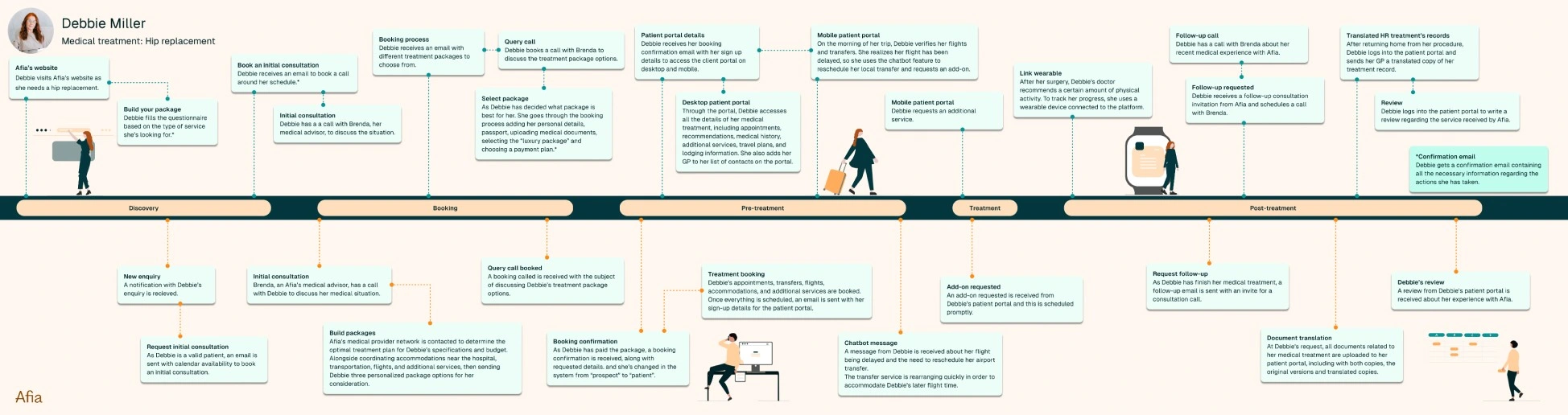
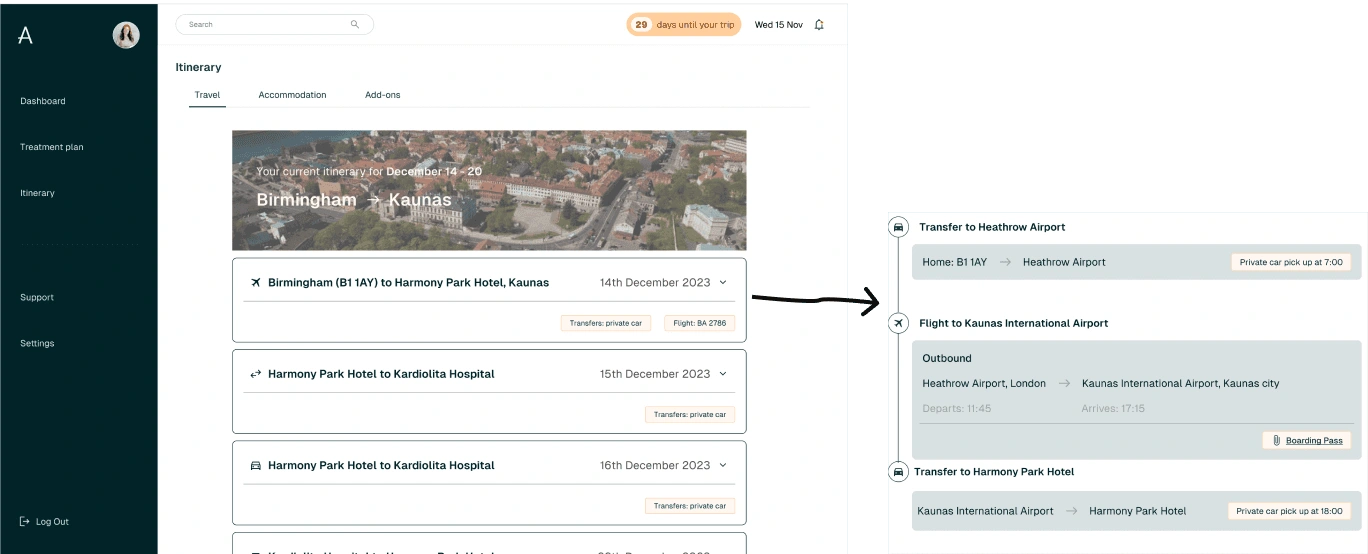
We designed a platform an entire service from both the patient's and Afia's perspectives - from the initial discovery of the platform to receiving the patient's feedback.
Find a Solution
User Flows
To understand how users will interact with the website, the client portal on desktop and on app, and Afia's team in their portal, we mapped out the step-by-step user flows from the initial onboarding to the post-treatment of the patient on both ends. This enabled us to identify pain points and opportunities to optimize the user experience. Our goal was to create intuitive paths that fulfil user needs with minimal friction.
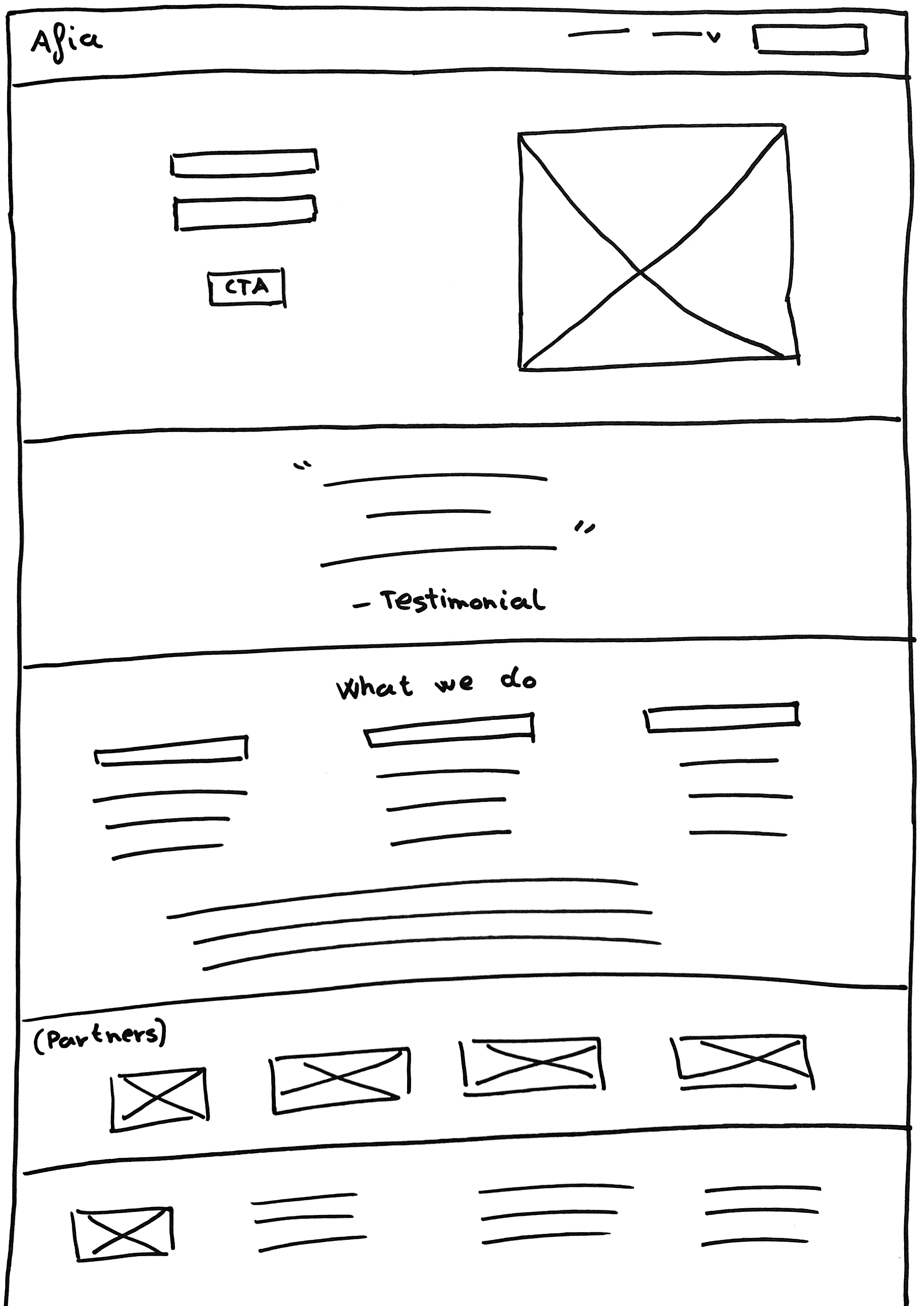
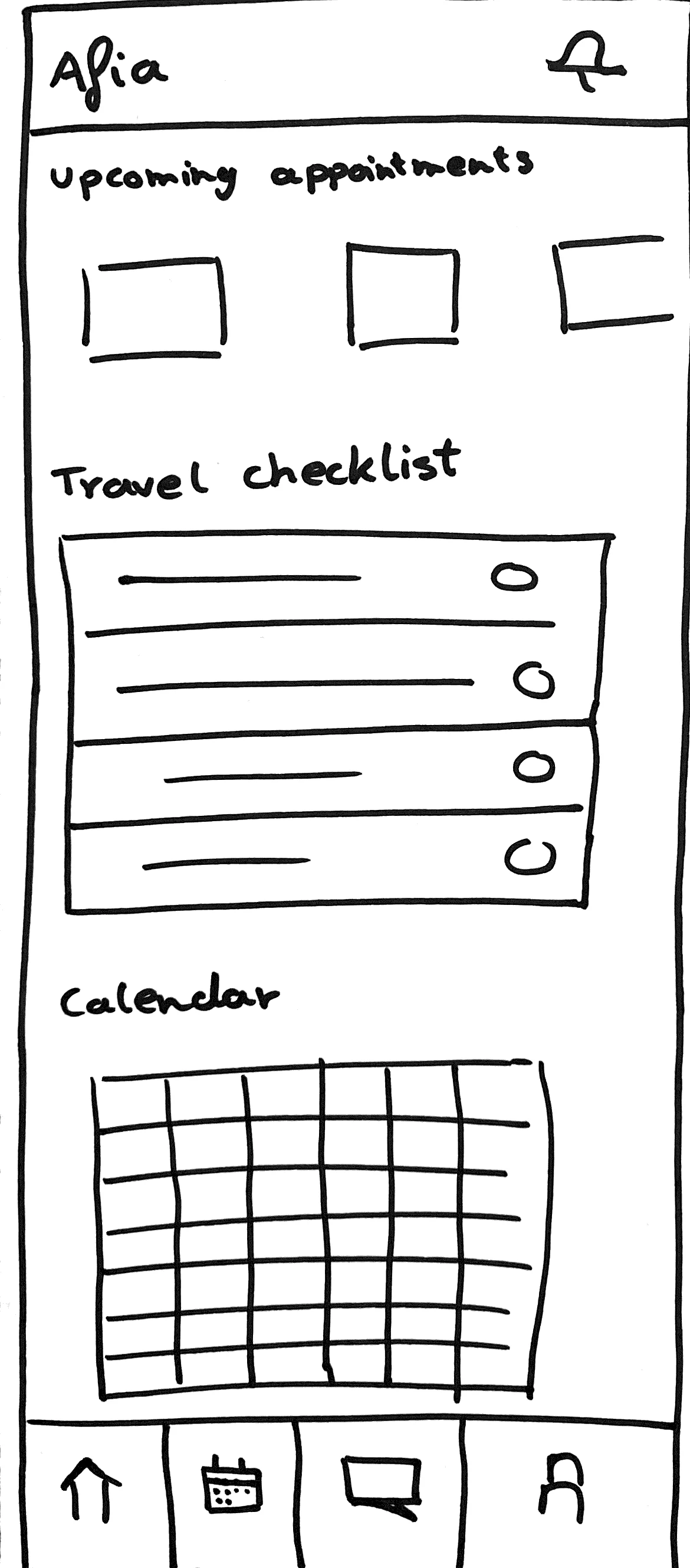
Sketches
We used sketches to rapidly explore ideas and user flows. Through iterations and feedback, we implemented changes into our design to better fulfil the user’s and Afia’s needs.
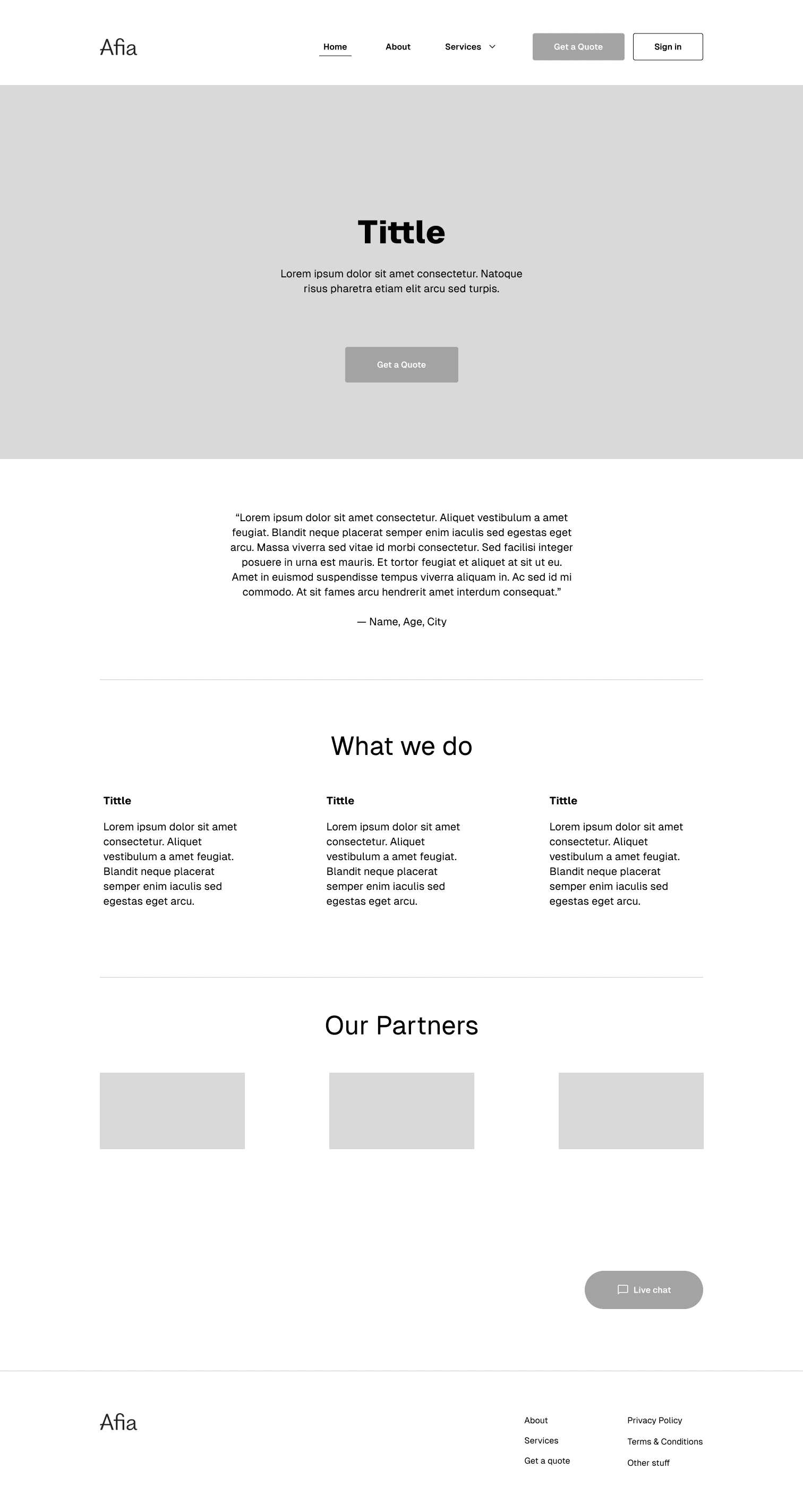
Low-fidelity wireframes
Then we went digital and created the low-fidelity prototypes where we explored potential solutions. Focusing on just the concepts rather than details allowed us to rapidly ideate and evaluate. This iterative approach enabled the identification of an effective design direction before additional specific elements were added.
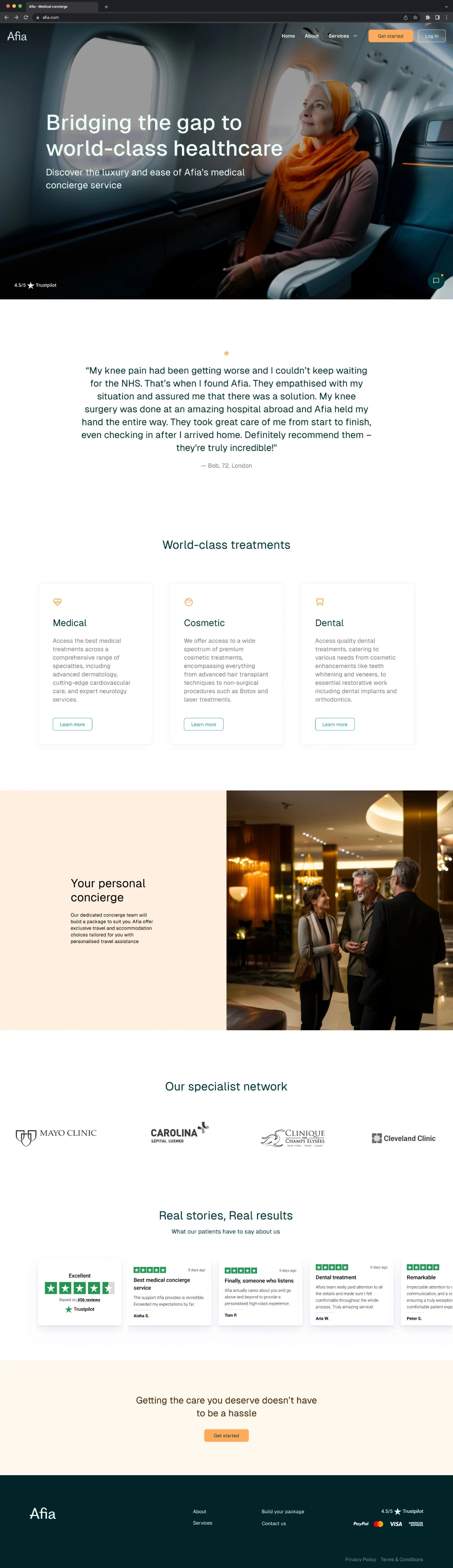
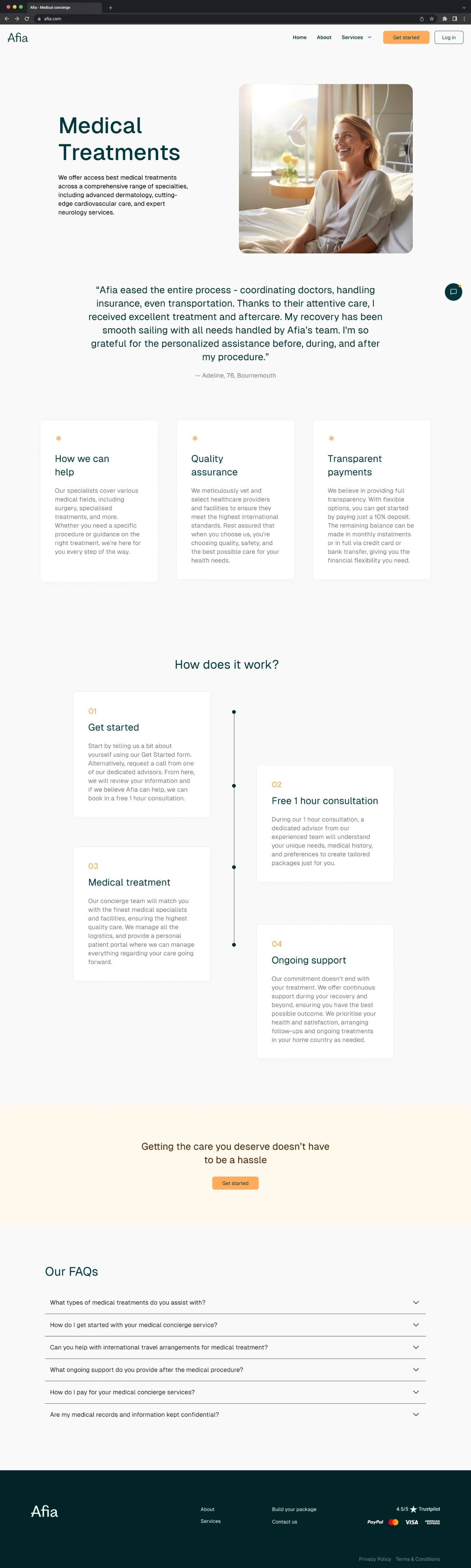
High fidelity
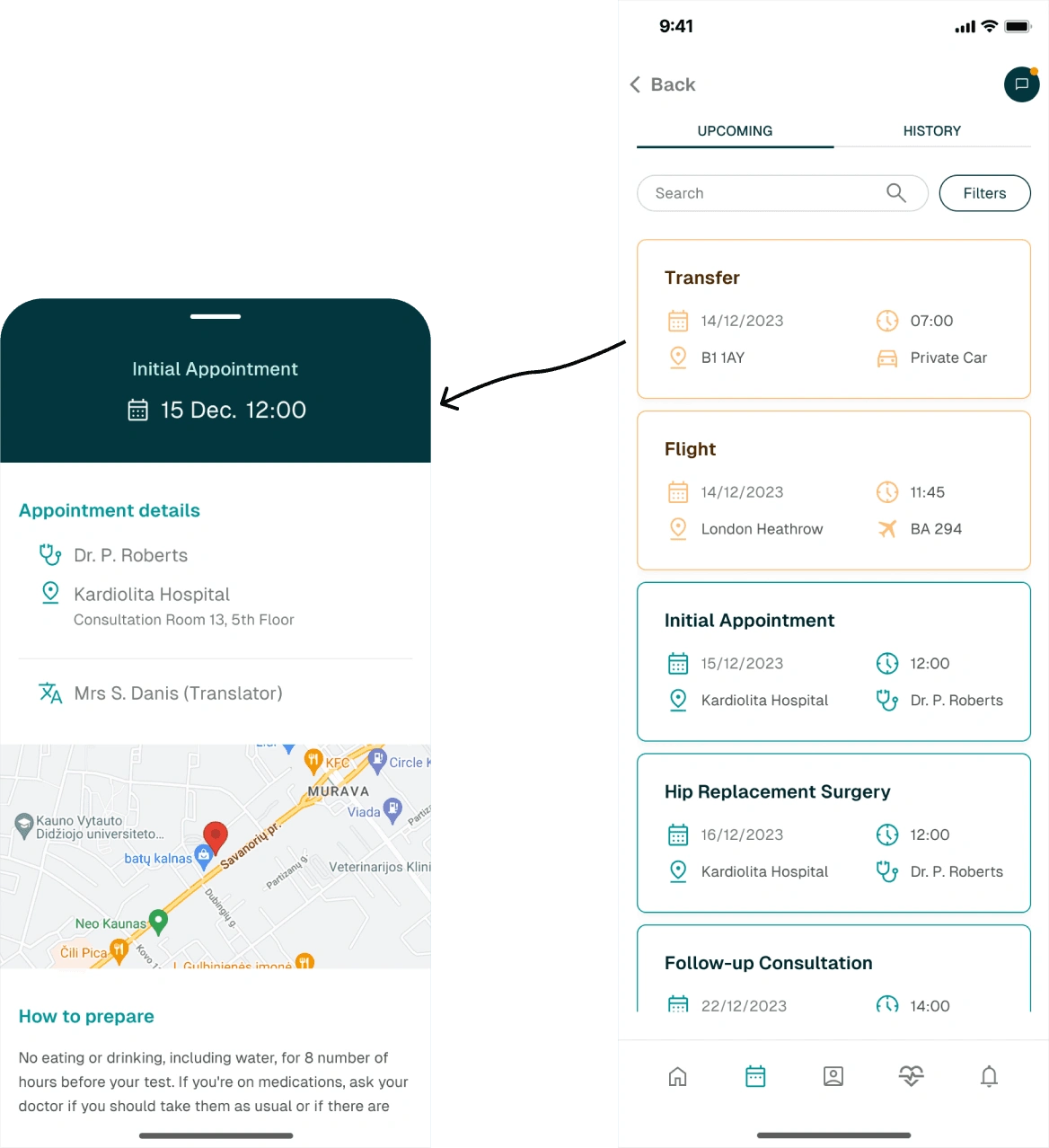
We created high-fidelity prototypes that fully realize the intended user experience. These interactive prototypes accurately reflect the final product's visual design, content, and functionality.
Website
Patient Portal
Itinerary
Outcomes
Balances business viability and market fit
Our research identified a gap between business objectives and market demands. We've bridged this gap by designing a product that meets both needs.
Trustworthy and warm brand
We've developed a brand that brings a sense of trustworthiness and professionalism while being approachable. It emphasizes a holistic approach that sets us apart from competitors.
End-to-end service
We've created an end-to-end service journey for both the customer and Afia. Streamlining both ends with an easy and permanent contact to provide the best possible experience for the patients.
Final thoughts
What did I learn?
Design system
The importance of a functional design system to make sure consistency is kept when working with different UI designers for different platforms in a project.
Team communication
The essential clear and open communication within the team, exploring all the thoughts and determining clear roles.
What would I have done differently?
Scoop & time constraint
We did not determine the scope of work possible within the 6 week timeline, which made the design process quite intense.
Stakeholder workshop
If time had not been a constraint, I would have conducted a workshop with the stakeholder to show her the sketches and flow of the platform in order to take her feedback into account.
0 likes · 5 views · Jul 26, 2024
A healthcare concept project for a potential Start-Up: validating market fit and user needs, crafting an end-to-end platform, including branding, user interface


