Automating Multi-Geo Payments & Treasury Through API Routing

Katy Osborn


Client: Intergiro Banking as a service
Automating Client Payments & Treasury Through Scalable API Infrastructure
Context
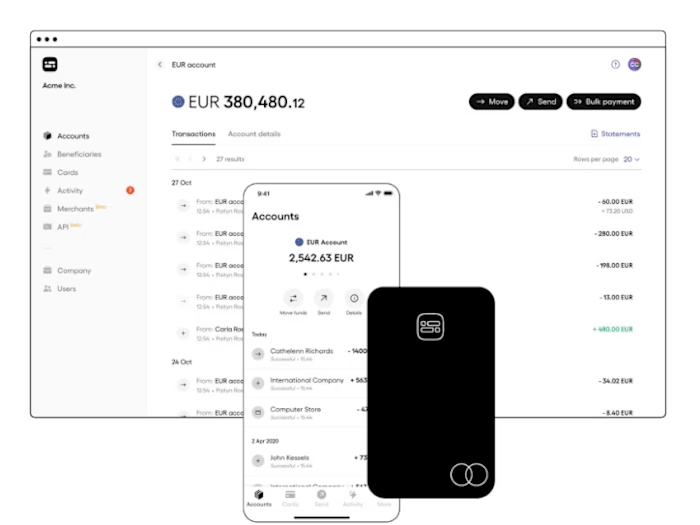
Intergiro operates as a Banking-as-a-Service platform, enabling clients to manage accounts, payments, and treasury operations programmatically.
As usage scaled, clients needed more reliable and structured ways to:
initiate payments
manage liquidity
operate across multiple payment rails
Problem
The existing setup created friction for both clients and internal teams:
payment behaviour varied across rails and regions
limited structure around transaction limits and treasury controls
manual intervention required for adjustments and reconciliation
fragmented handling of FX and cross-border flows
This made it harder for clients to:
integrate reliably
predict transaction outcomes
scale payment operations
Solution
To address these challenges, we implemented a robust client transaction and treasury management system focused on:
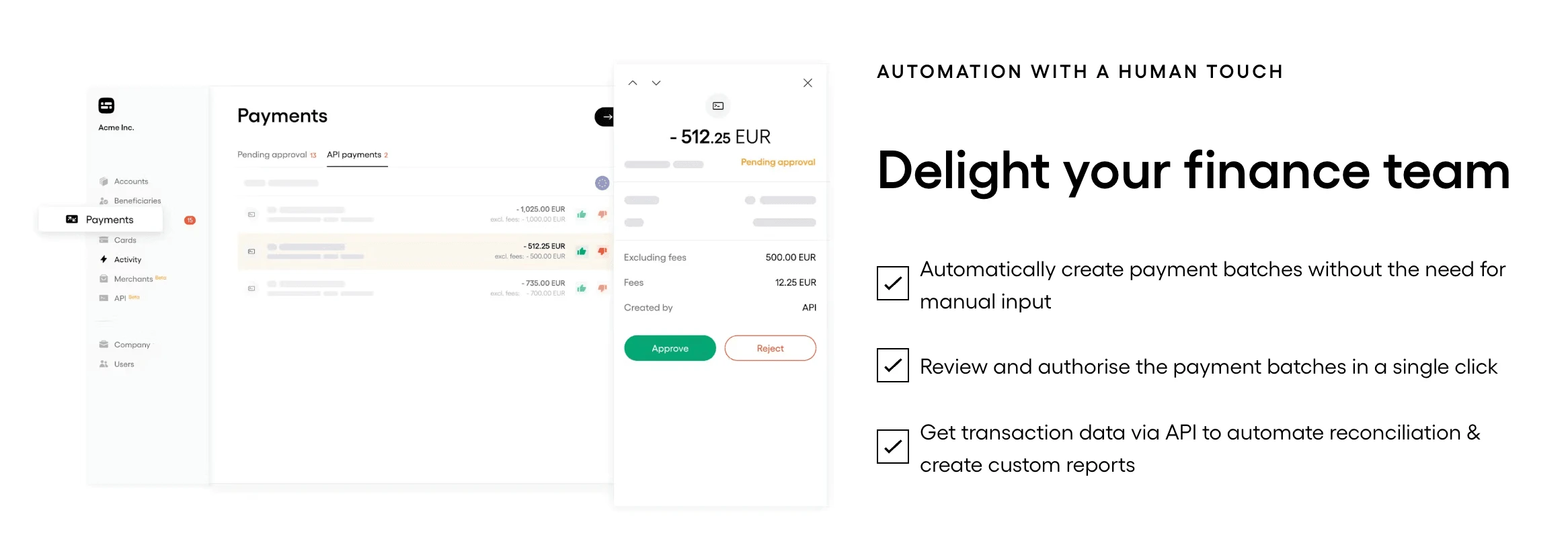
Automating outgoing transactions on behalf of clients to streamline fund transfers.
Establishing a structured transaction limit framework to enhance security and compliance.
Implementing fixed treasury cycles for improved liquidity management and fund allocation.
Expanding global payment capabilities to enable seamless cross-border transactions.
Integrating SEPA direct debit (SEPA DD) processing for enhanced payment efficiency.
Enhancing FX conversions from EUR to SEPA accounts to optimize transaction routing.
Managing real-time settlements through the RIX financial network.
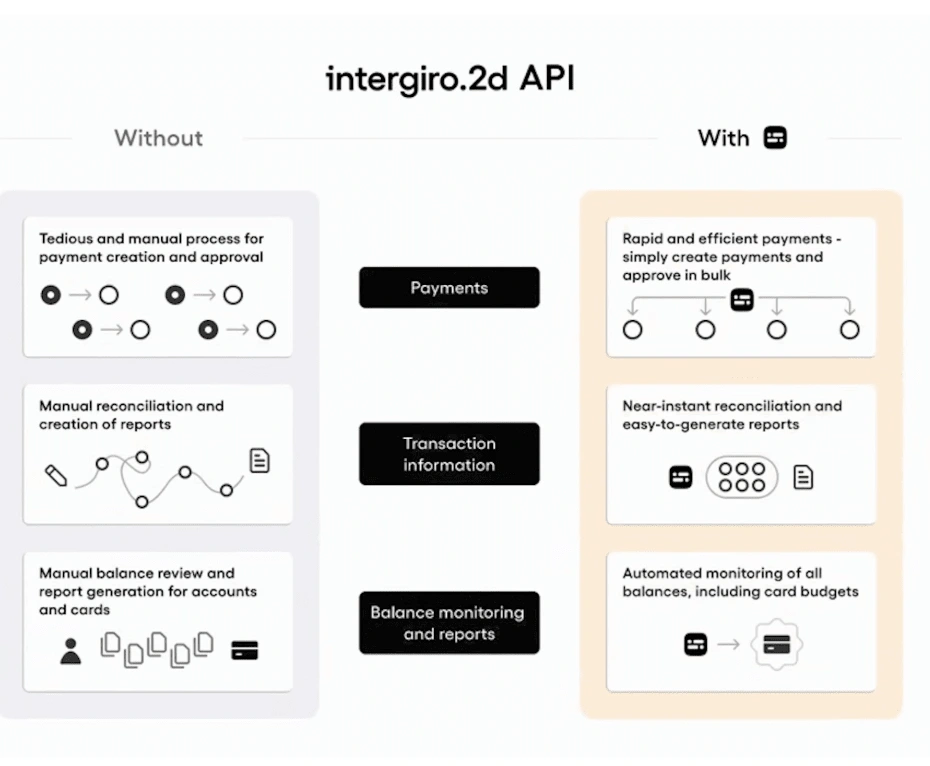
Seamlessly integrating these functionalities into the Intergiro.2d Business Banking API, providing clients with programmatic control over their financial transactions.
Solution
To address these challenges, we built a more structured and scalable payment and treasury system, exposed through the Business Banking API.
The focus was on standardising how transactions were initiated and managed across multiple geographies, where payment behaviour, compliance requirements, and settlement processes differed by market. This required introducing product-level routing logic to ensure transactions followed the correct paths based on regulatory constraints, payment rails, and currency.
We enabled clients to initiate and manage payments programmatically, supporting both e-money and real fund transfers, while introducing clearer controls through structured transaction limits and fixed treasury cycles to improve liquidity management and reduce risk.
At the same time, we expanded support across SEPA, SEPA Direct Debit, FX, and real-time settlement systems such as RIX, with improved routing and automated FX handling to make cross-border payments more efficient and predictable.
All functionality was exposed through a consistent API layer, allowing clients to integrate once and operate across multiple markets with more reliable and standardised payment behaviour.
What I worked on
1. Payment flows & transaction lifecycle
Enabled clients to initiate outgoing transactions via API
Defined clearer transaction states across initiation, processing, settlement, and failure
Introduced compensating transaction logic to handle adjustments and failed flows
Objective: making payment behaviour more predictable
2. Treasury & control layer
Designed structured transaction limits to support compliance and reduce risk
Introduced fixed treasury cycles to standardise fund allocation
Enabled real-time monitoring of transactions and balances
Objective: improving control and visibility
3. Multi-rail payments & routing
Supported routing across SEPA, SEPA Direct Debit, FX flows, and real-time settlement (RIX)
Enabled automated FX conversion for cross-border payments
Improved consistency in how different payment rails were handled
Objective: standardising fragmented systems
4. API integration layer
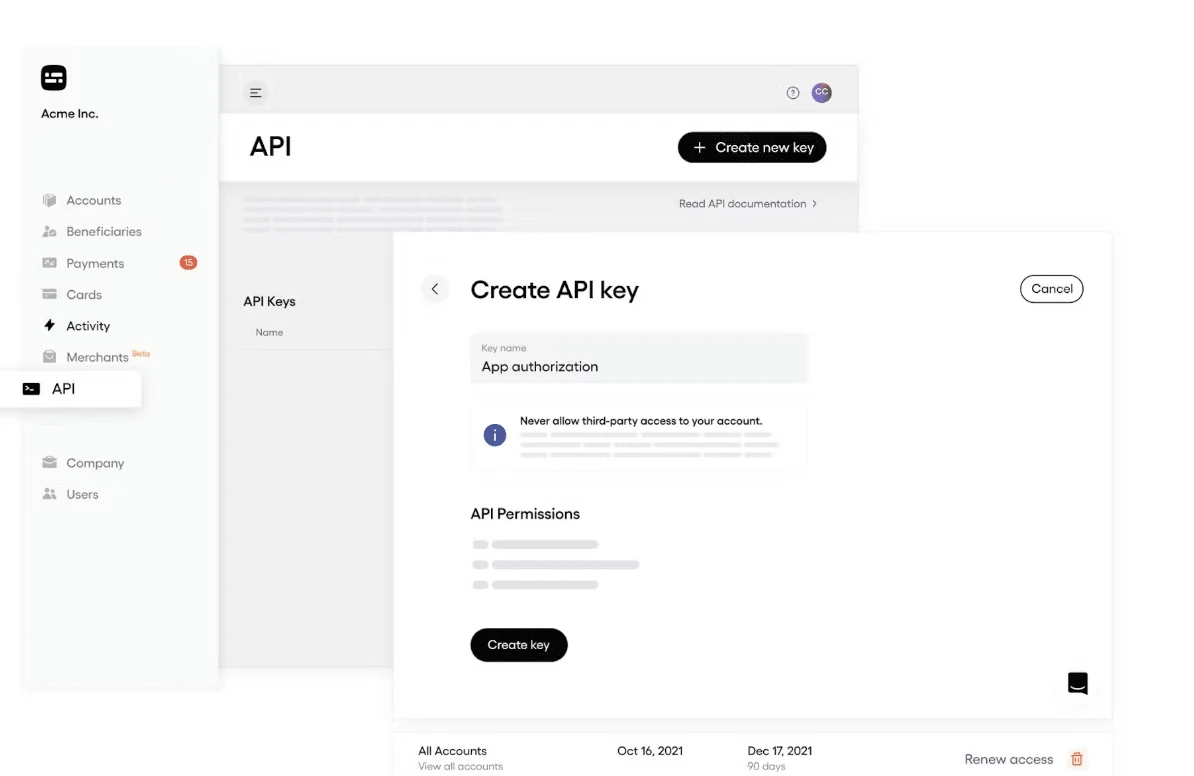
Exposed all functionality through the Business Banking API
Structured endpoints around real client use cases
Improved clarity and consistency for API consumers
Objective: easier integration and scalability
Impact
Reduced manual intervention in payment and treasury operations
improved reliability and predictability of transaction flows
enabled clients to scale payment operations via API
improved consistency across multiple payment rails
strengthened compliance through structured controls and monitoring
Technologies & Methodologies Used
Technologies: Python, SQL, AWS, SEPA, SWIFT, RIX/Swedish Clearing House, Intergiro.2d Business Banking API.
Methodologies: Agile development, risk-based transaction management, liquidity optimization.
Automation: AI-driven transaction approvals, automated FX conversions, SEPA DD processing.
Security Measures: AML compliance, GDPR-compliant data handling, secure API integrations.
This project highlights expertise in automating client transactions, optimizing treasury operations, and expanding global payment capabilities within Intergiro’s banking-as-a-service platform, seamlessly integrating with the Intergiro.2d Business Banking API to empower businesses with automated financial management.
Resources
Like this project
Posted Jan 30, 2025
Automated client payments and treasury in a Banking-as-a-Service platform, improving control, compliance, and reliability across markets via API-driven routing.