Four offices. One operating view.

Ivan Madrigal

The business problem
Four offices relied on vendor systems without usable APIs. Different carriers and third-party administrators imposed different timing, documentation, and quality requirements. Leaders needed a shared operating view that could turn those requirements into owned actions.
My role and approach
As interim operating executive and platform architect, I connected the operating requirements to the data model and delivery. The platform combined authorized browser-based data acquisition, a governed PostgreSQL model, source-precedence and reconciliation rules, effective-dated service-level logic, dashboards, alerts, and human-authorized workflows.
What was delivered
The implementation brought four offices into one operating view, with 22 role-specific dashboards and workflows governed by 26 carriers and 14 third-party administrators. Its value was the connection between a business rule, an exception, and an accountable owner.
Result and scope
The delivered scope connects shared data, service-level obligations, and accountable action across four offices. It demonstrates operational implementation and governance; no financial-return figure is claimed for this case.
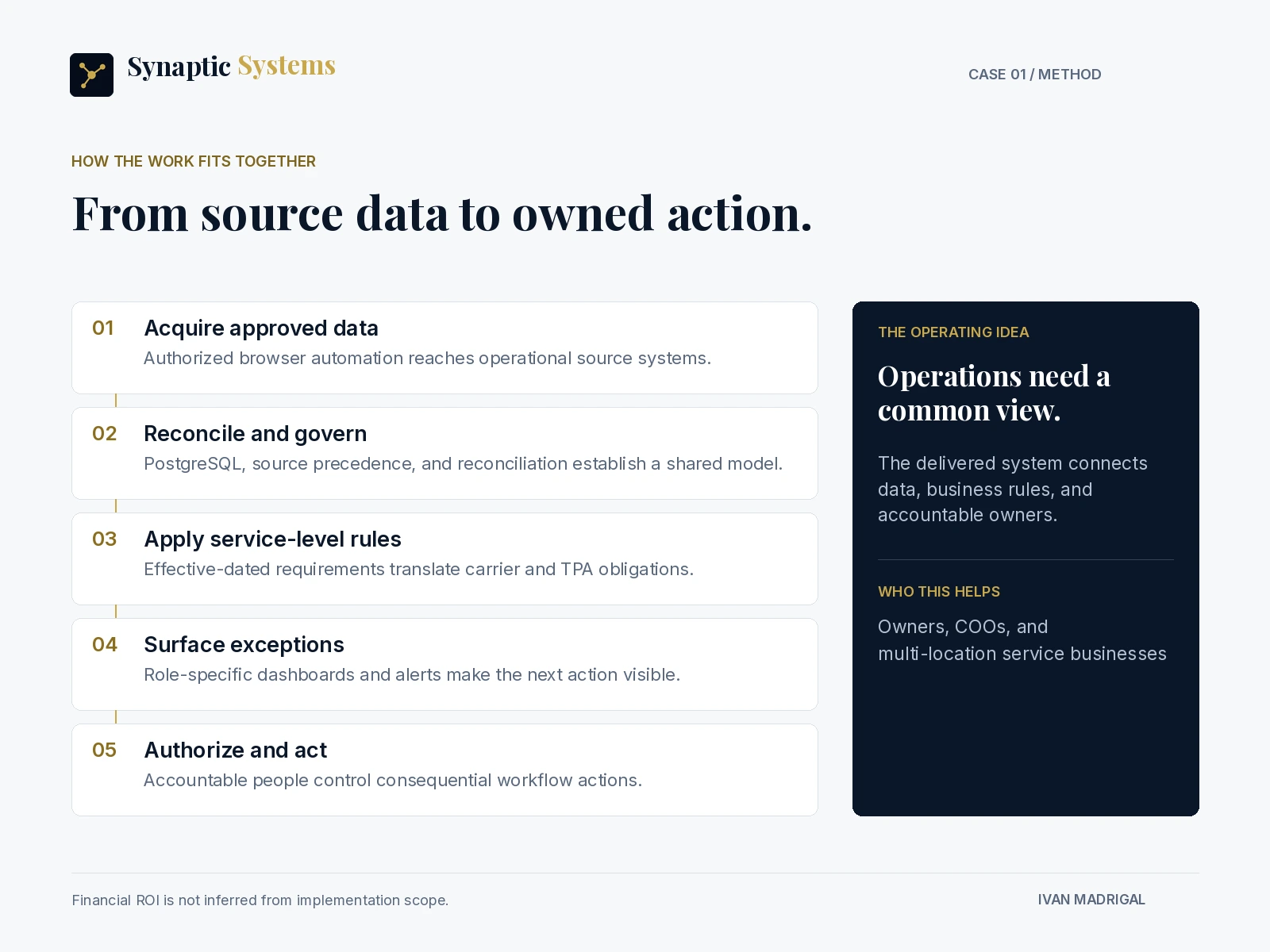
A schematic of the implemented operating logic, from approved sources through governed data to owned exceptions. This is not a screenshot of the production interface.
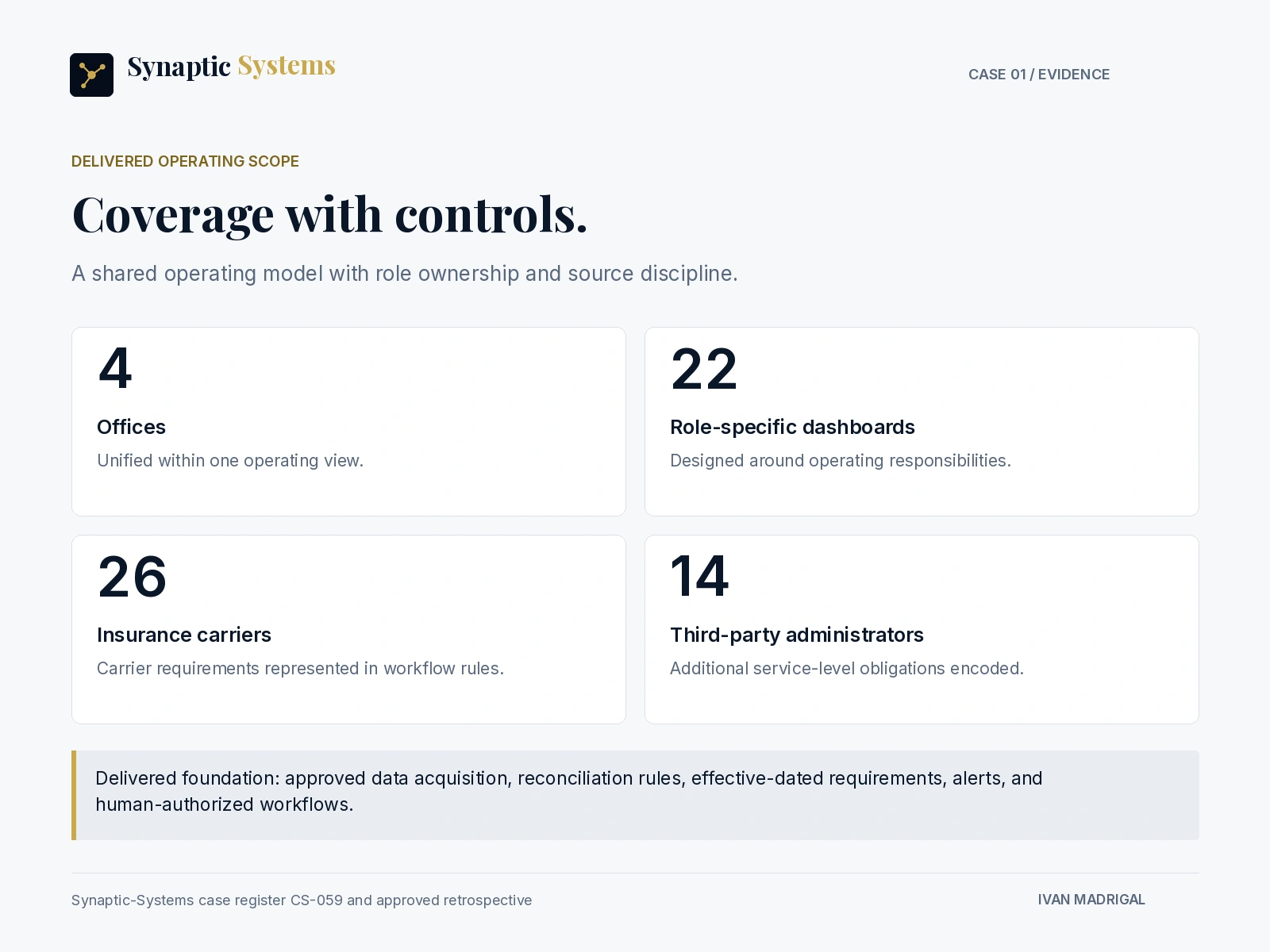
Delivery summary drawn from the approved retrospective. Scope figures describe coverage and capability, not a quantified financial return.
Like this project
Posted Oct 20, 2026
Unified four offices with governed data, 22 role-specific dashboards, service-level rules, and human-authorized exception workflows.
Likes
0
Views
2