
Your race, turned into a product.
Self-initiated product — designed and built by me, not a client commission.
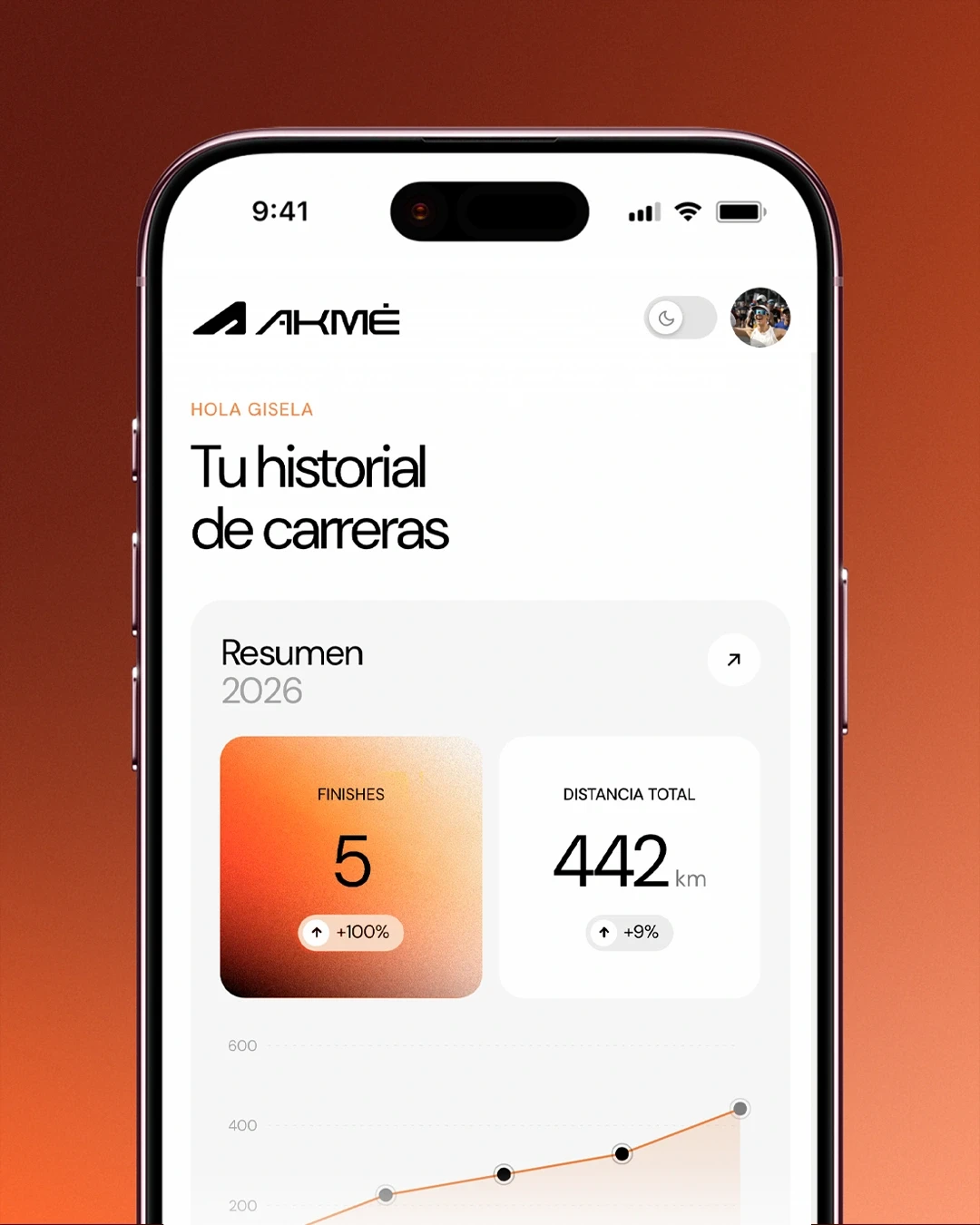
Akmé dashboard
Context
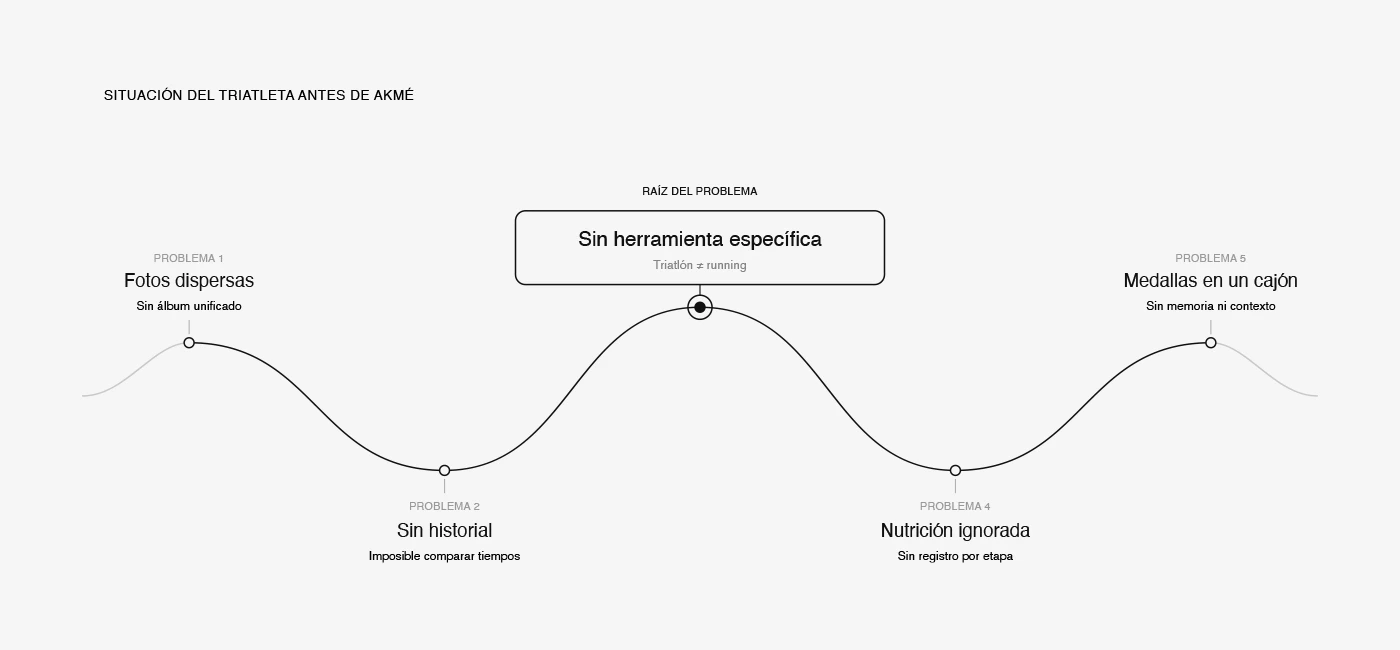
Triathletes generate a huge amount of data: times, routes, nutrition, results and personal records. That information usually lives scattered across apps, spreadsheets, photos and notes, making it hard to see the full picture of athletic progress.
The problem
Existing tools solve individual needs — tracking workouts, analyzing routes, calculating pace — but none bring the complete triathlon experience together. Athletes end up rebuilding their history by hand and losing the context behind each race.
My role
I led the project end-to-end, from defining the problem to designing and building the functional product: product strategy, UX/UI design, information architecture, feature definition, front-end development, backend integration, and testing with iterative validation. As a triathlete myself, my domain knowledge helped turn real needs into product decisions.
The solution
A specialized platform that brings training tracking, race history and performance analysis together. The first version has six core modules:
Performance evolution and metrics
Personal records
Race history
Cumulative route map
Nutrition by race stage
Predictive time calculator
Each one answers a question athletes ask after training or racing: How am I progressing? What did I learn from this race? How far did I actually go? What do I need to reach my next goal?
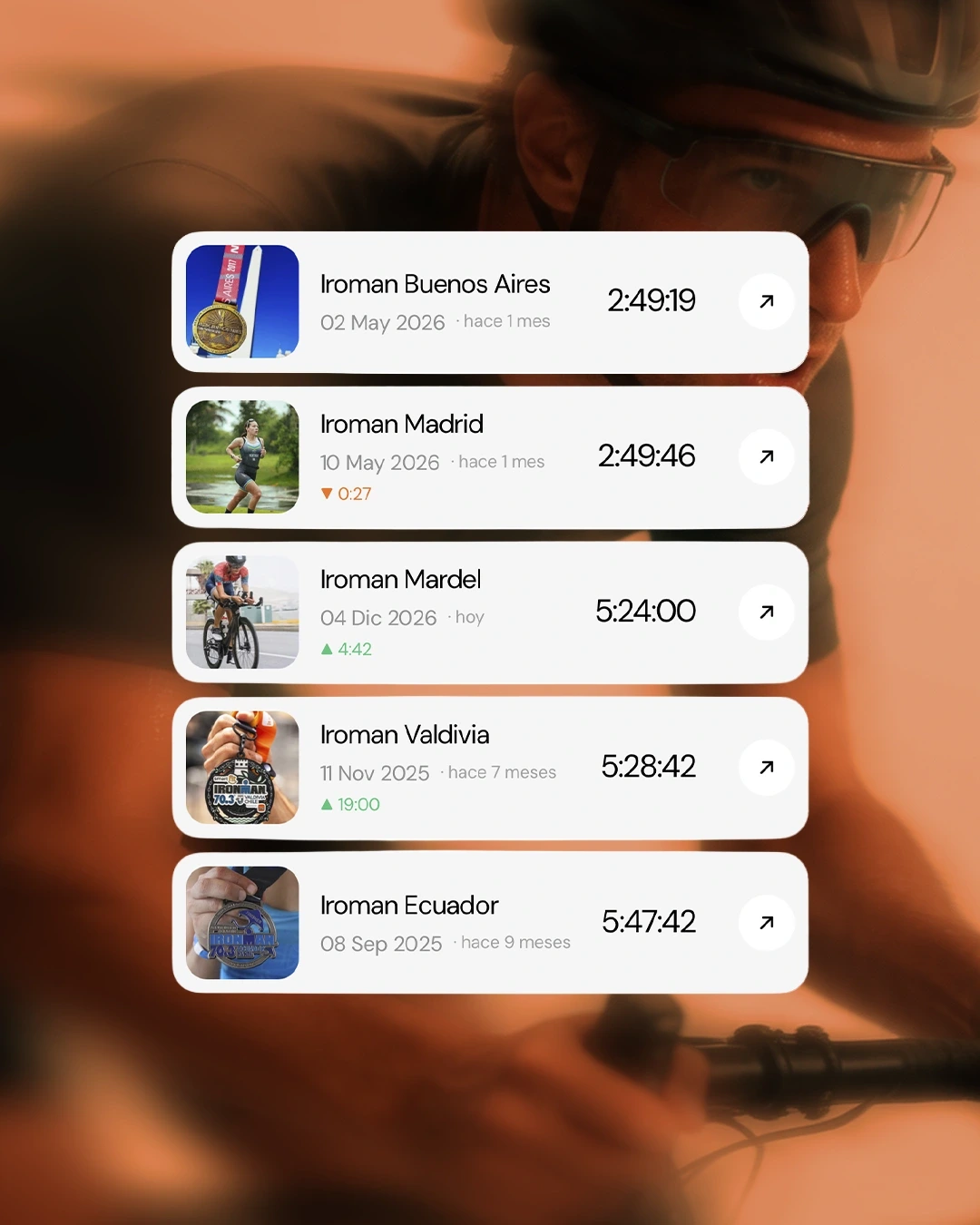
Race history
How it was built
With an AI-assisted Product Engineering approach — not just to write code faster, but to shorten the cycle between idea, implementation and validation:
Problem → Design → Implementation → Testing → Iteration
Claude Code was the primary development tool, while product, UX and architecture decisions were defined and validated throughout.
Route map
Outcome
Akmé validated a product development approach: turning a product hypothesis into a functional product within weeks, reducing the cost of validation before larger investments. Development speed depends less on the stack and more on how clearly the problem is defined.
What I learned
AI accelerates implementation, but it doesn't replace product judgment. Identifying a meaningful problem, defining a coherent solution and validating each decision is still the real differentiator.
Stack: React · TypeScript · Vite · Tailwind CSS · Supabase (Auth + Database) · Leaflet + CartoDB
0 likes · 0 views · Nov 12, 2026
Your race, turned into a product: a self-initiated web app for triathletes, designed and built end-to-end with an AI-assisted Product Engineering workflow.

