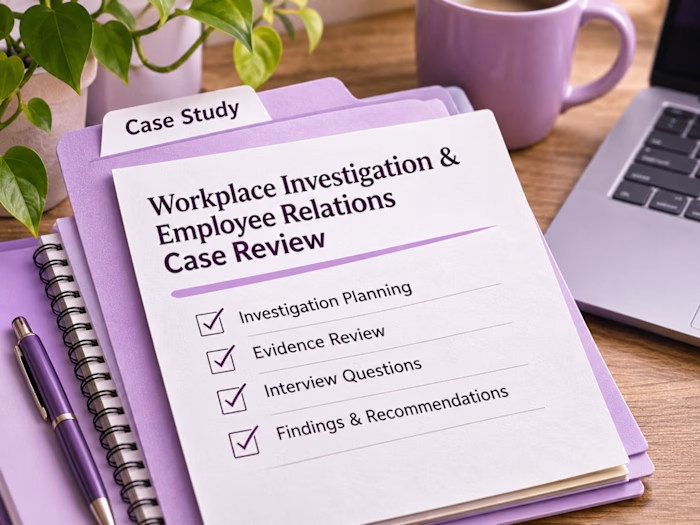
Workplace Investigation & Employee Relations Case Study

Jessica Valoy


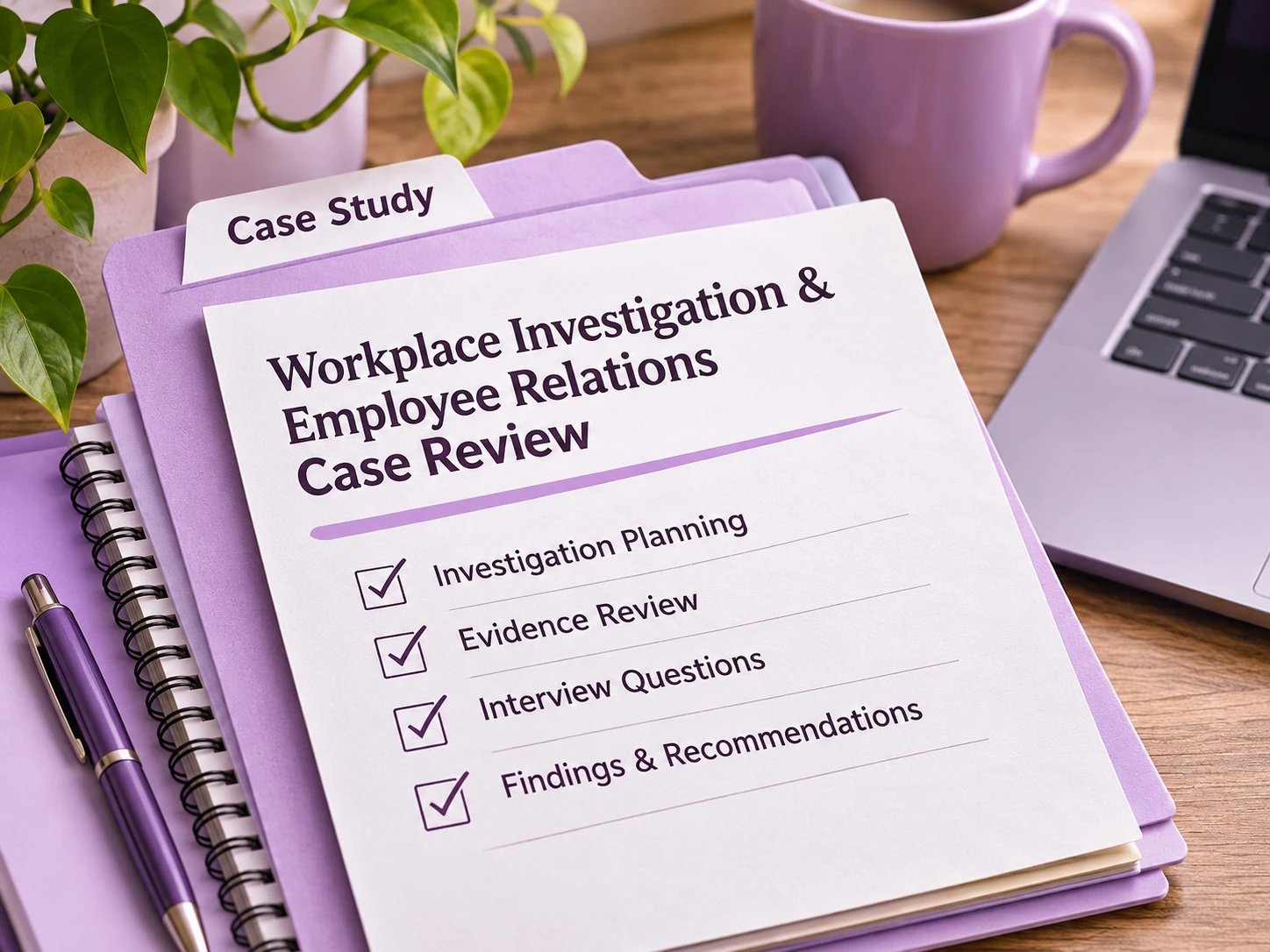
Workplace Investigation & Employee Relations Case Review
An evidence-based approach to investigating employee conduct concerns and developing practical HR recommendations
Portfolio case study | Fictional scenario demonstrating my investigation approach
The Challenge
A manager received reports of concerning employee behavior involving interactions with coworkers. The initial written statements included conflicting accounts of what occurred, and the manager needed guidance on how to investigate the concerns fairly and determine whether corrective action was appropriate.
The goal was to establish a clear understanding of the reported incidents, evaluate the available evidence, and provide a well-supported recommendation that considered workplace policies, employee expectations, and the circumstances involved.
My Role
As the HR consultant, my role was to guide the investigation process, help the manager identify relevant information, evaluate the evidence, and develop appropriate recommendations.
This included reviewing initial reports, preparing investigatory interview questions, identifying additional evidence sources, evaluating inconsistencies, and preparing written findings and recommendations.
My Approach
1. Review the Initial Concerns
I started by reviewing the written complaints, employee statements, and any relevant workplace policies. I worked with the manager to clarify the specific allegations, identify who may have relevant information, and determine what questions needed to be answered.
2. Identify Additional Sources of Evidence
I worked with the manager to determine whether there were other sources of information that could help establish what occurred.
Depending on the situation, this could include:
Security camera footage
Badge access records
Scheduling and timekeeping records
Emails, messages, or other workplace communications
Relevant operational records or other documentation
I also considered whether the information was available, relevant, and appropriate to access under applicable policies.
3. Develop and Conduct Investigatory Interviews
I developed targeted interview questions based on the reported concerns and available information.
The questions were designed to give employees an opportunity to explain their perspective, clarify details, respond to specific allegations, and identify any additional witnesses or evidence.
I also used follow-up questions when new information emerged or an employee's account required clarification.
4. Compare Statements and Evaluate Inconsistencies
An important part of my process was comparing the original written complaints and witness statements with what employees shared during investigatory interviews.
I looked for differences in timelines, descriptions of events, and other relevant details.
When inconsistencies arose, I considered whether they were significant, whether there was a reasonable explanation, and whether other evidence could help clarify what occurred.
I did not assume that an inconsistency automatically meant someone was being dishonest. The goal was to evaluate the information fairly and determine what the evidence actually supported.
5. Assess Findings and Consider Appropriate Action
Once the available information was gathered, I evaluated the findings against relevant workplace policies, employee expectations, and any applicable labor agreement provisions.
I also considered the employee's response, relevant prior corrective action, the seriousness of the conduct, and whether the proposed response was reasonable and consistent.
Where the evidence was insufficient, I identified what remained unclear rather than treating an allegation as an established fact.
6. Prepare Findings and Recommendations
I prepared a written summary that outlined the reported concerns, evidence reviewed, relevant findings, and recommended next steps.
My recommendations focused on helping the manager understand what was supported by the evidence, whether corrective action was appropriate, and how to address any remaining workplace concerns.
Deliverables
The work could include:
Investigation planning and allegation summary
Customized investigatory interview questions
Identification of additional evidence sources
Comparison of written statements and interview responses
Evidence assessment and identification of unresolved discrepancies
Written findings and HR recommendations
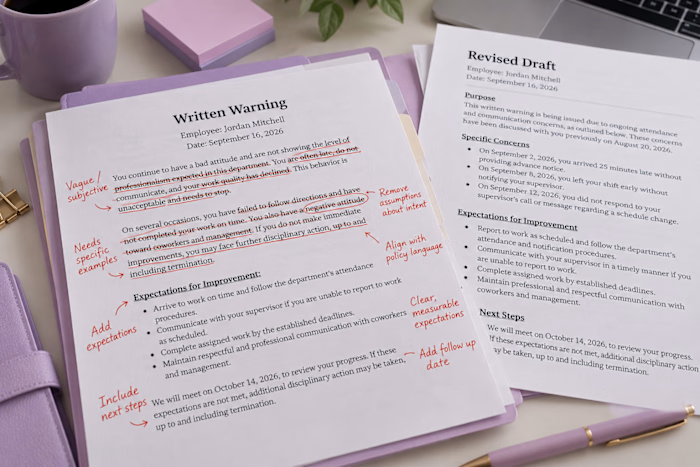
Draft corrective action documentation, when appropriate
Outcome
This approach provides management with a more complete and objective understanding of an employee relations concern.
Rather than relying solely on initial reports or individual accounts, the investigation considers multiple sources of information, gives employees an opportunity to respond, and evaluates whether the available evidence supports the conclusions.
The result is a clear, organized, and well-supported recommendation that helps leadership make informed decisions and address workplace concerns consistently.
My Approach to HR Consulting
I believe effective employee relations work requires more than knowing the policies. It requires asking the right questions, recognizing when information doesn't add up, considering different perspectives, and knowing when additional follow-up is needed.
My goal is to help organizations navigate difficult employee situations with fairness, sound judgment, and documentation that clearly supports the decisions being made.
This is a fictional case study created to demonstrate my professional approach and experience. It does not describe an actual client engagement or disclose confidential employee information.
Like this project
Posted Oct 28, 2026
Sample case study demonstrating my approach to workplace investigations, evidence review, employee interviews, and evidence-based HR recommendations.