Nail Tech Assistant — Pinterest inspiration to AI preview

Don Matthews


From scattered inspiration to a design a client and artist can discuss
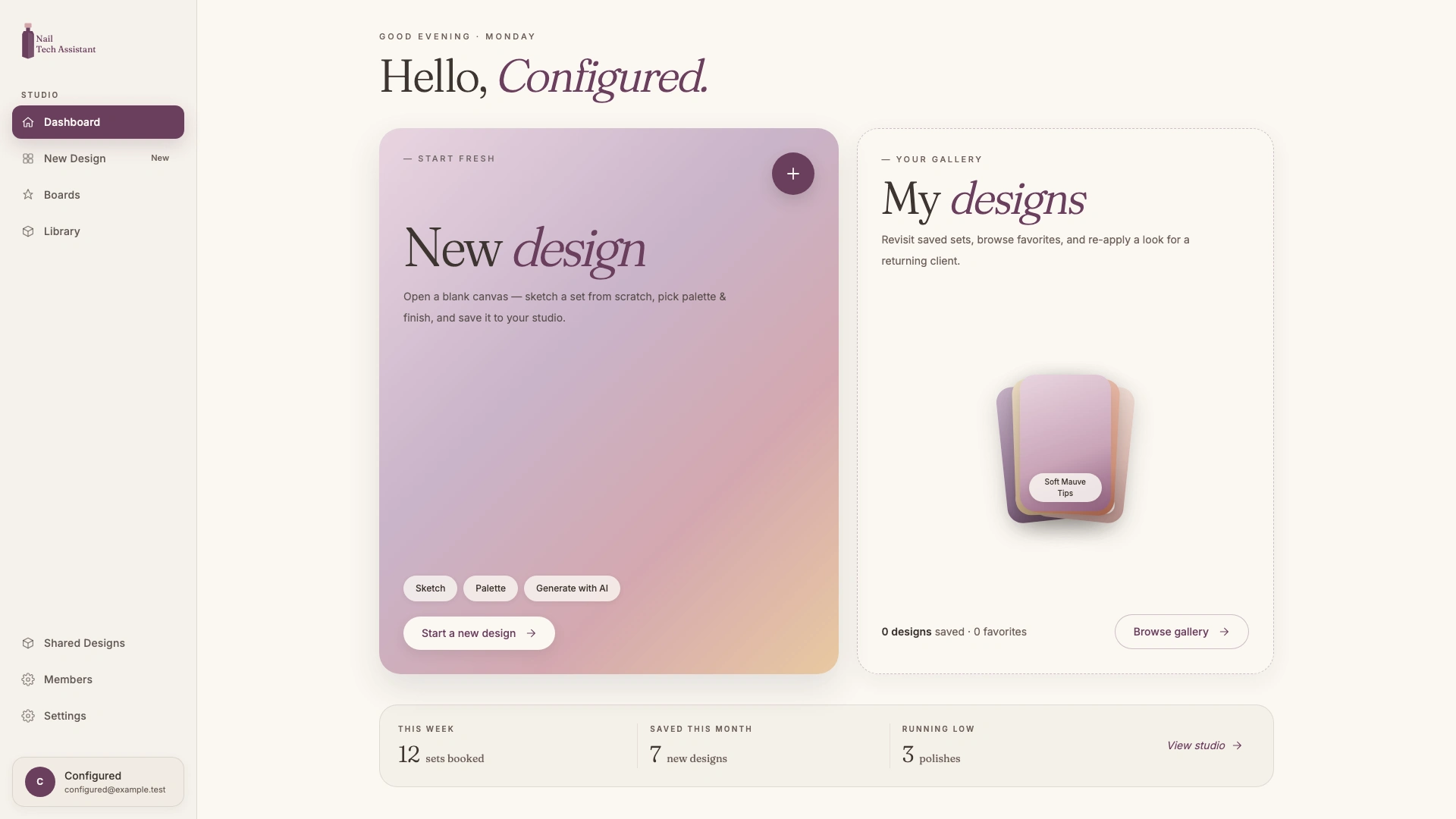
Shipped a private AI product that turns scattered nail inspiration into a coordinated five-nail design a client and nail artist can review, refine, and discuss before the appointment.
The problem
Nail clients often arrive with a Pinterest board full of individual ideas but no clear way to see how those references will work as one coherent set. The artist still has to interpret the direction, reconcile conflicting styles, and explain the result before the appointment begins.
The goal was not another image generator. It was a focused planning workflow that could turn inspiration into a useful shared visual.
What I delivered
I took the product from discovery through architecture, product design, implementation, testing, and deployment. The completed application lets a user:
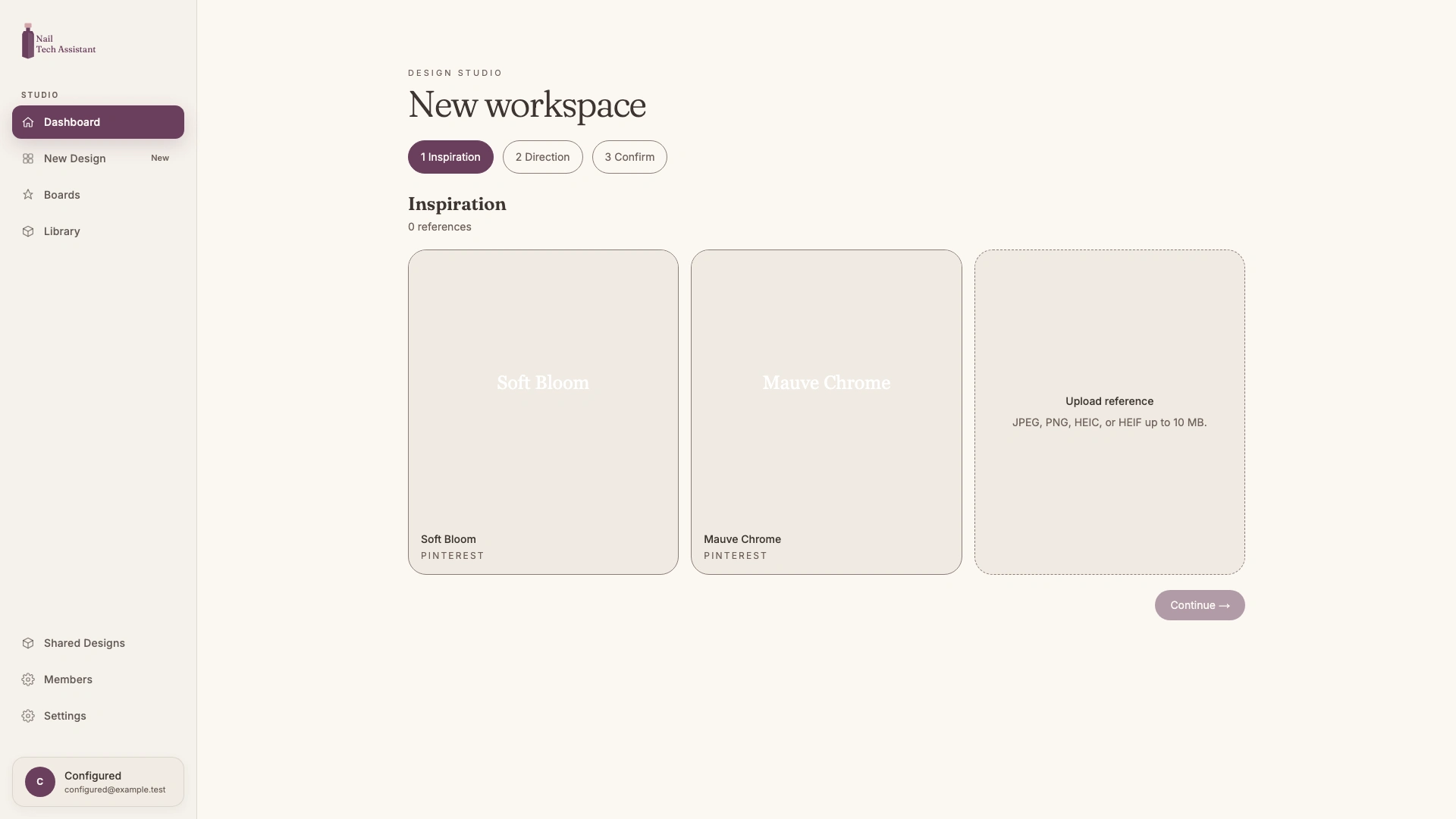
Select inspiration from Pinterest boards or upload a reference.
Add direction and choose a nail shape.
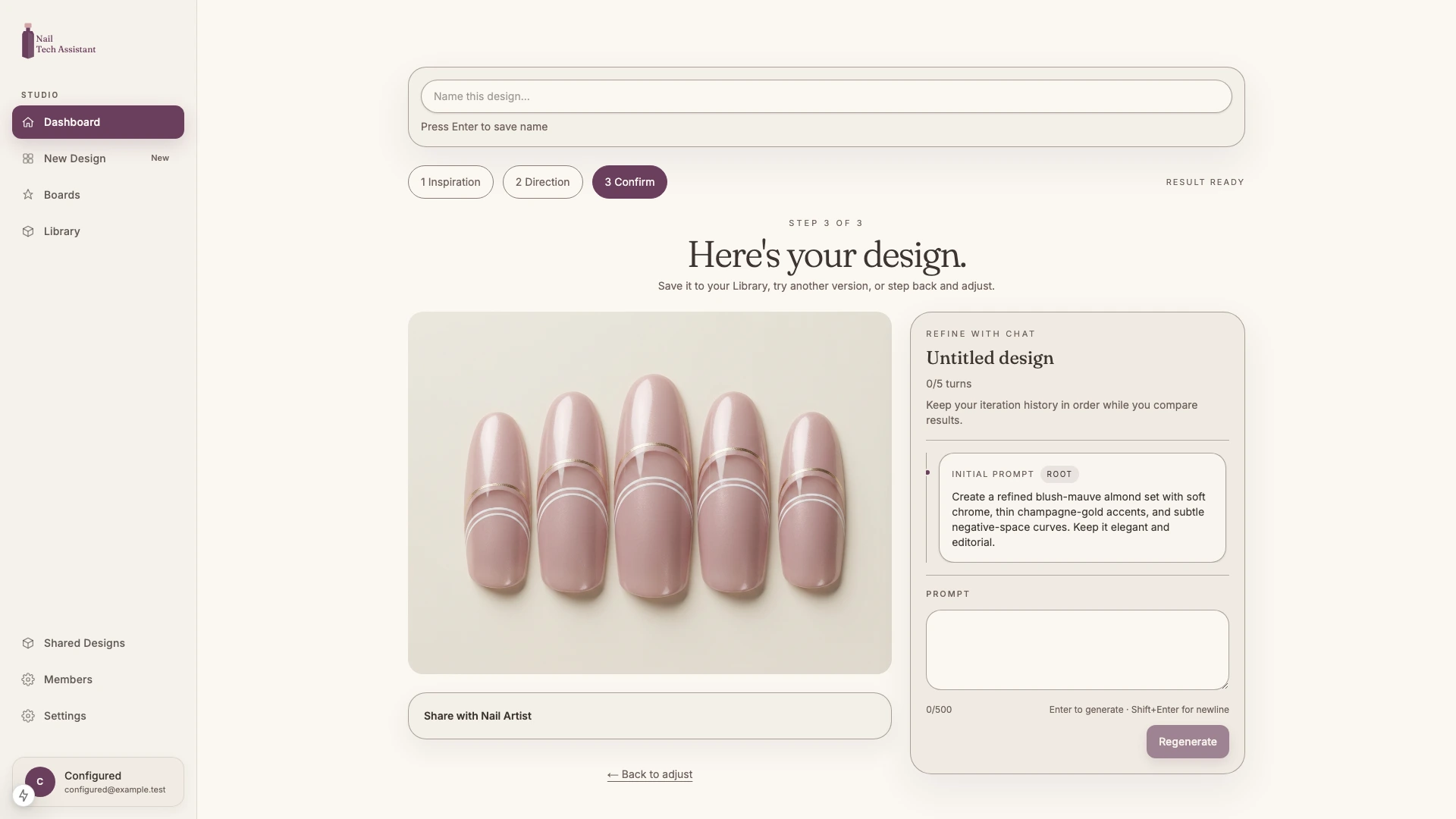
Generate a coordinated five-nail preview with Gemini.
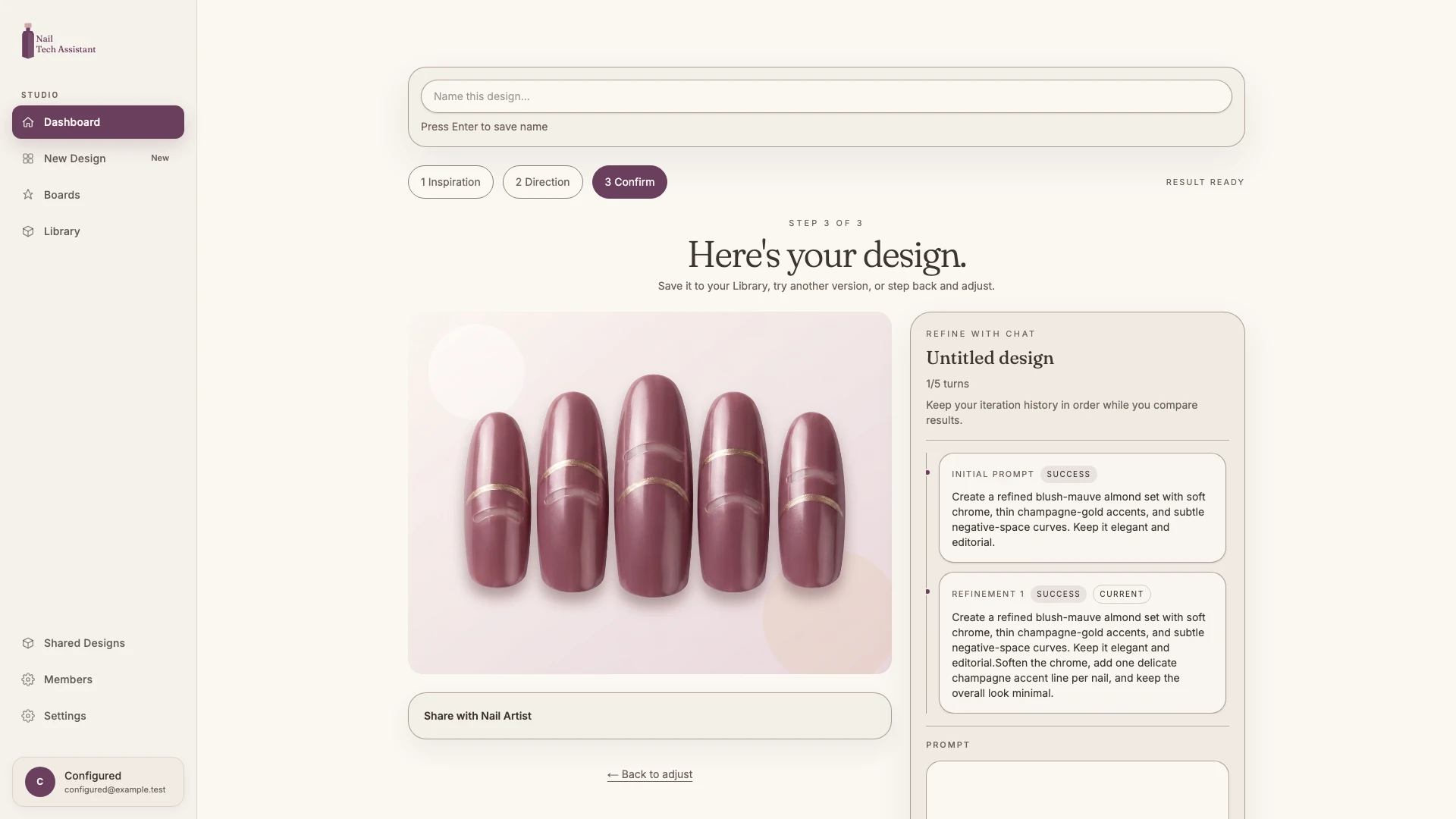
Refine the result conversationally while preserving iteration history.
Save designs and share the selected direction with the nail artist.
The owner workflow includes invitation-based access, per-user generation allowances, automatic refunds when a generation fails, Firebase security rules, and usage administration.
A product workflow, not a model demo
The central product decision was to structure generation around a three-step journey—Inspiration, Direction, and Confirm—rather than expose a blank prompt box. That makes the AI easier to direct, gives the user clear checkpoints, and produces an artifact that supports a real conversation with the artist.
The refinement experience maintains the original direction and iteration history, so the user can compare results instead of repeatedly starting over.
Engineering and delivery
The product shipped across six epics in 14 active build days against a fixed real-user deadline.
The production system includes authenticated, owner-approved access; Firebase-backed persistence and security; Gemini image generation; generation accounting and failure recovery; automated deployment; and end-to-end coverage of the critical workflow.
Stack: Next.js 15, TypeScript, Firebase, Google Gemini, Tailwind CSS, Playwright, and Vercel.
My role: Product discovery, UX and workflow design, system architecture, full-stack implementation, AI integration, testing, and deployment.
Outcome
The result is a deployed product that converts an ambiguous, highly visual planning problem into a guided workflow. It demonstrates the kind of work I do best: clarifying the user decision, selecting a pragmatic AI architecture, and shipping the complete product around it—not stopping at the prototype.
Like this project
Posted Sep 2, 2026
Shipped a private AI web app that turns Pinterest inspiration into coordinated five-nail previews with conversational refinement—in 14 active build days.