Built with Framer
Renoria: Interior Design Agency Website Template

Tarik Eamin


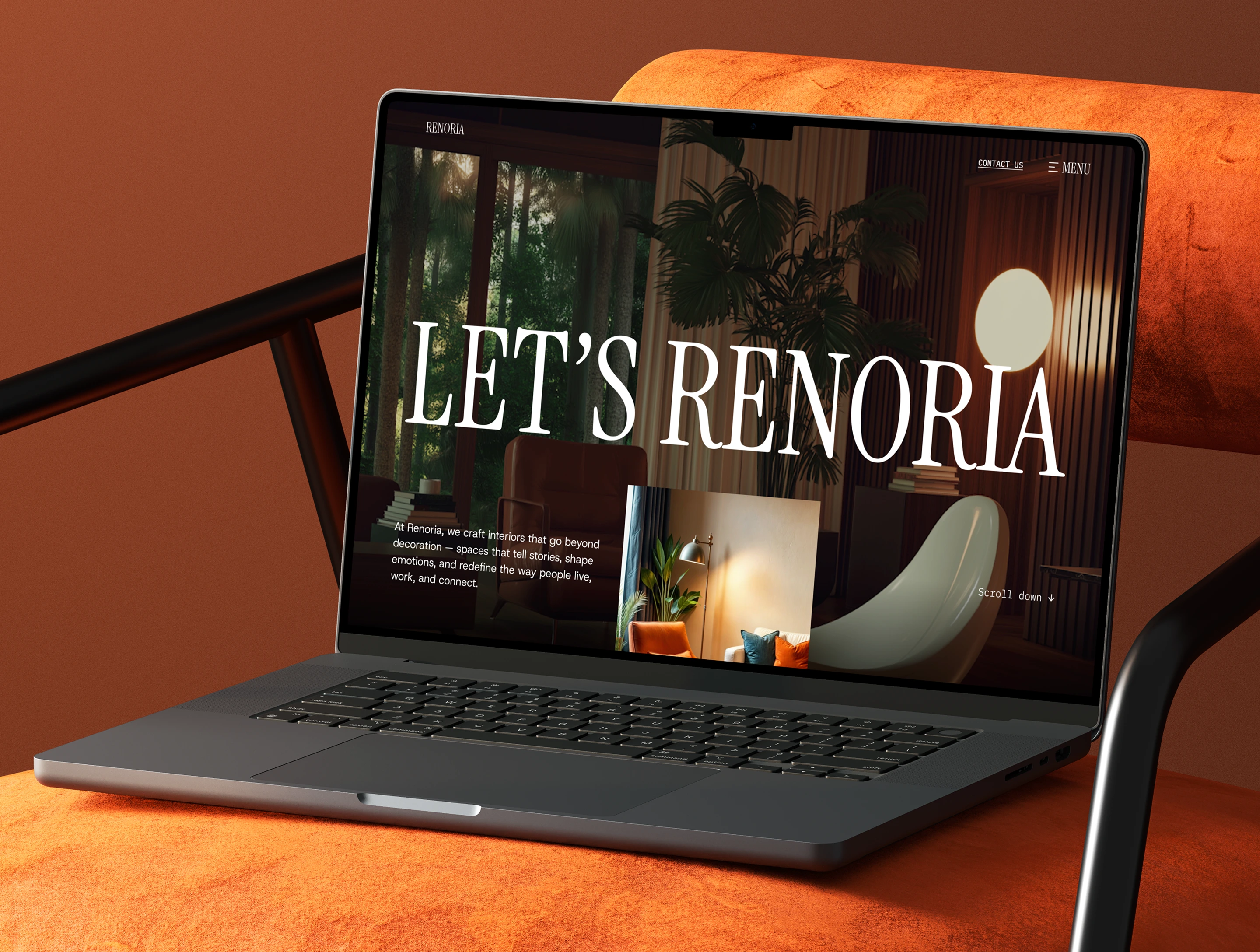
Renoria is a conversion-focused interior design agency website template built for studios that need a premium digital showroom and lead system. It supports residential and commercial work by presenting services, projects, and credibility signals with a clear, client-ready narrative structure.
The experience is designed to help prospects understand the agency’s approach quickly, then move confidently into consultation-oriented conversations.
The Problem
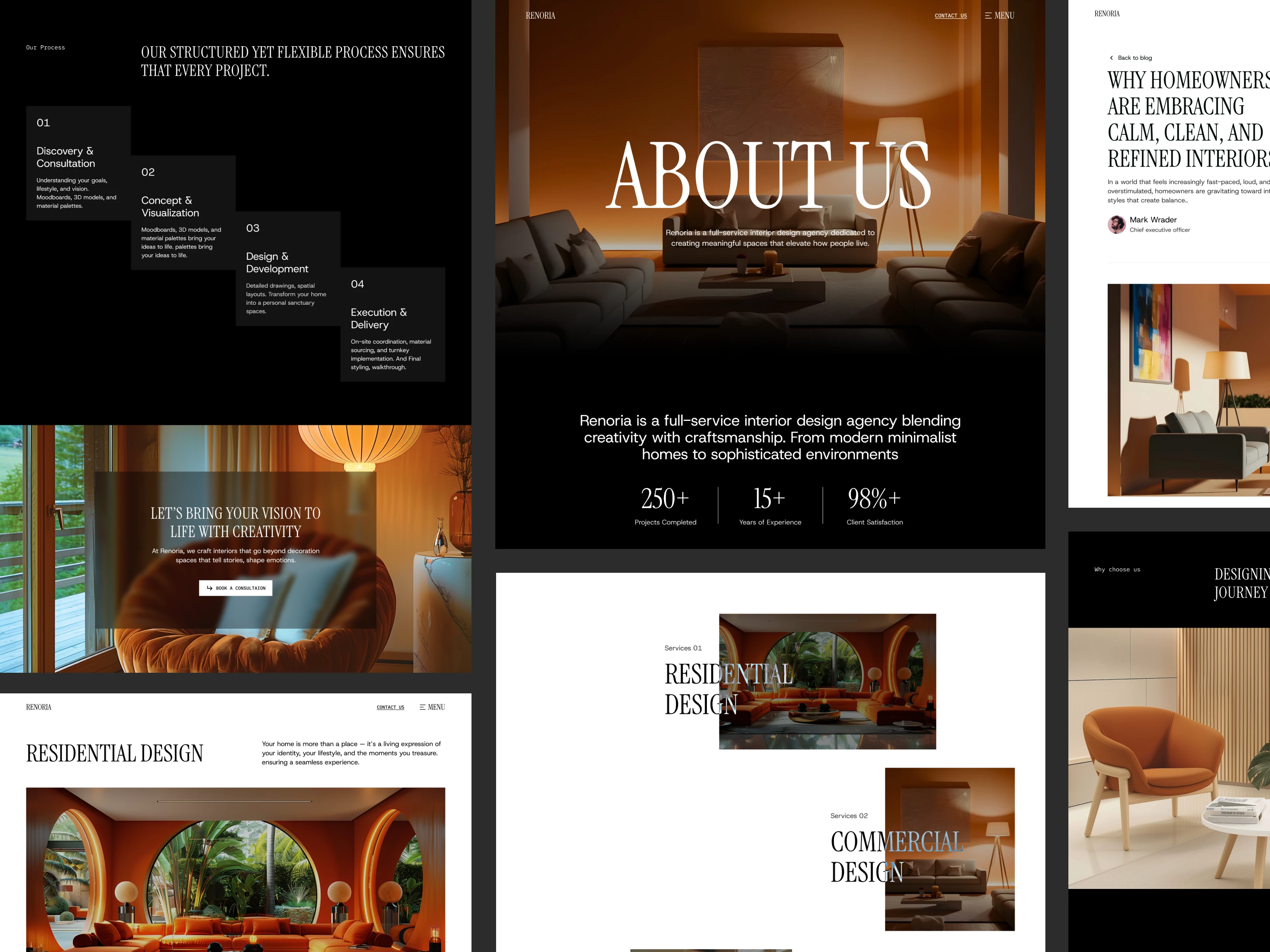
Interior design clients make high-stakes decisions with limited information, so websites must replace uncertainty with proof, clarity, and reassurance.
Many agencies lose qualified leads because their online presence feels like a gallery, not a guided buying experience with structure.
Prospects struggle when portfolios show beautiful images without project context, making it harder to judge scope, process, and credibility.
Service pages often lack packaging logic, so visitors cannot compare options or understand what a consultation actually includes.
Trust breaks when social proof is scattered, since client logos, testimonials, and awards appear too late in the journey.
Heavy imagery can slow pages, and slow experiences reduce perceived professionalism and increase drop-offs before any meaningful engagement begins.
The Goal
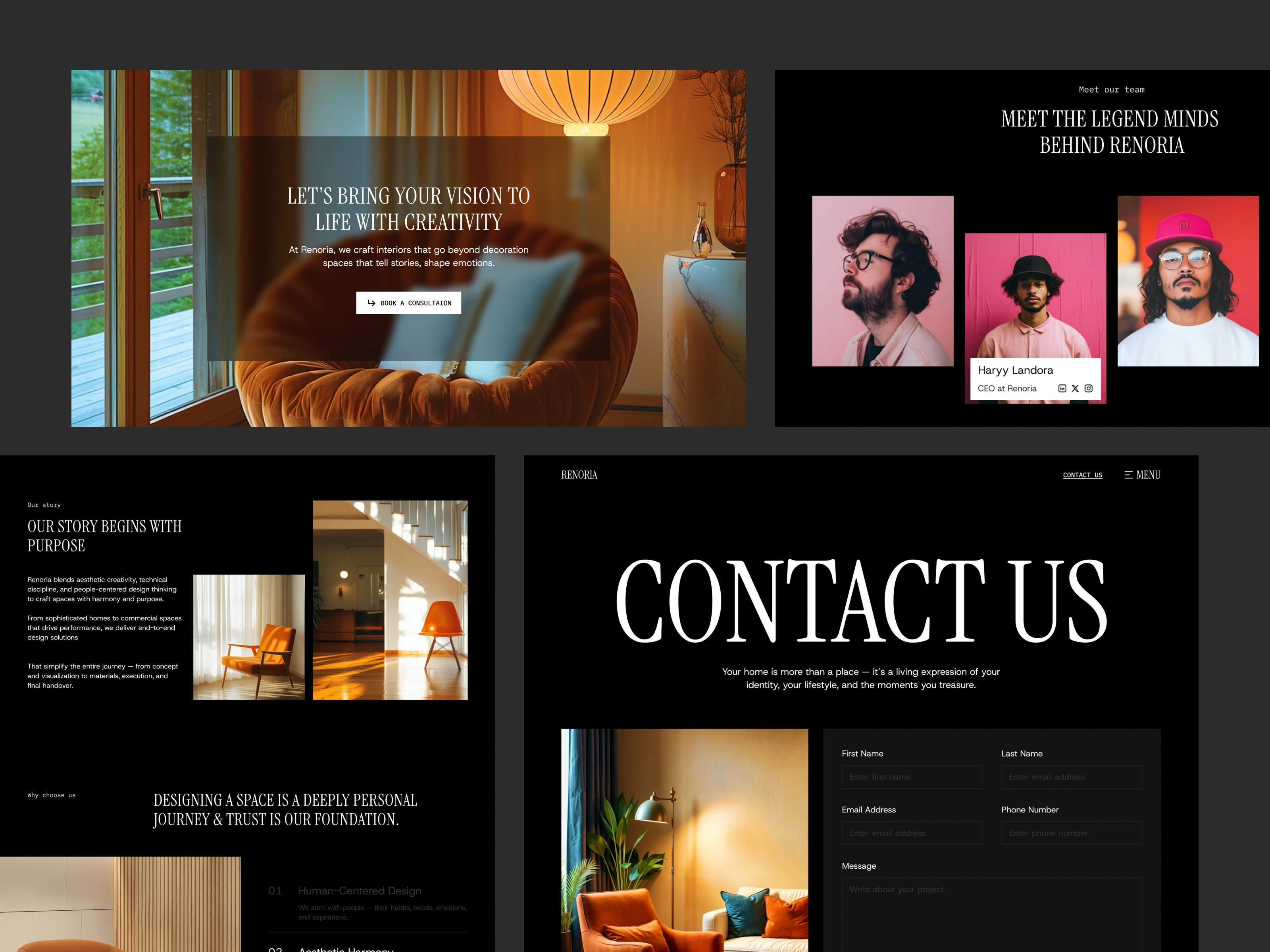
Renoria defined success as a template that sells interior design services through visual proof, operational clarity, and confident consultation pathways.
The primary conversion flow prioritizes “View Service” discovery, then moves visitors toward “Book a consultation” with minimal friction.
Establish credibility fast using project imagery, testimonials, client logos, and awards placed early in the browsing experience.
Clarify services with structured pages that explain outcomes, deliverables, timelines, and what clients should expect during collaboration.
Make project storytelling repeatable through CMS, so agencies can publish new work without redesigning pages or layouts.
Maintain a premium feel across devices by balancing immersive visuals with performance, accessibility, and consistent content hierarchy throughout.
Target Users & Use Cases
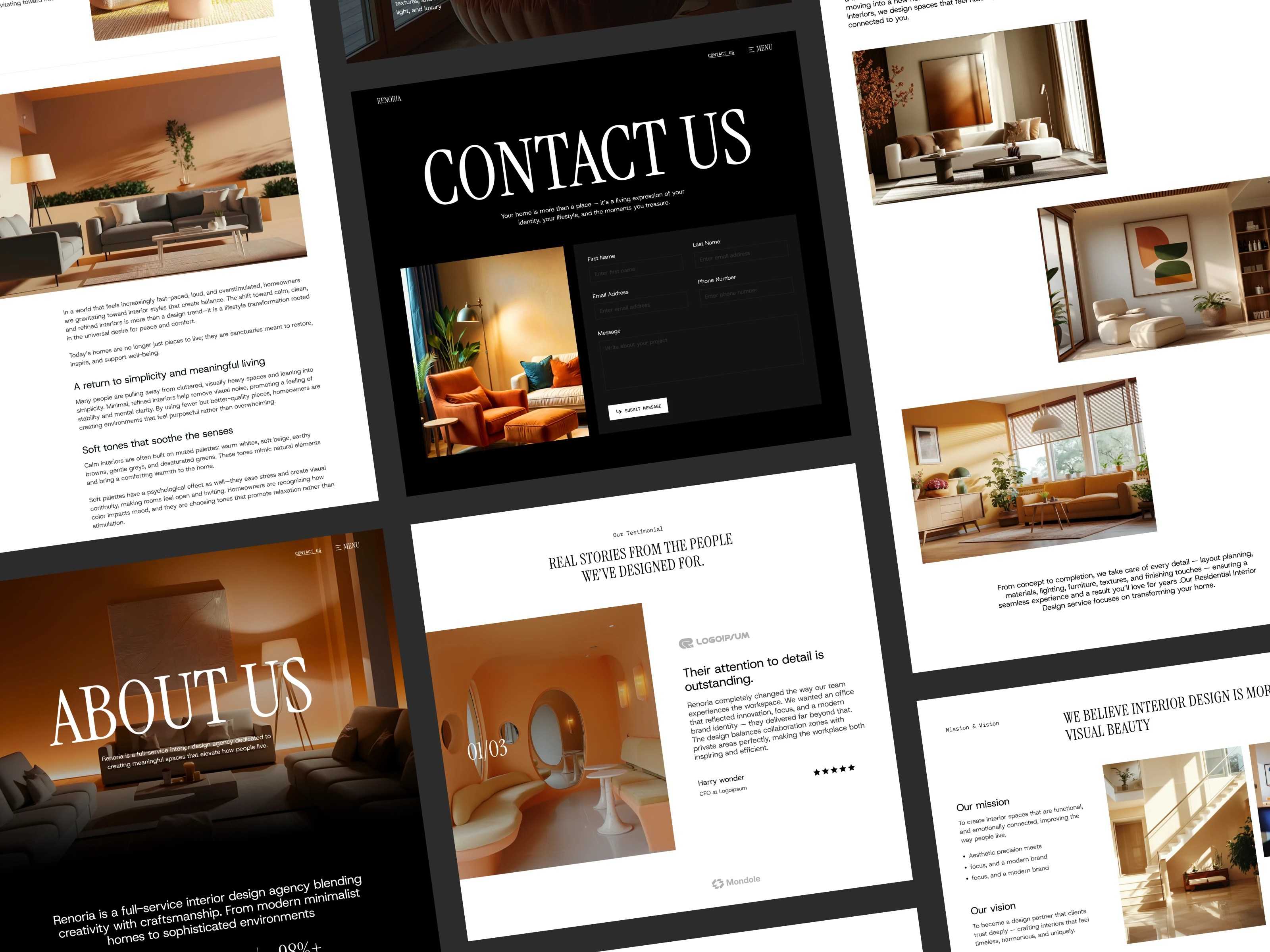
Primary Users are interior design agencies and studios that need a strong digital presence to win higher-value residential projects consistently.
Secondary Users include freelance designers and creative agencies building client websites, where fast launch and customization matter deeply.
Common Use Cases
A studio showcasing completed projects with a consistent case-study structure, so prospects see outcomes, not just beautiful photography alone.
A designer explaining services and process clearly, reducing client confusion and improving consultation quality before the first call.
A team publishing new blog posts for search visibility, while keeping the site cohesive with reusable CMS-driven patterns.
An agency organizing projects by categories and tags, helping visitors browse relevant styles quickly and stay engaged longer.
Strategy & Thinking
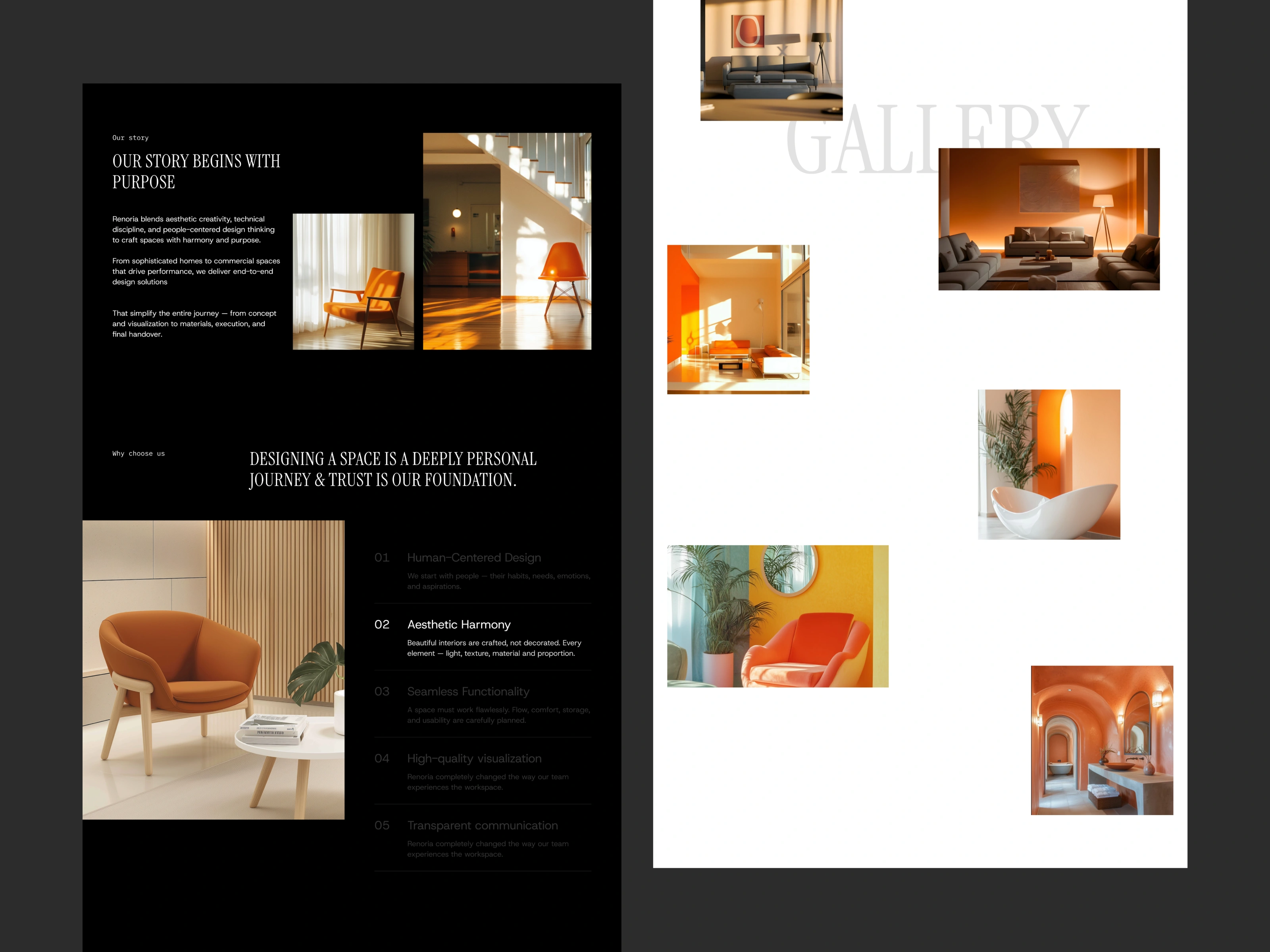
Renoria is built on a “proof first, then explanation” narrative, because design clients trust what they can evaluate immediately. We structured the experience to reduce decision anxiety by answering what the agency does, how it works, and why it’s credible.
We placed strong project imagery early because visual evidence establishes competence faster than claims and supports premium pricing expectations.
Then we designed the service-to-consultation flow to feel natural, so interested visitors can move from curiosity into commitment confidently. Structured project details to include meaningful context, ensuring images are supported by scope, intent, and measurable design outcomes.
And we reinforced trust through repeated credibility blocks, so testimonials, awards, and client logos validate decisions across multiple pages. Kept navigation simple and predictable, because high-end clients prefer clarity over novelty when exploring expensive, complex services.
Design System & Component Logic
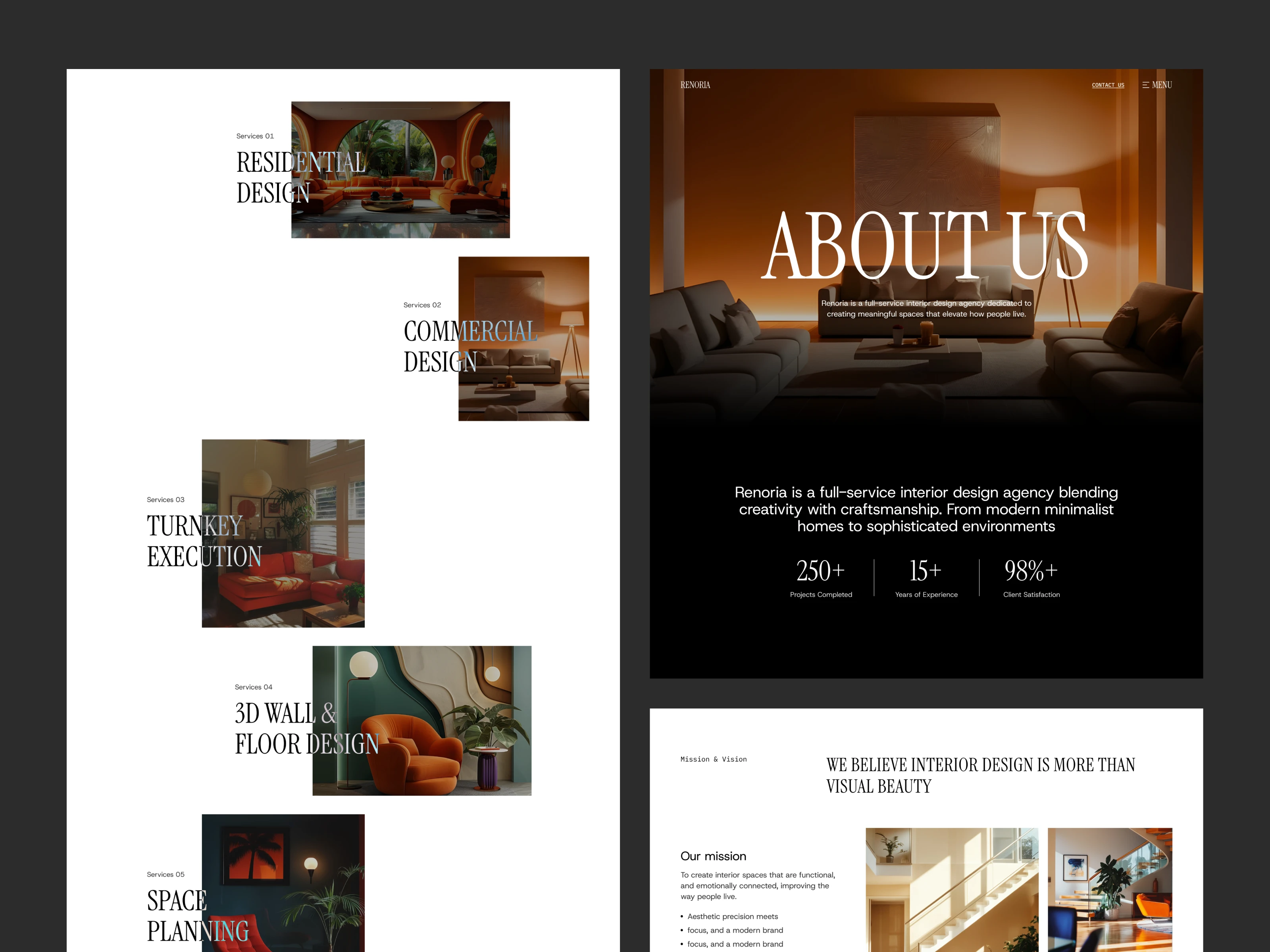
Renoria uses a modular system so agencies can rearrange sections, publish new content, and maintain consistency without breaking hierarchy.
The component logic is designed for repeatable storytelling, so every service, project, and post follows a familiar reading pattern.
Projects use reusable gallery and metadata patterns, enabling consistent presentation while supporting different project sizes and photography styles.
Services use shared section blocks for value, deliverables, and FAQs, reducing buyer confusion and increasing consultation readiness.
Testimonials and client logos are treated as repeatable trust modules, making credibility easy to place where hesitation typically appears.
Categories and tags support browsing logic, helping visitors filter work by style or space type without additional page complexity.
Development & Technical Execution
Renoria is engineered as a fully CMS-driven template, so content updates remain fast and structured as the portfolio grows. Because interior design sites rely on imagery, technical decisions focused on maintaining premium visuals without sacrificing speed or usability.
Image optimization and lazy loading are applied to reduce initial payload, keeping pages responsive while still showcasing large photography assets.
Responsive behavior is handled across breakpoints, ensuring galleries, grids, and typography remain readable and balanced on smaller screens.
Accessibility is covered through structure and interaction clarity, supporting keyboard navigation, readable contrast, and consistent heading semantics.
CMS templates support Projects, Services, and Blog Posts, so new entries inherit layout rules and remain consistent automatically.
SEO, Performance & Best Practices
Renoria supports scalable content growth by combining CMS structure with a clean page architecture that helps search engines understand page intent.
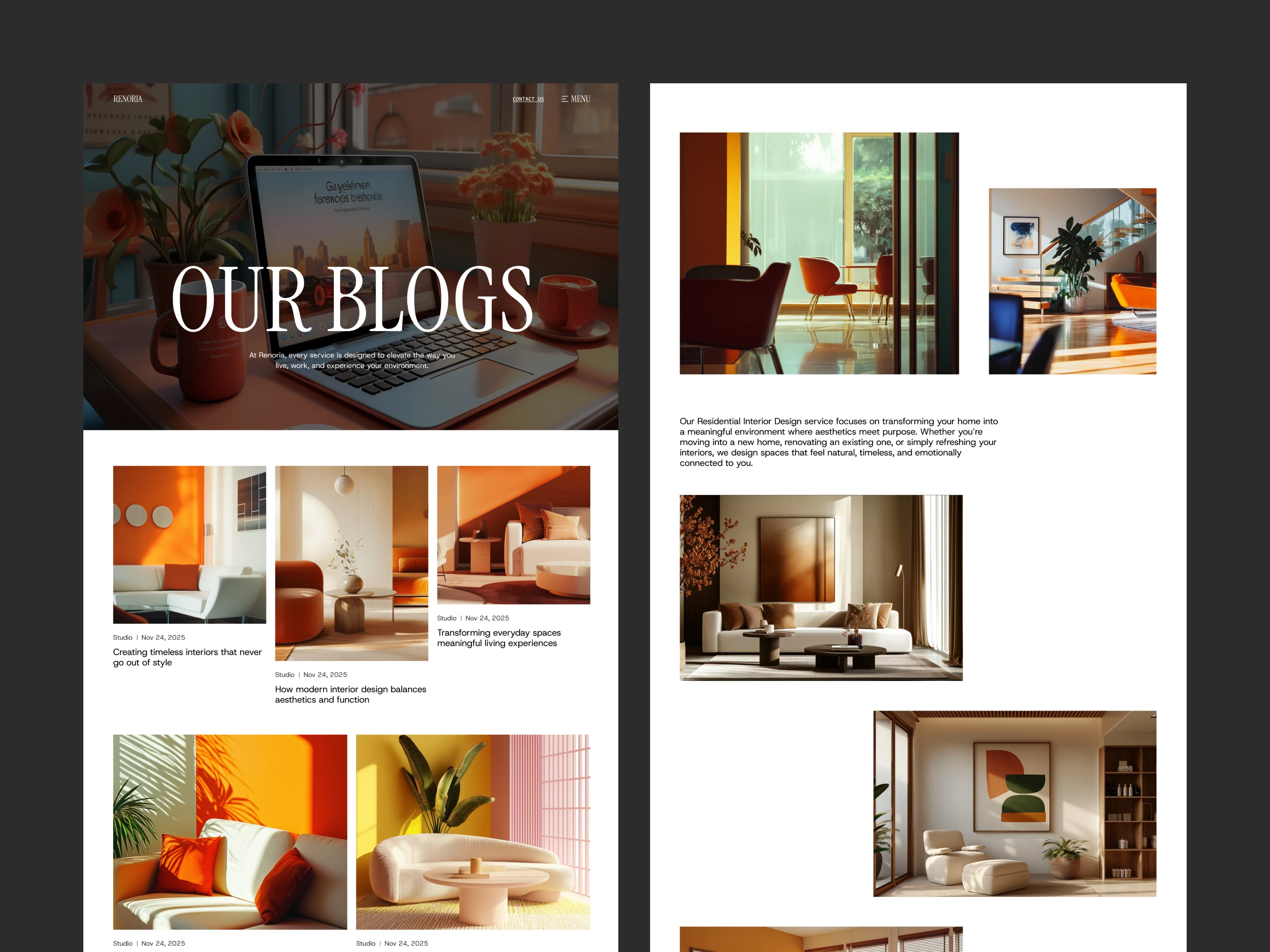
Headings follow a clear hierarchy, making content scannable for users while strengthening semantic clarity for indexing and accessibility.
CMS-driven pages keep URLs and templates consistent, supporting long-term content expansion without fragmenting structure or navigation patterns.
Performance best practices align with heavy imagery needs, balancing visual impact with loading strategies that reduce bounce risk.
Blog Posts are structured for educational content, enabling studios to capture intent-driven searches and build authority over time.
Challenges & Trade-Offs
The core constraint was delivering an immersive, image-led experience while keeping the site fast, accessible, and easy to maintain. We made deliberate trade-offs to preserve premium presentation without introducing fragile interactions or complexity that complicates customization later.
Things we did are:
Prioritized repeatable CMS patterns over one-off bespoke layouts, because maintainability matters when agencies publish projects frequently.
Optimized imagery aggressively, because performance issues undermine trust and can make a premium studio feel unprofessional quickly.
Kept motion and effects controlled, because subtlety aligns with luxury positioning and avoids distracting from portfolio storytelling.
What Makes Renoria Different?
Renoria stands out because it treats an interior design website as a structured sales system, not a simple portfolio gallery. By leading with proof, then reinforcing process and credibility, the template helps clients feel confident before they ever request contact. The result is a business-ready, CMS-driven foundation that supports growth, communicates premium value, and converts attention into consultations.
Like this project
Posted Mar 12, 2026
Developed a CMS-driven template for interior design agencies to enhance lead conversion.
Likes
2
Views
26