Built with Framer
Tutorly - Education Website Template

Tarik Eamin


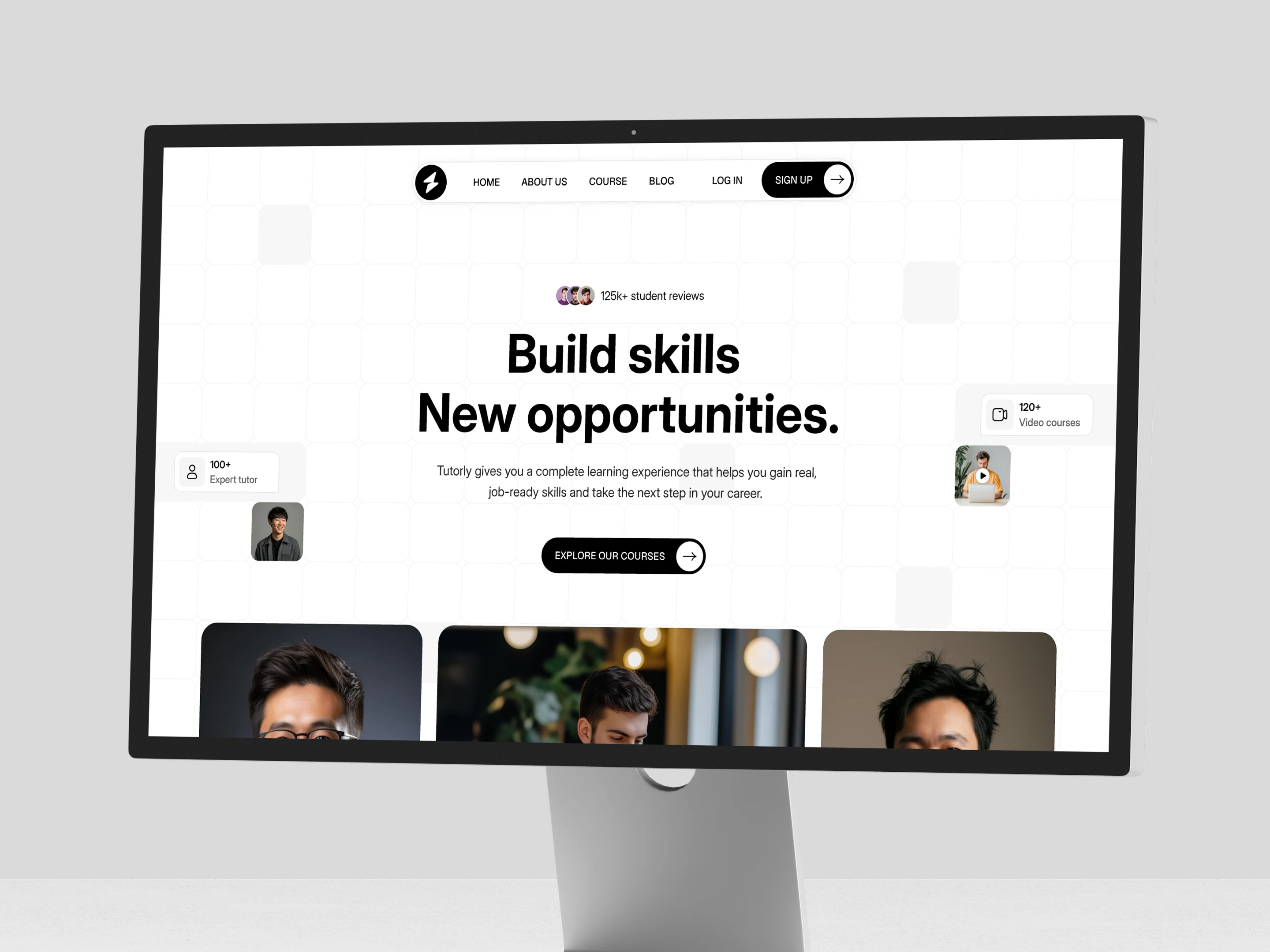
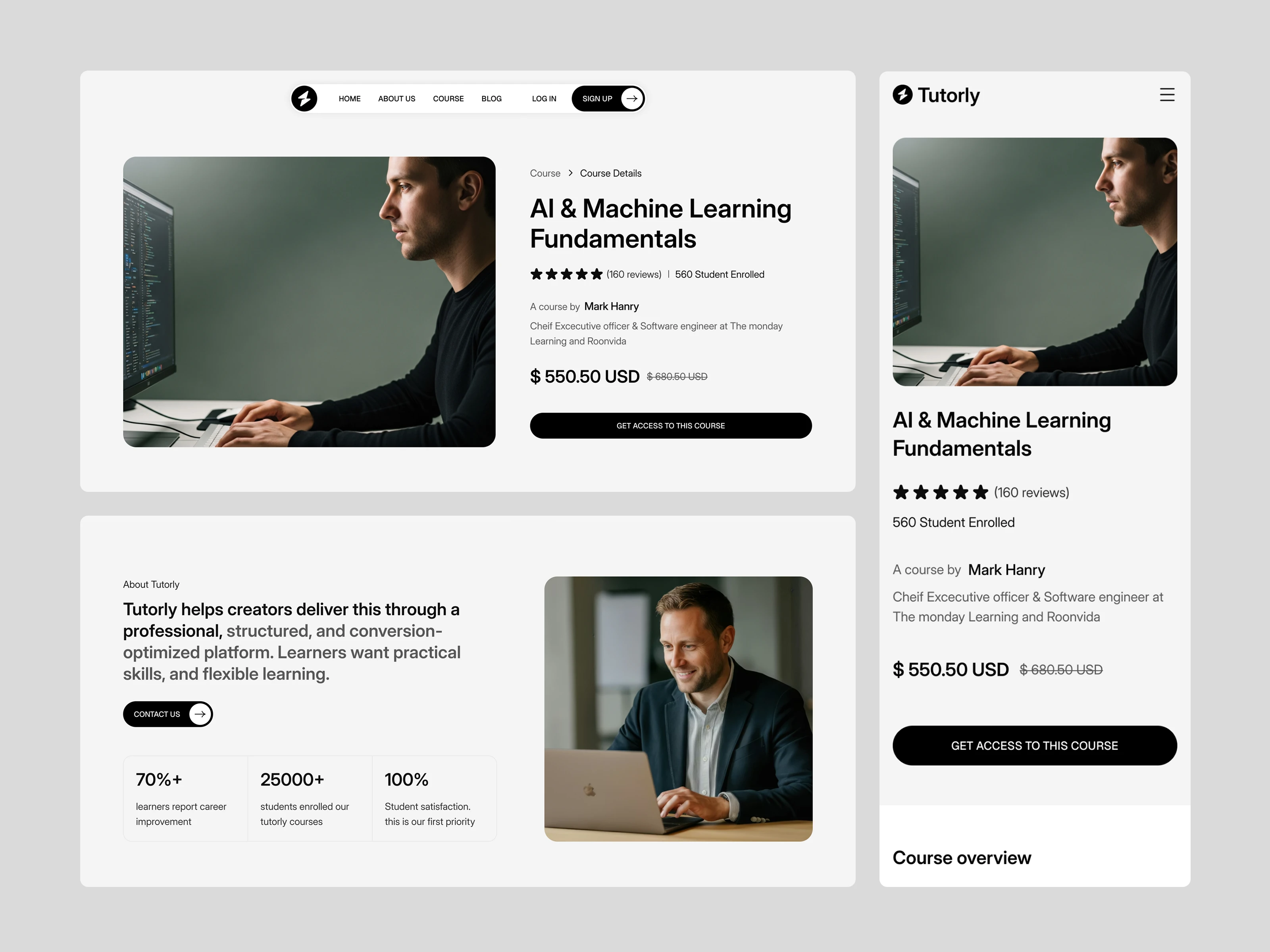
Tutorly is a premium online course-selling template built for educators, academies, and creators who need a credible training business website fast. It’s designed for career and technical skills programs where learners expect measurable ROI, including jobs, certifications, promotions, and salary growth.
The structure mirrors a real learning platform experience, helping buyers present courses, instructors, and outcomes with clarity and confidence. Tutorly is positioned to convert cold traffic into course exploration and purchases through a guided narrative, strong proof, and focused calls-to-action.
The Problem
Most online academies don’t lose customers because their curriculum is weak, but because their website fails to earn trust quickly. Learners compare multiple options in minutes, and they choose the platform that feels structured, outcome-driven, and professionally operated.
Common symptoms that reduce conversions and trust include:
Course value is explained with vague promises, so visitors cannot connect the offer to a realistic career outcome.
Courses are hard to scan, so users struggle to compare options and abandon before they reach pricing or enrollment.
Instructor credibility is hidden or weak, so buyers hesitate because they cannot assess expertise or teaching quality quickly.
Social proof is inconsistent, so visitors doubt whether real learners succeeded and whether the academy delivers results reliably.
Navigation feels like a marketing site, not a learning platform, so the experience lacks the confidence of an established LMS brand.
The Goal
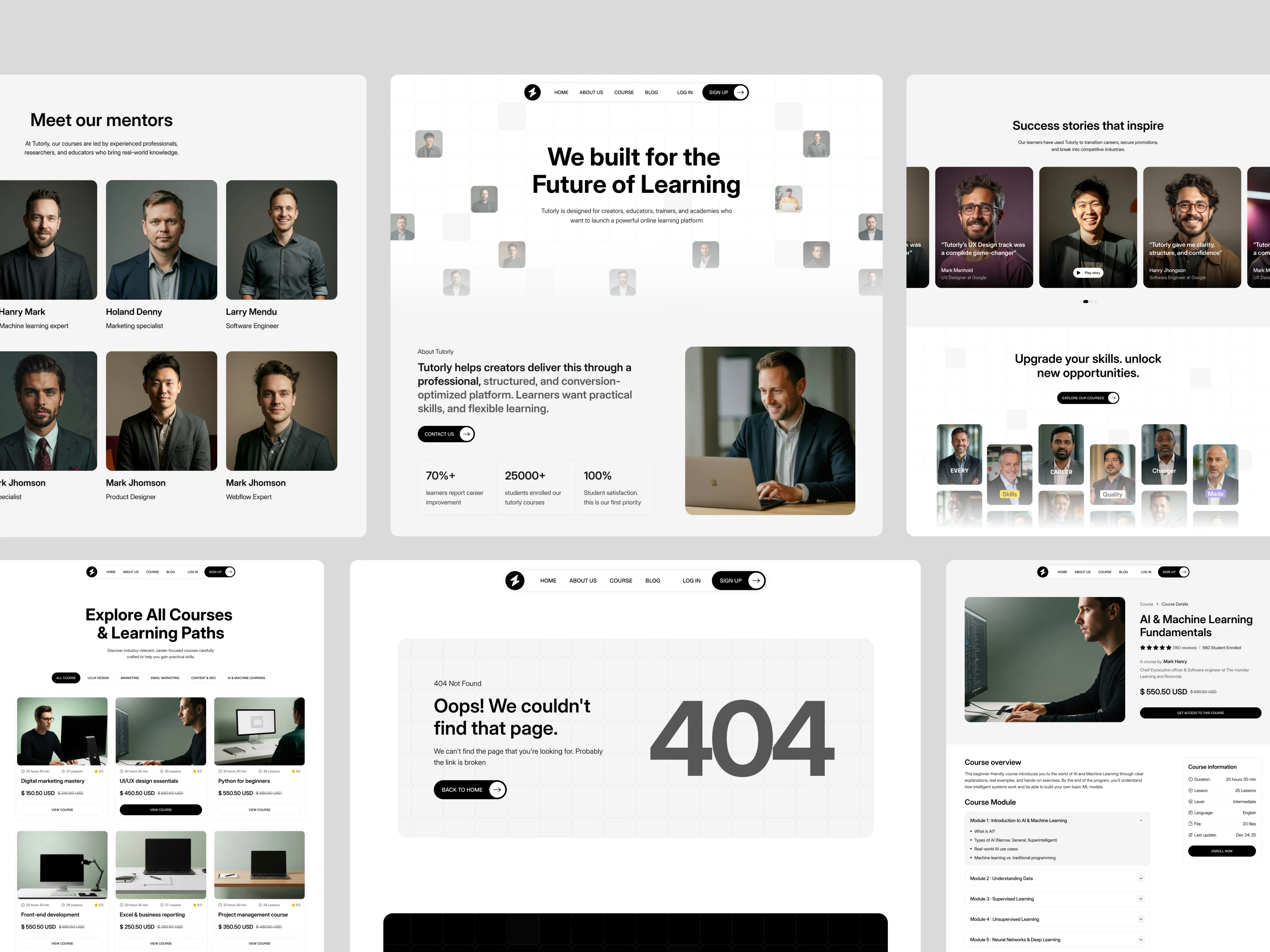
Tutorly was designed to function as a complete course-business foundation, not a landing page with a few attractive sections. Success meant building an experience that communicates outcomes, reduces evaluation effort, and guides visitors toward course purchase decisions.
We defined success through clear, outcome-focused requirements:
Make course discovery fast, so learners can find the right path and understand value without reading excessive copy.
Making trust-building unavoidable, so proof, instructor credibility, and results appear before doubts become drop-off points.
Then make conversion actions obvious, so users always know how to explore courses, compare options, and proceed toward enrollment.
And most importantly, make the structure scalable, so academies can add courses, categories, and instructors without redesigning the experience later.
Lastly, make the experience feel platform-like, so the site signals operational maturity even before the buyer interacts with lessons.
Target Users & Use Cases
Tutorly supports two distinct audiences, because the buyer and the learner evaluate credibility using different signals and expectations.
Primary Users
Course creators and online academies who need a complete website system to sell programs with structured information and strong proof.
Training companies and bootcamps that must communicate outcomes, methodology, and credibility to compete against better-known education brands.
Secondary Users
Agencies and freelancers who build education websites for clients and need a reliable structure that reduces custom UX decisions.
Edtech startups validating a new offering who need a launch-ready foundation that looks established and scales with new programs.
Common Use Cases
Launching a career-focused academy with multiple courses, instructors, and categories that must remain easy to browse and compare.
Presenting a single flagship program where outcome clarity, curriculum preview, and credibility signals must convert visitors efficiently.
Building a course catalog that supports learning paths, so learners can commit to a roadmap instead of purchasing isolated lessons.
Strategy & Thinking
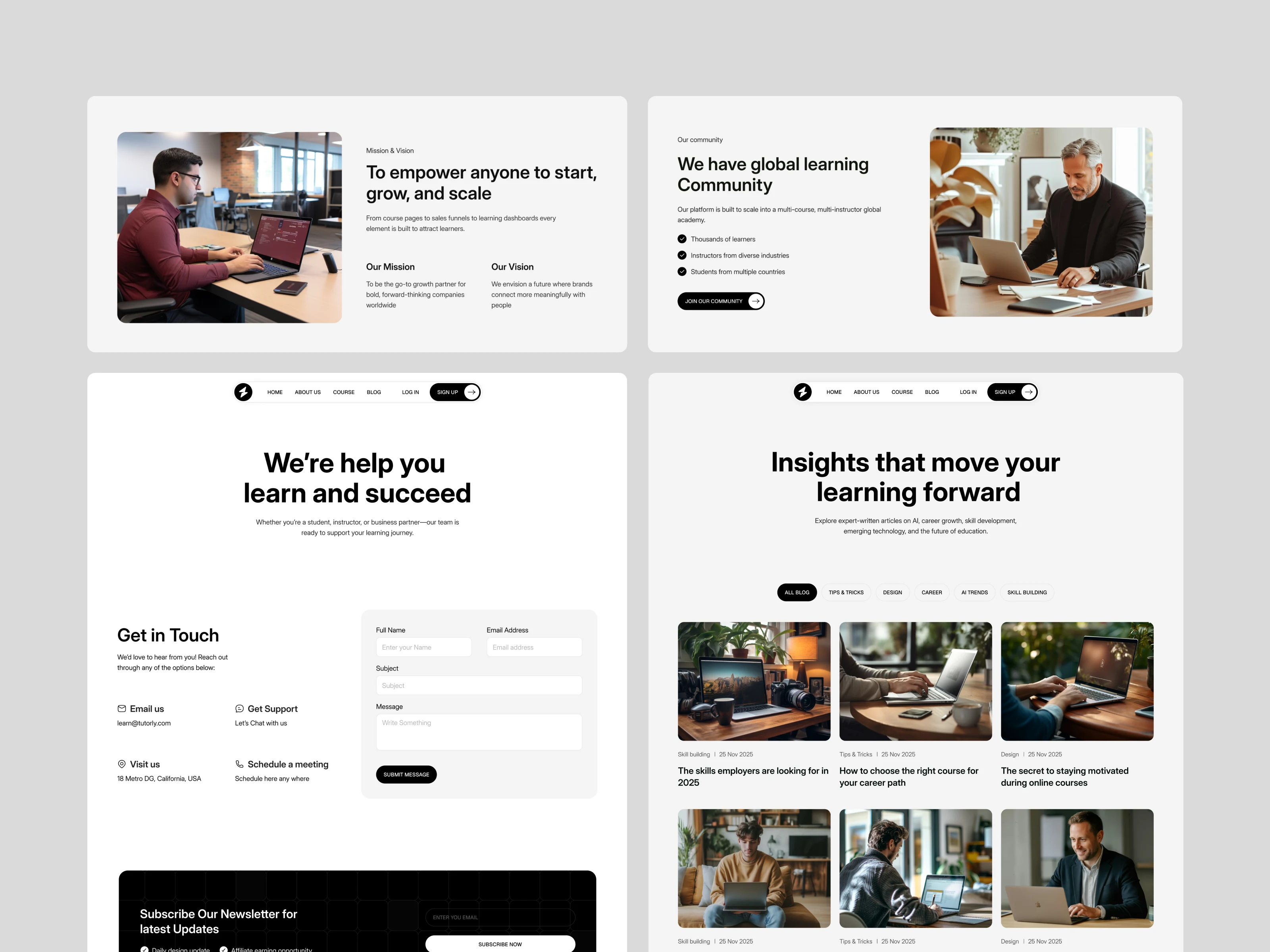
Tutorly is built on a simple belief: learners buy education when outcomes feel believable, and the path feels structured. We designed the experience to reduce uncertainty by answering the buyer’s silent questions in the right order, without forcing deep scrolling.
Key strategic decisions that shaped the structure we:
structured the hero to state outcome and direction immediately, so visitors understand the promise before they evaluate details.
prioritized course exploration early, because browsing the catalog is the fastest way for learners to self-qualify and commit.
placed proof throughout the journey, because trust is cumulative and should increase with every scroll, not appear once.
designed course pages around evaluation logic, so users see fit, curriculum, instructor credibility, and reviews before pricing resistance.
used methodology and “how it works” sections to reduce risk, because clarity on process increases confidence in results.
reinforced repeat CTAs at natural decision points, because visitors need a clear next step after every major information block.
This approach turns the website into a sales system, where structure does the persuasion work instead of relying on aggressive copy.
Design System & Component Logic
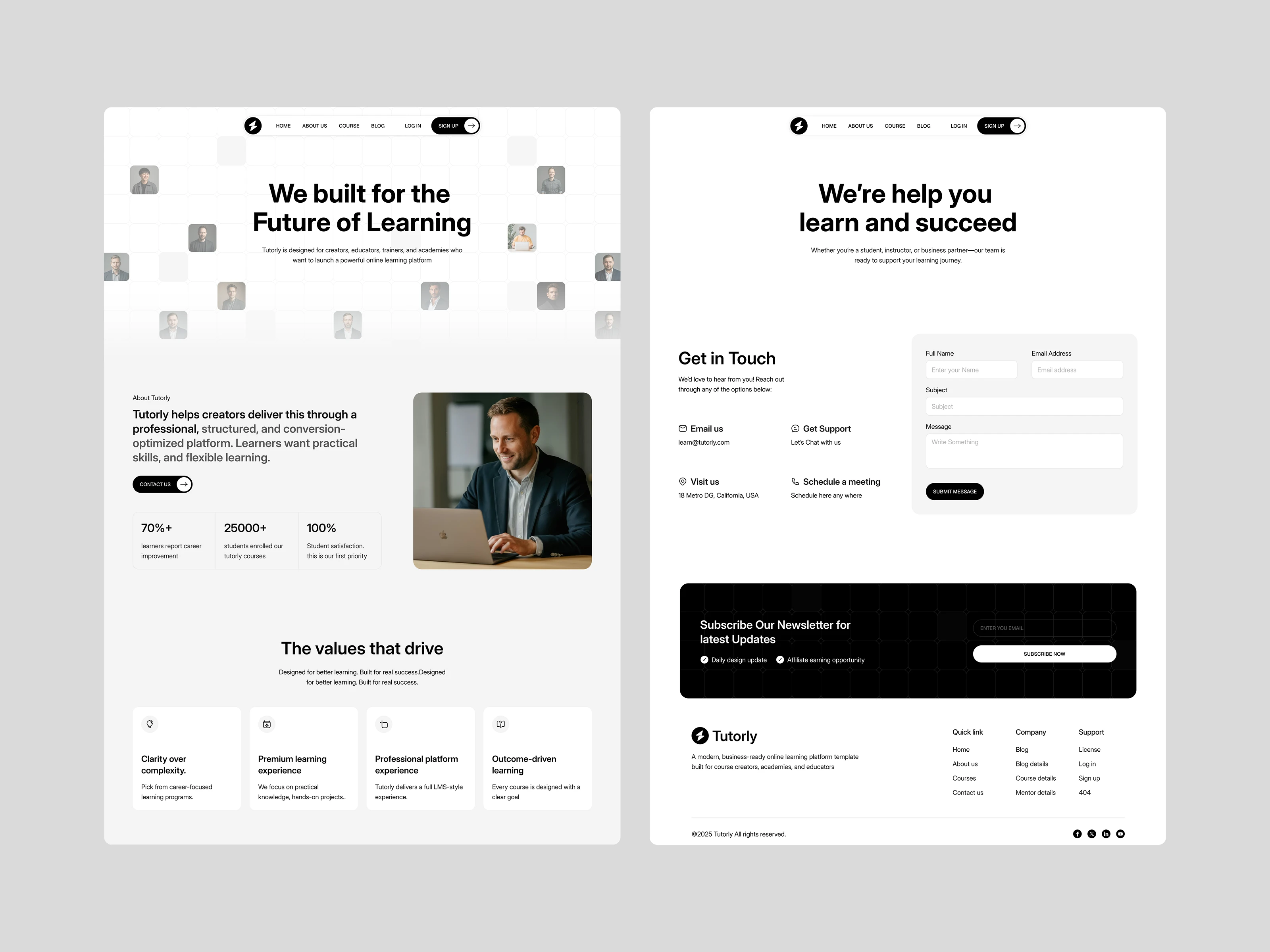
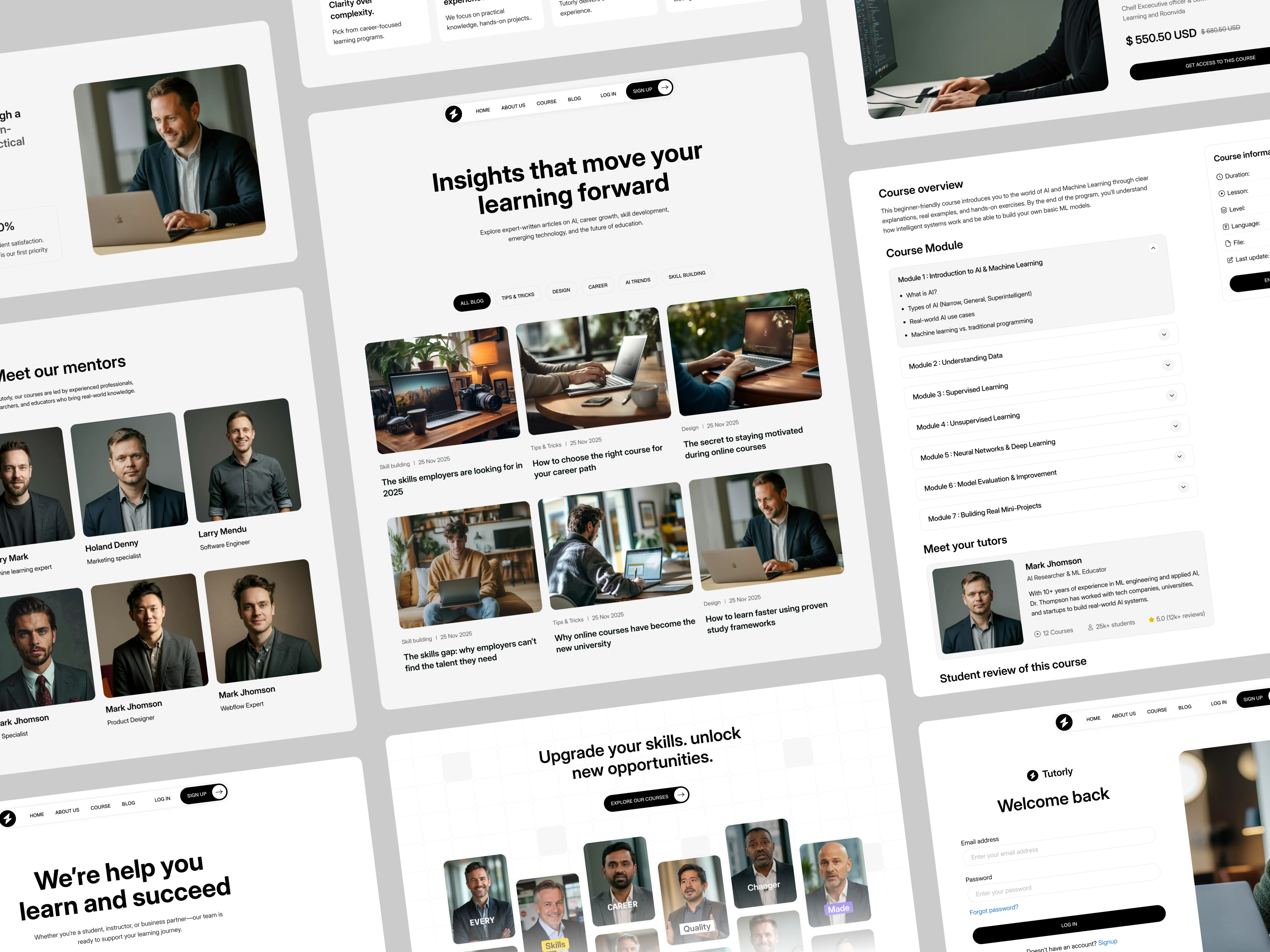
Tutorly uses a modular layout system designed to stay consistent while supporting many course types, categories, and instructor combinations. Instead of building one perfect page, we built reusable section patterns that keep hierarchy predictable as the site expands.
Core component logic that supports scalability:
Reusable course cards standardize comparison, so users can evaluate level, duration, and outcome without relearning layout each time.
Curriculum preview modules are repeatable, so creators can present structured sections and lessons consistently across different programs.
Instructor profile blocks are standardized, so credibility signals remain strong and visually consistent across courses and landing pages.
Proof components are modular, so testimonials, reviews, and success metrics can be inserted where they reduce uncertainty best.
CTA patterns are consistent, so users always recognize the next step without feeling pushed or confused by changing button logic.
Development & Technical Execution
Tutorly is structured like a real education platform front-end, so creators can present courses and learning experiences professionally on any device. The build prioritizes maintainable structure, predictable responsiveness, and clean content organization that supports growth and ongoing iteration.
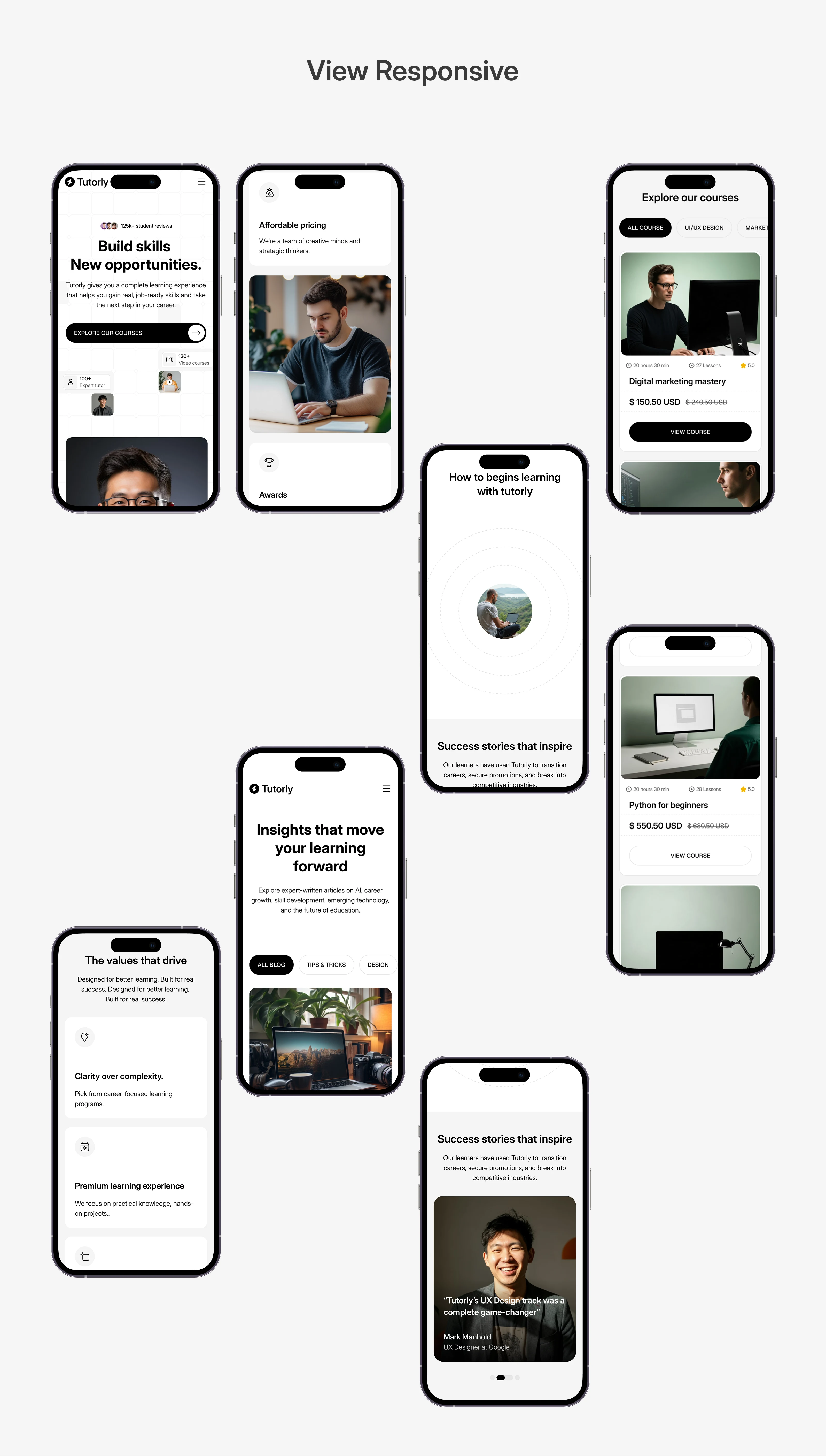
Technical execution decisions were guided by practical business needs:
Responsive layouts maintain scanning patterns, so course discovery and comparison remain effortless across desktop, tablet, and mobile screens.
Content structures support expansion, so adding courses, categories, or instructors does not break navigation or information hierarchy later.
Interaction patterns stay lightweight, so the experience feels fast and reliable instead of visually heavy and performance-sensitive.
Forms and conversion sections are placed with intent, so buyers can request access, start trials, or purchase without searching.
Accessibility-aware structure improves usability, so a broader audience can evaluate courses and complete actions with fewer friction points.
SEO, Performance & Best Practices
Tutorly is designed to support organic discovery, because education brands often rely on long-term search traffic for sustainable acquisition. We treated structure as a growth asset, ensuring the content can scale while staying readable for users and understandable for search engines.
Best practices applied across the template:
Clear heading hierarchy supports scanning and indexing, so course pages communicate topics and outcomes with strong structural clarity.
Semantic section structure improves crawlability, so expanding catalogs and new course pages remain organized and discoverable over time.
Performance-conscious layouts reduce load friction, so visitors reach key proof and CTA sections before impatience causes early exits.
Content-first spacing improves readability, so longer curriculum and FAQ content stays digestible and does not overwhelm learners.
What Makes Tutorly Different?
Tutorly is different because it treats a course website like a product funnel, not a collection of attractive sections. It’s designed to earn trust through outcome clarity, structured evaluation, proof placement, and a platform-like narrative that scales with growth.
For education brands selling career outcomes, Tutorly provides a credible, business-ready foundation that helps visitors explore confidently and convert faster.
Like this project
Posted Mar 5, 2026
Designed Tutorly, a template for selling online courses with trust and scalability.
Likes
3
Views
21