Unified UX for a fragmented construction industry

Henry Ugo

Simplifying construction and contract management for a fragmented industry.
The Problem
Construction project management is handled by people with fundamentally different jobs, each operating under different pressures and working with the same underlying data in completely different ways. Quantity Surveyors need precision down to individual measurements. Subcontractors need to estimate and procure quickly. Contractors are managing multiple contracts and budgets simultaneously. Owners want transparency and reporting without the operational detail.
Existing enterprise solutions like SAP cover the functional ground but at a cost and complexity that prices out most of the market. The tools that fill that gap tend to be fragmented: one system for takeoff, another for procurement, another for contract management. The result is data silos, duplicated effort, and interfaces designed around the software's logic rather than the user's workflow.
The brief was to design a unified alternative that could serve all four user types without making compromises that broke the experience for any of them.
The Design Challenge
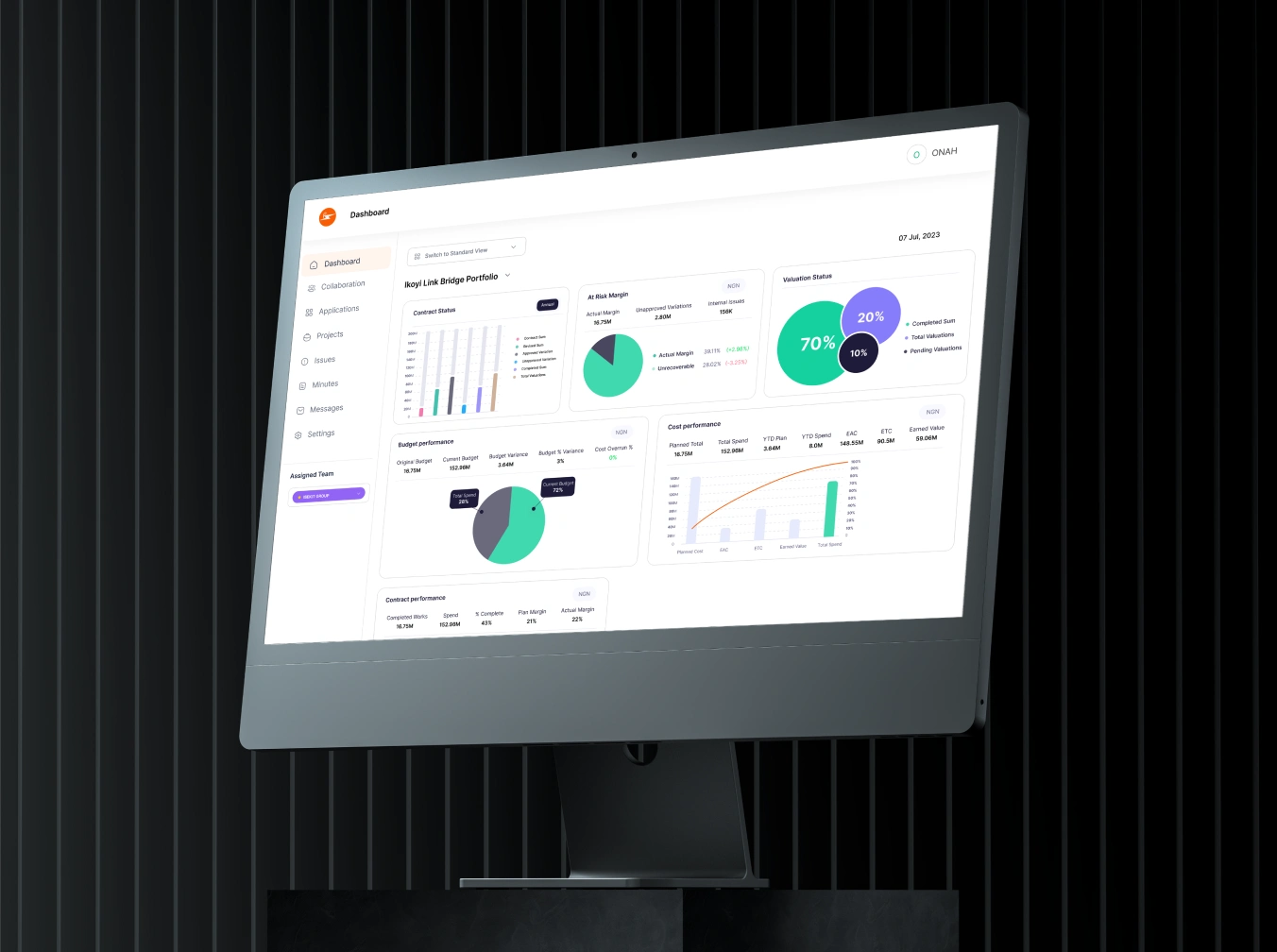
The hardest constraint wasn't technical. It was information density. Construction work is built on large numbers, complex data sets, and precise figures where a single misread has real financial consequences. Most existing interfaces had accepted illegibility as an industry norm. The design challenge was to make that density navigable without reducing it: clarity without oversimplification, speed without sacrificing accuracy.
The second constraint was the range of the user base. A system designed primarily for Quantity Surveyors would alienate Subcontractors. A system optimised for executive reporting would frustrate the people doing the operational work. The solution required a single information architecture that could adjust its depth and focus depending on who was looking at it.
What Shaped the Decisions
Research across all four user types made the differences in working patterns concrete rather than assumed. Quantity Surveyors moved fast between takeoff and bill of quantities tasks and needed data immediately at hand with no navigation overhead. Subcontractors needed linear estimating and procurement flows where the next step was always obvious. Contractors needed a contract management view that surfaced exceptions rather than requiring them to go looking for problems. Owners needed reporting that communicated project health at a glance without requiring them to understand the operational detail underneath it.
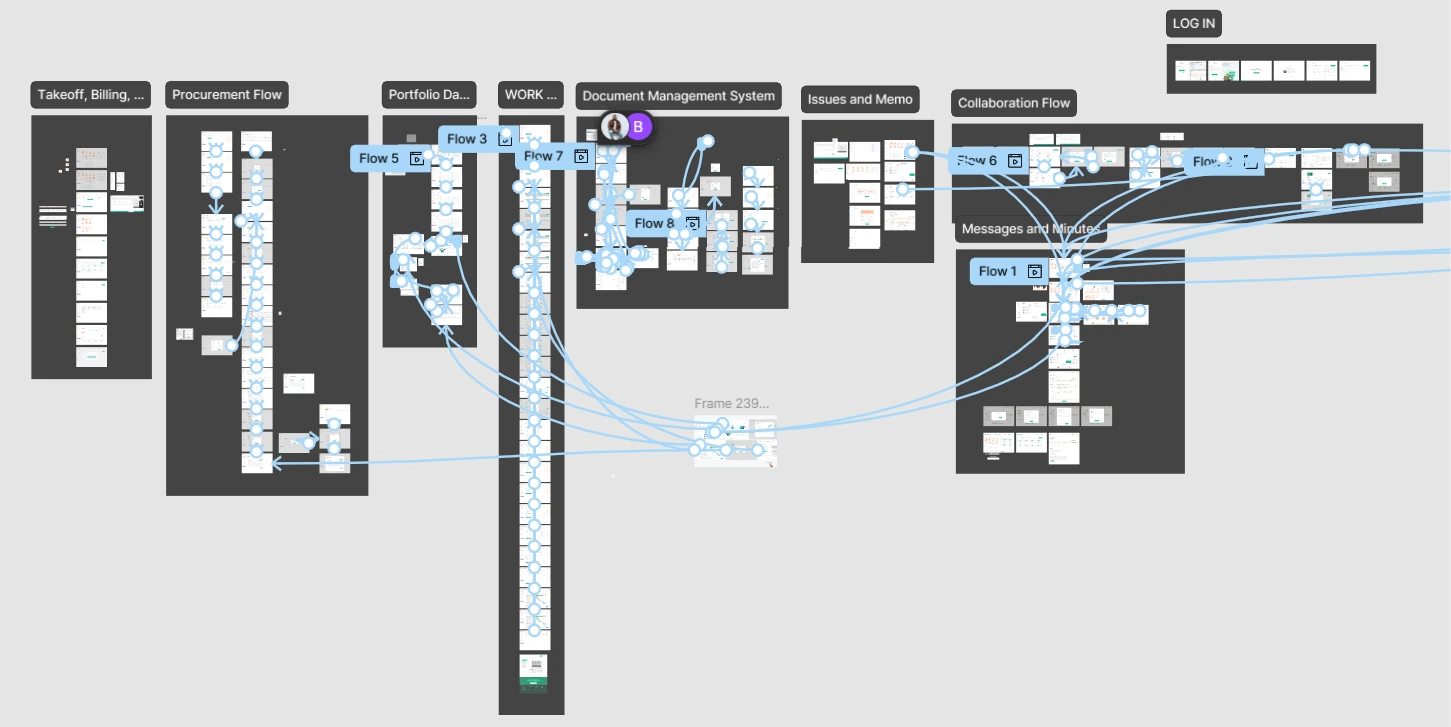
Those four working patterns produced four distinct navigation and layout priorities within the same visual system. The design system had to be consistent enough that switching between roles felt coherent, and flexible enough that each role's primary tasks were front and centre.
The Outcome
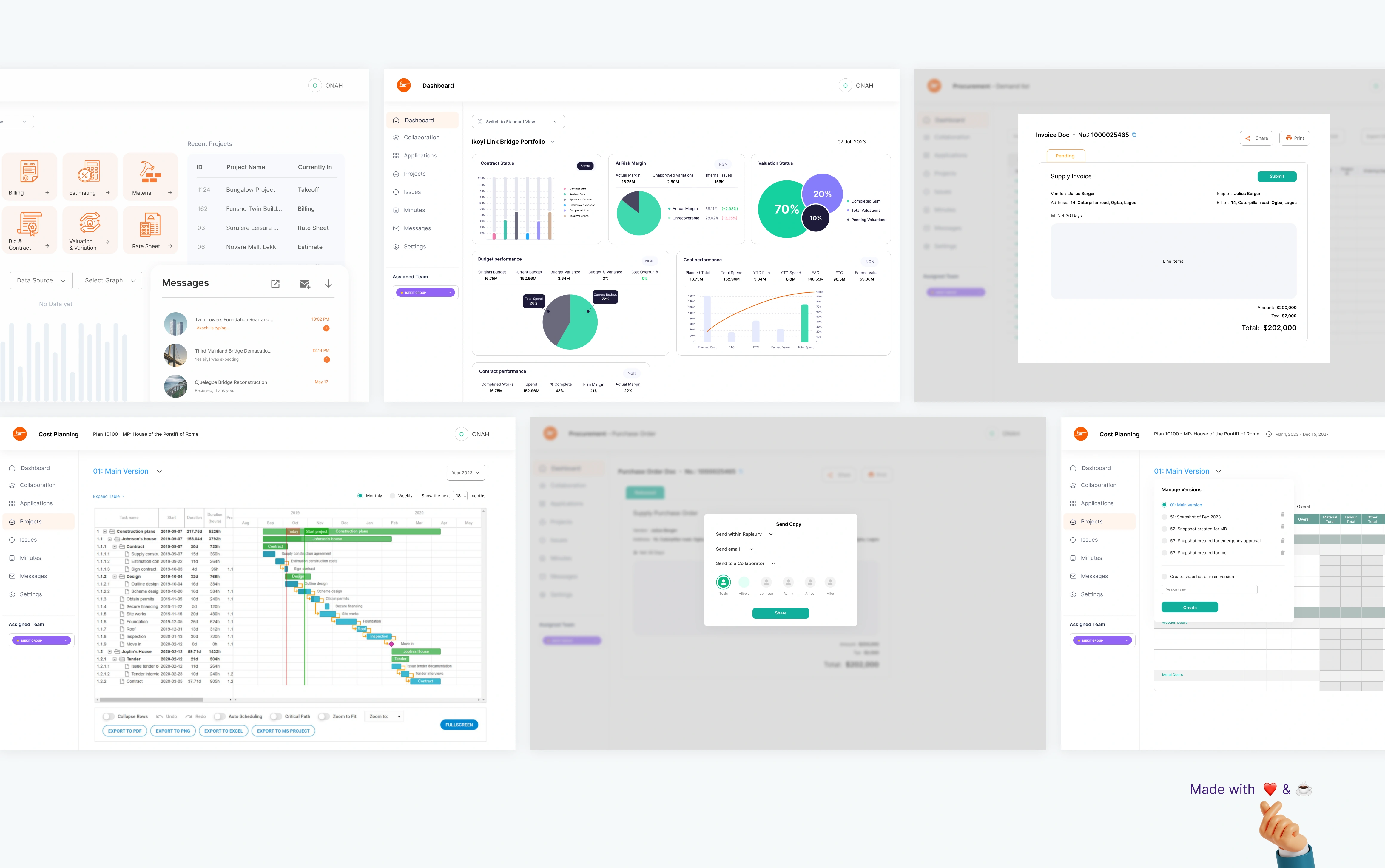
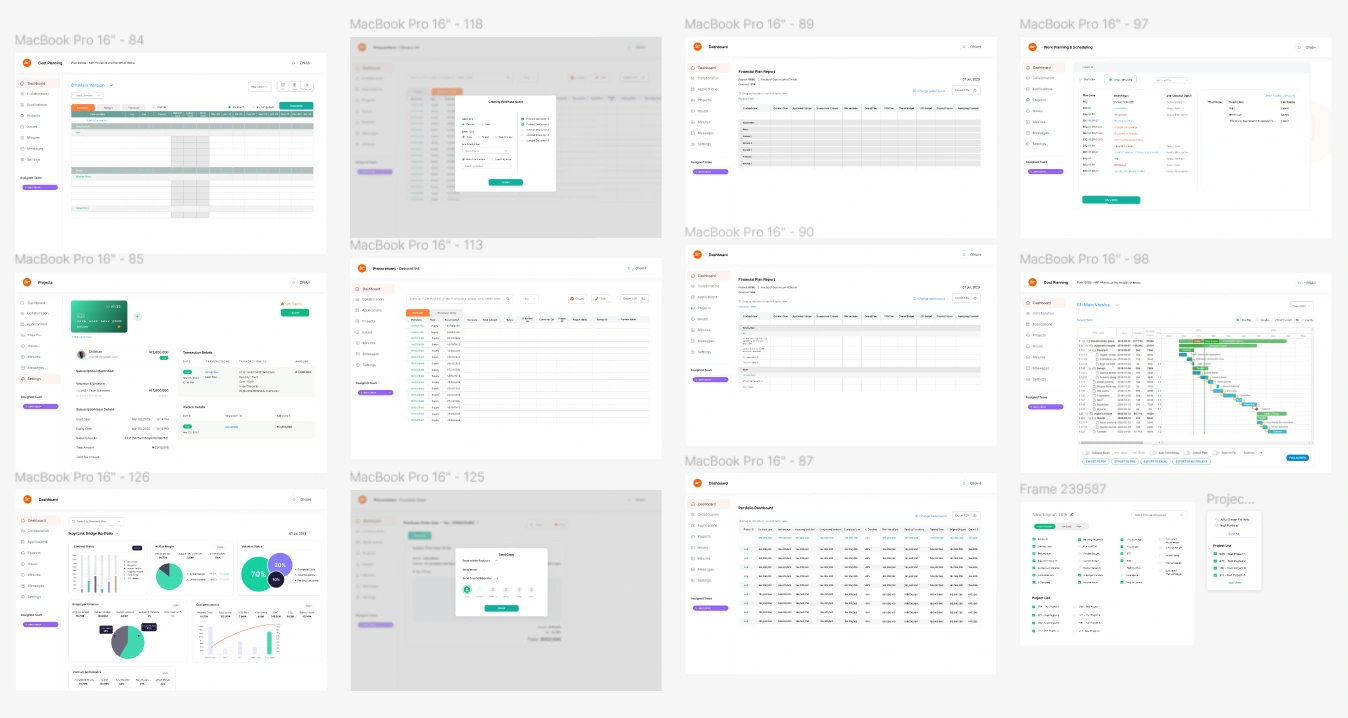
The platform unified what had previously required multiple tools into a single interface without flattening the complexity those tools were managing. Data that had lived in silos became shared and consistent across roles. The visual system resolved the legibility problem by rethinking hierarchy and typography for high-density numerical content rather than applying a standard interface pattern to a non-standard context.
The result was a platform where each user type could operate at full speed within their own workflow while working from the same underlying data as everyone else on the project.
Like this project
Posted May 19, 2026
Designing one platform to serve four distinct construction roles operating from the same data with fundamentally different needs.
Likes
0
Views
7