Built with Framer
Corvus Robotics – From drones to infrastructure

Daniel G Bright
Verified


Corvus Robotics — From drones to infrastructure
Corvus Robotics builds autonomous drones that scan warehouses and count inventory without humans, pallet jacks, or downtime. Founded in 2017, headquartered in San Francisco. Robots-as-a-Service model.
By late 2025, they had done the hard part. The tech worked. Southern Glazer's was running 40+ drones across nine distribution centers. Kroger signed for cold chain. MSI Surfaces, Dermalogica, Staci Americas, LAPP USA, Quanta — the logo wall was starting to look like enterprise, not seed-stage.
Then three things converged in six months: an $18M Series A (Oct 2024), a new CRO out of enterprise SaaS (Jan 2026), and two new products ready to launch — Corvus One for Cold Chain (Feb 2026) and Corvus Trident for pallet tracking.
That's the inflection point. Funding is easy to celebrate. Growing up is harder.
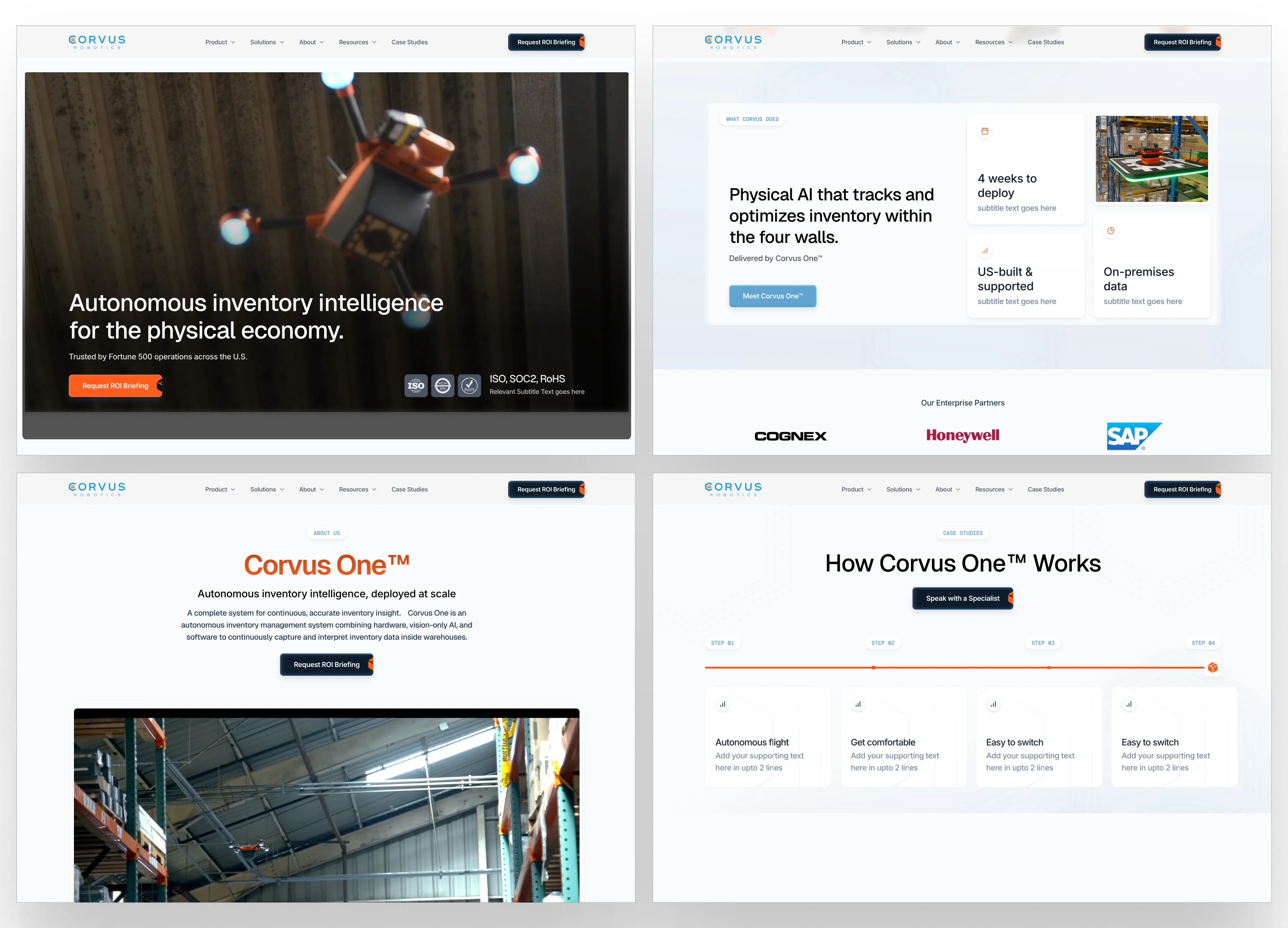
Tension
The company was becoming a platform. The brand was still a startup.
The website sold Corvus One like it was the only product. The positioning leaned on drones as the story, not the outcome. The visual language was built for a single product demo, not a three-product enterprise lineup. The sales motion a new CRO was building — multi-stakeholder, 9-month cycles, procurement involvement — needed a surface that could carry its own weight in the deal.
Every surface was a credibility gap. The product was enterprise-grade. The brand still looked like a pilot.
Fix the brand or lose the margin on the next logo.
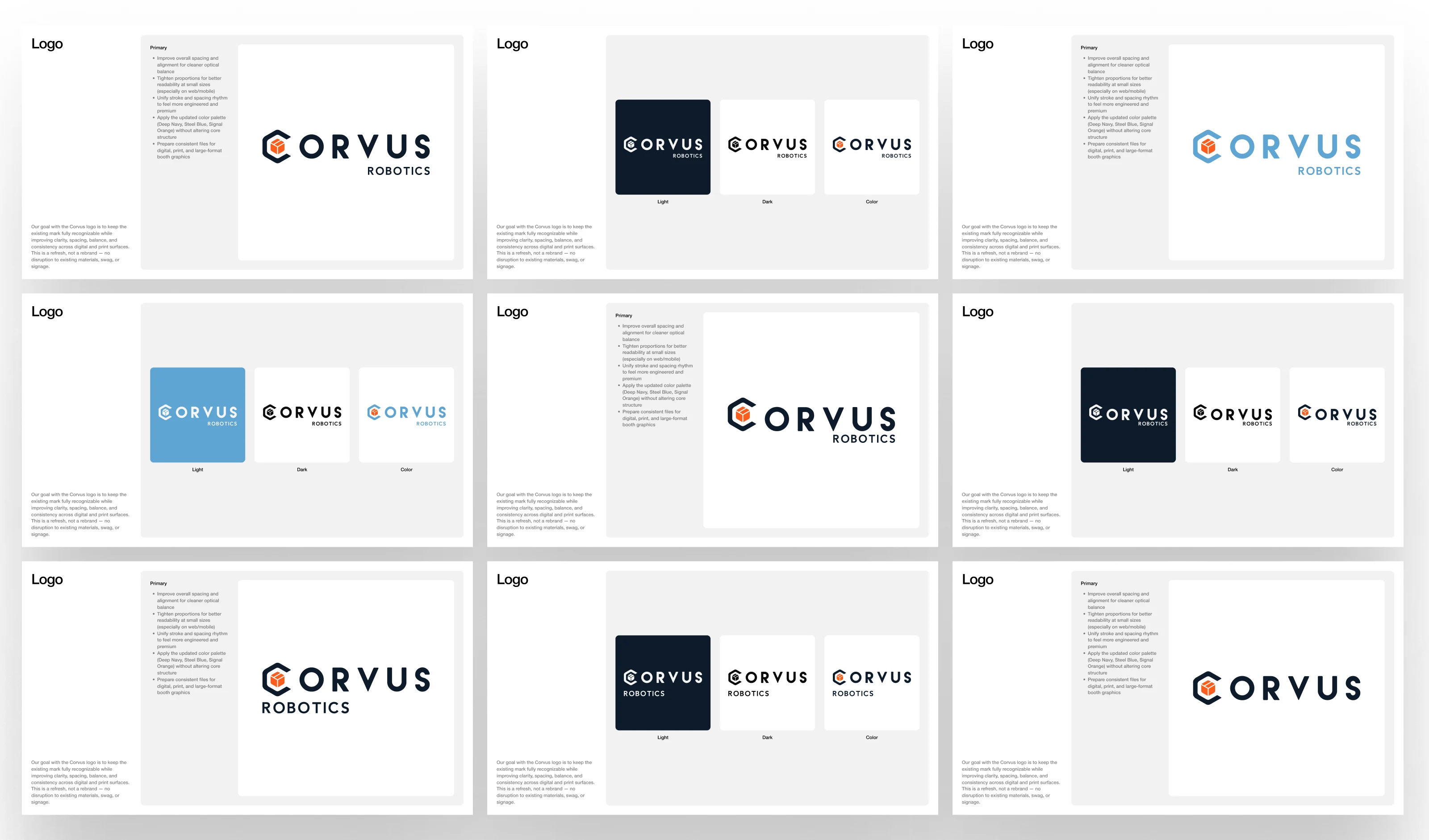
Fixing The Logo
Decision
We rebuilt the brand around the category they were actually entering — warehouse automation platforms — not the category they started in — inventory drones.
That one decision forced every other one.
Positioning had to work for a VP of Supply Chain at a Fortune 500, not an early adopter at a regional 3PL. The visual system had to stretch across three products without fragmenting into three brands. The information architecture had to move from "here is our drone" to "here is how we automate your warehouse — including with drones." The tone had to sound like infrastructure, not hardware.
We considered a softer refresh — new palette, tighter typography, keep the rest. Killed it. A refresh would have cosmetically improved a brand that was strategically misaligned. We'd have been rearranging furniture in a house that needed a different floor plan.
System
Strategy. New positioning: Corvus as the warehouse automation platform. Narrative framework built around the shift from manual cycle counts to continuous, autonomous inventory intelligence. Messaging hierarchy scoped to three audiences: operators (what changes), IT (what it plugs into), finance (what it costs to not have it).
Identity. Visual system designed for expansion. The mark, color system, and typography were built to carry three products at launch and absorb more without rework. Governance rules — not just for logos, but for product naming, photography, and UI affinity — so the CRO's team could ship without breaking the system.
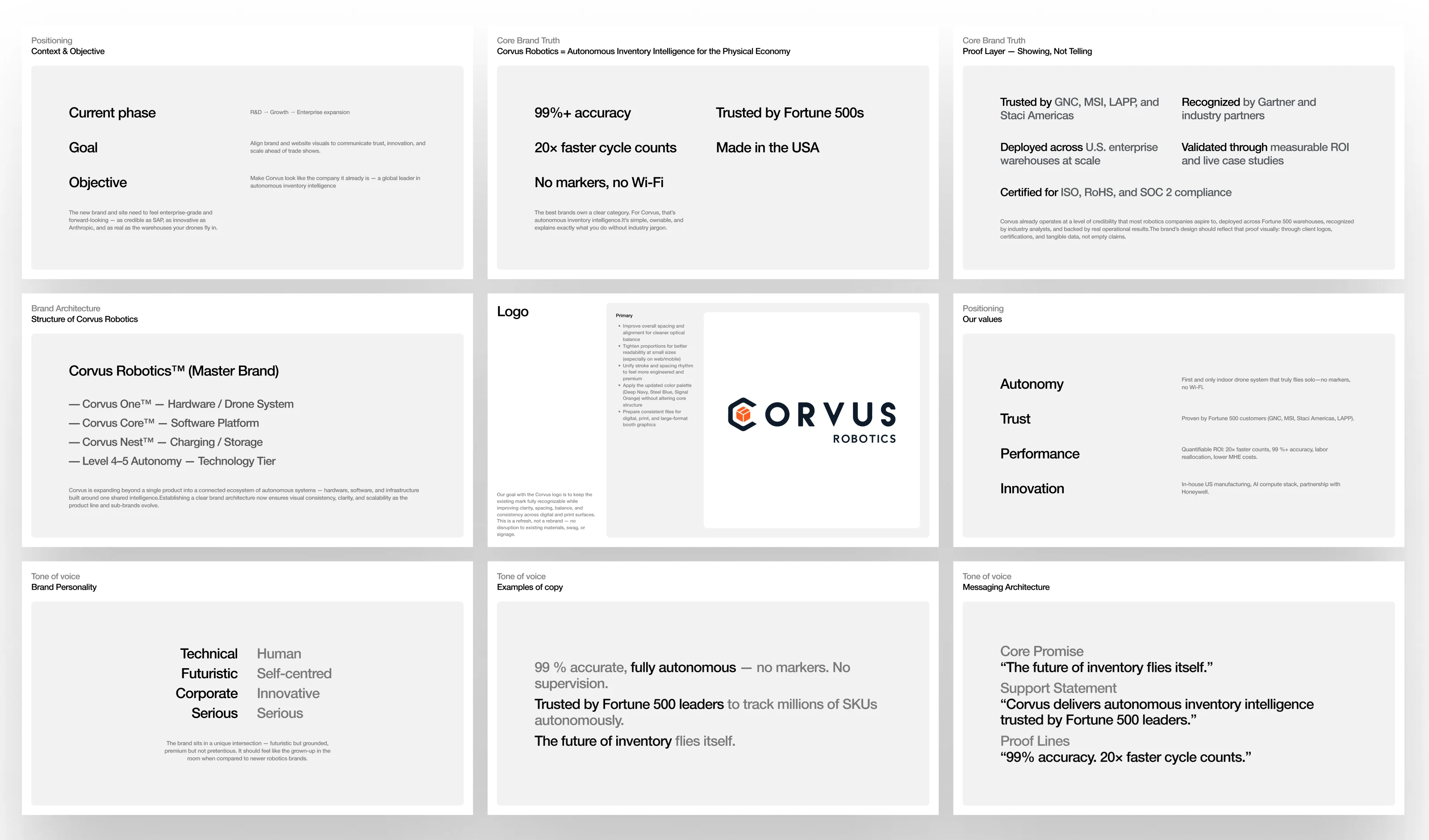
Setting Values
Website. Rebuilt on Framer. IA moved from a product-centric structure to a solutions-first one: Solutions > Industries > Products. Case studies promoted from footnotes to proof engine. Demo CTA repositioned from primary to qualifier — we don't want every form fill, we want the right ones.
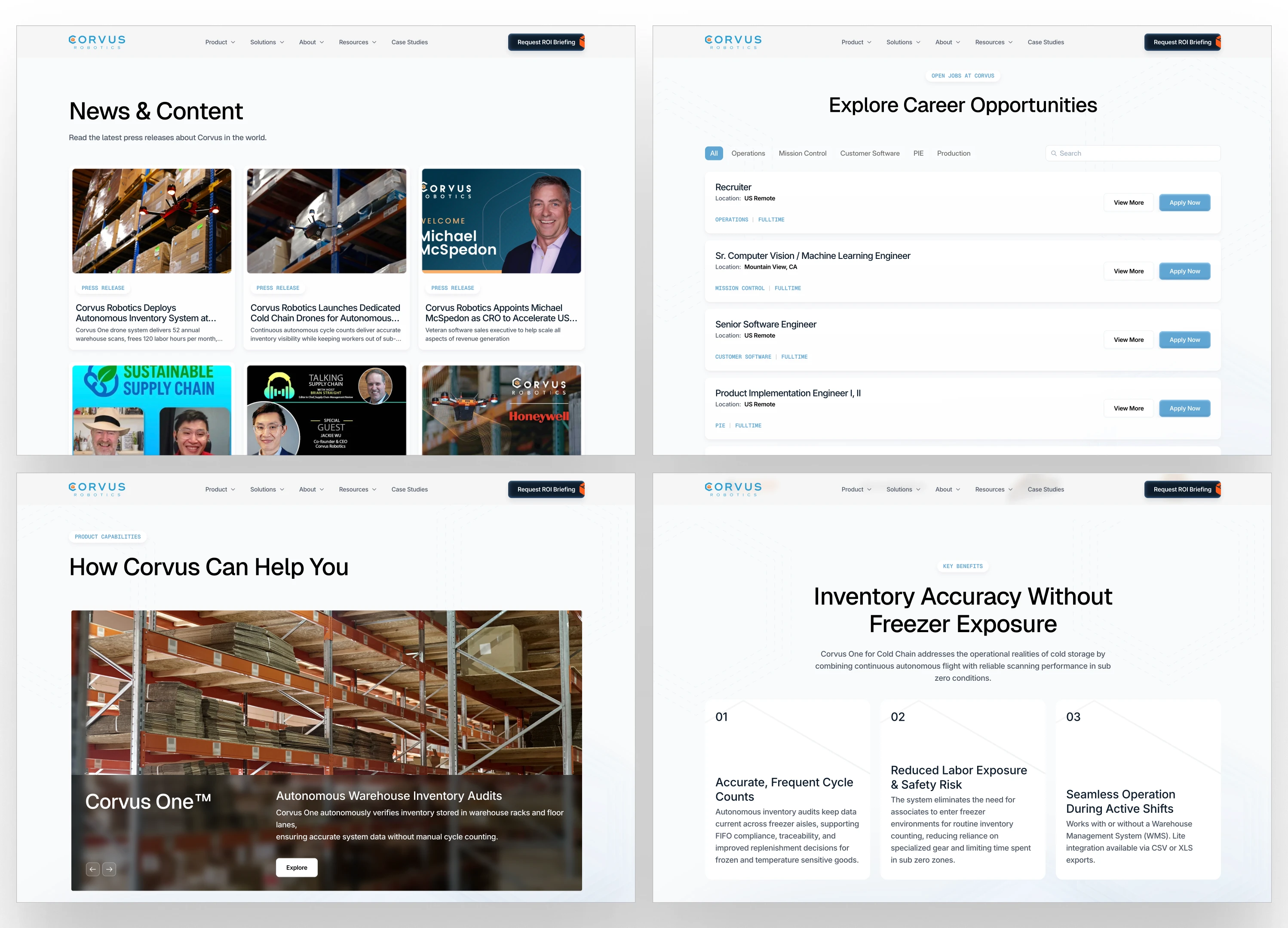
Website Design
Handoff. Guidelines document, component library, and governance framework delivered so the internal team and new hires could extend the system without us in the room. That's the difference between identity and a logo.
Impact
The site now does the work an enterprise sales motion requires. It qualifies. It stretches. It doesn't apologize for the price.
Positioning alignment across sales, product, and exec. Sales cycles that start with the right assumptions instead of resetting them. A brand the CRO can sell against, not around.
We're not in the business of promising lift. We're in the business of removing drag.
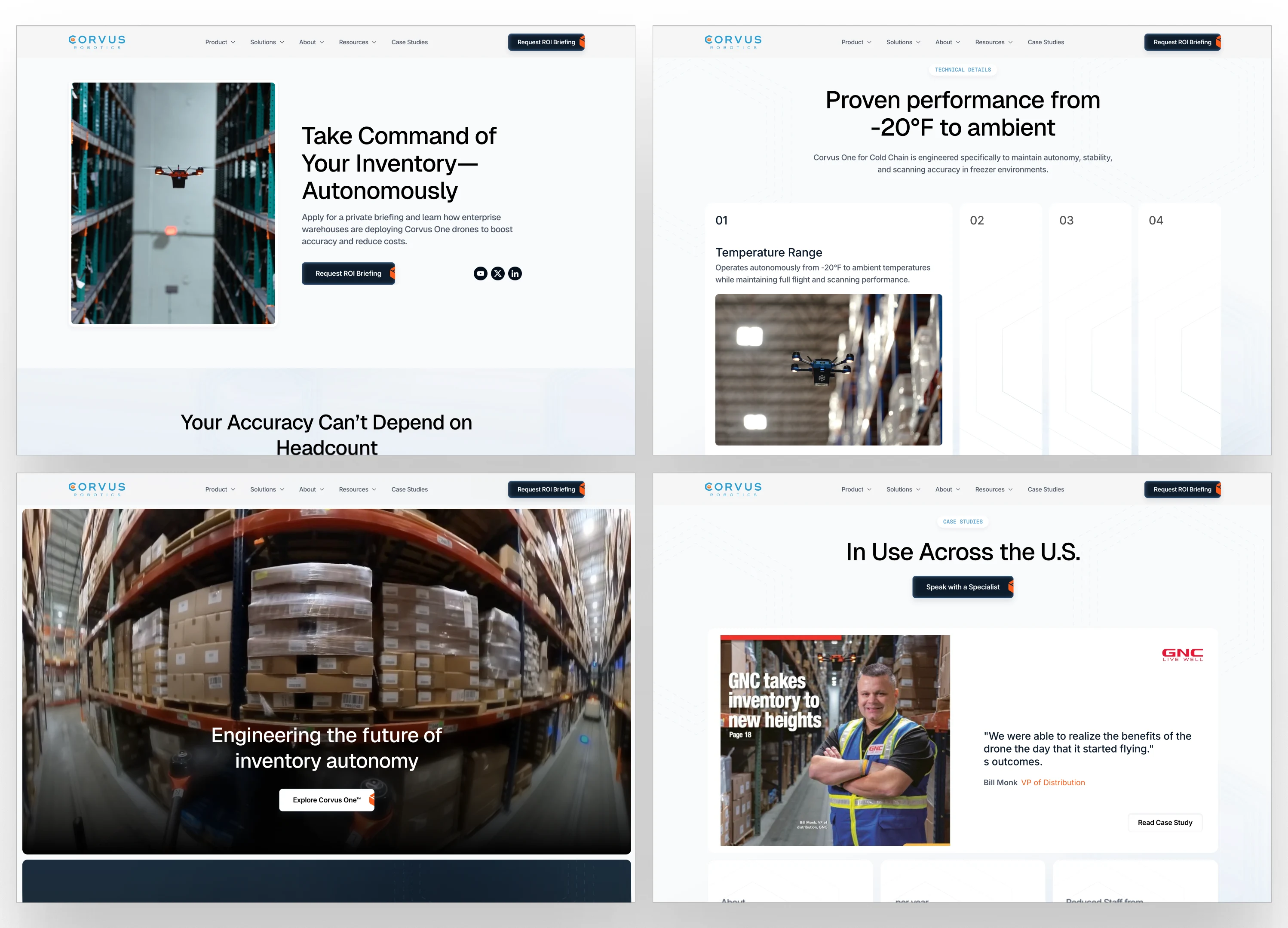
Website Design
Takeaway
Most brand work fails because it confuses the company's inflection point with its aesthetic preference. Corvus didn't need a prettier logo. They needed a brand system that could stretch into the market they were becoming, not the one they started in.
That's the BRIGHT Method. Diagnose the inflection. Build the system. Make the company look inevitable.
Like this project
Posted Apr 16, 2026
Corvus had enterprise customers. Their brand looked like a startup. We rebuilt positioning, identity, and the website so the they had something to sell against.
Likes
10
Views
505
Timeline
Nov 4, 2025 - Mar 18, 2026
Clients
Corvus Robotics