Coca-Cola K-Wave 3D Animation to 30+ LED Screens

Ricardo Romero


The problem
Coca-Cola's K-Wave campaign had to run on 30+ digital screens, each with its own pixel size, codec, frame rate and maximum duration. A forced perspective can't be cropped or stretched, because the illusion lives in the geometry of the frame. Thirty unique shots wasn't an option, so I built a system instead.
Orbit away from the camera and the trick falls apart: the can sits small on one side, the elements are a separate cluster somewhere else entirely. They were never around it.
The rig
Two master setups, horizontal and vertical. The chrome elements on the border are what break the frame, and the camera sits behind them, so the pieces in front are physically smaller. Four render groups, assembled per screen.
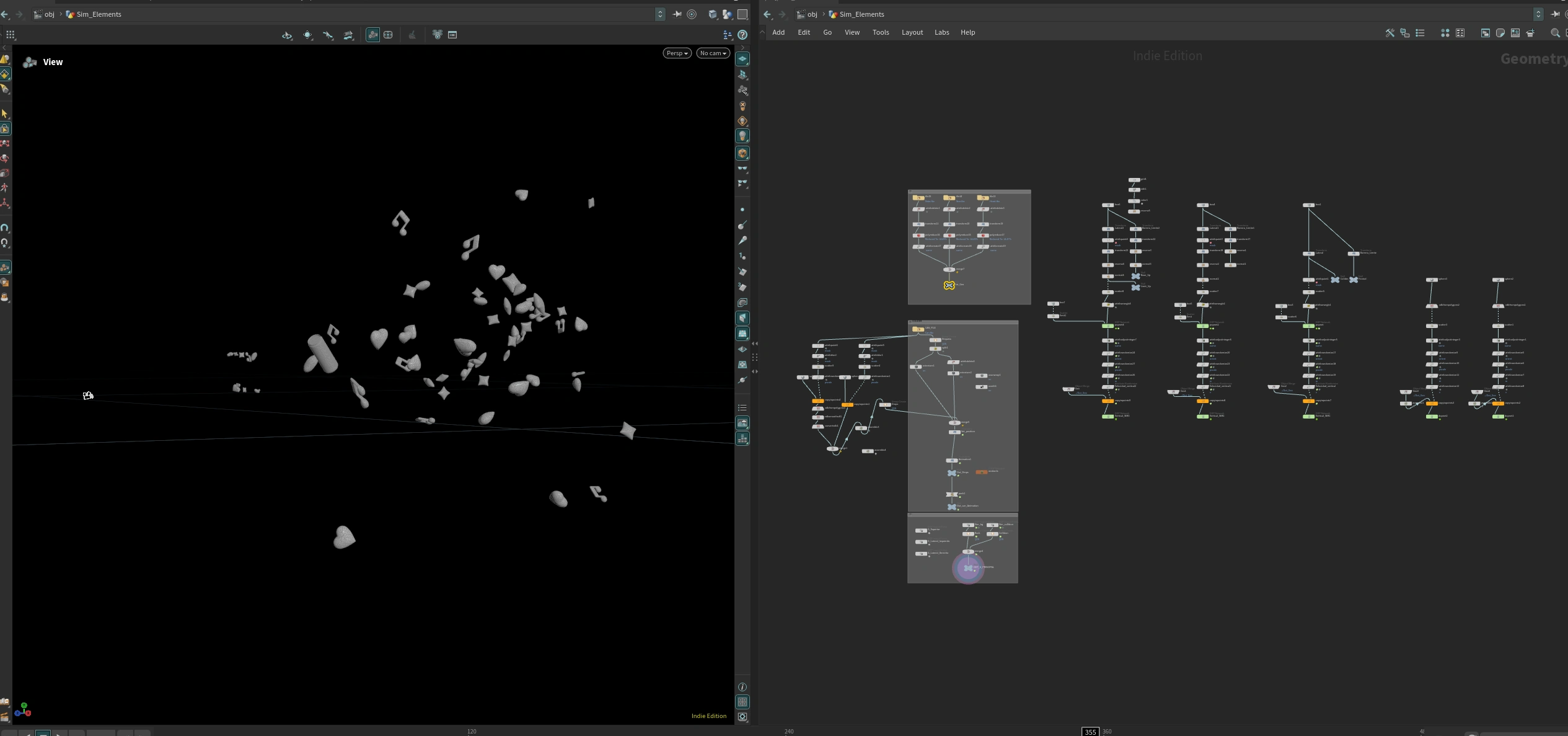
Four render groups, two cameras. Every screen derives from one of them.
Vertical breakdown. Same geometry, recomposed. In vertical the effect moves to the sides.
30+ screens, one project
Every screen carried its own spec sheet, written into its own comp. Even the LED wall is built rather than filmed: a pixel grid, a radial displacement map driving the glow, and the composite layered on top.
Starts on the radial displacement map driving the loop, then runs through fifteen of the thirty-plus screens: narrow verticals, squares, ultra-wide banners. Same composition, recomposed for each.
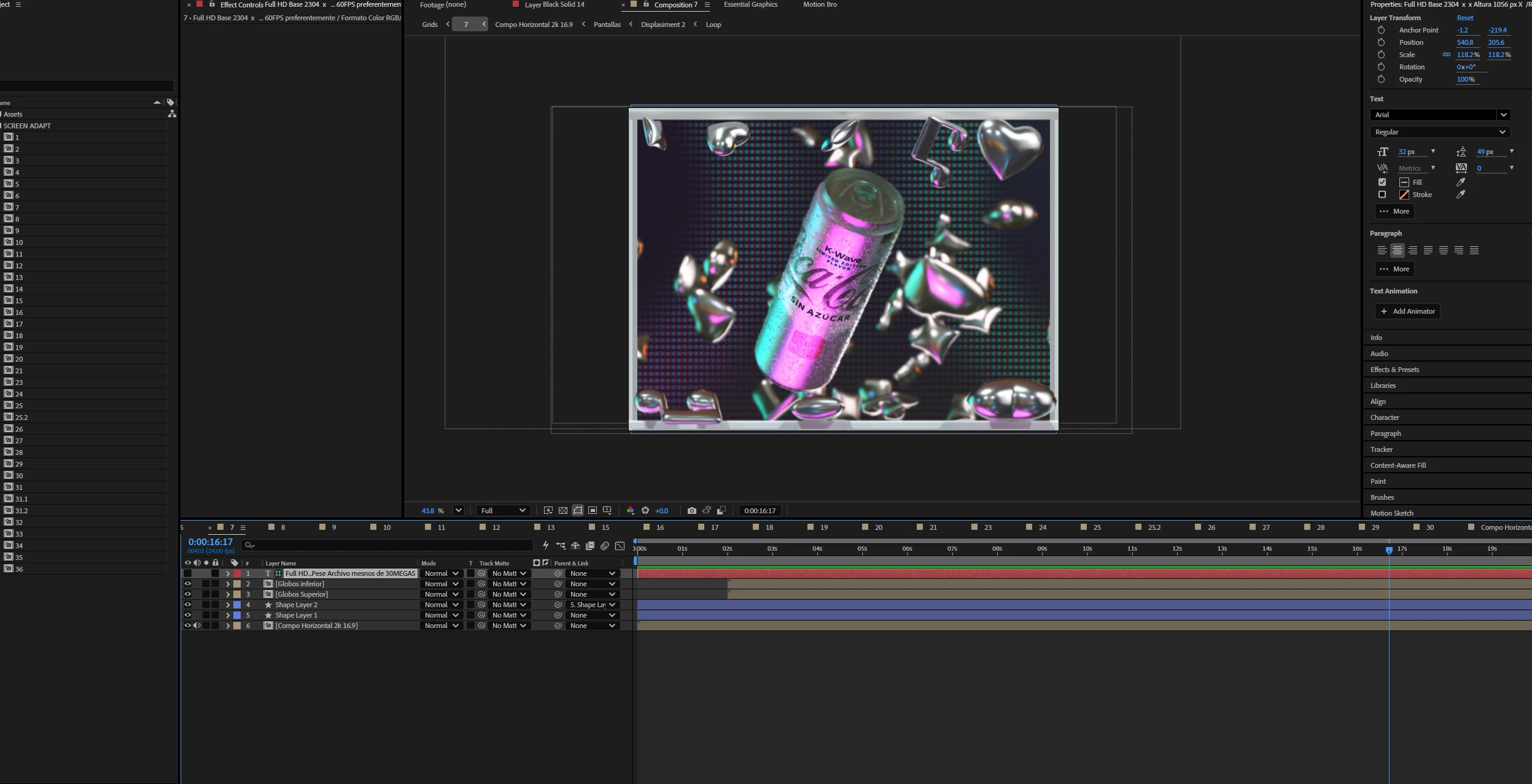
Compositing pass: geometry, LED grid and glow, assembled per screen.
Where it ran
The campaign went live across the screen network, including the LED facade at Paseo Queretaro.
Street-furniture format. Presentation mockup.
The campaign ran on the Paseo Queretaro LED facade. Venue shot recreated in post; the screen and the run were real.
Two years later the same rig adapted screen 31: the cover of this case study.
Like this project
Posted Aug 28, 2026
One forced-perspective rig adapted to 30+ digital screens for Coca-Cola's K-Wave campaign. Two master setups, four render passes, one cut per screen.