Martial Arts Rank Assessment & Study Guide System

Michael Rios

Overview:
Lake Placid Renshinkan Karate needed written materials that helped students understand what to prepare at each rank while giving instructors a consistent structure for written evaluation.
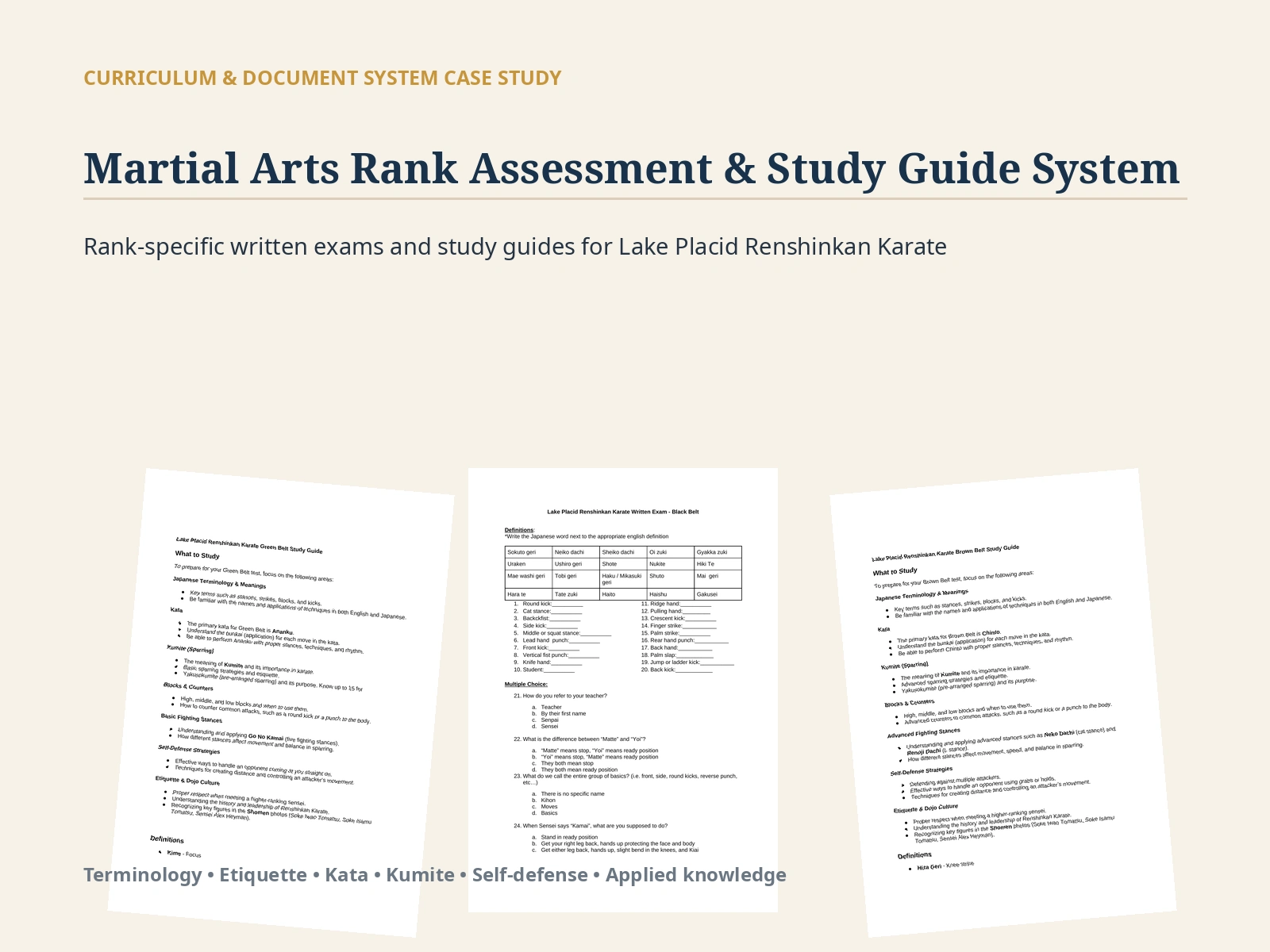
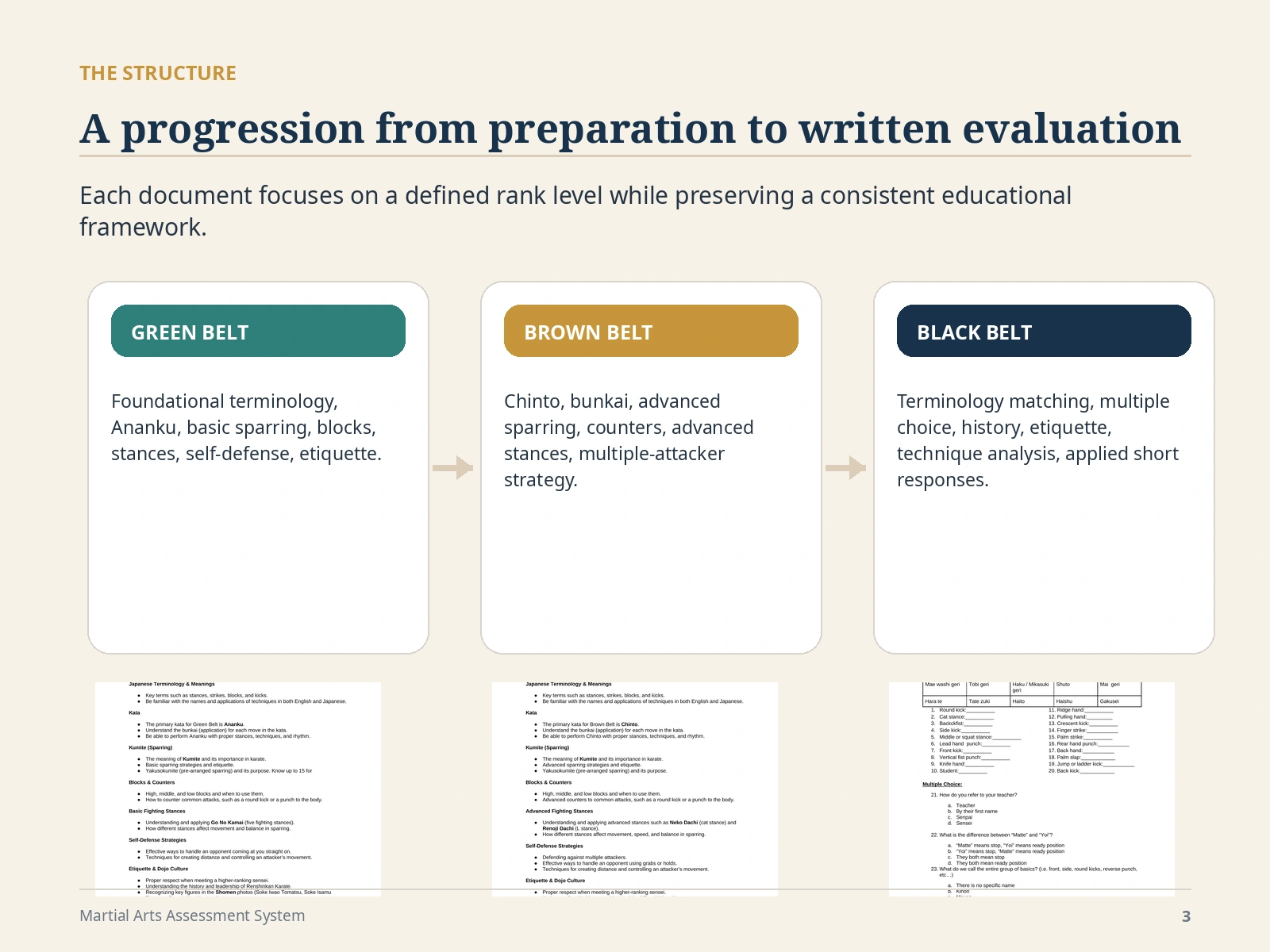
I developed and maintained rank-specific study guides and written exams covering Japanese terminology, etiquette, kata, bunkai, kumite, blocks and counters, self-defense, dojo culture, history, and applied technique knowledge.
The Challenge:
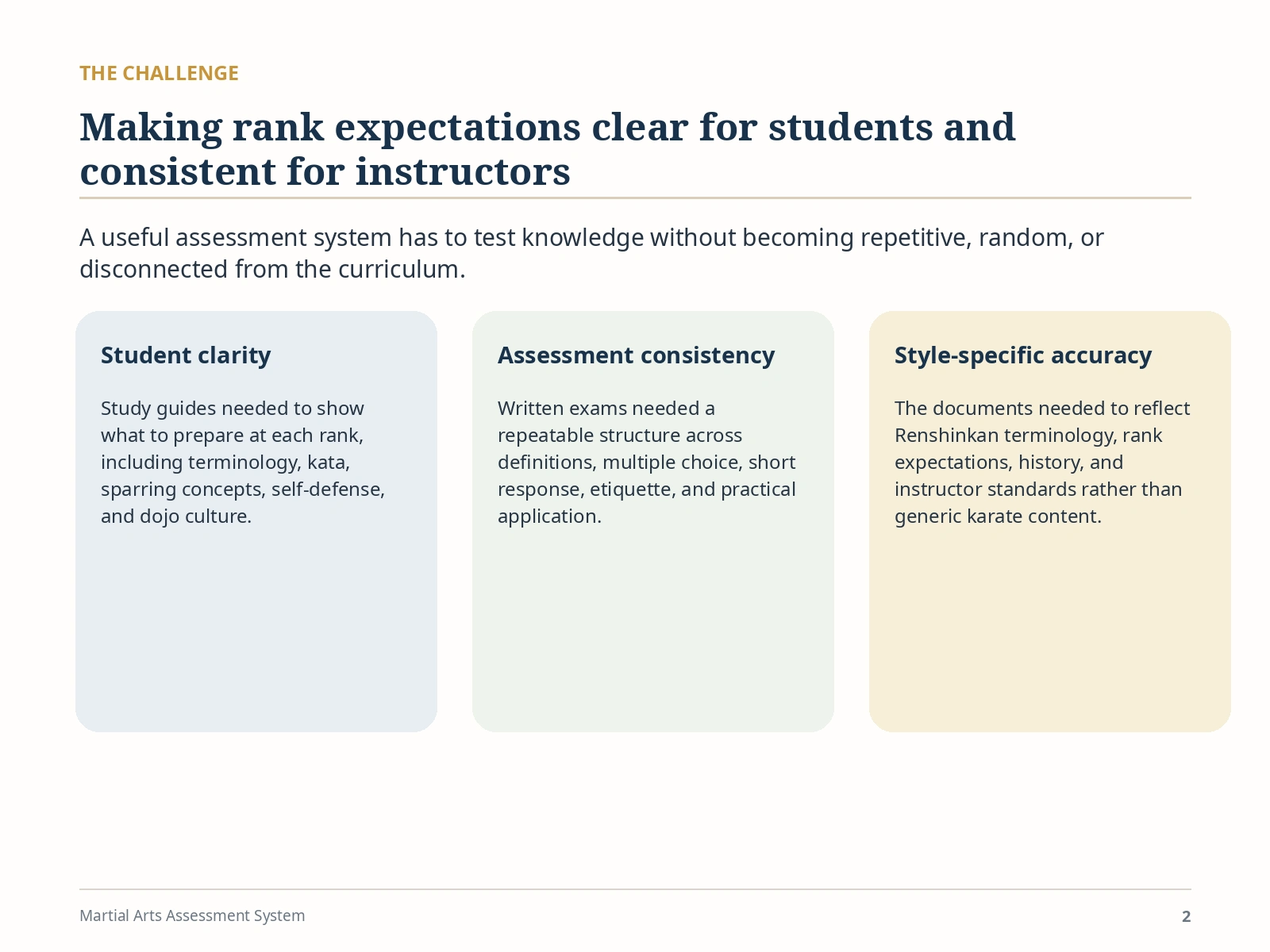
Martial arts assessments can become repetitive or disconnected from the actual curriculum. The documents needed to be style-specific, age-appropriate, organized by rank, and balanced across memorization, understanding, and practical application.
My Approach:
Organized rank expectations into clear study areas.
Used consistent question types: terminology matching, multiple choice, definitions, history and etiquette, and short responses.
Created study guides that explain what to prepare without simply giving students the test answers.
Increased the depth of application questions as rank advanced.
Preserved Renshinkan-specific terminology, kata, history, and dojo standards.
Result:
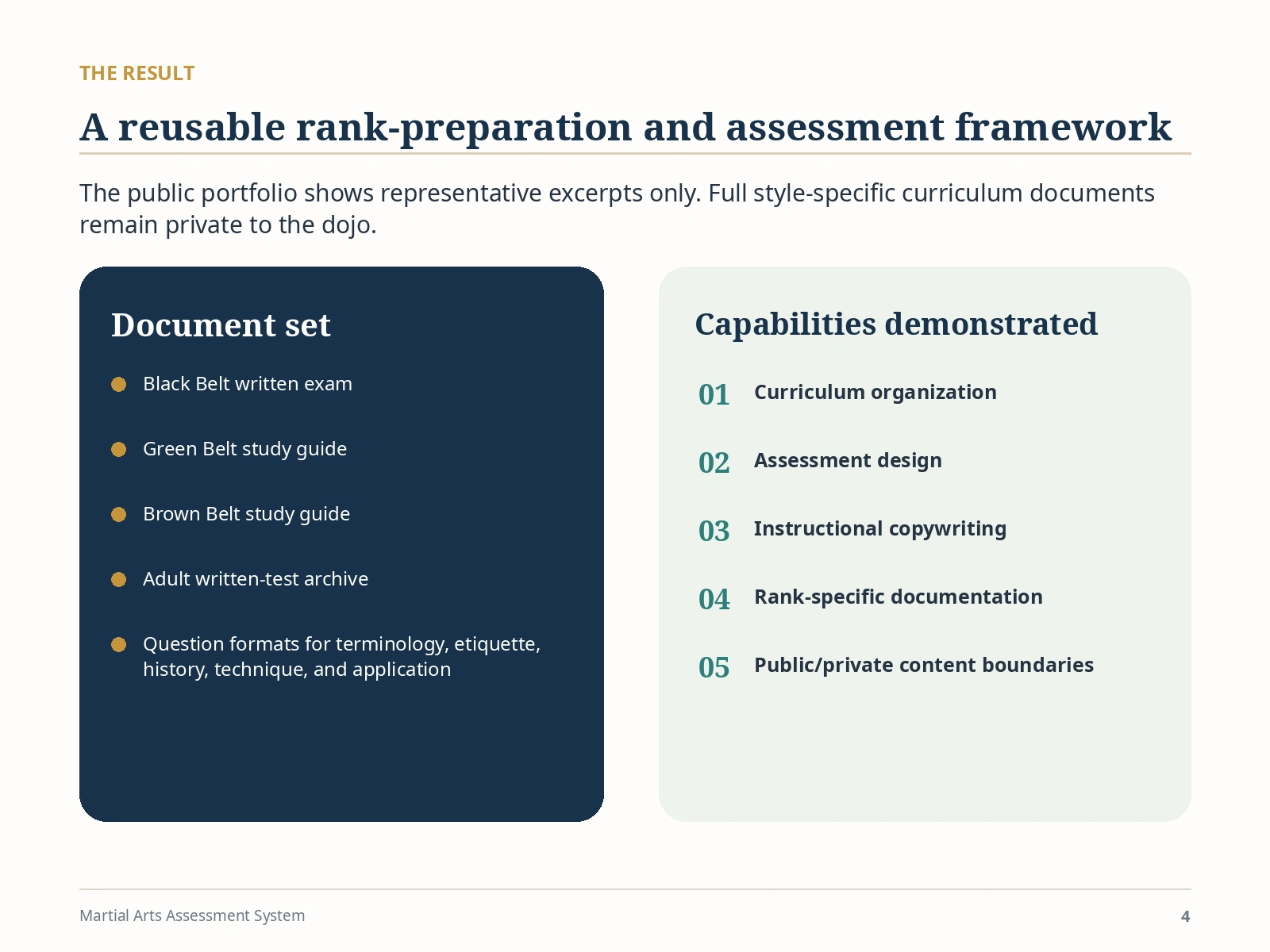
The system includes Green Belt and Brown Belt study guides, a multi-section Black Belt written exam, and an archive of adult written tests. Together, the materials demonstrate a reusable framework for curriculum organization and rank assessment.
Only representative excerpts are shown publicly. Full style-specific curriculum and testing files remain private to the dojo.
Note: This written assessment system is designed to supplement—not replace—a student’s regular physical and practical rank testing. It was created specifically for the adult curriculum at Lake Placid Renshinkan Karate and is not used for children’s classes.
Like this project
Posted Aug 4, 2026
Rank-specific written exams and study guides organizing terminology, etiquette, curriculum, kata, and applied knowledge.
Likes
0
Views
2