Lithos device

Nina Maar


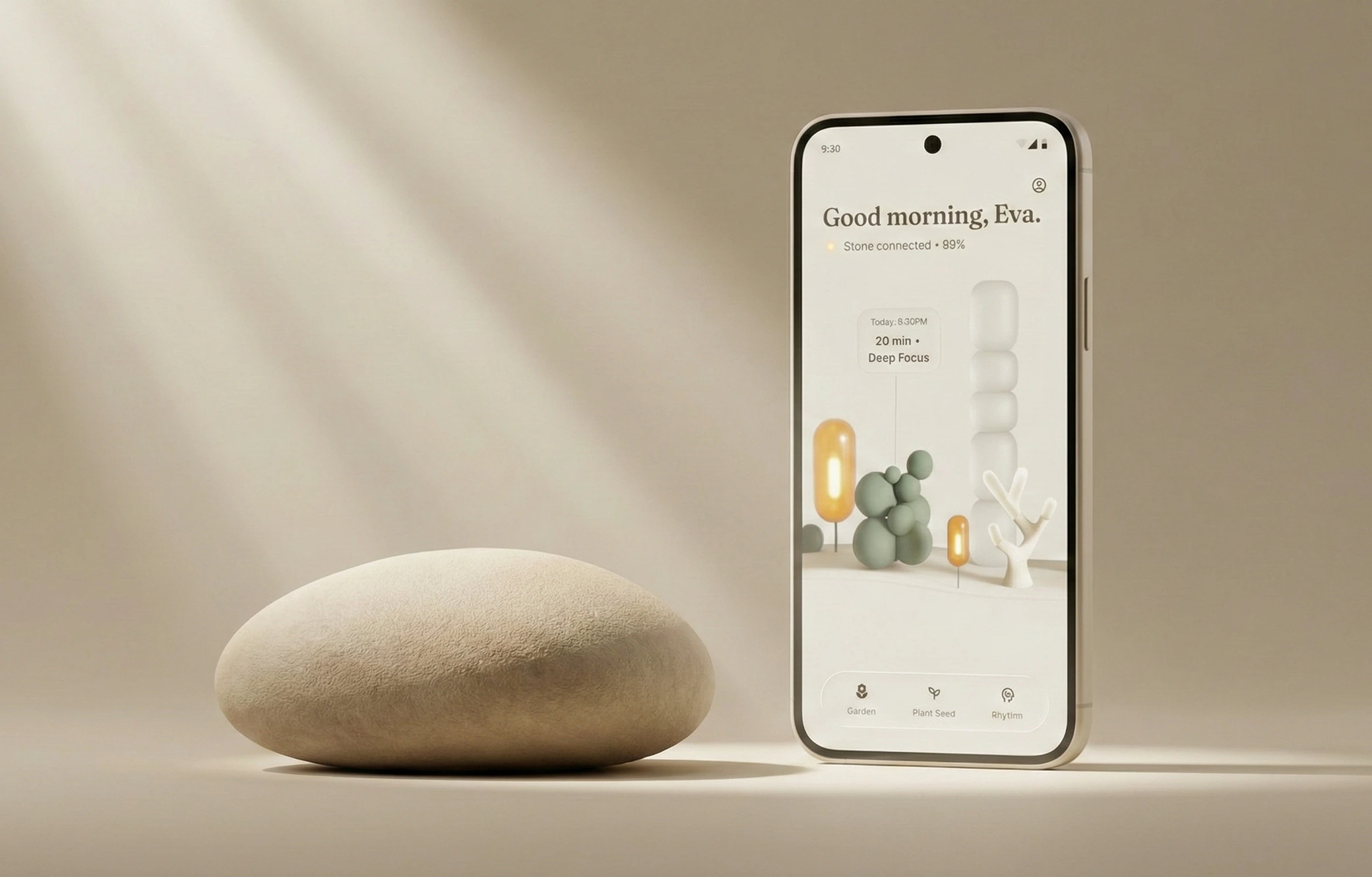
LITHOS - The Breathwork Device
The Design Thesis
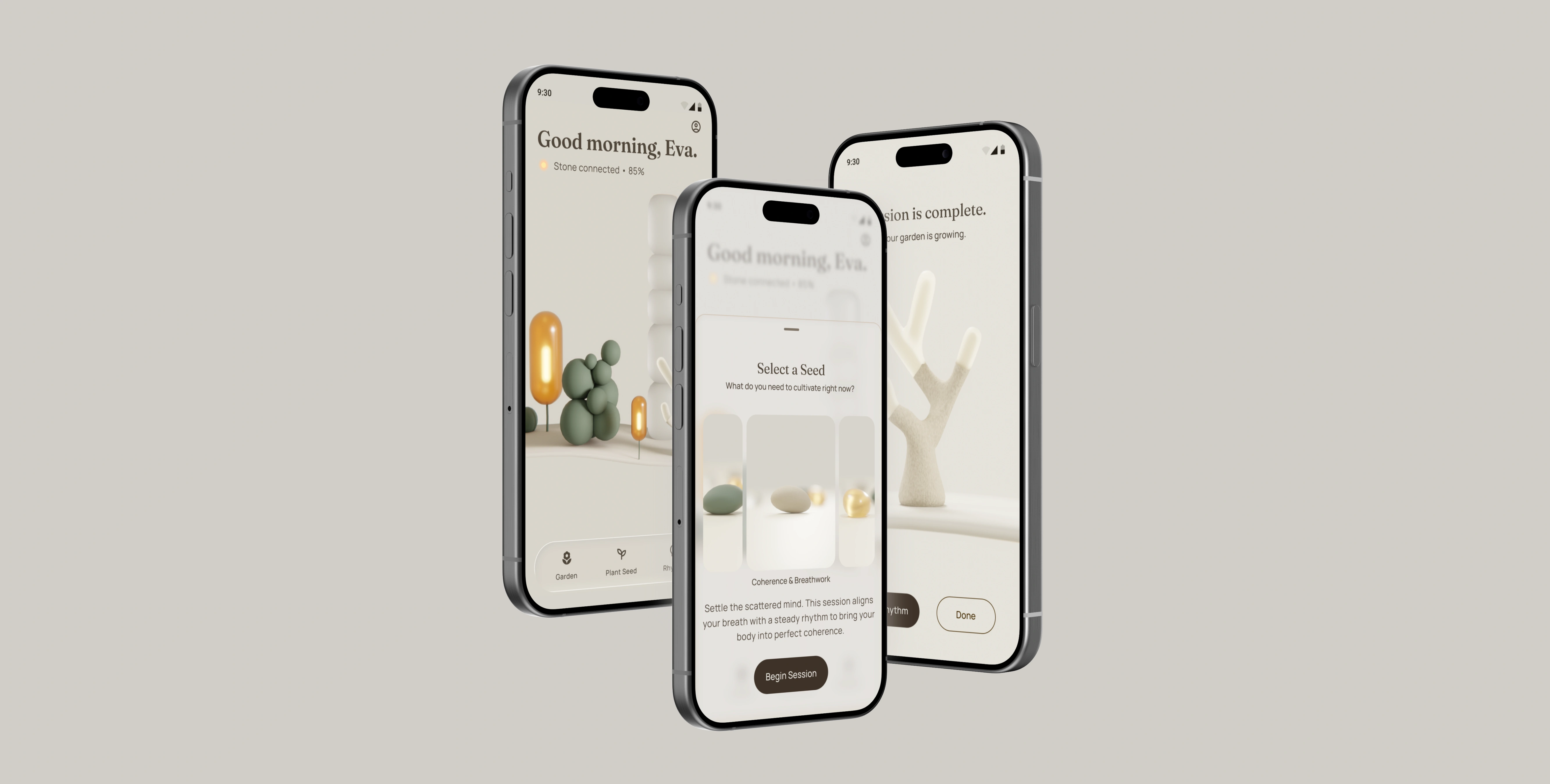
In an attention economy defined by infinite scroll and dopamine loops, Lithos is designed to act as an "anti-device". The core challenge was to create a digital companion for a physical object—the Haptic Stone—without trapping the user in the screen.
The solution relies on a "Dark-State" protocol: The interface handles the intent and setup, but the experience happens in the dark. Once the session begins, the screen turns off. The user is left only with the rhythmic vibration of the stone in their hand—shifting the primary sense from vision to touch.
The Scientific Context
The interaction model is grounded in the physiology of the Vagus Nerve. Controlled breathwork is the most effective way to shift the nervous system from a Sympathetic state (Fight-or-Flight) to a Parasympathetic state (Rest-and-Digest).
However, traditional breathwork apps often induce "performance anxiety" through rigid counters and timing circles. Lithos removes the clock. The design intent was to visualize the feeling of the breath, rather than the math of the breath.
The Digital Garden
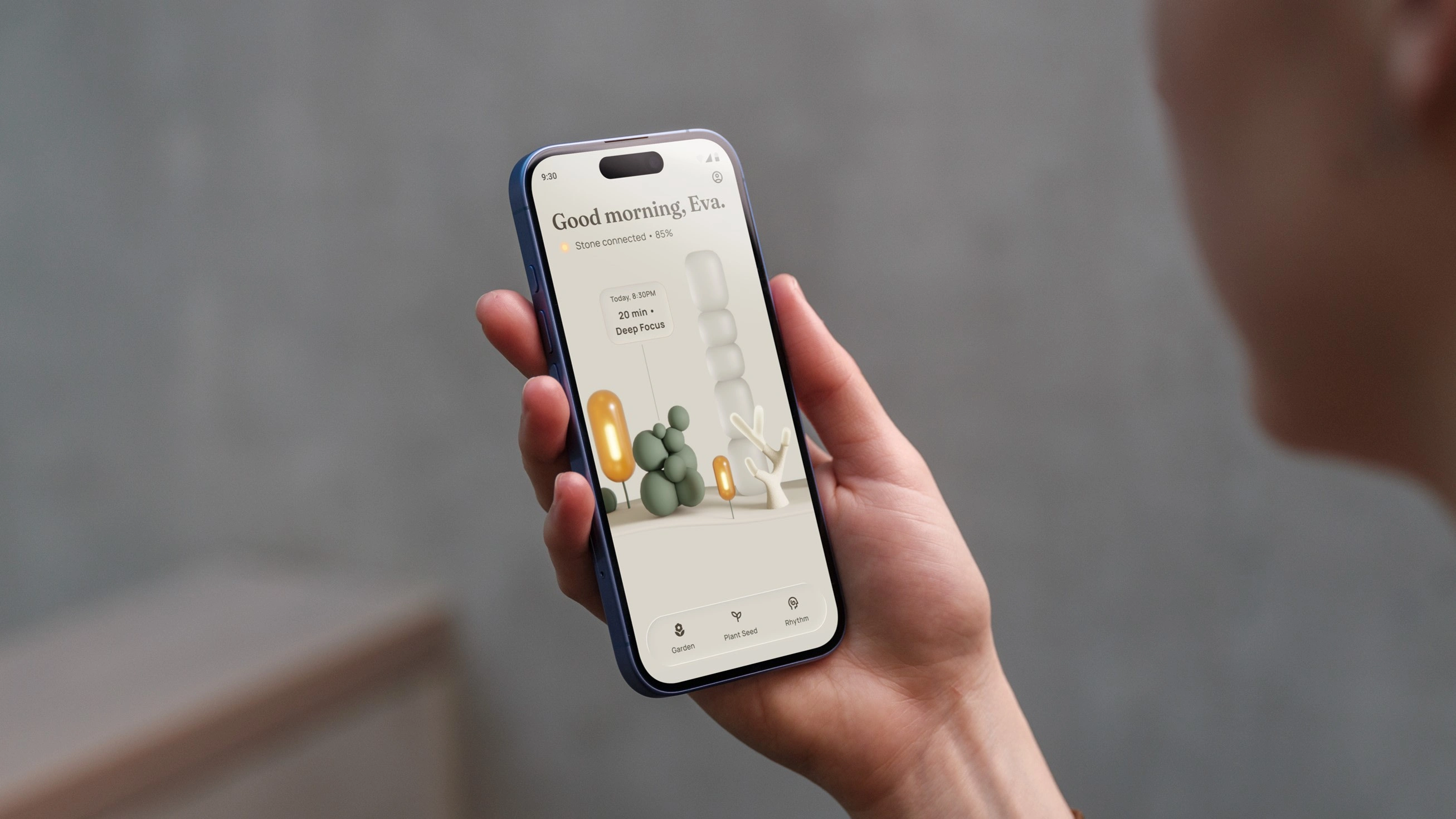
The central hub is not a dashboard; it is a procedural garden.
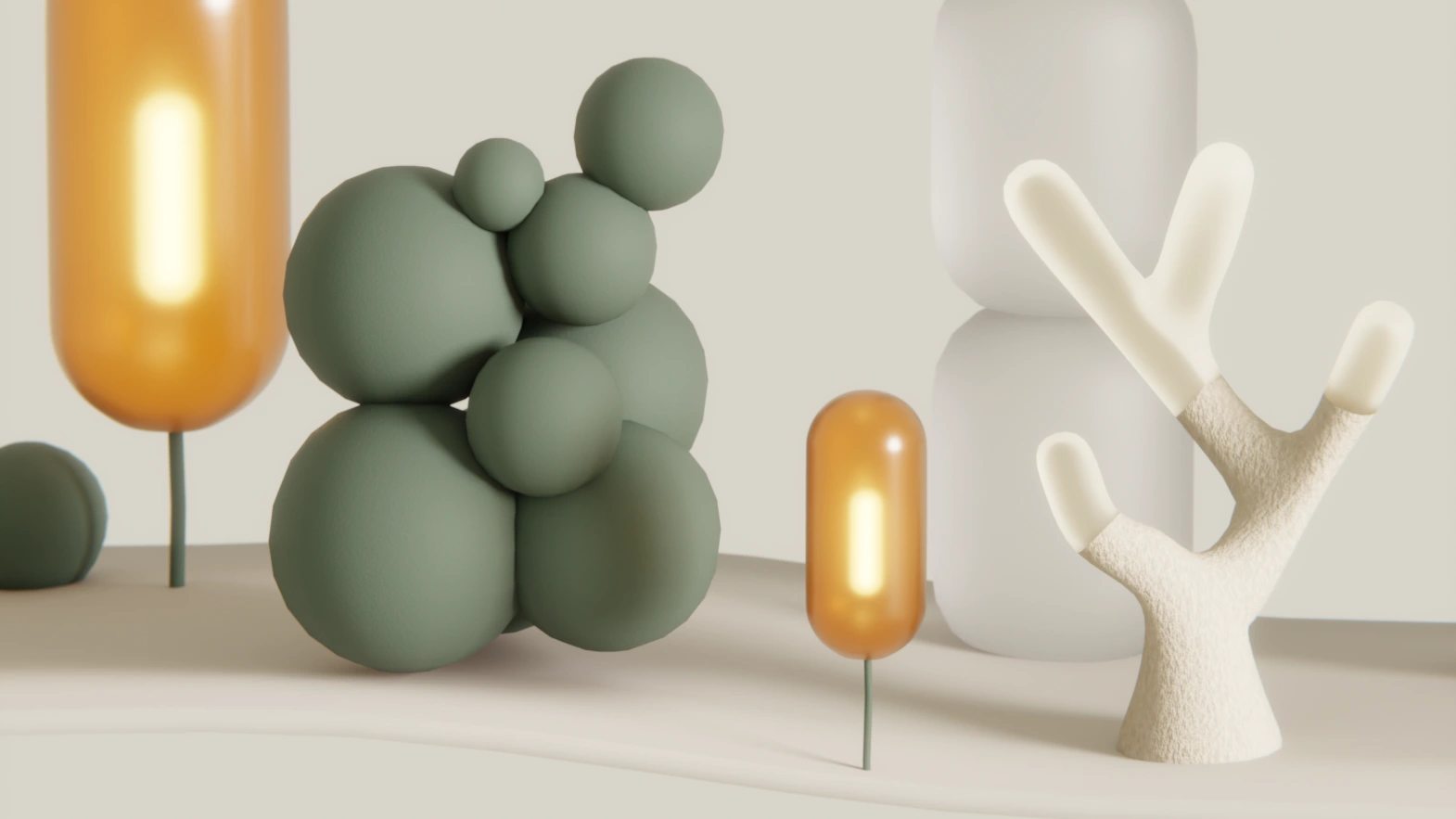
Sculptural Abstraction: I chose to render the trees as abstract, soft-body sculptures rather than photorealistic botany. Realism demands cognitive processing, but abstraction asks for interpretation. The soft, bulbous forms mimic the tactile quality of the hardware itself.
The Seeds: I designed four distinct "Seeds" to serve as visual cues for specific breathing techniques:
Sand Seed (Coherence): Uses a 1:1 Resonant Frequency (6 breaths/min) to synchronize Heart Rate Variability (HRV).
Glass Seed (Focus): Uses Box Breathing (4-4-4-4). A rigid structure designed to heighten cognitive alertness.
Green Seed (Balance): Uses an Extended Exhale (1:2 ratio). Stimulates the Vagus nerve to immediately lower cortisol.
Amber Seed (Sleep): Uses the 4-7-8 Technique. A rhythmic tranquilizer that forces a parasympathetic shift for rest.
Data Visualization: The River
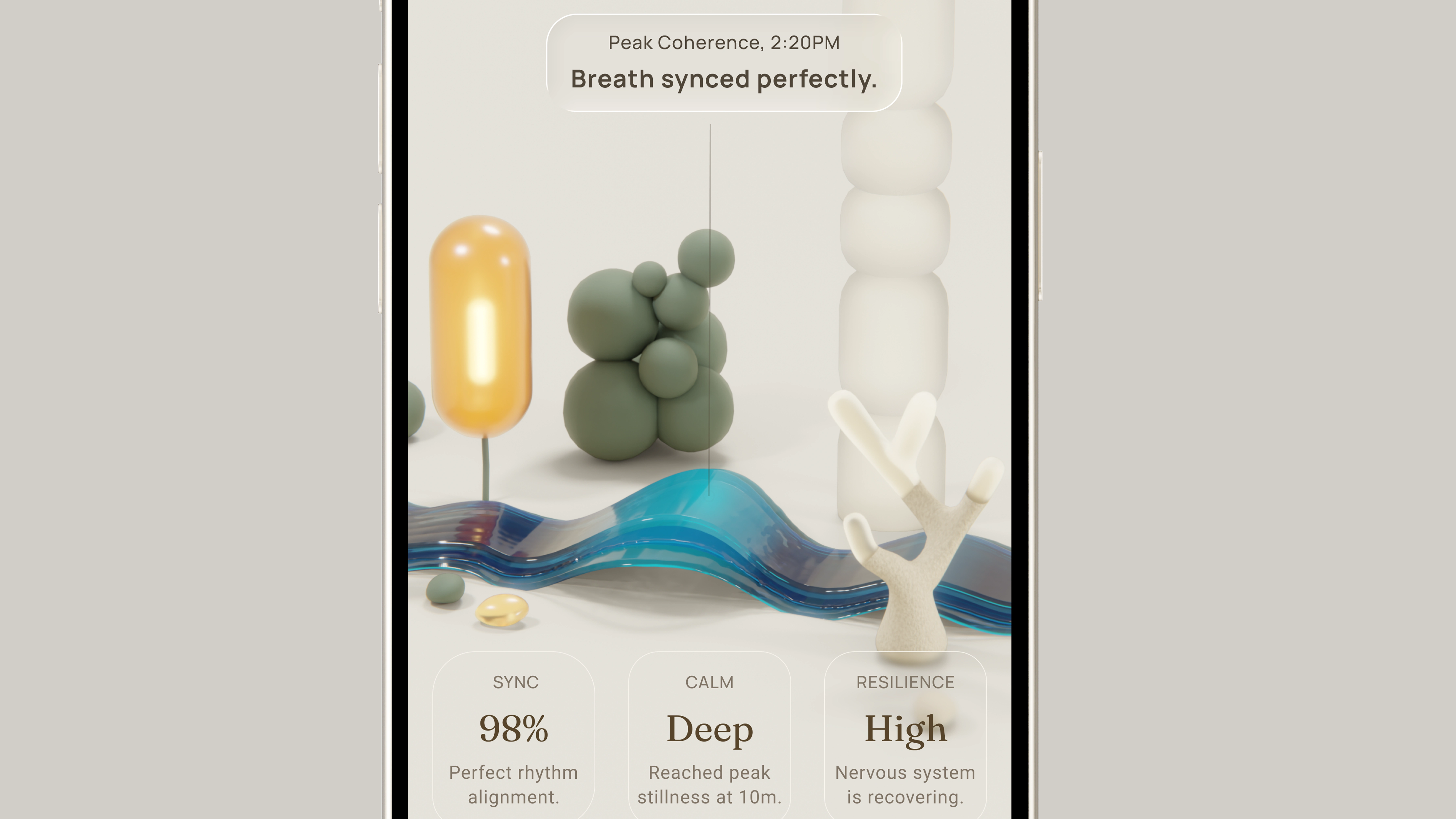
When the session ends, the app avoids reductionist scores (e.g., "85/100"). Instead, it visualizes the session's quality through a Topographical River System.
This screen transforms raw biometric data (Heart Rate Variability and Breath Duration) into a landscape:
Wave Height (Amplitude): Represents the depth of the breath. A deep, diaphragmatic breath creates a majestic, tall crest.
Wave Frequency (Rhythm): Represents the speed. A coherent state creates long, rolling swells; anxiety creates choppy ripples.
River Width (Duration): Indicates the practice volume. As the session extends, the river visually widens, occupying more screen real estate to signify the magnitude of the time invested.
The user sees the "shape" of their nervous system. A jagged river indicates stress; a smooth, wide river indicates flow. This creates a feedback loop where the user strives for aesthetic beauty in the graph, which biologically requires them to calm down.
Chronology & Growth
The Horizontal Timeline: History is not a list; it is a landscape. The history view utilizes a heavy-friction horizontal scroll, allowing the user to scrub backward through their past sessions. This spatial timeline emphasises continuity over isolated events.
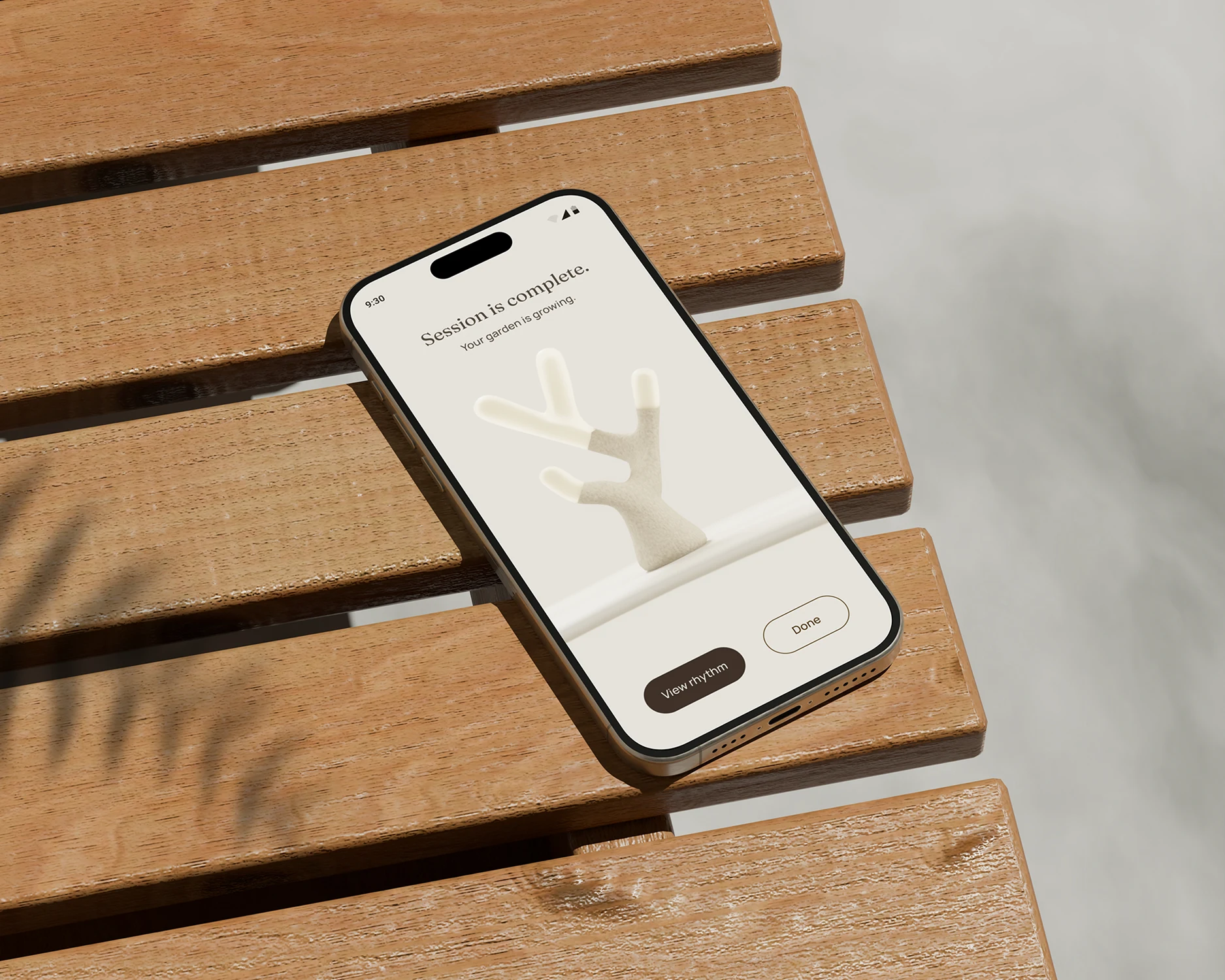
Visual Permanence: Every completed session contributes to the growth of a tree in the Garden. A short session creates a sapling; a deep dive results in a complex, mature structure. Over weeks, the user’s empty canvas fills with a dense, serene forest—a living archive of their practice.
A Circadian Interface
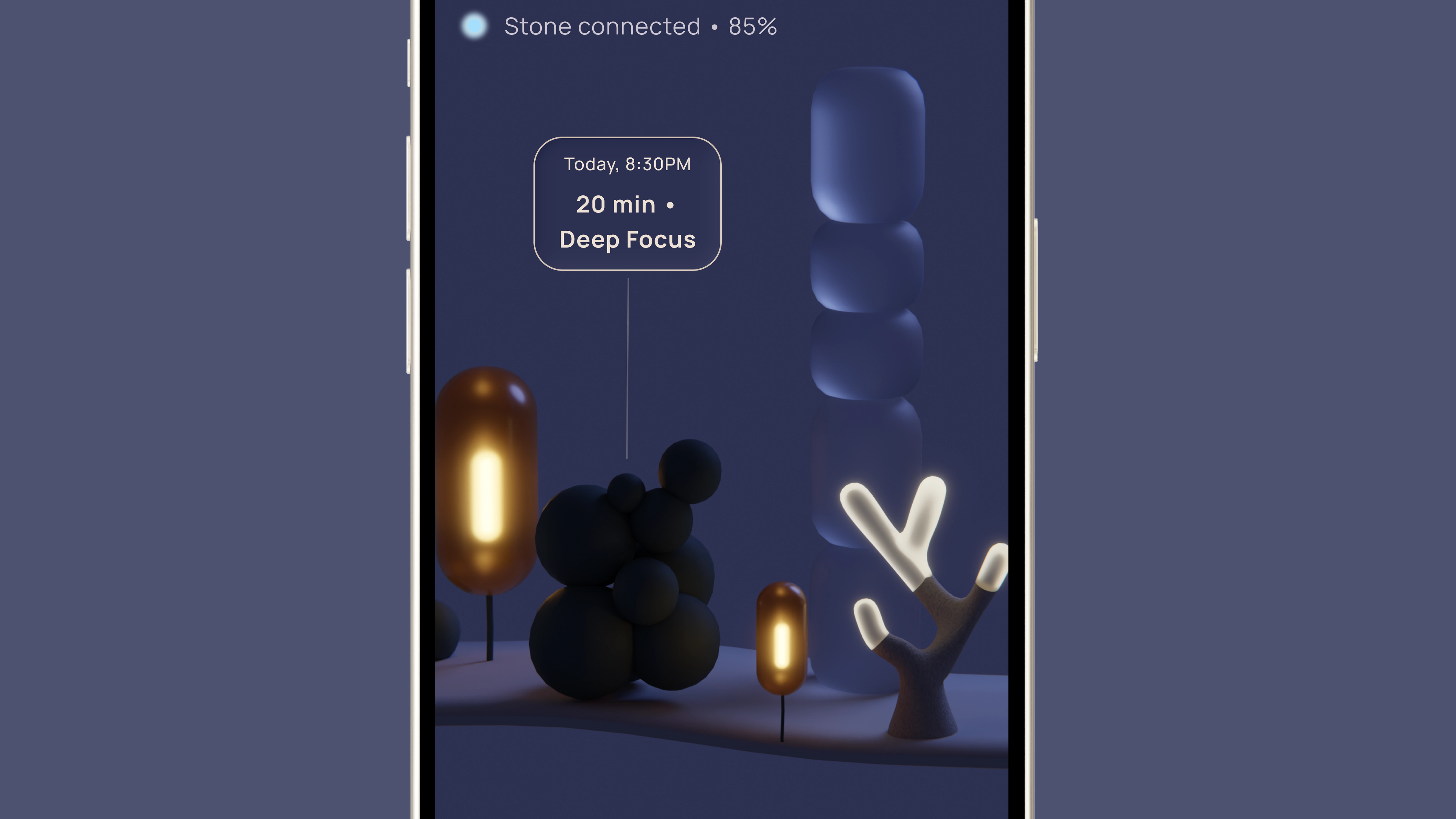
The visual language treats the screen as a habitable, physical space rather than a flat surface.
Spatial Hierarchy: The UI utilizes High-Refraction Glassmorphism, simulating frosted dielectrics suspended above the 3D garden. This separates the floating "Utility Layer" from the grounded "World Layer."
Temporal Sync: I engineered a dynamic lighting model that tracks the user's local time. The "digital sun" mimics real-world positioning—casting long, warm shadows at 8:00 AM and shifting to cool, volumetric moonlight at night—anchoring the interface in the user's physical reality.
Conclusion
Lithos stands as a pivotal project in my portfolio because it demanded the complete unification of my skillset. It was not enough to be just a UI Designer or just a 3D Artist; this project required a seamless synthesis of Interaction Design, Motion, Industrial Visualization, and Strategy.
It represents the ideal state of modern product design: a holistic workflow where the boundaries between the hardware, the software, and the art direction dissolve into a single, cohesive experience.
Like this project
Posted Jan 31, 2026
A haptic hardware and software system that rejects digital noise, utilising organic UI to guide users through tactile meditation.
Likes
1
Views
29