Pixel Designathon Website Design for GDGC

Ashvin Dige


Event Experience Design: Pixel Designathon Website
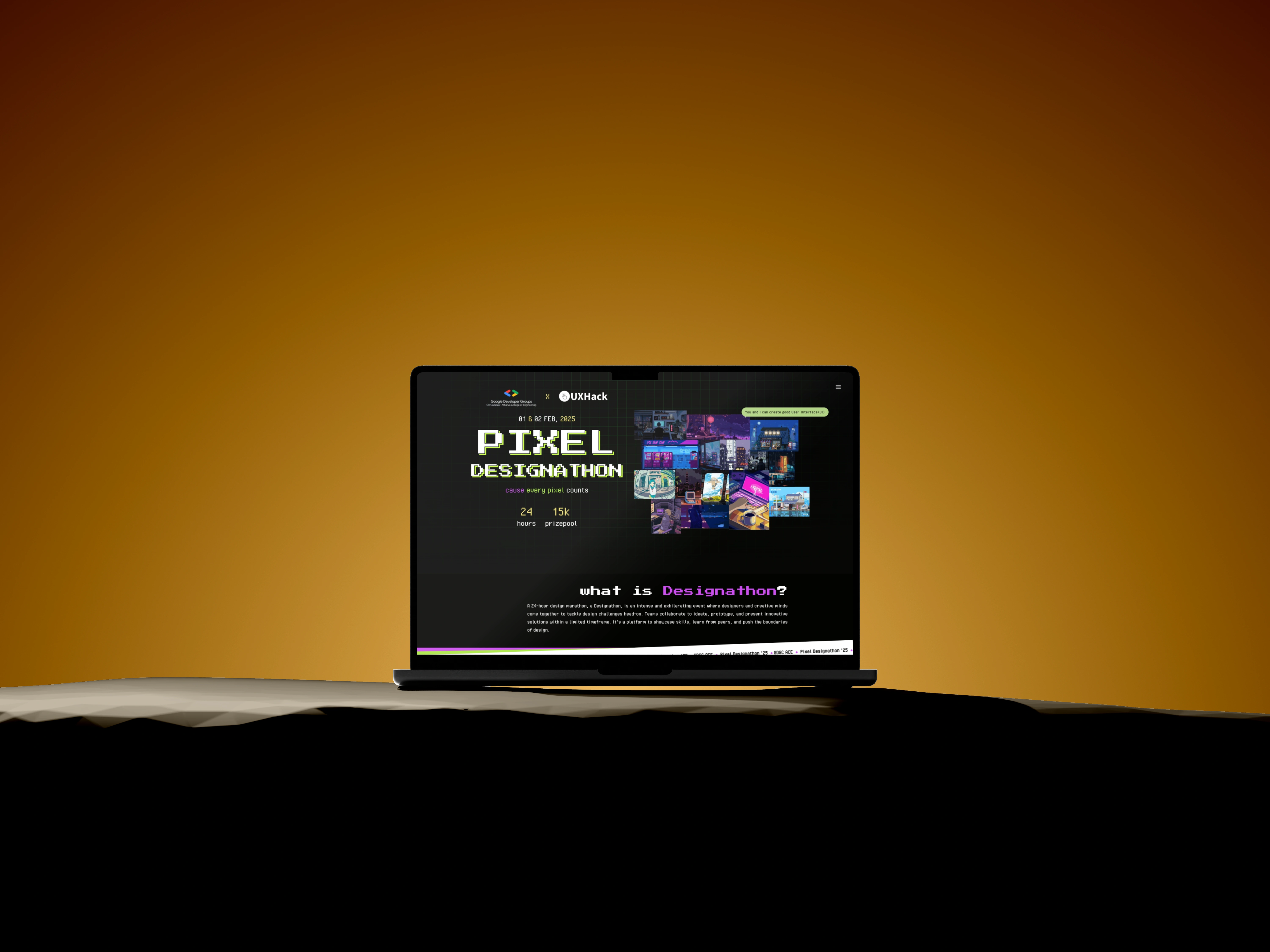
Led the end-to-end design for GDGC’s flagship "Pixel Designathon," creating a gamified, retro-themed web experience that handled 24 hours of live registrations, problem statements, and project submissions.
The Challenge
As the first-ever Designathon for GDGC ACE, the stakes were high. We weren't just building a registration form; we were building a platform for designers.
The "Designer's Eye": The target audience (design students) would judge the event based on the website's quality. A standard template would fail; we needed a custom, highly aesthetic "Pixel Art" identity.
Complex Logistics: The site needed to evolve in real-time—switching from "Registration Mode" to "Live Event Mode" (releasing problem statements) and finally "Submission Mode" without breaking the user journey.
Time Constraints: I had to balance my role as Lead Organizer with the actual design work, requiring a strict "60/40" prioritization strategy to hit deadlines.
The Solution (Your Design & Strategy)
I operated as the Lead Product Designer, handing off pixel-perfect assets to the development team.
The "60-40" Visual Strategy: I prioritized Visual Impact (60%) to build hype, using a distinct "Pixel Art" design system with fonts like Pixel Operator and Press Start 2P, and a neon palette (Green #A9E93F, Purple #CE4DF0) to evoke a retro gaming feel.
Functional UX: For the remaining 40%, I focused on friction-less utility. I designed a streamlined registration flow that integrated with external platforms (UX Hack) while keeping users immersed in the branded experience.
Developer Handoff: I created a modular design system in Figma, defining states for buttons, inputs, and the "countdown timer" components. This allowed the developers to build the responsive site quickly without constant back-and-forth.
Key Tools Used
Figma (UI Design & Prototyping)
Adobe Illustrator (Pixel Art & Asset Creation)
Notion (For Developer Handover & Task Management)
Like this project
Posted Dec 18, 2025
Designed a retro-themed website for GDGC's Pixel Designathon with live registrations and project submissions.
Likes
1
Views
8