Built with Framer
Early Adopter Launch Landing Page for AgeCode

Andrey Kichigin
Verified


AgeCode – a launch landing page that had to feel ready on day one
Industry: Health / consumer app
Engagement: Single landing page in Framer for early adopter launch
Timeline: Compressed Christmas-period sprint
Context: First public surface for a health product still developing its full story
The situation
AgeCode is a health app at the early adopter stage. The product is real, the ambition is high, but the public story is still forming. There was no website to point people to and no anchor for the early audience to land on. Everything that needed to feel legitimate, modern, and trustworthy had to live on one page.
The deadline made it sharper. We were working into the holiday period, and the launch could not wait for January. The landing page had to ship before the calendar collapsed, without looking like something that was rushed to ship before the calendar collapsed.
The real challenge
The hardest part was not visual design. The hardest part was signal density.
A single page had to do the job of an entire site. It had to introduce a health product to people who had never heard of it, communicate enough credibility for a category where trust is non-negotiable, and convert curiosity into a real signup. All of that without leaning on a back catalog of features, customers, or content that simply did not exist yet.
On top of that:
A holiday window where stakeholders were going offline in waves
Branding that was usable but not fully translated into product surfaces
A health audience, where anything that feels generic or templated quietly damages trust
How we worked
The project stayed on track by treating the landing page like a product launch, not like a marketing graphic.
Context and constraints. Before any layout, we locked the one job the page had to do on launch day and cut everything that did not serve it.
Rapid prototype. A first version went up quickly with real copy and real hierarchy, so stakeholders could react to something close to the final feeling instead of approving wireframes in a vacuum.
System design. Even for a single page, we built a small, disciplined system: typographic rules, a tight component set, motion principles, and clear hierarchy patterns. That made every section consistent and every later addition cheap.
Framer build. Built for speed, accessibility-aware, and structured so the page could grow into a multi-page site later without a rewrite.
Launch and handover. QA across devices, analytics and signup wiring, and a setup the team could update on their own during a period when no one wanted to wait on a designer.
Because people were drifting in and out for the holidays, we ran the project on a single board with a clear daily edge. Decisions, assets, and feedback lived in one place so a stakeholder coming back from a day off could catch up in five minutes instead of an hour.
What we built
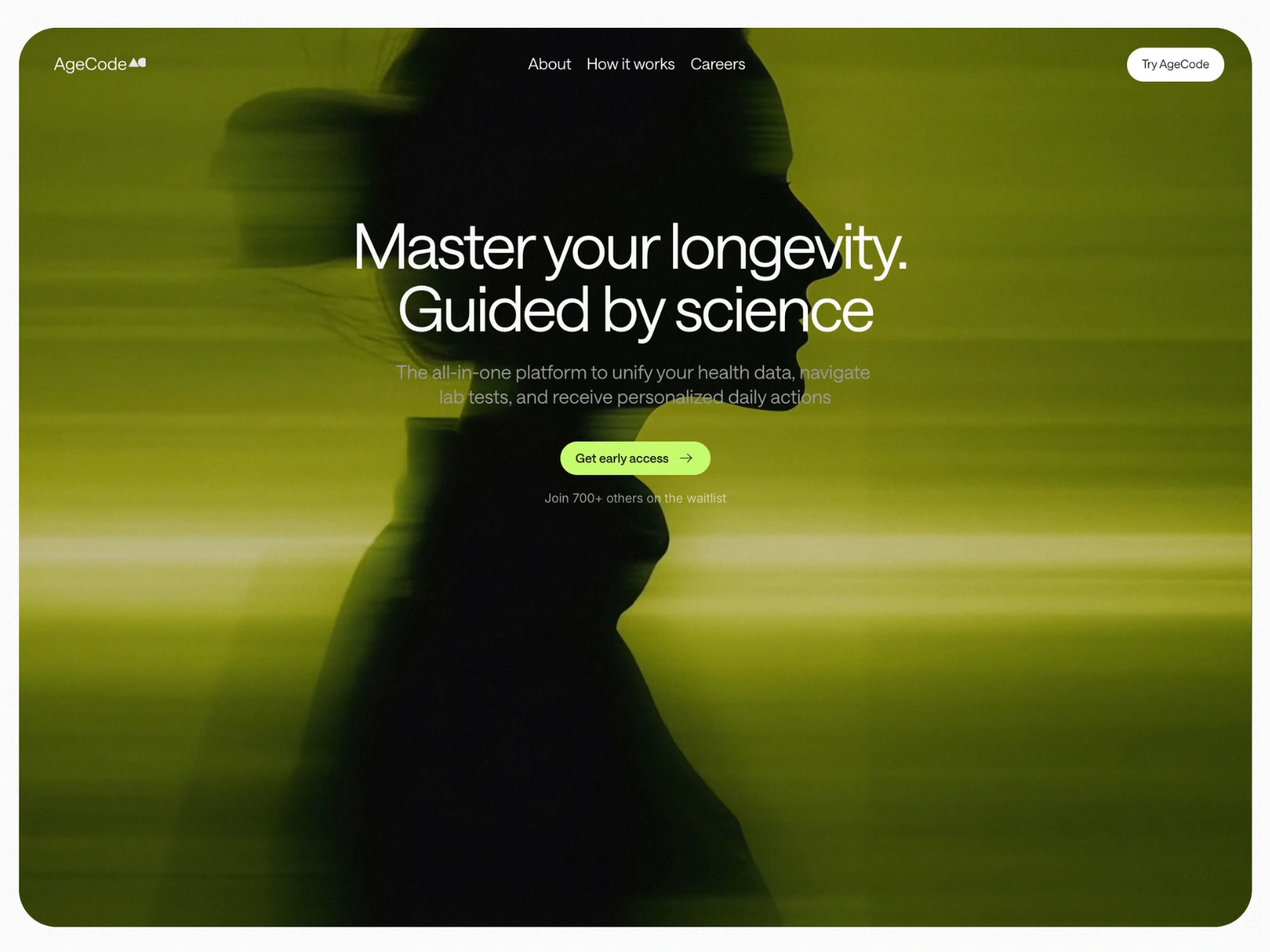
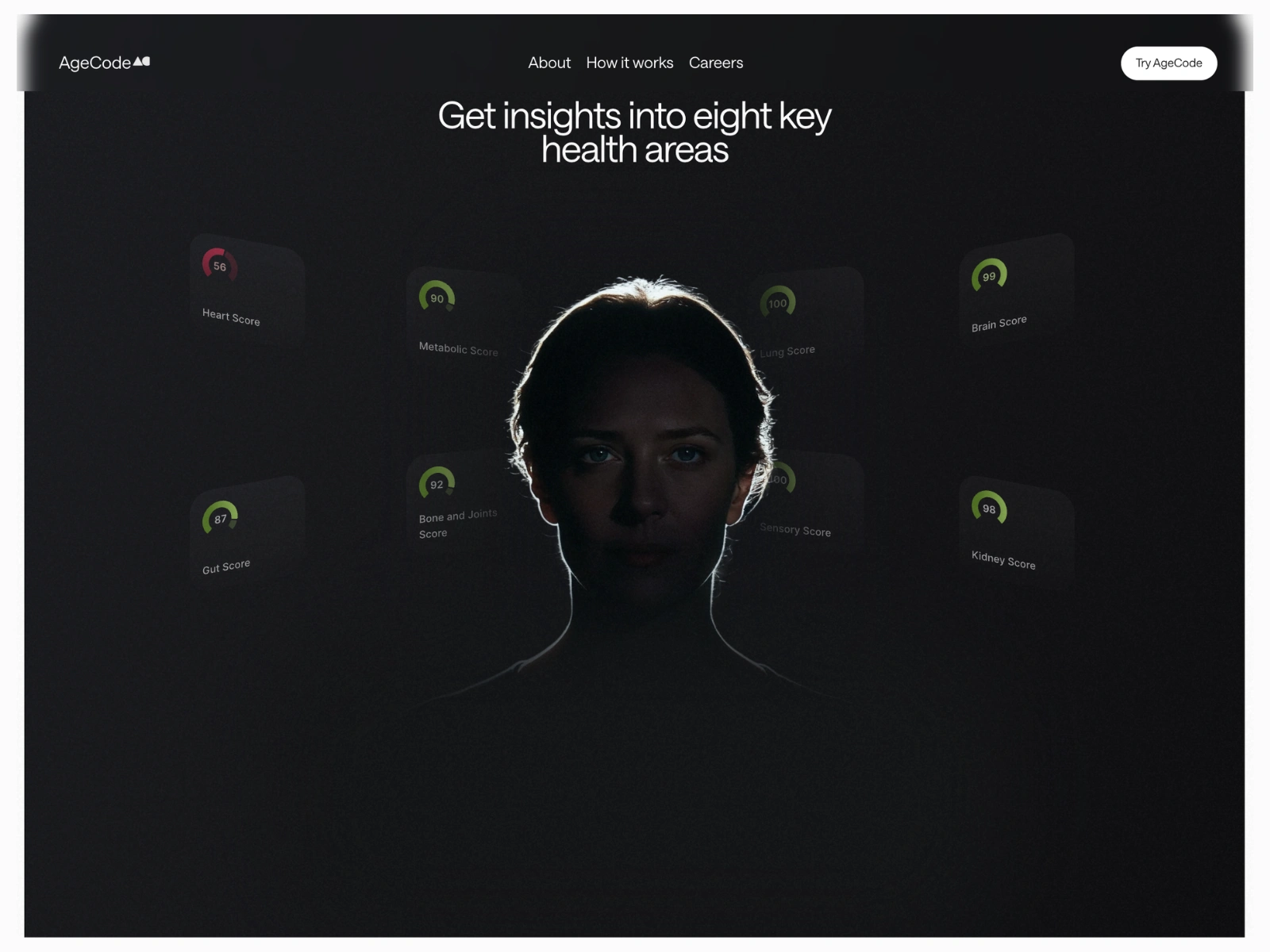
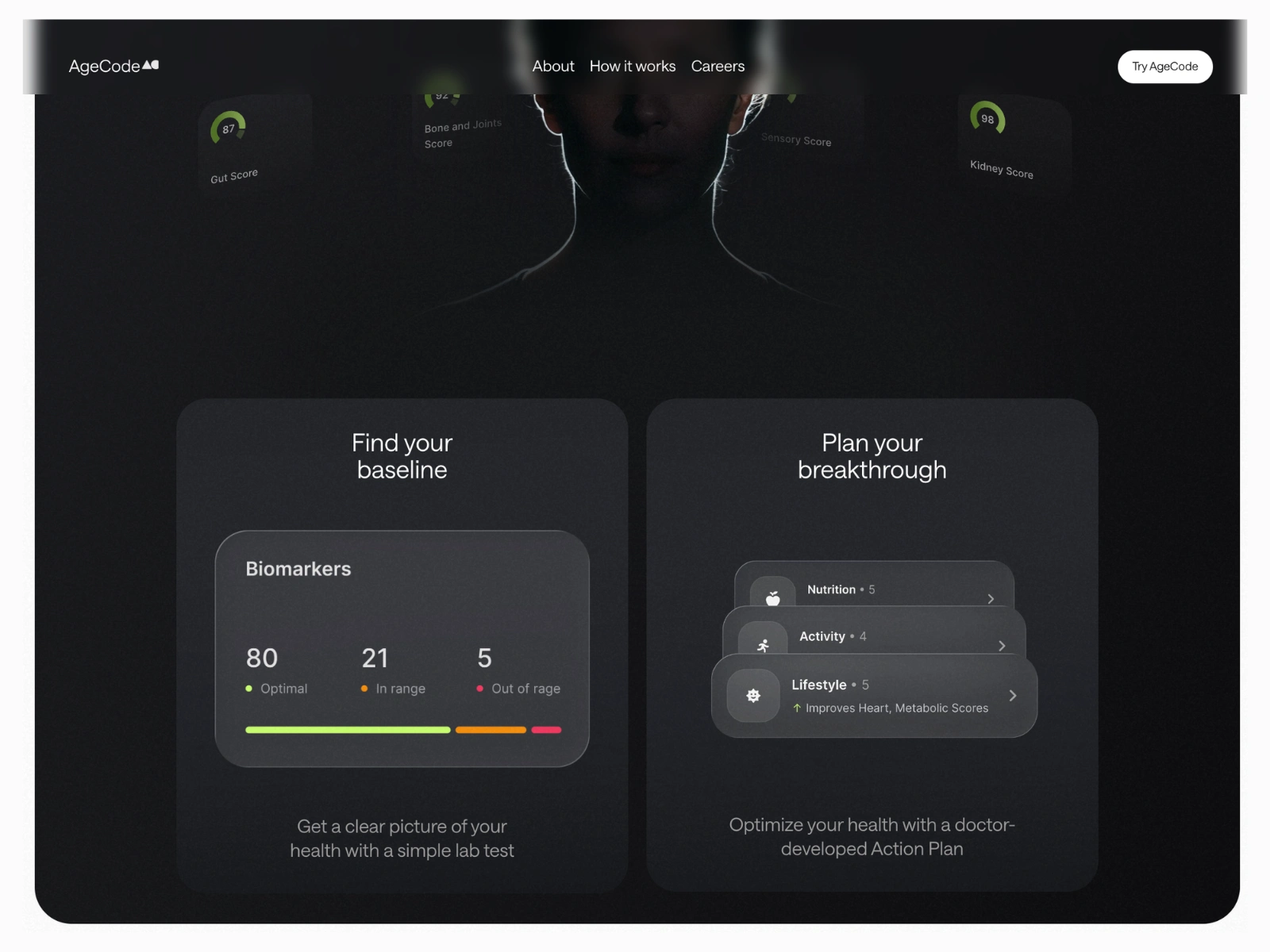
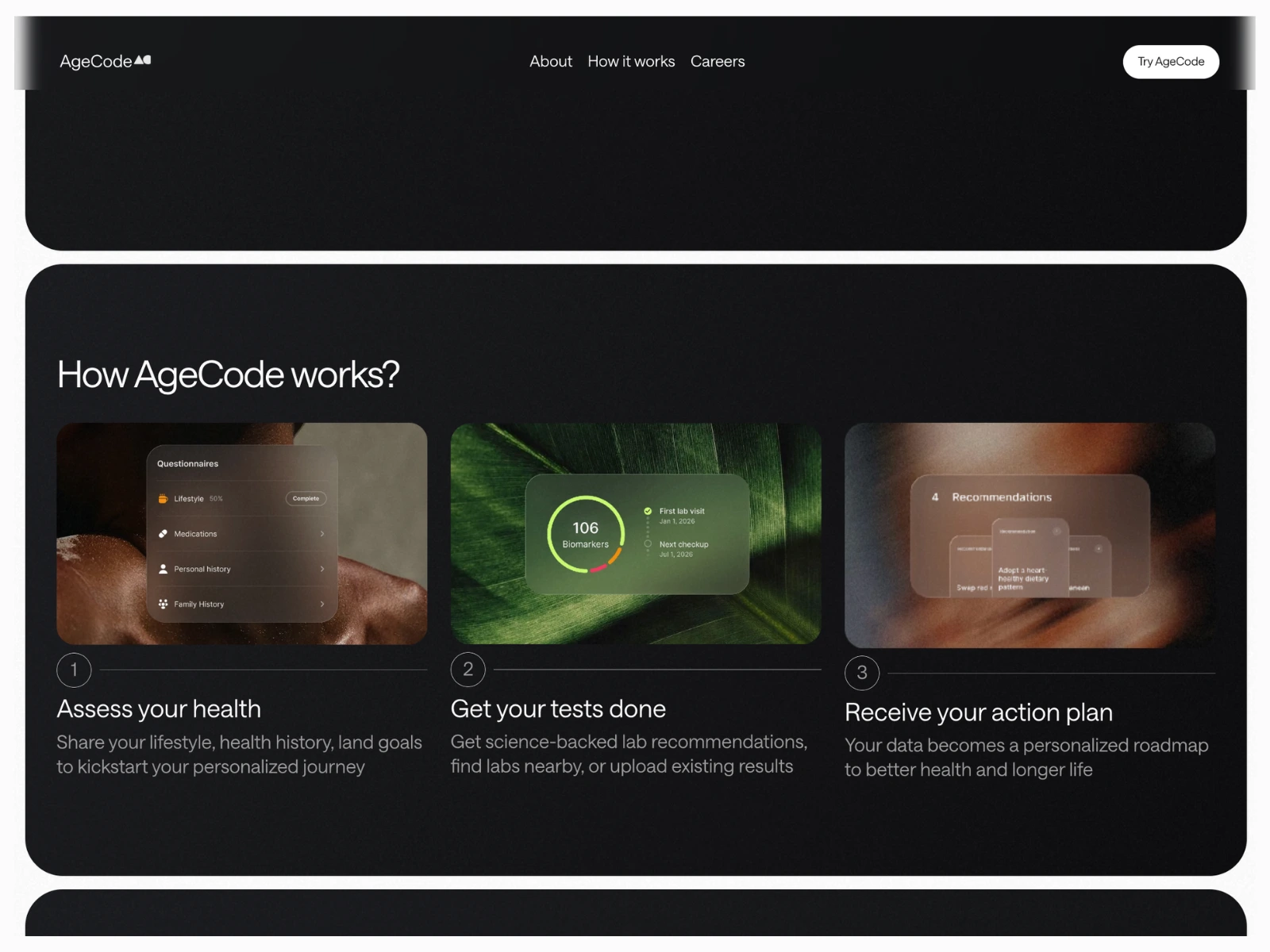
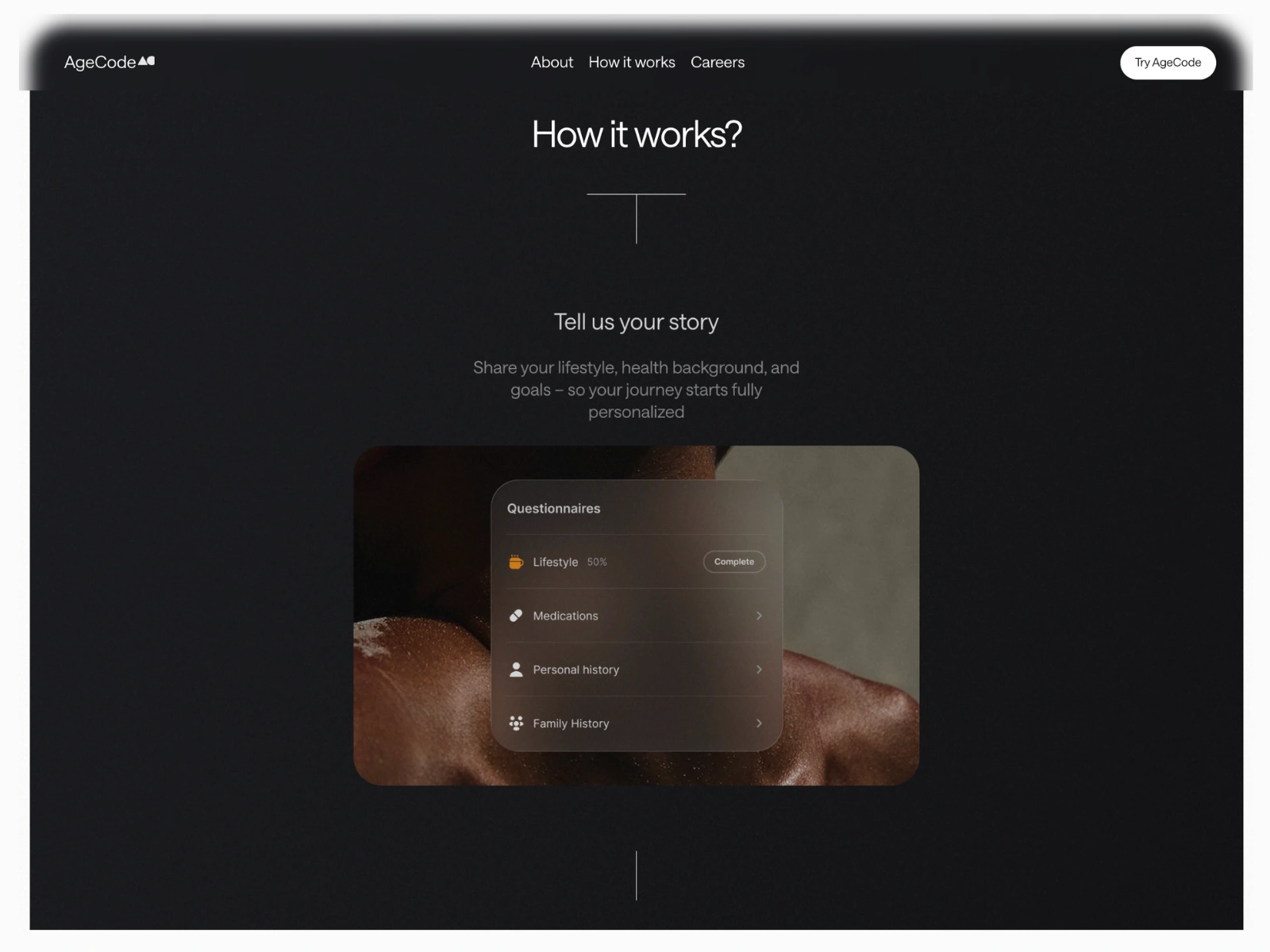
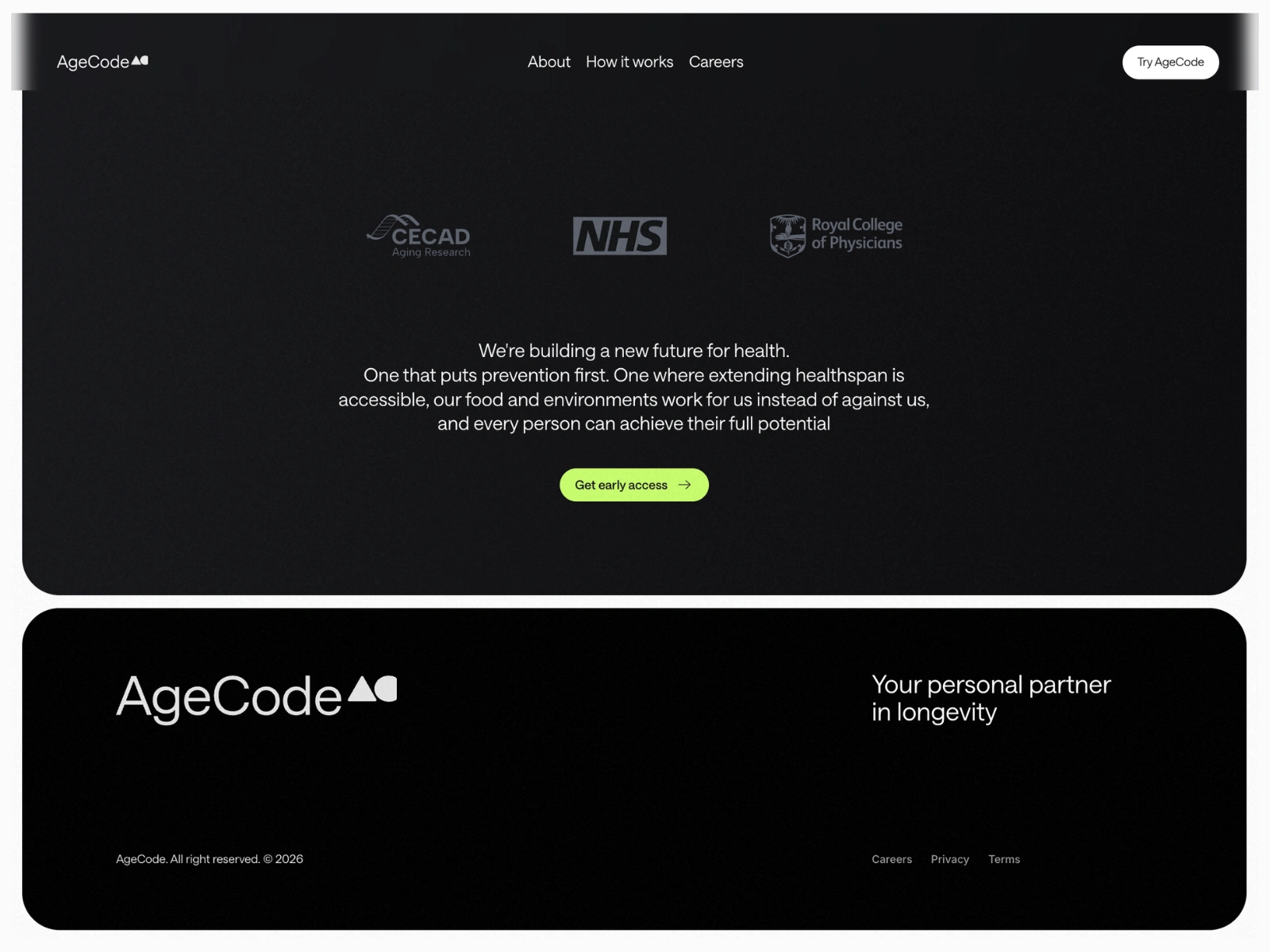
A single high-density landing page in Framer, designed as the public surface for the early adopter launch
A focused narrative flow that introduces the product, builds credibility, and drives signup in one continuous read
A small component and type system built specifically for this page, ready to scale into a full site later
Signup and analytics wiring tested end to end before launch
Full responsive behavior across desktop, tablet, and mobile, with mobile treated as a primary surface, not an afterthought
Craft and technical detail
A few things mattered more than usual on this project.
Hierarchy as the main design tool. With one page carrying the full message, every section had to earn its place. Type scale, spacing, and rhythm did most of the storytelling work.
Motion that supports trust. Animation was used to guide attention through the page, not to perform. In a health context, restraint reads as competence.
Performance as part of the brief. Image handling, lazy loading, and clean structure were built in from the start. A health app cannot afford a slow first impression.
Mobile-first discipline. Most of the early adopter audience would arrive from phones. The mobile experience was designed deliberately, not adapted at the end.
Launch-grade QA. Forms, links, metadata, and tracking were tested under real conditions before the page went live, because there was no second window to fix things during the holidays.
Built to grow. The page was structured so the next chapters of the product story can be added without rebuilding the foundations.
Outcome
The page shipped inside the holiday window and gave the team a credible public anchor for the early adopter launch. It turned a moment that could have slipped into January into a real launch event, and it set a visual and structural baseline the product can keep building on as the story develops.
Why this case is representative
This is the kind of project Kichigin Studio is built for.
A real product launch with a hard external date, where the website is the launch, not a brochure about the launch.
A scope deliberately kept small, so quality is the variable instead of timeline or polish.
A single page treated with the same systems thinking used on full multi-page builds, so it can grow without being rebuilt.
A finished surface that is fast, responsive, and easy for the team to maintain through the messy first months after launch.
Like this project
What the client had to say
I had a great experience working with Andrey Kichigin on design and a Framer website. He’s a true professional, very responsive, and fast to deliver. The final result looks excellent. I’m very happy and highly recommend him.

Alexandr Ovsiankin
Jan 20, 2026, Client
Posted Apr 29, 2026
A single Framer landing page for a health app launch, shipped inside a holiday window without faking a maturity the product had not earned yet
Likes
4
Views
48
Timeline
Dec 25, 2025 - Jan 20, 2026
Clients
AgeCode