Q3Ambientfest Visualizer: Digital FX for a Music Festival

Sal Vanegas


Q3Ambientfest Visualizer: 70 Minutes of Architectural Decay for a Potsdam Music Festival
A 70-minute visual piece screened at Q3Ambientfest 2023, built from architectural still-lifes of Potsdam and slowly corrupted using datamoshing, pixel sorting and custom digital decay. Performers scored it live, reading the images from the big screen as they played.
Client: Brueder Selke (Sebastian and Daniel Selke, also known as CEEYS)
Festival: Q3Ambientfest, 7th edition, Kesselhaus, Waschhaus Potsdam
Role: Video artist, digital FX, post-production
Tools: Adobe After Effects, Avidemux, FFmpeg, custom scripts
Runtime: 70 minutes, four movements
Year: 2023
The brief
Q3Ambientfest is a boutique neoclassical and experimental music festival founded by the brothers Sebastian and Daniel Selke, an award-winning Potsdam cello-piano duo. The festival is named after the Querwandbau, the GDR-era cross-wall construction the brothers grew up beside, and it deliberately sets contemporary music against Potsdam's architecture: Frederician palaces, neoclassical residences, brutalist Plattenbauten.
They found my work through a music video I shot in Mexico City in 2016 and wrote asking for the same treatment on their own material. Their footage was architectural still-lifes of Potsdam, completely locked off. They wanted subtle stretching and corruption applied across a very long runtime, and they were specific that the effects should not run continuously.
The piece would screen behind performers throughout the festival and function as something for the musicians to play against.
The first problem: there was nothing to corrupt
Datamoshing and pixel sorting work on motion vectors. They need movement in the frame to grab onto. The source footage was static architectural still-lifes, which means there was no motion data in it at all and nothing for the corruption process to act on.
So the movement had to be manufactured first. I broke the plates apart in After Effects and built artificial 3D camera moves across them: dolly in and out, push in and push out, zoom, pan left and right. None of this existed in the original footage. Every move was keyframed purely to generate the motion the corruption would then destroy.
Effects were then processed through a combination of Avidemux, FFmpeg and custom scripts inside After Effects. Each one was built against the specific geometry on screen rather than applied as a preset, so the decay behaved differently on a palace facade than on a panel building.
The second problem: too many ideas
The first delivery showed range. That was the mistake.
The curators came back with clear notes: too many different effects, the low-resolution look was distracting on a still-life image, and there was no visible logic to when the corruption appeared. They asked me to limit the palette rather than expand it.
Sebastian put it in the language he actually works in. Treat one effect as a bow across the footage, playing crescendo and decrescendo. Short waves with small amplitude and fast tempo for the quiet passages. Long waves with large amplitude and slow stretching for the loud ones. He called it the Heat Wave Cello.
That reframed the whole piece. Not a catalogue of techniques, one effect at varying intensity, structured like a score.
The structure
The 70 minutes were rebuilt as four movements:
Part 1, 20 minutes. Pure still-lifes, no pixel corruption. Slow zooms, gentle pans.
Part 2, 20 minutes. Slow soft waves. Heat haze, buildings beginning to stretch.
Part 3, 20 minutes. Faster, harder waves. Maximum turbulence.
Part 4, 10 minutes. Calming down, returning to the opening state.
Roughly 25 effects across the full runtime, appearing at three-to-five-minute intervals. The restraint was the specification.
The resolution: slowing the chaos down
Heat waves at normal speed still read as an effect. The eye clocks it, files it as a glitch, and stops looking. Across 70 minutes behind live performers, an effect that announces itself is worse than no effect at all.
The answer was to stretch the corruption in time until it stopped being perceptible as an event. The distortion never breaks, it drifts. A building deforms across a minute rather than a second, and the viewer starts second-guessing what they saw: was it doing that before? That uncertainty is the effect.
It is also what made the piece playable. A musician cannot respond to a glitch that lasts four frames. They can respond to something slowly swelling across a minute.
The result
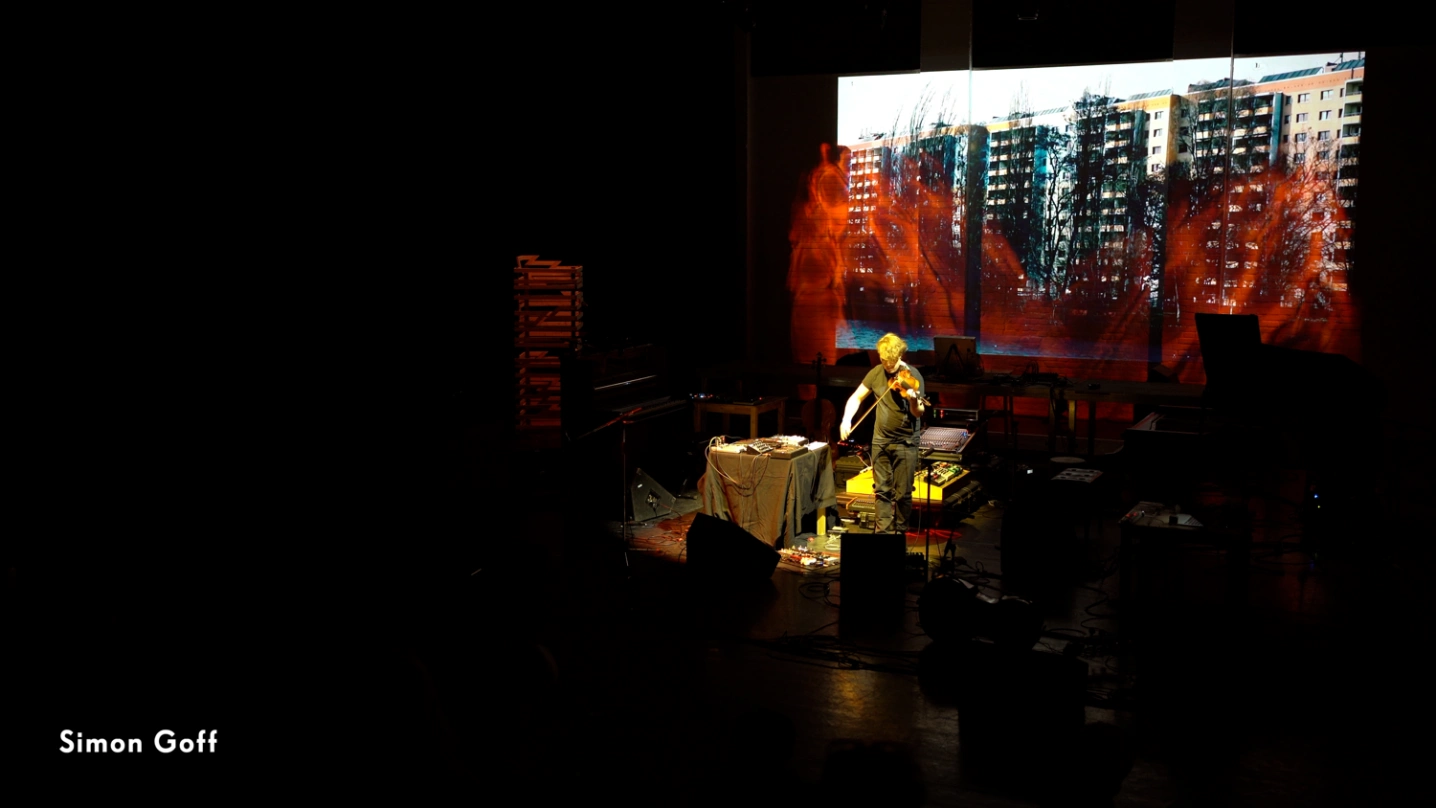
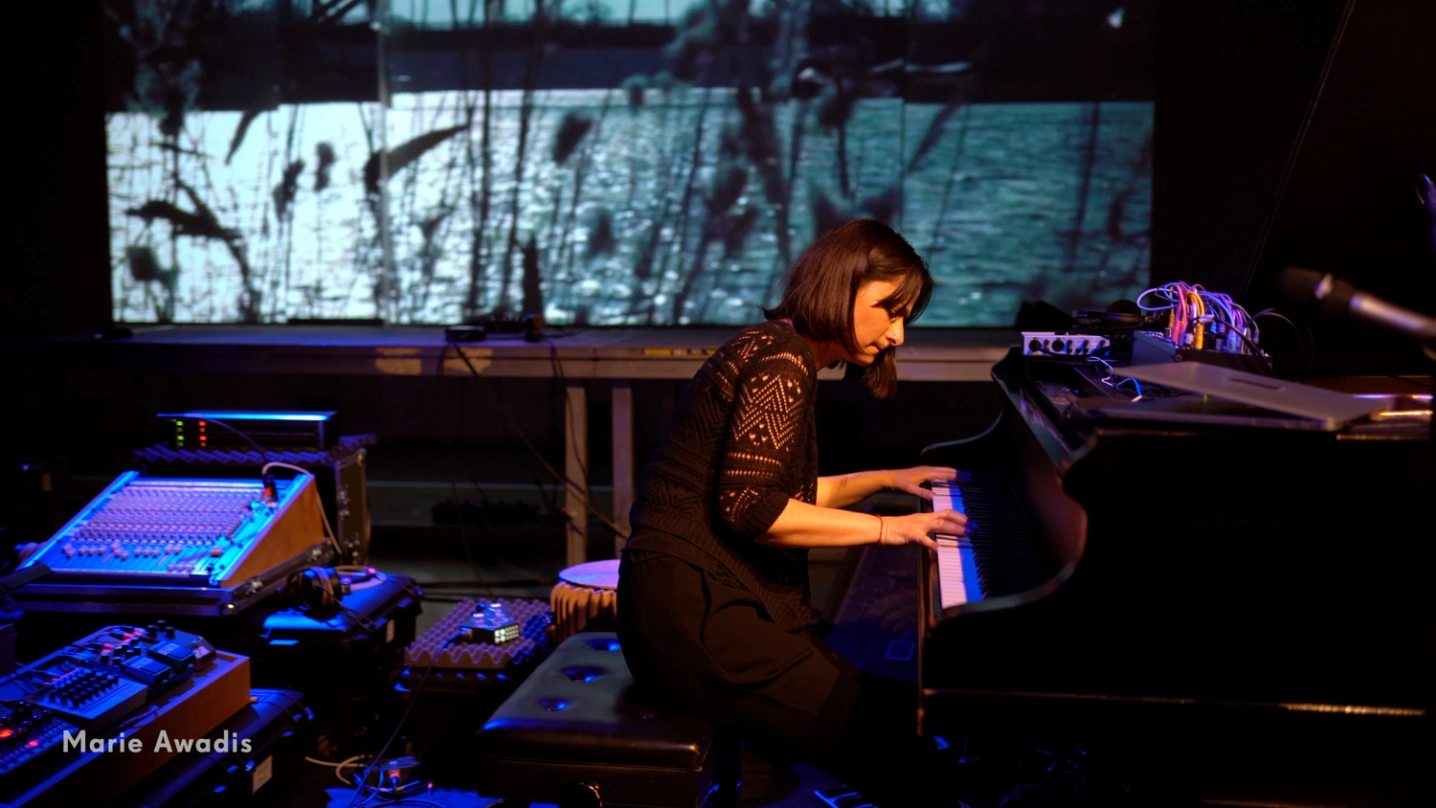
The visualizer screened throughout Q3Ambientfest 2023 and was scored live by performers during their sets. In interviews about the festival, the curators described the piece as intended to animate the artists so they would respond sensitively to the images on the big screen, creating a kind of musical score.
The work was credited in Headphone Commute, CLOT Magazine and The Berliner, all describing the still-life footage as transformed by video artist Sal Vanegas using time-based effects.
Specs
Source: Architectural still-life footage of Potsdam, supplied by the client
Camera movement: Adobe After Effects, keyframed artificial 3D moves
Digital corruption: Avidemux, FFmpeg, custom After Effects scripts
Techniques: Datamoshing, pixel sorting, bloom, heat haze distortion
Runtime: 70 minutes, four movements, approximately 25 effect events
Screened: Q3Ambientfest 2023, Kesselhaus, Waschhaus Potsdam
Delivered: January to February 2023, three milestones
Like this project
Posted Aug 6, 2026
70 min visuals for Q3Ambientfest in Potsdam. Architectural still-lifes corrupted with datamoshing and pixel sorting, scored live by performers at the festival.
Likes
0
Views
12
Timeline
Jan 1, 2023 - Feb 28, 2023