Website Design - Moose

Ronan Drumm


Web Design - Moose
Premium strength equipment for home and commercial gyms
Moose is a US strength equipment brand focused on high quality weight equipment and accessories. Their main differentiator is build quality and aesthetics. Most gym equipment looks functional but not desirable. They wanted to position their equipment as something worth collecting and displaying, rather than hiding in a garage.
Who it is for
Their core audience includes strength athletes and home gym owners who value both performance and industrial design. This group is willing to pay a premium for equipment that lasts and looks good, and they often research products deeply before purchasing. They also respond strongly to social proof from other lifters and from product photography that clearly communicates quality.
My role
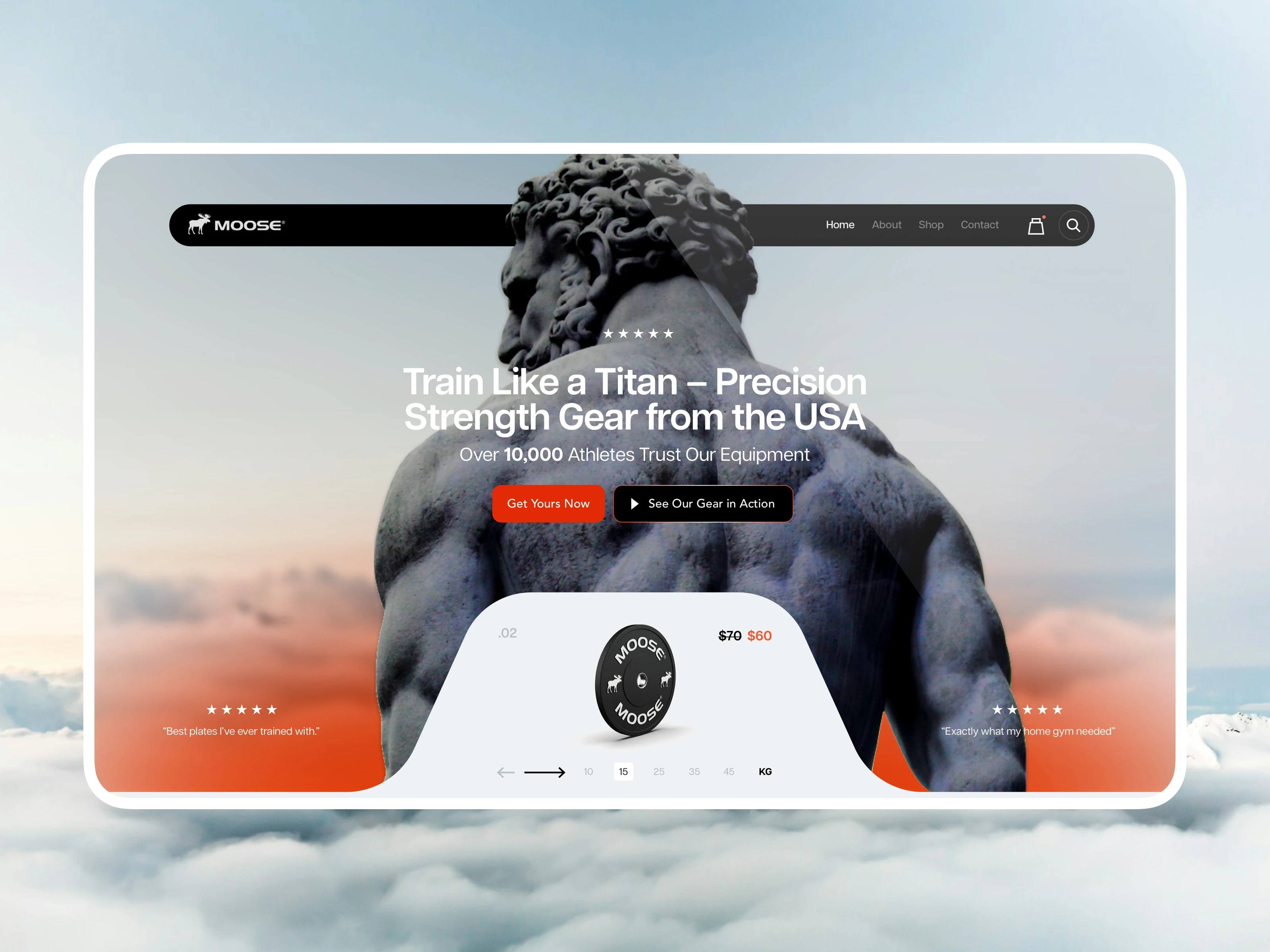
I was responsible for the web design and product presentation, including the hero section, merchandising layout, product storytelling, and the shopping experience. The goal was to elevate perceived value, explain the product line clearly, and make buying feel simple rather than technical.
Design approach
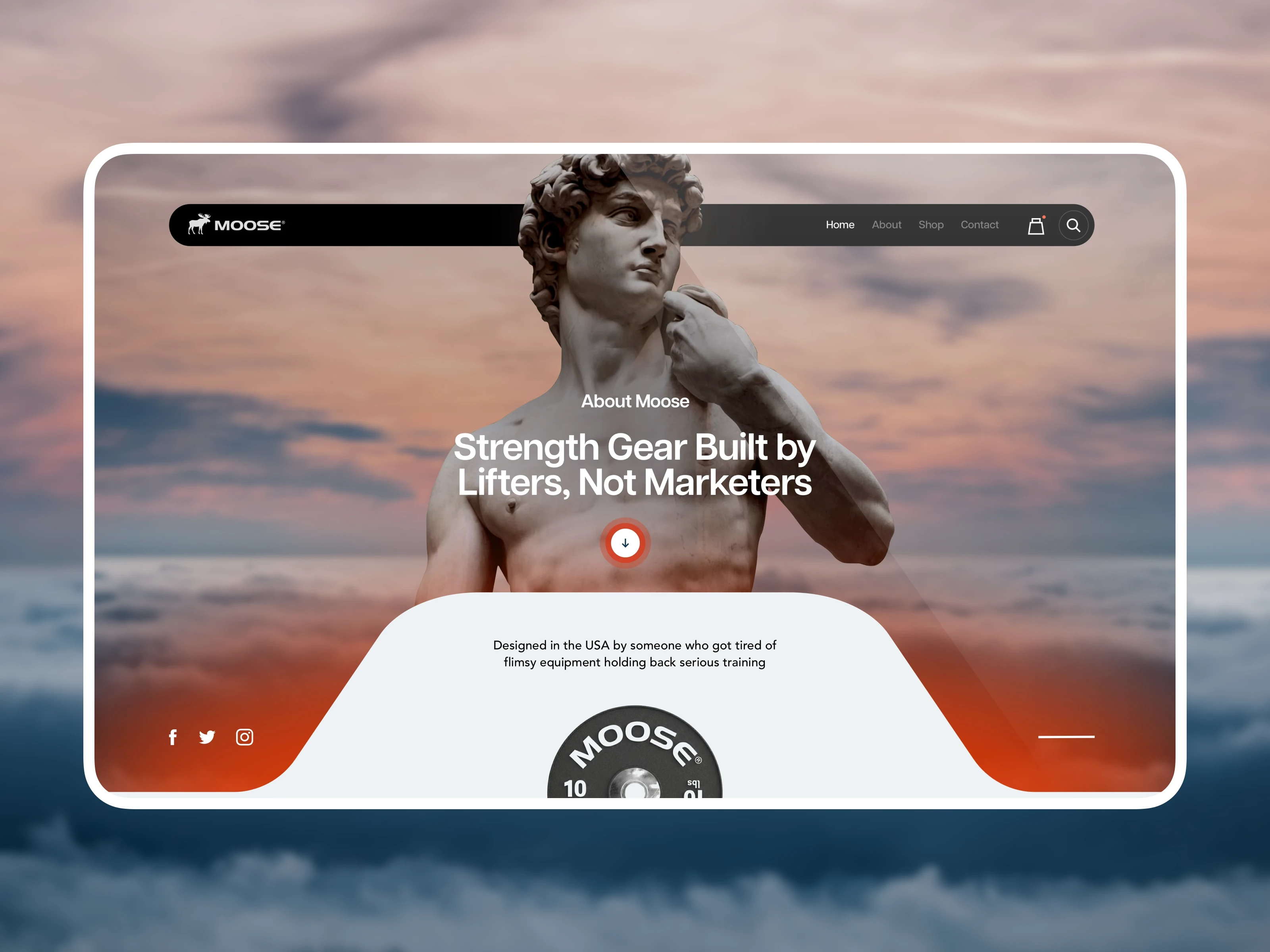
Most equipment brands rely on grit, heavy textures, and aggressive messaging. I took a cleaner and more sculptural approach. Using classical figure photography in the hero created immediate visual differentiation and connected strength training with craft and aesthetics rather than aggression.
Product pages focus on presenting each item as an engineered object. Spacing and minimal but intentional copy help the equipment feel premium and reduce visual noise. This approach encourages slower scrolling and increases perceived value, which aligns with a higher price point.
Navigation is intentionally simple. Weight training equipment can be confusing to shop for due to variations in weight, coating, and collar types, so I reduced cognitive load by separating products into clear categories and surfacing essential details without forcing users to hunt for specifications.
CTA placement and micro social proof cues help remove buying hesitation, especially for customers building home gyms. These buyers often purchase in phases, so reducing uncertainty matters.
Like this project
Posted Jan 21, 2026
Web design for a premium strength brand that elevates product perception and makes buying easier for serious lifters and home gym owners.
Likes
0
Views
10