Dutch Sentence Practice: AI Language Learning Prototype

Yuliia Prykhodko

Dutch Sentence Practice: AI Language Learning Prototype
A working AI language-learning prototype that helps English speakers practise Dutch through sentences, instant feedback, and contextual explanations.
The product moves learners beyond isolated vocabulary. It gives them a focused way to work with the words they are learning inside real sentence structures, then understand why an answer works.
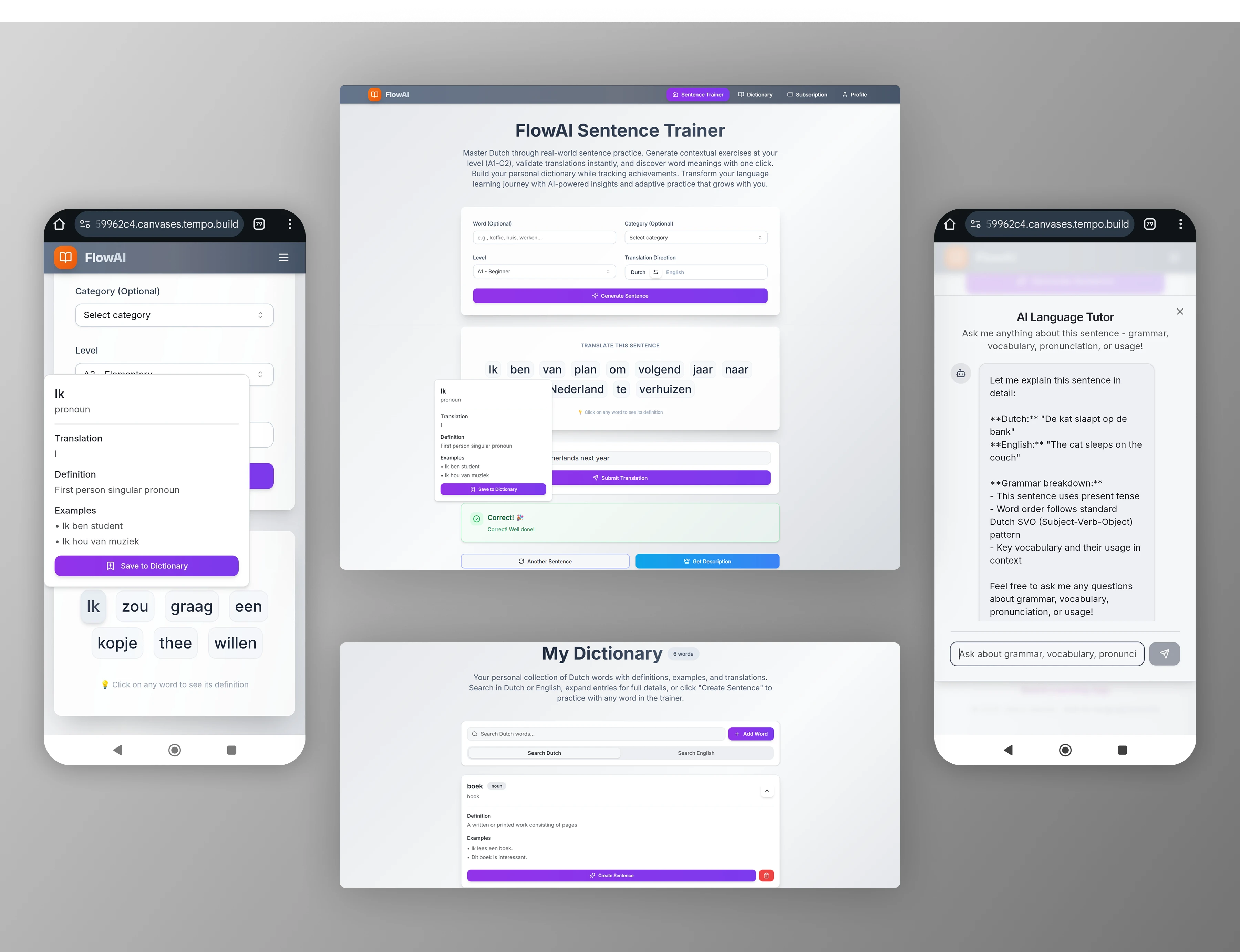
Dutch language-learning product overview
The product challenge
Language learners can memorise individual words and still struggle to use them in context. Sentence practice often lacks personalisation, while grammar explanations can arrive too late or feel disconnected from the learner’s immediate mistake.
The design question was: how might AI create targeted sentence practice around the vocabulary a learner actually wants to master?
The experience
A learner chooses a word, optional category, difficulty level, and translation direction. The product generates a Dutch sentence for them to translate, then checks the answer. From there, they can inspect individual words, save useful vocabulary, and request a deeper AI explanation when needed.
UX decisions that shaped the prototype
1. Practice begins with the learner’s goal
The flow starts with a chosen word, so each activity connects to vocabulary the learner wants to practise. Difficulty and translation direction add control without making the setup feel heavy.
2. Grammar stays connected to context
Instead of separating grammar into a generic lesson, the product offers an AI explanation for the exact sentence the learner is working with. It can clarify word order, grammar, and usage in context.
3. Every sentence becomes study material
Learners can click into a sentence word by word to see translations and alternative meanings. Useful words can move directly into a personal dictionary for later practice.
4. The dictionary supports a repeatable loop
Saved vocabulary is searchable and reusable. A learner can return to a word, generate a new sentence around it, and keep building confidence through context-based practice.
What I designed
Product concept and learning-flow architecture
AI interaction design for sentence generation and feedback
Vocabulary, translation, and difficulty-selection flows
Contextual grammar-explanation experience
Personal dictionary and repeat-practice loop
Working interactive prototype in Tempo
For AI and education product teams
I help teams turn an early learning idea into a clear, testable product experience. My work connects AI interaction logic, learner needs, UX flows, and interface design, creating a prototype that makes the product direction easy to evaluate before development.
Like this project
Posted Jul 24, 2026
AI language-learning prototype for Dutch sentence practice, combining targeted prompts, instant feedback, word-level support, and contextual grammar help.
Likes
0
Views
10