SpeechCare: UX Prototype for Speech Therapy Support

Yuliia Prykhodko


SpeechCare: UX Prototype for Speech Therapy Support
A mobile product prototype that helps speech therapists, parents, and caregivers share practical routines and support children’s speech development between sessions.
SpeechCare turns a fragmented flow of tips, exercises, progress updates, and questions into one guided experience. It gives professionals a clearer way to share methods, while giving parents approachable support they can use at home.
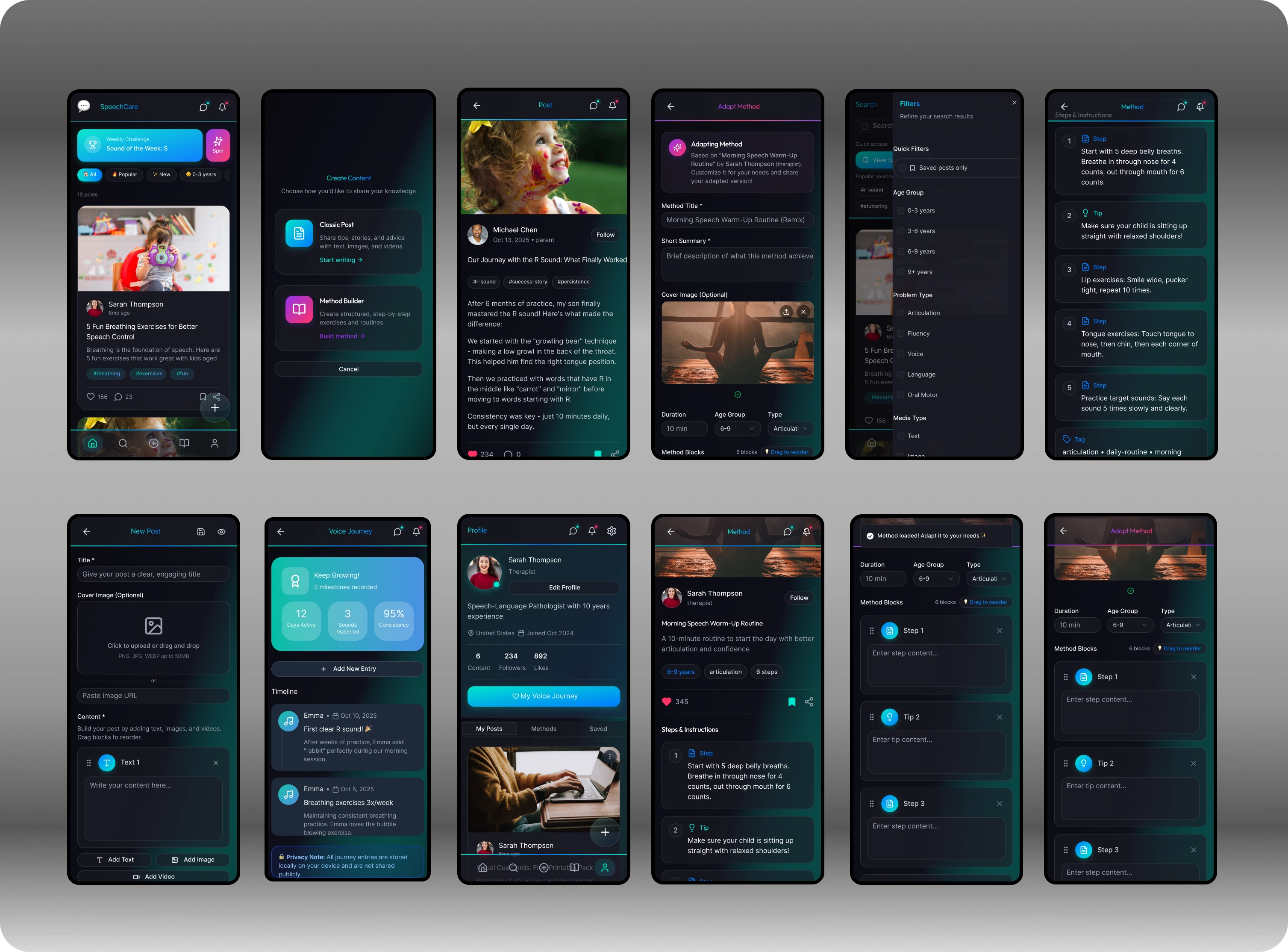
SpeechCare product overview
The product challenge
Speech therapy often continues outside the session, but helpful techniques and routines are scattered across chats, social feeds, and personal notes. Parents need clear guidance they can return to. Practitioners need a practical way to share methods without rebuilding the same explanation each time.
The design question was: how might one product make professional knowledge easier to share, find, adapt, and use in everyday practice?
The experience
SpeechCare brings together a community feed, structured therapy methods, creation tools, discovery filters, and small engagement loops. The prototype maps a product where people can browse ideas, create reusable routines, share progress, and find content relevant to a child’s age and speech goal.
UX decisions that shaped the product
1. Structured methods alongside everyday posts
The product separates freeform community updates from step-by-step therapy routines. Professionals can share expertise in a format parents can follow, while the community still has space for questions, progress, and encouragement.
2. A guided method builder
Creating a useful routine should not begin with an empty text box. The method builder gives contributors a structure for turning a technique into clear, repeatable steps.
3. Discovery built around a real need
Age and speech-goal filters help parents and caregivers narrow content to what is relevant now. Search and categories keep practical guidance from getting buried in a feed.
4. Gentle reasons to return
Weekly challenges and an inspiration wheel add small prompts for continued practice. They support consistency without making the experience feel like another obligation.
What I designed
Product concept and user-flow architecture
Problem framing for parents, caregivers, and speech therapists
Community, post creation, and structured-method flows
Search, category, age, and speech-goal discovery patterns
Interaction design, screen transitions, and dark-theme UI
Complete interactive prototype in Figma Make
For health and education product teams
I help early-stage teams turn a complex user problem into a clear, testable product prototype. My work connects user needs, UX structure, interface design, and interactive flows, so a team can align on the product before development begins.
Like this project
Posted Oct 27, 2025
UX prototype for a speech therapy support app, helping professionals and parents share structured routines, practical guidance, and progress.
Likes
0
Views
8