Numen Tarot: Built Card by Card

Jordan Atkins


Most tarot apps pick a card and paste a definition under it. I wanted the opposite: a reading table that feels like sitting across from a careful reader, and an engine honest enough that every part of it could be inspected.
The deck
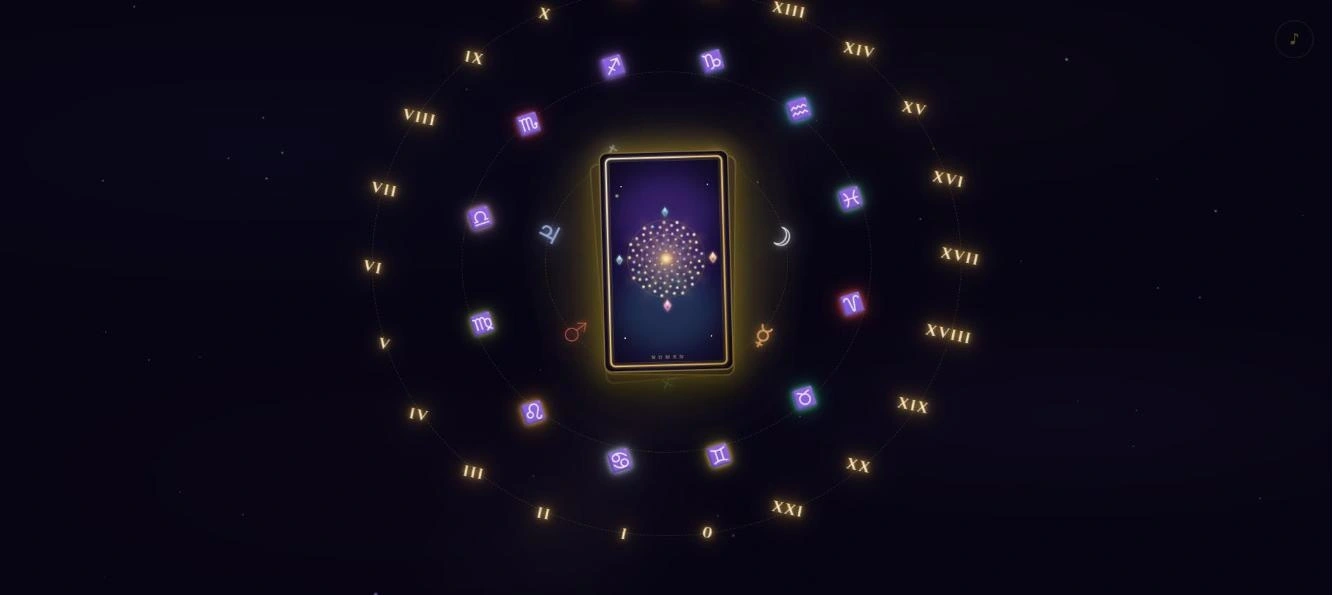
The reading uses Pamela Colman Smith's 1909 deck, and every one of its 78 cards carries a narration in five layers: what the image actually shows, what the card means in its lineage beginning with Waite's Pictorial Key, what it is asking of you now, its shadow, and a practice to carry through the week. The deck sits at the center of a slowly turning wheel of the twenty-two Major Arcana, the twelve signs, and the seven classical planets, and each suit brings its own color into the reading.
A shuffle you can verify
The code calls it consecrated sortition. Every swap in the shuffle is drawn fresh from the operating system's own randomness, with no seed that could be predicted or replayed, and the deck is checked after every shuffle so no card can go missing or appear twice. Each draw is then sealed with a short cryptographic signature of the moment it happened, printed beneath the spread as proof the cards were really dealt.

The reader
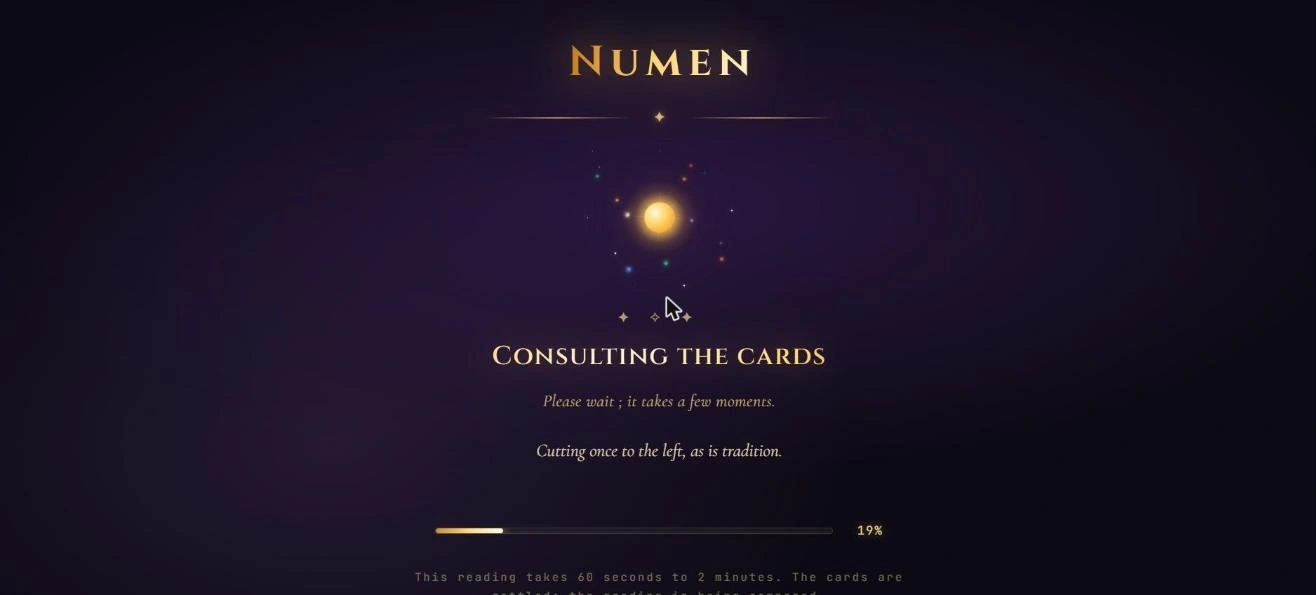
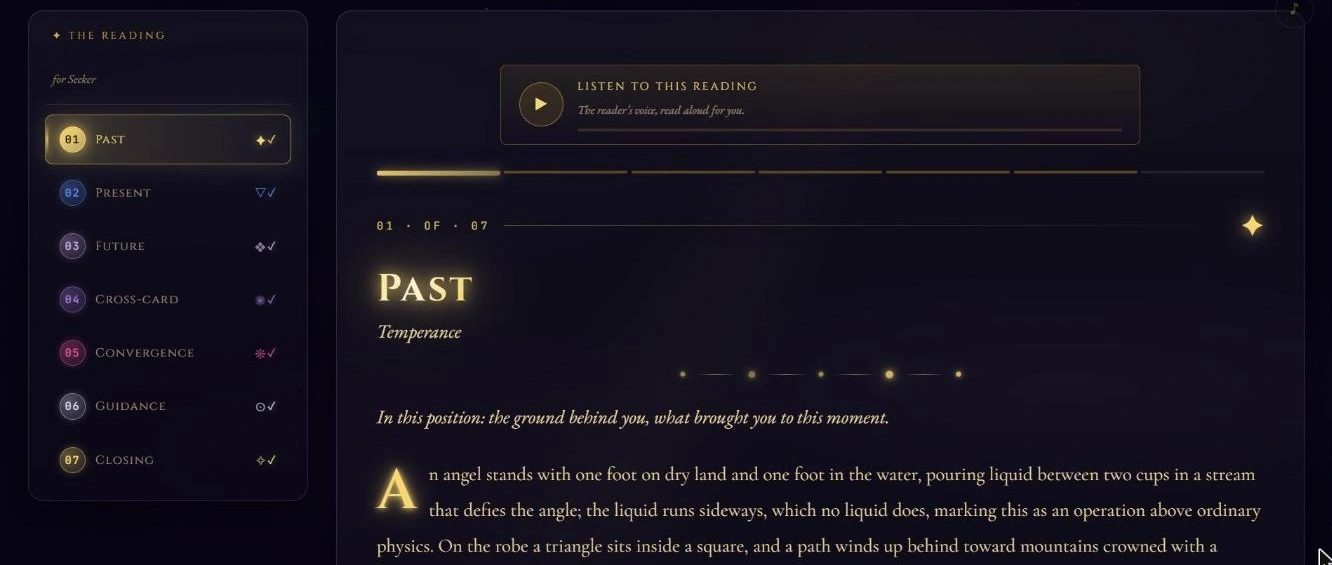
Each spread opens with the reader's ritual, spoken before the cards turn. For the daily card, the deck is shuffled once, held face-down until the room settles, and cut to the left with the left hand. The reading then unfolds in chapters, the card itself, a cross-card, the convergence, guidance, and a closing, and every one of them can be heard aloud in the reader's voice.
Tied to the rest of Numenist
A Hermetic correspondence engine connects every card to the rest of the platform. Each numbered card sits on a station of the Tree of Life, from the Aces at Kether to the Tens at Malkuth, and each Major Arcana card is mapped against the Life Path and Personal Year archetypes, so a daily card is read against a person's own numbers.
The ethics it runs on
The reader works from a written Master Prompt with a code of ethics it cannot step around. Death is never read as physical death. Nine heavy cards, among them the Tower and the Ten of Swords, always arrive with careful, trauma-aware framing. Every reading must name both a gift and a growth edge. Questions about health, legal matters, money, or custody are handed to the right kind of professional by name, and a seeker in crisis is given real help instead of a reading. The engine also protects itself; anything a seeker types is treated as their question and never as instructions, so a reading cannot be hijacked by injected text.
Built in TypeScript and JavaScript with streamed Claude readings, inside the Numenist platform, with tests covering the shuffle, the free-draw allowance, crisis handling, and the reading composer.
Like this project
Posted Oct 26, 2026
A tarot reader I designed with 78 narrated cards, verifiable shuffles, spoken rituals, and AI readings held to a written code of ethics.