Healthcare SEO & E-E-A-T Fix - Happiher Health

Everther Studio


The Problem
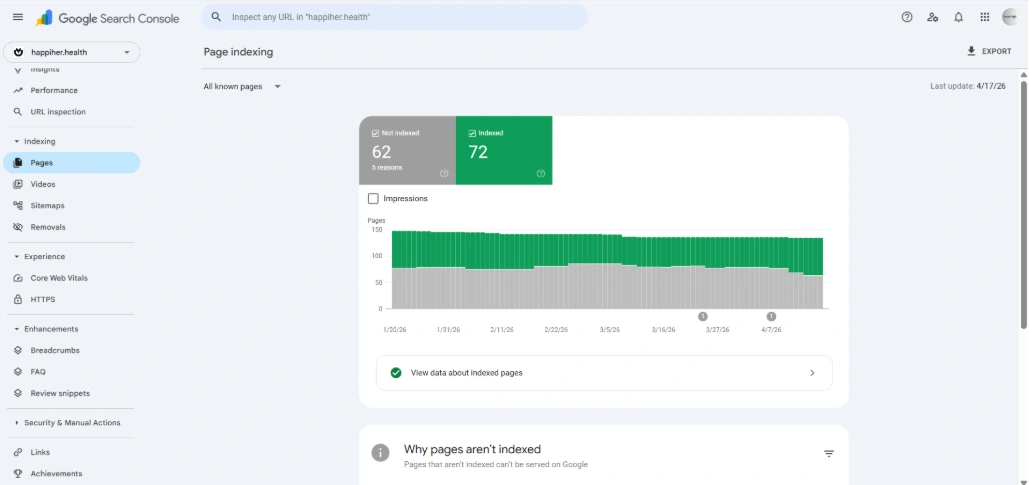
Happiher Health launched on Framer with clean design but 0 Google visibility. The entire site was invisible to search engines.
When I audited the setup, I found 3 critical blockers-
Server firewall was blocking Google and Bing crawlers completely. Not slow indexing. Total ban
Framer couldn't handle medical schema requirements. YMYL sites need advanced E-E-A-T signals. Framer's limitations meant we couldn't verify Dr. Kaur's GMC license or implement proper MedicalCondition schema
Pages looked clinical, not trustworthy. Text-heavy pages with no visual context. Patients looking for private gynaecology care expect premium imagery, not stock photos or blank layouts
The Partner had invested in professional copywriting but couldn't get a single patient inquiry from organic search
What I Did-
Phase 1- Platform Migration & Technical Recovery
Migrated the entire site from Framer to WordPress with Elementor. This wasn't just a content copy—I rebuilt the architecture to support medical SEO requirements.
Fixed the crawl ban. Firewall was in "Bot Fight Mode" blocking legitimate search bots. Configured proper crawler access and submitted fresh sitemaps to Google and Bing.
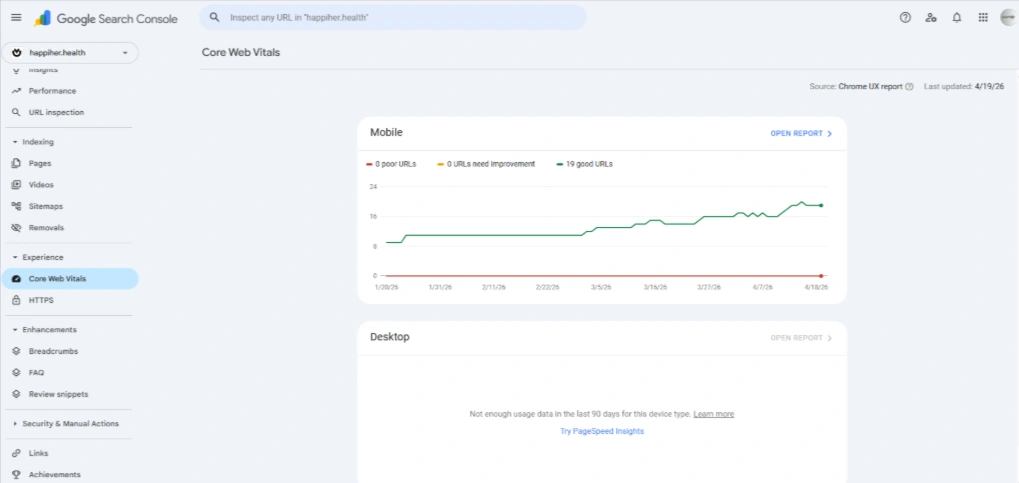
Optimized site speed. Configured LiteSpeed caching and minification. Achieved 100% "Good" URLs in Core Web Vitals so page speed wouldn't kill rankings.
Phase 2- Visual Trust Signals
Created custom medical imagery using AI prompts to match the "private clinic" brand positioning. Replaced generic stock photos with styled visuals across all 72 pages.
This wasn't decoration. Medical sites need visual credibility. Patients researching surgery need to see professional environments, not clip art.
Result- Time on page increased because pages finally looked like a legitimate private practice.
Phase 3- Medical Authority (E-E-A-T)
Connected the site to Dr. Kaur's verified credentials:
GMC license
LinkedIn profile
Hospital affiliations
Wrote custom JSON-LD schema for-
MedicalCondition pages
SurgicalProcedure pages
Physician entity markup
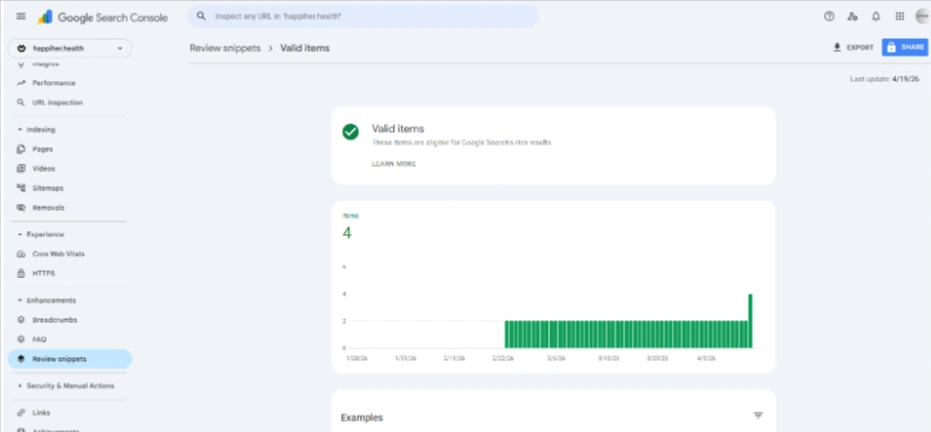
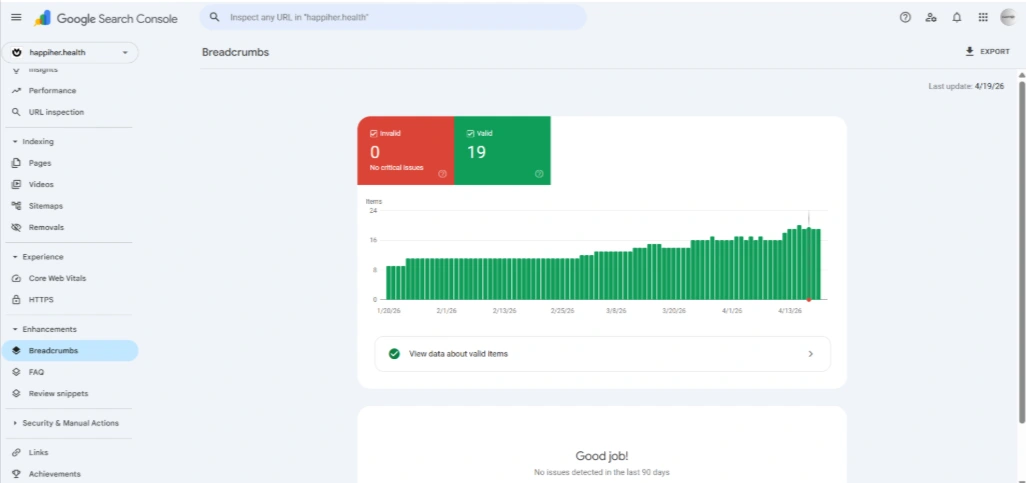
Integrated Doctify review system with AggregateRating schema so 5-star reviews could trigger Google rich snippets.
Rebuilt internal linking. Connected orphaned condition pages to relevant treatment pages. This created a knowledge graph structure that helped bots understand topic relationships
Phase 4- Answer Engine Optimization
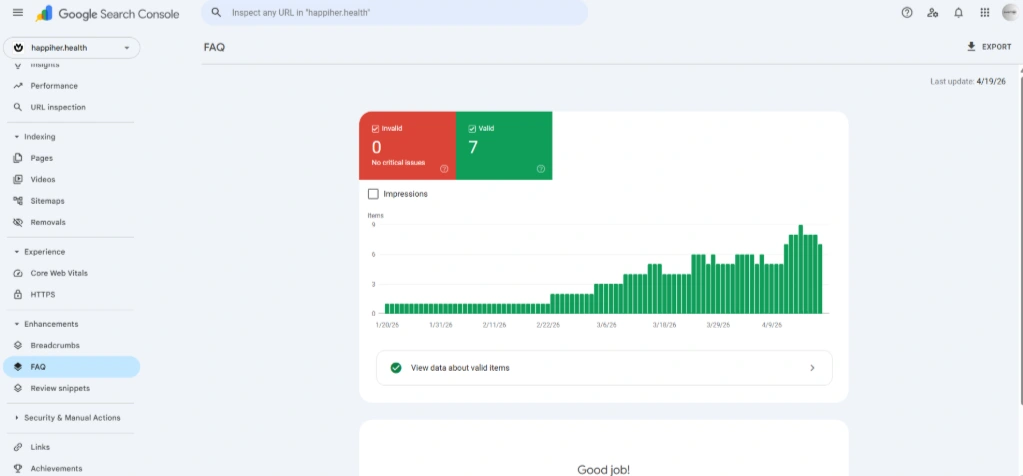
Integrated FAQ schema on every condition page so answers could be cited by ChatGPT Search and Perplexity.
Deployed llms.txt file to help AI models quickly locate authoritative content for medical queries
The Results
From zero indexing to live rankings
Average search position- 4.4
Impressions- 86,600+
Rich snippets- Successfully triggered Google Stars and FAQ results
Patient inquiries- Steady organic growth from zero
The site went from completely invisible to ranking on page 1 for private gynaecology services in competitive UK markets
Why This Worked
Most developers would have just "fixed the firewall" and called it done. That gets you indexed but doesn't get you ranked.
Medical SEO requires three layers working together-
Technical trust (schema, credentials, site speed)
Visual trust (professional imagery, premium design)
Content trust (internal linking, FAQ optimization, review integration)
I handled all 3. The migration gave us the technical foundation. The schema and credentialing established medical authority. The visual refresh reduced bounce rate and increased engagement signals
What I Learned
Framer is great for portfolios and agency sites. It's terrible for YMYL (Your Money or Your Life) content that needs deep technical SEO.
If a client is in health, finance, or legal—platform choice matters more than design aesthetics. WordPress with proper schema implementation beats a beautiful Framer site that can't rank.
Also- firewall misconfiguration is the most common cause of "why isn't my site indexing" issues. Always check crawler access before assuming it's a content problem.
SKILLS & TOOLS USED
Migration & Platform
Framer to WordPress migration
Elementor page builder
URL mapping and 301 redirect management
LiteSpeed caching configuration
Technical SEO
Google Search Console
Bing Webmaster Tools
JSON-LD Schema (MedicalCondition, SurgicalProcedure, Physician)
Core Web Vitals optimization
Firewall debugging and crawler access management
On-Page SEO
Internal linking architecture
Content clustering
Image SEO and alt text optimization
FAQ schema implementation
E-E-A-T & Medical Authority
GMC license verification and entity connection
AggregateRating schema integration
Doctify review system setup
Social proof implementation
AI Readiness (AEO)
Answer Engine Optimization
llms.txt deployment
FAQ widget integration for AI citation
Client Type- Private medical practice (YMYL)
Industry- Healthcare / Private Gynaecology
Location- United Kingdom
Like this project
Posted Apr 22, 2026
Migrated private gynaecology practice from Framer to WordPress. Fixed zero indexing, achieved 4.4 average search position, 86K+ impressions.