Aissi: Designing a Specialized Voice-First AI Assistant

Yurii Funkendorf


Aissi. Specialized voice-first AI assistant
Building a Specialized AI Environment for Hands-Free Use
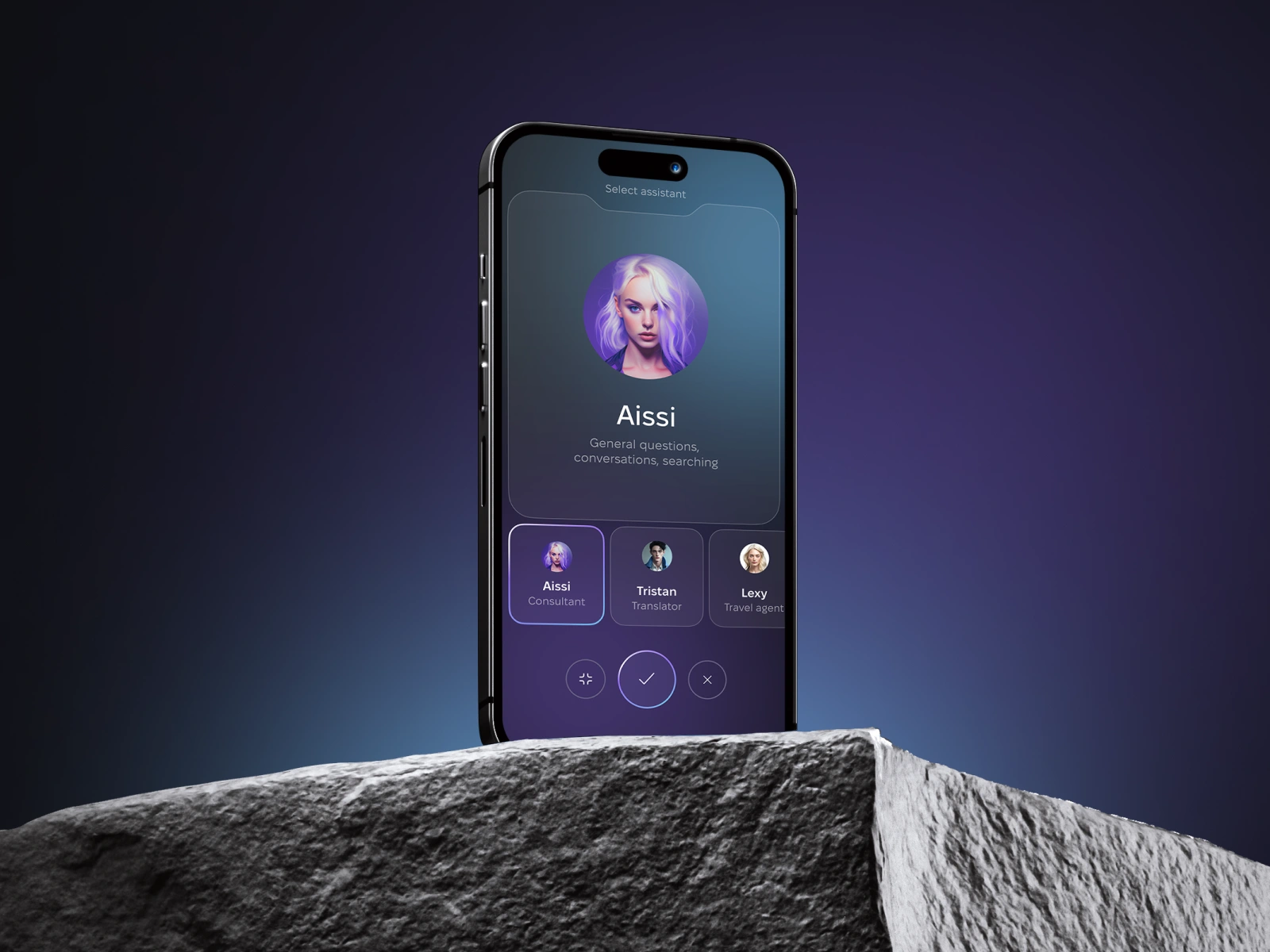
Aissi is a mobile AI assistant built to fix the flaws of "generalist" chatbots. While most AI tools lose context or give vague answers when jumping between topics, Aissi uses a "Concierge" model to guide users toward specialized LLM personas. Our goal was to create a voice-first, inclusive experience that feels natural while multitasking, like driving a car, without losing visual polish. We turned a raw concept into a production-ready design ecosystem that supports dozens of experts while keeping conversational flows sharp and predictable.
Aissi Tech
Discovery Phase, UX Strategy, UI Design, Design System, Prototyping
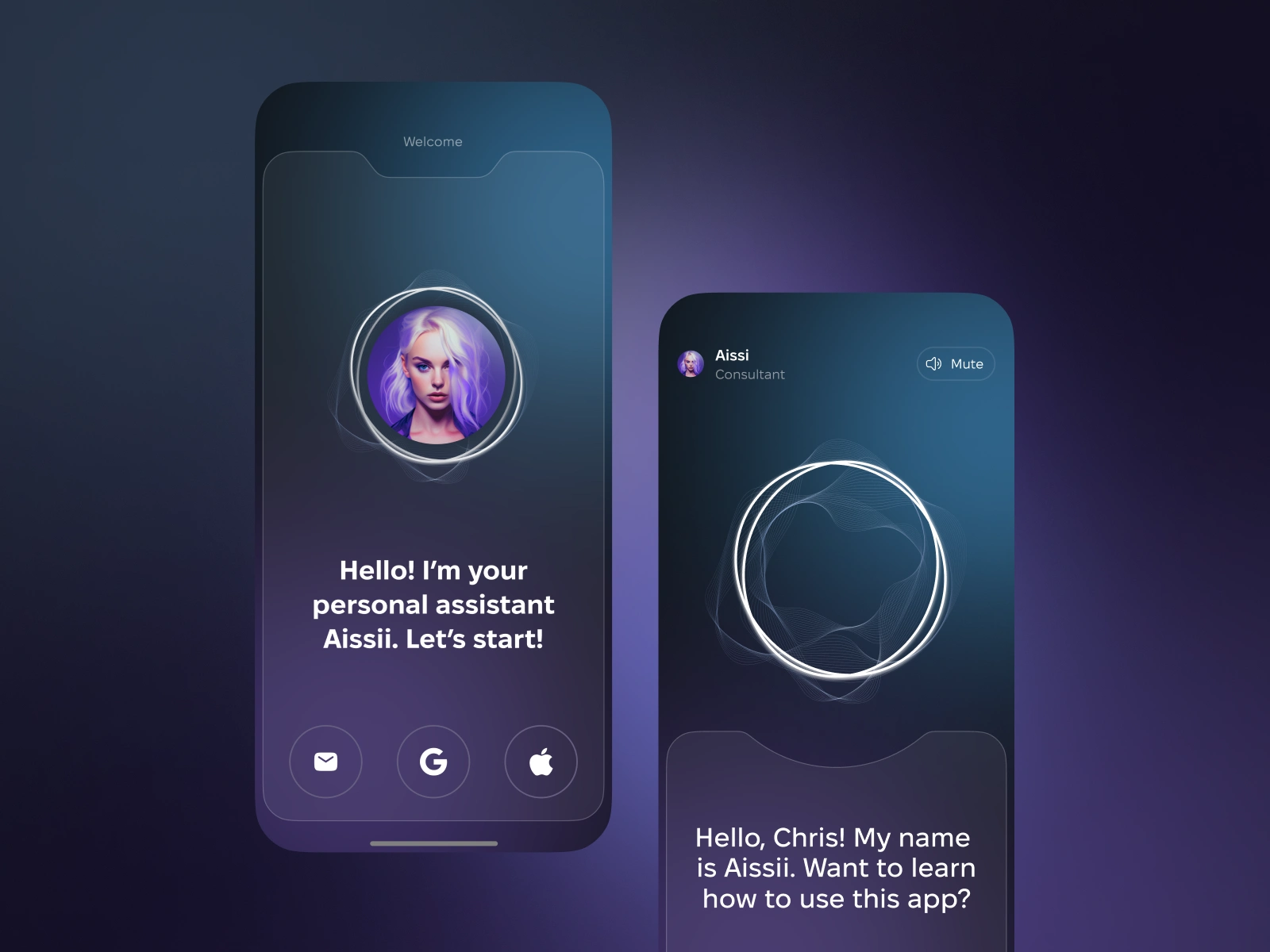
Fixing the Generalist AI Flaw: The Move Toward Experts
The current market is cluttered with text-heavy bots that struggle with specific professional contexts. Our client saw a clear gap: users wanted an assistant that acted like a team of specialists rather than one average bot. Whether chatting with a chef, a fitness coach, or a travel agent, the transition had to be frictionless. We focused heavily on reducing cognitive load for the user. Since someone driving can't look at a screen, we built a "Voice-First" setup where the Aissi Concierge acts as a smart router. It hears what the user needs and pulls in the right expert automatically, delivering high-value answers without manual clicking.
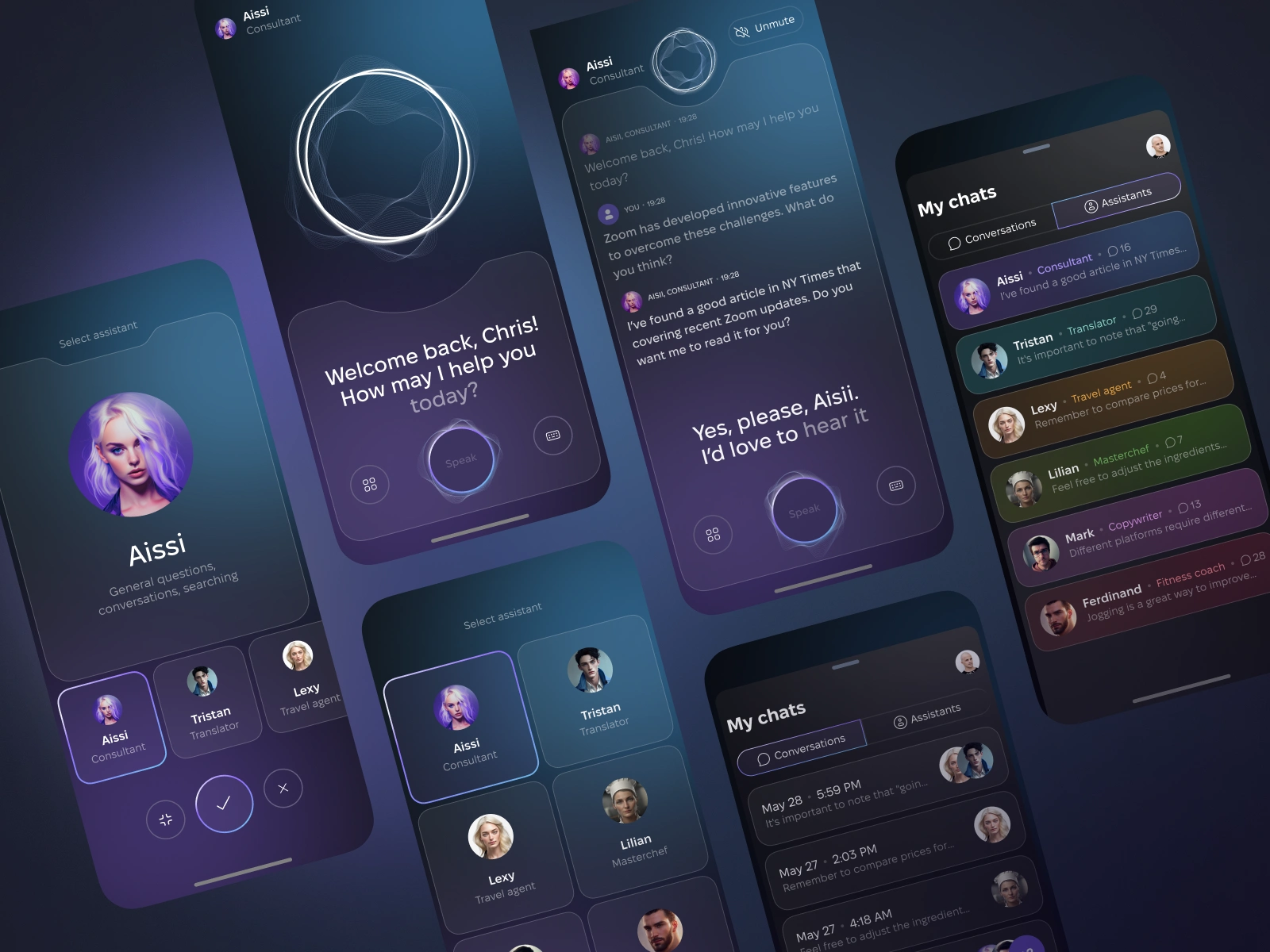
Core Features and System Logic
We built a unified workspace that included:
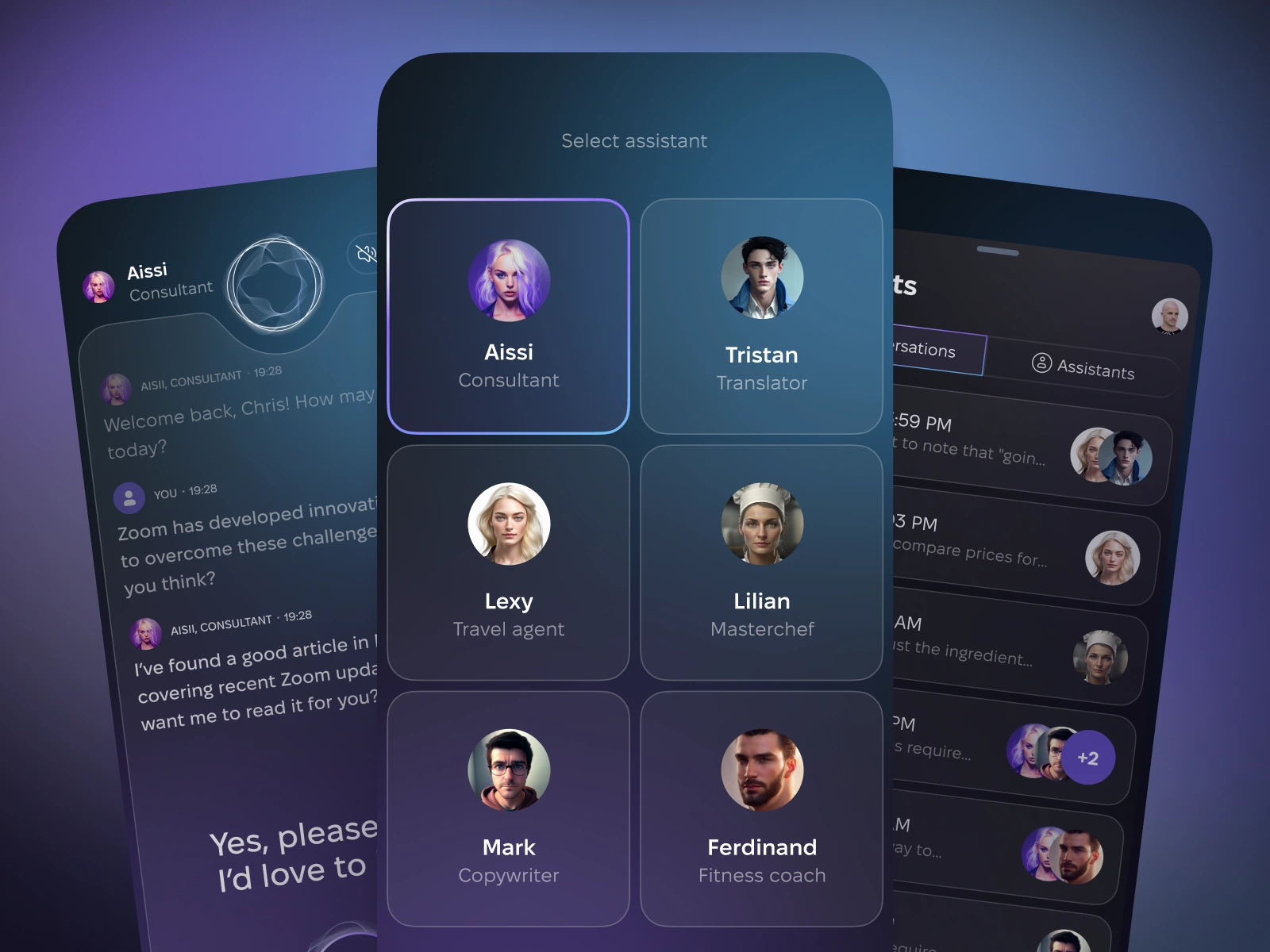
A smart 'Concierge' logic that routes user requests to specialized expert models.
A hands-free navigation flow with real-time transcription and voice-to-text sync.
A dual-view history archive for searching by time (Sessions) or by topic (Personas).
Flexible accessibility settings, including text-only modes and mute toggles for voice.
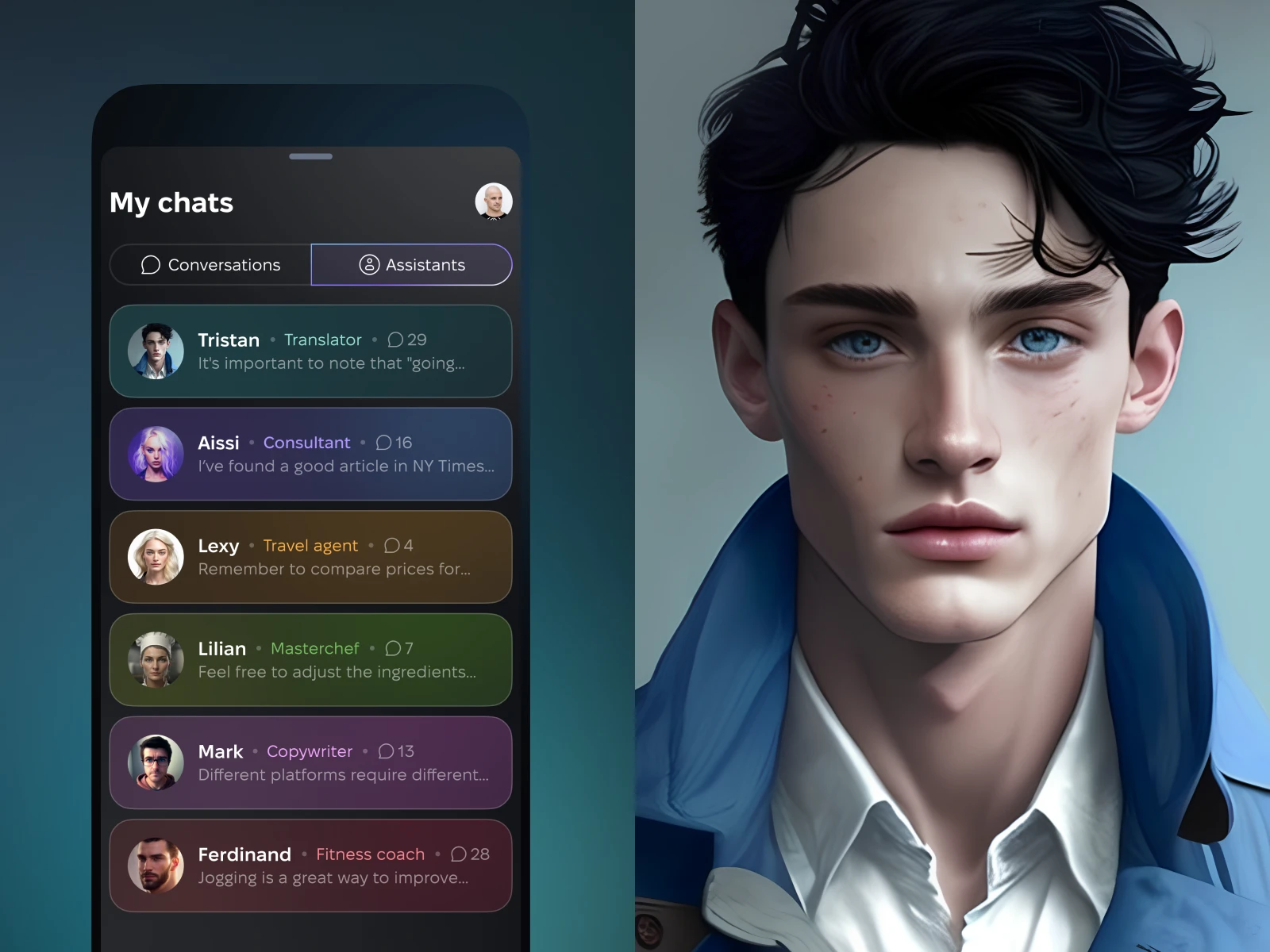
A dynamic UI that shifts its color palette and avatars based on which persona is active.
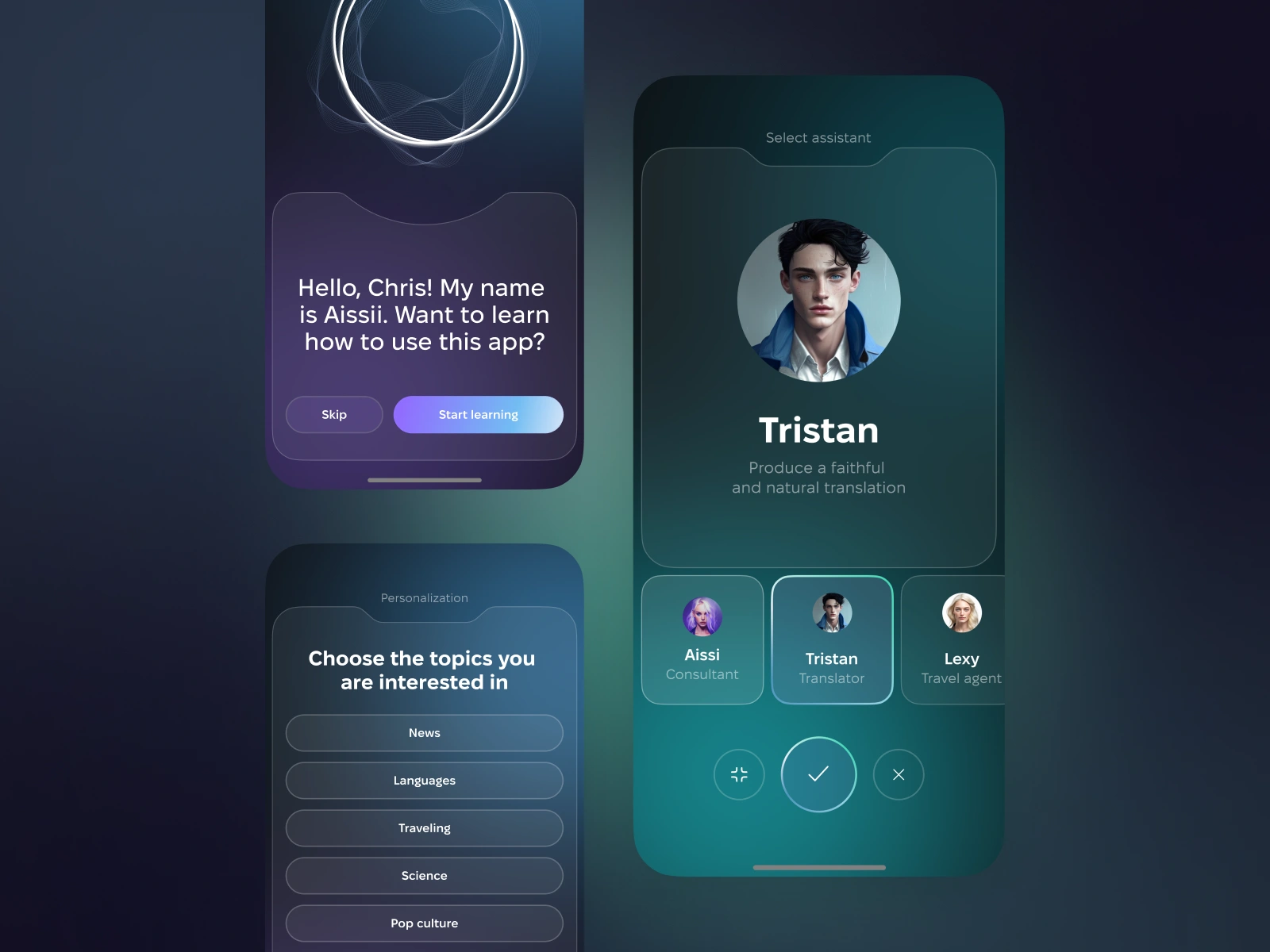
Research-Driven Design and Visual Strategy
Everything started with a deep Discovery phase to find where other AI assistants fail. We looked at why users get frustrated with tools like Gemini or ChatGPT, mainly context loss and poor accessibility, and built Aissi to solve those specific pain points. Through persona mapping, we planned for 50+ future agents to make sure the app structure wouldn't break as it grew. Visually, we went with a high-contrast dark theme and a futuristic "frosted glass" style. This wasn't just for looks; it ensures the screen is readable in a dark car at night and matches the high-tech feel of the LLM technology.
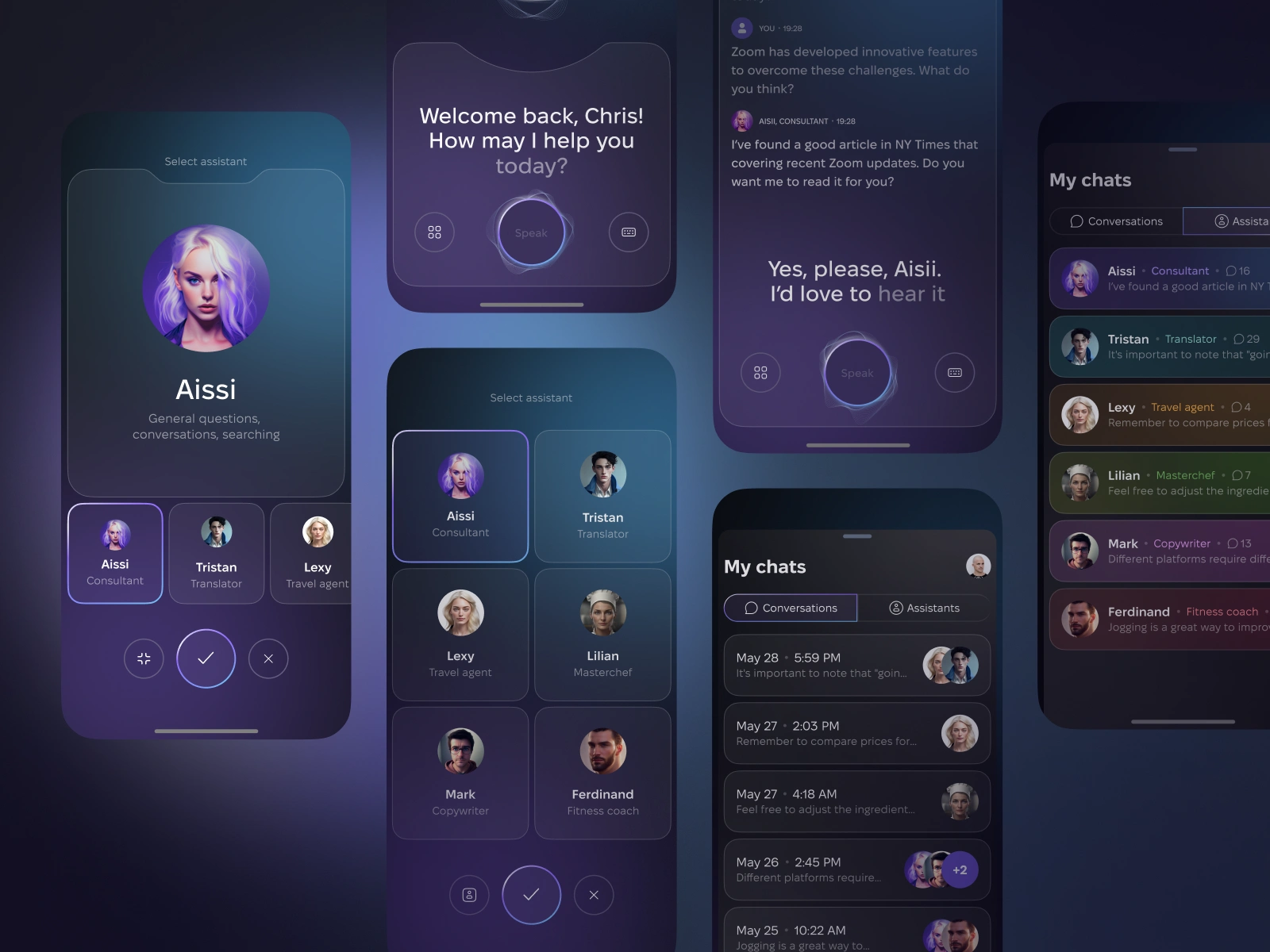
Scalable Frameworks and Technical Handoff
Dynamic Theming and Component Architecture
We designed a component system meant for long-term growth. Because the client plans to jump from 5 to 50+ personas, the layout had to stay consistent while the "personality" of the screen-the colors and AI avatars-updates on the fly. This modular approach allows the app to scale and add new specialists without needing a designer to redo the screens every time a new service is launched.
Engineering Alignment and Logic Flows
During production, we held regular sessions with the developers to bridge the gap between our vision and their code. We spent a lot of time on the "handshake" moments - the exact second when the Concierge hands a conversation over to a specialist. Mapping out these logic flows ensured the transition felt human and reliable, preventing the "robotic" friction often found in complex AI-driven interfaces.
A Production-Ready Asset for Future Scale
We delivered a full Design ecosystem that gave the engineering team exactly what they needed for a high-fidelity launch. This package included a breakdown of all platform features, the research behind our UX choices, and a documented design system. We made sure every screen had clear developer notes, especially for the persona transitions. By creating this modular architecture, we gave the client a product that acts as a strategic business asset, allowing them to expand their AI lineup quickly while keeping the brand feeling premium and cohesive.
Impact on User Experience and Business Growth
The final platform bridges the gap between complex tech and human needs, offering much better response accuracy than general bots. Key outcomes included:
A scalable framework ready to support 50+ new specialists with zero additional design work.
Better driver safety through high-contrast visuals and specialized hands-free logic.
High accessibility scores allow users with visual or auditory needs to use the tool comfortably.
"We couldn't be happier about the outcome of this project. The style, creativity, functionality, everything was beyond our expectations. We've shown the finished product to many people, and everyone is blown away by how much better the app has become thanks to Cre8 Team’s insights and hard work." - Chris Soll, Founder @ Mindspo Pte
(for website only)
Amount of screens 53
Total hours 92
Like this project
Posted Apr 2, 2026
Developed a voice-first AI assistant, Aissi, optimizing user flow for multimodal navigation and accessibility.
Likes
10
Views
29