RGM Platform — Service Blueprint & UX Strategy

Anthony Chevalier


This project focused on redesigning a global Revenue Growth Management (RGM) platform used by commercial teams across multiple CPG markets. Each market had developed its own workflows, artefacts, permissions, and reporting habits over the years, resulting in duplicated steps, inconsistent decision flows, and a fragmented product narrative. The goal was to create a unified, insight-driven experience that could scale across regions while supporting both top-down targets and bottom-up planning.
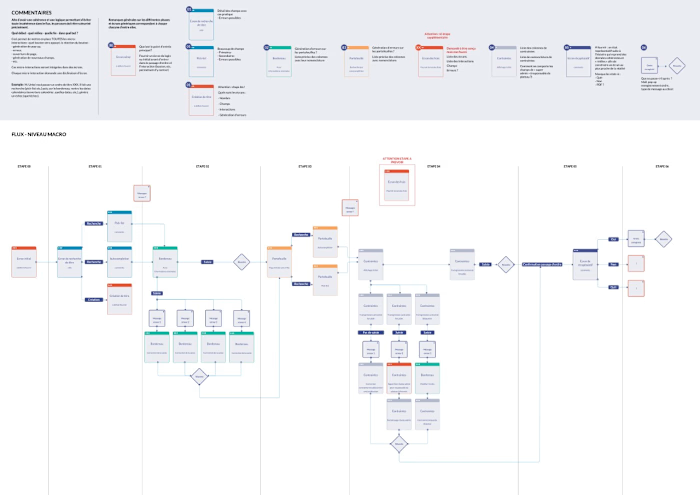
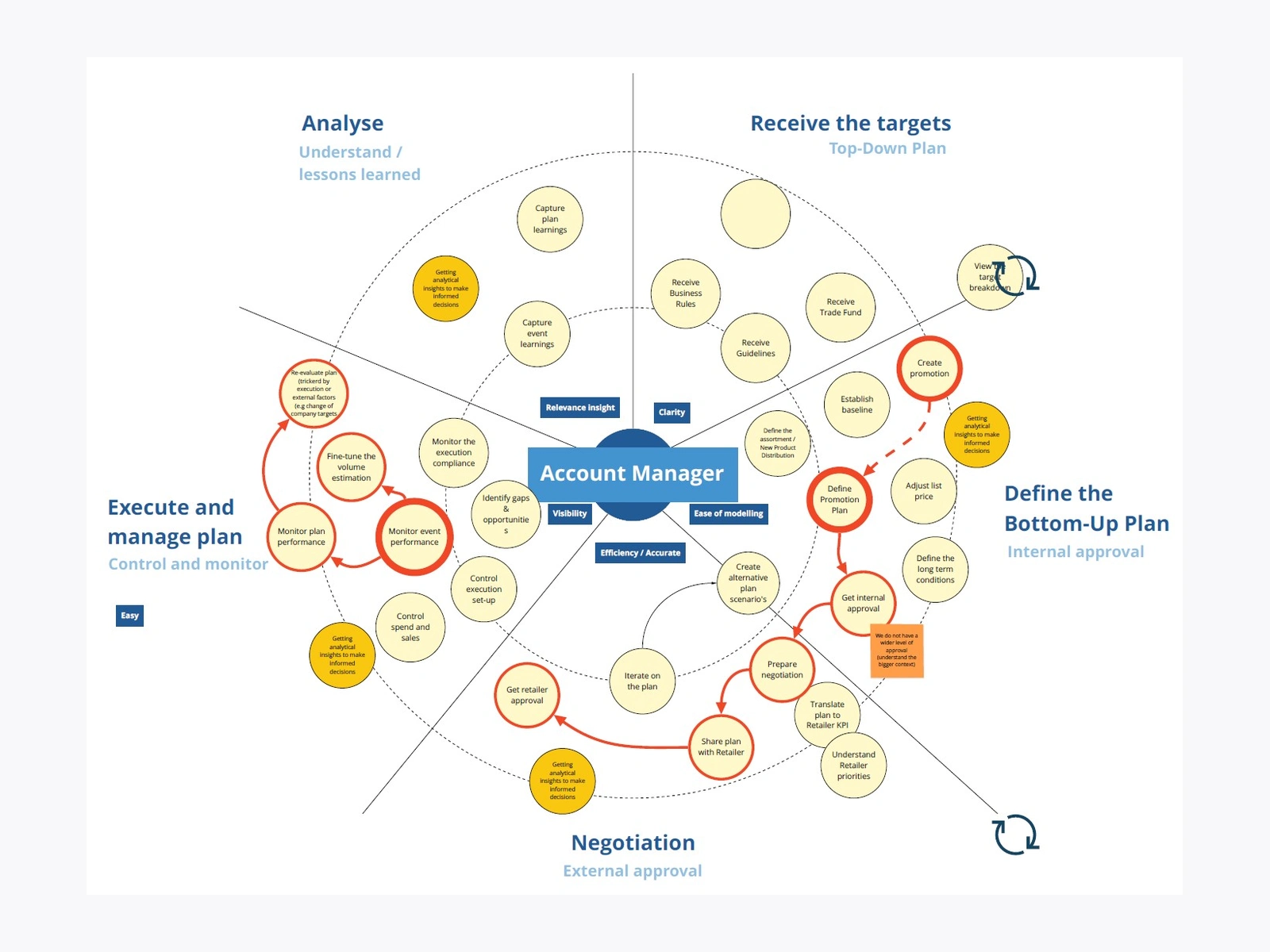
My first step was to map the entire planning lifecycle end-to-end: analysis, target reception, plan creation, scenario modelling, negotiation, execution, and post-event learning. I conducted interviews with commercial, finance, trade marketing, and supply-chain teams to understand how plans were prepared, validated, adjusted, and executed in real markets. This revealed a large number of hidden tasks, offline workarounds, and approval gates that were not reflected in the existing product.
Using this research, I produced a comprehensive service blueprint that aligned goals, actors, data inputs, system actions, approvals, risks, and KPIs. This blueprint exposed redundancy, misaligned responsibilities, and inconsistent interpretation of planning rules. It also clarified how insights—historical performance, pricing levers, trade budgets, retailer constraints—should appear at each moment of the workflow to support better decisions.
From there, I reframed the product narrative and information architecture to give users a clearer mental model of how the platform supports planning: what happens when, why it happens, and how each module connects to the others. I redesigned the sequence of key tasks, improved cross-team handoffs, and adjusted permissions to match real-world governance. Workflows were simplified to reduce friction, eliminate circular loops, and support faster iteration during negotiation.
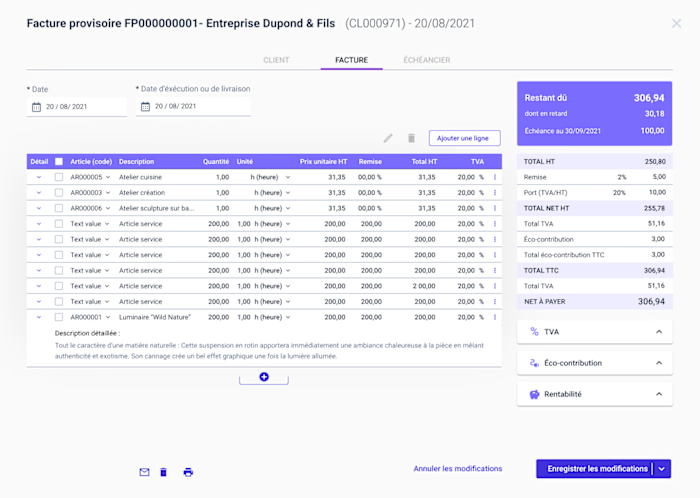
On the UX side, I defined interface patterns for scenario creation, list-price adjustments, promotion planning, and performance review. These patterns required consolidating more than a dozen inconsistent screens into a single, coherent interaction model. I also worked on the transition points between planning and execution so that teams could monitor results, identify variances, and feed learnings back into the next planning cycle.
The result was a scalable, structured platform foundation used to guide future redesigns, support analytics integration, and smooth onboarding for new markets. The product team gained a shared blueprint, a clarified governance model, and a more coherent sequencing of actions—allowing design, engineering, and product owners to make decisions faster and with fewer contradictions.
Like this project
Posted Nov 11, 2025
Enterprise SaaS platform used by global CPG leaders. Mapped the full planning lifecycle. Foundation for a scalable, insight-driven platform. DesignOps.
Likes
0
Views
8
Clients
Kantar XTEL