Ivy Tutors Network Website Redesign

Michael Shabi


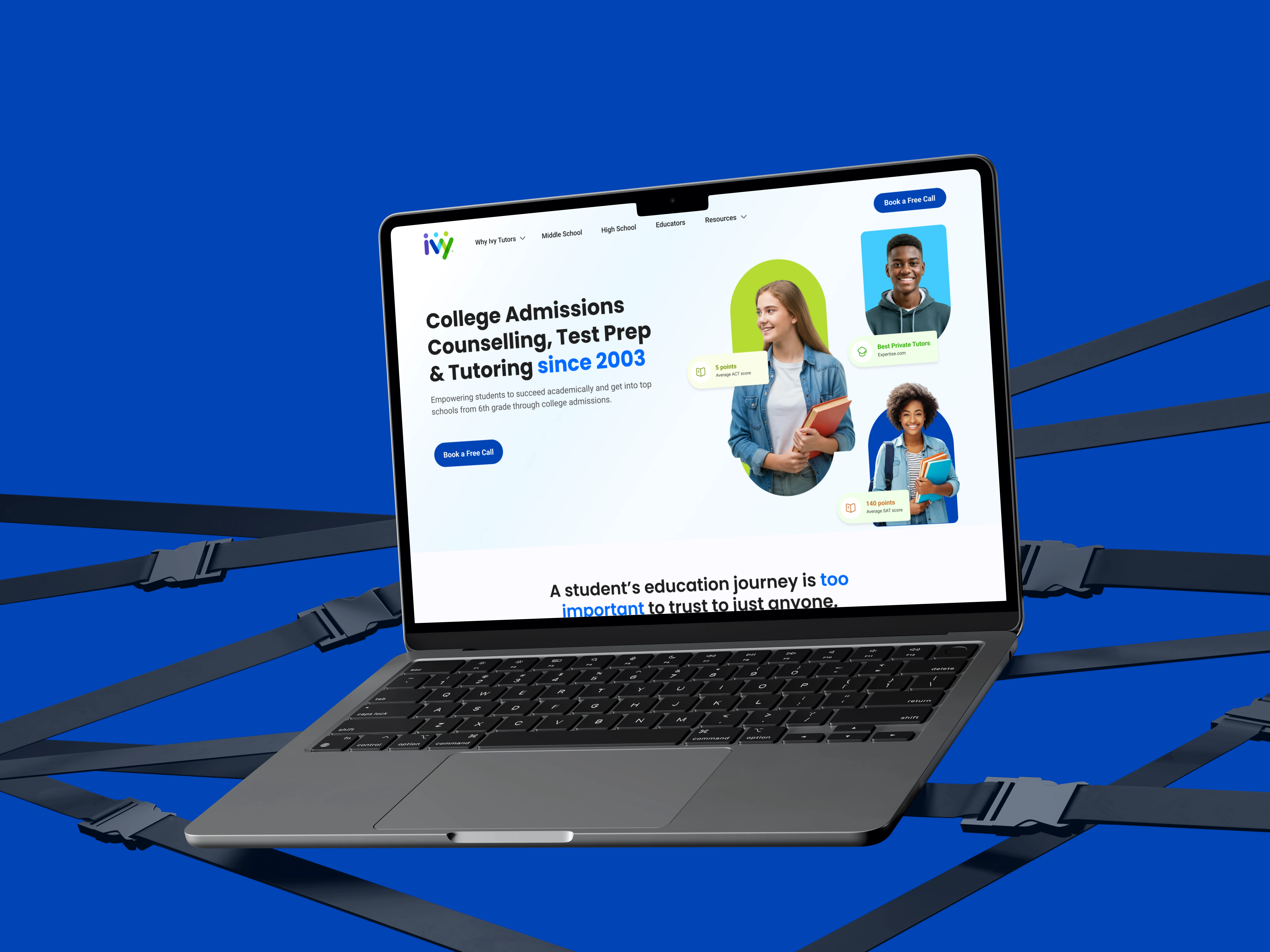
Ivy Tutors Network: Product Design
1. Background & Problem
About Ivy Tutors Network: Ivy Tutors Network has offered expert tutoring, test prep, and college admissions mentoring since 2003.
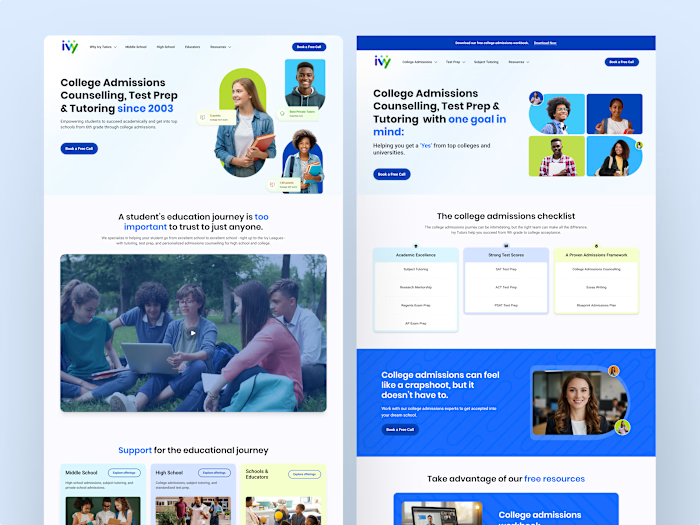
Challenge: The existing website was not fully optimized to communicate trust, highlight academic credibility, and convert visitors (parents or students) into booked consultations. A modern, conversion-focused redesign was needed to better reflect Ivy Tutors’ expertise and long-standing reputation.
2. Objectives
As the product designer, my goals for the redesign were:
Clarify the value proposition: make it immediately clear that Ivy Tutors Network has decades of experience, high quality tutors, and excellent results.
Increase conversion: guide users to “Book a Free Consultation” through persuasive UI, trust signals, and clear messaging.
Showcase credibility: highlight student outcomes, tutor credentials (Ivy League backgrounds), and proof points in a way that builds authority and emotional connection.
Make navigation intuitive: organize services by education stage (elementary, middle, high school), so parents and students can quickly find relevant offerings.
Support lead generation: integrate resources (e.g. free workbook), webinars, and forms to nurture prospective clients.
3. Research & Insights
From the Services page, Ivy Tutors offers a broad set of offerings: from early education to test prep (SAT, ACT, SHSAT, ISEE) and college admissions consulting.
Their subject coverage is extensive: math, English, science, history, test prep, executive functioning, etc.
Geographic reach: They operate in New York (NYC, Long Island, Westchester), Atlanta, and online globally.
Proof of impact:
84% of reported SHSAT students got a specialized school offer (vs. a general 18% acceptance rate).
Average SAT score increase = 140 points; average ACT increase = 5 points.
99% of students reported increased confidence and interest in their subjects.
Tutors’ credentials: many educated at top-tier universities (Harvard, Yale, Princeton, Stanford, etc.).
Employee perspective: Glassdoor reviews indicate a strong organizational culture and commitment to quality.
These insights informed design decisions in ways such as emphasizing academic prestige, building trust through metrics, and prioritizing user conversion paths.
Like this project
Posted Nov 21, 2025
Redesigned Ivy Tutors Network's website to enhance trust and conversion.
Likes
0
Views
9
Clients
Ivy Tutors Network