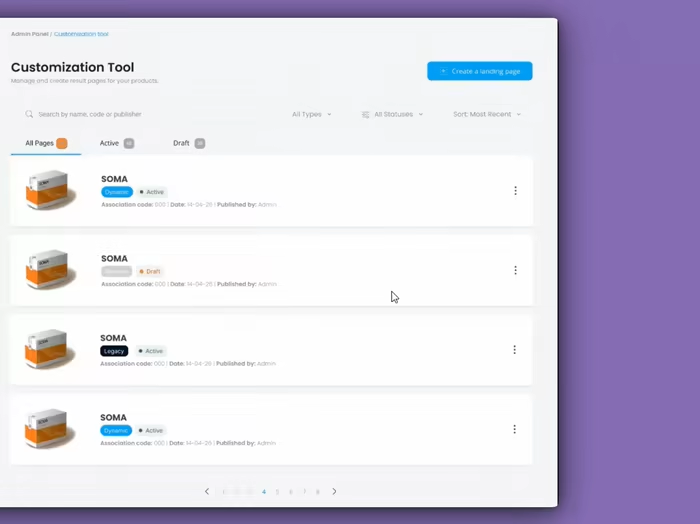
Deep Trace · Innovation Award 2025

Farah | AI Native


Making a complex AI process feel simple.
Deep Trace is an AI-powered anti-counterfeit product that allows users to verify physical products using their smartphone camera.
The technology was sophisticated. The experience didn't need to feel that way.
When I began working on the product, only 46% of users who started verification were completing it. I led the end-to-end product redesign—from research and UX through UI, testing, design systems and iteration—to understand where users were struggling and make verification easier to complete.

Deep Trace — Redesigning an AI Verification Experience
The experience was creating uncertainty.
Users had to interpret instructions while positioning and scanning a physical product correctly. Screens carried too much information, important actions competed for attention, navigation wasn't always obvious, and error states didn't provide enough guidance.
For a product designed to reduce uncertainty about whether something is genuine, the experience itself was introducing friction.
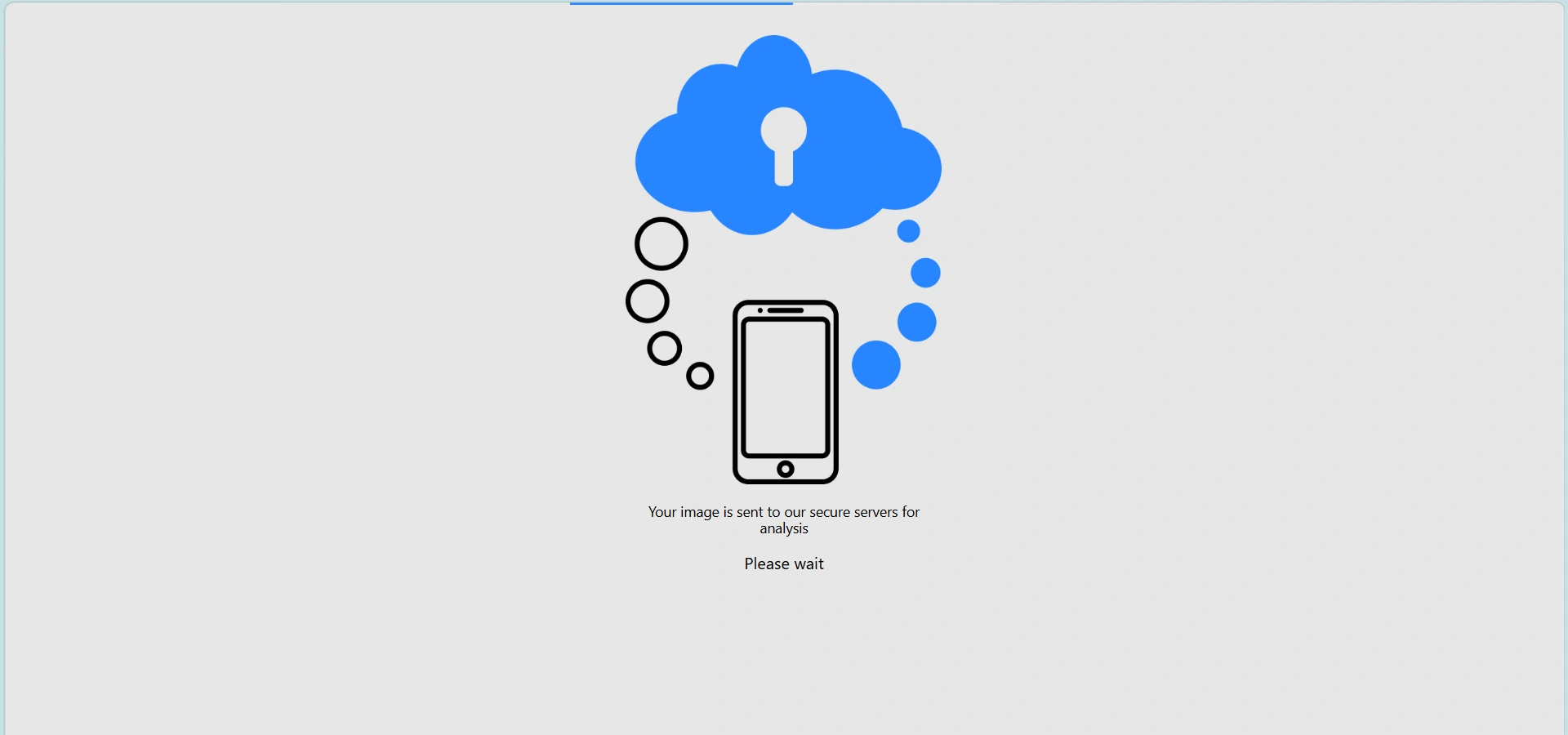
Deep Trace — old system
My Role - End-to-End Product Designer
I owned the experience from understanding the problem through design, testing, release and iteration, working directly with Cypheme's co-founder alongside engineering and marketing.
UX Research · Product Strategy · User Flows · Wireframing · Prototyping · UI Design · Usability Testing · Design Systems · Developer Collaboration
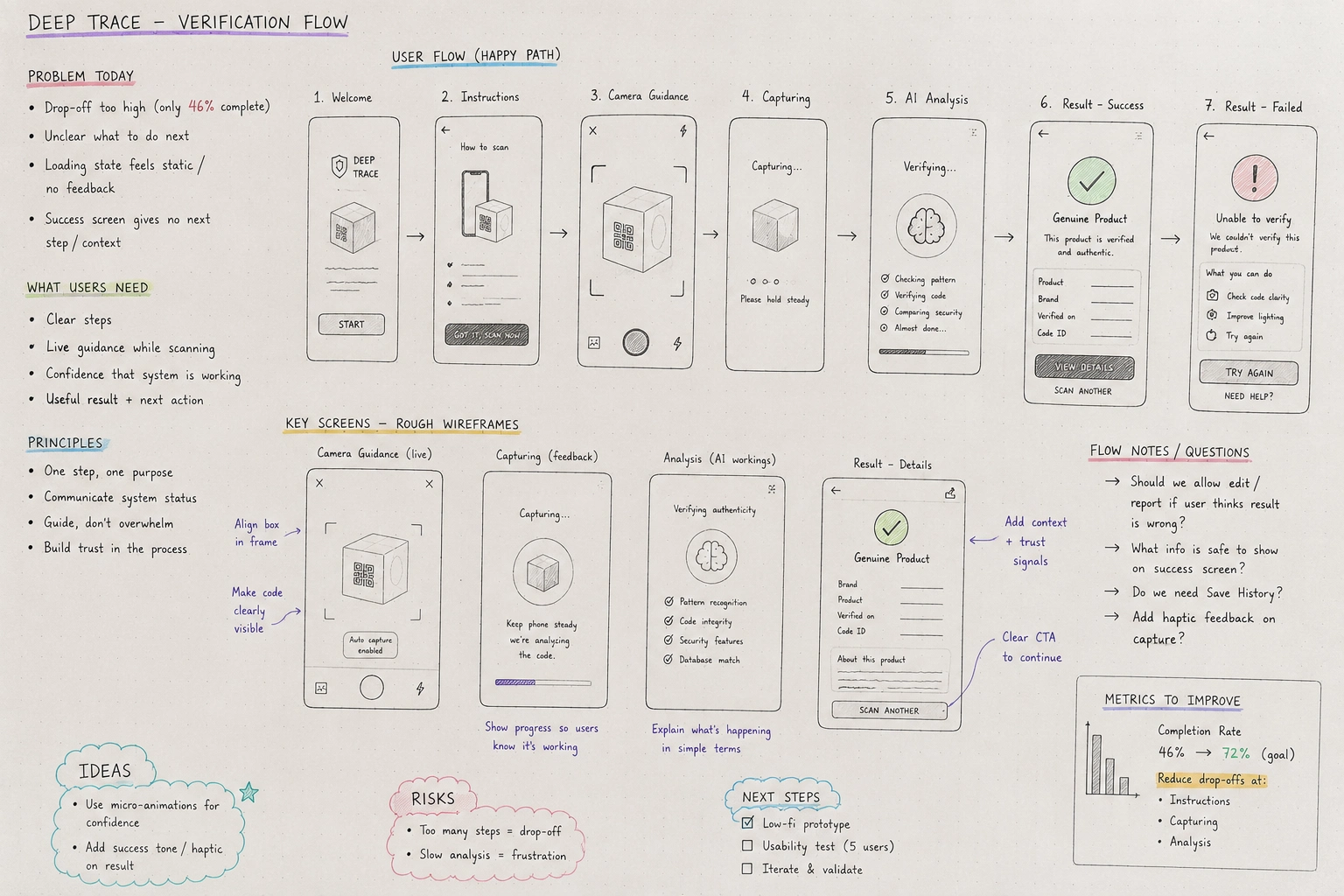
UX design / Research
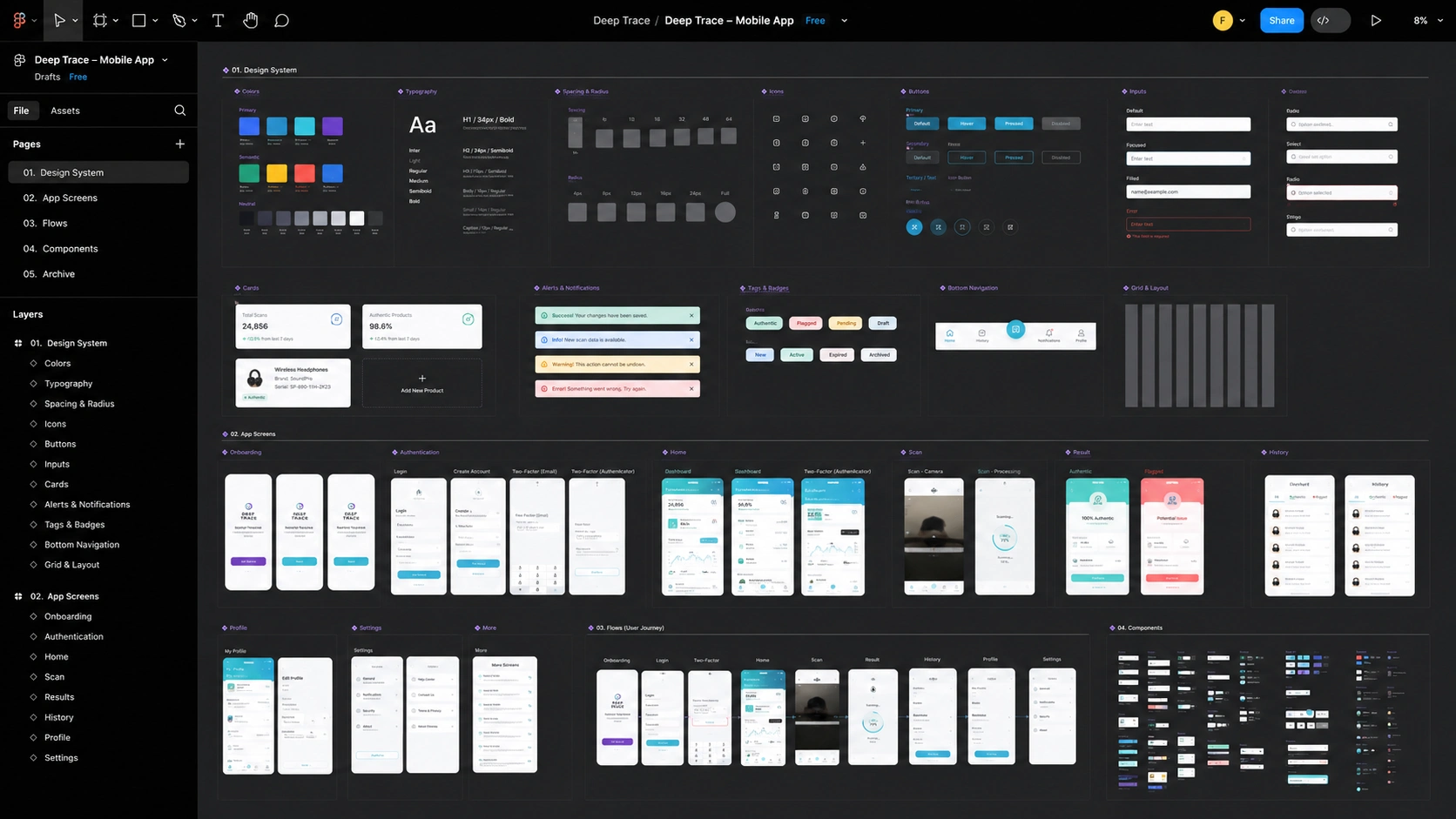
UX design figma
Research
Finding out where and why users were leaving?
Product analytics showed where users dropped out. Research helped uncover why.
I combined behavioral data with user feedback, stakeholder interviews, surveys and prototype usability testing. I looked for hesitation, misunderstood instructions, failed attempts, retries and moments where users weren't sure what to do next.
Research → Prototype → Test → Release → Measure → Refine
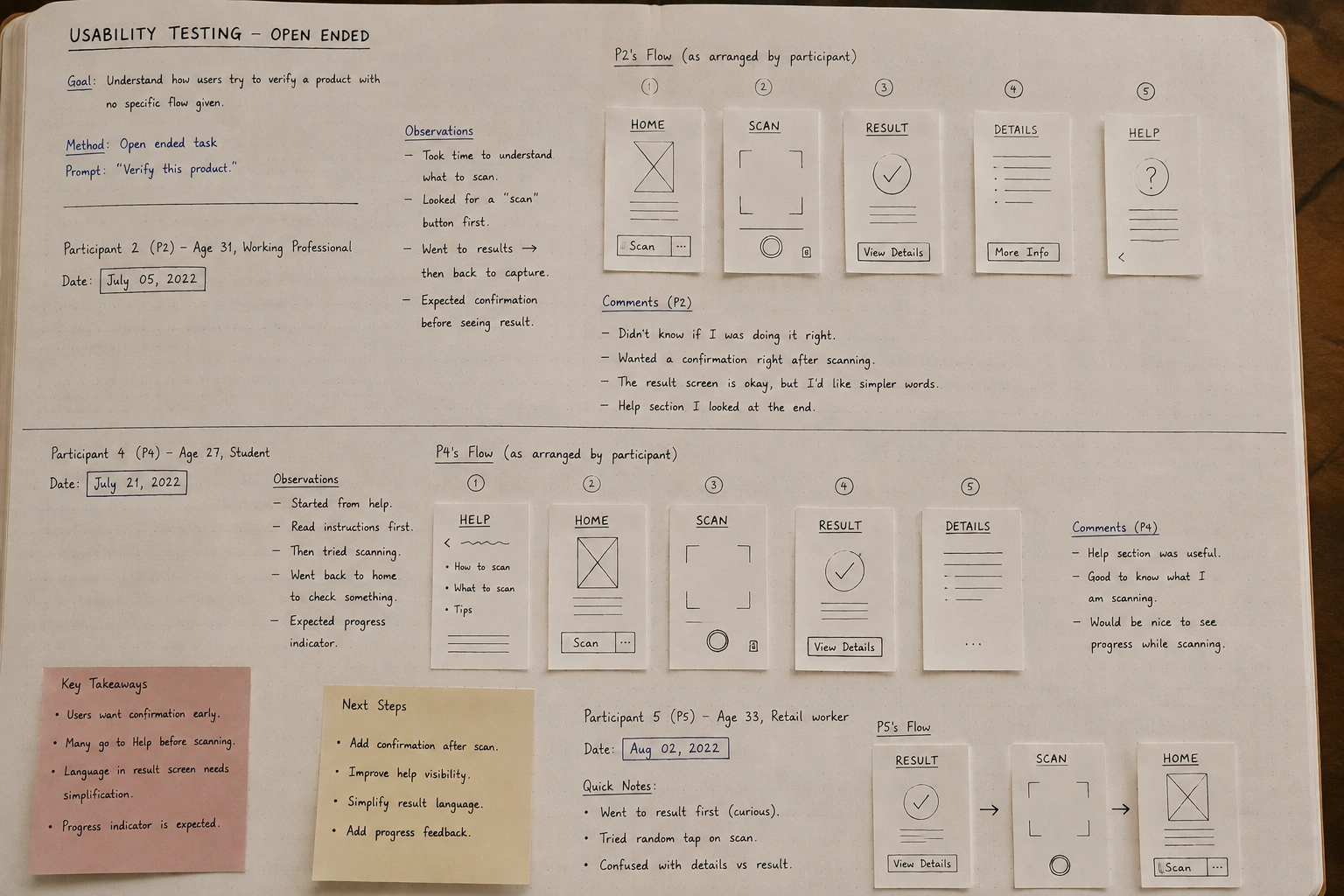
Usability testing - open ended
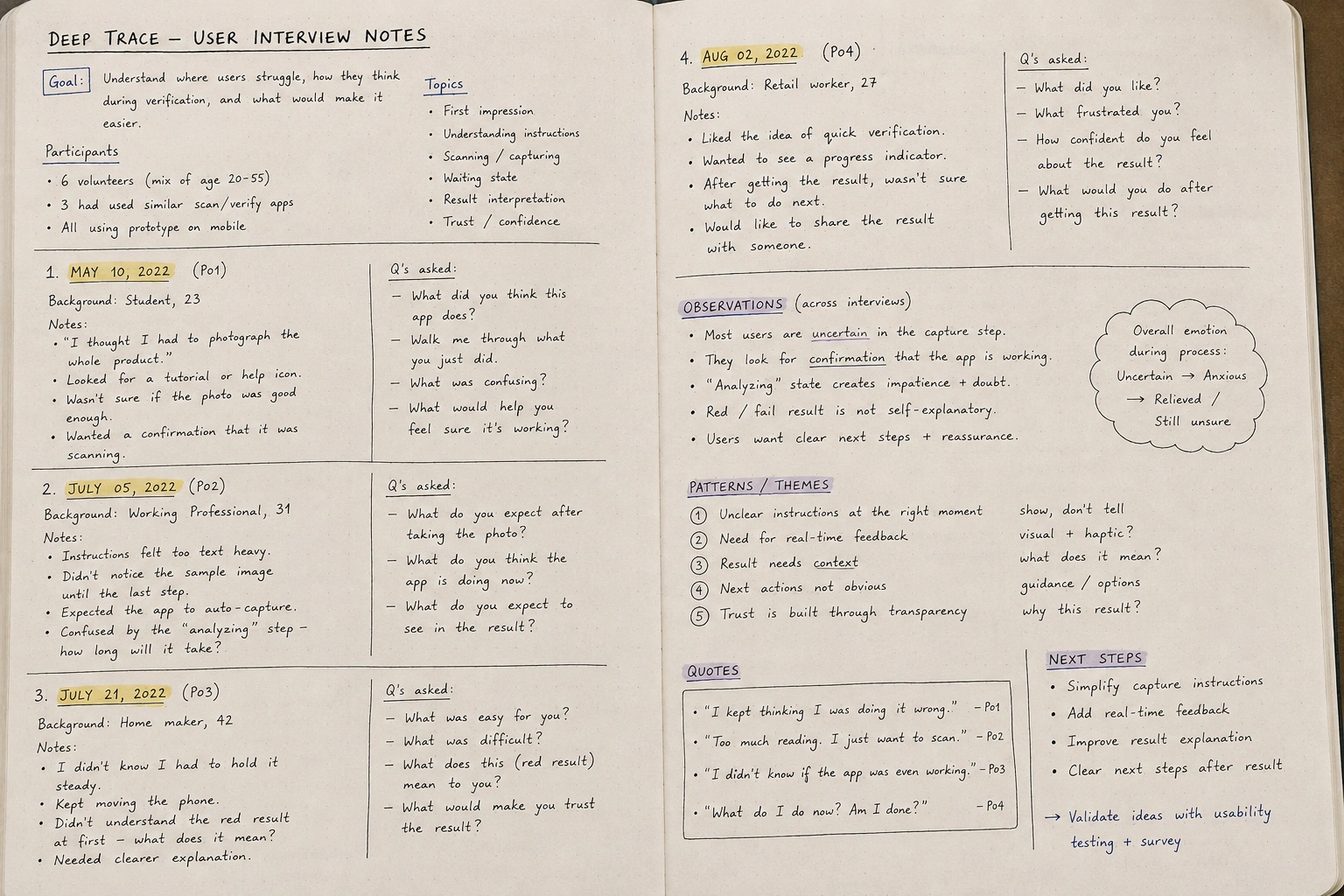
User Interviews
The Design Approach
Designing for clarity, not complexity.
Research pointed toward a simple principle: users didn't need to understand everything happening behind the AI. They needed to understand what the system expected from them at each moment.
I broke verification into smaller guided steps, introduced information only when it became relevant, strengthened camera guidance and processing feedback, and redesigned failure states so an unsuccessful scan became a recoverable moment rather than a dead end.
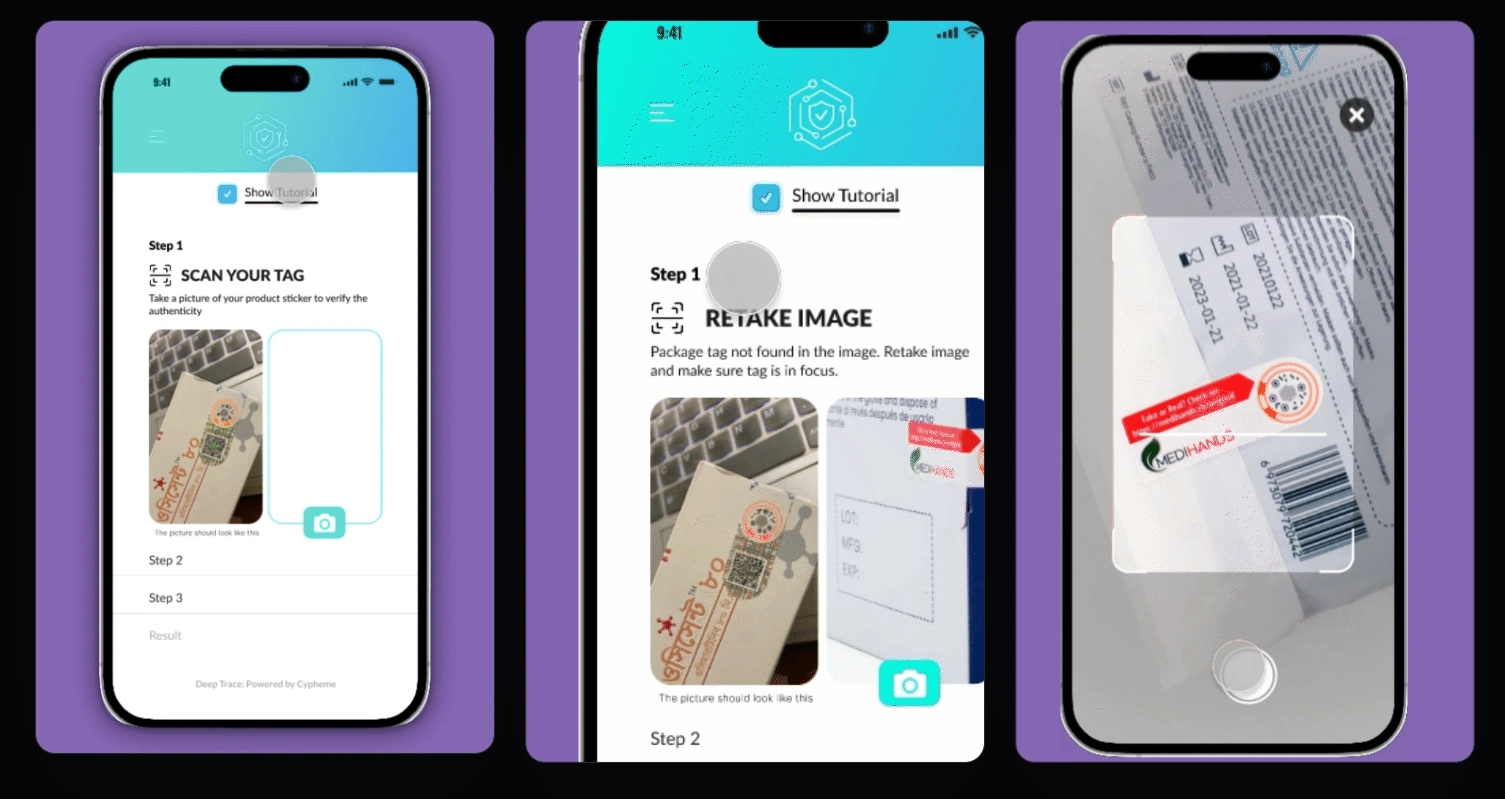
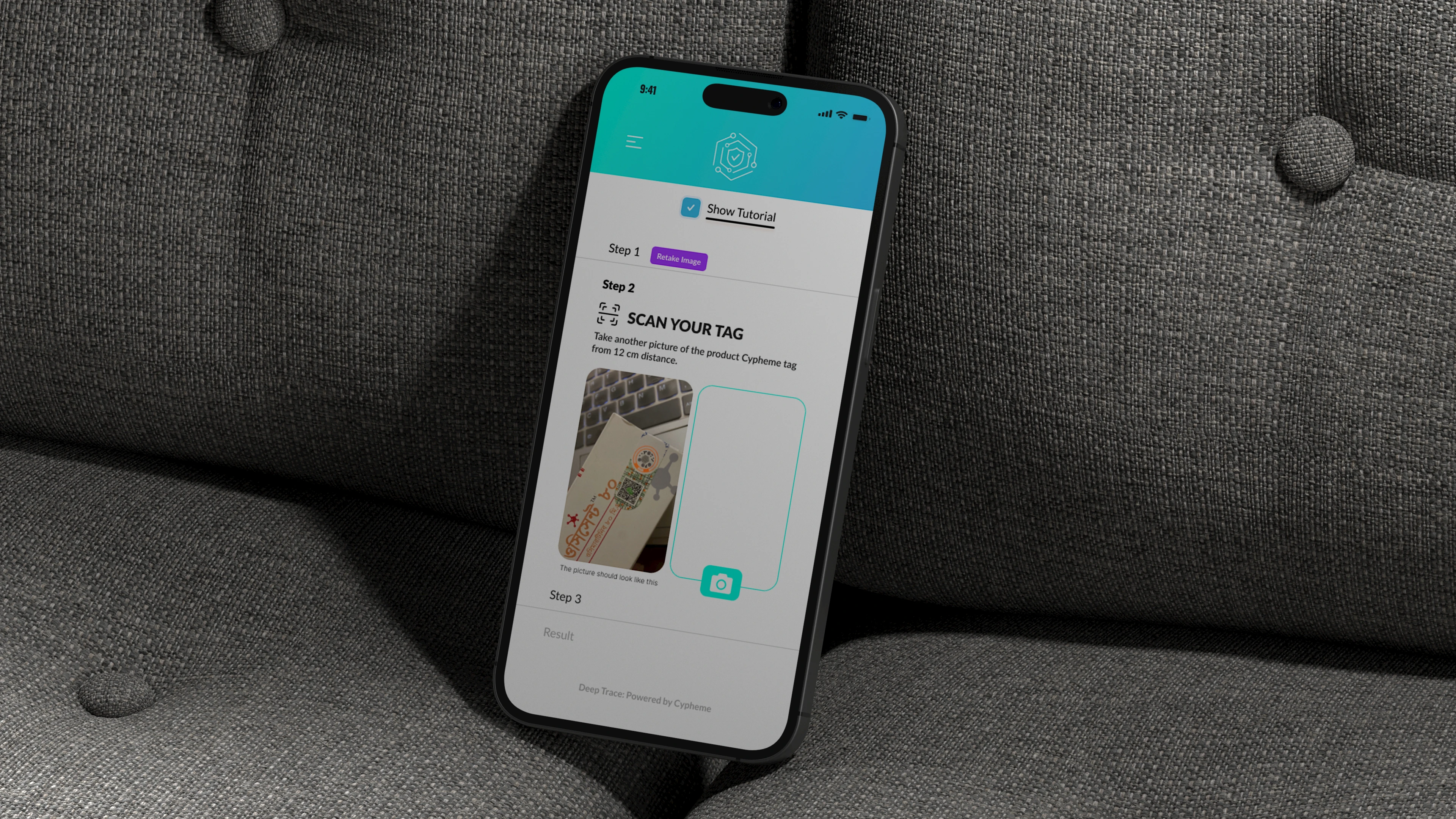
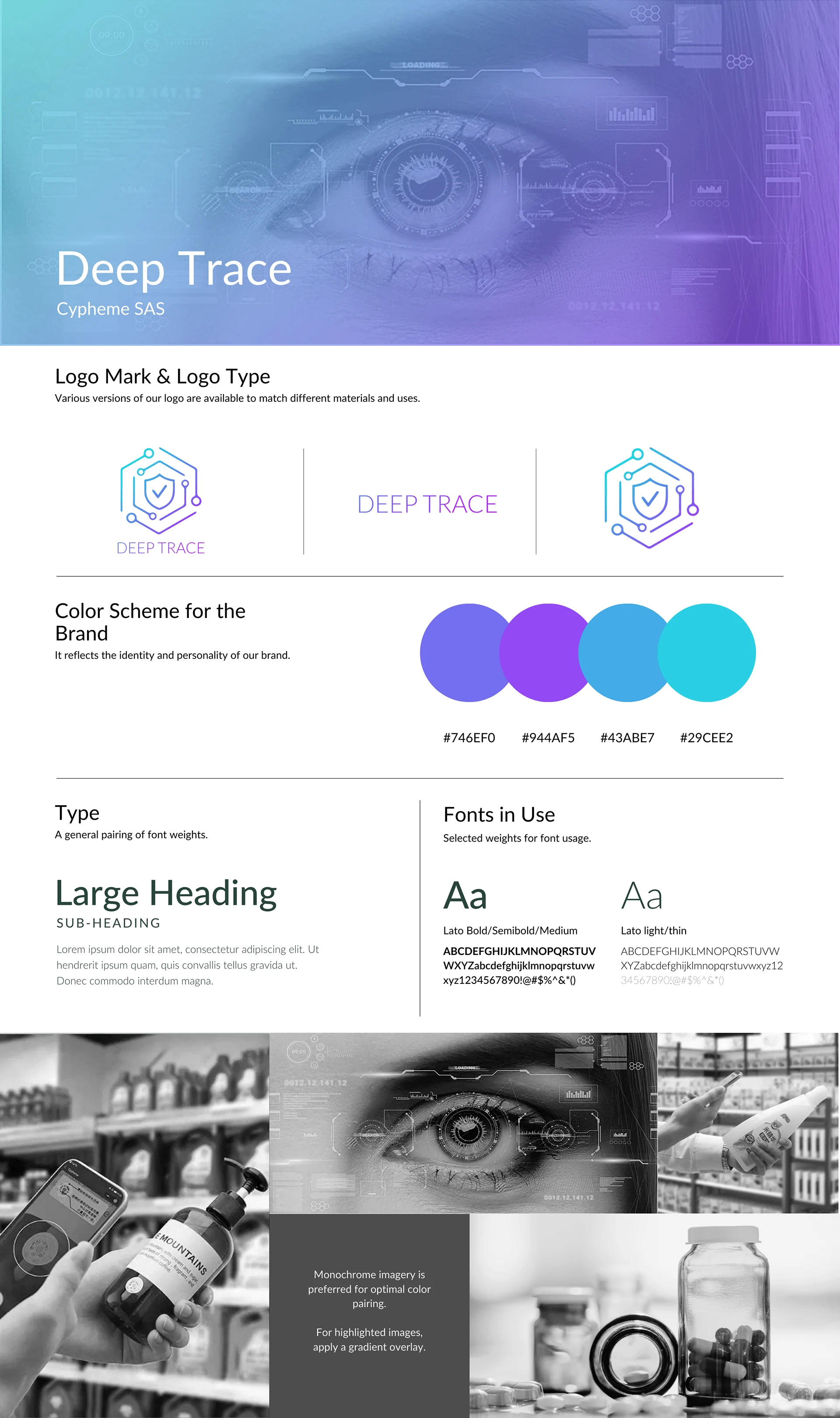
Mobile App Brand identity
Branding to Product Design
Building the System
One experience across a growing product
The redesign wasn't only about individual screens. I created a reusable visual and interaction system around recurring product states—actions, loading, analysis, success, warning and failure—so the experience could remain consistent as Deep Trace expanded.
Outcome
From 46% → 72%
Verification completion increased by 26 percentage points following the redesign and subsequent iterations.
Like this project
Posted Sep 12, 2026
AI-powered anti-counterfeit verification Redesigned the verification experience for brands & consumers, making authentication easier to understand & trust.