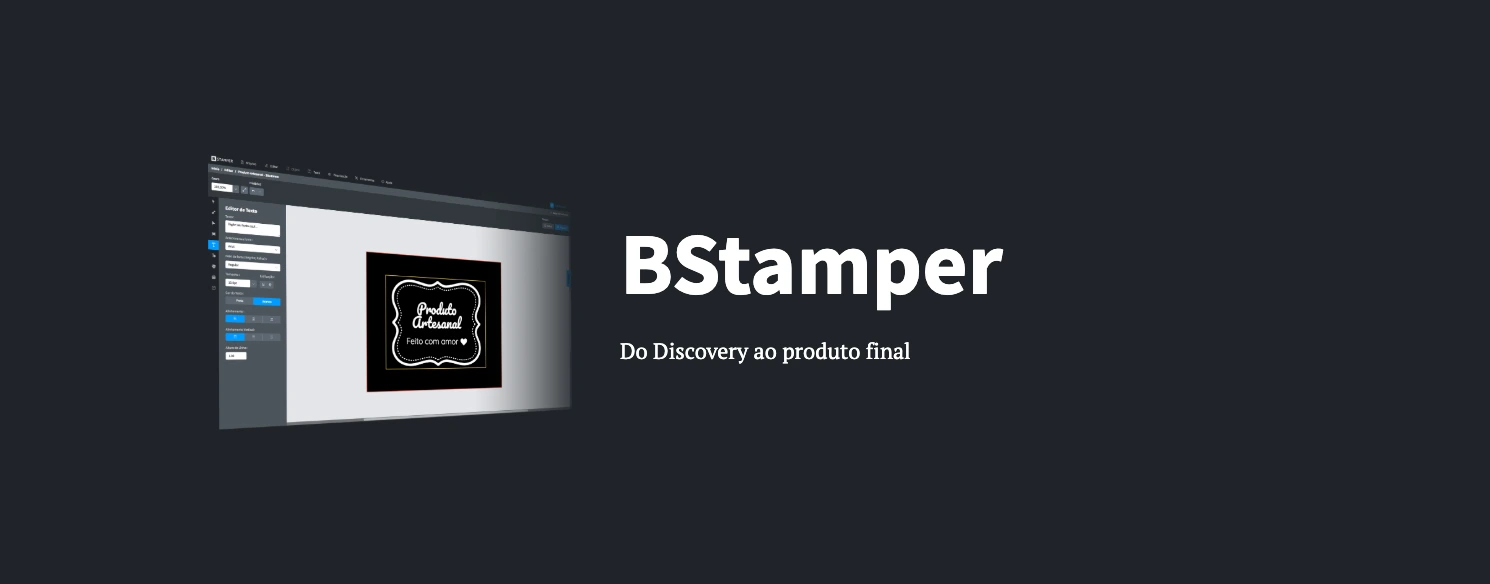
User-Friendly Web App for Stamp Makers

Ana Livia Nunes


The problem
Even with modern technology, physical stamps are still essential tools for many professionals, especially in the legal and healthcare sectors.
Most of these stamps are made by small entrepreneurs who depend on this income to support their families.
While working alongside CarimFlex, a supplier of equipment and materials for the stamp-making industry, we identified a recurring issue. The majority of support requests were related not to the machinery, but to difficulties in producing the stamp negatives. This step is the foundation of the process. The negative holds the final artwork that will be transferred to the stamp. If this part fails, everything else comes to a halt.
My Role
I was responsible for the UX and UI process of the project, conducting research and designing the product from its initial concept to final delivery.
Goals
The initial goals of the project were:
Make the daily routine of stamp makers easier by enabling quick creation of negatives with a low learning curve
Reduce support requests caused by difficulties in negative production
Build a user-friendly product that requires minimal support and improves the daily workflow of small business owners
Deliver an accessible and affordable solution
Methodology
We began with a qualitative approach by monitoring customer support requests related to negative production. This allowed us to identify the main challenges users were facing. Later, during the product development phase, we conducted guided usability tests with a selected group of users. These sessions helped us understand which proposed solutions were effective and which still needed improvement. After the usability tests, we shared an online survey, so users could evaluate the WebApp and suggest improvements.
Problem Validation and Refinement
After several conversations with CarimFlex customers, we identified the following recurring challenges:
Many users needed to learn complex professional editing software to produce negatives, which caused confusion and doubts during use.
There were difficulties in configuring the correct color settings so that the printer would print the negative with the necessary black tone for stamp production.
Many customers had basic computers that could not support the installation of professional editing and imaging software, which are usually resource-intensive.
Additionally, we found that due to the high cost of the software used at the time, many customers resorted to piracy to keep their stamp production viable.
Personas
Based on the profiles of the customers we interviewed, we created personas to help understand the context, needs, and desires of the users. These personas served as a reference throughout the entire product development process to ensure that the requirements and proposed solutions aligned with the way our users think and behave.
Project Requirements
Based on the insights gathered, we developed the requirements for a software solution aimed at making the daily work of these professionals easier:
The application needed to address all issues related to negative production with streamlined and easy-to-use features
A simple and distraction-free interface to facilitate learning Be lightweight and fast
Function as a web application that users could access directly through their browser without installation
Offer an affordable price Include a library of stamp templates with correct sizes and margins to simplify production
UX Flow
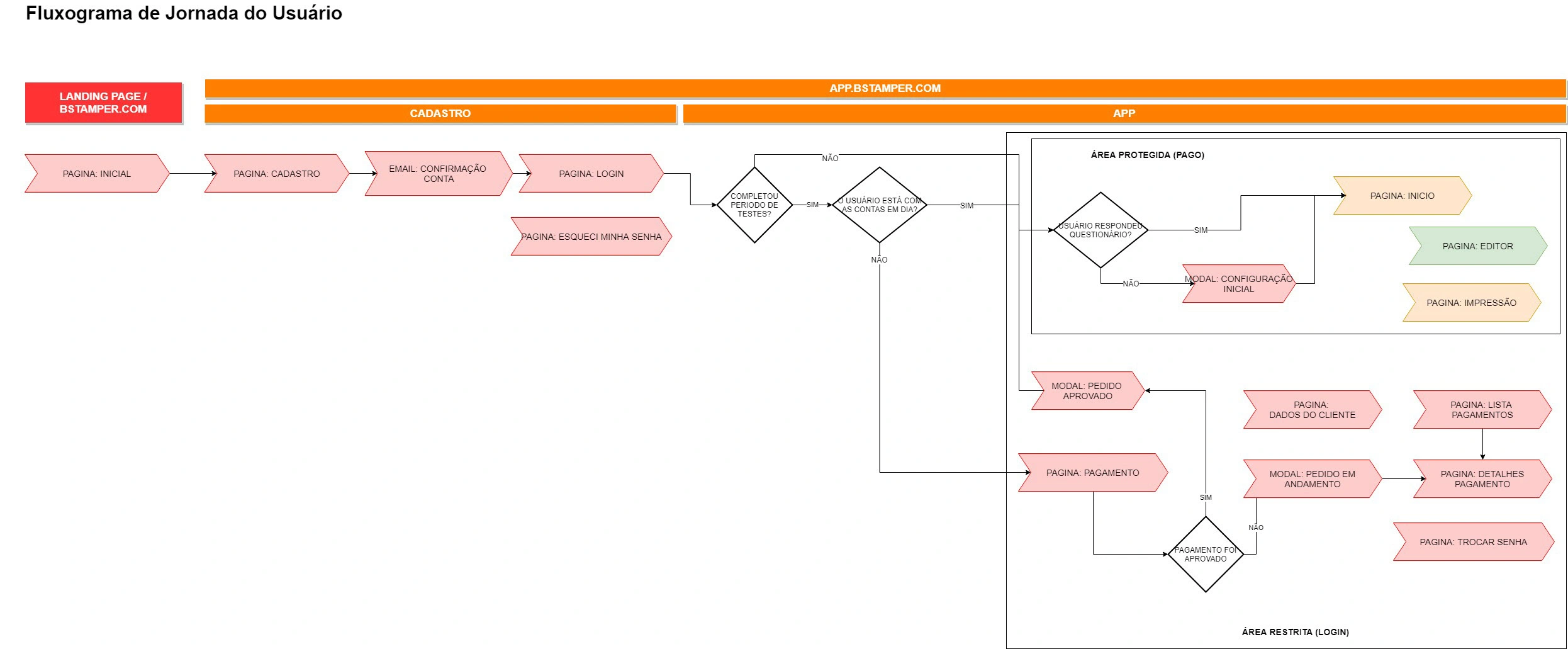
After refining the initial MVP requirements, we mapped out the user journey to clearly outline the path users would take within the application and optimize each of these steps.
Low and High Fidelity Prototyping
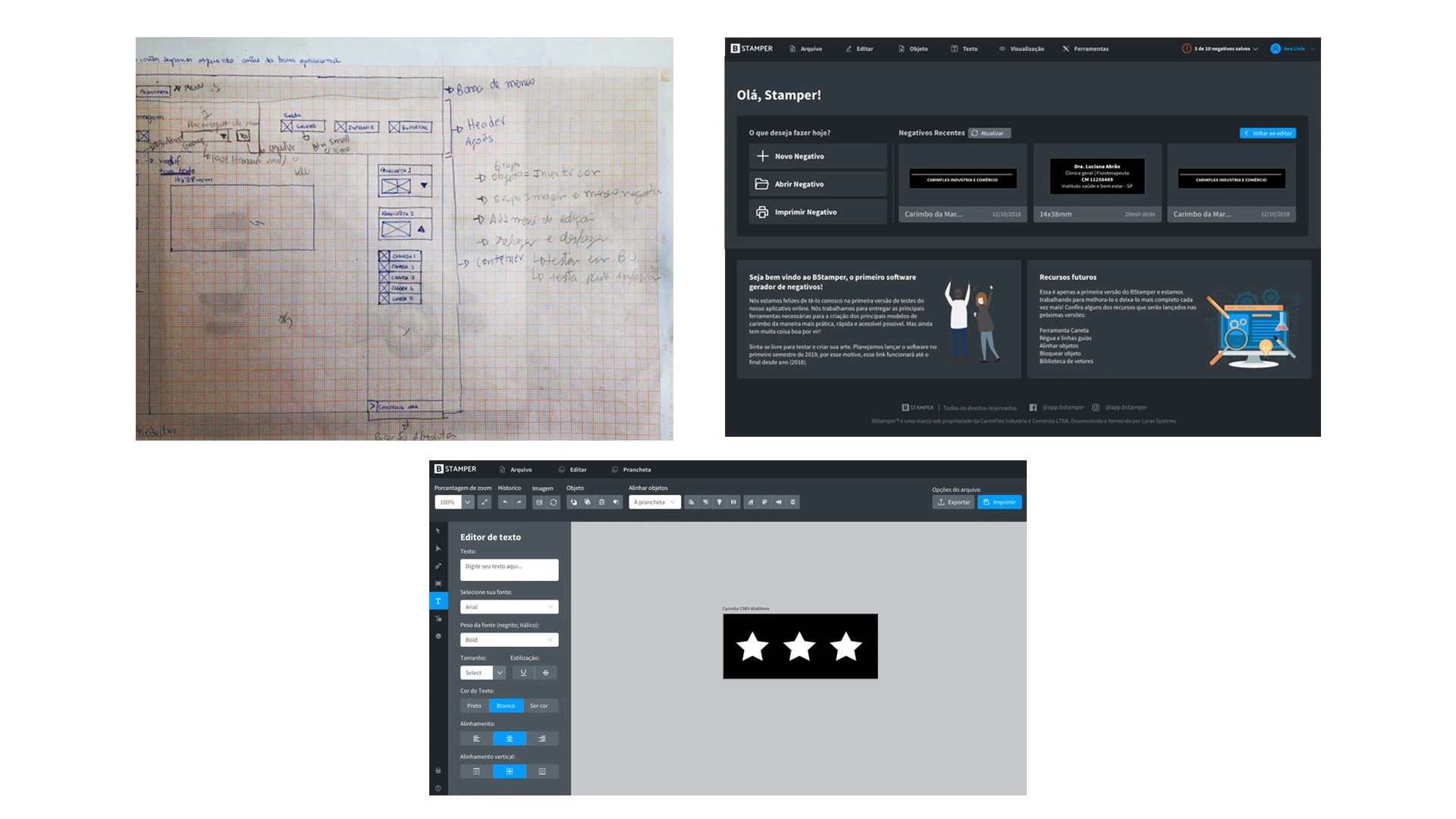
The prototyping process began with the creation of interface wireframes and was later refined into high fidelity prototypes using Sketch and Zeplin. In Sketch, we conducted the first user journey tests to refine the interface. Finally, we defined the application’s style guide.
Usability Test – Alpha Version
After developing the MVP, we conducted a small guided usability test with a sample of five clients, where we observed difficulties in using the application. Additionally, after completing the assigned tasks, users were sent an online form to share their opinions and suggest improvements for the app.
The test included users with advanced knowledge of vector design tools as well as beginners in the field. We asked clients to create a specific stamp model in the application so we could analyze their challenges.
Even users with little experience with this type of software were able to complete the models in less than ten minutes.
Based on the difficulties users had in finding certain tools, we adapted the UI to improve clarity and ease of use.
Usability Test – Public Beta
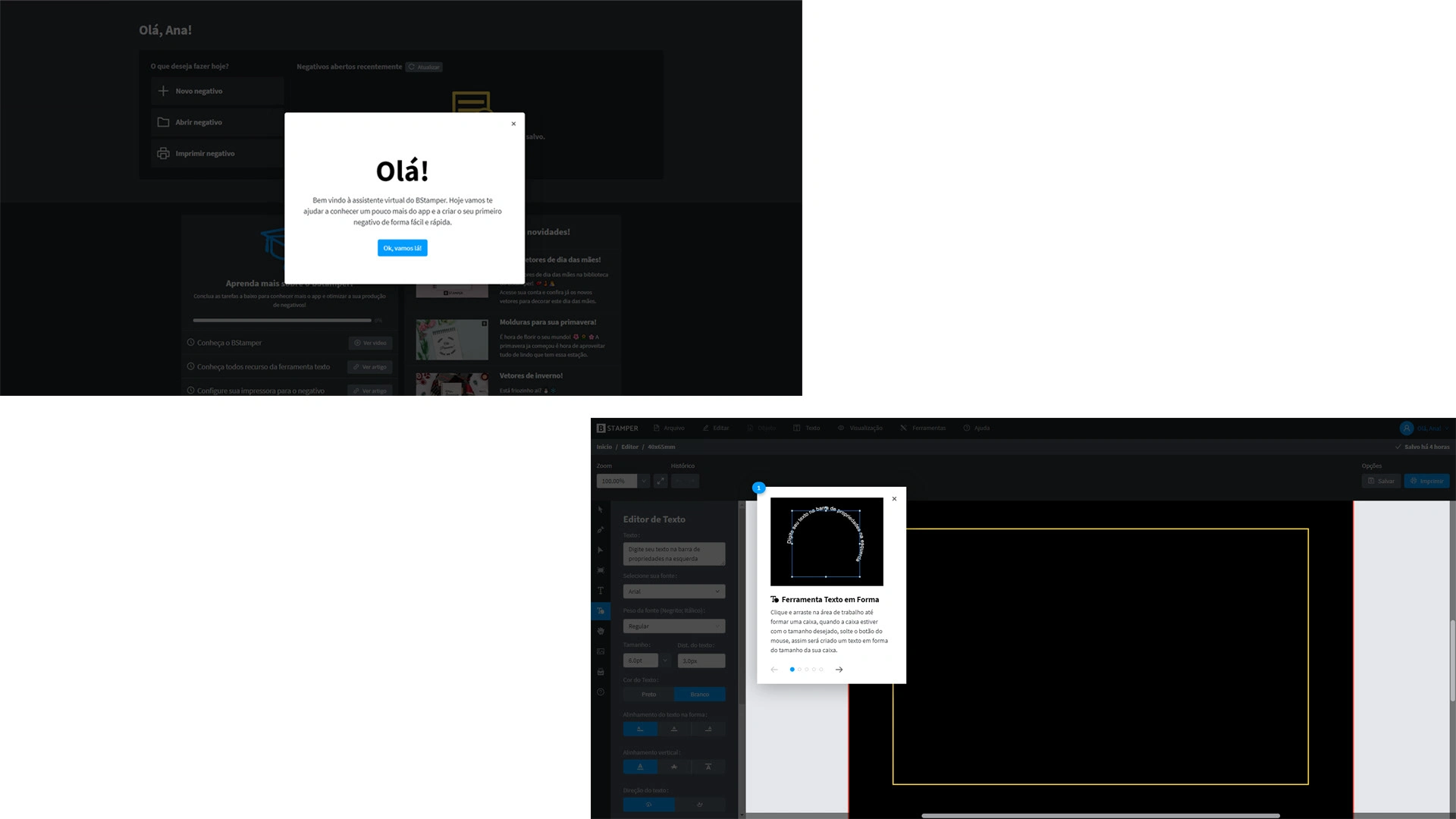
After receiving positive feedback from the initial tests with selected users, we made minor interface adjustments and released the app for free public beta use over two months. During this phase, we used the Orange Lucky tool which, with user permission, allowed us to observe how users interacted with the app in their daily routines. After two months and numerous negatives created, we gained a better understanding of how customers produce their negatives day to day. We identified some challenges faced by less experienced users when using advanced tools such as:
Pen tool for vector editing
Text in shape tool Because these and other tools require prior knowledge, we decided to add an onboarding process that highlights the app’s main shape-related features. After the beta ended, we conducted a quantitative survey to collect customer feedback.

Interface Refinement
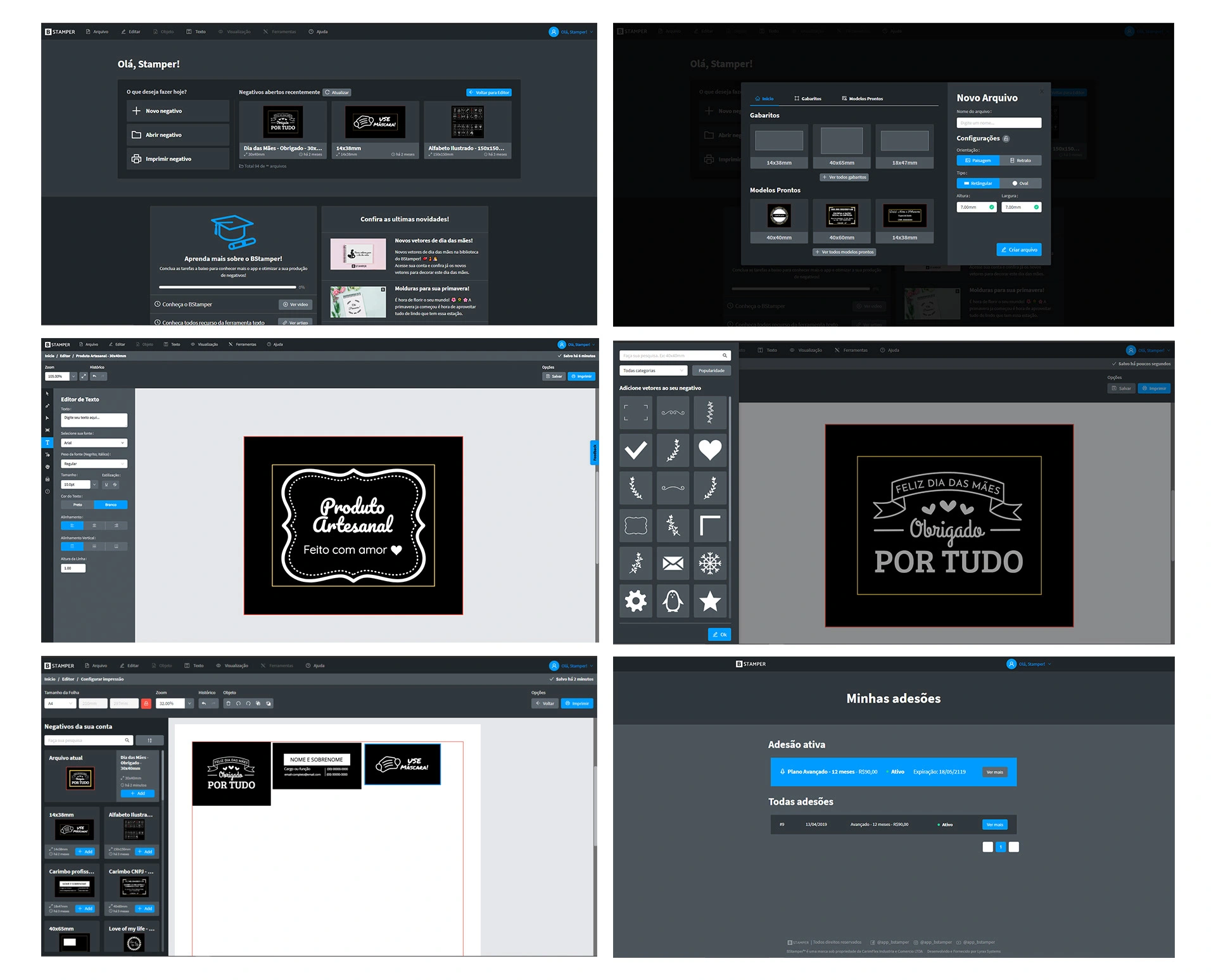
After the beta phase, we refined the interface to better align with the users understanding.
Results
Engaging and communicating with the customer was essential to validate and uncover the real issue with negatives: software usage.
Throughout the entire product development process, we made a point to stay close to the customer to ensure that the requirements matched their needs.
The product was launched in April 2019 and currently has around 1,000 registered users, with a support request rate of only 4.5%.
Finally, a key lesson we learned from our target audience was the importance of simple and fast processes in the daily routine of micro-entrepreneurs. Therefore, delivering an intuitive interface without unnecessary features was crucial to achieving a shorter learning curve for the application.
Like this project
Posted Aug 1, 2025
A powerful and easy-to-use WebApp that revolutionizes how stamp makers produce negative boosting productivity for small businesses.
Likes
0
Views
16
Clients
CarimFlex