Redesigning Loan Application Process for Brazilian Bank

Ana Livia Nunes


How We Simplified Access to Credit for Small Business Owners
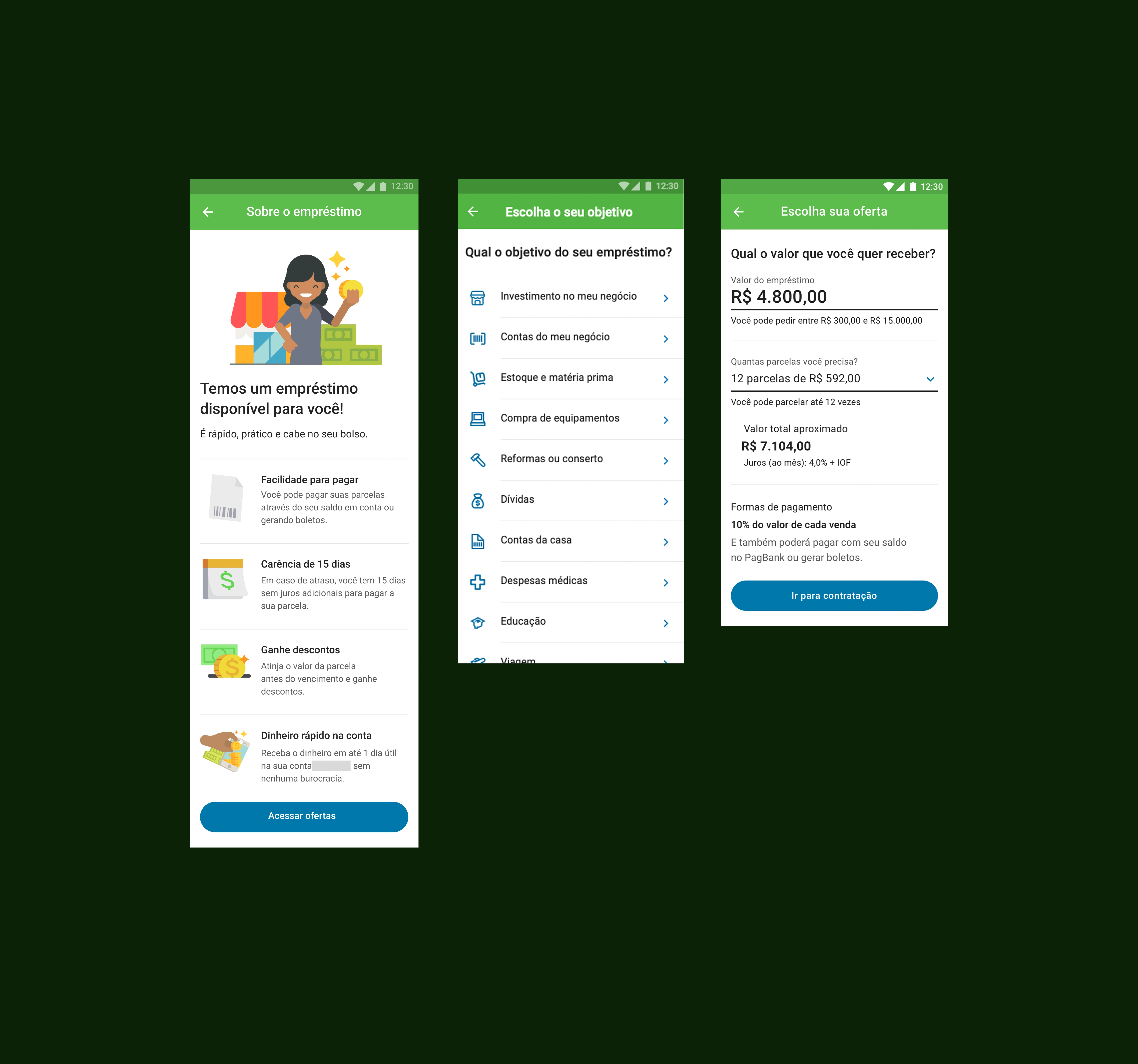
When I was invited to redesign the loan application process for one of the largest Brazilian banks, the mission sounded simple: improve what already existed. But, as is often the case, the reality was much more complex. The existing process had been created back in 2019. Since then, user behavior had changed, the market had evolved, but the process remained the same. It was limited by technical constraints, bureaucratic, and not user-friendly. And the ones suffering the most were small business owners; people who needed credit to restock inventory, pay suppliers, or simply keep their businesses running.
Listening Before Designing
We started with the most essential step: talking to people who had actually gone through the experience. We interviewed 8 people who had previously applied for loans, both at this bank and at other institutions. The conversations were direct, often emotional. We asked about the difficulties they faced, what made them give up at certain points, and how the experience felt after the money was in their accounts. Two insights stood out immediately:
75% reported difficulties in completing the application.
40% complained about excessive bureaucracy.
But what concerned us the most came after the loan was approved: many users didn’t remember having taken out a loan or why they had done it, especially those who had multiple active loans at the same time.
Making the Process More Human and Memorable
This showed us that the problem went beyond just getting through the application. It was also about how people related to that money afterward. Our solution was to focus on simplicity and personalization:
We reduced the number of steps required to complete the process.
We gave users the option to name their loan and categorize the reason for borrowing.
This way, when it came time to repay or review their contracts, users would know exactly what the loan was for. From a business perspective, this personalization also added value. The bank gained richer data on customer behavior and borrowing patterns, enabling more targeted future offers.
Testing, Learning, and Iterating
Once we had the first version ready, we moved on to user testing. In the first round, we ran an unmoderated, quantitative usability test with 145 participants. The results were positive: over 80% were able to complete the loan application without major issues. But... what about the remaining 20%?
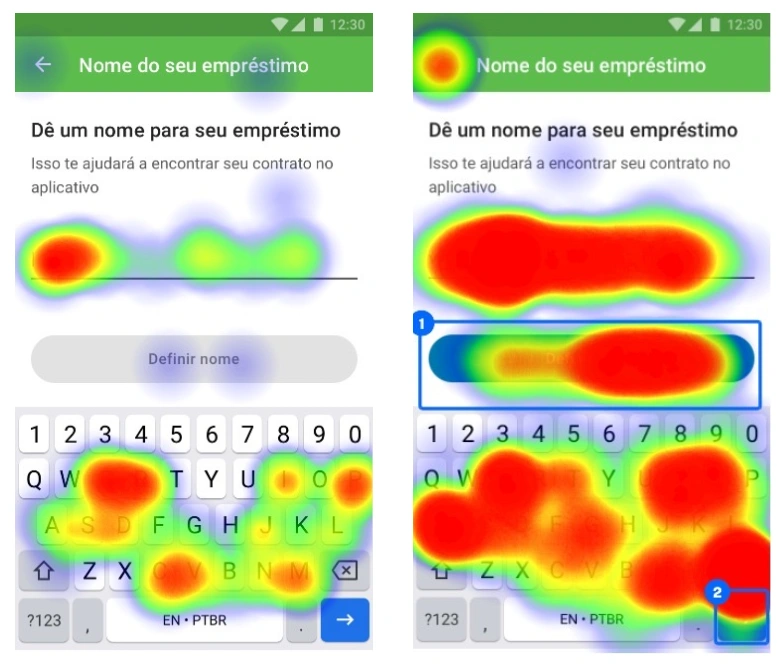
We dug deeper. About half of them struggled due to limitations in the prototype (like not being able to change the loan amount). The other half abandoned the process at various points, for reasons that weren’t yet clear.
To investigate further, we conducted a qualitative round with 9 individual interviews. This time, all participants successfully completed the process, but the sessions still revealed key areas for improvement:
The onboarding text was too long; many users skipped it.
The contract needed to be easily accessible after loan approval. We made the necessary adjustments.
Launch and Results
We opted for a phased release, closely monitoring how users interacted with the new experience. Whenever we noticed friction or confusion, we made small adjustments before expanding to a larger audience. Over time, adoption grew, and the results became clear:
Significant reduction in support calls related to the loan process.
A strong increase in user satisfaction scores.
The product reached the company’s highest NPS score at the time.
More Than a New Process: A Measurable Business Impact
This project became a strong example of how a user-centered approach, combined with fast learning cycles and iterative testing, can deliver measurable business outcomes. Throughout the project, we managed to reduce friction, simplify the customer journey, and bring greater clarity to each decision point in the process. The personalization strategy not only improved the user experience but also provided the company with valuable behavioral insights. In the end, this wasn’t just about redesigning screens. It was about delivering an experience that made a real difference, for both users and the business.
Like this project
Posted Aug 1, 2025
Redesigned loan application process for a major Brazilian bank, improving user experience and business outcomes.
Likes
0
Views
23