STILL HOUSE: Design-Led Stays and an Interactive Trip Planner

Benjamin C


A hospitality experience built around the stay
STILL HOUSE is an independent concept for a design-led holiday-home collection. I created it to explore a practical challenge for boutique hospitality businesses: how to communicate the character of a property while helping a visitor decide whether it fits their trip.
The concept uses fictional stays and sample prices. It is a working demonstration of the discovery and planning experience, with no live inventory or reservations. The business use case is concrete: give a small collection of distinctive properties a direct digital presence that feels as considered as the spaces themselves.
Starting with a visitor decision
I began with a simple journey: discover a place, compare the useful details, save a favourite, then outline a possible stay. This gave the project a clear purpose beyond an attractive homepage.
I wrote the initial brief around both visual direction and interaction requirements. The brief specified property settings, guest capacity, saved selections, date validation and a transparent summary. Defining those details at the start helped keep the build focused on the questions a guest would ask before making an enquiry.
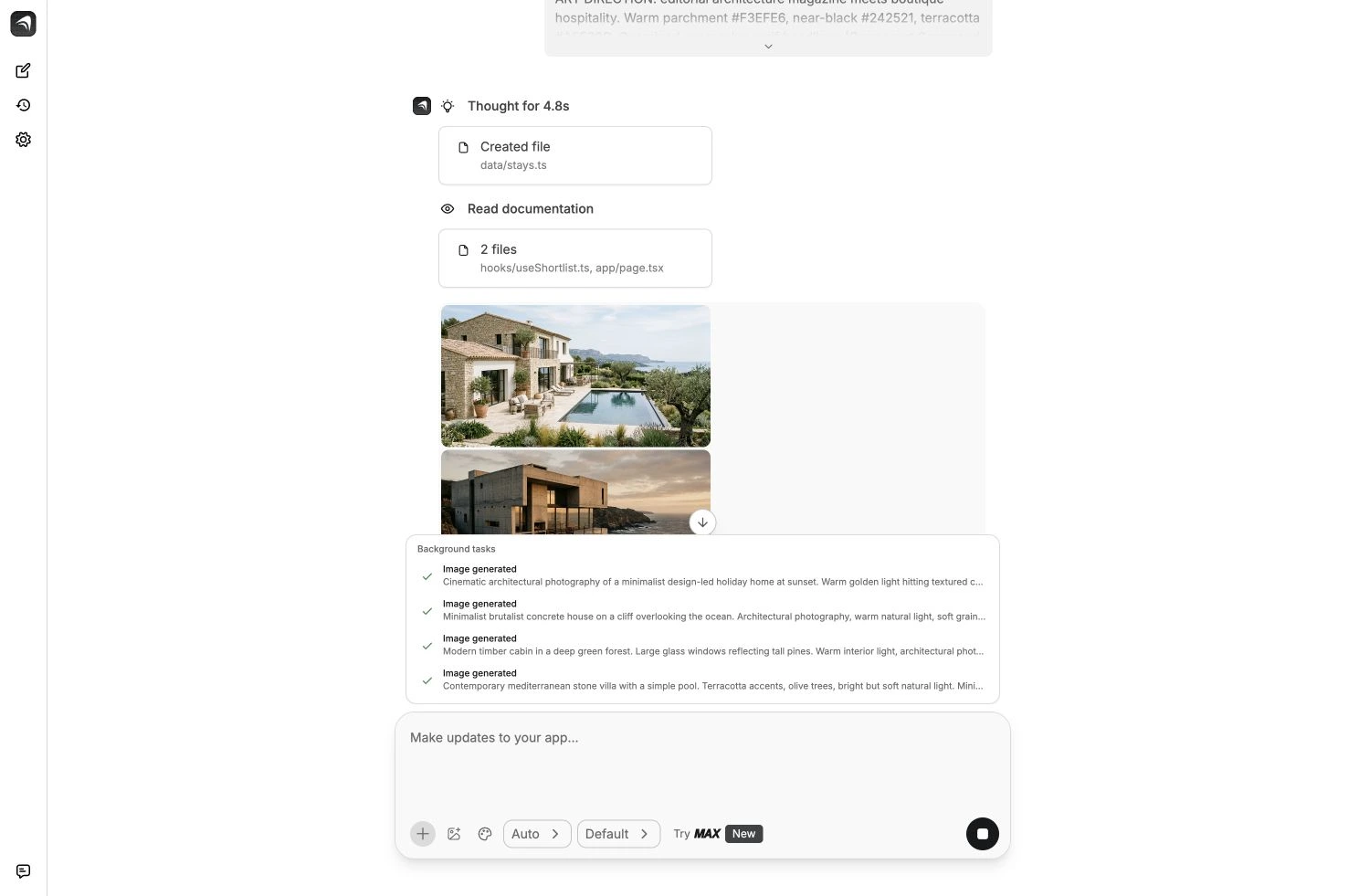
Building the concept in Anything, including the visual direction and generated architectural imagery.
Translating architecture into the interface
The visual system takes its cues from an architecture editorial. Warm parchment, dark ink and terracotta sit alongside expressive serif typography, fine dividing lines and generous spacing. The large opening image establishes the atmosphere before the page introduces practical information.
I used Anything to build the interface and generate architectural imagery for the concept. Oversized type gives the first screen its identity, while smaller labels keep rates, locations and filters easy to scan. Restrained reveal and hover motion support the photography without making the interface feel busy.
Turning browsing into a useful shortlist
The collection contains six fictional stays across coast, country and city settings. Setting and guest-capacity filters let a visitor narrow the collection instead of reading every card. Each property brings its description, amenities and capacity into a detail view.
The saved shortlist carries a visitor’s choices between sessions using local browser storage. This makes it useful for the familiar pattern of finding a property, leaving the site and returning later. A visible shortlist count also gives immediate feedback when a stay is saved or removed.
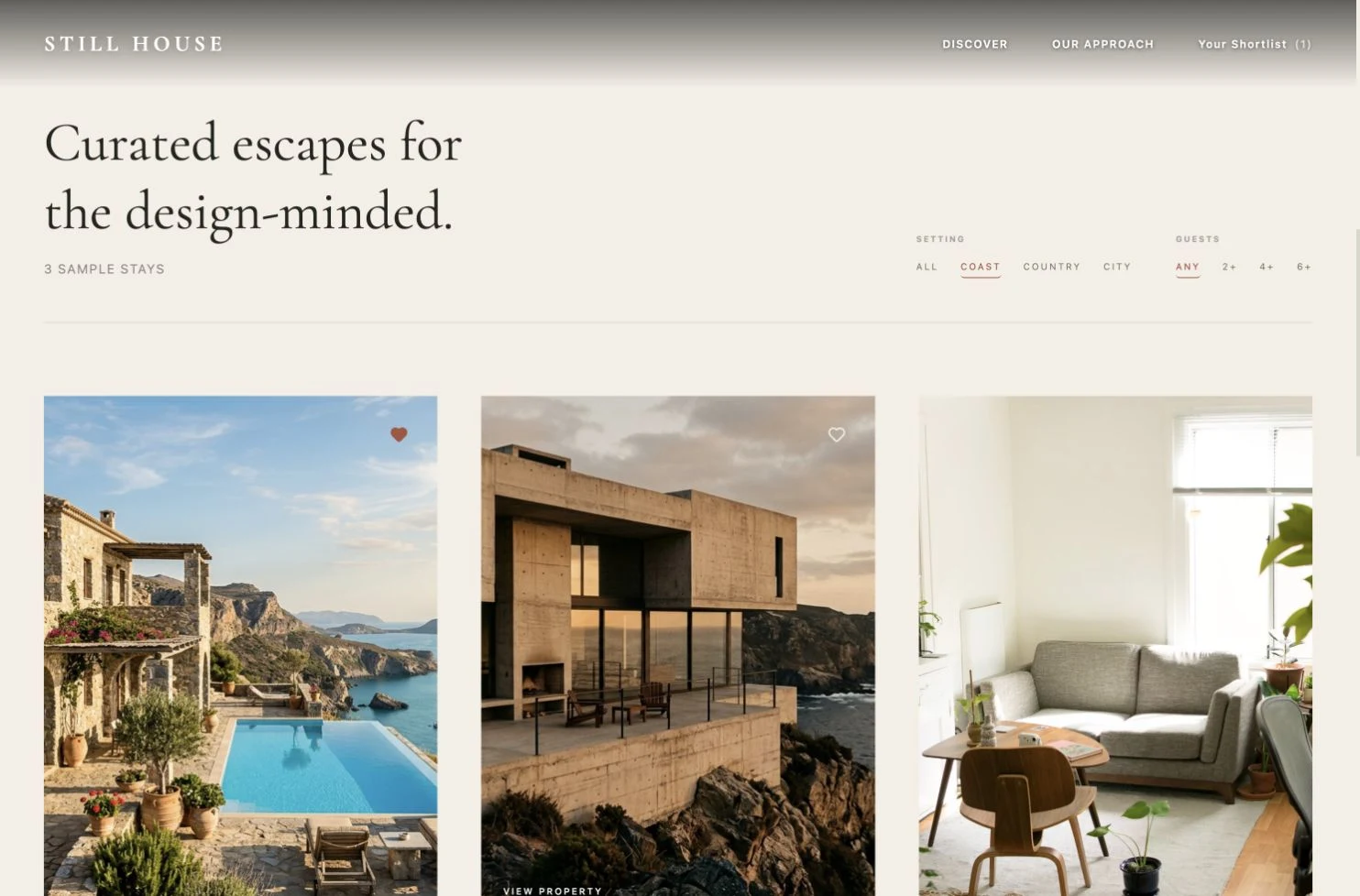
Setting filters turn the collection into a practical shortlist of suitable stays.
Making the next step specific
The trip planner asks for the selected stay, arrival and departure dates, and guest count. It is designed to turn a vague interest into a clear trip outline, including the number of nights and a sample subtotal.
This is deliberately a planning demonstration. It collects no personal information and sends no enquiry. The final summary explains that no reservation has been made. That keeps the concept honest while showing how the same interaction could sit before a real enquiry or booking integration in a commissioned project.
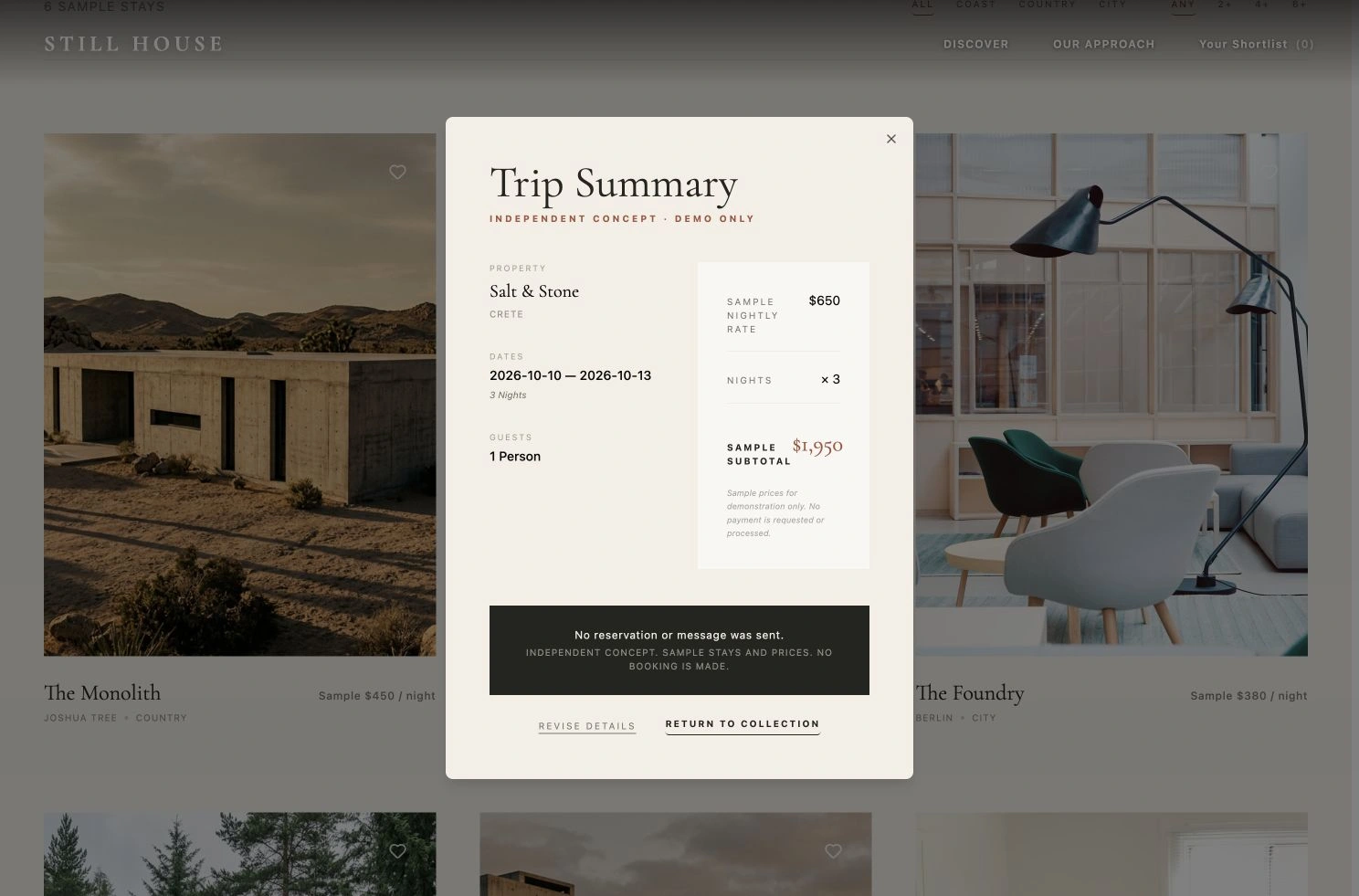
The planner creates a clear trip outline and sample subtotal, while stating that no reservation or message was sent.
Building and refining in Anything
I developed the site in Anything using Next.js, React and Tailwind CSS, with local storage for the shortlist. I captured the initial brief, the build process and the working interface so the case study shows how the experience took shape.
During browser review, I checked the relationship between property imagery and descriptions, the usefulness of navigation, and the date-entry flow. I then used a focused revision brief to improve those details. The work was reviewed as an interactive product, including filters, property selection and planning, rather than only as a static composition.
A clear direction for a real hospitality brief
The finished direction demonstrates how a boutique property business could combine a strong visual identity with a practical route from browsing to trip planning. It gives the brand room to express a point of view while giving the visitor something useful to do.
For a commissioned version, the next integration would depend on the operator’s actual reservation system and enquiry process. This concept establishes the interface and visitor journey that those operational services would support.
Like this project
Posted Sep 8, 2026
Built an editorial hospitality concept in Anything, with property filters, a saved shortlist and a working trip planner.