Non-Custodial Wallet Onboarding Redesign

Rukayat Yaro

Introduction
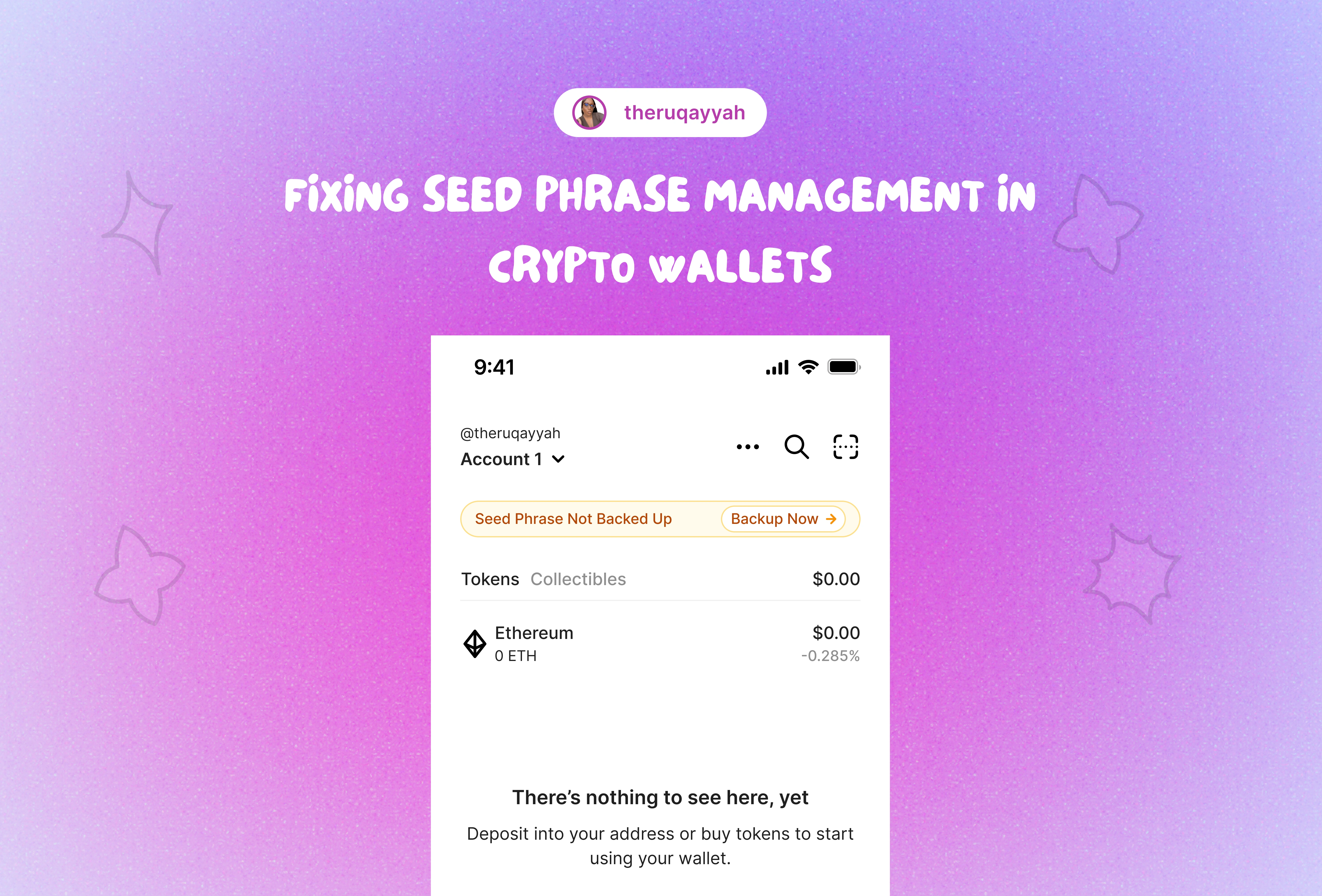
Non-custodial wallets give users full control over their assets—but that freedom often comes with fear. For many users, seed phrases and backups feel confusing, intimidating, and easy to ignore. I redesigned the onboarding and backup experience to make security feel understandable, approachable, and hard to miss.
Problem
Most users don’t back up their seed phrase during onboarding.
Why?
The concept is poorly explained
Security warnings feel overwhelming
Backup steps are rushed or hidden
Users underestimate the risk until it’s too late
This leads to lost wallets, lost funds, and broken trust.
Solution
I reimagined the onboarding and backup flow to build confidence before asking users to act.
Key improvements included:
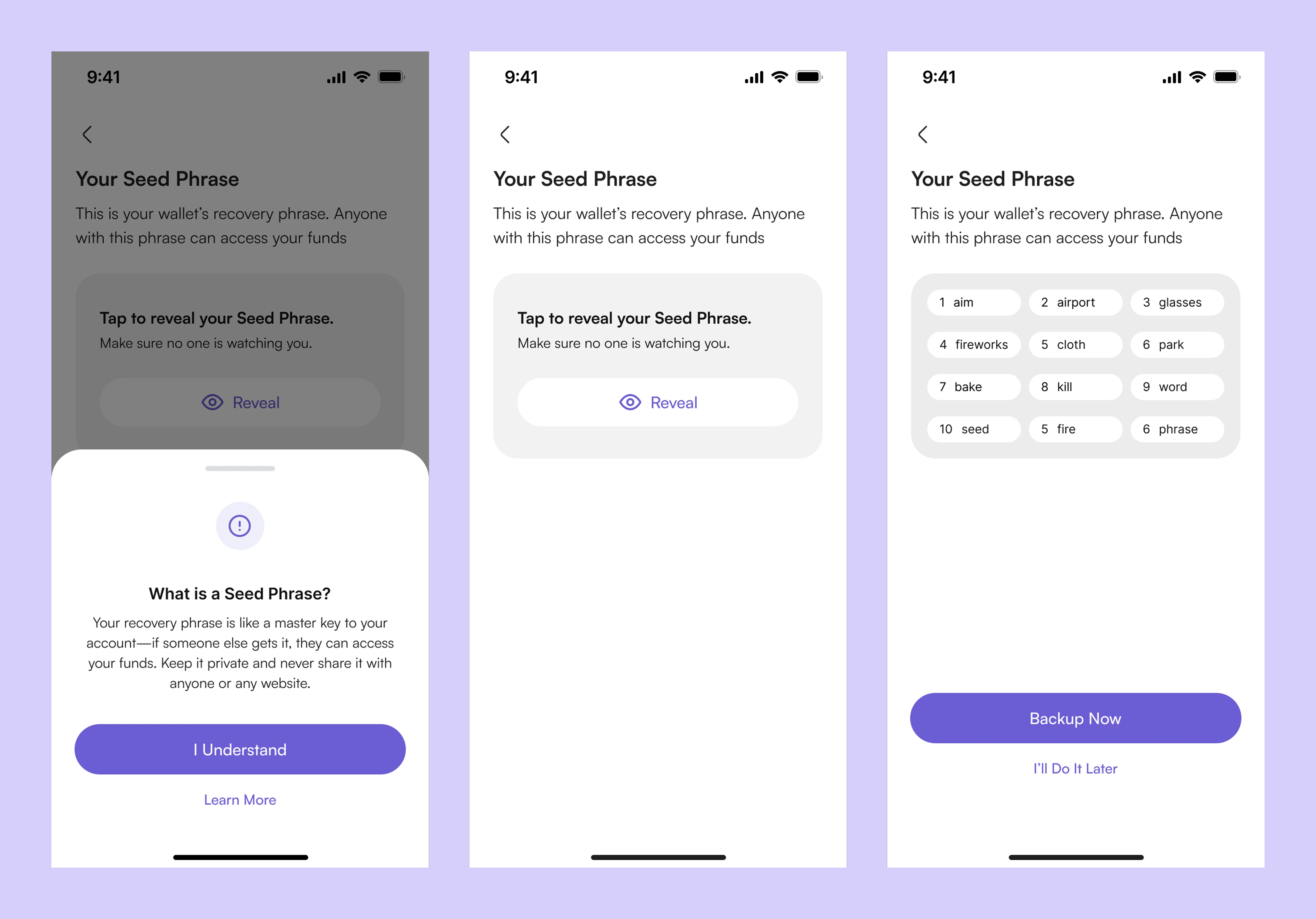
A simple “What is a Seed Phrase?” explanation is shown upfront
A delayed seed phrase reveal paired with a subtle safety reminder
Clear visibility of the seed phrase with the option to back up immediately or return later
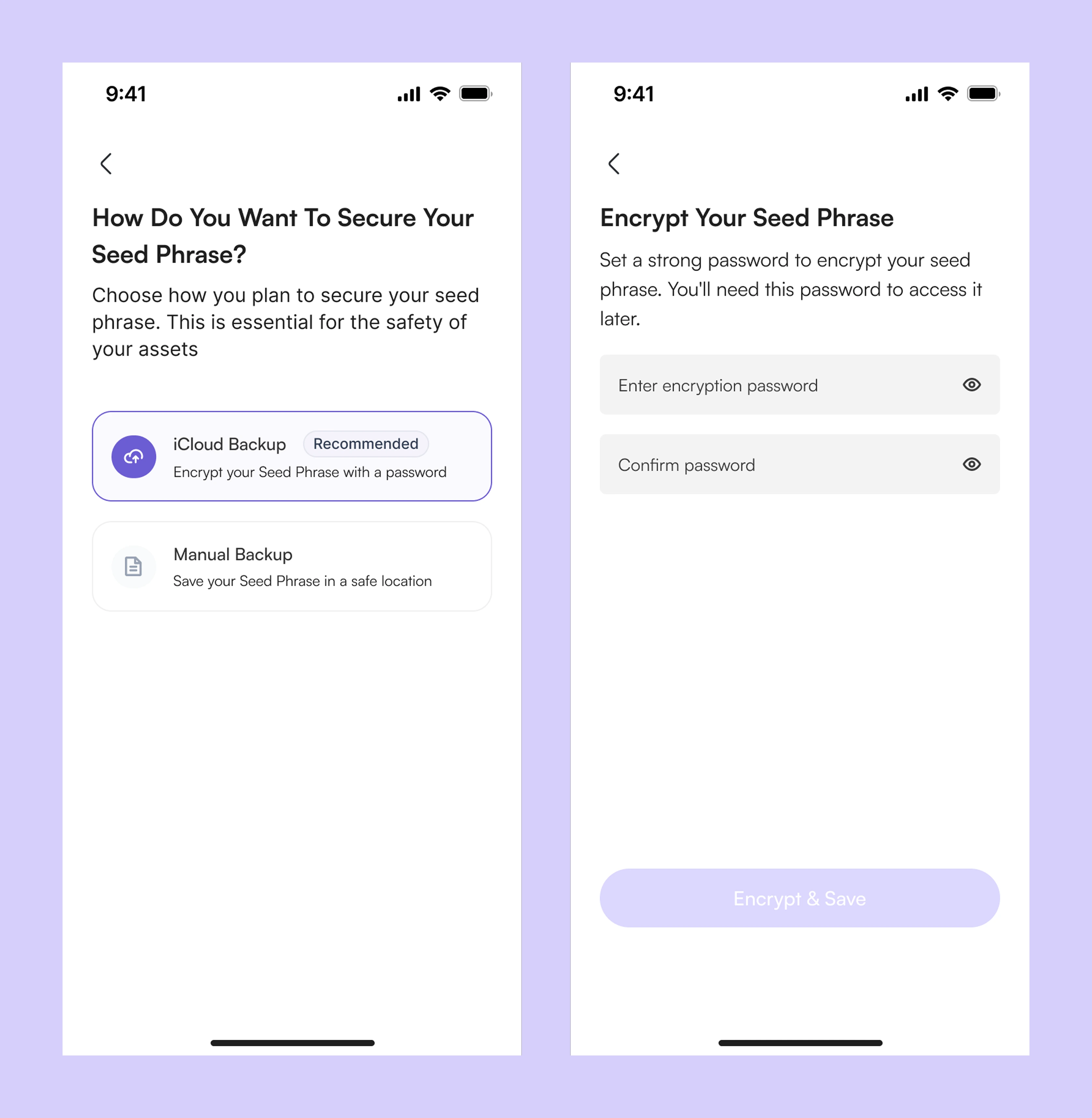
In the second onboarding step, users were given two clear backup paths:
Encrypted iCloud Backup: fast, safe, and beginner-friendly
Manual Backup for users who want full control
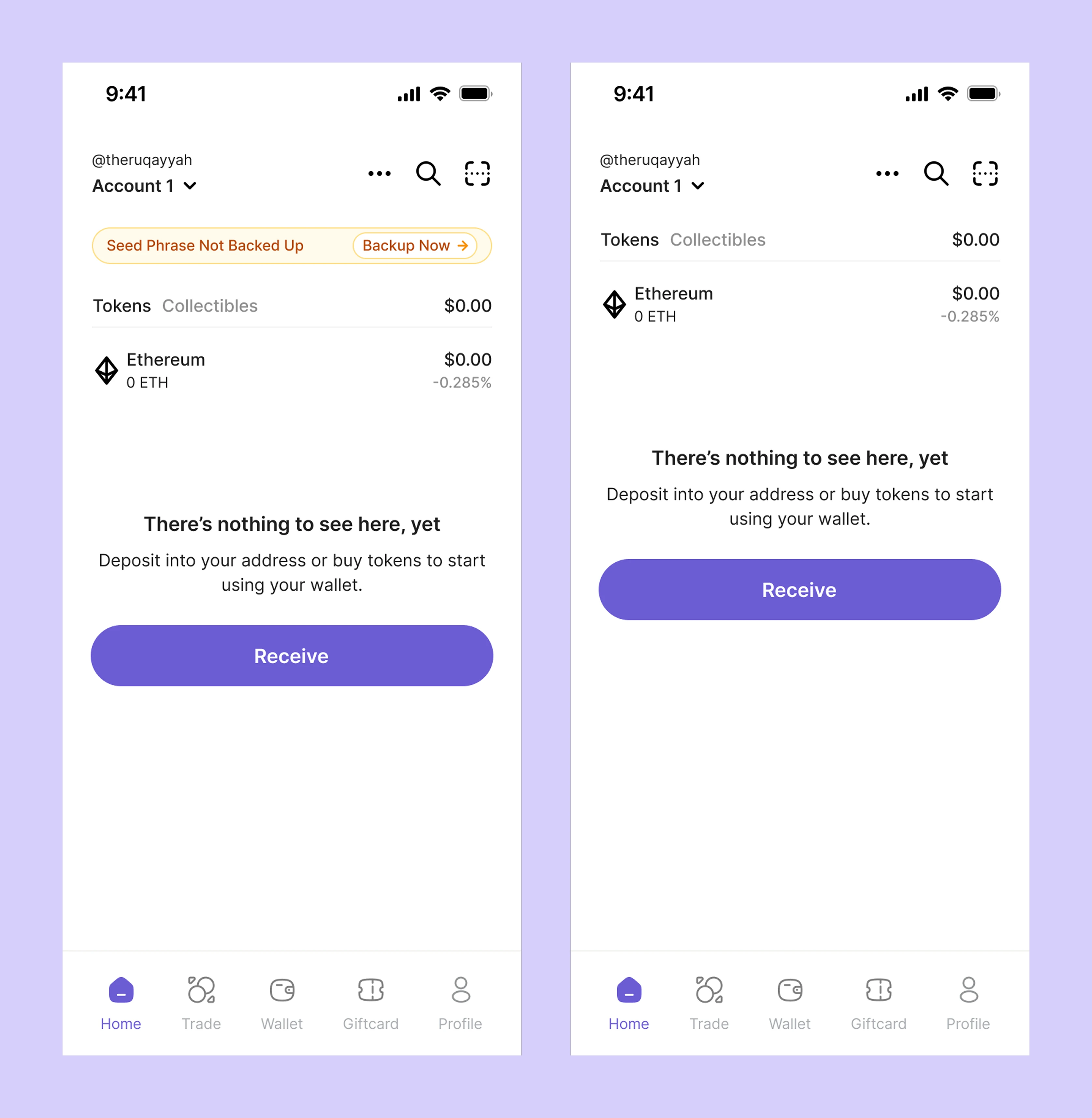
To prevent users from skipping backup entirely, I added:
A visible Home Screen banner reminding users to back up
A gentle "Backup Now" nudge that stays accessible without being intrusive
Security was no longer hidden; it was intentionally visible.
My Role
I led the end-to-end product design for this flow, including:
UX research and problem framing
User flow mapping and interaction design
High-fidelity UI design
Microcopy and security-focused messaging decisions3
Process
Identified friction points in existing cross-chain transfer experiences
Designed simplified user flows focused on clarity and trust
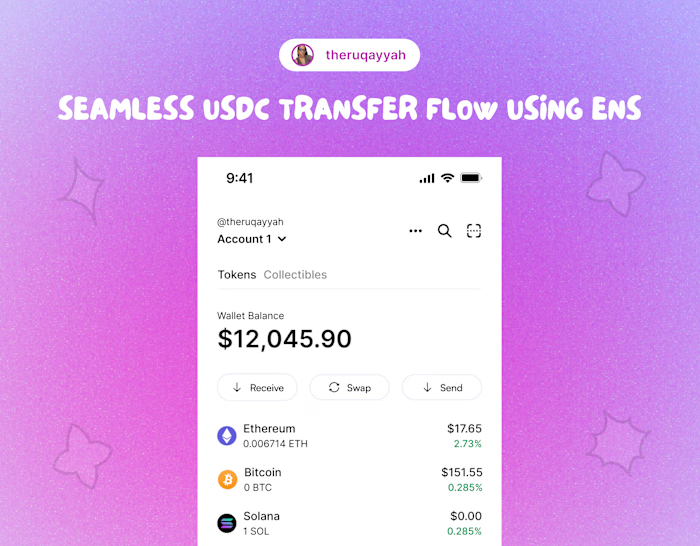
Iterated on ENS resolution, confirmation states, and fee visibility
Refined UI to reduce cognitive load at each step
Challenges
Explaining complex security concepts without overwhelming users
Encouraging backup without fear-based messaging
Balancing beginner-friendly options with advanced user autonomy
Outcome
Backup was positioned as a core action, not an afterthought
Users were guided with clarity instead of pressure
The experience felt safer, calmer, and more intentional
By making security visible, understandable, and optional, the onboarding flow supported both trust and long-term user safety.
Like this project
Posted Jan 12, 2026
Redesigned non-custodial wallet onboarding to simplify seed phrase education, offer flexible backup options, and nudge users to secure their wallet early.
Likes
1
Views
48