From COVID to Chronic Care

Igor Rodriguez


From COVID to Chronic Care
HealthTech · Design Manager · Multi Platform
MISSION
eMed set out to make clinical-grade healthcare accessible from home, starting with COVID test-to-treat and evolving into a full chronic care platform built around GLP-1 medication management and long-term behavior change.
CHALLENGE
The hardest design problem isn't building something new. It's evolving a platform that already serves millions without breaking what works, losing the team, or starting over. We had to do that twice. And the first time, we were doing it at a scale where a 2% error rate meant 64,000 people getting it wrong.
MY CONTRIBUTION
I joined as the lead and only designer on web and mobile, working directly with the Founder and Executive team from day one. I built the design system from scratch, improved the COVID testing experience, designed the full treatment flow hands-on, and established the UX foundation that every subsequent product was built on. As the team grew I moved into the Design Manager role, mentoring and leading a team of 5 across multiple platforms and mediums. I was part of the leadership team that drove the AON enterprise partnership and UK Mounjaro expansion forward.
KEY OUTCOME
We didn't pivot. We compounded. Every capability built for COVID testing became infrastructure for chronic care. The GLP-1 platform didn't start in 2023, it started the day we built the first camera widget. On March 1, 2022, the White House launched its national "Test to Treat" COVID-19 initiative using the term eMed had trademarked.
3.2m concurrent patients at peak COVID season
5m+ total patients across platforms
20% increase in user satisfaction
AON enterprise deal secured eMed's market position
DISCOVERY
eMed had a working COVID testing product. The next question was inevitable: if someone tests positive at home, why should they have to start over to get treatment? The gap between a positive result and a prescription was 24 to 72 hours of friction. We were already in the room. The opportunity was to close that gap entirely.
Insight: "The test was never just a test. It was the first step in a care journey. Once we saw it that way, the design direction became obvious."
PLANNING
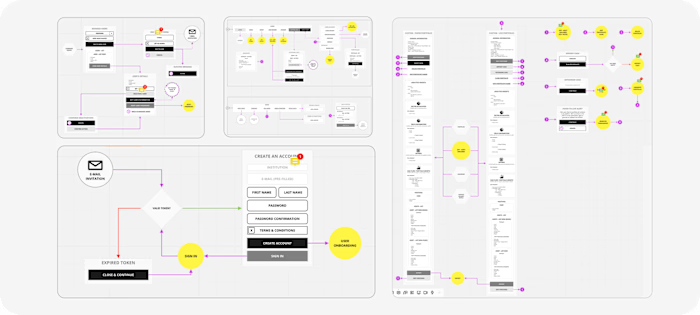
I worked with product and engineering to shape a 3-phase release strategy, the result of negotiating clinical, regulatory, and engineering constraints against user experience goals.
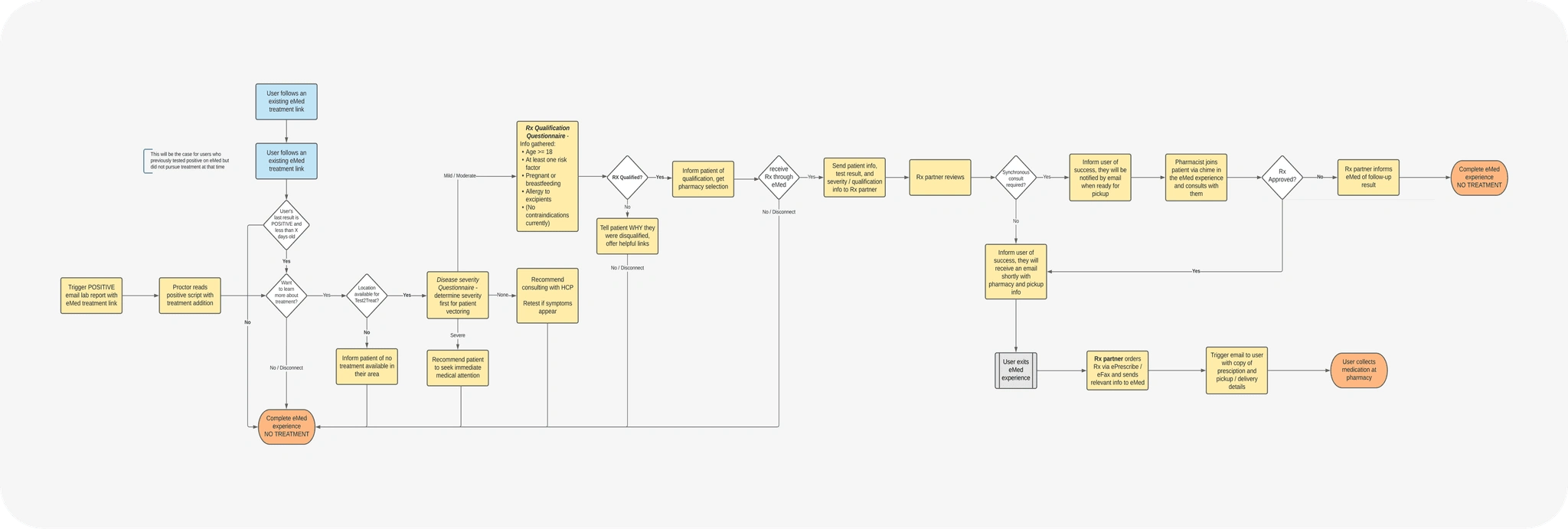
Planning
BUILDING TREATMENT
I designed the medical questionnaire our prescribing physicians used to determine patient eligibility, the pharmacy picker with both local pickup and overnight delivery flows, and the confirmation and communication pattern that kept patients informed at every step.
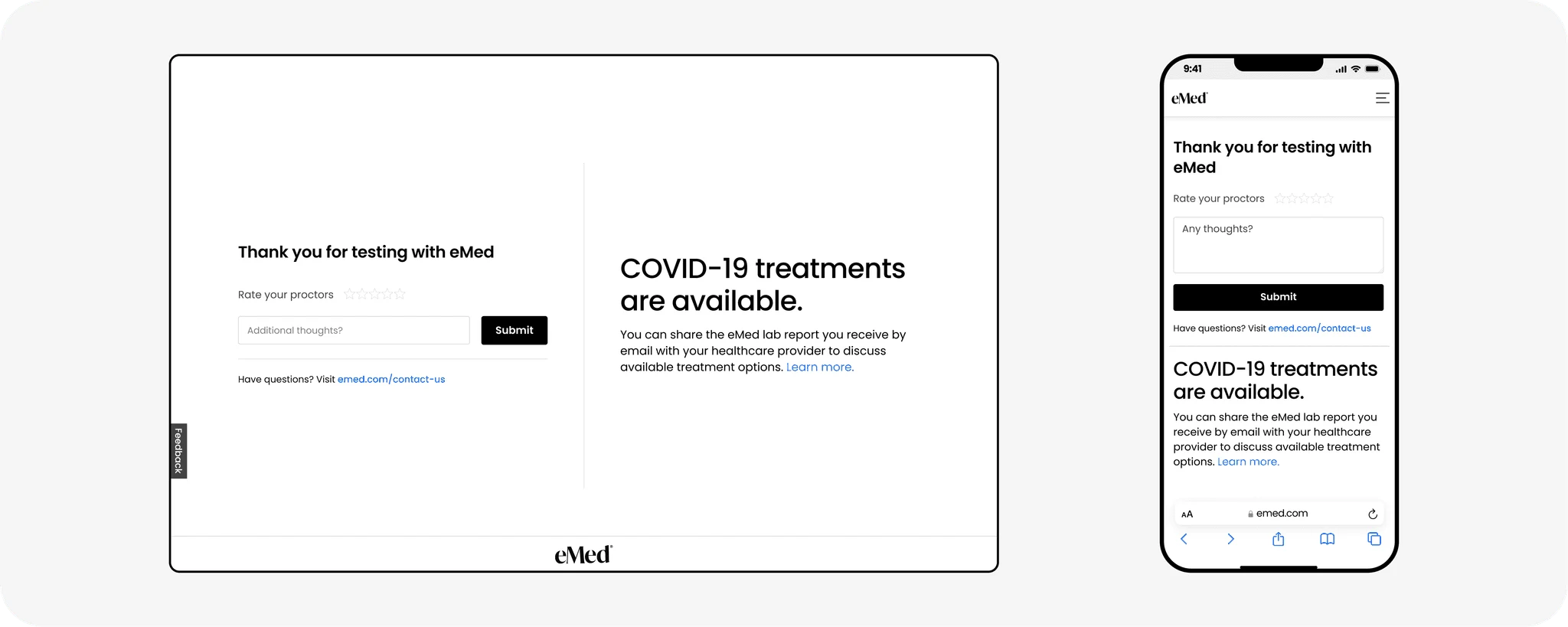
Phase 1
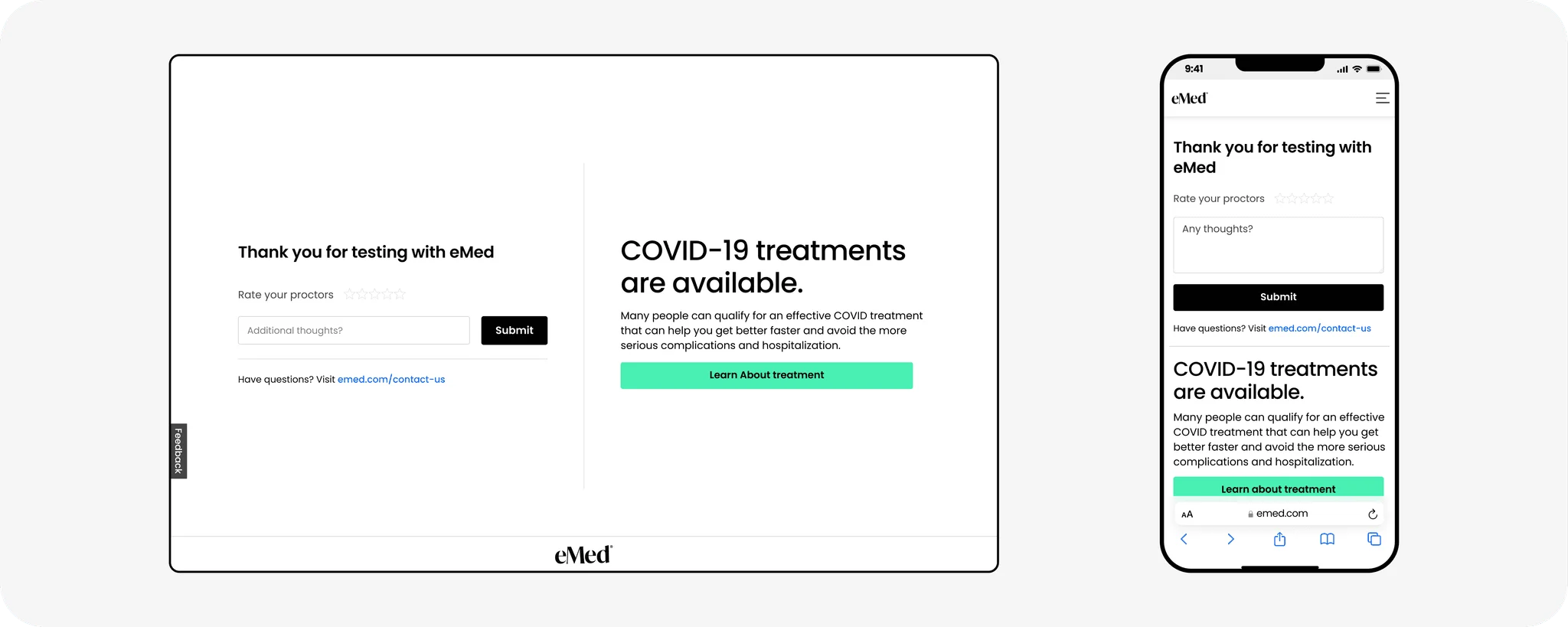
Phase 2
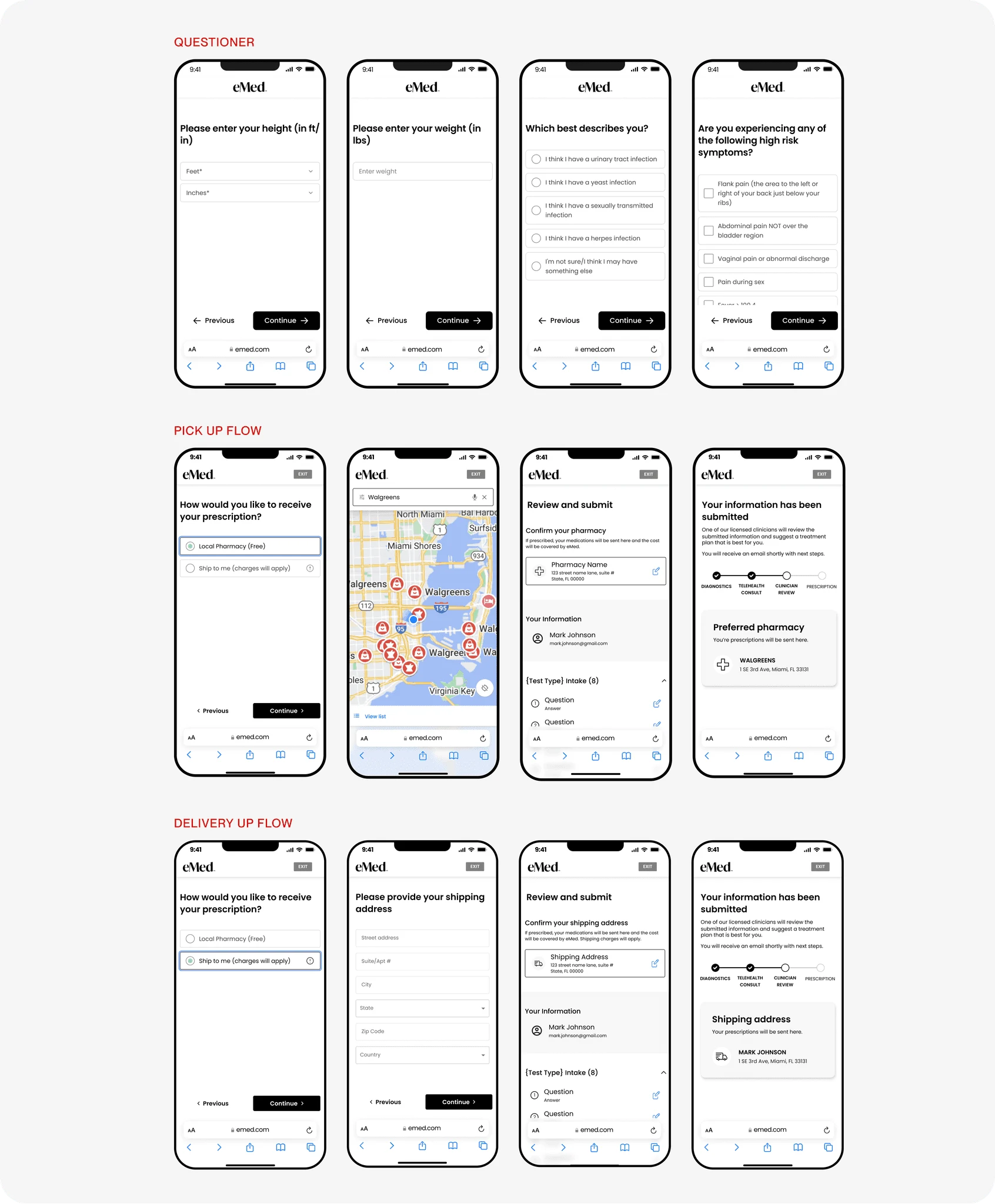
Phase 3
EVOLVING THE TESTING EXPERIENCE
As treatment launched, we were simultaneously expanding the testing engine to new conditions: COVID + Flu, Flu only, Women's UTI, Drug testing, Lyme disease. Data from customer service told us something was wrong with how users were reading their results. Working with our data team through Grafana session analysis, we identified four root causes: language barriers with overseas proctors (40.7%), test kit interpretation confusion (31.2%), deliberate result manipulation (18.8%), and self-consciousness around sensitive test types (9.3%).
I ran a structured usability study with PMs and designers, paper prototyping three solutions, building hi-fi prototypes in Figma, and testing with 9 internal participants using Maze. Self-attestation with a black-and-white color-matching UI won. We designed, tested, and shipped it in 3 weeks.
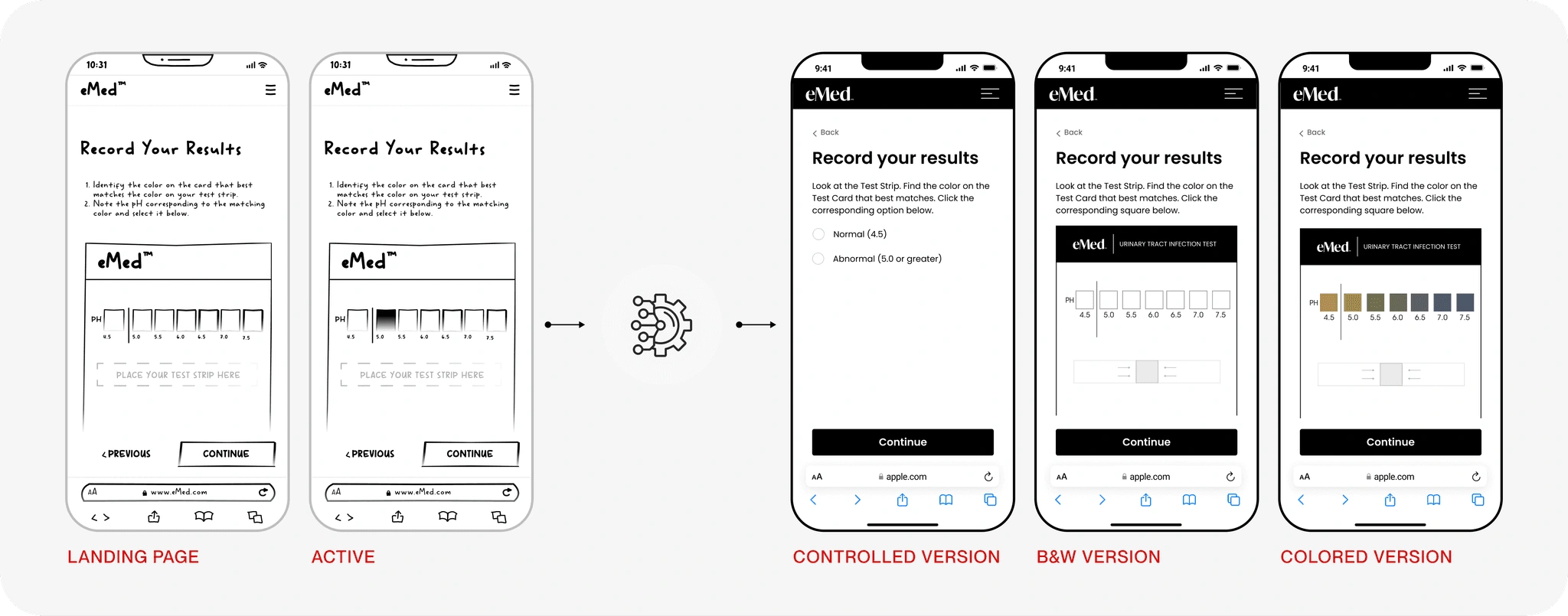
Paper Prototype to High Fidelity
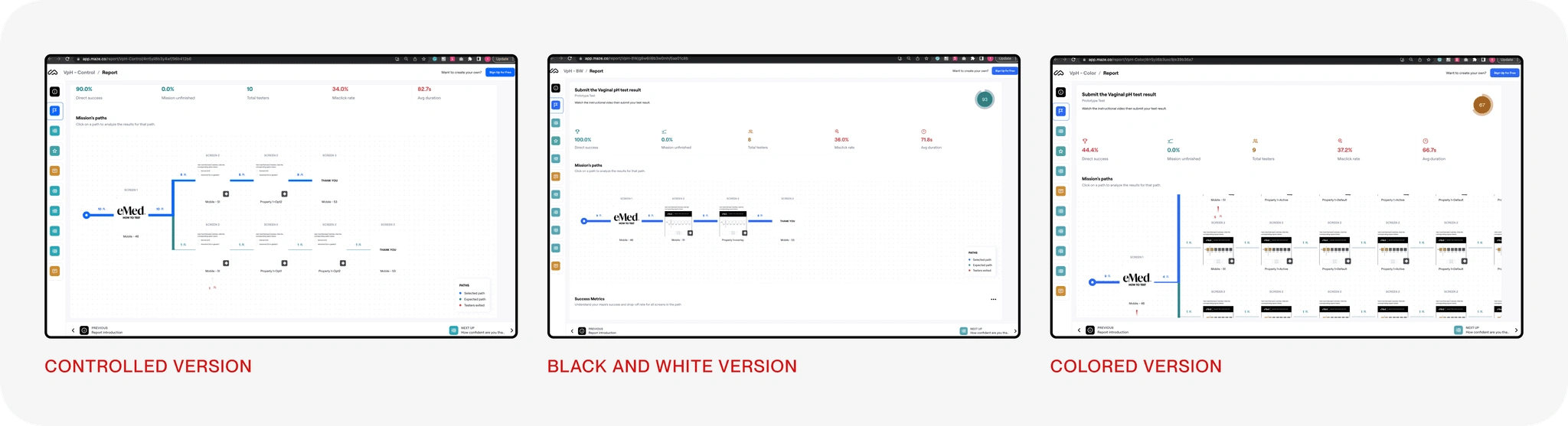
Maze Test
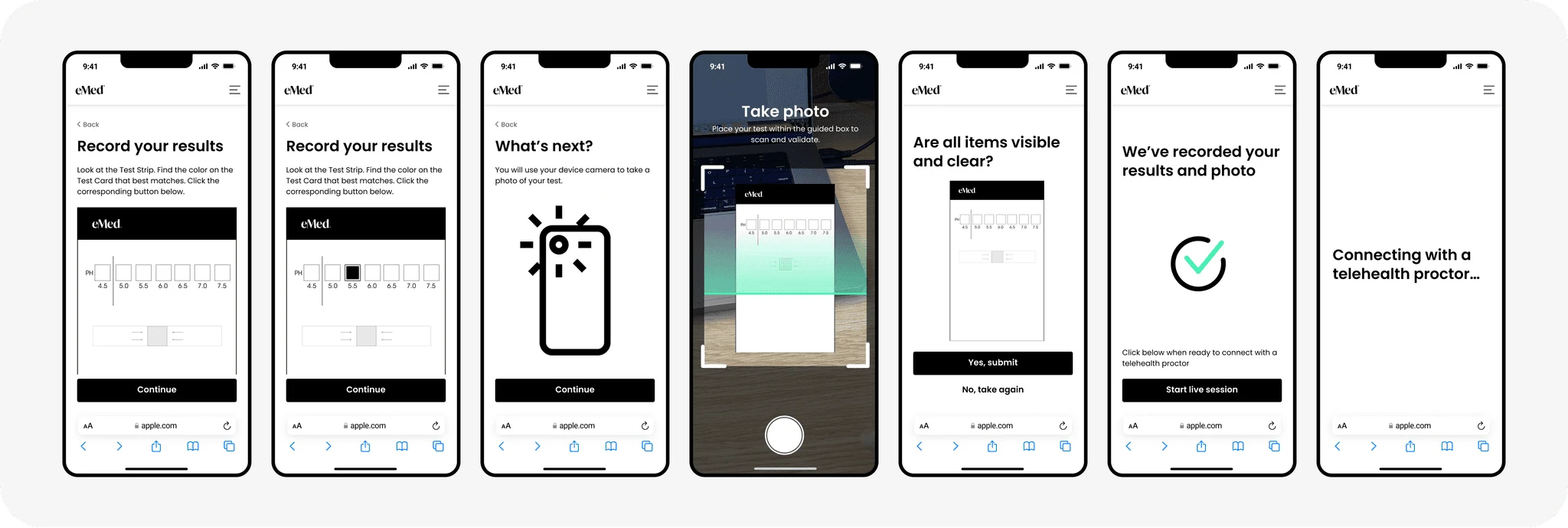
Self Attestation Widget
AI TRIAL AND WHAT IT OPENED
We explored an AI-assisted health check-in experience. We shelved the AI feature because the models weren't reliable enough for clinical-adjacent decisions. But the patterns became the blueprint for the GLP-1 weekly check-in experience that shipped a year later. We acquired Binah.ai, a technology that could detect health parameters through a standard phone camera.
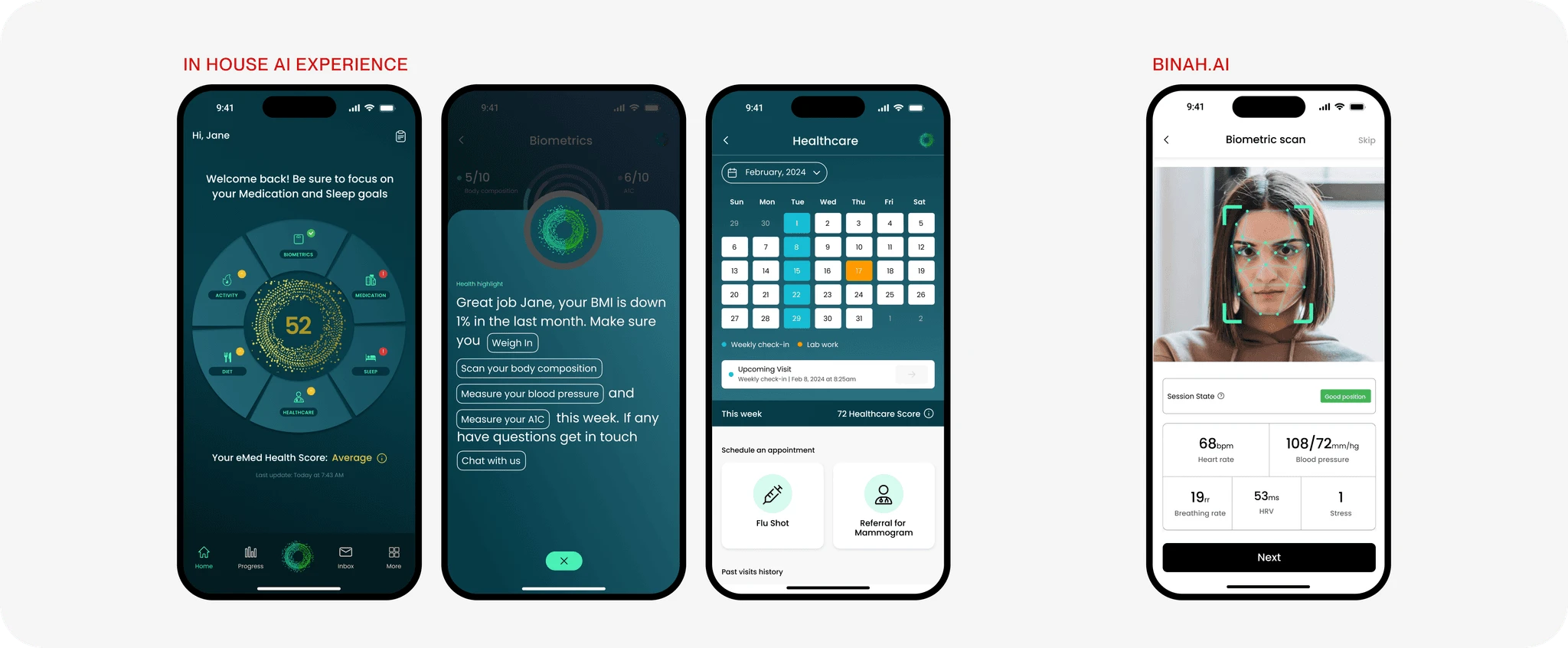
AI Trial
PIVOTING FROM COVID TO GLP-1
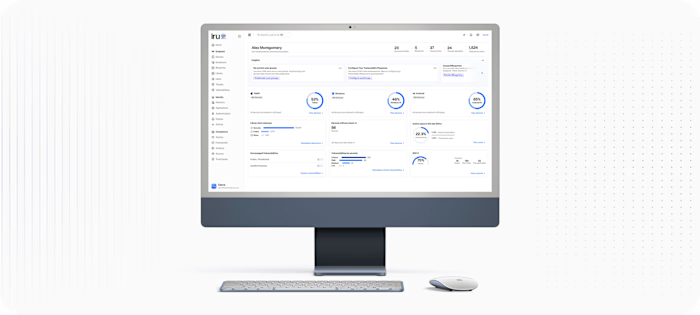
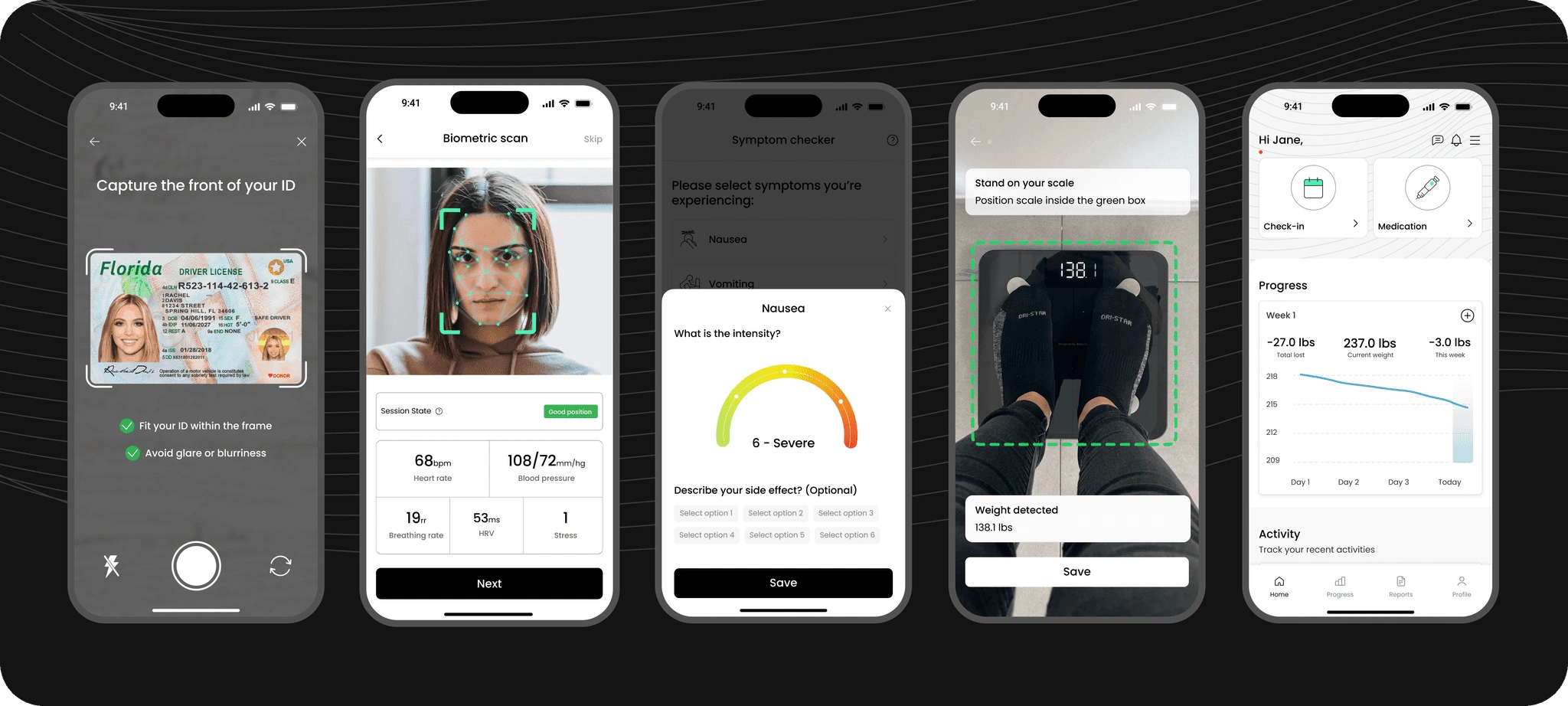
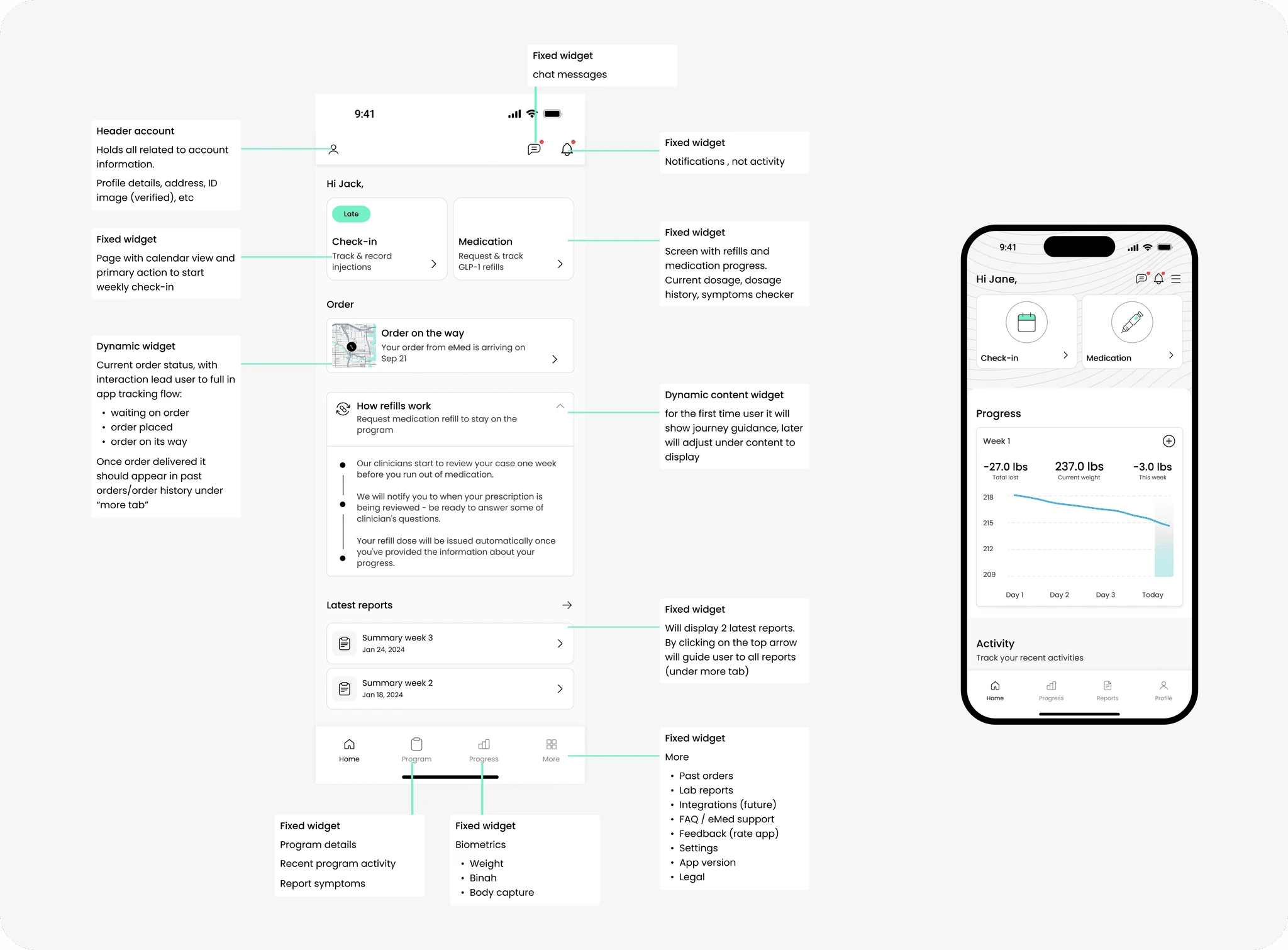
Everything built in the previous three years became the infrastructure for this shift. The camera widget became body scan and scale capture. The T2T questionnaire became clinical intake. The self-attestation pattern became weekly check-ins.
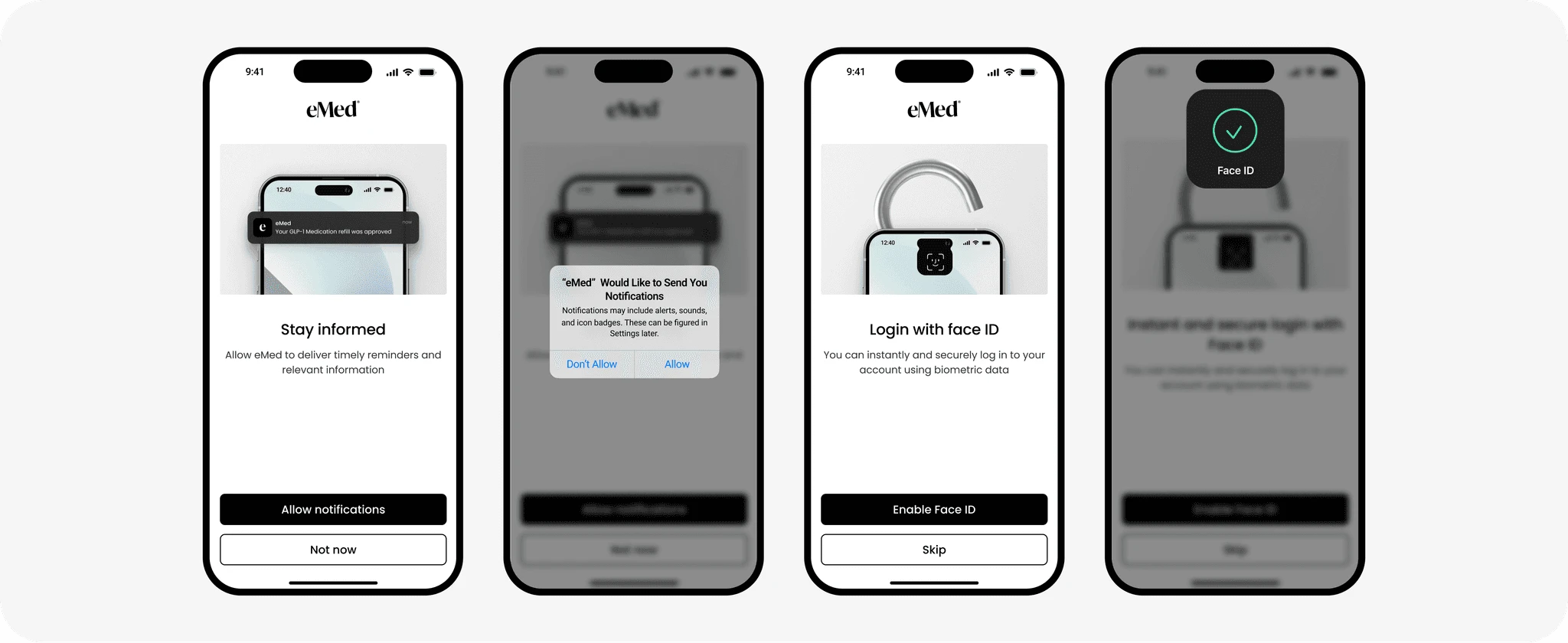
Notifications and Authentication
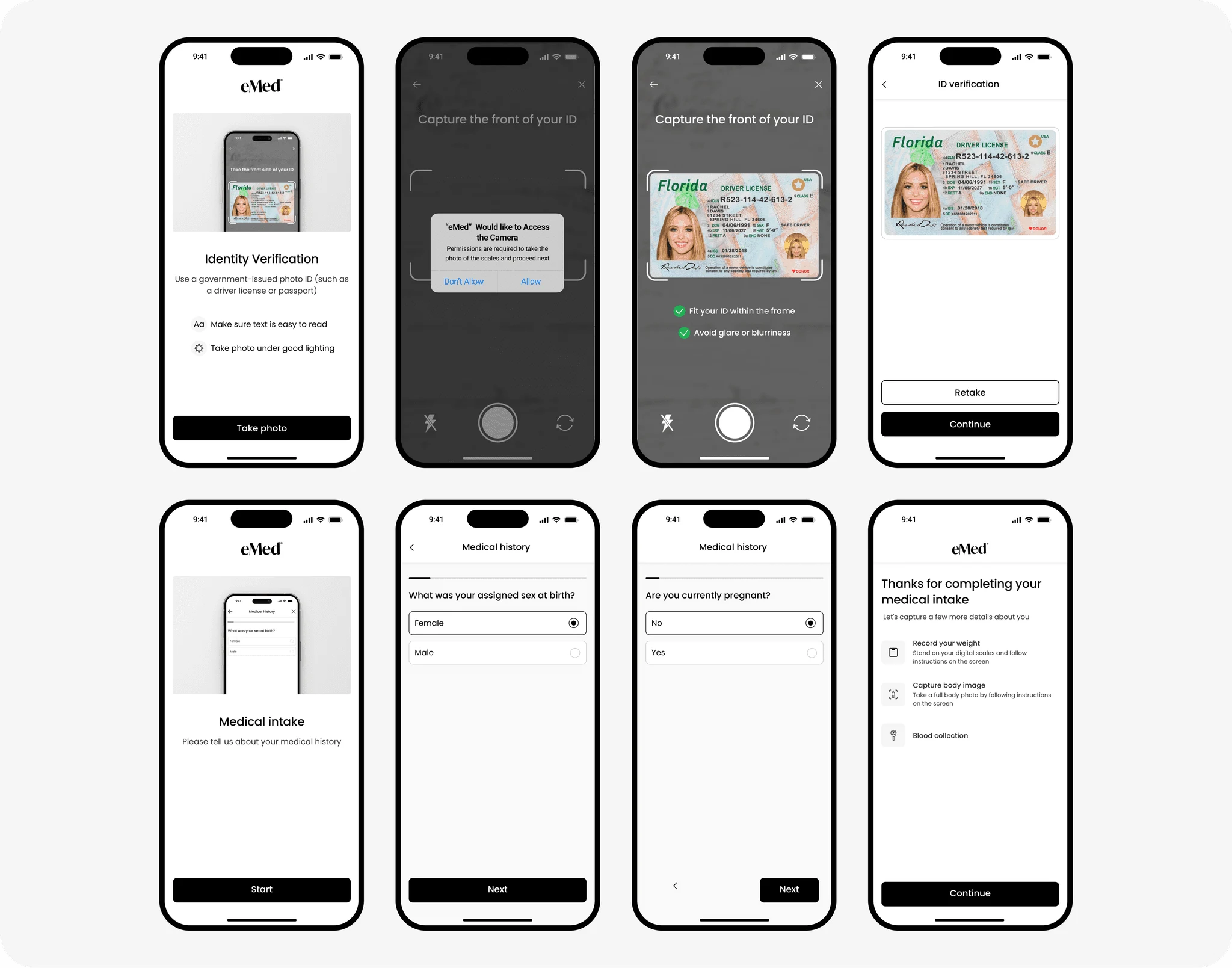
ID Verification and Clinical Intake
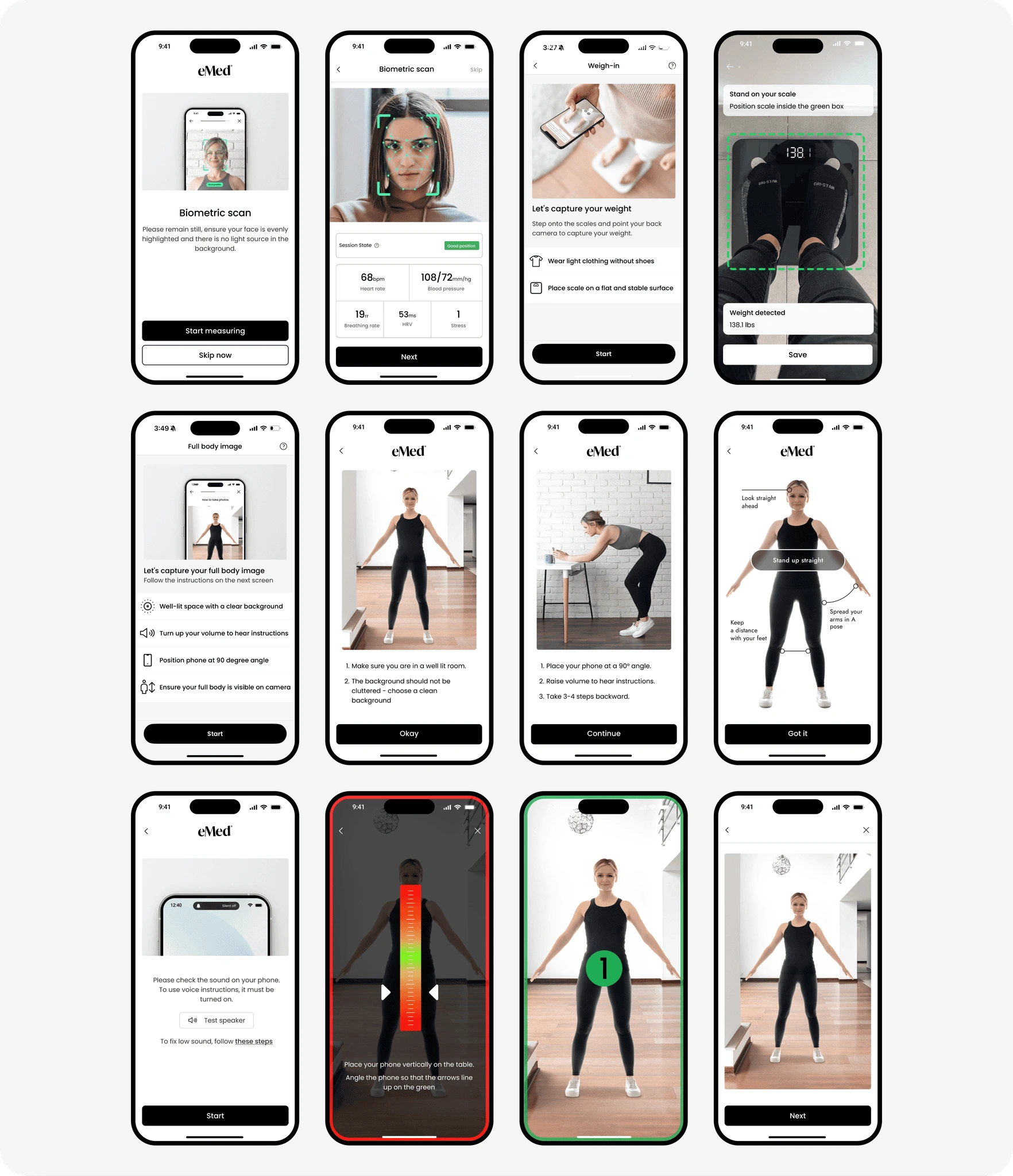
Biometric Measurement
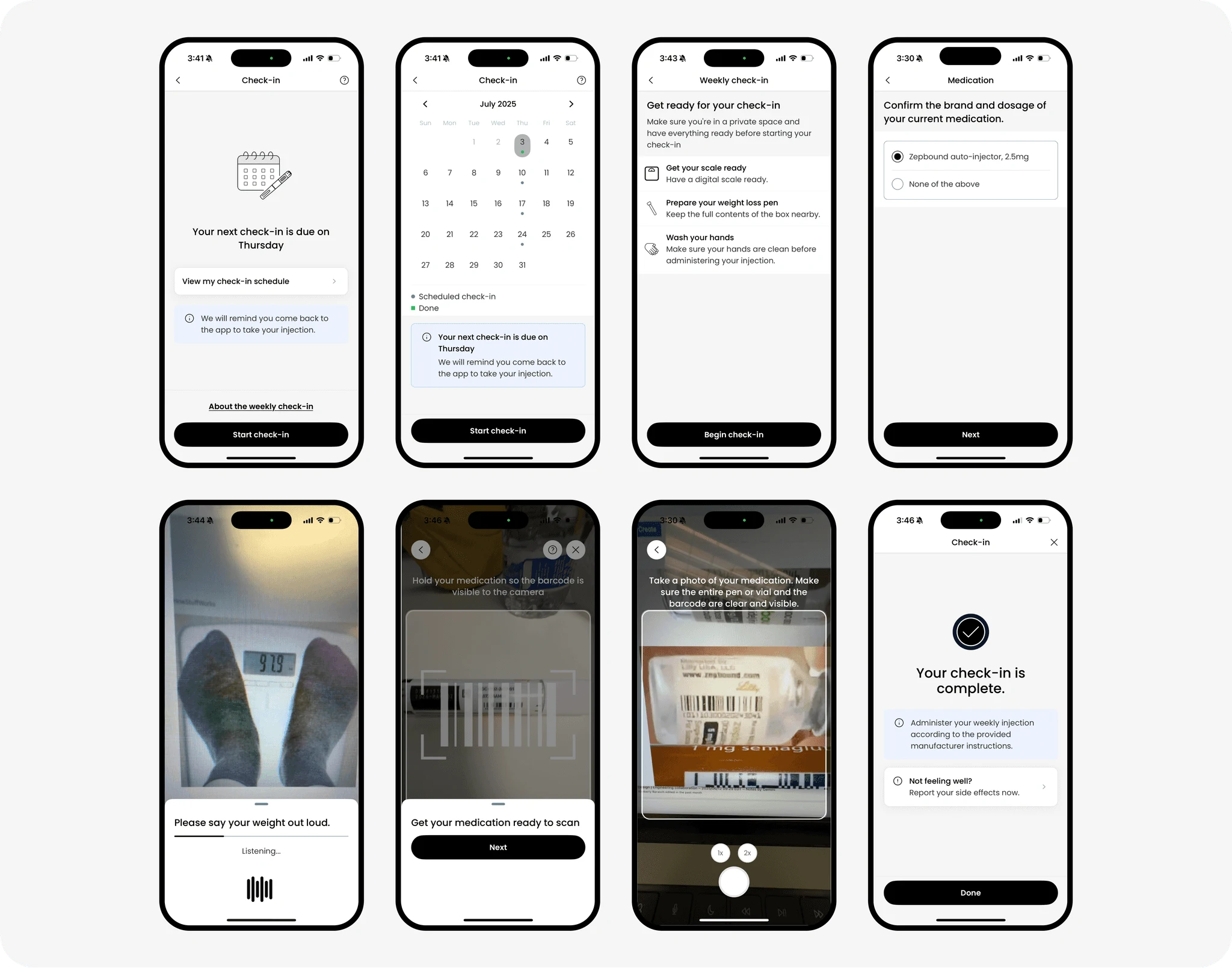
Weekly Check-in
Home
MARKET EXPANSION
The platform launched in two significant markets. In the UK, eMed partnered with Mounjaro. In the US, a landmark enterprise deal with AON brought the GLP-1 program to AON's corporate client base as an employer health benefit.
RESULTS
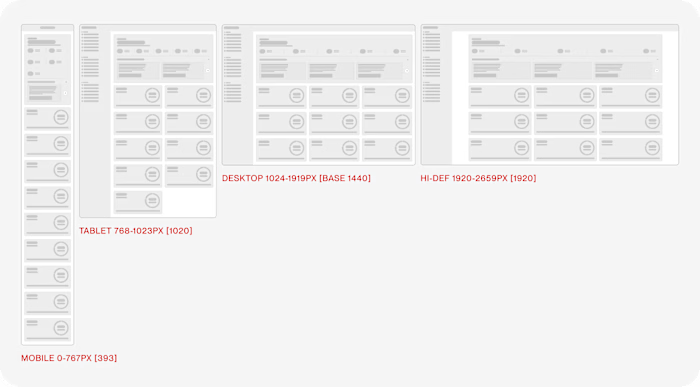
I started as the only designer at eMed. By 2023 I was managing 5 designers across web, iOS, Android, and the clinical proctor dashboard simultaneously. I introduced a weekly design review cadence, restructured Figma around shared libraries reducing duplicated work by ~40%, and built growth tracks that kept two designers from leaving when they were approached by other teams.
FINAL REFLECTION
The thing I'm most proud of from eMed isn't any single screen. It's that we built a team and a system flexible enough to evolve from a pandemic product to a chronic care platform without starting over. Good design infrastructure compounds. That's the lesson.
Like this project
Posted Jul 24, 2026
Led eMed from sole designer to managing 5 across web, iOS, and Android. Built the design system and treatment flows that enabled a test-to-prescription patient journey serving 5m+ patients.
Likes
0
Views
3
Timeline
Nov 1, 2021 - Dec 1, 2024
Clients
eMed