Development of AI Proposal Platform for Leandeck

MD Robin Islam


Leandeck — Building an AI Proposal Platform That Turns Hours of Work Into Minutes (Django + GPT-5.1)
Lead with the screen recording of the app — AI generating a proposal, the editor, the dashboard. A product case study lives on showing it work.
A proposal that used to take an agency six to ten hours should take minutes — but only if the AI actually produces something usable, not a wall of generic text you have to rewrite anyway. That "usable, structured, editable" bar is the whole game with Leandeck, and it's where most of the engineering went.
Leandeck is an AI platform that helps agencies generate proposals, agreements, and invoices in one connected workflow. I architected and built the backend and the AI system; my team built the Next.js frontend. We shipped the MVP in two months, and it's now live in beta with real agencies using it.
Next.js Frontend
Django · Python · FastAPI Backend
GPT-5.1 AI engine
2 months To beta
Product:
AI proposal, agreement & invoicing platform for agencies
My role:
Backend + AI architecture and development (lead)
Frontend:
My team
Status:
Live beta
Robin built our entire backend and AI system from scratch — and the hard part wasn't the demo, it was making the AI output accurate and structured enough that agencies would actually send it. He got that right. We're running real proposals through it in beta now, and it holds up. Felt less like hiring a contractor and more like having a technical co-founder.
— Leandeck
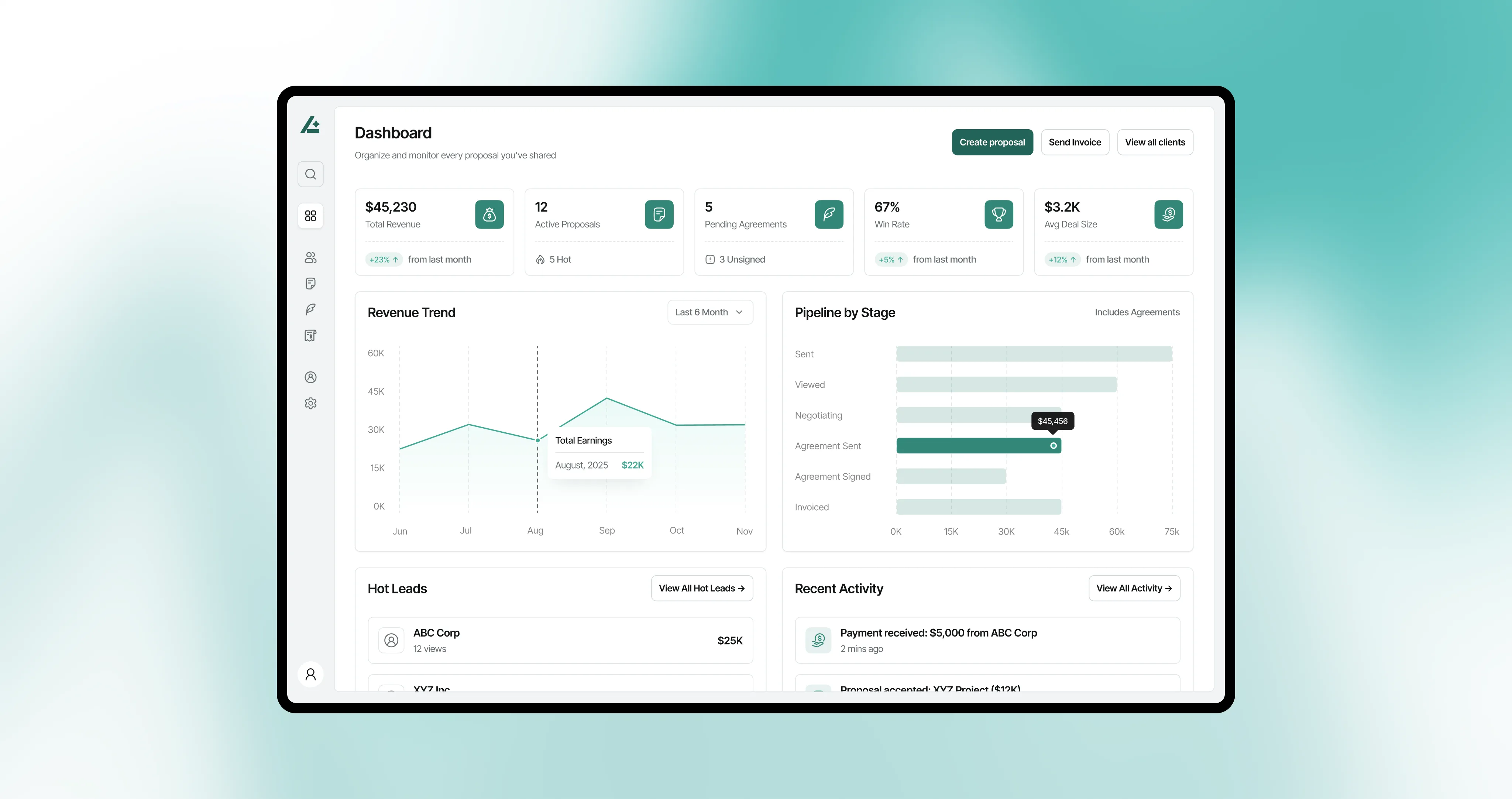
The brief: replace the proposal grind
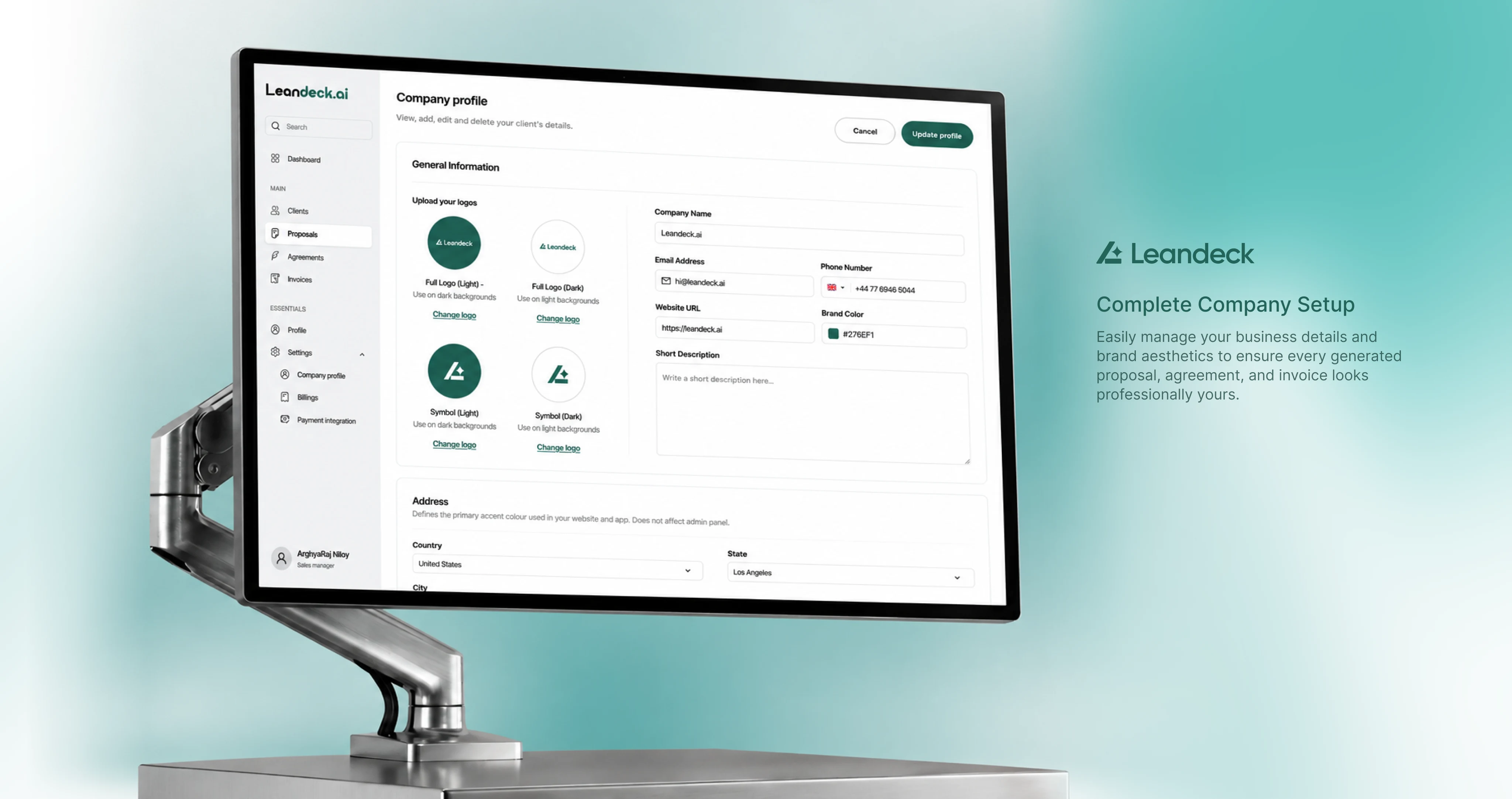
Design and dev agencies lose hours writing proposals — pricing, scoping, agreements, invoicing — mostly by hand, mostly from scratch each time. Leandeck's promise is to collapse that into minutes: describe the project, and the platform generates a real, structured proposal you can refine, turn into an agreement, and invoice against — all in one place.
The promise is easy to say. Making the AI output good enough that an agency would actually send it is the hard part.
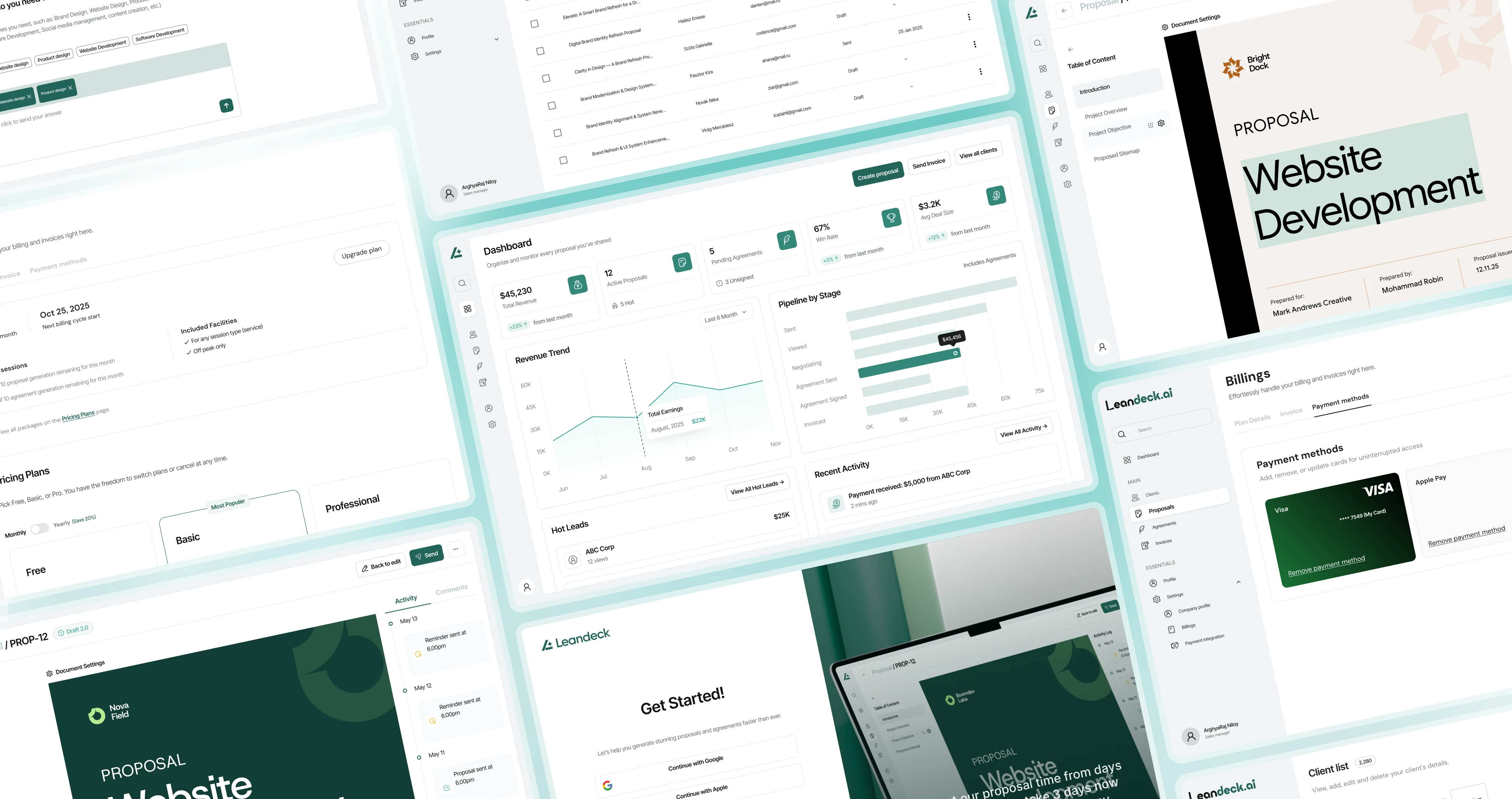
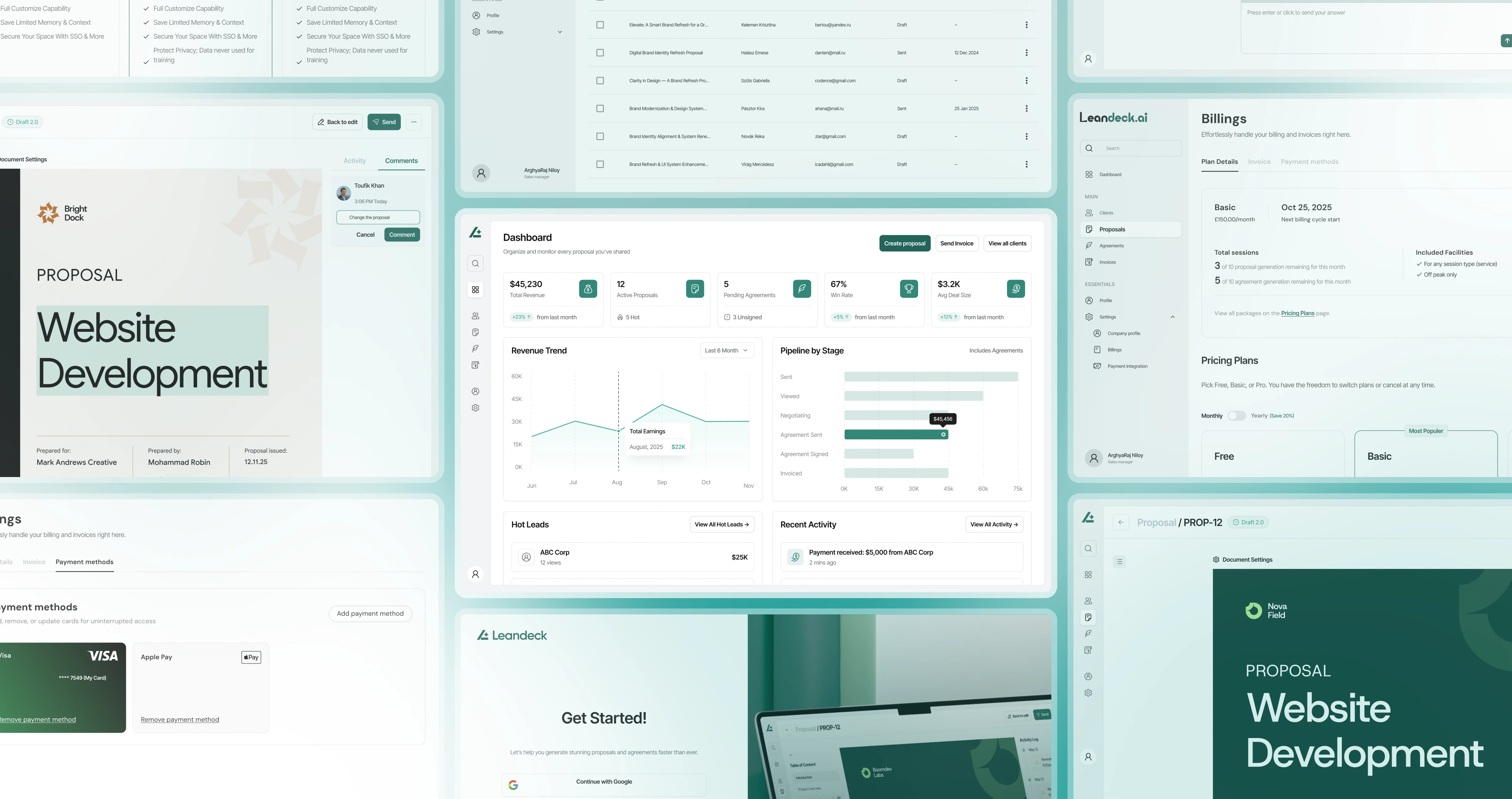
What we built (live in beta)
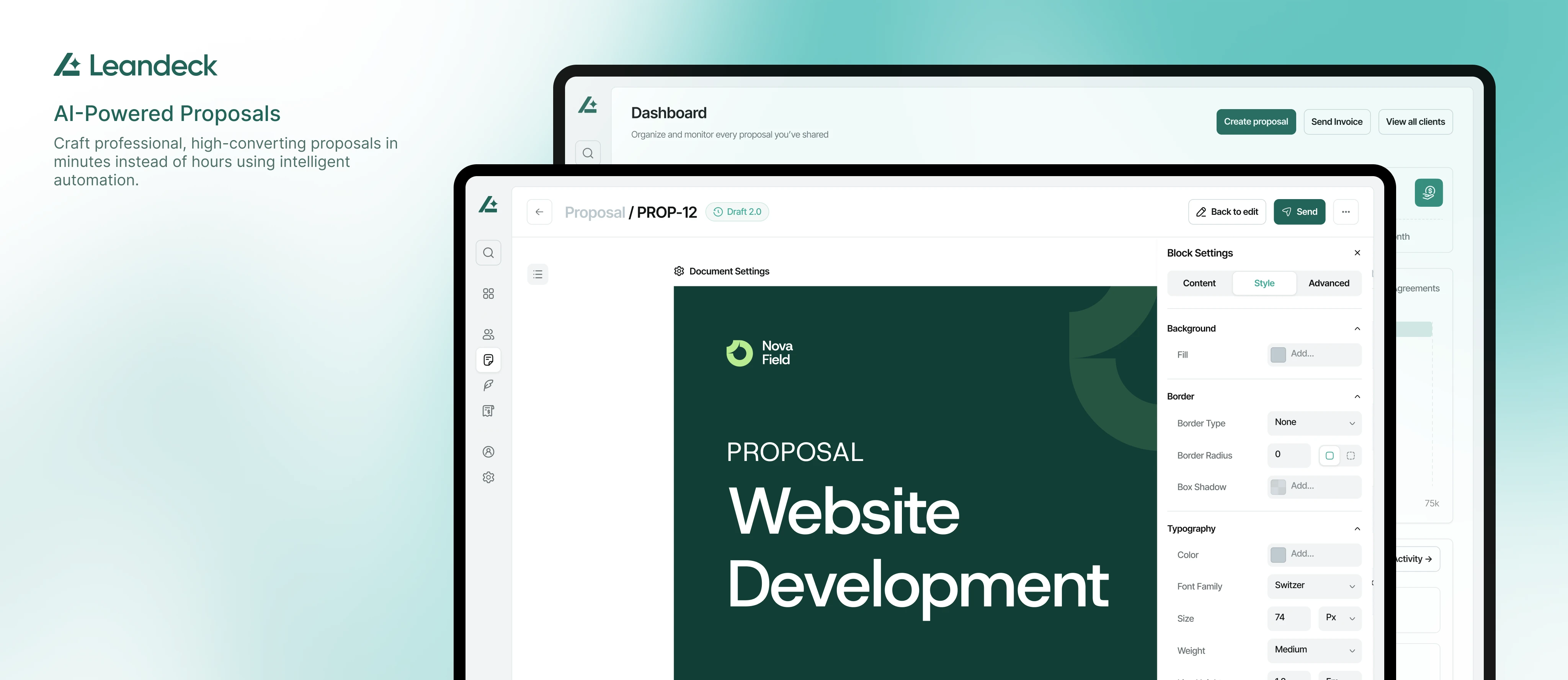
→ AI proposal generation — structured, editable proposals from a guided input, not just a block of text
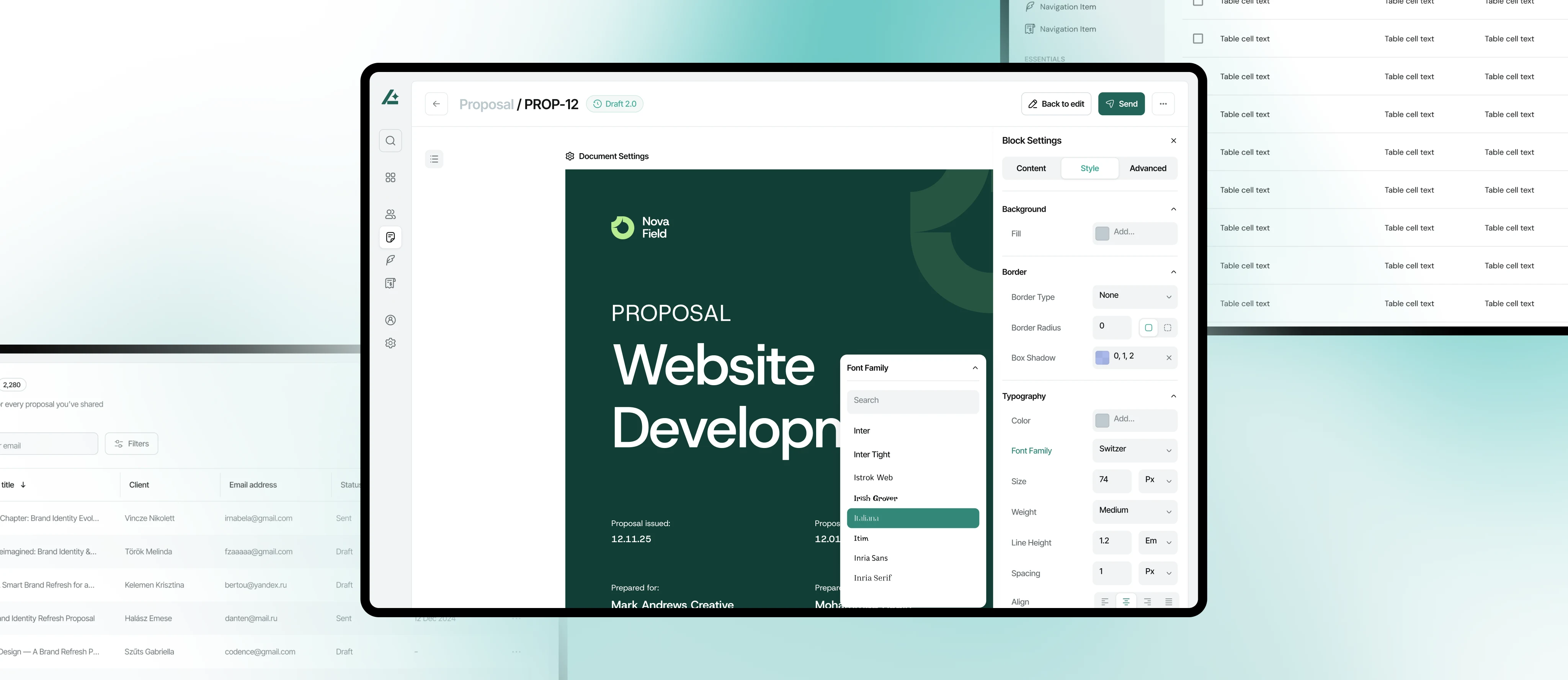
→ A granular document editor — edit at the document, section, and sentence level, with AI assistance
→ One-click proposal → agreement conversion
→ A clause / legal library for agreements
→ AI-powered cost & timeline estimation
→ Invoicing with payment tracking
→ Multi-user teams and workspaces
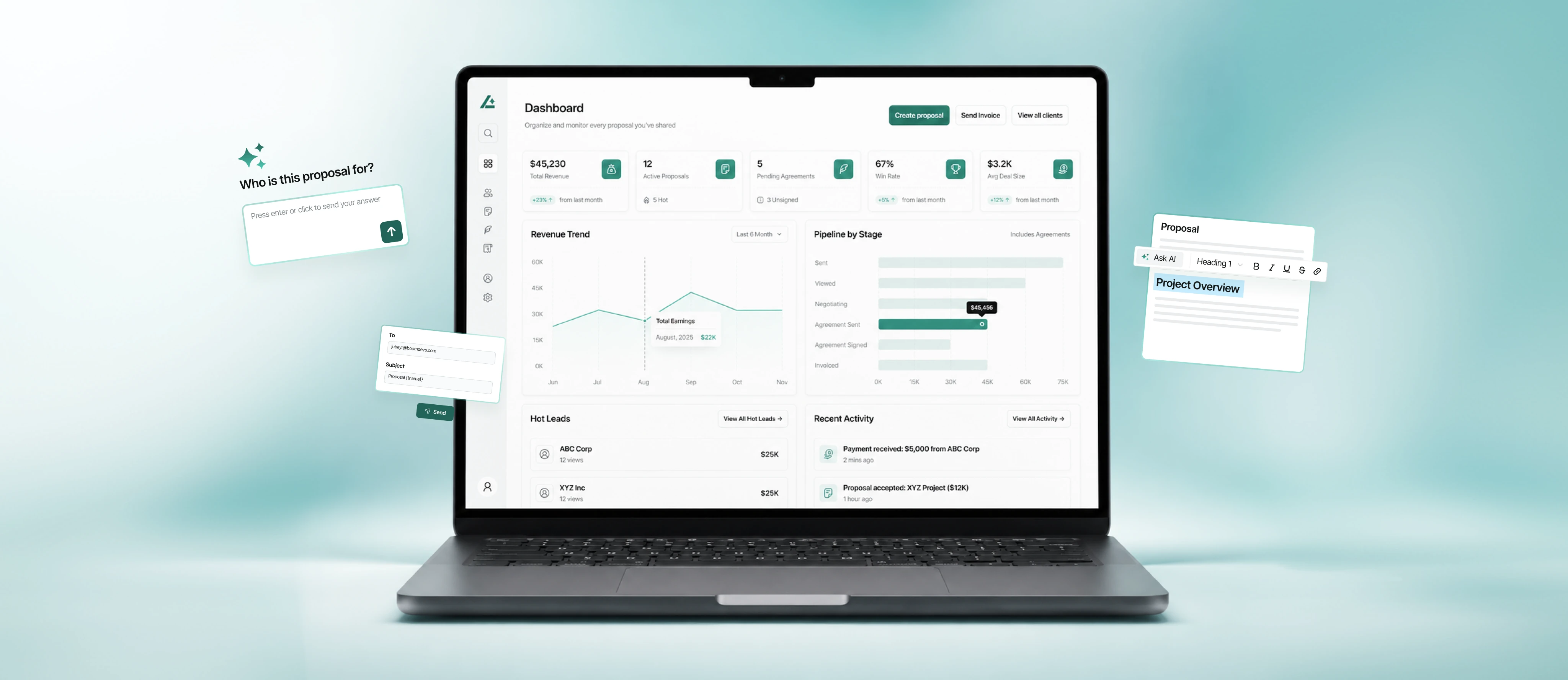
How I built it
I built the backend in Django and Python, with FastAPI powering the AI-facing services — chosen because an AI product lives or dies on how cleanly it orchestrates generation, structure, and data. The AI engine runs on OpenAI's GPT-5.1. My team built the frontend in Next.js for a fast, modern editing experience, connected through a clean API layer.
The core architectural principle: the AI doesn't just return text — it returns structured, editable objects. That's what lets a generated proposal be edited section by section, converted into an agreement, and priced — instead of being a dead block of copy the user has to redo.
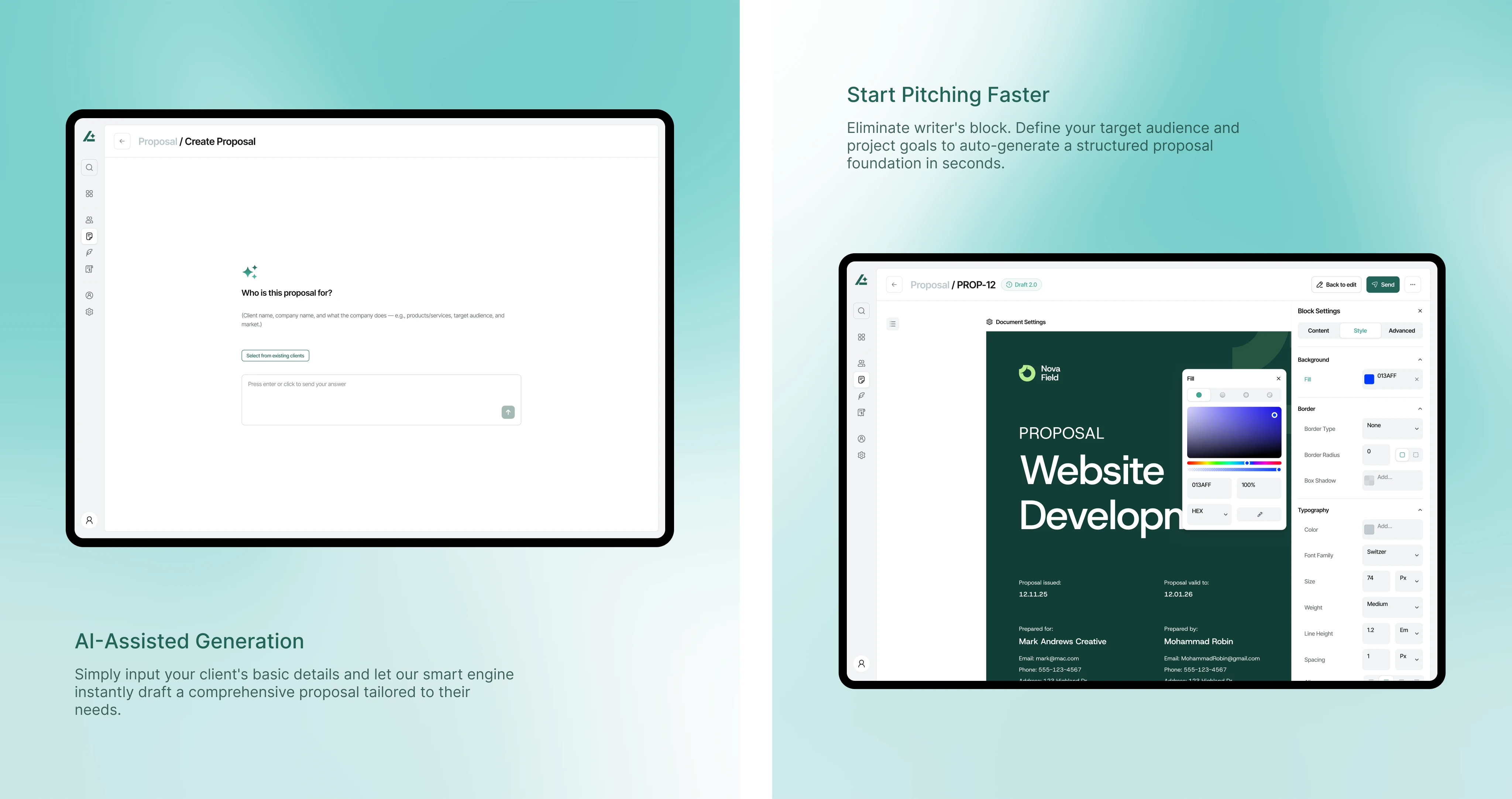
Where it got hard
Two problems were the genuine challenge of this build.
Accurate, structured proposal generation. The easy version of "AI writes a proposal" is a text box that spits out paragraphs. That's useless to an agency — they need something structured (scope, deliverables, sections, pricing) that they can edit and trust. Getting GPT-5.1 to reliably produce proposals that are accurate, well-structured, and consistent enough to build an editor and an agreement flow on top of — every time, not just on a good run — was the hardest part. It's the difference between a demo and a product.
AI cost and timeline estimation. Asking an AI to guess a price is easy and wrong. Building estimation logic that produces defensible cost and timeline numbers — grounded, consistent, and sensible enough that an agency would put them in front of a client — took real work on top of the raw model. This is the feature that turns Leandeck from a writing tool into a business tool, so it had to be right.
The outcome (beta)
Leandeck is live in beta, with real agencies using it to generate proposals, agreements, and invoices day to day. That live usage is now shaping the roadmap — we're refining generation quality and estimation against real-world use and building out Phase 2 (milestone billing).
What exists today is a working, multi-tenant AI SaaS — backend and AI built from scratch in two months — that does the hard thing: produces AI output structured and accurate enough that agencies actually send it.
The easy part of an AI product is the demo. The hard part is making the output good enough, every single time, that someone puts their name on it and sends it to a client.
Like this project
Posted Sep 23, 2026
AI proposal, agreement & invoicing platform for agencies. Structured AI generation + cost estimation. Django/FastAPI + GPT-5.1, Next.js.