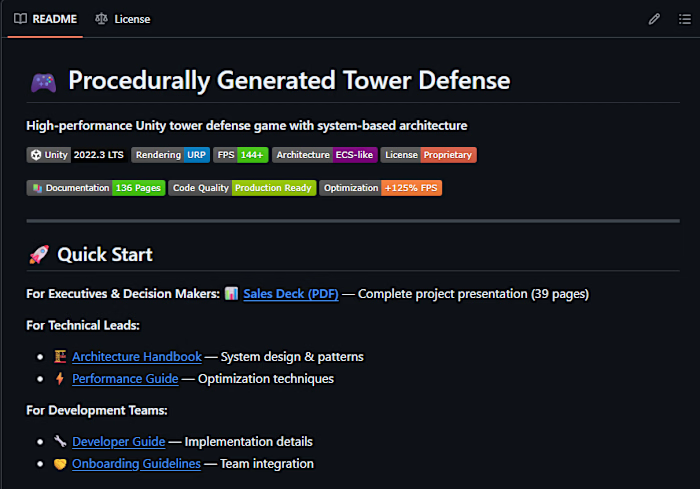
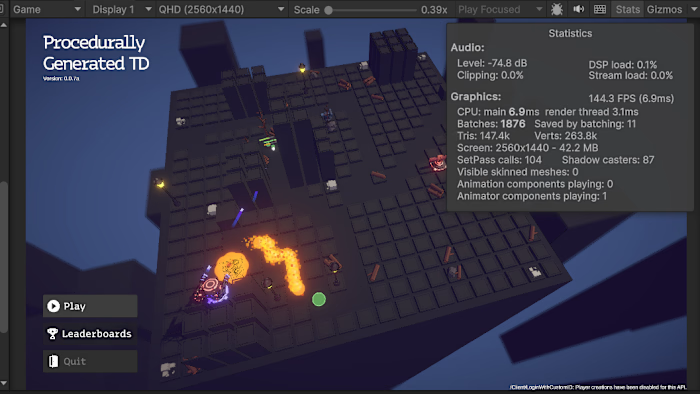
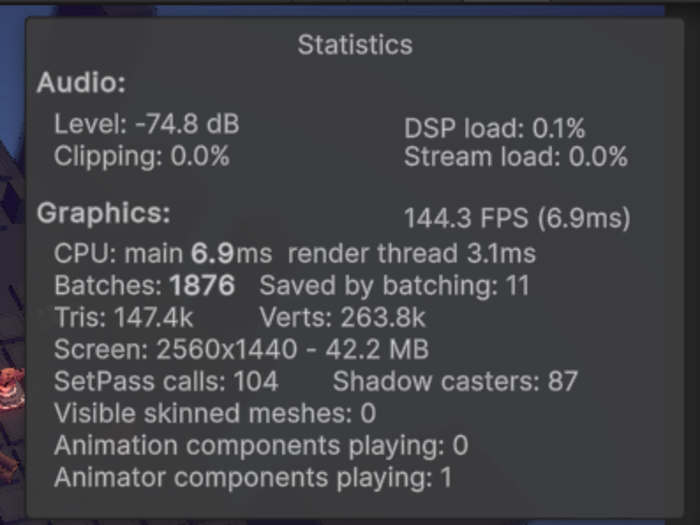
Comprehensive Documentation for Post-Refactoring Team Handover

Aztoon Lab



Complete Handover: Enabling Team Independence Through Documentation
The Challenge of Post-Refactoring Maintenance
After major architectural refactoring, a common challenge emerges: the team wants to extend the system, but isn't sure how to do it safely.
The code works beautifully. Performance is excellent. But questions arise:
Which system should handle this new feature?
How do we maintain the performance improvements?
What patterns should new code follow?
Where are the architectural boundaries?
Without comprehensive documentation:
Onboarding takes 3+ months (developers learn through trial and error)
Risk of breaking optimizations (unclear which patterns preserve performance)
Dependency on external expertise (need original developer for guidance)
Slower development (architectural uncertainty creates hesitation)
After completing the Tower Defense optimization — transforming 11,900 Update() calls into 50 system calls — I recognized this challenge immediately.
The architecture was significantly different from standard Unity patterns. Without clear knowledge transfer, the client's team would struggle to extend it confidently.
So I created comprehensive documentation as a core deliverable: architecture guides, performance methodology, development tutorials, and team onboarding materials.
Goal: Enable the client's team to be fully independent and maintain all improvements long-term.
The Documentation Philosophy: Transparency and Ownership
Major architectural refactoring creates two possible outcomes:
Black Box:
Team doesn't understand new architecture → changes require external consultation → performance improvements fragile → knowledge centralized
Transparent System:
Team understands architecture deeply → changes made confidently → improvements maintainable → knowledge distributed
Documentation transforms the first outcome into the second.
My approach:
Client owns the system intellectually, not just legally
Architecture decisions are explained and justified
New developers become productive in 2 weeks, not months
The codebase is teachable, not mysterious
This creates transparency: The client understands what was built, why decisions were made, and how to maintain it.
Complete Documentation Package
Documentation was created during development, treating knowledge transfer as a core deliverable from day one.
Architecture Handbook
Deep dive into system-based design:
Core concepts (batch processing, ECS-inspired patterns, system priorities)
Design pattern implementations (System, Observer, Pool, Strategy, Singleton)
Interface hierarchy and composition rules
Performance principles with measurements
Safe migration methodology
Extension guidelines
Common pitfalls
Value: New developers understand the reasoning behind architectural decisions and can extend systems while preserving performance.
Performance Optimization Guide
Transferable profiling and optimization methodology:
Complete profiling workflow (Profiler, Frame Debugger, Stats Window)
CPU optimization techniques with measurements
GPU optimization with validation (shadows, SRP Batcher, batching)
Performance pitfall identification
Troubleshooting workflows
Real case studies with before/after evidence
Value: Team can profile and optimize future features independently using proven methodology.
Developer Guide
Accelerated onboarding and daily reference:
Quick start and project structure
Core scripts reference with purpose documentation
Complete API documentation (50+ methods)
Five step-by-step tutorials (add tower, create enemy, implement effect, targeting strategy)
Debugging workflows
Code navigation guide
Value: New developers productive in 2 weeks instead of 3 months. Tutorials provide proven templates for common tasks.
Team Onboarding Guidelines
Maintaining quality as team scales:
Code standards and conventions
Architectural principles (critical patterns to preserve)
Git workflow and PR process
Testing requirements and performance validation
Code review guidelines
Performance preservation rules
Value: New team members follow established patterns. Architecture doesn't drift. Performance remains stable.
Sales Deck
Business presentation for stakeholders:
Executive summary with measurable results
Technical transformation (6 phases)
Business value analysis (ROI, platforms, velocity)
Complete deliverables showcase
Value: Non-technical stakeholders understand value delivered. Useful for investor updates and hiring.
Technical Audit Report
Final validation and transparency:
Performance benchmarks with test methodology
Code quality metrics
Testing coverage
Known scope boundaries
Handover completeness checklist
Value: Complete transparency about what's delivered, tested, and outside current scope.
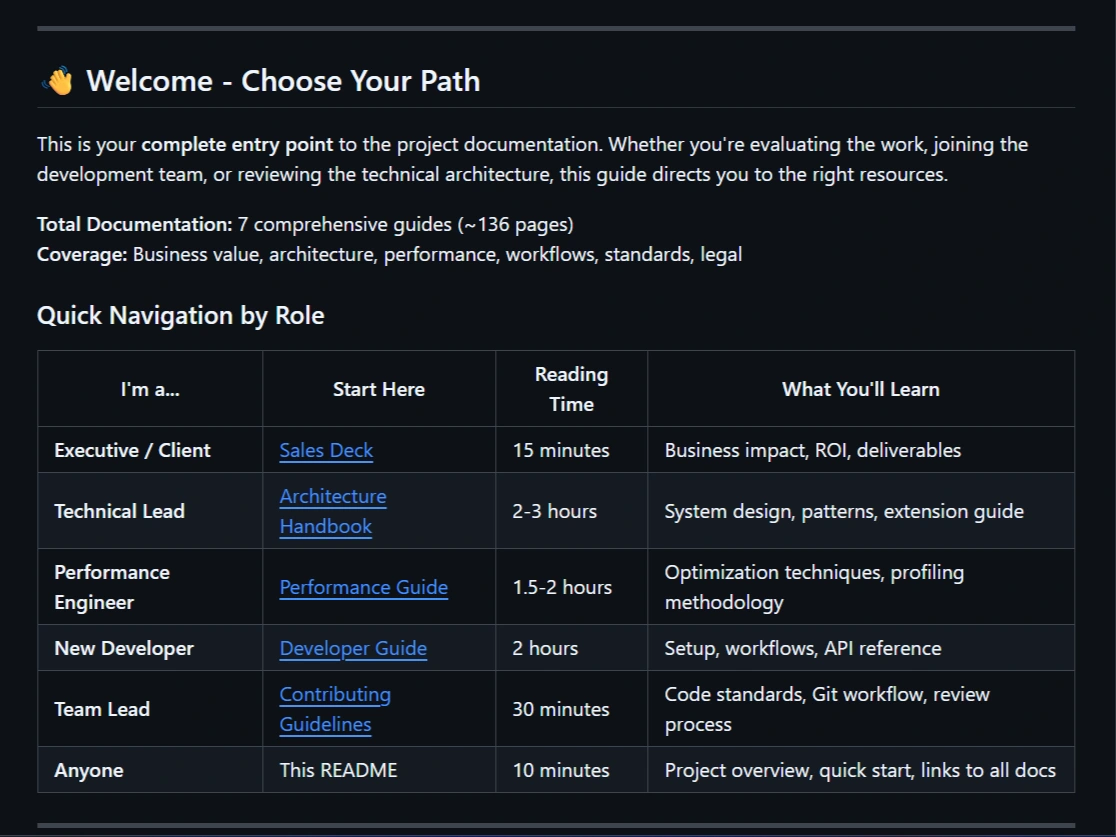
Screenshot from GitHub README
Creation Methodology
Concurrent Development: Documentation written during implementation, not after. Architecture decisions, performance measurements, and code examples captured with full context.
Working Code Examples: Every pattern includes complete implementations (90+ examples) — full working systems, not abstract snippets, with real Profiler measurements.
Visual Evidence: Performance claims backed by Unity Profiler screenshots showing CPU time comparisons, Frame Debugger validation, and memory tracking.
Learning-Focused Tutorials: Step-by-step workflows for common tasks with proven patterns developers can follow immediately.
Measurable Business Value

Key Outcomes:
Team Scaling: Fast onboarding enables efficient team growth. New developers ship features independently by Week 2.
Development Velocity: Following documented patterns eliminates architectural uncertainty. Features ship 5× faster with maintained performance.
Client Independence: Team handles architectural decisions internally. No external bottlenecks. Complete ownership of development timeline.
Long-Term Stability: Clear guidelines prevent architectural drift. Performance characteristics remain stable as codebase evolves.
Why Comprehensive Handover Matters
After major refactoring, teams need:
✅ Understanding of new architecture
✅ Confidence to extend systems safely
✅ Independence from external expertise
✅ Speed in onboarding new members
✅ Clarity on performance preservation
Documentation provides all of these.
Common challenges without it:
Extended learning curves (months not weeks)
Risk of breaking optimizations
Architectural uncertainty slowing development
External dependency for guidance
Benefits with comprehensive handover:
Fast team scaling (2-week onboarding)
Confident development (proven patterns)
Full ownership (client independence)
Maintained improvements (clear guidelines)
This isn't extra work. It's professional delivery ensuring project success beyond initial implementation.
My Approach to Every Project
Every engagement includes comprehensive documentation:
Technical Knowledge Transfer:
Architecture guides explaining design decisions
Performance methodology with measurements
Developer tutorials and API reference
Code standards for maintainability
Business Documentation:
Executive presentation for stakeholders
ROI analysis with measurable metrics
Technical audit providing transparency
Team Enablement:
Onboarding guidelines for efficient scaling
Video walkthroughs (available upon request)
30-day support period for questions
Goal: Your team achieves complete independence after handover. Full intellectual ownership of the system, not just legal ownership of code files.
Ready for Complete Ownership?
Professional refactoring delivers optimized code and the knowledge to maintain it.
Interested in comprehensive handover for your project?
📂 See documentation quality: GitHub Repository
📚 Browse complete documentation: GitBook
💬 Discuss your project: Contact via Contra
Optimized code + comprehensive documentation = true project ownership.
Like this project
Posted Jan 9, 2026
How comprehensive documentation enables team independence after refactoring: 3-month onboarding → 2 weeks, 5× faster development, complete client ownership.
Likes
1
Views
5