Community-Oriented Fitness Center Creation for Women

DISHA KRISHNA


Fit Gainer Gym and Fitness Centre
1. Location
The gym is located in an area where the approach roads are rocky, making accessibility somewhat challenging. Additionally, the absence of proper parking facilities can be an inconvenience for members commuting by vehicle.
2. Ambience and Equipment
Infrastructure: The gym is spread across two floors. The first floor is dedicated to cardio workouts, while the second floor houses equipment for weight training, powerlifting, and strengthening exercises.
Equipment Quality: The equipment is well-maintained and suitable for a variety of upper body, lower body, and cardiovascular workouts.
Environment: The facility provides a clean and organized setup, ensuring a comfortable workout experience for members. Equipment is well-maintained; however, the facility lacks sufficient ventilation, leading to discomfort due to sweat odors, especially during peak hours.
3. Trainers and Instructors
Trainers are selected based on their practical experience rather than certifications.
Each trainer has 5-7 years of experience, ensuring knowledgeable guidance in fitness routines.
There are three trainers available to assist members.
4. Advertising and Clientele
Marketing Strategy: The gym primarily relies on community support for advertising rather than traditional marketing channels.
Client Demographics: A significant portion of the client base consists of women from local households, many of whom are Hijabis.
Safe Environment: Interviews with clients reveal that the gym’s identity as a Muslim women-owned fitness center fosters a sense of safety and inclusivity, particularly for women from conservative backgrounds.
5. Pricing
Weight and Strength Training
Admission Fee
Monthly Fee
Monthly
500
600
1100
Quarterly
500
1800
2300
Half-Year
500
3600
4100
Yearly
500
7200
7700
Weight and Strength Training and Cardio
Monthly
500
800
1300
Quarterly
500
2400
2900
Half-Year
500
4800
5300
Yearly
500
7200
7700
Conclusion
Fit Gainer Gym and Fitness Centre stands out for its community-oriented approach and emphasis on creating a safe and inclusive environment for women. While it excels in equipment quality and experienced trainers, improvements in accessibility and parking facilities could further enhance the overall experience for its members.
Shape In Gym
Overview
Shape In Gym is a women-only fitness center that draws its primary client base due to its exclusive policy catering to women seeking privacy. However, the facility faces significant challenges regarding space, equipment quality, management, and amenities. Its current operations focus more on aerobic and dance-based workouts such as Zumba rather than hardcore fitness routines, which may limit its appeal to a broader audience of fitness enthusiasts.
Facilities and Amenities
The gym is notably small, with inadequate space for stretching or functional exercises, making it unsuitable for more comprehensive workout routines. The available equipment is basic and insufficient, with only one treadmill and other key machines reportedly non-functional. Basic amenities such as drinking water, air conditioning, and functional washrooms are either poorly maintained or unavailable, leading to discomfort for clients. The steam room is also frequently out of order and unhygienic. They also take in children above the age of 12 if the mother is enrolled in the training program and engage them with simple exercises.
Focus and Training Approach
Shape In Gym places a strong emphasis on aerobics, dance workouts, and Zumba rather than weight training or hardcore fitness regimens. While this approach caters to a specific demographic, it alienates clients who may seek strength training or advanced fitness programs. Moreover, most clients opt not to use trainers, perceiving them as underqualified. During the visit, the absence of trainers and the owner highlighted a lack of supervision, raising questions about operational efficiency.
Management and Supervision
Shape In Gym management appears inconsistent, with reports of the administration being frequently unavailable. Instances of the gym being left open without supervision have been observed, raising safety concerns. The lack of a structured management system undermines client trust and satisfaction, as evidenced by complaints about unsupervised strangers entering the gym premises.
Client Feedback
While many clients are drawn to the women-only environment, they have expressed dissatisfaction with the gym's facilities and services. Common issues include overcrowding during peak hours due to limited equipment, lack of air conditioning during hot weather, and an overall absence of accountability from the management. These concerns suggest a need for urgent improvements to maintain client loyalty.
Strengths and Weaknesses
Strengths:
The women-only policy provides a safe and private workout environment.
Focus on aerobics and Zumba appeals to clients interested in group fitness and dance-based workouts.
Weaknesses:
Insufficient space for workouts.
Basic and poorly maintained equipment.
Lack of amenities like drinking water and functional air conditioning.
Inadequate supervision and poor management practices.
Limited appeal for clients seeking comprehensive fitness solutions.
Pricing
1 Month
3000
3 Months
6000
6 Months
9000
12 Months
15000
Personal Training
6000/month
Silver’s Gym
Overview
Silver’s Gym is a fitness center primarily focused on aesthetics and body transformation. The gym caters mostly to men aged 20-40 and offers training programs centered around fitness and physique competitions. While the gym operates similarly to other standard fitness centers, it has managed to build a loyal client base through word-of-mouth advertising and referrals. The gym’s focus is on aesthetic fitness, and it is known for its emphasis on bodybuilding and physique enhancement rather than broader fitness or wellness.
Facilities and Services
Gym Setup: Silver’s Gym offers standard gym facilities, with equipment suited for bodybuilders and individuals focused on physique development. However, it does not present any unique features or innovations that set it apart from other fitness centers.
Trainers: The trainers at Silver’s Gym are primarily competitors in fitness and physique competitions, providing specialized guidance to clients focused on aesthetic goals. The trainers offer individualized advice on training regimens tailored to building muscle and enhancing physical appearance.
Additional Services: In addition to regular fitness training, the gym offers diet suggestions to complement the fitness goals of its clients, helping them achieve body transformation. However, it does not appear to offer other specialized services like personal training or wellness programs.
Target Audience
The gym’s primary clientele consists of men aged 20-40 who are either engaged in or interested in fitness competitions or physique transformation. This demographic is drawn to the gym for its focus on bodybuilding and aesthetic training rather than general fitness.
Advertising and Marketing
Silver’s Gym has effectively built its client base primarily through word-of-mouth referrals and recommendations from existing members. The gym's marketing strategy revolves around the concept of "brotherhood," leveraging community support and a strong sense of camaraderie among its clients. This organic marketing approach has contributed to its growing reputation and client retention.
Pricing
Silver’s Gym follows a straightforward pricing structure:
Monthly Membership: ₹2,000 (plus a one-time registration fee of ₹500)
3-Month Membership: ₹5,500 (including trainer guidance and diet suggestions).
The pricing is competitive for the services offered, considering the inclusion of trainer guidance and diet planning in the 3-month package.
Strengths and Weaknesses
Strengths:
A focused approach to physique training, appealing to those interested in bodybuilding and aesthetic fitness.
Competitive pricing, with trainer guidance and diet suggestions included in the 3-month package.
Strong word-of-mouth advertising and a close-knit community environment.
Weaknesses:
Lack of uniqueness in gym offerings beyond basic fitness and bodybuilding services.
Limited appeal for individuals seeking general fitness, wellness programs, or diverse workout regimens.
Primarily caters to a male demographic, potentially limiting its market reach.
Namma Gym Fitness Centre
Overview
Namma Gym Fitness Centre focuses on athletics-oriented training and emphasizes building a strong sense of community among its members. The gym is known for its diverse training programs, catering to all age groups and fitness levels, from children to seniors. The gym’s approach revolves around group workouts, where a single trainer plans and leads the daily workouts. This unique approach fosters a collaborative atmosphere among clients, helping them replicate the workouts on a communal basis. The gym has gained credibility by claiming to have trained notable figures such as cricketers Manish Pandey and Uthappa.
Facilities and Services
Gym Setup: The gym's equipment is basic and focuses more on functional fitness, using old-school tools such as ropes and weights. Although the equipment is not high-end, it is sufficient for the types of training offered, which rely heavily on bodyweight exercises.
Trainer and Program Structure: There is one primary trainer who plans and writes the daily workout routine on a blackboard for the clients to follow. This trainer also specializes in training athletes for flagship events. While the gym primarily operates with one coach, there are additional specific coaches assigned to particular programs, ensuring focused expertise in each area.
Strength & Conditioning Program: This program combines elements of high-intensity interval training (HIIT), Olympic weightlifting, gymnastics, calisthenics, and more, designed to provide a comprehensive fitness regimen.
Additional Programs:
Kids Program (4-7 years): Focuses on physical development, coordination, balance, confidence, and goal-setting abilities.
Senior Program (55+ years): Emphasizes strength training to counteract muscle and bone tissue atrophy associated with aging.
DadBods Program: Tailored for fathers who struggle with fitness after the birth of children, helping them regain strength and fitness.
Mumbods Program: Designed for mothers who wish to rebuild strength and fitness post-pregnancy and manage the effects of aging and conditions like osteoarthritis.
MMA Program: Aimed at improving movement skills, speed, and resilience through fight skill training and conditioning.
Sports Performance Program: Targets amateur and professional athletes, focusing on improving sports performance, reducing injuries, and enhancing recovery.
Target Audience
Namma Gym caters to a wide demographic, offering specialized programs for different groups:
Children (4-7 years)
Seniors (55+)
Parents (Dads and Mums)
Athletes (Amateur and Professional)
Individuals interested in Martial Arts and Sports Performance
The gym's inclusive approach to fitness, with programs targeting various age groups and needs, helps attract a diverse client base.
Advertising and Marketing
Namma Gym relies on a combination of word-of-mouth recommendations, its reputation for training prominent athletes, and local community engagement. The gym’s emphasis on high-quality coaching and a wide variety of fitness programs contributes to its credibility and appeal. It is particularly known for its specialized Strength & Conditioning programs, which have garnered attention for their effectiveness in enhancing physical performance across different age groups.
Pricing
The gym offers several membership plans to cater to different needs and budgets:
3-Month Plan: ₹15,000/month (with storage and domain benefits included)
Unlimited 3-Month Plan: ₹18,000 for 3 months (includes additional storage and users)
Yearly Plan: ₹43,000/year (provides ample storage and multiple users)
The pricing is competitive, especially given the wide range of specialized programs offered, making it a valuable option for those seeking tailored fitness training.
Strengths and Weaknesses
Strengths:
Diverse Program Offerings: The gym provides targeted programs for children, seniors, athletes, and individuals with specific fitness goals like dads and mums.
Focus on Community: The gym emphasizes community-building, which helps in fostering an encouraging environment.
Credibility: The gym’s claim of having trained well-known athletes adds credibility and attracts clients.
Personalized Approach: Despite having a single primary trainer, the gym’s approach allows for individual attention, especially through the specialized trainers assigned to different programs.
Weaknesses:
Limited Equipment: The gym's equipment is not high-end, which could limit options for some clients looking for more advanced tools.
Single Trainer for General Workouts: Having one trainer for the group workouts may not be sufficient to address the individual needs of all clients, especially in larger groups.
Space Constraints: The gym's space may limit the number of clients it can accommodate, especially during peak hours.
Basic Facilities: Although the gym offers a strong program, its facilities, including equipment and space, are basic compared to more high-end gyms
Conclusion
In conclusion, Namma Gym Fitness Centre has successfully created a welcoming and all-inclusive fitness space that caters to people of all ages and body types. Unlike many other gyms, they stand out by offering personalized guidance to every client rather than just providing equipment. Their primary focus on athletic training and preparing clients for high-performance activities shows their dedication to achieving real results. Limiting monthly memberships ensures the space remains comfortable and never overcrowded, allowing each member to benefit from their training fully. This thoughtful approach, combined with specialized programs and a strong sense of community, makes Namma Gym a unique and impactful choice for anyone seeking a meaningful fitness journey.
4K Fitness Club
Overview
4K Fitness Club, part of the CultFit network, offers a large space with a variety of equipment, aligning with the CultFit standard. However, despite its scale, the gym experience feels somewhat crowded. While they advertise modern amenities and comprehensive services, there are notable drawbacks that impact the overall appeal.
Ambience and Facilities
The gym boasts an expansive layout with numerous machines and equipment. However, the crowding detracts from the intended spaciousness, and some machines are not well-maintained, which diminishes the overall quality. A significant shortfall is the irregular steam bath facility, offered only once a month, which feels inadequate compared to other local fitness centers that provide it daily. Additionally, the washrooms were poorly maintained, with unpleasant odors leaving a negative impression.
Client Base and Programs
The club primarily caters to full-time working professionals who aim to incorporate fitness into their busy schedules. This clientele is generally well-versed in fitness, with many choosing to work out independently rather than seeking trainers. The presence of a BMI machine for tracking progress every 45 days adds a touch of modernity but does little to elevate the gym beyond being a standard fitness center.
Business Practices
The marketing approach leans heavily on upselling memberships, which can feel pushy and overwhelming to potential clients. While the gym's sleek appearance and variety of equipment give it a "fancy" feel, the offerings lack uniqueness and remain fairly mediocre in execution.
Pricing
4K Fitness Club follows CultFit’s pricing structure, ranging from ₹600 to ₹4000 per month depending on the selected plan. This broad pricing range may appeal to some clients, but the overall value feels questionable given the service inconsistencies.
Conclusion
While 4K Fitness Club benefits from its affiliation with CultFit and offers a visually appealing setup, it falls short in key areas such as equipment maintenance, hygiene, and meaningful customer engagement. The crowding and lack of unique features make it a less compelling option for those seeking a standout fitness experience. It may work for busy professionals who value convenience over quality, but for those prioritizing personalized attention or premium facilities, there are better alternatives in the area.
iFitness
Overview
iFitness blends the CultFit model with its nuanced approach, offering a more client-centric experience. With modern equipment, well-maintained facilities, and a diverse range of programs, the gym positions itself as an inclusive and accessible fitness space that caters to varying needs and goals.
Ambience and Facilities
The gym features two distinct floors: one dedicated to strength training and weights, and another designed as a dance floor for activities like Zumba, aerobics, and yoga. The equipment is brand-new and fully functional, ensuring a seamless workout experience. The overall ambiance is inviting and conducive to fitness, making it a pleasant environment for clients.
Programs and Services
iFitness offers weekly yoga and diverse group classes to all its members, setting it apart from CultFit's exclusive "elite points" access to such programs. Members on a general plan receive on-the-floor guidance about workouts and diet from available trainers at no additional cost. For those seeking more personalized attention, a nominal fee secures a dedicated personal trainer for consistent guidance.
Pricing
iFitness provides competitive pricing options:
₹17,000 for 12 months
₹11,999 for 6 months
₹9,500 for 3 months
₹4,000 for 1 month
These plans include BMI and body weight tracking, along with other parameters to monitor progress, offering great value compared to similar facilities in the area.
Client-Centric Approach
Unlike many other gyms, iFitness prioritizes accessibility and inclusivity by ensuring all members have access to diverse programs and guidance. The flexibility in trainer availability and the option for personalized plans make it a favorable choice for individuals with varying fitness goals and budgets.
Conclusion
iFitness successfully balances the appeal of the CultFit model with a more inclusive and client-friendly approach. Its modern facilities, thoughtful program design, and accessible services make it a standout option for those looking for a comprehensive fitness experience without unnecessary exclusivity. With competitive pricing and a focus on client satisfaction, iFitness emerges as a reliable and inviting fitness destination.
Burn and Build Transformation Centre
Overview
Burn and Build Transformation Centre is a niche fitness facility operated by Sherin Varghese, renowned for his work with celebrities such as Tamil actor Surya. The centre specializes in aesthetic transformations, prioritizing personalized attention and tailored fitness plans.
Exclusive Membership
The gym limits its monthly memberships to only 5-6 clients, ensuring an exclusive and highly focused environment. This limited intake allows Sherin to dedicate his time and expertise to each individual, making it an ideal choice for those seeking significant and personalized transformation.
Training and Expertise
Sherin Varghese is the sole trainer at the centre, offering direct and continuous guidance to clients. With a focus on aesthetic goals, his training programs are designed for visible and impactful results. This personalized approach is one of the gym's defining features, catering specifically to individuals committed to achieving transformation under expert supervision.
Facilities and Equipment
The gym is relatively small compared to other fitness centres and is equipped with only the essential tools required for effective workouts. While it lacks the expansive amenities or advanced equipment of larger gyms, the minimalist setup aligns with the centre’s targeted focus on transformation.
Pricing
The pricing at Burn and Build is dynamic, varying based on demand. This approach reflects the exclusivity of the facility but may not be suitable for individuals looking for fixed or budget-friendly pricing structures.
Conclusion
Burn and Build Transformation Centre offers a boutique fitness experience tailored to aesthetic transformations. Under the direct supervision of Sherin Varghese, clients benefit from personalized programs and dedicated attention. While the limited space and fluctuating pricing may not appeal to everyone, the centre's exclusivity and focused training make it a premium option for those prioritizing one-on-one guidance and impactful results.
Lean & Fit Gym
Overview
Lean & Fit Gym, owned and operated by Jitesh, offers a well-rounded fitness experience with a focus on cleanliness, ambiance, and well-maintained equipment. Jitesh, who also serves as one of the personal trainers, ensures a hands-on approach to managing the gym and its clientele.
Facilities and Equipment
The gym boasts a spacious layout equipped with all the necessary tools for a comprehensive workout. The equipment is in excellent condition, catering to various fitness goals. The ambiance is inviting, with a clean and well-maintained environment, complemented by a pleasant scent, creating a positive and motivating vibe for workouts.
Training and Guidance
Jitesh's dual role as owner and trainer ensures that clients receive expert guidance and personal attention. His involvement in daily operations reflects a commitment to maintaining high standards of service and care.
Pricing and Packages
Lean & Fit offers competitive pricing:
₹1,500 per month
₹4,000 for three months
₹6,000 for six months
₹6,499 for 12+1 months (available as a special offer during December and January).
All packages include a diet plan tailored to individual needs, adding value to the membership.
Conclusion
Lean & Fit Gym is an excellent choice for individuals seeking a clean, spacious, and well-equipped fitness center with an inviting atmosphere. Under Jitesh's leadership, clients benefit from a personal touch and professional guidance, making it a cost-effective option with added perks like inclusive diet plans. The seasonal 12+1 month offer further enhances its appeal, especially for long-term fitness enthusiasts.
Rebel's Fitness One
Rebel's Fitness One is a straightforward and beginner-friendly gym, similar to many other gyms in the area. The pricing is affordable, with an admission fee of ₹500 and a monthly fee of ₹1000. Students also enjoy a 10% discount, making it an even more budget-friendly option.
What sets this gym apart is its trainers. They are approachable and friendly, offering workout plans and guidance to beginners at no extra cost. This is a big plus, as most other gyms charge extra for personal trainers. Overall, Rebel's Fitness One is a great choice for those new to fitness or looking for a simple and affordable place to work out.
Train to Perform
Overview
Train to Perform is a niche fitness facility tailored specifically for athletes preparing for upcoming athletic events. Its unique focus on athletic training, coupled with a minimalist and functional approach to fitness, makes it a specialized destination for serious sports enthusiasts.
Facilities and Equipment
The facility operates on a terrace, providing a well-ventilated and airy environment. The equipment is basic and traditional, consisting of ropes, pull-up bars, weights, and other functional tools. The simplicity of the setup aligns with its focus on performance-oriented training rather than general fitness or aesthetic goals.
Training and Trainers
Train to Perform employs a team of young and well-qualified trainers, many of whom are pursuing or have completed their master’s or postgraduate studies in sports science. Additionally, the trainers are ASGA-certified, ensuring a high level of expertise in athletic training.
Client Base
The gym’s clientele predominantly consists of athletes, reflecting its specialization in athletic training programs. The personalized and performance-driven training plans cater to individual needs, making it a suitable choice for those aiming to excel in sports or physical competitions.
Pricing
The pricing is customized based on individual requirements and training plans, ensuring a tailored approach to meet specific athletic goals.
Conclusion
Train to Perform stands out as a dedicated fitness center for athletes, offering specialized training by highly educated and certified trainers. While its equipment is basic and traditional, the focus on functional fitness and athletic preparation makes it a prime choice for those looking to elevate their sports performance. The terrace setting and tailored plans further enhance its appeal for serious athletes.
SRX Fitness Studio
Overview
SRX Fitness Studio is a well-equipped fitness center with modern facilities and certified trainers. Spanning across two floors, it provides a structured space for different types of workouts: the ground floor is dedicated to cardio exercises, while the upstairs area focuses on weights and strength training.
Facilities and Equipment
The gym boasts modern and well-maintained equipment, catering to a variety of workout needs. Each floor is organized to optimize workout efficiency, providing a designated area for cardio enthusiasts and strength trainers alike.
Trainers and Expertise
The trainers at SRX Fitness Studio are certified professionals with 5-6 years of experience in the field. They are equipped to guide clients of all fitness levels, ensuring safe and effective training sessions.
Customer Engagement
To attract potential clients, SRX Fitness Studio offers free trial classes, allowing individuals to experience their services firsthand before committing to a membership. This gesture reflects their confidence in the quality of their services.
Pricing
While the studio was hesitant to disclose its fee structure, it is estimated to range between ₹600-₹1000 per month, along with an admission fee. Prospective clients are encouraged to attend a free trial class to get details about pricing and available plans.
Conclusion
SRX Fitness Studio provides a balanced workout environment with quality equipment and experienced trainers. Their modern facilities and free trial classes make it an appealing choice for fitness enthusiasts looking to explore a structured and professional gym setup.
Medium Priority Fitness Centers:
Xtreme Fitness
Rating: 4.3/5
Crowd Level: Medium
Unique Features: Offers standard, fully-fledged gym equipment and a couple's package to attract dual memberships.
Pricing: ₹700-₹1400 monthly
Strengths: Xtreme Fitness provides comprehensive equipment suitable for a variety of workouts. Its mid-range pricing and option for couples make it appealing to a broader audience.
Weaknesses: Feedback indicates that while it serves its purpose, it doesn't seem to have a standout feature that differentiates it from competitors.
Nak’s Gym
Rating: 4.9/5
Crowd Level: Medium
Unique Features: Extremely affordable with a unique offering of training included until members fully learn.
Pricing: ₹500-₹800 monthly
Strengths: Its affordability and emphasis on ensuring members learn proper techniques before progressing sets Nak’s Gym apart. It’s an excellent option for budget-conscious individuals.
Weaknesses: Minimal details on advanced facilities, which may deter seasoned fitness enthusiasts looking for specialized equipment or programs.
Trotz Fitness
Rating: 4.5/5
Crowd Level: Medium
Unique Features: High-end facility offering a range of services, including CrossFit, Boxing, Zumba, Strength & Conditioning, Yoga, and Kids' Fitness.
Pricing: ₹3000 (2 months), ₹5500 (3 months), ₹8800 (6 months), ₹9999 (9 months), ₹11999 (12 months)
Strengths: It’s praised for its diverse programs, making it suitable for men, women, and children seeking varied and personalized fitness routines. Trainers like Rashid and Kartik are highly commended for attentiveness and results.
Weaknesses: Trainer engagement inconsistency, especially with beginners, and some trainers being distracted, could deter newcomers.
Iron House Gym
Rating: 4.7/5
Crowd Level: Medium
Unique Features: Located in a residential area with a small client base, offering a pleasant and less crowded environment.
Pricing: ₹500-₹800 monthly
Strengths: Iron House Gym appeals to nearby residents looking for a quiet and uncrowded workout space. Jagadish, a certified trainer, adds value with his expertise.
Weaknesses: Limited unique features or innovations; its focus on standard equipment might not attract fitness enthusiasts looking for cutting-edge options.
Transform Fitness 2.0
Rating: 4.6/5
Crowd Level: Low
Unique Features: Outdoor space for CrossFit and warm-ups, with upgraded equipment.
Pricing: Admission fee: ₹500; Monthly: ₹1400; 3 months: ₹5000
Strengths: Located in a prime area, it caters to muscle-building and aesthetic physique enthusiasts. The outdoor CrossFit area adds a unique edge. Trainers Harshith and Shivu are highly experienced.
Weaknesses: No significant weaknesses reported, although its focus on bodybuilding may limit appeal to a niche audience.
Beast Fitness
Rating: 4.5/5
Crowd Level: Medium
Pricing:
Monthly: ₹2000
6 Months: ₹6000
Yearly: ₹9000
Unique Features: Turf area with monkey bars, plyometric jump boxes, battle ropes, resistance bands, and a boxing dummy.
Strengths: Well-suited for beginners and experienced fitness enthusiasts, it provides separate workout zones and dietary support. Trainers like Kiran, Satish, and Arjun are lauded for their expertise and guidance.
Weaknesses: Overcrowding during peak hours and inadequate machines in some areas can be a concern for users.
Quadzilla Fitness
Rating: 4.9/5
Crowd Level: Low
Unique Features: Modern equipment, diverse classes, spacious and inclusive environment, particularly welcoming for women.
Pricing: Monthly: ₹2000; 6 Months: ₹6000; Yearly: ₹9000
Strengths: Highly rated for its cleanliness, supportive trainers, and variety of programs. Trainer Punith is specifically recognized for his expertise. It’s ideal for all fitness levels and maintains an excellent safety standard.
Weaknesses: Minor overcrowding during peak hours is reported but does not detract significantly from the overall experience.
Elite Fitness (Part of CultFit)
Rating: 4.1/5
Crowd Level: Medium
Unique Features: Spacious, multi-floor gym with a variety of equipment and a swimming pool.
Strengths: The gym is commended for expert trainers like Devraj and Karthik. It offers diverse fitness programs and a feedback-driven service approach.
Weaknesses: High complaints about the pool size, overcrowding, excessive chlorine, non-functional AC, and unexpected class cancellations. These issues have marred its reputation despite its modern equipment.
CultFit - BEL Road
Rating: 2.5/5
Crowd Level: High
Unique Features: Modern equipment with a compact layout catering to working professionals.
Pricing: ₹600-₹4000 per month
Strengths: Targets busy professionals with a focus on convenience and independent workouts.
Weaknesses: Poor maintenance of machines and washrooms, crowded environment, irregular steam bath availability, and pushy marketing tactics have resulted in negative feedback.
Notes from interviews
Call 1 - Venkatesh
Personal Information
Age: 50s
Health Rating: 3 (compared to his 30s self)
Goal: Realistic, age-appropriate, and motivating fitness routine.
Past Experiences with Fitness Programs
Ashtanga Yoga from a Mutt:
Cost: ₹6,500 for 1.5 months.
Focus Areas: Breathing techniques and simple exercises.
Experience: Basic and satisfactory, but not sustained long-term.
Fitness Apps (e.g., Health Tick):
Subscription: Bulk fee for 3 months (Weight Loss Plan).
Routine: Intense workouts, strict diet, and routines.
Outcome: Felt drained after the first month. The program was overly optimistic and impractical, leading to a lack of motivation to continue.
Current Fitness Routine
Program: Online Iyengar Yoga sessions (Community-based).
Schedule: 3 days per week (6 AM – 7 PM).
Activities: Flexibility training, dumbbells, running, and walking (all at home).
Experience:
Enjoys the structured mix of activities.
Finds the program manageable and age-appropriate compared to previous experiences.
Challenges and Needs
Challenges:
Previous programs were either too intense or poorly designed, leading to burnout.
Comparing his current fitness level to his 30s makes him feel less satisfied.
Needs:
A realistic and doable fitness plan tailored to his age and lifestyle.
A program that is flexible and sustainable while still motivating.
Diet and routine recommendations that align with his eating habits and current physical capabilities.
Other Considerations
Motivation: Prefers a program that is enjoyable and easy to stick to.
Financial Situation: Money is not a constraint.
Preference: Age-sensitive programs with a balance between physical exertion and flexibility.
Summary
Venkatesh has tried various fitness approaches, from Ashtanga Yoga to fitness apps, with mixed results. His current Iyengar Yoga routine is the most sustainable so far. However, he is seeking a more tailored, realistic, and motivating fitness program that aligns with his age, lifestyle, and long-term goals. Money is not a concern, but practicality and sustainability are key factors in his decision-making.
Call 2 - Arun Kumar
Name: Arun Kumar
Age Group: 41 - 60
Gender: Male
Marital Status: Married with Kids
Contact Number: 9902600337
Fitness Level: 3(Intermediate)
Workout Routine: Strength training session 3 days a week
Exercise Type: Hybrid (mix of in-person and online sessions)
Focus Area: Strength Training and Cycling
Fitness Goals & Motivation
Arun Kumar’s primary fitness goals are:
Cycling Performance: He aims to complete a 100-meter track in cycling, an objective driven by his passion for cycling.
General Health & Independence: Arun expressed that his initial fitness level was very low, which became evident when he started cycling. He realized the need to improve his fitness, prompting him to incorporate strength training into his routine. His ultimate motivation is to avoid dependence on others as he ages and to maintain his health.
Current Routine & Preferences
Strength Training: Arun follows a hybrid fitness regimen, focusing on strength training three days a week. This routine is a blend of both in-person sessions with a trainer and online sessions, offering him flexibility due to his busy schedule.
Meal Plan: Currently, Arun is not following any specific meal plan.
Tracking Progress: To monitor his progress, Arun routinely checks his weight and tracks his cycling performance, using these metrics as indicators of improvement.
Challenges & Scheduling Constraints
Arun's primary constraint is his schedule, which limits his ability to commit to a fully in-person routine. This has led him to choose a hybrid workout schedule, balancing his personal and fitness commitments.
Additional Comments
Arun highlighted that one of the reasons for his shift to strength training was to increase his fitness level after realizing how low it was when he first started cycling. This awareness has driven him to improve his overall health through strength training, aiming to become more independent later in life.
Call 3 - Rohit
Name: Rohit
Age Group: 41 - 60
Gender: Male
Marital Status: Married with Kids
Contact Number: 9902376956
Fitness Level: 3 (Intermediate)
Workout Routine: Self-workout without a trainer
Exercise Focus: Strength training and running
Fitness Goal: Fat loss
Fitness Background & Experience
Rohit has been consistently working out for the past 10 years. His long-term experience has allowed him to understand his body’s strengths and weaknesses, which is why he prefers to work out independently without a trainer. His work mostly involves field activities, which contrasts with a sedentary desk job, and this active lifestyle supports his fitness routine.
Health & Lifestyle Considerations
Rohit has had a history of kidney stones, which has made him more conscious of his hydration needs. He ensures that he maintains a high water intake and keeps his carbohydrate consumption low to manage his health.
In terms of tracking his progress, Rohit uses a body fat tracking device at home to monitor his body fat percentage. His current body fat percentage is 26%. Additionally, he regularly gets his blood tests done to monitor his health, including cholesterol levels. His cholesterol is currently borderline, which he is actively working on improving.
Current Routine & Progress Tracking
Workout Type: Rohit follows a self-designed routine of strength training and running, focusing on fat loss. He has not been working with a trainer, relying on his knowledge and experience to guide his fitness.
Health Monitoring: He tracks his body fat percentage using a body fat tracking device and stays proactive about his health by getting regular blood tests.
Call 4 - Avinash
Name: Avinash Panigrahy
Age Group: 41 - 60
Gender: Male
Marital Status: Married with Kids
Contact Number: 9246934408
Fitness Level: 1 (Sedentary)
Health Concerns: High blood pressure (BP), blood sugar
Fitness Activity: None currently
Fitness Goal: No specific fitness goal was mentioned, but seeking to incorporate light physical activity
Lifestyle & Challenges
Avinash is currently leading a sedentary lifestyle and faces significant challenges in finding the time and motivation to incorporate regular fitness activities into his daily routine. His schedule is strict, rigid, and extensive, leaving him with little intrinsic motivation to focus on fitness.
However, despite these constraints, he is making small efforts to include light physical activities whenever possible. For example, he walks to his workplace and tries to walk while on calls, adding physical movement to his day in a manageable way.
Health Considerations
Avinash is dealing with health concerns like high blood pressure and blood sugar levels, which could potentially benefit from a more active lifestyle. While he has not yet committed to a formal fitness routine, these health issues may serve as a motivating factor to increase his physical activity.
Call 5 - Gaurav Lakhani
Name: Gaurav Lakhani
Age Group: 25 - 40
Gender: Male
Marital Status: Married with Kids
Contact Number: 9650162525
Fitness Level: 3 (Intermediate)
Workout Routine: Self-guided, without a trainer
Exercise Focus: Jogging, Elliptical, Cycling
Fitness Goals: General Health, Fat Loss, Conditioning
Lifestyle & Health Considerations
Gaurav leads an active lifestyle and has been focused on maintaining his fitness through various exercises, including jogging, cycling, and using an elliptical machine. He has invested in an elliptical machine to help him stay active at home, indicating that he is committed to incorporating fitness into his routine despite challenges.
However, Gaurav faces several health and lifestyle constraints:
Dietary Restrictions/Allergies: He is allergic to many foods, which complicates his ability to follow a specific diet plan. As a result, he struggles to adhere to a proper meal plan, which he recognizes as a crucial part of a fitness journey.
Diet Challenges: Due to his dietary restrictions, Gaurav has rated himself a 3 when it comes to following a structured diet plan. He believes that his inability to stick to a meal plan is a significant barrier to his fitness progress, as diet is a major component of achieving health and fitness goals.
Food Preferences: Gaurav is also a self-identified foodie, and he enjoys indulging in food, especially cheat meals. However, he compensates for these indulgences by working out, as he believes exercise helps balance out his food choices.
Current Fitness Routine & Tracking
Exercise Types: Gaurav follows a self-designed fitness regimen, incorporating activities such as jogging, cycling, and elliptical workouts. He has structured these activities around his schedule and preferences, ensuring they align with his fitness goals.
Progress Tracking: He tracks his fitness progress using metrics such as his heart rate and BMI measurements. These tools help him gauge improvements and ensure that he is making progress in his fitness journey.
Approach to Fitness & Motivation
Self-Guided Fitness: Gaurav does not currently work with a trainer, choosing instead to design his own fitness routine. His extensive experience in fitness allows him to structure his own workouts effectively. He leverages resources like AI tools (e.g., ChatGPT, Gemini) and fitness blogs to gather tips and build a routine that suits his needs.
Cost Concerns: One of the main reasons Gaurav chooses not to hire a trainer or a dietician is the cost. He noted that hiring a fitness trainer and a dietician separately would cost him 3-5k each, totaling around 10k. Gaurav finds this expense prohibitive, especially considering that he perceives the training regimes offered to be monotonous and not personalized enough to justify the cost.
Challenges & Barriers to Progress
Diet Adherence: Gaurav's primary challenge is his difficulty in adhering to a diet due to food allergies and restrictions. He understands the importance of diet in the fitness journey but finds it hard to stick to a plan that accommodates his dietary needs.
Time & Resources: Gaurav’s reliance on self-guided fitness resources like AI tools and fitness blogs is partly due to the limitations in his schedule and his inability to afford professional fitness services.
Summary of Fitness Goals & Strategy
Gaurav’s fitness goals are focused on general health, fat loss, and conditioning. Despite facing challenges with diet and time, he remains dedicated to maintaining his fitness through a combination of self-workouts, tracking progress, and using affordable online resources to enhance his routine. He believes that exercise helps offset his food indulgences and is committed to continuing his fitness journey with the tools available to him.
Call 6 - Karthik
Name: Karthik
Age Group: 41 - 60
Gender: Male
Marital Status: Married with Kids
Contact Number: 8095622782
Fitness Level: 41 - 60 (Intermediate)
Workout Routine: Self-guided workouts without a trainer
Exercise Focus: Badminton and home-based exercises
Fitness Goal: General Health
Lifestyle & Fitness Approach
Karthik prioritizes maintaining a healthy and balanced life through physical activity. His fitness routine includes playing badminton and performing exercises at home, which he designs using his prior knowledge and experience in fitness. His approach to fitness is self-reliant, focusing on listening to his body and understanding his own needs.
Views on Fitness Training
Karthik has strong opinions about commercial fitness services and group training:
Commercialization of Fitness:
He feels that modern fitness services, like Cultfit, over-commercialize fitness, turning it into a business rather than a personalized experience.
He dislikes how these services focus primarily on weight loss rather than tailoring programs to individual health needs.
Group Training:
Karthik avoids group training sessions because they lack personalized attention and fail to cater to individual goals effectively.
Preference for Individual Attention:
He believes that a good trainer should prioritize understanding and catering to individual needs rather than following a monotonous routine.
The lack of personalized attention in group and commercial training programs is a major reason he opts for self-guided workouts.
Motivation & Goals
Karthik’s primary fitness goal is general health and leading a balanced lifestyle. He is not focused on weight loss but rather on holistic well-being. His fitness philosophy emphasizes the importance of:
Listening to one’s body.
Avoiding monotonous routines.
Applying tried and tested training methods.
Challenges with Commercial Fitness
Karthik’s decision to avoid hiring an instructor or joining fitness services stems from his belief that:
Fitness providers are overly focused on profit.
There is a lack of true personal attention in commercial setups.
Services are overcrowded and fail to address individual preferences.
Summary
Karthik’s self-guided approach to fitness highlights his confidence in his ability to craft a workout regime tailored to his needs. He uses his knowledge and past experiences to create a fitness routine that aligns with his goals. His aversion to commercialized fitness solutions stems from their perceived inability to prioritize individual well-being and customization.
Call 7 - Sankar
Profession: Software Engineer
Fitness Goal: General health and long-term fitness, rather than achieving a defined physique.
Approach to Fitness
Workout Preference:
Enjoys group workouts provided by Cult.
Chose Cult primarily because it was created by his friends, making it a trusted platform.
Philosophy on Fitness:
Believes fitness is a lifelong journey that extends beyond physical activity to include mental well-being and a balanced diet.
Criticizes the current trend of prioritizing physical transformation over individual fitness goals.
Simplicity in Workouts:
Prefers keeping workouts simple and sustainable, focusing on consistency over complexity.
Key Insights:
Sankar values a holistic approach to fitness, integrating physical, mental, and dietary aspects. While he enjoys the social aspect of group workouts, he emphasizes the need for individualized goals over mainstream transformation-focused programs.
Call 8 - Vijay K R
Age Group: 25 - 40
Gender: Male
Marital Status: Married with Kids
Contact Number: 9742019512
Health Concerns:
Obesity
Fatty Liver
Vitamin D & B12 Deficiency
Fitness Routine
Workout Type: Online training with a friend (fitness provider).
Frequency: 2-3 sessions per week, 45 minutes each.
Workout Focus: A mix of strength training and aerobic/cardio exercises.
Motivation & Goals
Vijay’s wake-up call came after being diagnosed with fatty liver, prompting him to address his sedentary lifestyle.
His primary goal is to maintain good health and ensure his cholesterol levels and other body parameters stay within healthy limits.
He isn’t focused solely on weight loss but aims for overall well-being.
Vijay is particularly cautious due to his family medical history:
His father was diabetic and underwent heart surgeries.
His mother has had two heart surgeries with stent placements.
Additional Insights
Body Fat Percentage: Currently at 40%.
Vijay values guidance and accountability in his fitness journey, which is why he works out with a trainer.
He opted for online training for its convenience in terms of distance and time.
Report on Fitness Centres
Report on Fitness Centres
The report on fitness centers aims to analyze their business models by categorizing them into five key stages: extrinsic motivation (the initial trigger such as peer influence, social media, or word of mouth), intrinsic motivation (clients’ internal drive to make fitness a part of their daily routine), inquiry (the initial client interaction and information-seeking process), the first week in the gym (the onboarding phase and initial engagement), and client retention (strategies to keep clients engaged and prevent attrition). The report will focus on identifying effective strategies that attract and retain clients, as well as challenges faced by fitness centers in each stage.
Stage 1: Extrinsic Motivation
Description: How potential clients are initially attracted to the fitness center—whether through social media, word of mouth, or advertising.
Things that have worked well:
The desire to be a part of a community/something exclusive: Human beings are social animals fitness providers like Namma Fitness and Burn and Build Transformation Centre have taken advantage of this fact and are successful in attracting clients. They both have a good story that sells and has built something exclusive and community-driven that everyone wants to be a part of. Even though their services are different they rely on the same kind of advertising which has proved to be efficient.
Tendency to support “our” people: We all have a tendency to support "our" group, whether in fitness or any other field, even if the other party is equally good at what they do. This inclination is innate in humans. Fitness providers like Fit Gainer Gym & Fitness Centre and Shape In have successfully curated their client base by leveraging this natural tendency. Being around a familiar community creates a sense of safety among members, as they are more comfortable in their vulnerable state during workouts. However, this strategy has also made them susceptible to threats due to their stable and loyal client base.
Offers and discounts: As a majority of gym-goers looking for an aesthetic build are teenagers or college students with limited budgets, highlighting special offers and advertising student discounts has proven effective. For instance, Nak's Gym successfully targets this demographic by offering appealing promotions that cater to their financial constraints. Additionally, I’ve observed similar strategies at my college, where people distribute gym flyers with exciting “student discount” offers. These promotions attract students who are drawn to the idea of saving money while still investing in their fitness goals, creating a strong appeal for young, budget-conscious individuals.
Stage 2: Intrinsic Motivation
Description: How the fitness center works to make clients feel that fitness is a necessary part of their routine.
To trigger intrinsic motivation and make clients feel that they genuinely need to work out, big players like CultFit are willing to take an extra step. They use social media through sponsored ads and posters that incorporate persuasive advertising ranging from simple to complex. For instance, one ad might feature three individuals planning a trip but discovering they are unfit to climb or engage in physical activities, highlighting a barrier that resonates with many people who crave trips and vacations. This scenario underscores the importance of fitness, suggesting that physical conditioning is essential for enjoying such experiences. Additionally, CultFit’s business model extends to their apparel, where they leverage their clients as walking advertisements. Clients wearing branded clothing with motivational quotes or fitness-related imagery serve as a constant reminder of the importance of staying active. This multi-faceted approach taps into the psychology of intrinsic motivation, encouraging clients to see fitness as an integral part of their lifestyle. By combining targeted advertising with tangible reminders of fitness goals CultFit has managed to attract a large client ase.
Stage 3: Enquiry
Description: involves strategies that showcase the gym's offerings and effectively lure in potential clients through professional communication, personalized attention, and a welcoming environment.
Things that have worked well:
Free trial classes: Free trial classes provide clients with an opportunity to experience the facilities without the burden of a fee, giving them the confidence to make an informed decision. This aligns with the self-determination theory, which suggests that feeling in control of one’s choices can enhance a sense of well-being. This strategy is effectively adopted by SRX Fitness Centre and has proven successful in attracting clients.
No keeping a rigid partition between programs: Unlike iFitness and Xtreme Fitness, Nak's Fitness and similar facilities do not maintain a strict partition between clients who have chosen different programs and fee structures. All clients are given somewhat equal and lenient access to advice on form, positions, workouts, and diets, ensuring a more inclusive and personalized experience. This approach fosters a sense of community and support among all members, regardless of their fitness plans or payment tiers.
Things that have not worked well:
Bombarding the customer with numerous plans and programs, and having someone who lacks fitness expertise speak to the client from a business-oriented perspective, can often overwhelm the potential client. Instead, narrowing down and personalizing the approach by understanding the customer's needs and suggesting an appropriate plan should be given priority. This personalized strategy is effectively employed at 4K Fitness, which is part of the CultFit network, ensuring clients receive relevant and tailored recommendations that align with their goals.
Stage 4: First few weeks in the gym
can be challenging for clients as they adjust to the new environment and may feel pressured to keep up with more experienced members and their fitness goals, potentially leading to intimidation.
Fitness centers like iFitness, Namma Training, and Nak's Fitness emphasize providing beginner sessions to ease clients into the gym environment. In contrast, centers like Burn and Build and Train to Perform may not face the same challenges, as they adhere to structured, charted-out plans tailored to individual needs, minimizing the intimidation factor and supporting a more personalized experience.
Stage 5: Client Retention
Description: How the fitness center retains clients over the long term, addressing boredom, motivation, and engagement.
Factors contributing to client retention often depend on the client's source of motivation. One effective approach is avoiding monotony by keeping workouts engaging, such as incorporating Zumba, aerobics, and yoga classes, similar to the CultFit model. However, CultFit's offerings are more commercialized and expensive. In contrast, iFitness, which mirrors CultFit's approach, is more client-oriented, providing these classes regularly to all clients and offering additional perks like daily steam baths at competitive rates. For some clients, positive reinforcement through visible results and continuous tracking is crucial. Many fitness providers address this by installing BMI machines and offering progress charts, ensuring clients stay motivated and committed.
For some clients, the ambiance or "vibe" of a fitness center plays a significant role in sustaining their motivation. For instance, Lean and Fit offer a unique atmosphere that conditions clients to associate their workouts with that specific environment, making it difficult for them to switch to another provider. Beginners who start their journey there often develop a strong attachment, reinforcing their consistency. In contrast, inconsistency can lead to business failures, as seen with Shape In, which struggled to maintain standards and deliver on its promises, ultimately losing client trust and retention.
Conclusion
In conclusion, the success of fitness centers largely depends on their ability to address the varied stages of a client's fitness journey, from initial attraction to long-term retention. By effectively leveraging extrinsic motivators like community-driven advertising and personalized offers, and tapping into intrinsic motivations with tailored messaging and consistent reinforcement, fitness providers can build strong, loyal client bases. The integration of free trials, beginner-friendly programs, and engaging classes not only eases the onboarding process but also fosters a supportive and inclusive environment that clients value. Furthermore, centers that prioritize client needs, maintain consistency, and deliver on their promises are more likely to achieve sustainable growth. Ultimately, understanding and addressing the psychological and practical aspects of client engagement are key to thriving in the competitive fitness industry.
Summary of Survey Participant Calls
Summary of Survey Participant Calls
Participants Overview:
The participants in the survey are primarily from Bengaluru, with ages ranging from their 20s to 50s. A majority follow flexible workout routines, while some adhere to more rigid schedules. Health concerns such as high blood pressure and blood sugar are common among certain individuals, influencing their fitness approaches. The group shows a mix of self-designed and group workouts, with varied motivation levels and fitness goals.
Older Individuals (50+ Years)
Older participants, such as Mr.Venkatesh and Mr. Karthik, express frustration with commercialized group workout regimes. They feel that the current focus on fat loss and body transformations does not align with their goals of maintaining overall health and flexibility. They find many activities overwhelming and are struggling to find a routine or fitness center tailored to their age-related needs. There is a clear desire for fitness regimes that focus on longevity, mobility, and flexibility rather than weight loss or dramatic transformations.
Insight: Older adults are seeking routines that prioritize functional fitness and health maintenance. They do not want to be part of group workouts that are overly intense or centered around body transformation.
Key Challenge: Finding fitness centers or routines that cater specifically to age-related needs, like improving mobility, strength, and flexibility, without focusing solely on fat loss.
Middle-Aged Adults (40-60 Years)
The middle-aged population tends to be independent and focused on maintaining fitness shortly. With busy schedules and numerous responsibilities, these individuals are not very open to experimenting with new workout regimens. Instead, they rely on previous knowledge to create their routines, seeking practical and time-efficient options.
Insight: Middle-aged adults tend to be more conservative in their fitness choices, preferring routines they are familiar with. Health concerns such as high cholesterol and other potential risks often act as a wake-up call, motivating them to start their fitness journeys.
Key Challenge: They need to balance their routines within their busy schedules while being careful not to experiment too much with new workouts due to time constraints and personal risk factors.
Younger Individuals (25-40 Years)
Younger participants are more experimental, disciplined, and passionate about their fitness routines. They tend to view fitness as a holistic concept that goes beyond physical health, incorporating mental well-being and proper nutrition. Most of them track their progress through various metrics, showcasing a commitment to disciplined and well-rounded fitness journeys.
Insight: The younger population embraces a more holistic approach to fitness, focusing on mental health, food intake, and physical conditioning. They are more open to exploring new fitness regimes and technologies that track their progress, making fitness a part of their daily routine.
Key Observation: Younger individuals are often driven by discipline and a strong passion for self-improvement, setting high standards for their fitness goals.
Self-Motivated Individuals vs. Fitness Providers
Self-Motivated Individuals: People like Venkatesh and Mr. Karthik who are self-motivated tend to prefer crafting their routines based on previous knowledge or experience. They value independence and control over their fitness journey and only seek external guidance when necessary. They are often not reliant on trainers unless they are already familiar with fitness principles and feel comfortable incorporating them into their routines.
Fitness Provider-Dependent Individuals: Many others, especially in the middle-aged group, prefer fitness providers or trainers, but this is often after acquiring some basic knowledge themselves. These individuals are typically seeking structured guidance that aligns with their health concerns and lifestyle. They appreciate trainers who understand their personal health challenges, such as high cholesterol, and create individualized programs.
Cultural Sensitivity in Fitness
Several older participants mentioned that trainers should consider cultural aspects when suggesting diets or routines. This insight highlights the importance of personalized, culturally sensitive fitness advice. For instance, dietary habits, food availability, and cultural preferences play a significant role in how older adults approach their nutrition and overall fitness journey.
Recommendations Based on Observations
To satisfy the fitness needs of these diverse groups, the following recommendations can be made:
For Older Individuals:
Holistic, Age-Appropriate Programs: Fitness providers should offer specialized programs for older adults that focus on flexibility, strength, and mobility rather than weight loss. These programs should be gentle, not overly commercialized, and take into account common age-related health issues.
Cultural Sensitivity: Trainers should be trained to understand cultural aspects and offer personalized dietary suggestions that align with the cultural preferences and eating habits of older adults. This helps in making fitness routines more sustainable and enjoyable.
For Middle-Aged Adults:
Time-Efficient, Practical Solutions: Fitness providers should offer flexible, short, and effective workout routines that cater to busy schedules. These routines should be customizable, allowing individuals to craft their own workouts based on prior knowledge or with minimal guidance.
Focus on Health Concerns: Programs that address specific health issues, like high cholesterol or diabetes, should be offered, emphasizing long-term wellness over dramatic transformations.
For Younger Individuals:
Holistic, Structured Programs: Young adults should have access to well-rounded fitness programs that incorporate physical fitness, mental well-being, and nutritional guidance. They value tracking their progress, so incorporating technology for progress monitoring would be beneficial.
Experimentation and Customization: Given their openness to new workouts, these individuals would benefit from more experimental options, including a wide variety of classes and activities that help them stay engaged and passionate about their fitness journey.
General Recommendations:
Personalized Plans: Fitness routines should be tailored to meet individual health goals, fitness levels, and lifestyle preferences. This includes adjusting the intensity, type of exercise, and dietary plans to suit each person’s needs.
Affordability: Most individuals, especially in the middle-aged and older demographics, are looking for cost-effective options that don’t compromise on quality. Providing affordable personalized programs within budget can cater to a broader range of clients
Refer to Page 4 - Participant Interviews
Survey Result Analysis
Understanding the population
Male
1
Female
2
Single Unmarried
1
Married w kids
2
Married, no kids
3
No Fitness Activity
0
Self work out without trainer
1
Work out with trainer
2
Fitness apps - online
3
Age Group:
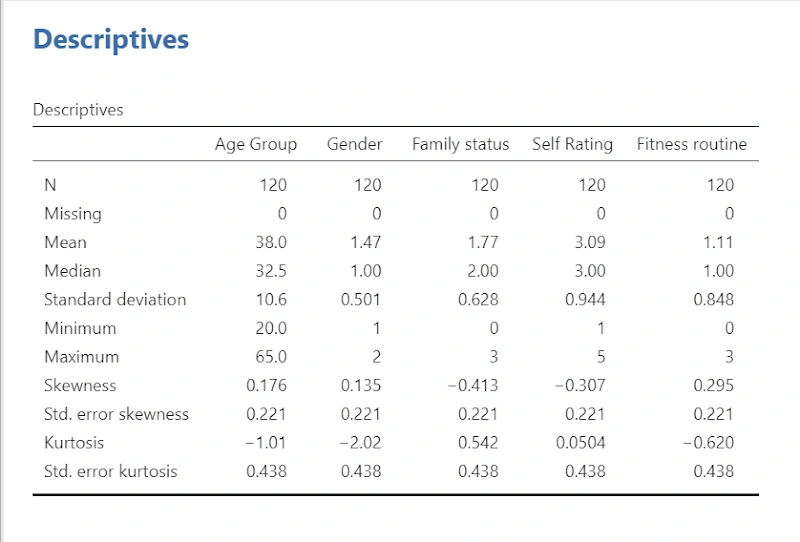
There is a somewhat equal distribution among the age groups even though a majority of the population belongs to the younger age group. Still, there is a small group of older individuals that could influence certain results or trends.
Family Status:
The data shows a slight skew toward participants who are single or married without kids, which might influence their self-rating, fitness routine, and other factors. For example, participants who are married with kids might have different self-perceptions or fitness routines due to time or family commitments
Fitness Scale Rating:
The majority of participants choosing a self-rating of 3 (neutral) may reflect neutrality bias, where individuals avoid extreme ratings and prefer to stay in the middle, perceiving themselves as neither particularly high nor low. This could also indicate an optimistic bias or an unrealistic self-perception, where participants rate themselves favorably despite not necessarily meeting the standards they set for themselves. Many may compare their abilities to idealized figures of fitness, such as celebrities or influencers, which creates a mismatch between their actual capabilities and what they perceive as the "ideal." This discrepancy suggests that while they might be doing well according to their capacity, they feel pressure to align with an unrealistic standard.
Fitness Routine:
The fitness routine data shows a mean of 1.11, which is low, indicating that most participants either don't engage in fitness activities or rely solely on self-workouts. The median of 1.00 supports this, showing that half of the participants don't engage in any fitness activities at all. The standard deviation of 0.848 reveals significant variation, with some participants highly active while others are not engaged at all. This distribution is skewed toward lower levels of activity, which could be influenced by factors like age and family status. Younger, single individuals likely have more time for structured fitness, while older or family-oriented participants may face more limitations in incorporating fitness into their routines.
Statistical findings and further investigation
between age and fitness scores There is a negative correlation between age and fitness scores, indicating low fitness levels in older individuals.
there is a weak positive correlation between the two variables age and fitness routine which means there is a slight tendency for engagement in a fitness routine to increase.
There is a positive correlation between fitness levels and fitness scores, which means as individuals engage in a fitness routine more frequently or consistently, their fitness scores tend to improve.
Since there is a negative correlation between age and fitness scores, investigating further to find influencing factors:
High Inactivity Among Younger Individuals (44.1%): Younger individuals often neglect fitness due to career pressures and lack of time, leading to higher inactivity rates.
Older Individuals Prefer Self-Workouts (52.3%): Older individuals prioritize low-impact routines like walking and yoga, which may not sufficiently boost fitness scores.
Low Use of Fitness Apps by Older Individuals (4.5%): Older adults face challenges like skepticism, physical limitations, and difficulty adapting to technology, limiting their access to structured fitness programs.
Limited Trainer-Led Workouts in Both Groups: Only 8.8% of younger individuals and 29.5% of older individuals engage in guided training, reducing the potential for targeted fitness improvements.
Younger individuals engage in high-intensity activities like cardio, strength training, CrossFit, and swimming, contributing to higher fitness scores, while older individuals prefer low-impact routines like walking, yoga, and stretching, which focus on health maintenance. Younger individuals spend more on fitness (₹5192.30 vs. ₹4852.94) and train more consistently, using modern tools like apps and gyms. Older individuals prioritize recovery and physical strengthening, with fewer sessions and simpler routines. While some older individuals achieve higher scores through weight training and boxing, they are outliers. Physical limitations, fewer advanced options, and less intensity in workouts explain the negative correlation between age and fitness scores.
there is a weak positive correlation between the two variables age and fitness routine which means there is a slight tendency for engagement in a fitness routine to increase.
As mentioned earlier due to age-related health concerns, older individuals might become more conscious of their health, leading to increased participation in low-impact fitness routines like walking or yoga.
The increase is slight, meaning not all older individuals follow this trend, and many still remain inactive.
There is a positive correlation between fitness levels and fitness scores, which means as individuals engage in a fitness routine more frequently or consistently, their fitness scores tend to improve.
Inactive individuals v/s Beginner individuals v/s intermediate individuals v/s active individuals:
Most participants seem to fall into the beginner category, emphasizing basic movement-based activities such as yoga, stretching, and home workouts. This suggests a preference for foundational fitness routines that are easily accessible and can be performed independently.
Three participants reported lifestyle-related health issues, which could be attributed to rigid schedules and a lack of intrinsic motivation. This highlights the challenges many face in maintaining a balanced approach to fitness amidst demanding daily routines.
The data suggests a gap in the current fitness landscape. There is a lack of tailored fitness programs that combine physical exercise with mental health support. There is a clear need for a more integrated approach that considers physical activity and lifestyle changes to improve overall health.
To address these issues, fitness programs should be designed to cater to beginners, focusing on flexibility, ease of access, and the integration of mental health aspects. This could involve creating more engaging fitness routines that combine physical exercises with mindfulness practices, stress management techniques, and motivational support.
The analysis of the fitness data indicates that while younger individuals generally have higher activity levels and fitness scores, older adults often prefer low-impact exercises. There is a noticeable gap in fitness habits among older adults, such as limited use of fitness apps and fewer guided workouts. A weak positive correlation between age and fitness routine engagement suggests some older adults are becoming more active, yet the majority still face barriers to consistent exercise. Most participants fall into the beginner category, focusing on basic, independent routines. To bridge these gaps and improve overall health, fitness programs need to be more integrated, combining physical exercise with mental health support. Tailored approaches that consider individual needs and preferences could help individuals of all ages develop healthier lifestyles.
Market Opportunities and Recommendations
Market Opportunities and Recommendations: Analyzing Survey Responses, Fitness Center Visits, and Phone Interviews
Elder Fitness Program Market Opportunity
A significant portion of the older population is increasingly engaged in low-impact workouts, driven primarily by a desire to maintain general health and well-being. For many middle-aged individuals, this marks a turning point where they recognize the importance of fitness to avoid dependency in old age. This demographic represents a distinct market for elder fitness programs carefully curated by professionals such as orthopedics and certified coaches whom they can trust.
To effectively meet the needs of this group, elder fitness programs should:
Start with a Flexible Regime: The program should begin with a flexible exercise plan that accommodates varying fitness levels and gradually eases individuals into physical activity. This helps prevent injury and builds confidence.
Align with Cultural Practices and Diet: Programs should consider cultural practices, preferences, and dietary requirements to ensure that exercise routines and meal plans are suitable for each individual’s lifestyle and health needs.
Address Health-Related Concerns: Focus on addressing common health issues that older adults face, such as joint pain, osteoporosis, heart health, and muscle strength. Programs should incorporate exercises that improve flexibility, balance, and cardiovascular health.
Trust and Credibility: Trust is a key factor in engaging older adults. Having professionals they can trust, including medical experts and coaches, will enhance program credibility and adherence.
Community and Social Interaction: The program should foster a sense of community and provide social interaction opportunities, which are particularly important for mental health and motivation.
By curating elder fitness programs that meet these criteria, fitness centers can tap into a growing market of middle-aged and older adults who are committed to maintaining their independence and quality of life as they age.
Market Opportunity: Collaborative Partnerships with Colleges
Fitness centers, such as "Train to Perform" and others, can explore the opportunity to partner with nearby colleges. This collaboration could promote a culture of "healthy life, fitness, etc." among students, especially during the Fit India campaign. Such partnerships offer a dual benefit:
Advertising for the Fitness Center: By aligning with the college, fitness centers can leverage these partnerships as effective advertising opportunities. Promoting through college events, orientations, and campaigns can raise brand visibility and attract students.
Achieving Fitness Goals on a Budget: Students often seek affordable ways to achieve their fitness goals and dream aesthetic builds. By collaborating with colleges, fitness centers can offer special student pricing and tailor programs to meet the specific needs and preferences of this demographic.
Peer Pressure as a Motivator: The college environment can serve as a strong motivator for students. Peer pressure can be a powerful tool to encourage enrollment, leading to increased membership and revenue for the fitness center.
Price Discrimination Strategy: This approach reflects a classic price discrimination strategy—offering tailored pricing that caters to different customer segments (students and the general public) while ensuring satisfaction for both parties.
This strategy not only benefits the fitness centers by boosting enrollment and profits but also promotes a culture of health and fitness among college students, fostering a positive community environment.
Market Opportunity: Leveraging Online Workouts and Fitness Apps
A significant portion of the population is embracing online workouts and fitness apps, which effectively address common obstacles such as time constraints, financial limitations, scheduling conflicts, and commute challenges. The success of models like Chloe Ting's provides valuable insights into crafting a highly engaging and accessible fitness solution.
Key Features of Successful Online Fitness Models
Positive Reinforcement: Programs should offer motivational tools, such as progress tracking, badges, and encouraging messages, to keep users engaged.
Fitness Tracking: Built-in systems to monitor progress, set goals, and celebrate achievements are essential for sustaining user interest.
Home-Friendly Routines: Workouts designed for small spaces with minimal equipment make fitness accessible to a wider audience.
Recommended Enhancements for Greater Engagement
To elevate the online fitness experience, integrating a social connectivity feature can be a game-changer:
Fitness Partners or Groups: Users can connect with like-minded individuals for mutual support and accountability. They can join workout groups, find fitness partners, or engage in challenges, making the experience more interactive and community-driven.
Survey Insights: Responses from the survey indicated that having a fitness partner or group is a strong motivational factor for many. Incorporating this feature can increase user retention and satisfaction.
Business Model Insights
Taking inspiration from Chloe Ting’s model, the online platform could:
Offer free basic workout plans with optional premium features, such as one-on-one coaching, advanced fitness analytics, or access to exclusive content.
Include targeted advertising, merchandise, or partnerships with wellness brands to generate additional revenue streams.
By blending accessibility, personalized features, and social engagement, fitness centers and app developers can capitalize on the growing demand for online workouts while addressing the diverse needs of their audience. This innovative approach aligns with modern fitness trends and positions businesses for sustainable growth in the digital fitness market.
Like this project
Posted Sep 27, 2026
Consulted on creating a community-oriented fitness center for women.