Life Balance Contact

Michael Komarov


Client
Business Process Technologies
Project members
Alex Marokko - 3D design
Dmitry Shepel - software engineer
Dmitry Chemeris - software engineer
Vladimir Kolobanov - hardware engineer
About project
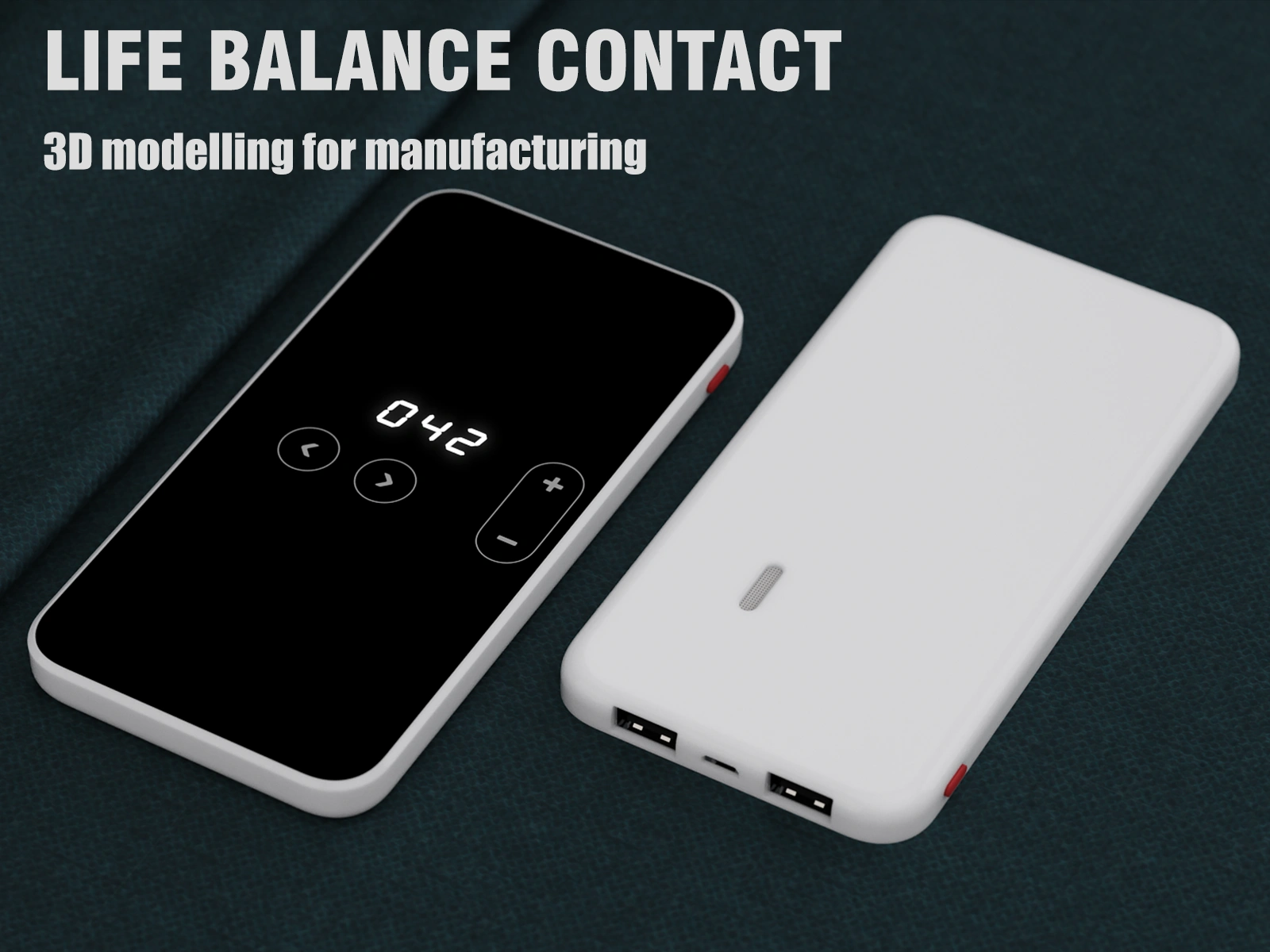
Life balance contact is a device that uses bioresonance to influence the body (endogenous influence). It uses the patient's own physiological and pathological frequencies, which are then amplified (physiological) or inverted (pathological) and returned to the body to restore it. The device has a modern case, special electrodes, and a large number of working programs, which makes it a good assistant in restoring health.
Project requirements
1 Simplicity and reliability
The housing had to be easy to maintain and have a simple structure, with all parts of the housing being quick and easy to replace. At the same time, the housing had to be reliable in terms of resistance to physical damage.
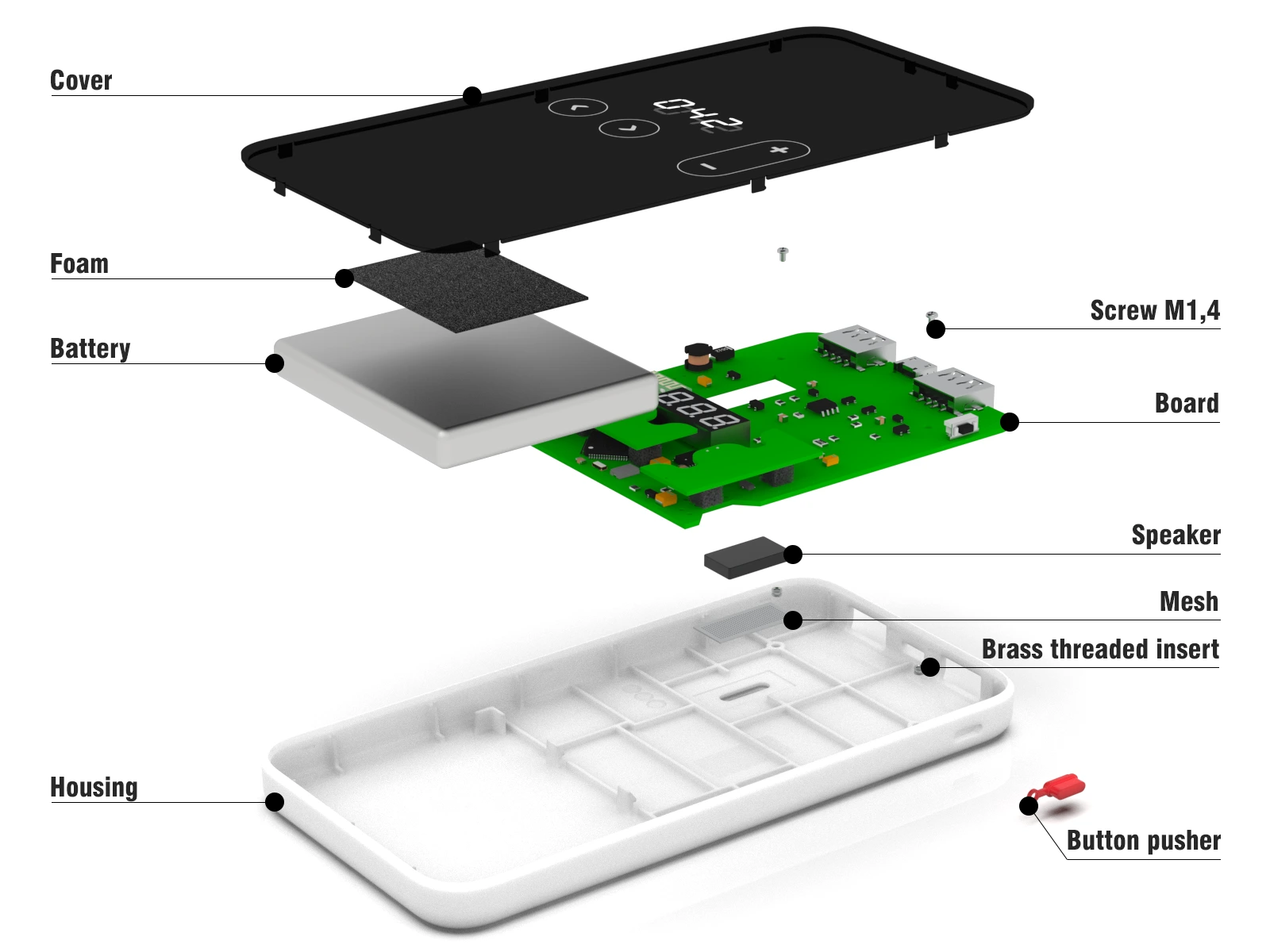
Life balance contact structure
2 Modular structure
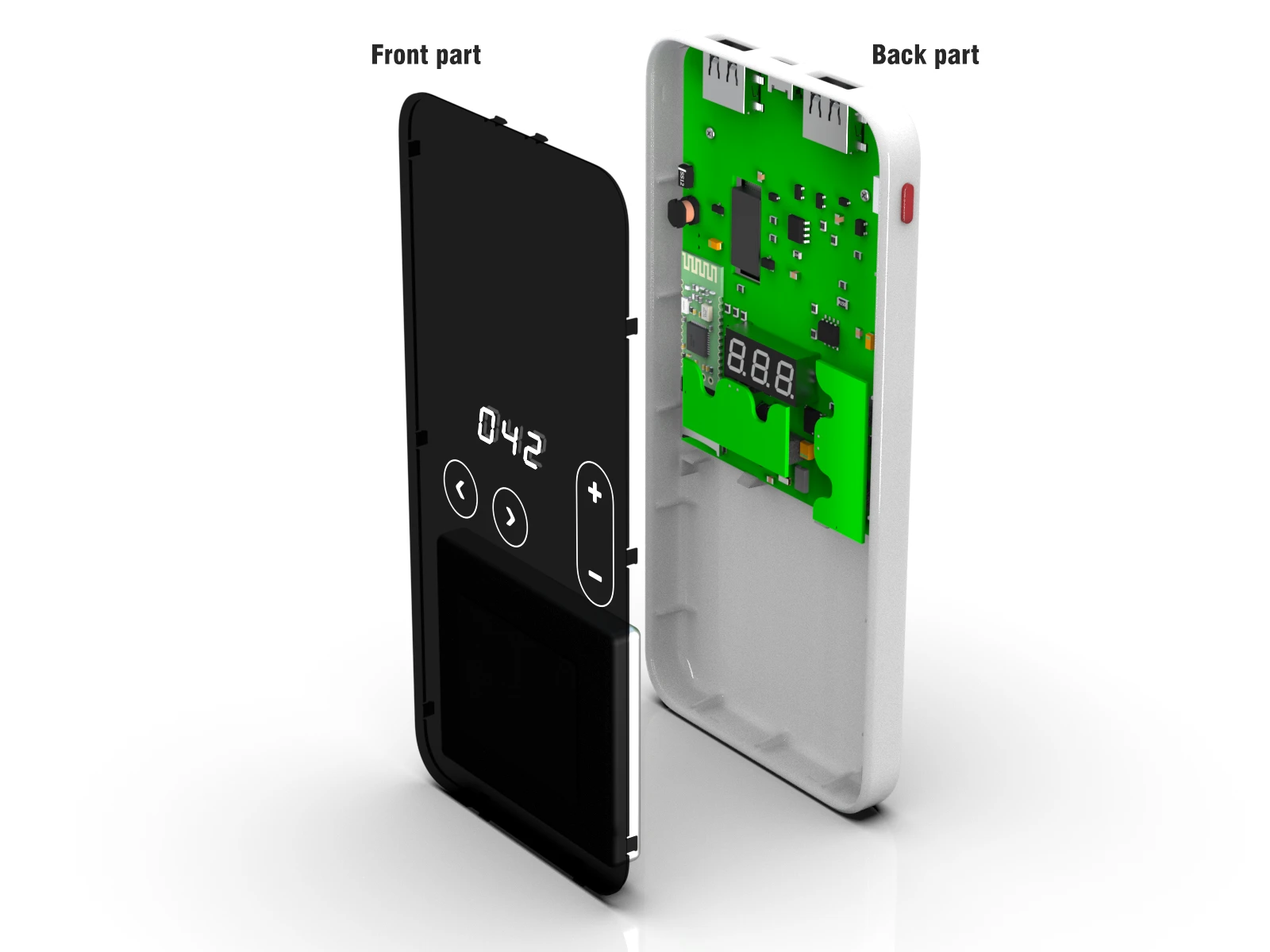
The structure had to consist of two parts that were independent of each other, which simplified the assembly and maintenance of the device.
Two parts
3 Cost reduction
The device mainly uses standard components, with only three parts manufactured using plastic molding, which increased production speed and reduced costs.
Project implementation
Structurally, Life Balance Contact consists of two parts: front and rear. Both parts must be independent of each other, except the battery, which can be disconnected from the board after removing the front part. The front part includes: cover, adhesive foam, and battery. The rear part includes: the case, the board with fasteners, the button pusher, and the adhesive mesh for the speaker.
Front part structure
Cover: transparent PC, black, light transmission - 5%,
Foam: adhesive, foamed, black,
Battery: 60x50x8.
The cover features a certain number of snaps, sufficient to hold it in place, and a stiffening rib runs along the entire length of the cover, which helps reduce the impact of mechanical loads on the cover. The foam serves to connect the battery and the cover, and also acts as a shock absorber for the cover.
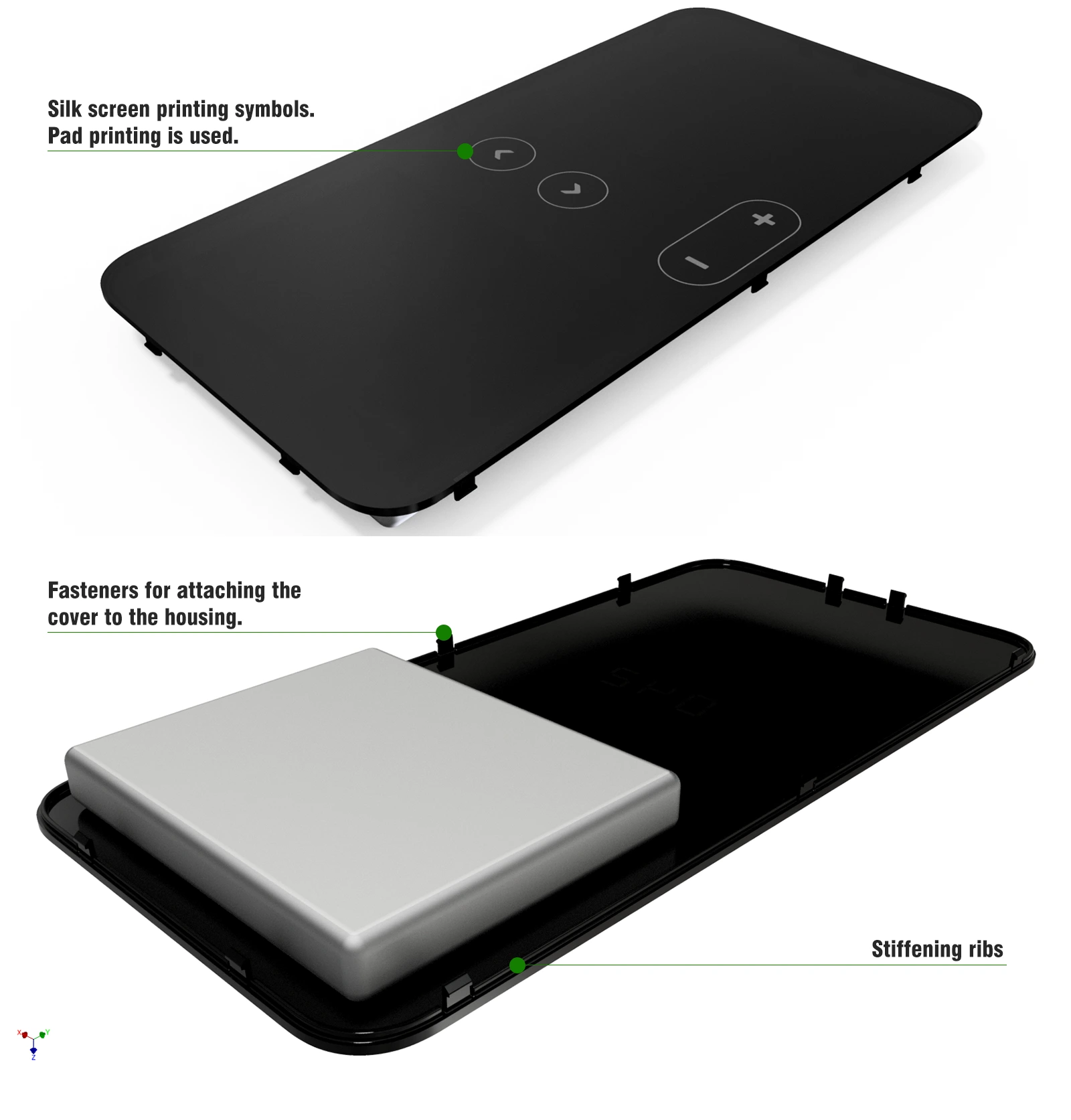
Both sides of the front part
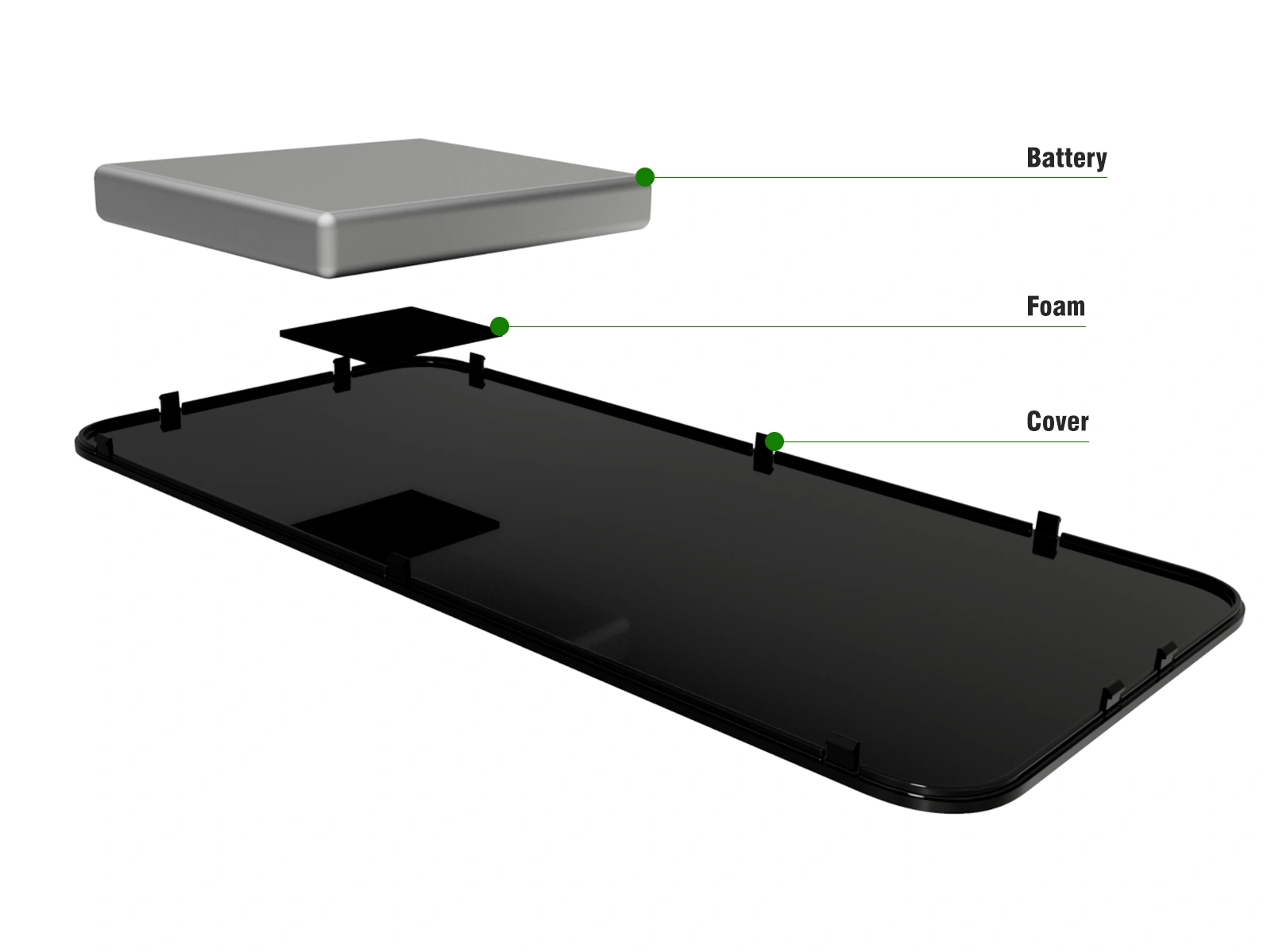
Front part structure
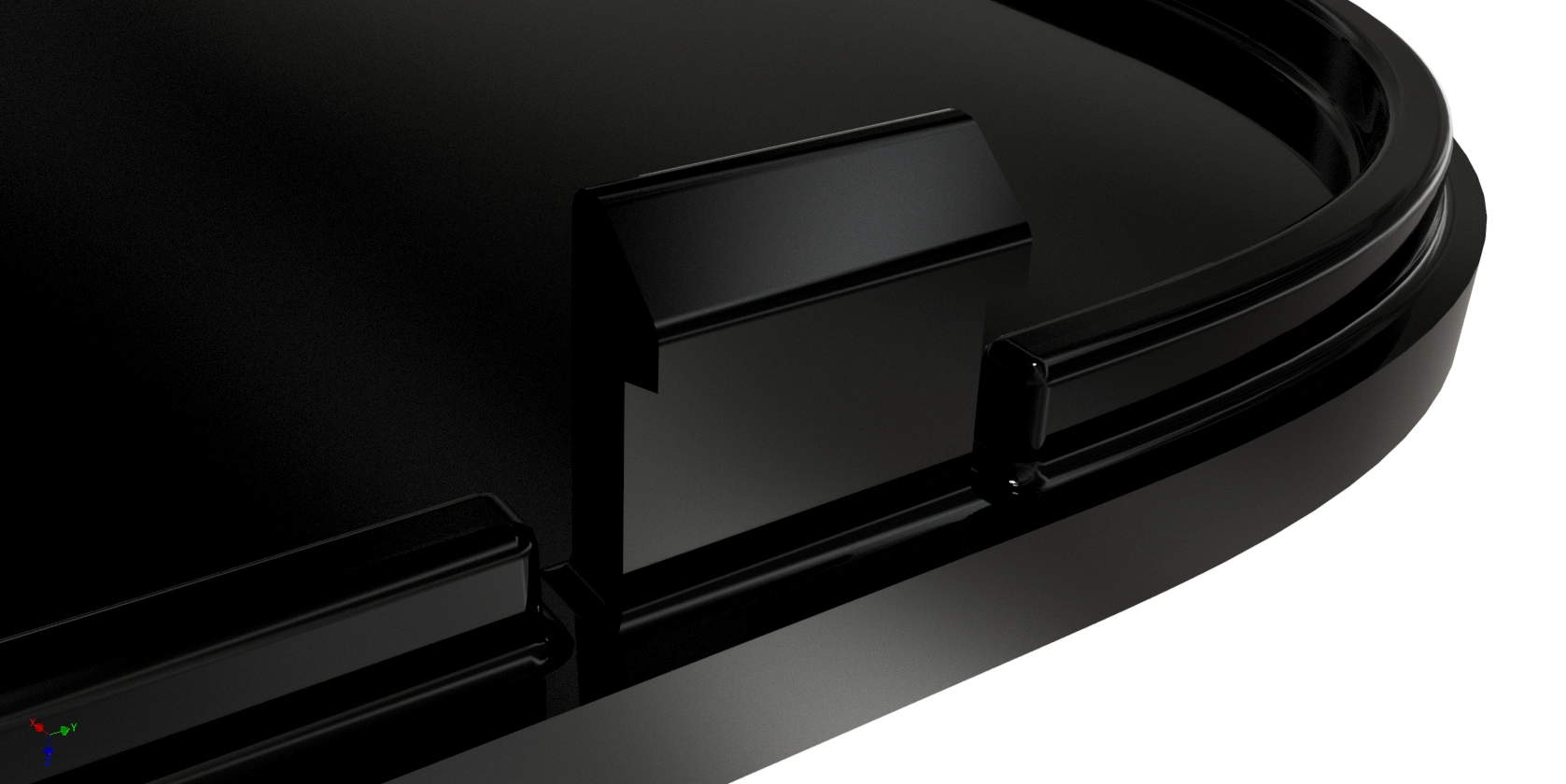
Snap shape and stiffening ribs
Back part structure:
Housing: PC/ABS, metallic white, glossy surface after painting,
Brass threaded inserts: M1.4 thread,
Metal mesh: stainless steel, adhesive base.
The housing has two bosses with brass threaded inserts for mounting the board. The bottom part of the board has no mounting holes, so snaps are used for mounting. A sound tube and decorative metal mesh covering the opening from the inside are located where the speaker is. The housing also has special bosses for centering the battery so that it can be properly installed on the cover. For the fasteners on the cover, the housing has corresponding cutouts that help to install the cover. The button pusher has a corresponding hole in the location of the button. The pusher must be located close to the button in order to transfer the energy of the push to the button. The pusher is attached to the corresponding boss on the housing.
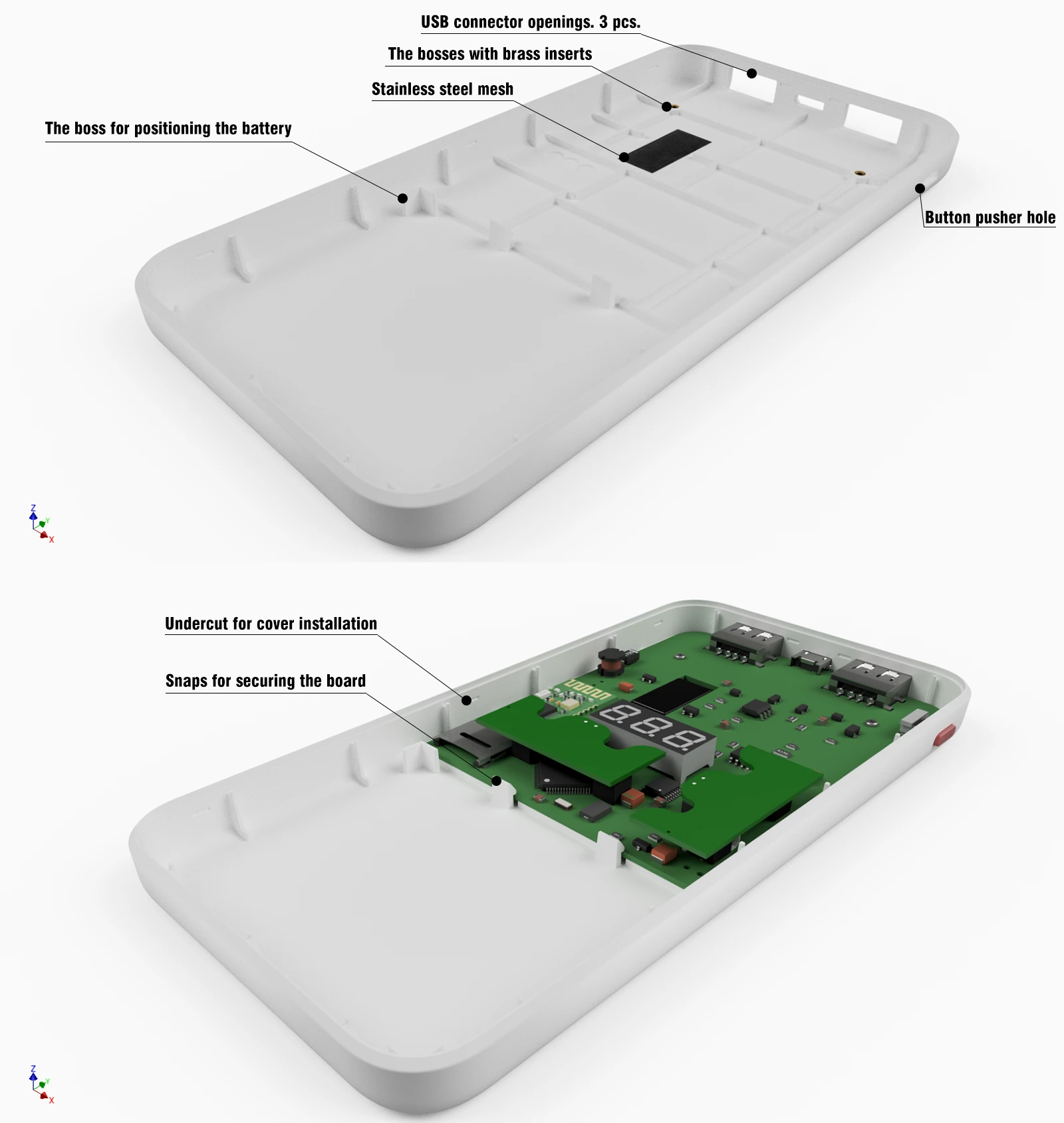
back part structure
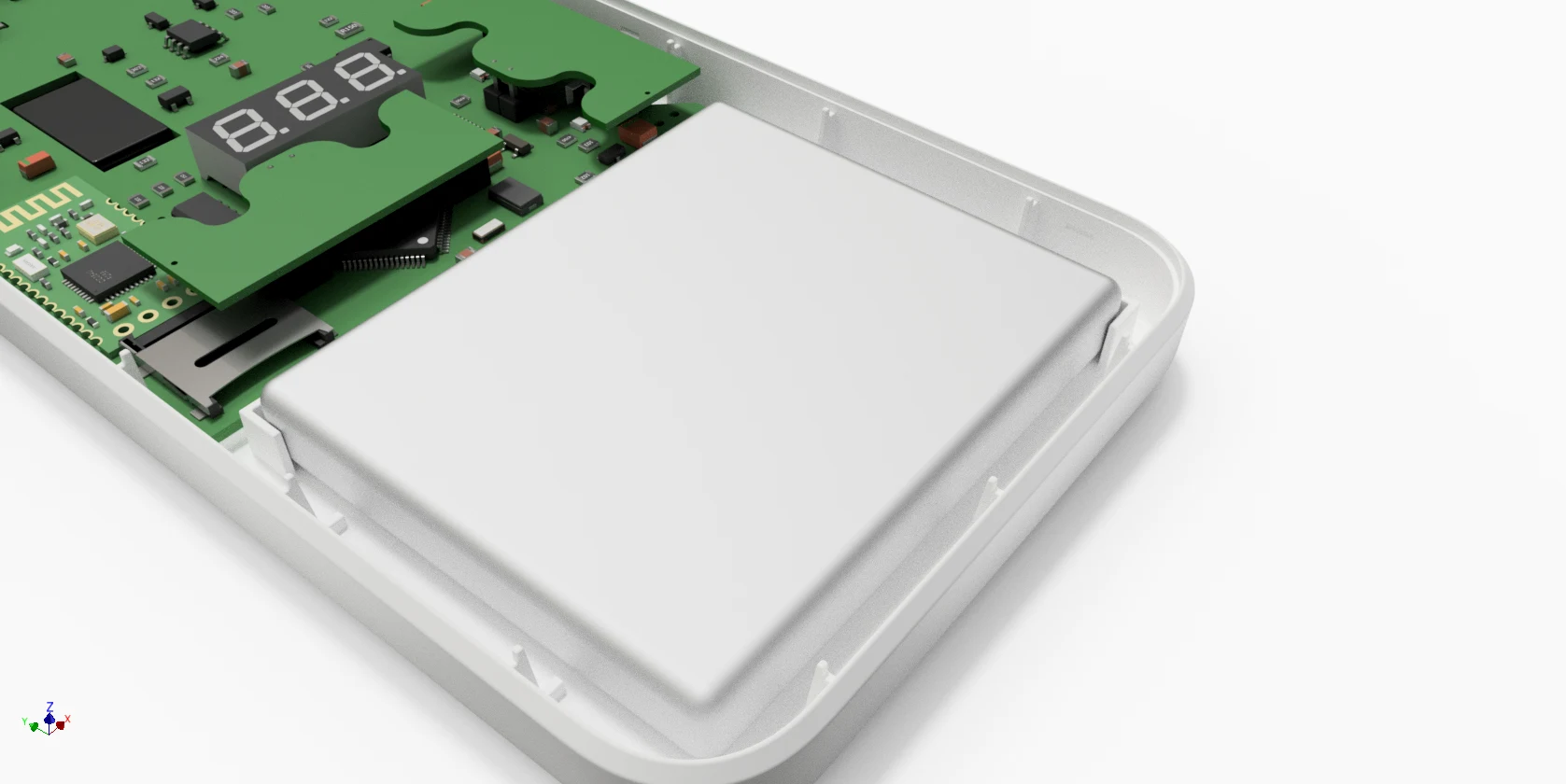
The battery bosses
Button pusher
Material: PC/ABS,
Surface: glossy,
Color: red.
The button pusher has a special structure that allows it to be attached to the housing (the ring is placed on the pin). The inner surface that contacts the button has a wide, monolithic structure, which reduces the impact of a misaligned button on the board due to incorrect soldering.
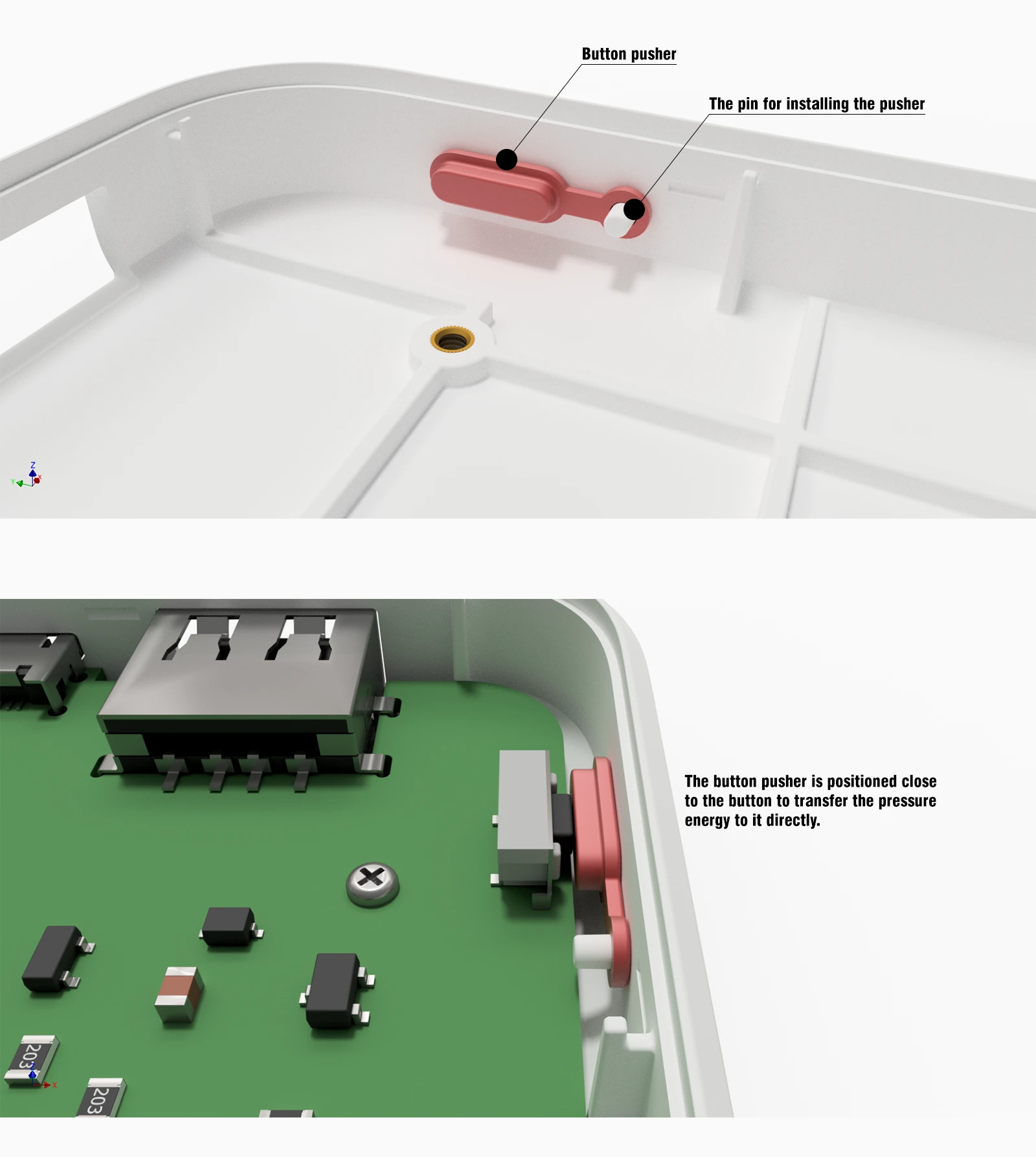
Button pusher
Like this project
Posted Oct 27, 2025
Development of a therapeutic device that affects the body through internal vibrations and reduces pathologies by inverting their vibrations.
Likes
2
Views
8
Timeline
Jun 8, 2021 - Jan 30, 2022