UPI Shield: Pre-Transaction Fraud Detection

Harsh Gogri


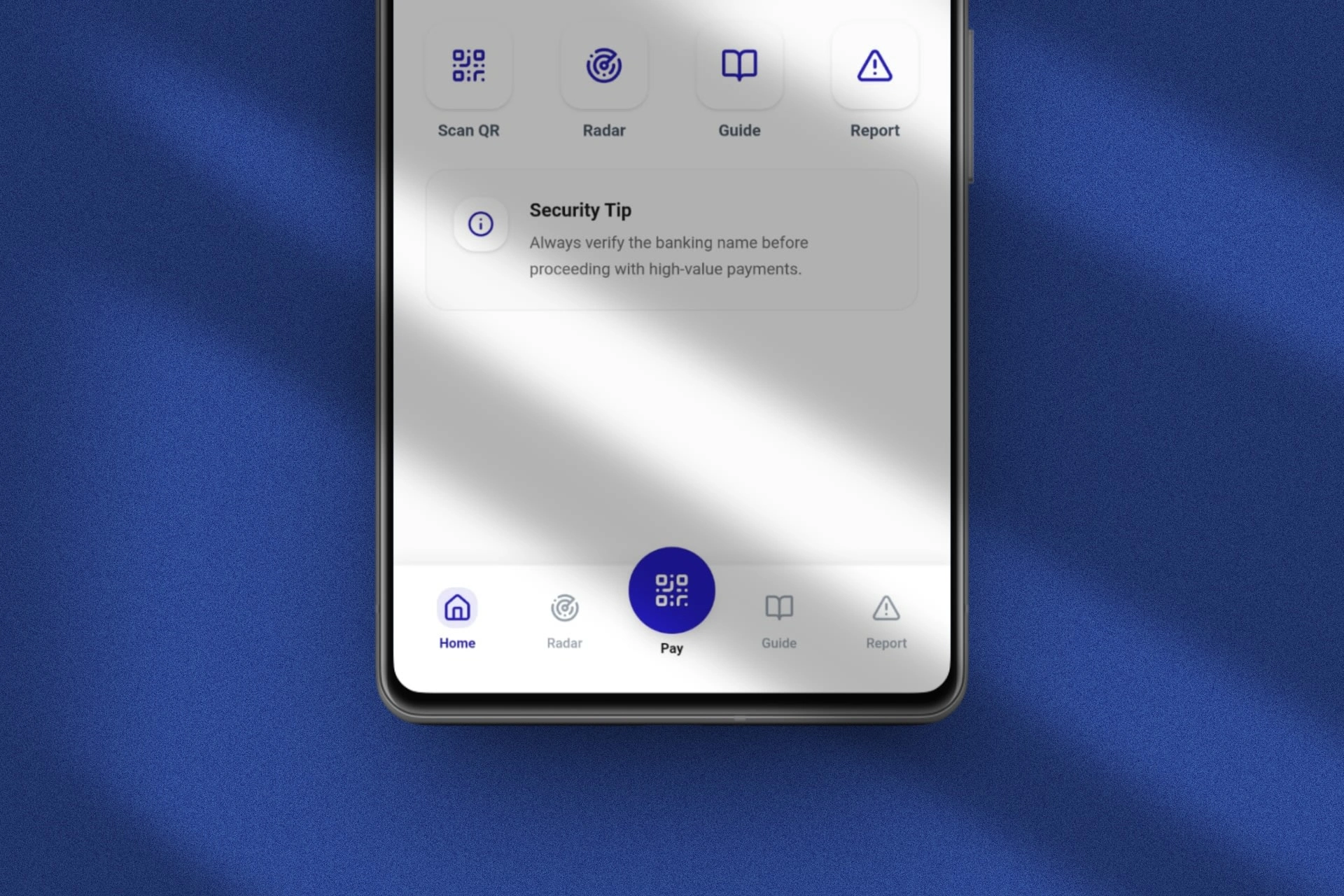
Overview
UPI powers India’s digital economy with billions of monthly transactions, but as adoption grows, so do fraud risks. This project explores how fraud prevention can shift from post-transaction detection to pre-transaction decision support.
UPI Shield is a concept feature that introduces a real-time risk awareness layer within the payment flow, enabling users to make safer decisions before sending money.
✨ Research & Problem Framing
The Context
UPI is one of the largest real-time payment systems globally, with 400M+ users and 20B+ monthly transactions
However, fraud is scaling alongside adoption:
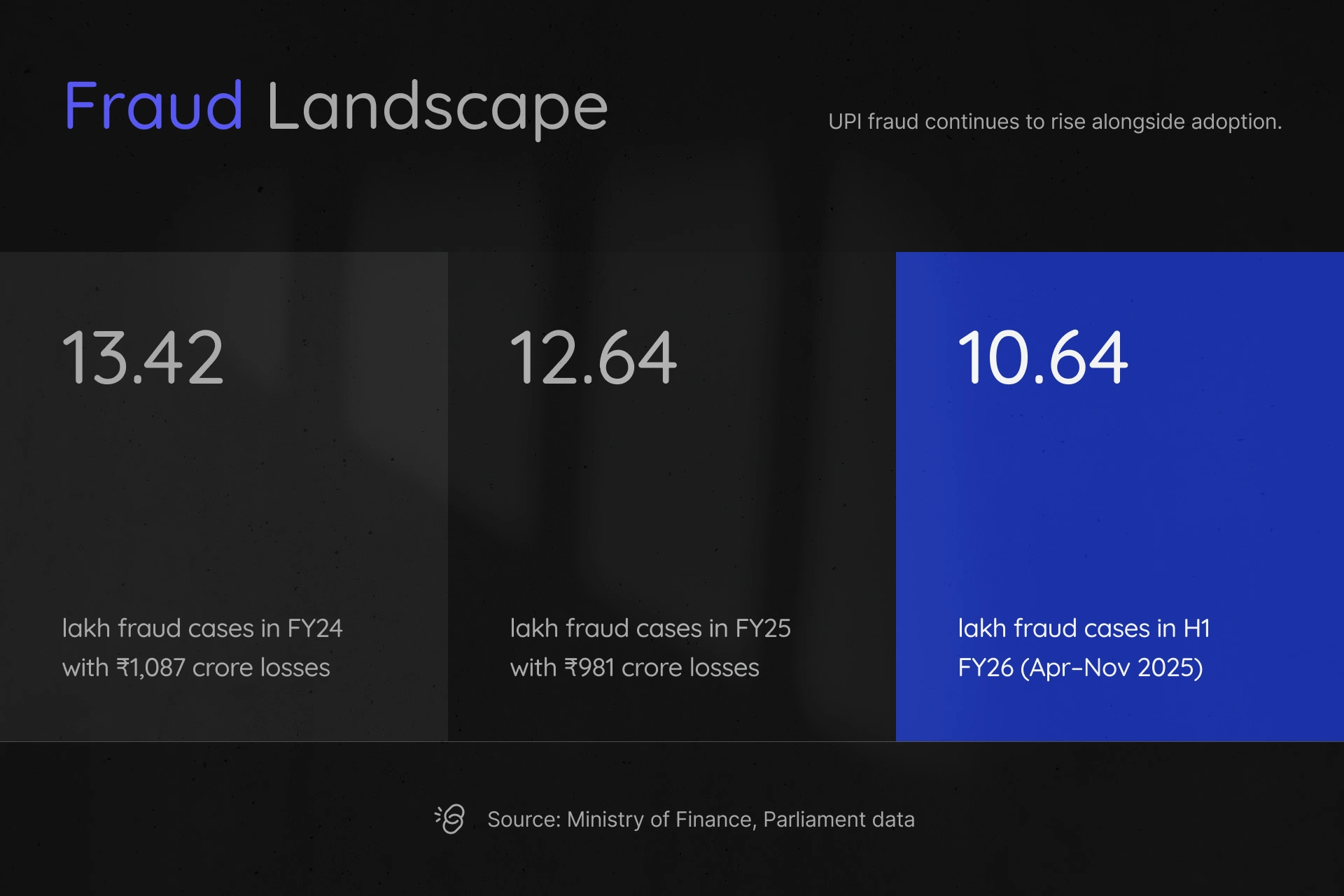
Key Insight
Most fraud does not occur due to system vulnerabilities, but because users are not equipped with the right signals at the moment of decision-making.
Today, users are expected to trust unfamiliar QR codes or UPI IDs without any contextual verification.
UPI fraud is a decision-stage problem, not a technology failure
User Segments
There are two primary behavioral patterns observed:
Frequent Transactors prioritize speed and convenience, often making multiple daily payments to unfamiliar IDs without verification.
Cautious Transactors engage less frequently but face higher anxiety and uncertainty, especially in high-value or unfamiliar transactions.
Despite their differences, both groups lack real-time confidence signals during payments.
Core Problems
Users cannot evaluate QR codes or UPI IDs before paying
No quick credibility check for unfamiliar recipients
Payment flow prioritizes speed over safety signals
Fraud exploits decision gaps, not technical vulnerabilities
✨ Opportunity & Strategy
The opportunity lies in embedding lightweight risk awareness directly within the payment journey, without disrupting the speed that makes UPI successful. Instead of blocking transactions, the strategy focuses on:
Surfacing just-in-time risk signals
Allowing users to opt into deeper analysis
Preserving a fast, uninterrupted payment flow
Primary Goal
Enable at least
30% of payment attempts to include a risk review within 4 monthsSupporting Metrics
Risk analysis engagement rate
Payment cancellation after alerts
Fraud report submissions
Guardrail Metrics
No significant increase in payment time
No drop in payment success rate
✨ Solution: UPI Shield
UPI Shield introduces a lightweight, optional security layer integrated directly into the payment flow.
Core Components
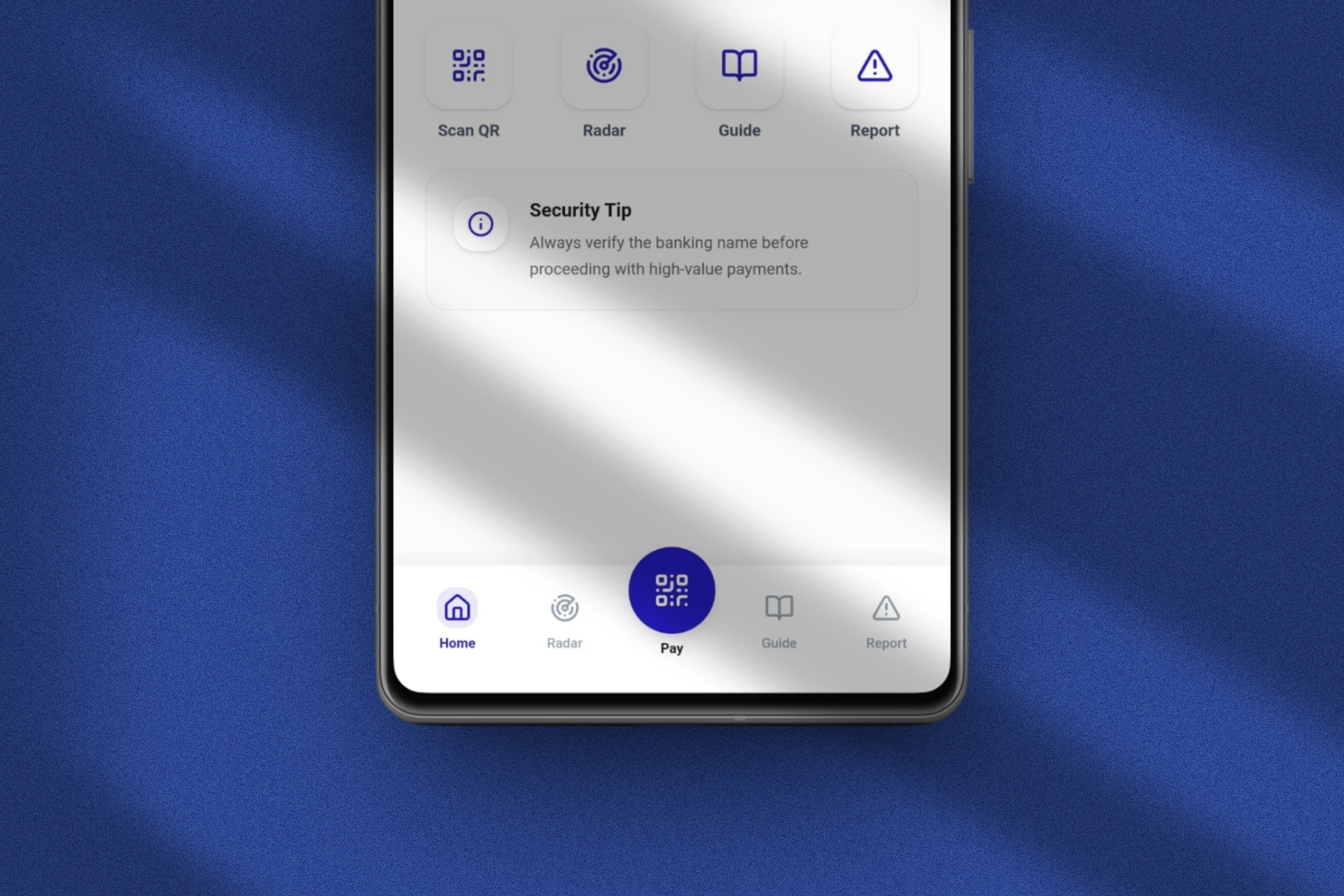
1. Scan QR with Risk Awareness
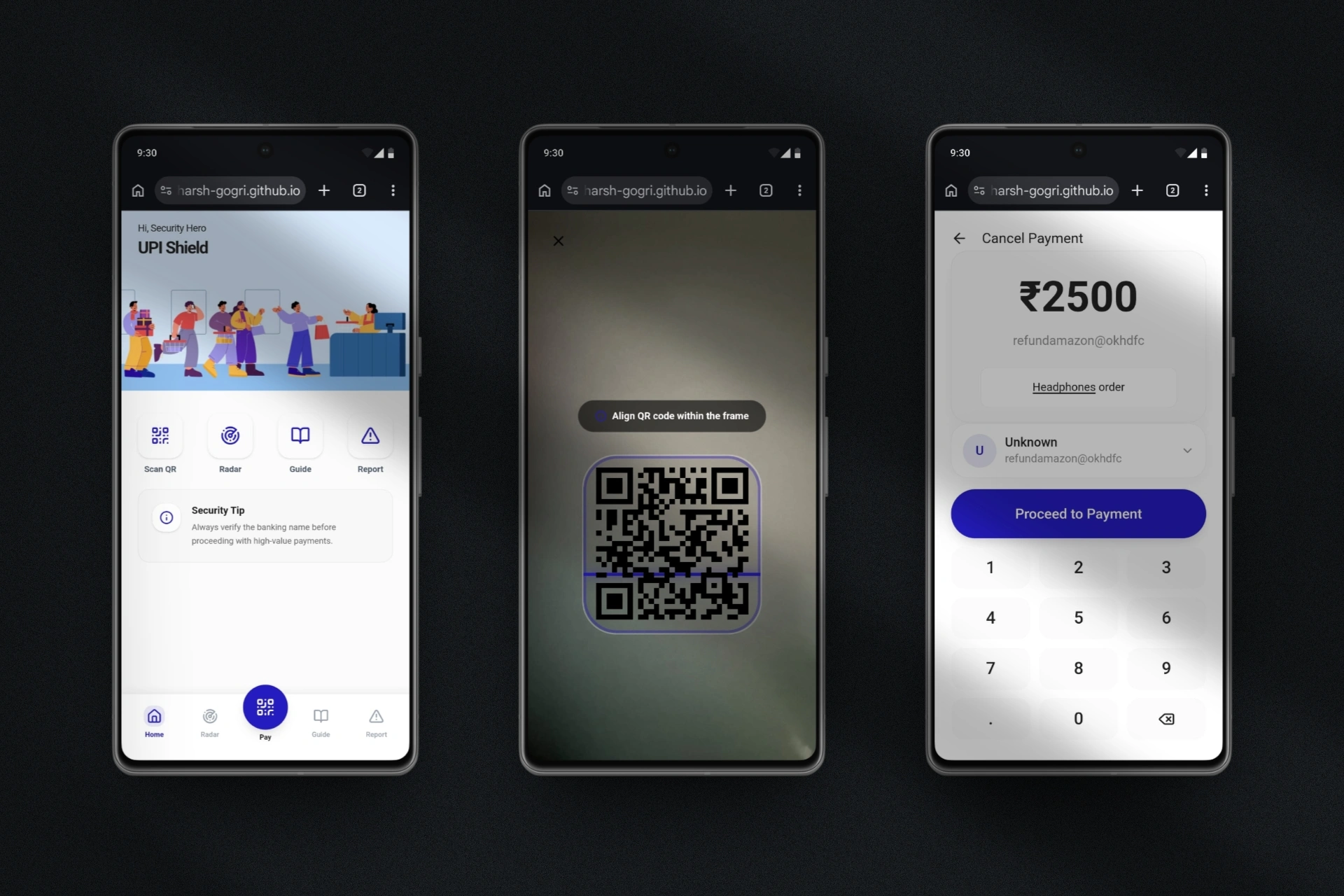
👉 Scan QR 🡢 Detect UPI ID 🡢 Enter amount
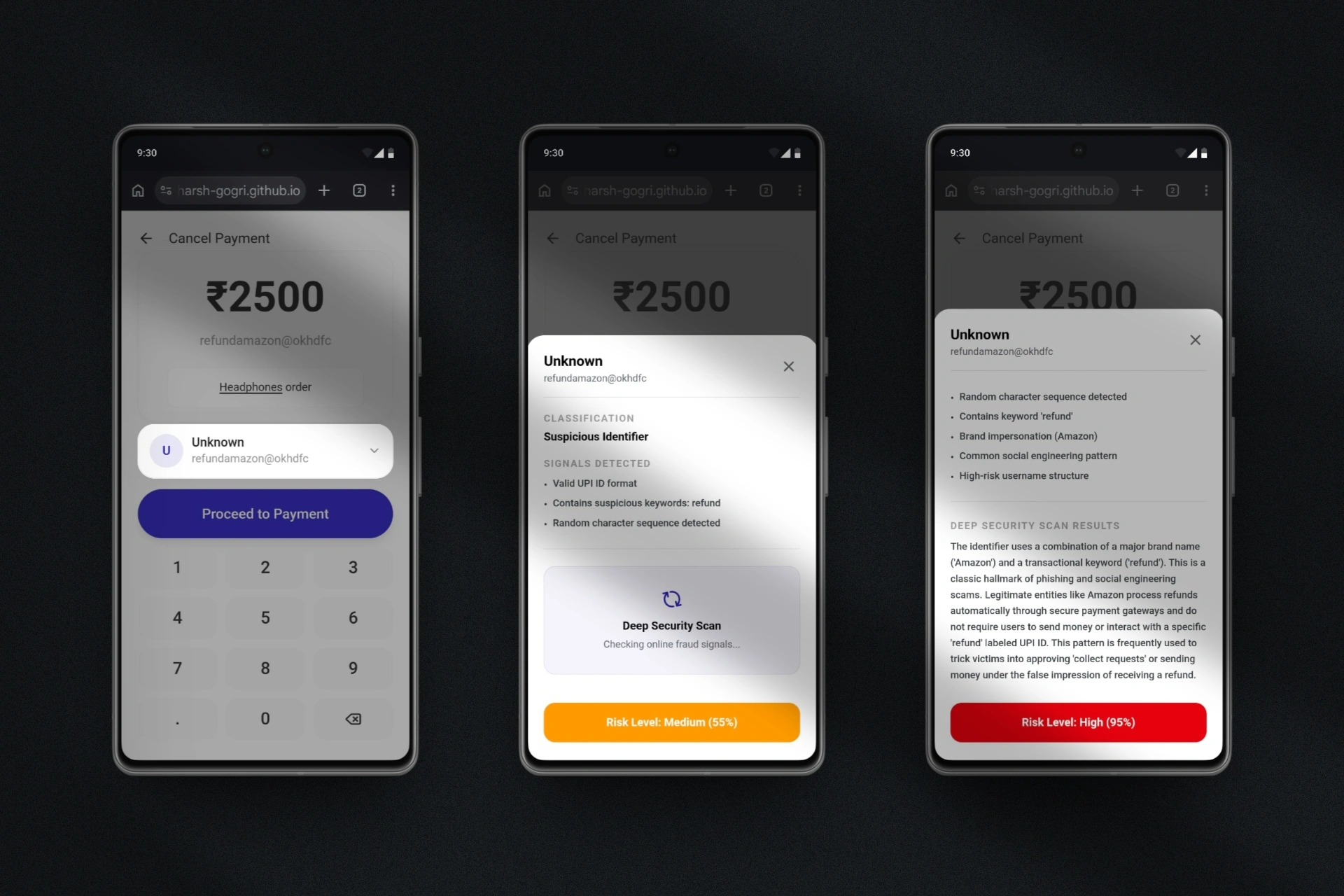
👉 Open risk analysis panel (Optional) 🡢 Proceed or Cancel
2. UPI ID Analyzer
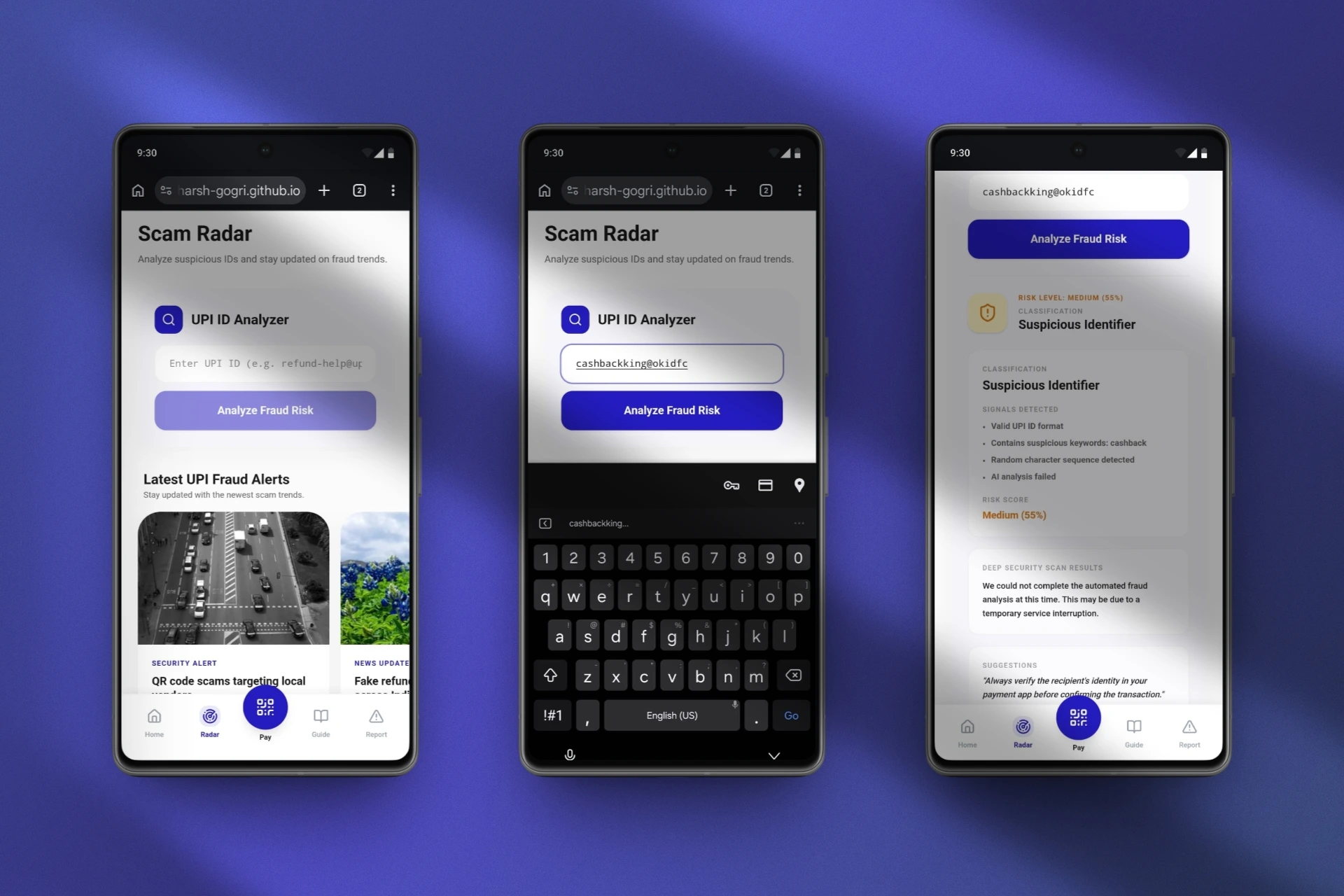
💡 A feature for checking VPA credibility when uncertain about an ID.
3. Fraud Reporting
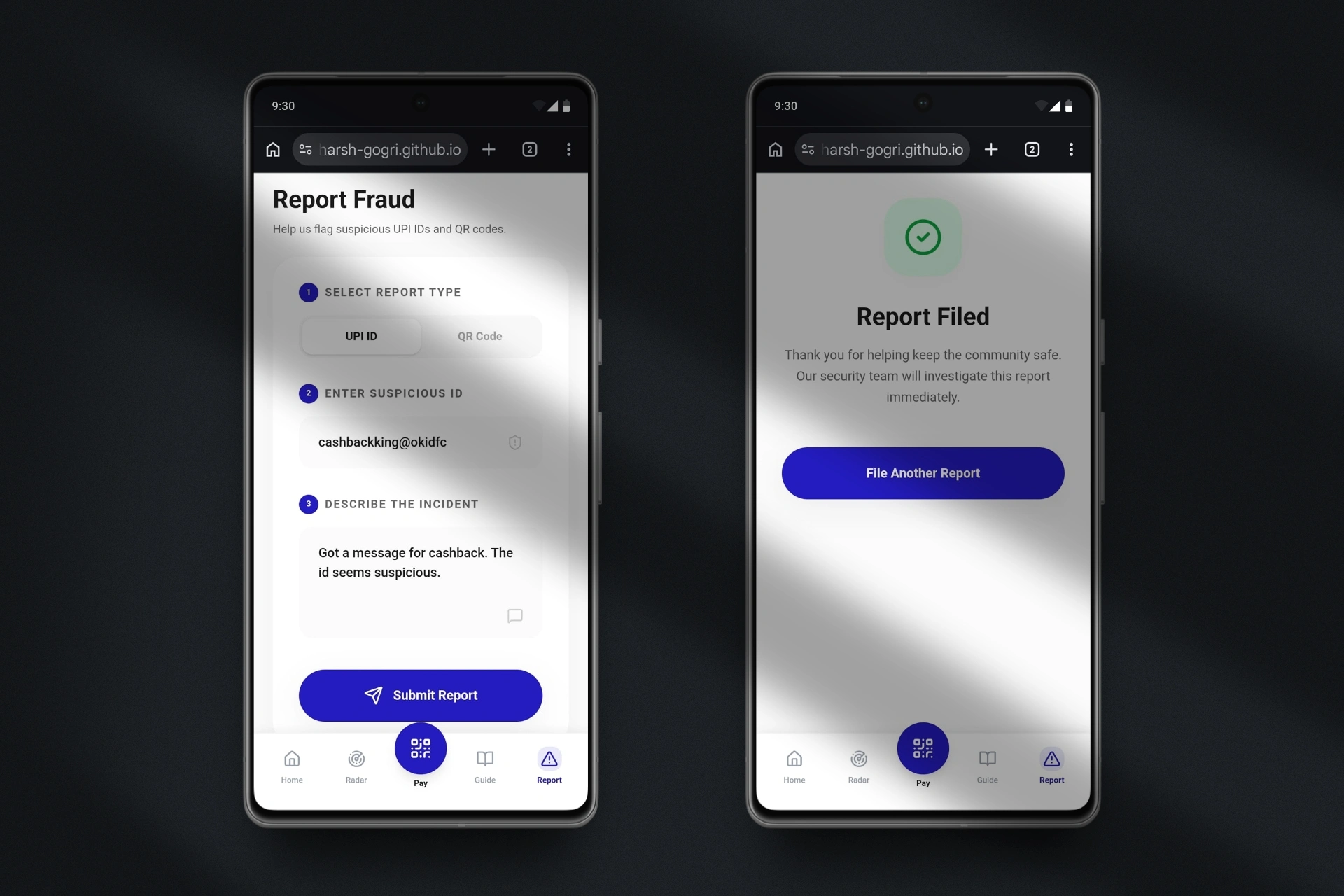
❗Fraud reporting to help protect other users.
4. AI Knowledge Hub
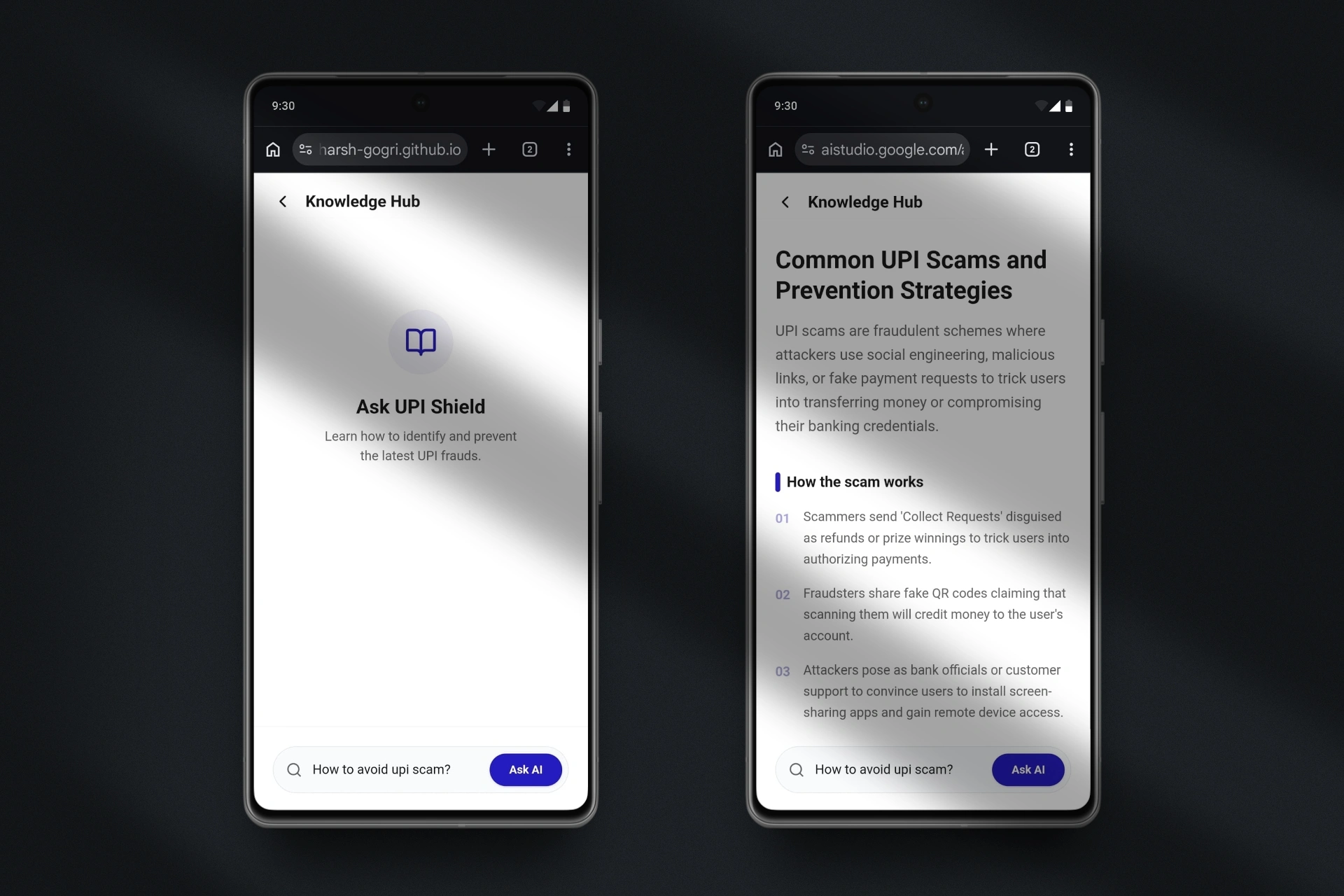
✨ System Thinking
Risk Scoring Logic (Conceptual)
The risk scoring system is conceptualized as a multi-signal evaluation engine:
Instead of relying on a single metric, it combines multiple indicators such as identifier patterns, suspicious keywords, and known fraud behaviors.
The output is not just a score, but an explainable risk breakdown, which is critical for building user trust.
Users are more likely to act on warnings when they understand why something is risky.
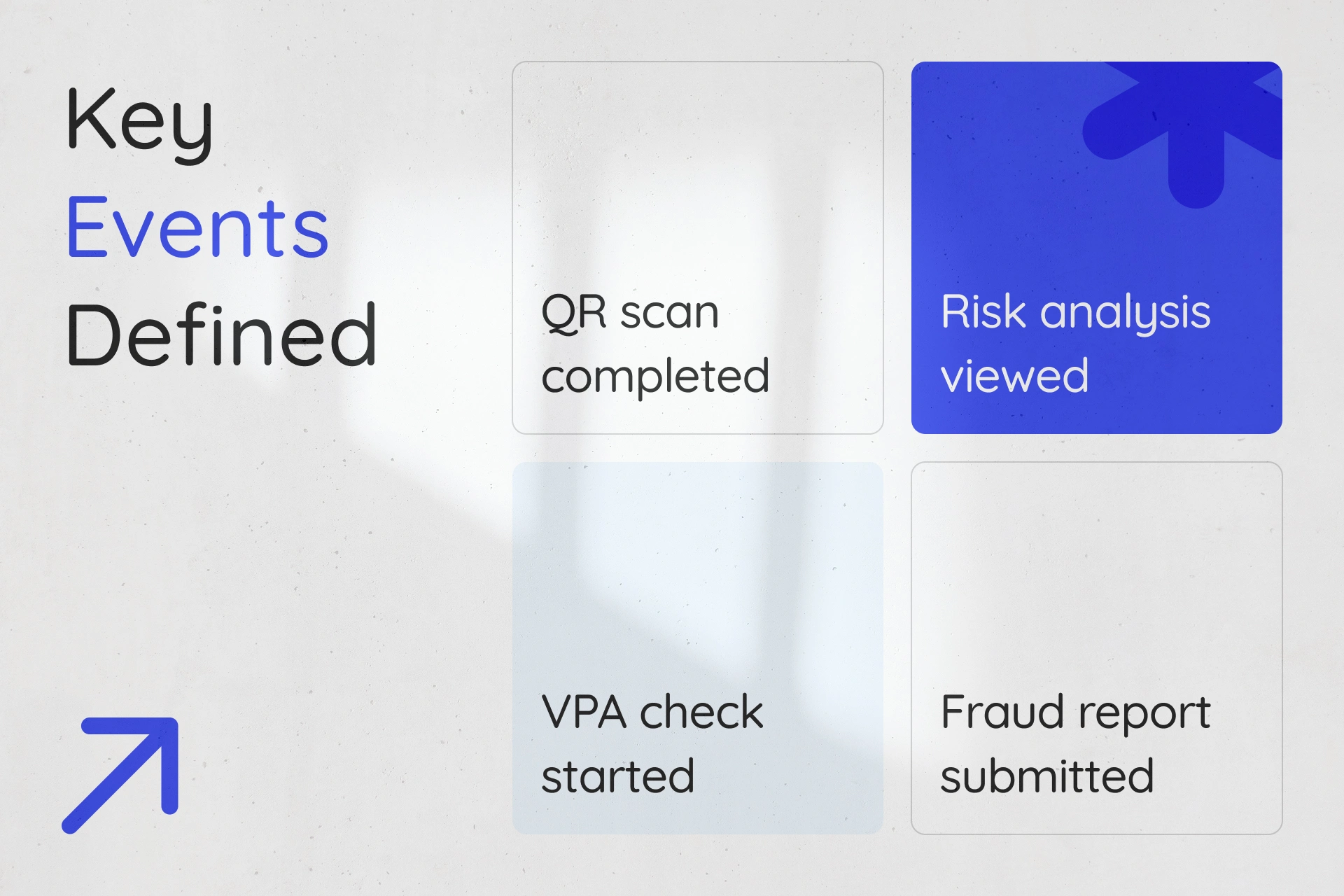
Event Tracking Plan
Challenges & Constraints
Balancing safety within a high-speed payment ecosystem required careful trade-offs across product, UX, and system design.
1. Speed vs Safety
UPI’s core value lies in instant transactions. Introducing friction risks drop-offs and reduced adoption.
Decision:Keep all risk interactions optional and non-blocking.
2. Trust in Risk Signals
Overly aggressive warnings can create alert fatigue, while weak signals fail to prevent fraud.
Approach:Prioritize explanation: show why something is risky instead of relying on black-box scoring.
3. Lack of Primary Research
The project relied entirely on secondary research without user interviews or usability validation.
Approach:Ground decisions in industry data and known behavioral fraud patterns.
4. Technical & Compliance Dependencies
Implementation depends on multiple external systems:
QR parsing and camera integration
Risk evaluation engine (backend/API)
Compliance requirements for financial warnings
✨ Outcomes & Expected Impact
UPI Shield is designed to influence user behavior at the most critical moment — just before a payment is completed.
By introducing contextual risk signals, the product aims to:
Increase user awareness during transactions
Reduce impulsive or manipulated payments
Improve confidence when dealing with unfamiliar recipients
From a product perspective, this translates to lower fraud success rates and stronger trust in digital payments.
The primary success benchmark is achieving 30%+ engagement with risk signals before payment completion
✨ Links
Like this project
Posted Apr 19, 2026
Led a 0→1 UPI fraud-awareness product, defining personas, PRD and metrics; designed AI risk scoring and non-blocking flows for safer payments.