From Software to Hardware: Museum Donation Kiosk

Alex Amat



Social Good Software: Museum Donation Kiosk
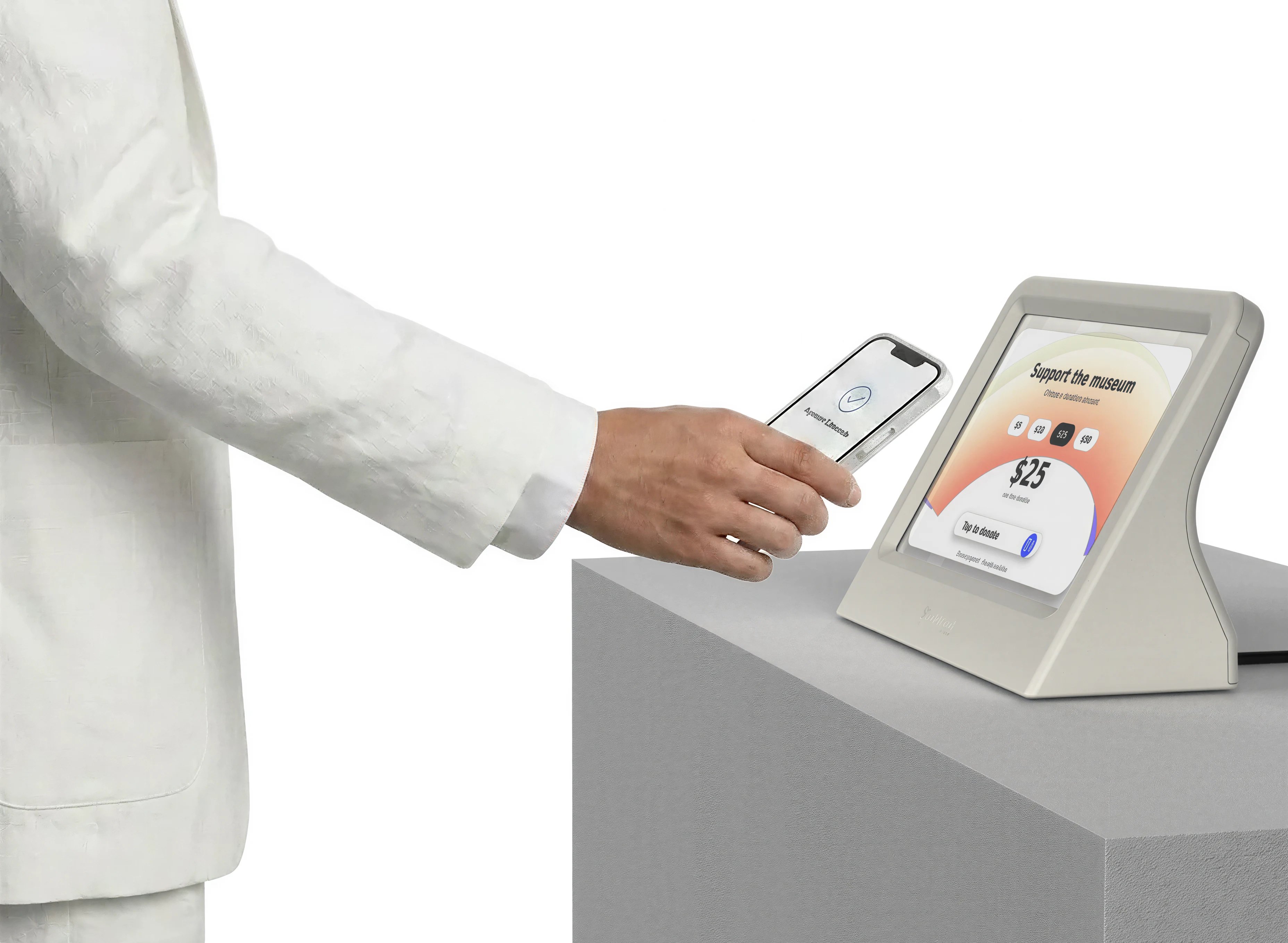
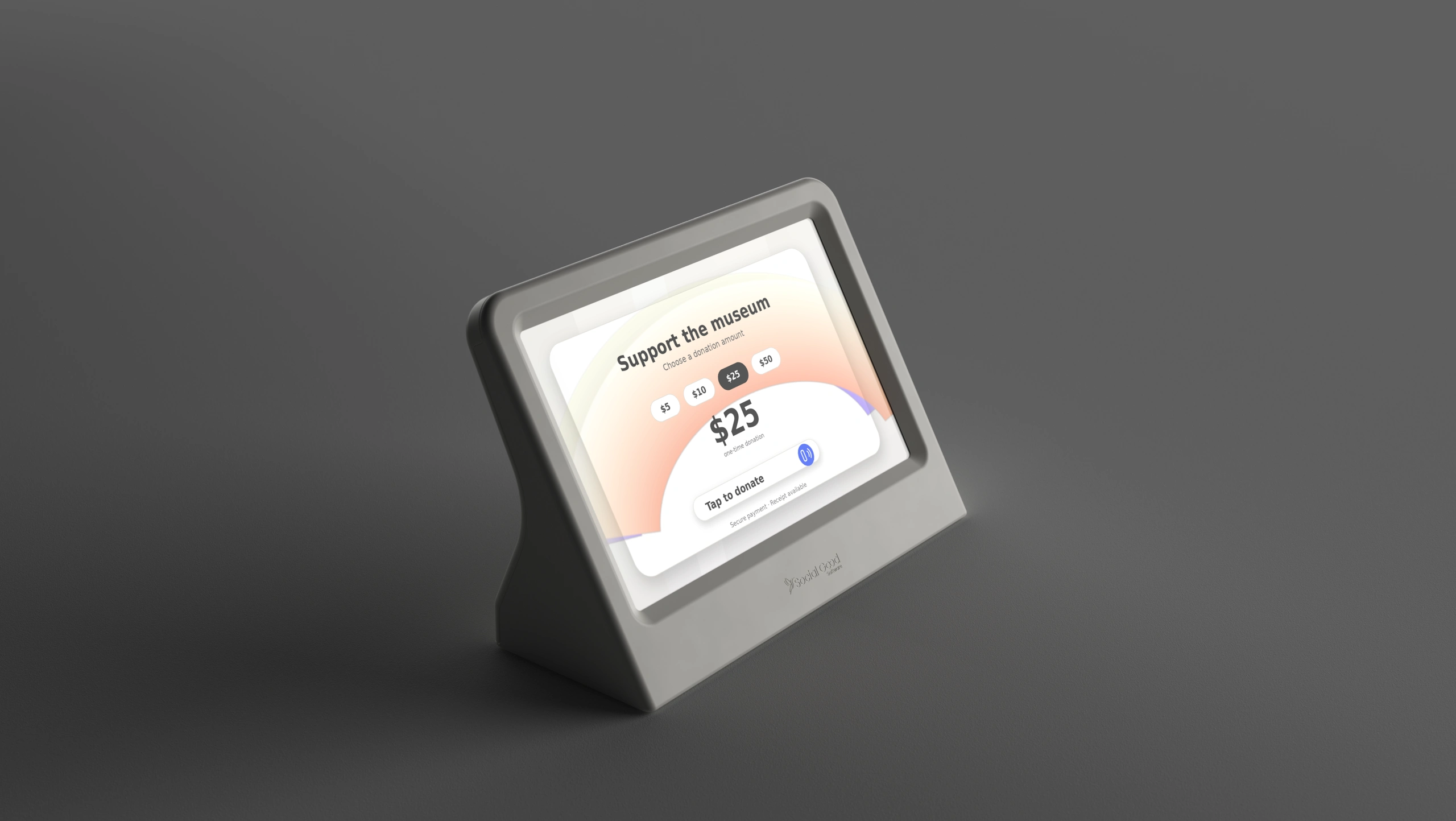
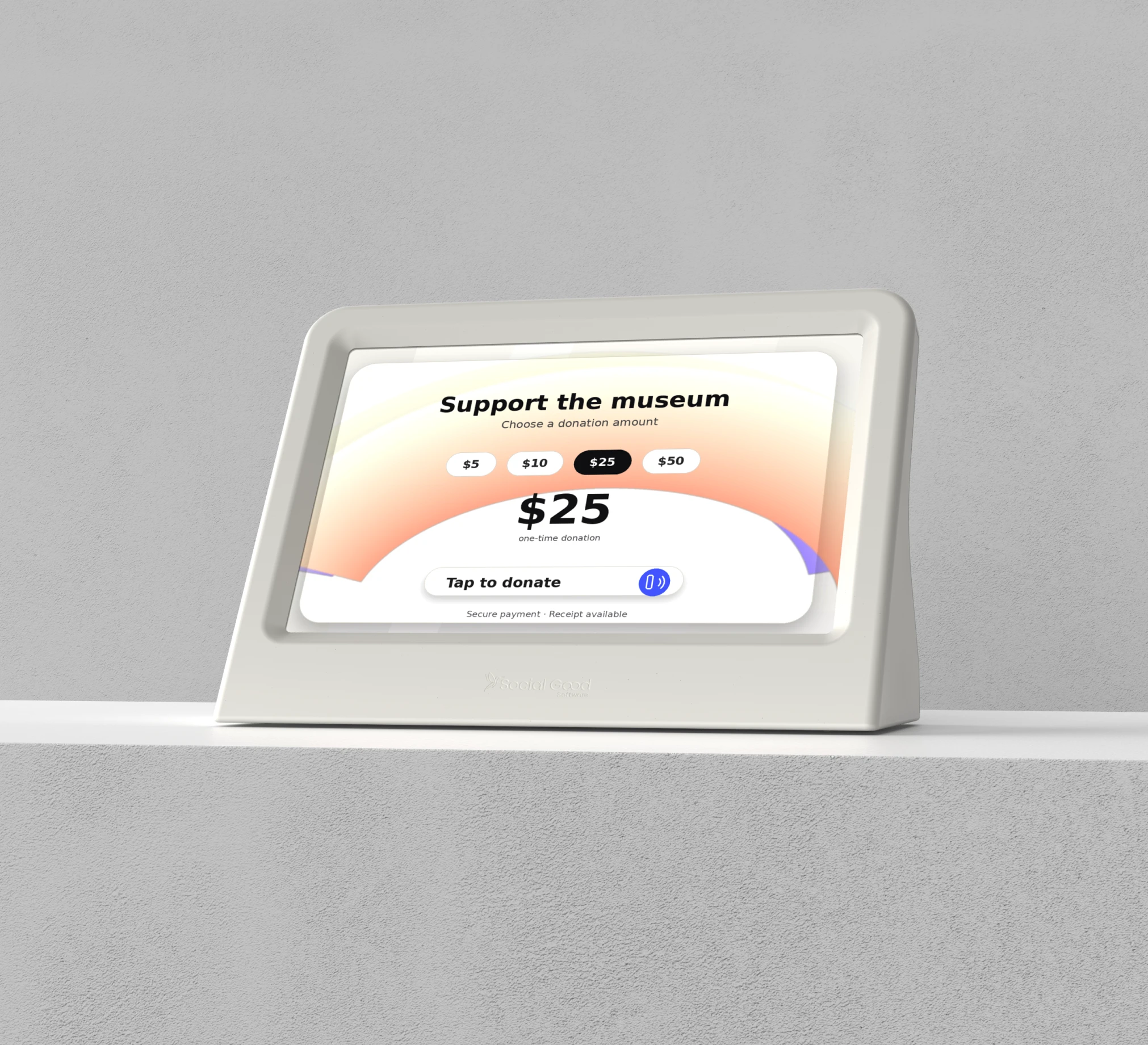
A software company needed their first physical product. A donation kiosk for museums, something people could walk up to, tap, and trust. Everything they'd ever shipped lived on a screen. This time, it had to exist in the real world.
Approach
Most software teams underestimate what it takes to ship hardware. The challenge wasn't just designing a kiosk, it was translating a digital mindset into material decisions, manufacturing constraints, and assembly logic. All within a tight budget.
The Strategic Challenge
The kiosk had to live in museums. That single constraint changed everything. It couldn't look like a tech accessory dropped in the wrong room. It had to belong, next to objects made 200 years ago, while housing modern electronics and surviving daily public use.
Research & Ideation
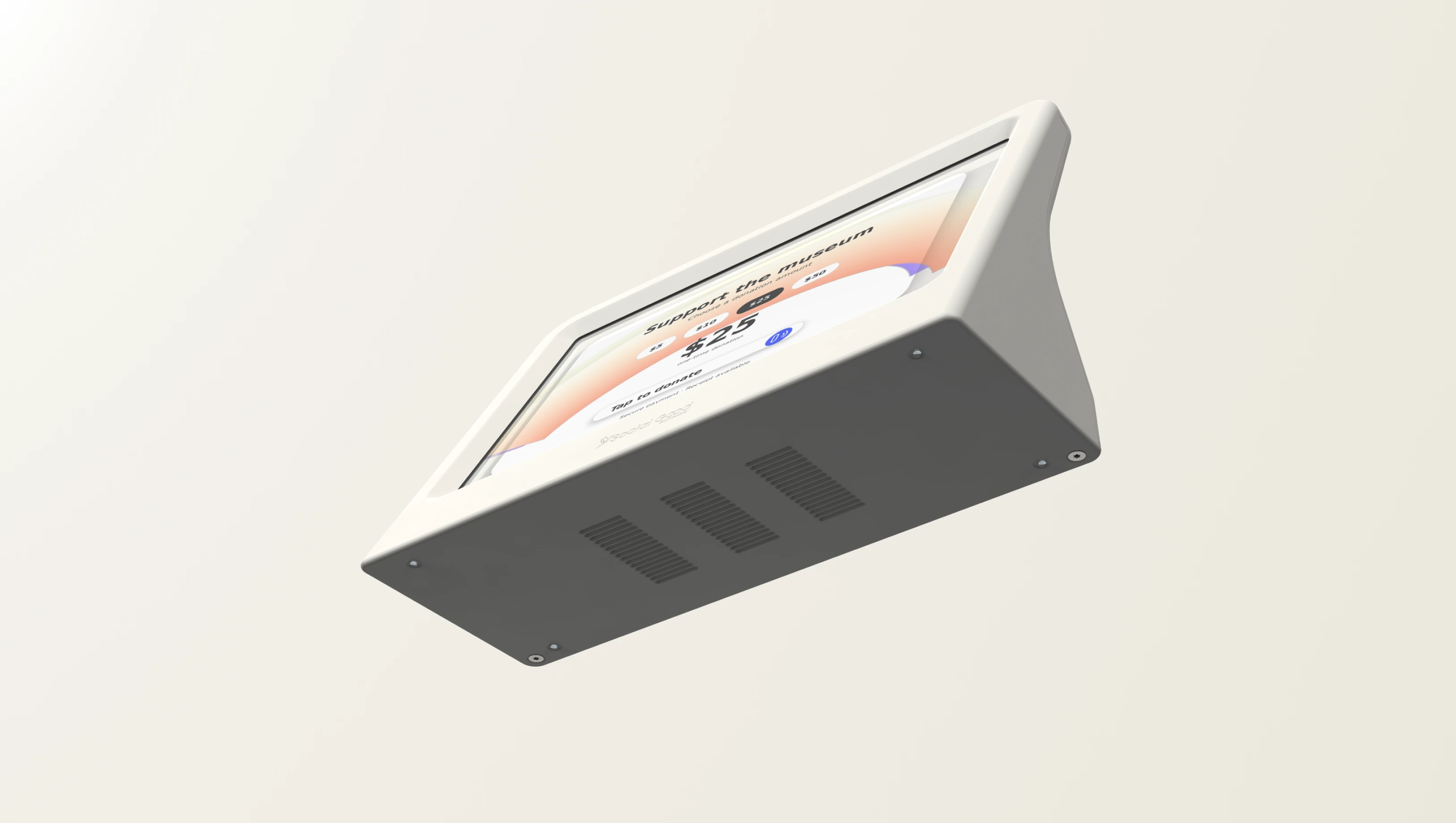
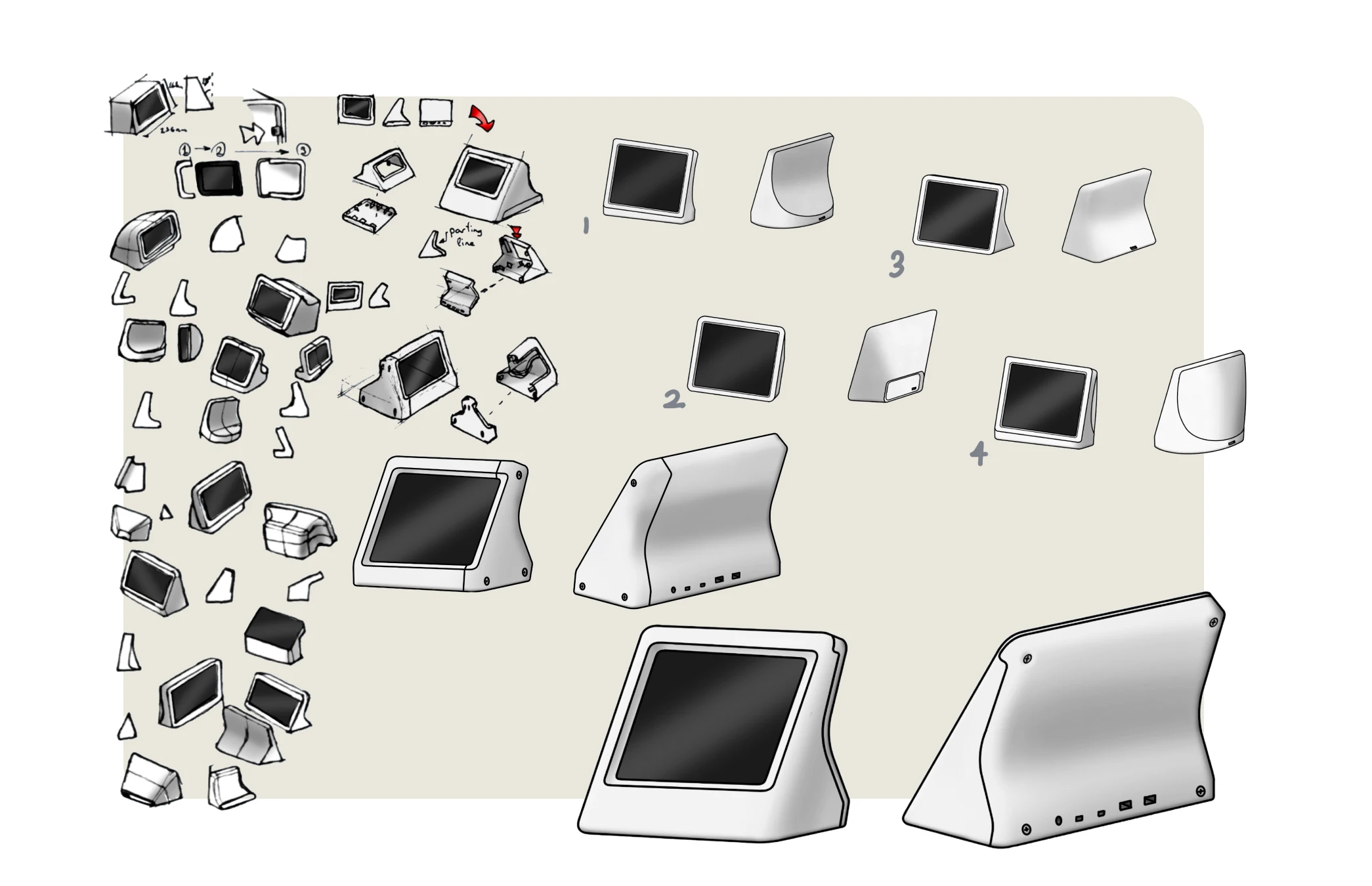
The process started by studying how the tablet would be mounted, accessed, and serviced. Every decision passed through the same filter: does this work in a museum context? Four proposals explored very different directions, form language, assembly logic, maintenance access. Two refinement rounds later, one direction was clear.
Creative Execution
Led the full industrial design process from brief to production-ready files:
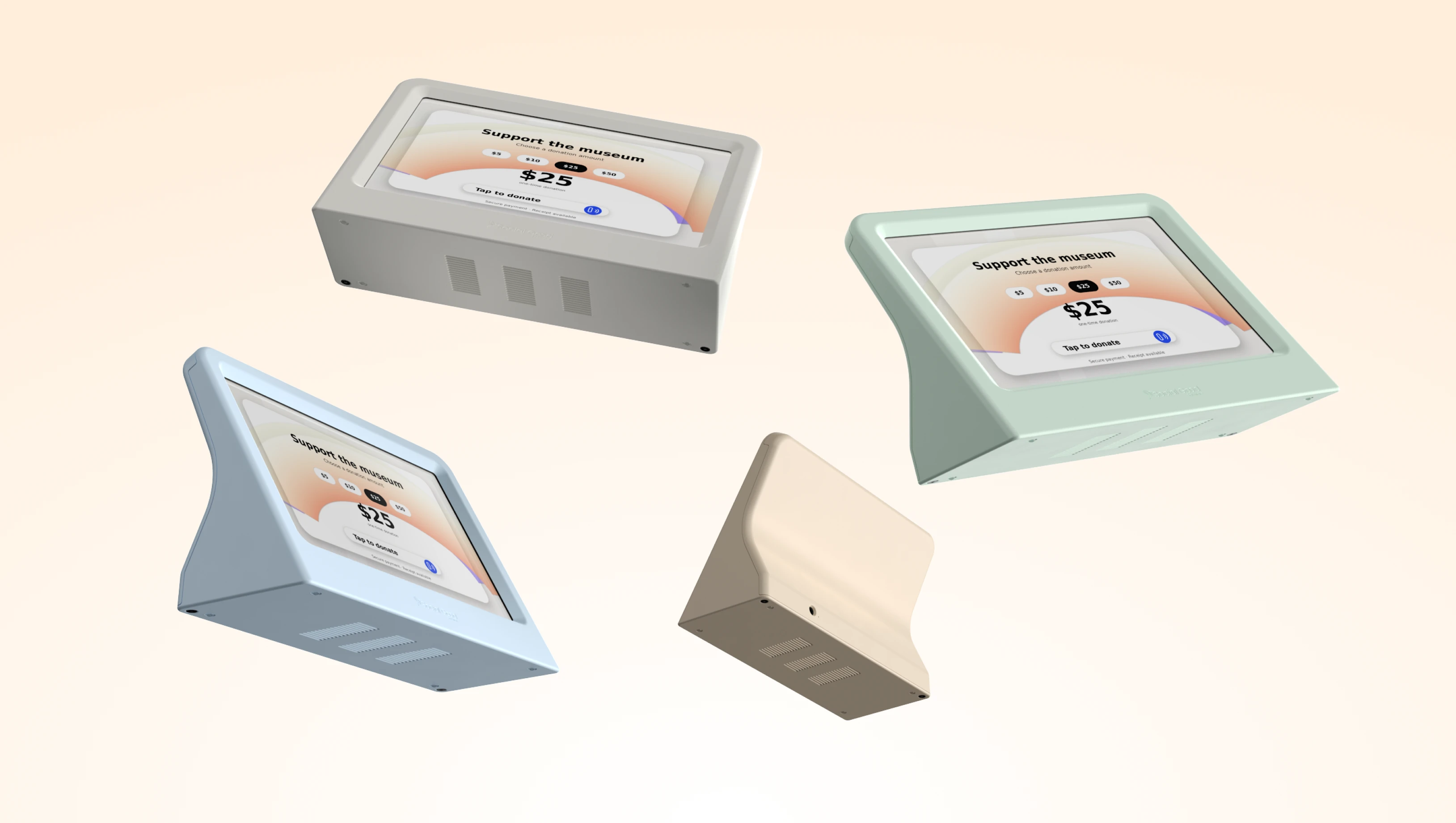
Shape ideation: 4 proposals exploring very different form languages, assembly approaches, and interaction angles. Two refinement rounds to narrow to the final direction.
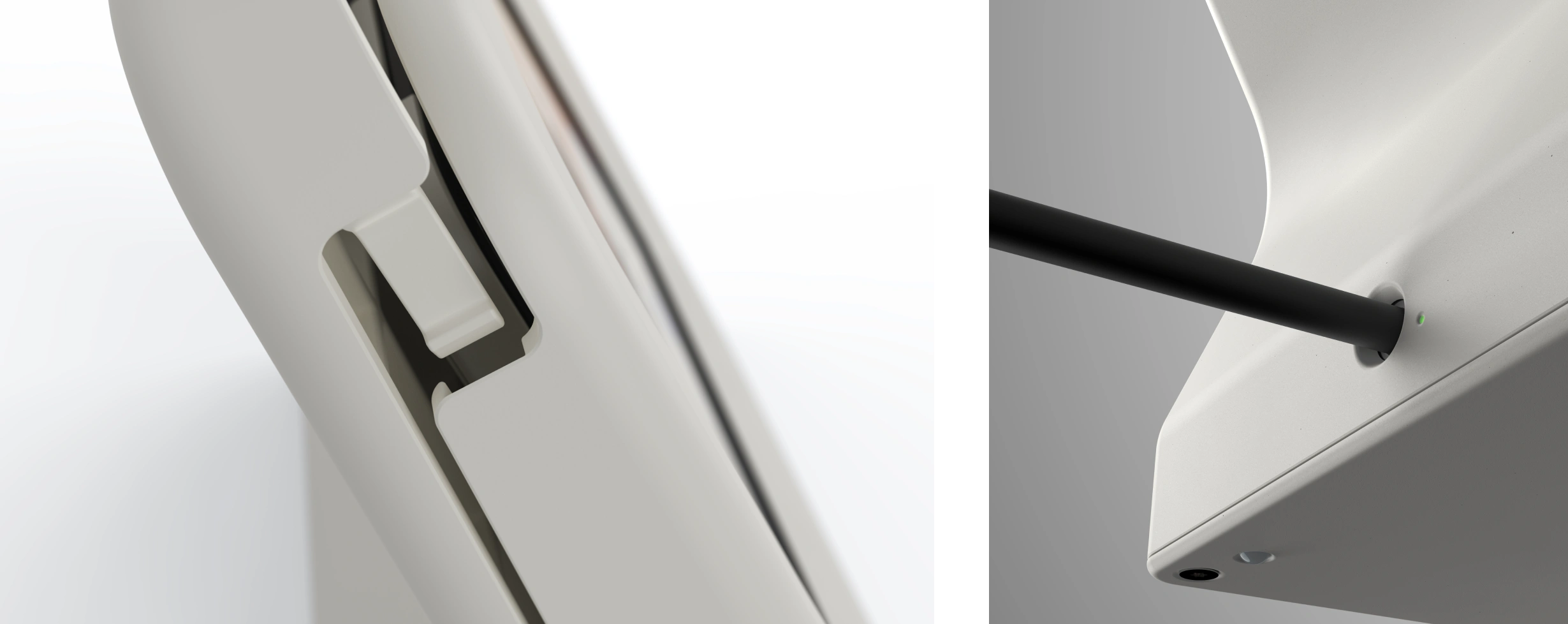
Interior architecture: component placement, cable routing, screen mounting, heat management, service access.
Process selection: MJF nylon with painted finish. At their volume, injection molding tooling would have eaten the entire budget. MJF gave complex geometry, structural integrity, and a surface that could finish premium without premium costs.
Assembly system: snap lock at the top, guided assembly, two hidden screws at the base. No visible fasteners.
Full CAD modeling and photorealistic renders for client approval and production handoff.
Results & Impact
Delivered a production-ready design within budget and timeline. A product that looks like it belongs in a museum, on a counter, in the real world. Social Good Software shipped their first physical product.
Role: Lead Industrial Designer
Client: Social Good Software
Duration: 3 weeks
Deliverables:
Sketches
Full CAD system modeling
Interior architecture design
Process and material specification
Photorealistic renders (multiple colorways and configurations)
Assembly and DFM documentation
Production-ready files
Tools: Ptc Creo, Keyshot, Adobe Photoshop
Like this project
Posted Jun 17, 2026
Designed the first physical product for a software company. A donation kiosk for museums, MJF nylon, no visible fasteners, built within budget.
Likes
1
Views
24
Timeline
Mar 30, 2026 - Jun 23, 2026
Clients
Social Good Software