I'm Emanuele, a UI/UX designer

Emanuele Di Cecca


I'm Emanuele, a UI/UX designer from Italy, and for this challenge I decided to step outside my comfort zone. I wanted to see how far @Envato's creative toolkit could take me, so I created "The Spark", a short film about humanity's relationship with change.
Before explaining my workflow, I want to dedicate this project to all creatives (and beyond) who feel uncertain about AI in the creative field.
Throughout history, every major technological evolution has created the same reaction: fear. Every new tool seemed destined to replace what came before, creating uncertainty about the role of humans in the creative process.
But history has shown us something: tools have never defined human value. It has always been the way we learn to understand, adapt, and use them that transforms uncertainty into opportunity.
This project is about that exact moment: the transition from rejection to awareness.
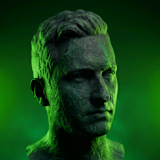
The fire you see in the video is not just fire. It represents every new tool that enters our lives. The first reaction can be fear, and that is natural. But what comes next is what has always allowed us to evolve: observing, understanding, and creating something new.
First, rejection.
Then, vision.
Finally, awareness.
--
So, here's how I brought this idea to life:
I started with one question: what does "Human by Design" really mean? What makes us human in a world where AI can create almost anything? That exploration led me to the core of my story: our fear of the unknown.
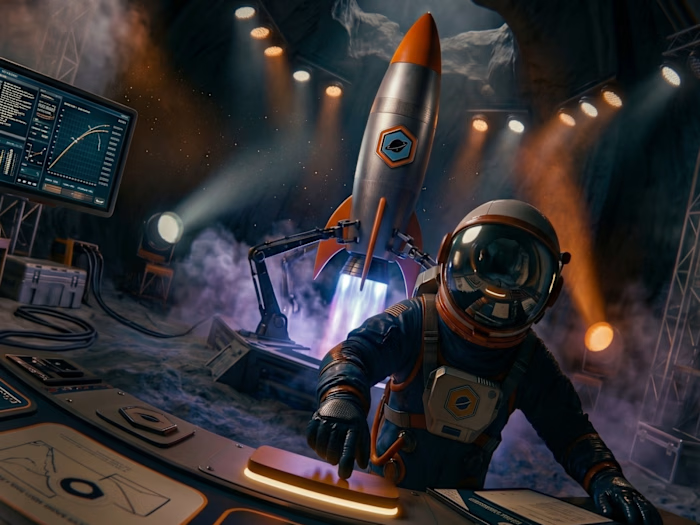
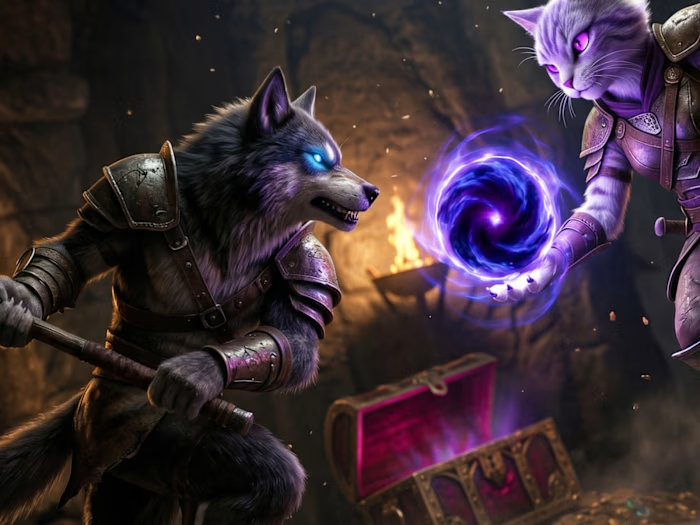
I built the storyboard on a custom webpage I developed specifically for this project, planning every scene and every shot. Then I used ImageGen and ImageEdit to create and refine the key frames, and VideoGen to animate them using start and end frames, camera movement presets including lateral dolly shots, and seamless continuous transitions to maintain cinematic flow between scenes. I used VoiceGen for the narration, and Envato's stock assets for the opening footage and soundtrack. Finally, I brought everything together in post-production, refining the pacing, sound design, and transitions.
The real work wasn't generating images. It was making creative decisions. I rewrote dozens of prompts, reused discarded frames as starting points, and kept refining every scene until it conveyed the emotion I wanted to communicate.
But the biggest decision came during the writing process. At first, the story was about curiosity. Then I realized the right emotion wasn't curiosity, it was fear. That single decision completely changed the narrative. AI couldn't decide what emotion the story should communicate. That choice was mine.
Envato gave me the tools. I gave the story its meaning.
--
The attachment also includes an overview of my custom workspace and how I structured my creative process.
The video is a quick overview of my process. The interface and research notes are in Italian, but I wanted to share the thinking behind the tool I created.
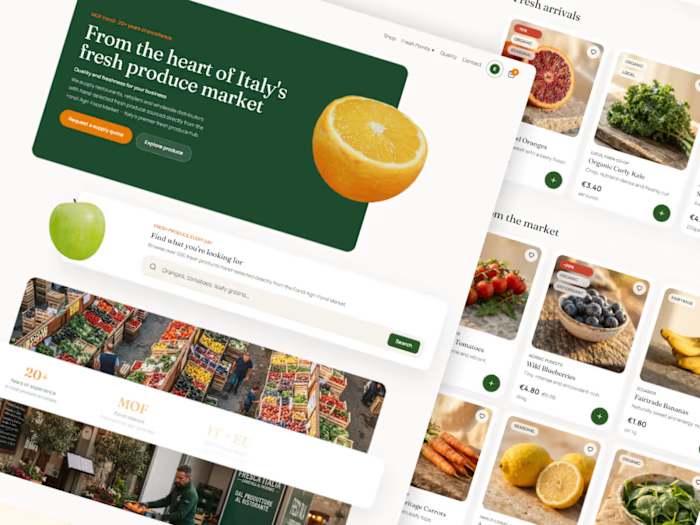
To organize my ideas and answer the key questions behind the challenge, I built a custom webpage specifically for this project. It became the place where I collected my research, defined the creative direction, and developed the first ideas that later became the storyboard.
From there, I created a dynamic storyboard system designed around Envato's workflow and generation features.
The tool allowed me to create, remove, and organize scenes while defining whether each shot required one frame or two frames, depending on the generation method: start and end frame animations or continuous shots from a single frame.
At the top, I created a visual timeline preview where I could drag and drop scenes, reorder the sequence, remove elements, and quickly recover from mistakes using an undo function.
Each scene could contain multiple visual references, with the ability to upload images, reorder them through drag and drop, and move assets between different scenes.
One of the most useful features was the scene progress tracker. Through a simple dropdown system, I could mark each scene as completed or pending, automatically keeping track of how many scenes still needed to be generated.
I also added small quality-of-life features, such as quick scene creation directly between existing shots and a "back to top" button to navigate the page more efficiently.
This tool was not just a way to organize production. It became a visual workspace where I could transform an idea into a structured cinematic project.
Like this project
Posted Jul 27, 2026
I'm Emanuele, a UI/UX designer from Italy, and for this challenge I decided to step outside my comfort zone. I wanted to see how far @Envato's creative toolk...
Likes
0
Views
2
Timeline
Jul 17, 2026 - Jul 27, 2026