HaulIQ: load board with live profit math

Arsen Doda

The problem
Owner-operators and small fleets pick loads off a board by rate per mile, then find out at the end of the week that fuel, deadhead, tolls and the truck note ate the margin. Dispatchers do that math; a one-truck operator rarely has one.
What I built
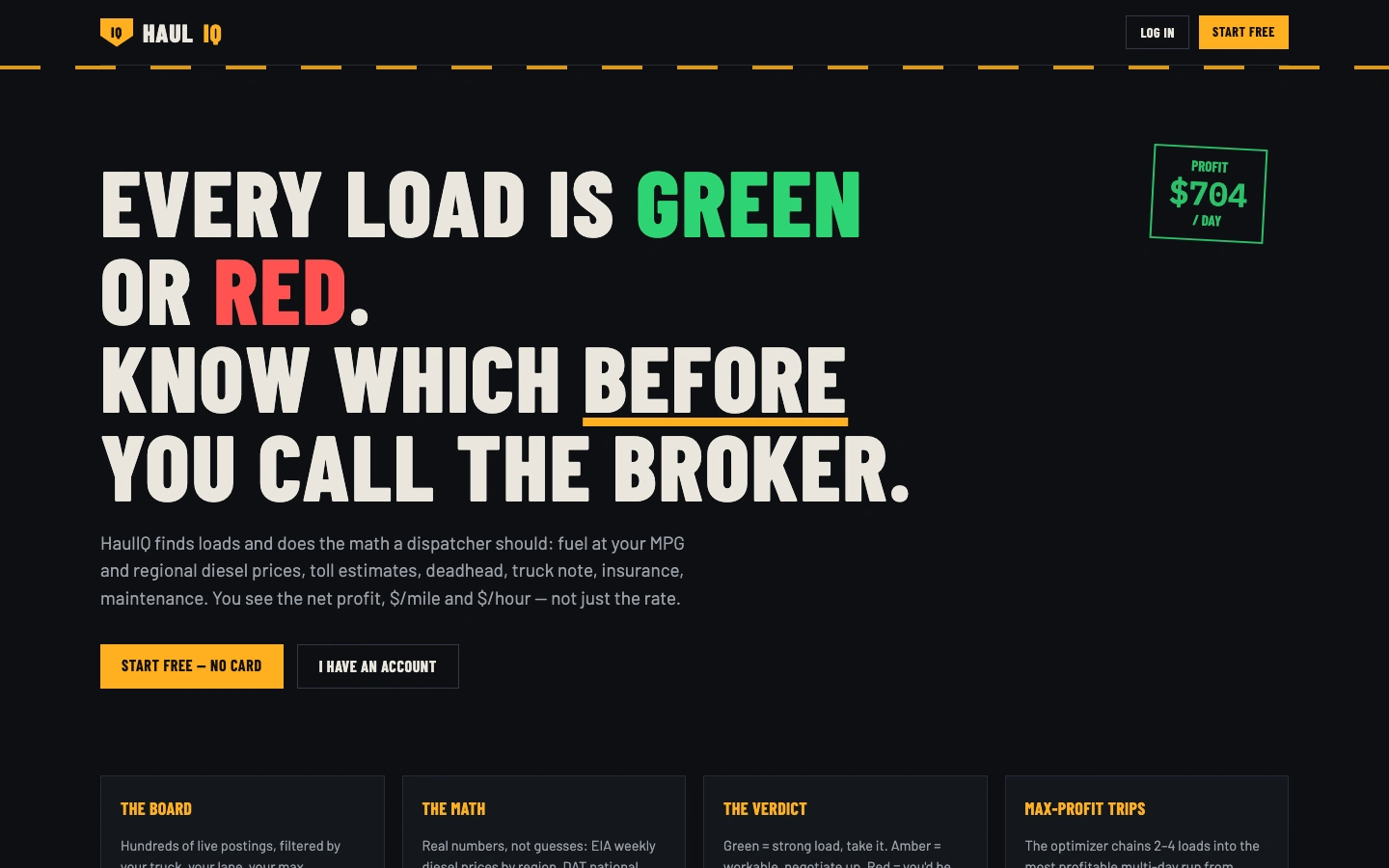
HaulIQ, a load board that does the dispatcher's math on every posting before you call the broker.
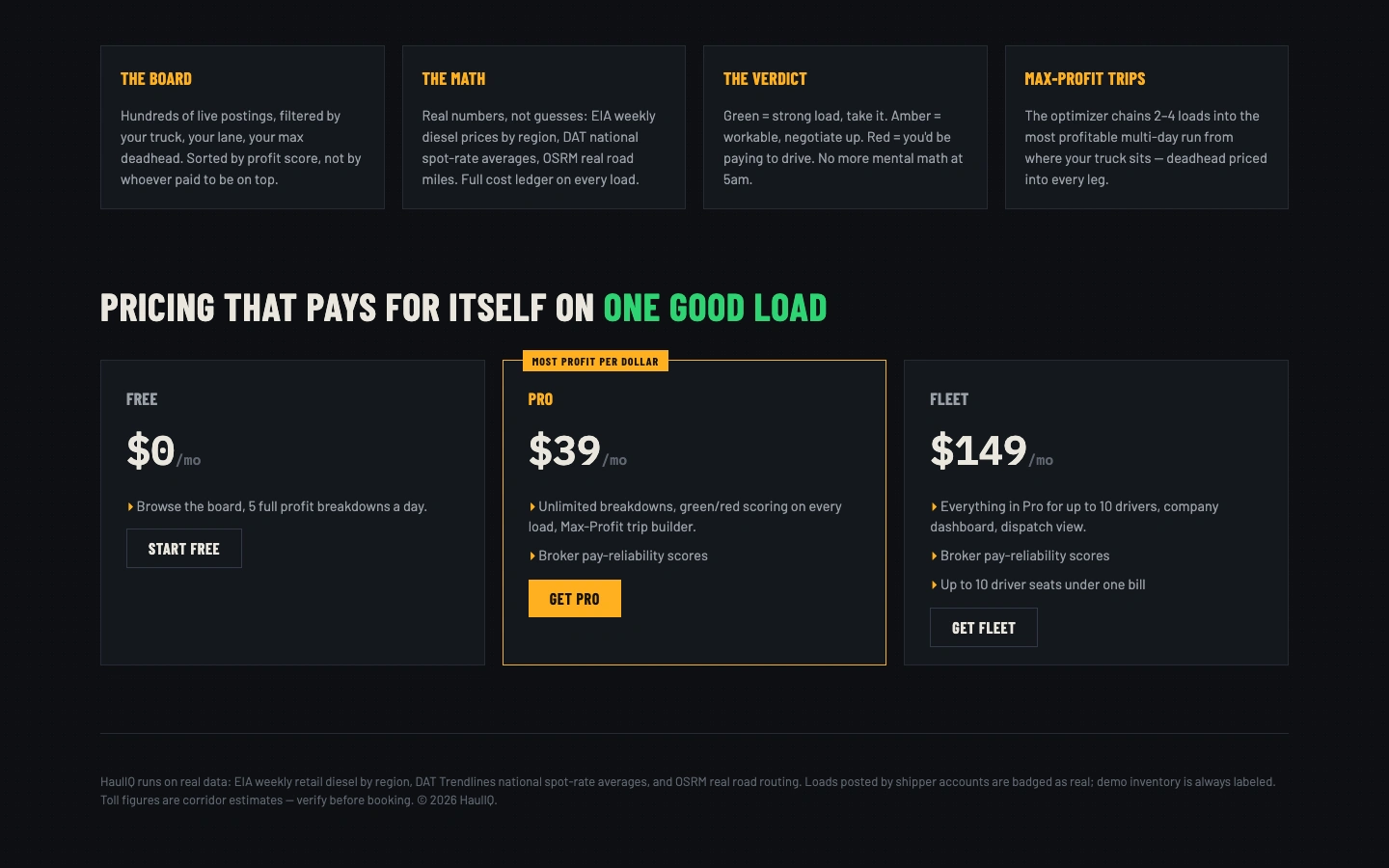
Live data feeds: weekly regional diesel prices from the US Energy Information Administration, routing distances and drive times from an open routing engine, and load postings pulled on a schedule
Per-load profit model using the operator's own numbers (MPG, truck payment, insurance, maintenance, deadhead to pickup) to show net profit, dollars per mile and dollars per hour, not just the rate
Green / amber / red verdict on every load so a decision takes seconds, with the reasoning shown
Max-profit trips: an optimizer that chains two to four loads into the most profitable multi-day run
Accounts, saved truck profiles, lane filters and a board that updates itself, with admin tooling behind it
Stack
Next.js, TypeScript, Postgres on Neon, Vercel, scheduled ingestion jobs against public data sources, server-side routing and pricing calculations, Stripe-ready billing.
Outcome
A working product on a live domain where every load on the board carries a real net-profit number and a verdict, fed by data that refreshes without manual work. Live at https://hauliq-ten.vercel.app.
What this looks like for your project
A scope doc with the sources, fields and acceptance criteria, a prototype on your real data within days, then the pipeline, the dashboard and the monitoring, handed over as code in your repository with a runbook.
Like this project
Posted Oct 9, 2026
Trucking load board for owner-operators: live diesel prices and route distances, net profit per load, green/red verdicts, trip optimizer. Next.js + Postgres.
Likes
0
Views
1