Development of Mosic: Finance App for Musicians

Iria Iglesias


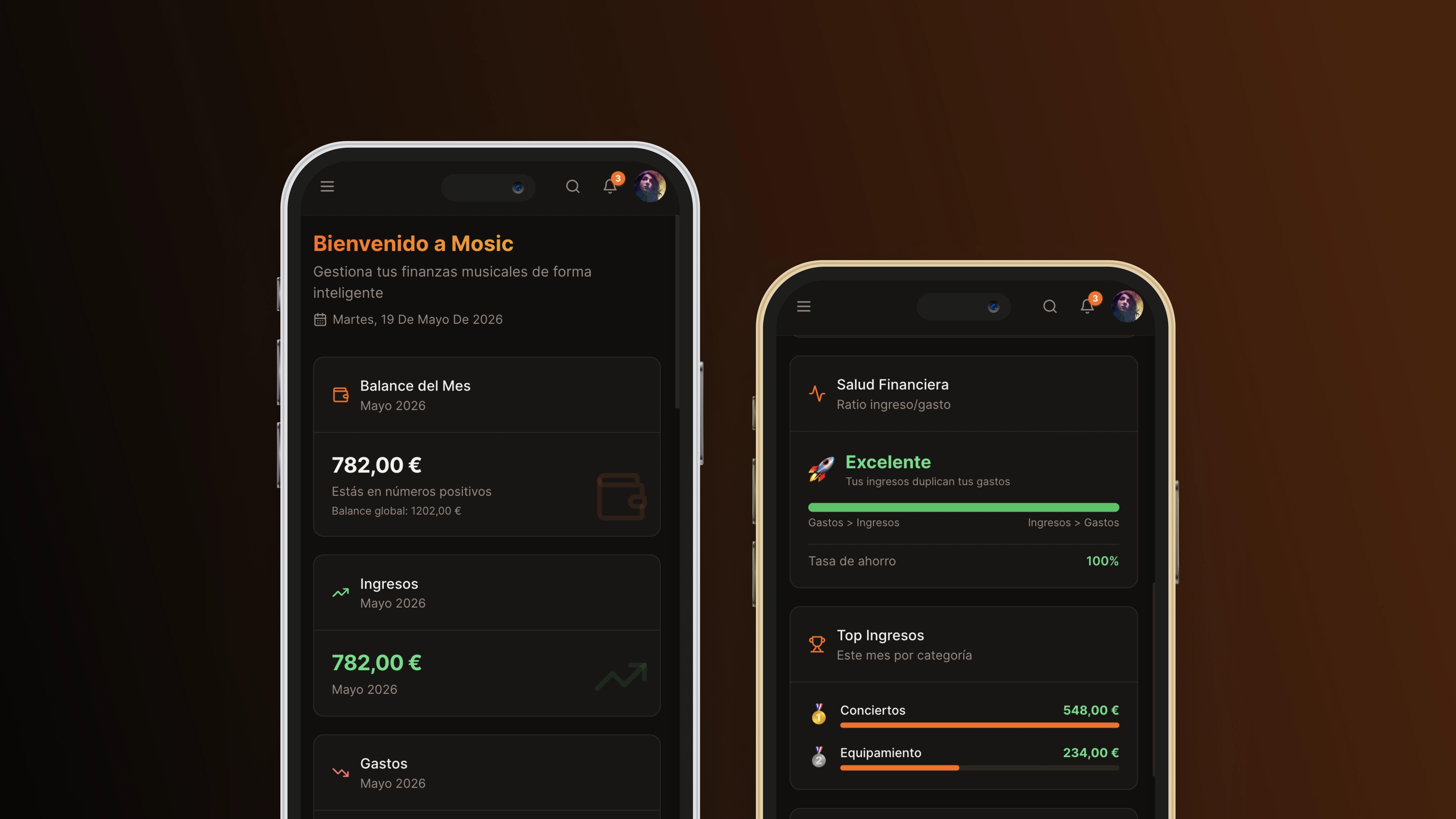
Mosic — Finance management for working musicians
Role: Concept, research, UX/UI, frontend (no-code), shipping
Status: opening up to early beta testers, live at
Stack: Lovable, Supabase via Lovable cloud, email + Google auth
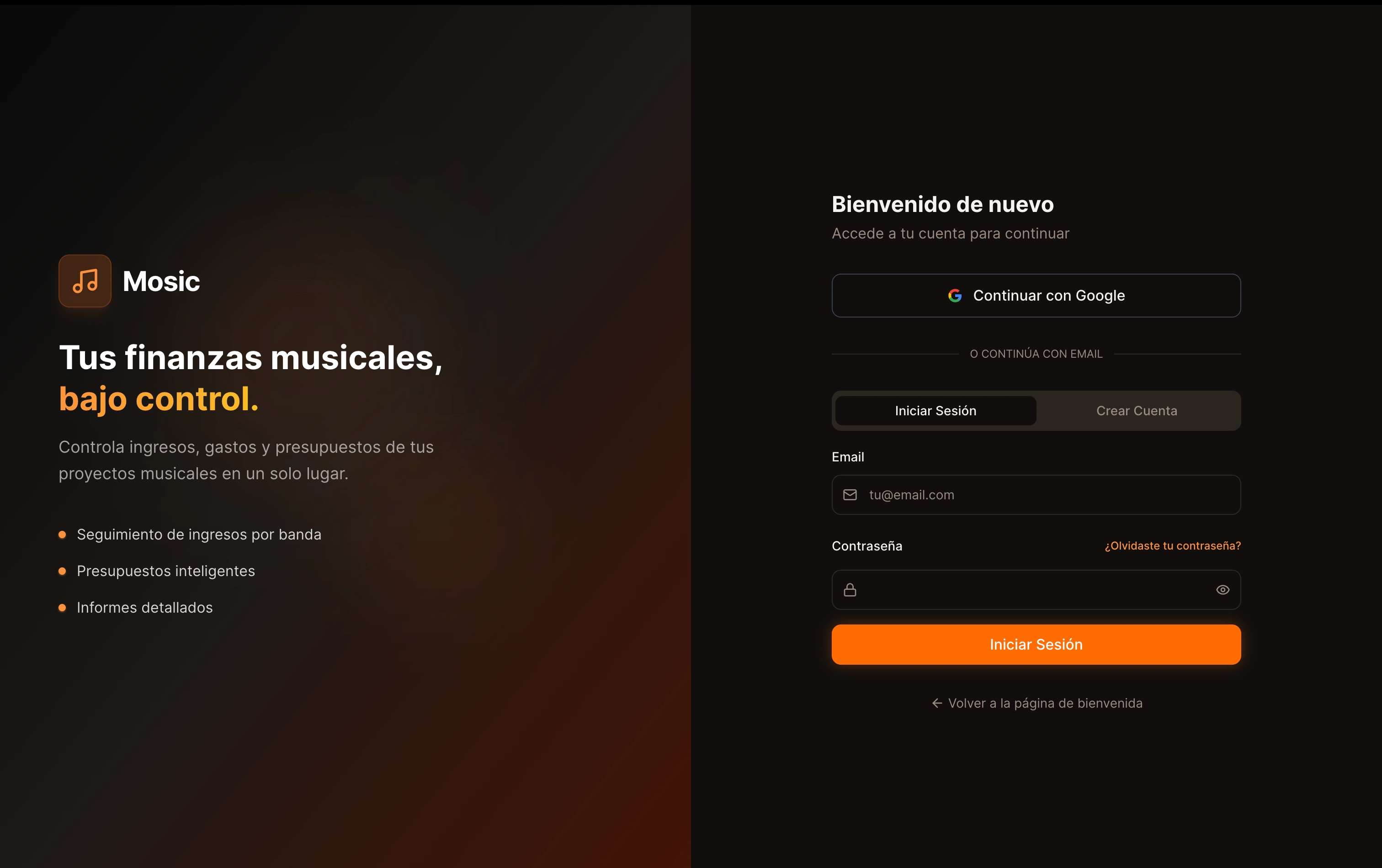
Login/Sign up screen on desktop
The problem, from the inside
I'm a keyboard player. I've been earning part of my living from music for years, and every working musician I know (myself included) handles their money the same chaotic way: numbers scribbled in a notebook, screenshots of bank transfers, mental notes about who owes what for last weekend's gig. I've watched friendships strain under the paperwork of keeping a band alive.
In 2018 I built the first version of Mosic as a UX research project. I surveyed around 50 musicians across four profiles (students, amateurs, semi-pros, full-time pros), and the numbers confirmed what I already lived: 53% earned a meaningful share of their income from music, 51% tracked it by hand, and 38% didn't track it at all. Generic finance apps weren't built for this kind of work: irregular income, gig-by-gig expenses, splits between band members, royalties trickling in months later, no clean line between hobby and job.
That case study sat in a drawer for seven years. I had the design and the research, but I'm one person, and shipping a real product alone wasn't realistic in 2018.
Why now
When AI-assisted build tools started appearing, I used Mosic as my guinea pig project to evaluate them. I built a working version in plain React, tried a couple of other tools, and Lovable won. Not because it was the most powerful, but because it let me move from "I have a design" to "this thing exists" without losing control of the details I care about. The editing loop is fast, the output is customizable, and it solved problems I'd been bouncing off for years as a solo builder.
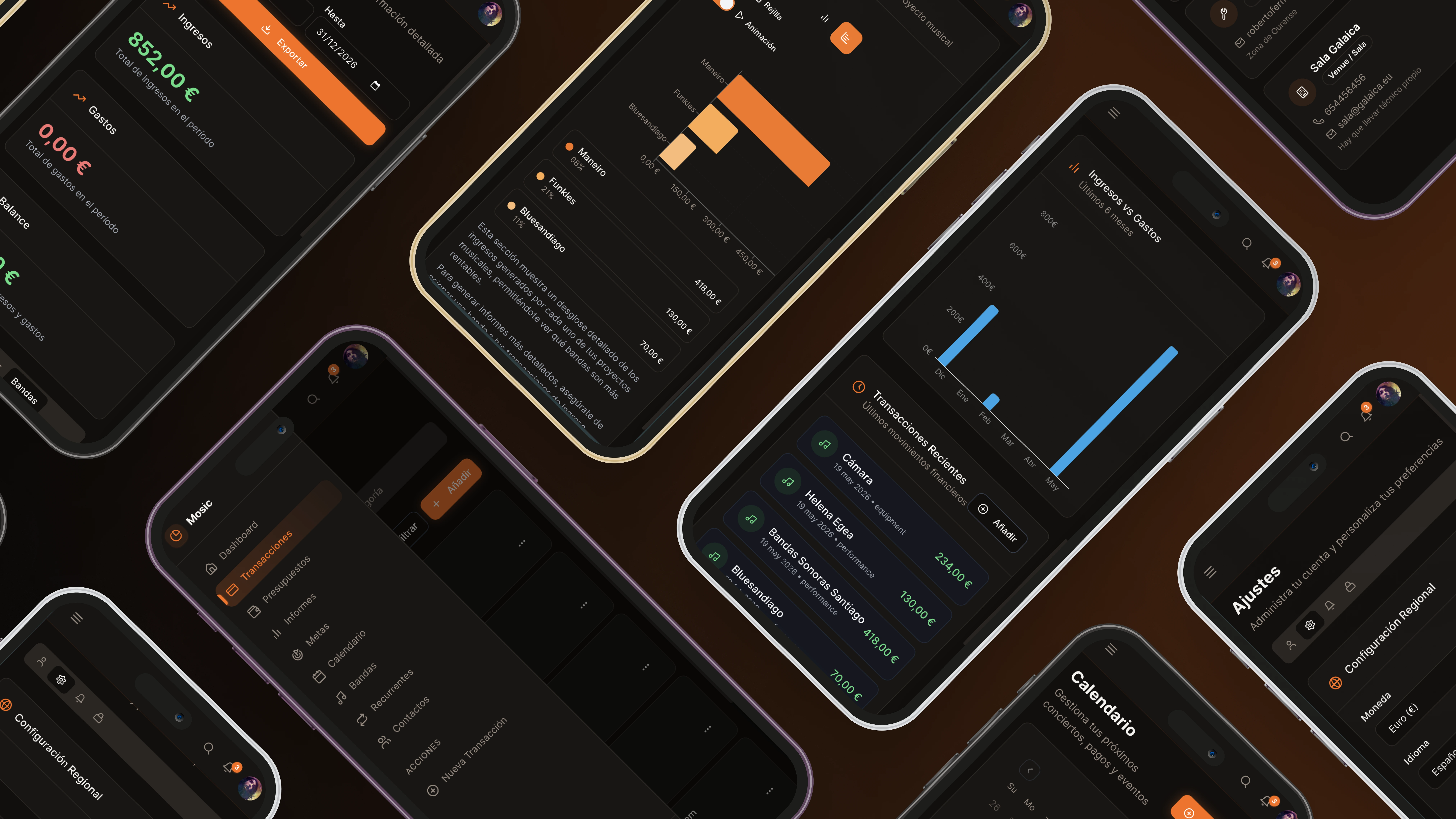
Multiple shots of the app
What it does
Mosic is structured around how musicians actually work, not how accountants do. The language is the giveaway:
Transactions with categories like Conciertos, Royalties, Merchandising, Equipamiento, Estudio, Marketing, not "miscellaneous" and "professional services"
Recurring entries for things like the monthly rehearsal-space rent
Budgets by period, with custom categories and visual breakdowns
Goals for things like saving for a new piece of gear, with deadlines and progress
Bands, because most musicians work across more than one project
Calendar for upcoming gigs and financial events
Contacts scoped to venues, promoters, and technicians, the people musicians actually deal with
Reports exportable for tax season
Auth is email + Google. Data lives in Lovable's cloud. Notifications surface upcoming recurring expenses and goal deadlines.
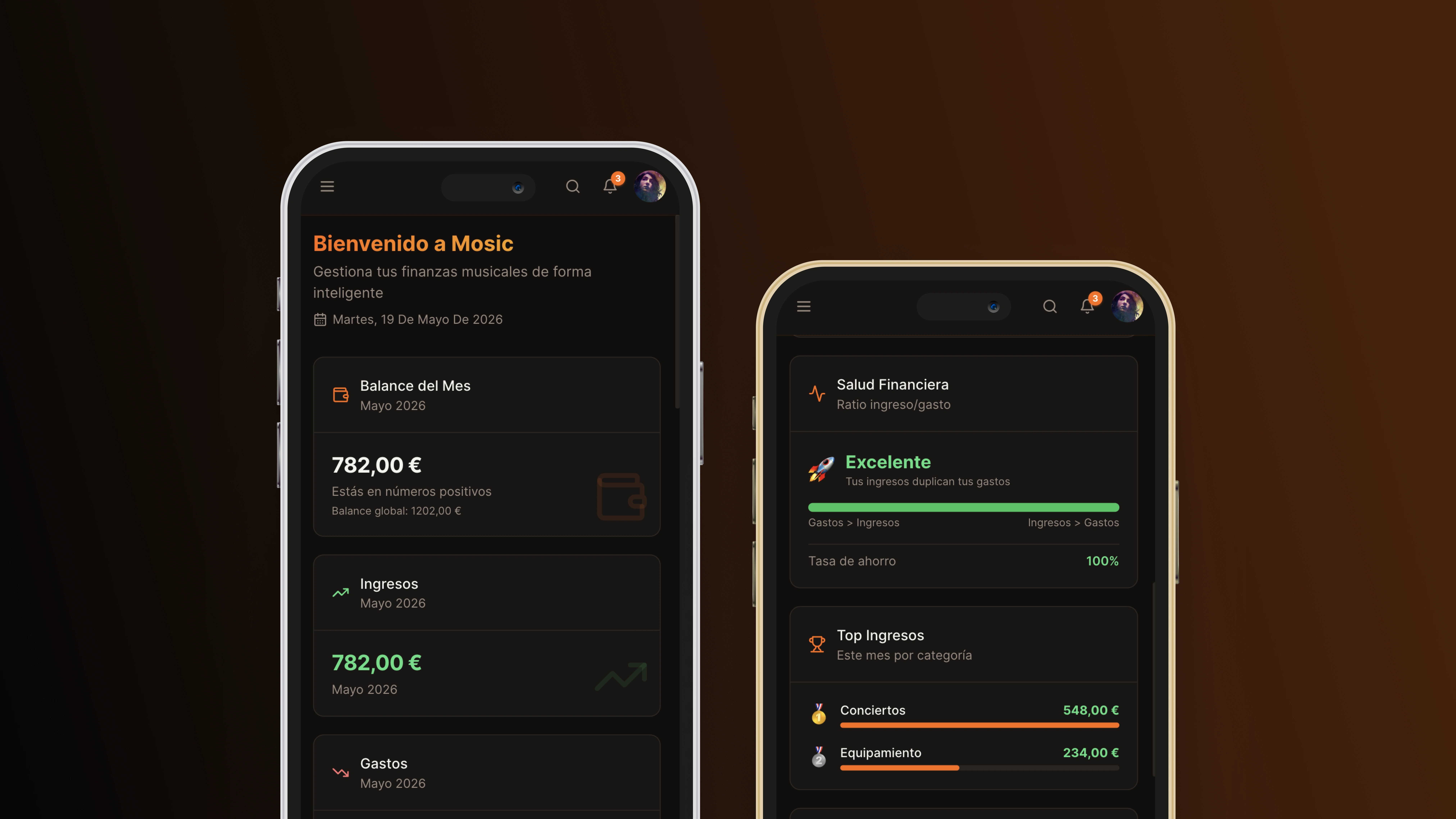
A few decisions I'd point to
Domain language over generic finance terms. Every category, placeholder, and empty state is written for musicians. "Rehearsal space for rent" instead of "Recurring expense." "Manage your venues, promoters and sound engineers" instead of "Contacts." Small choice, but it's the difference between a tool that feels generic and one that feels like yours.
Warm dark theme. Most finance apps lean cold and corporate. Musicians don't. I wanted something closer to the apps on the side of a stage than to a banking dashboard.
Mobile-first. Musicians log expenses standing in a venue at 2 AM, not at a desktop. Every interaction is sized for one-handed use.
Open categories. I gave good defaults but kept the system extendable. Every musician's reality is different (session work, teaching, streaming income, merch..) and a fixed taxonomy would have aged badly.
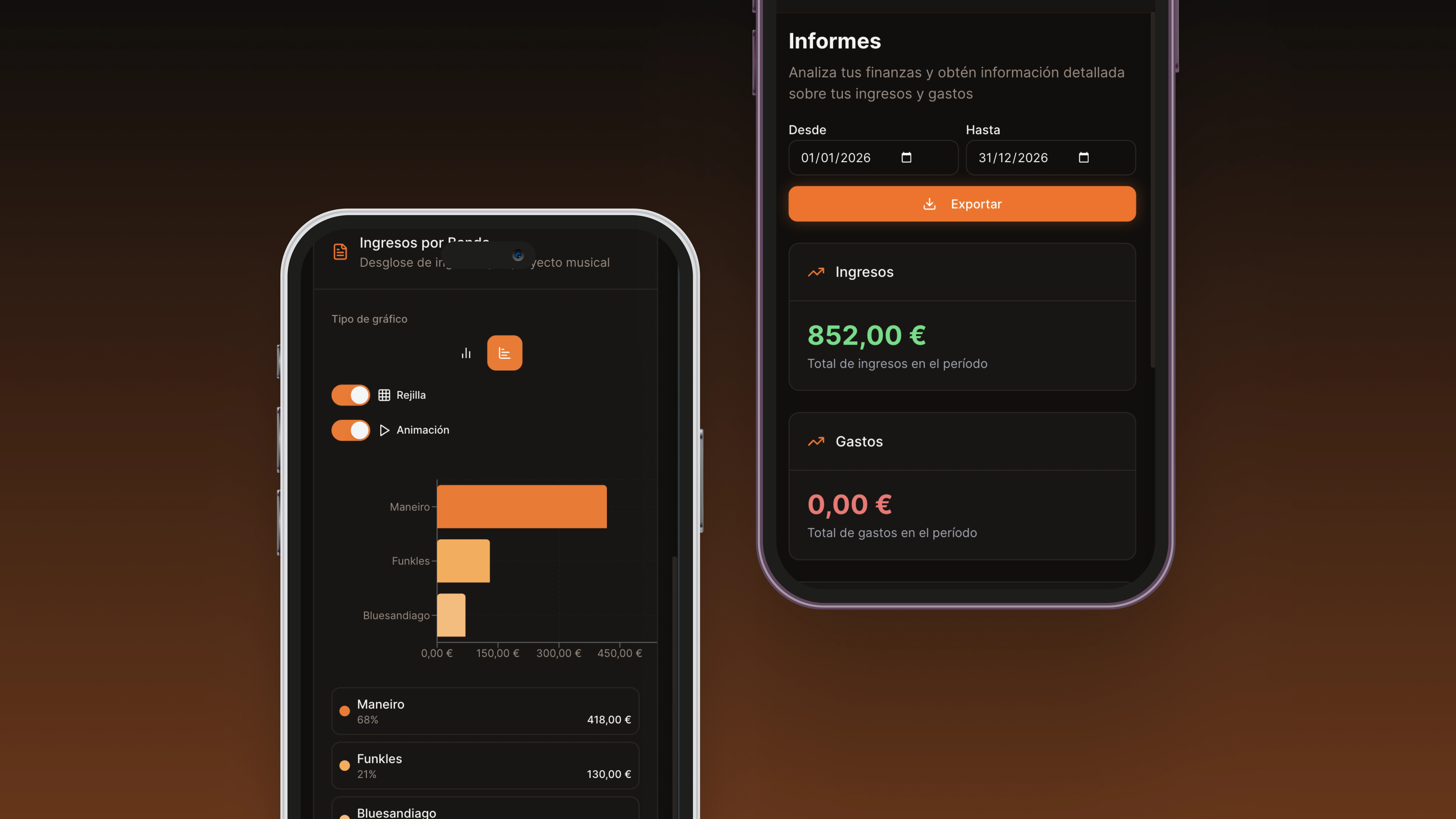
Reports section, with graphics per band, type of income/expense and more
Where it is now
I'm the only daily user right now. I'm rolling it out gradually to friends and bandmates as a real-use test before opening it more widely, with a monetization plan that respects the kind of income musicians actually have.
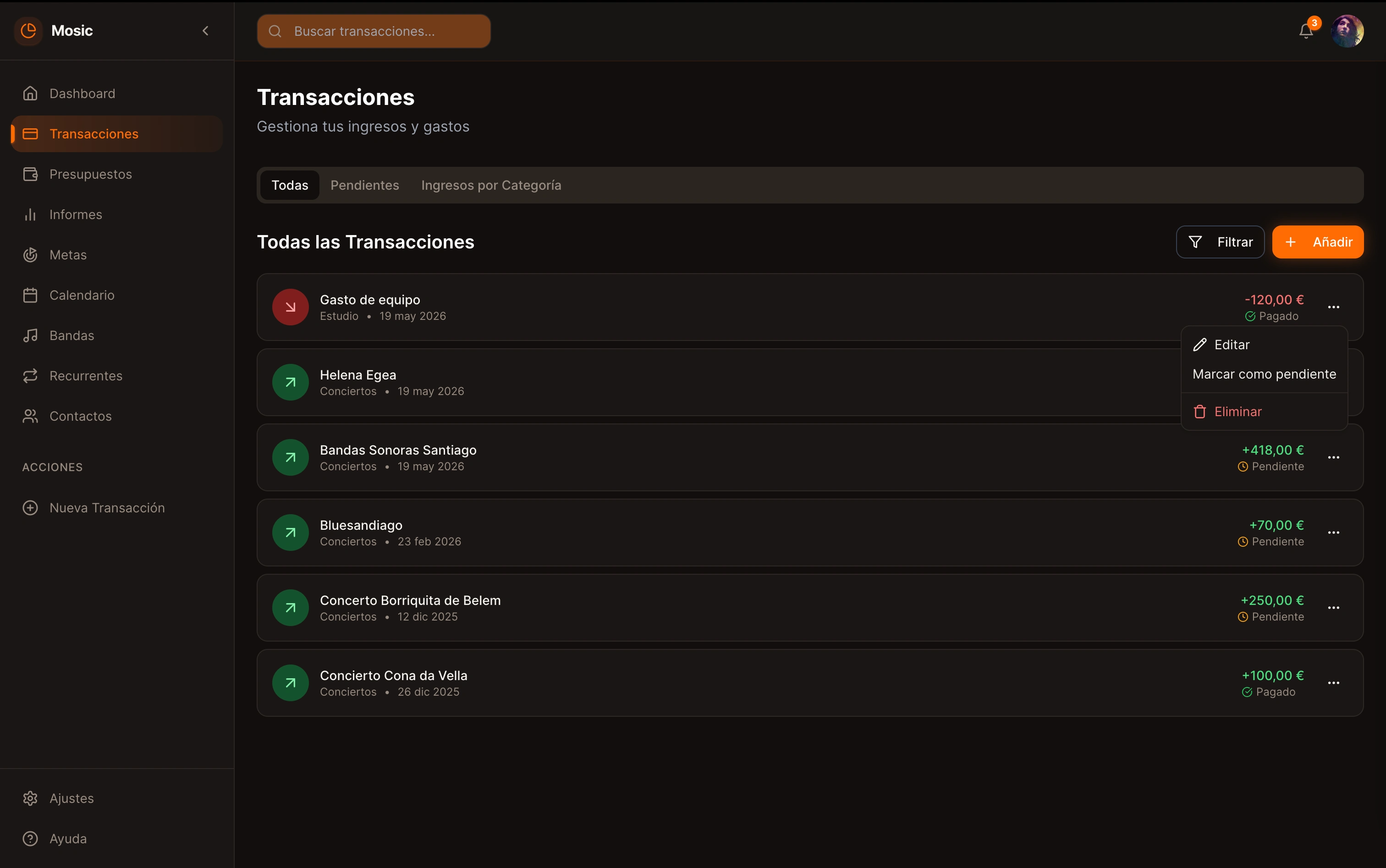
It also works perfectly as a desktop app
What this project taught me
That sometimes the bottleneck on a good idea isn't the design, it's the build. And that when the build becomes accessible, the years you spent thinking about the problem become a real advantage, not just a note on a portfolio.
Like this project
Posted May 19, 2026
Designed and built Mosic, a finance app for musicians, using Lovable and Supabase.
Likes
0
Views
7
Timeline
Jan 1, 2018 - Ongoing