Sankalp HMS | Full-Stack Hospital Management

Somveer Kumar


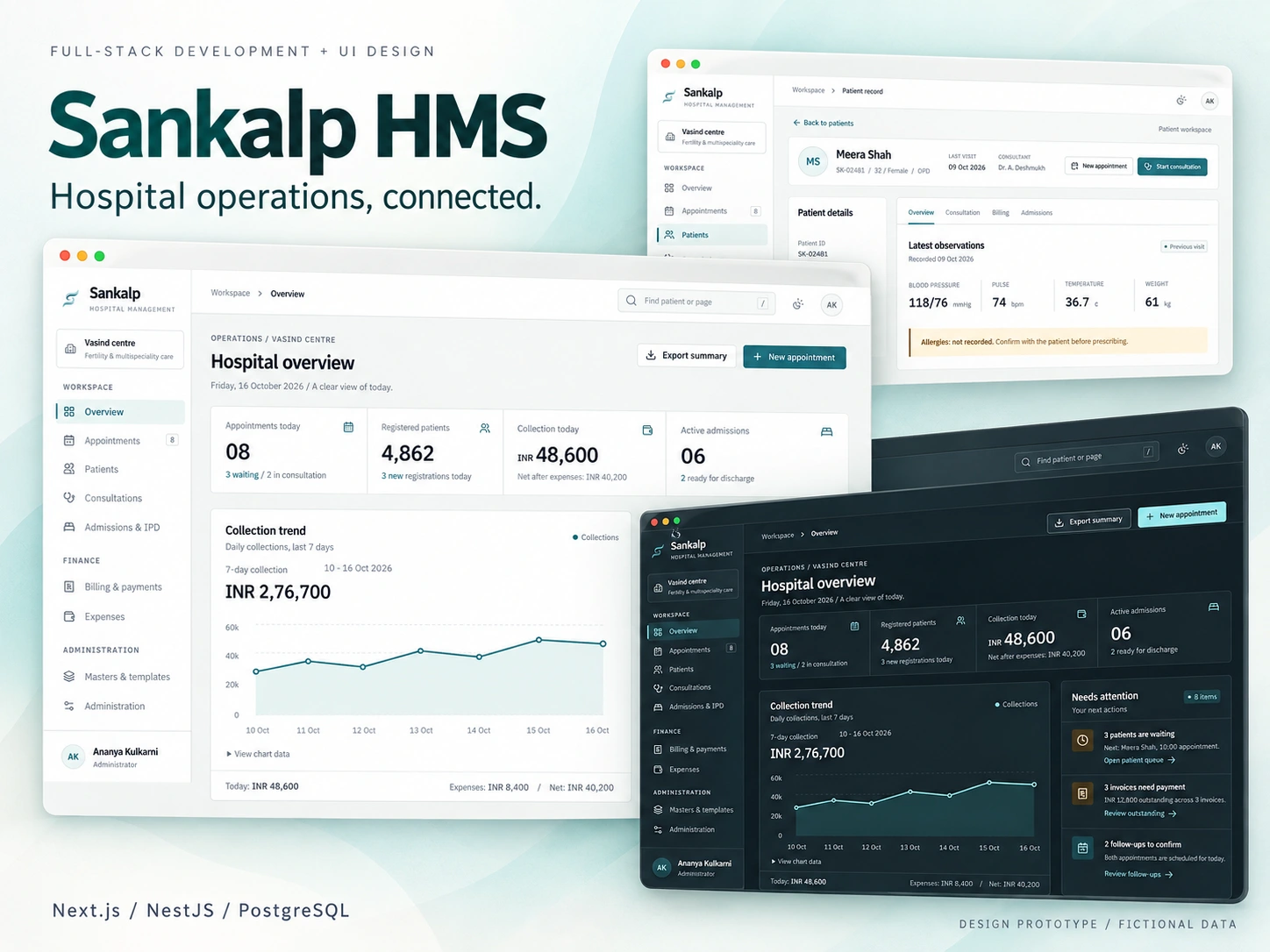
Hospital operations, connected
I built Sankalp HMS for the people running the hospital day: reception, clinicians, billing teams and administrators. The single-hospital application brings appointments, patient histories, consultations, admissions and financial records into one workspace.
My role: Full-stack development across the interface, API, data model and deployment setup.
01 / Turn an overview into the next action
The dashboard groups the patient queue, collections and admissions around the decisions staff need to make next. Waiting patients, outstanding invoices and follow-ups each lead to the relevant workspace.
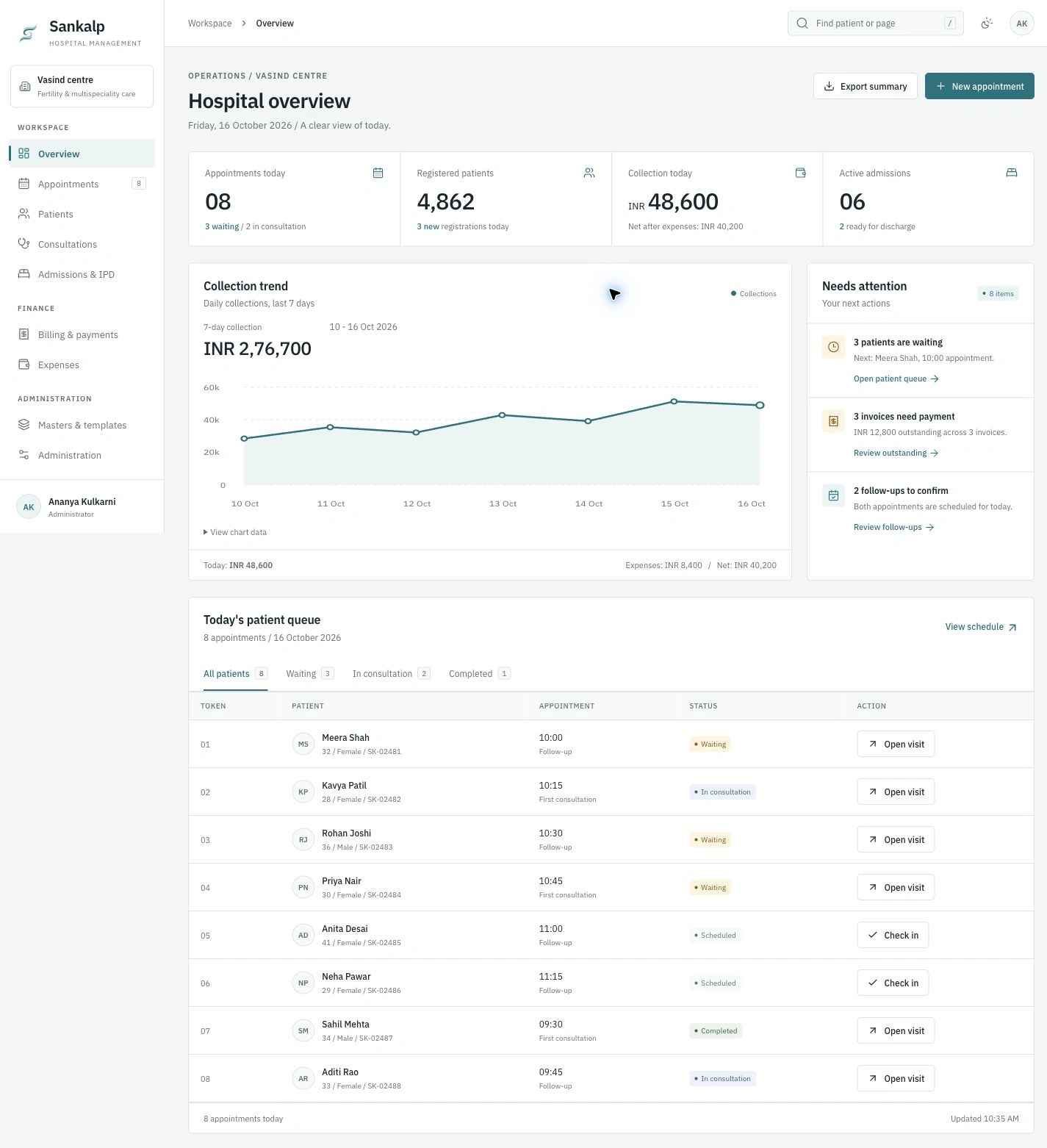
Light-mode design prototype: operational overview and patient queue. All records and amounts are fictional.
02 / Keep the patient context
A shared patient identity connects appointments, previous observations and the visit timeline. The record provides a direct route into consultation, billing and admissions without starting the search again.
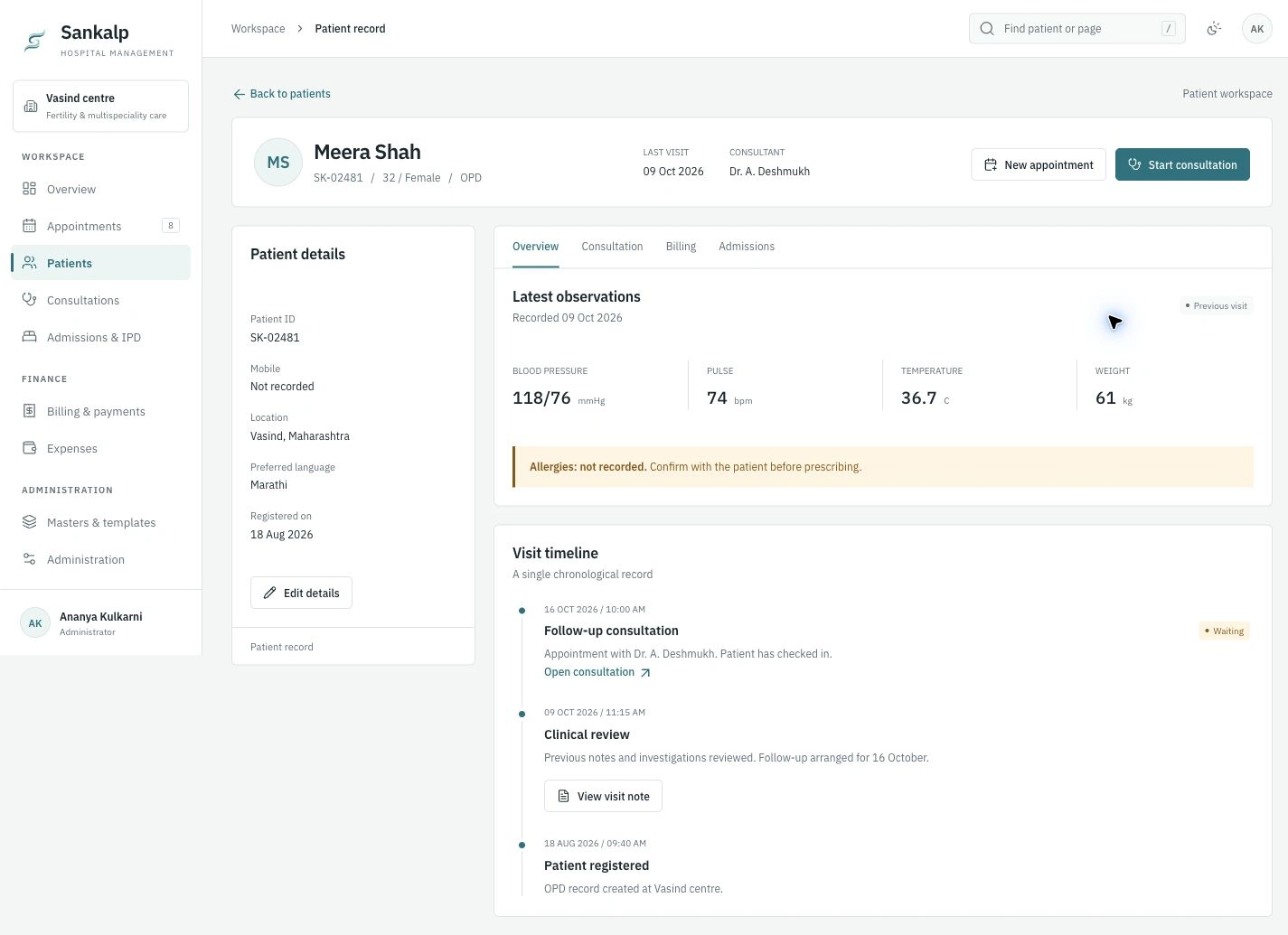
Patient record design prototype: observations, history and linked workflows using fictional patient data.
03 / Give the consultation a clear sequence
Clinical assessment, vitals, prescriptions and follow-up sit in one visit workspace. Previous-visit context stays alongside the form, while missing allergy information is called out before prescribing.
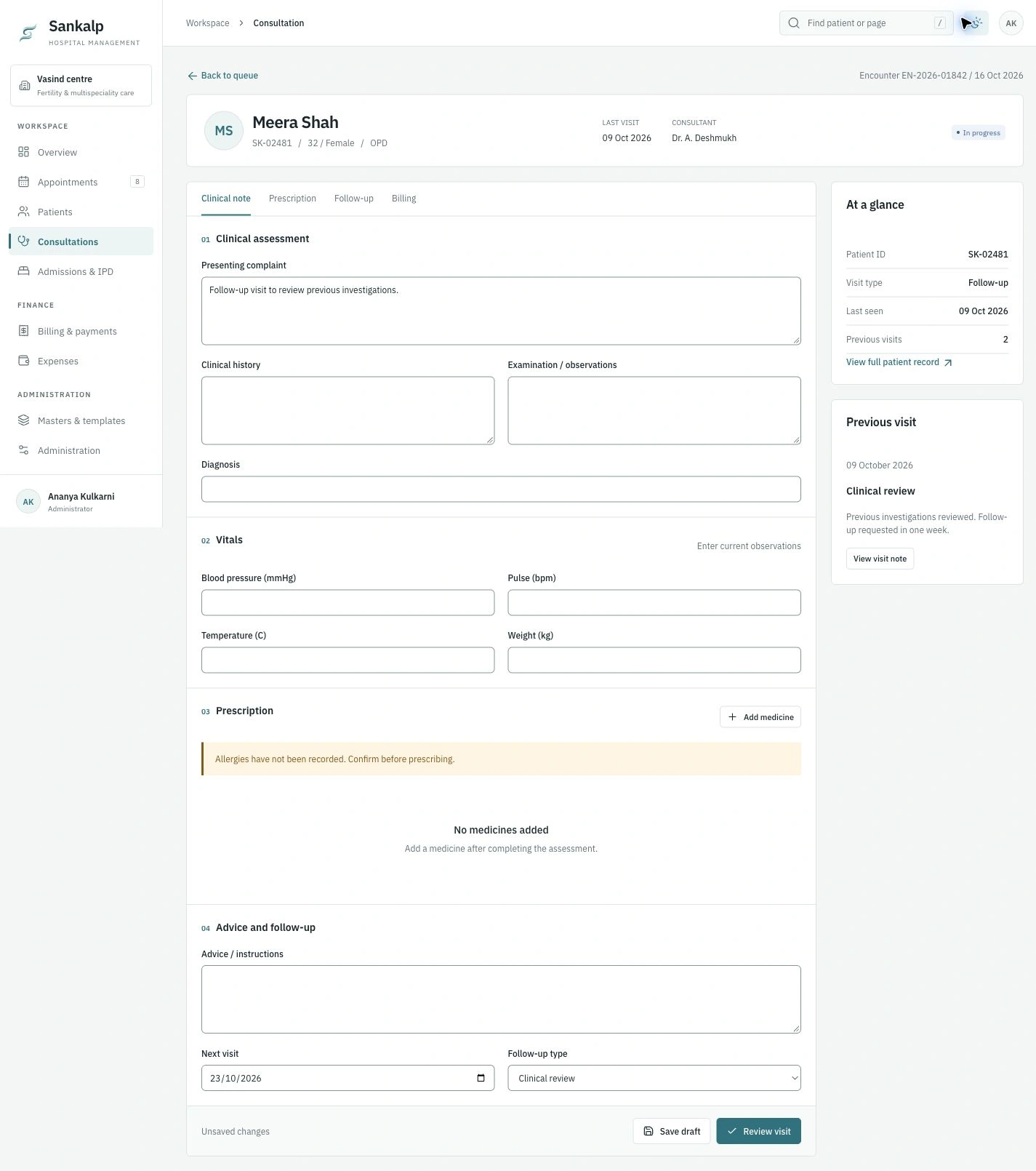
Consultation design prototype: assessment, vitals, prescription and follow-up, with previous-visit context.
04 / Carry care into the inpatient stay
Admissions bring the patient, bed, consultant and discharge status together. In the application, linked encounters and admission source identifiers preserve the connection between outpatient and inpatient records.
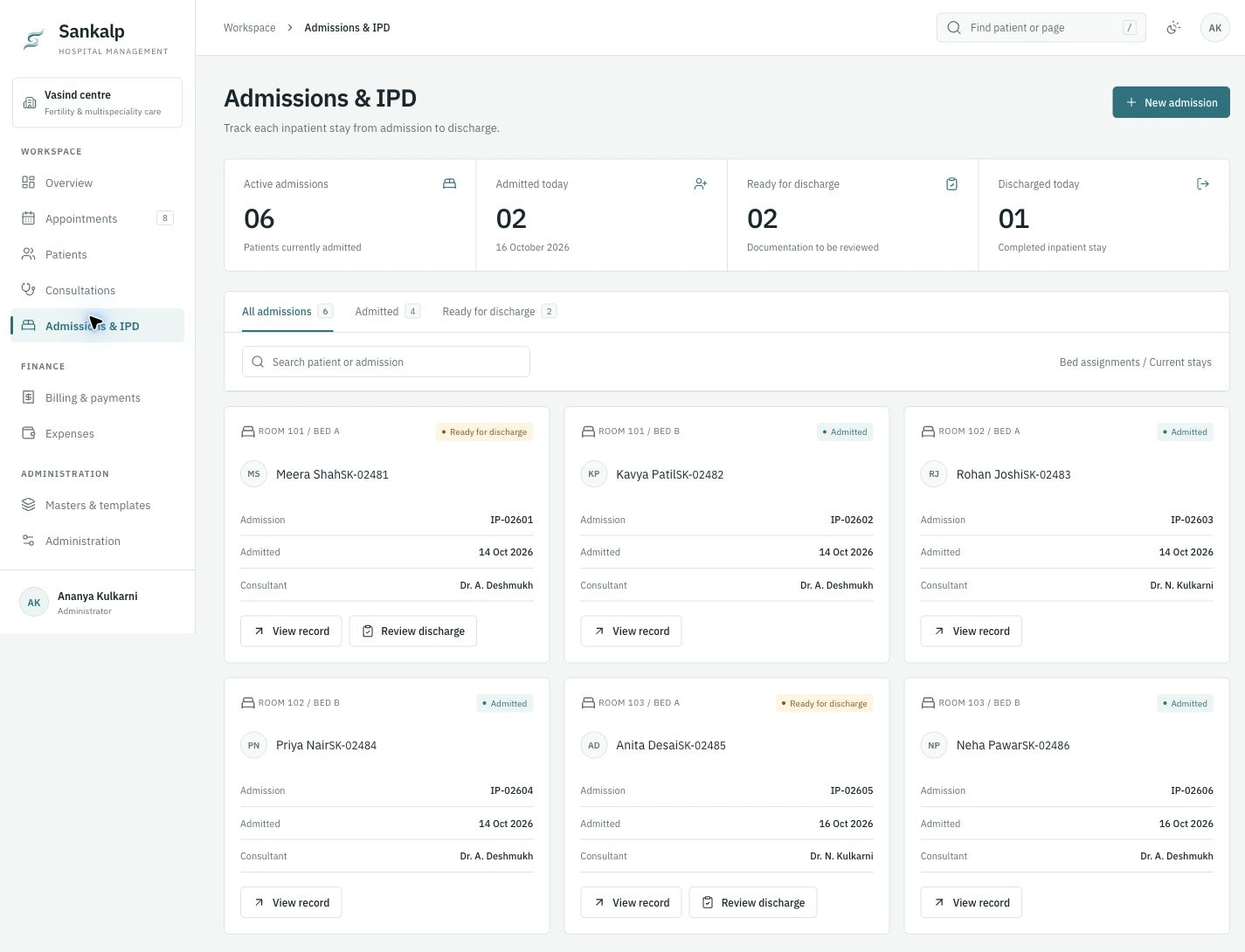
Admissions design prototype: fictional bed assignments, linked patient records and discharge review status.
05 / Make billing easy to review
Itemized services, recorded payments and the remaining balance are visible together. The API checks that the patient matches the linked encounter or admission and recalculates bill totals on the server.
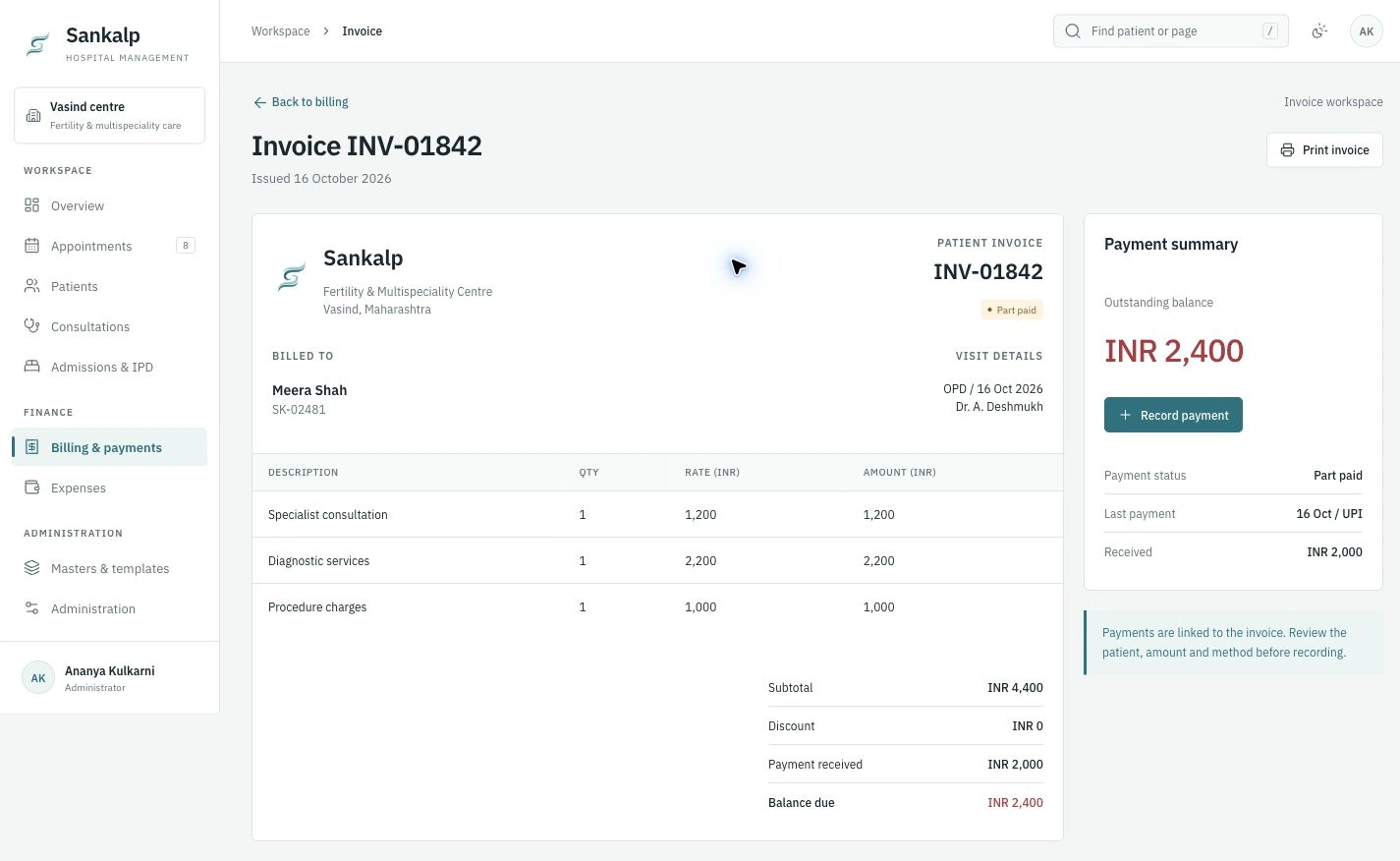
Invoice design prototype: itemized services, recorded payments and balance using fictional data.
06 / Keep the interface consistent across themes
Light and dark views use the same hierarchy, restrained color palette and labeled statuses. The responsive prototype also adapts navigation and content for smaller screens.
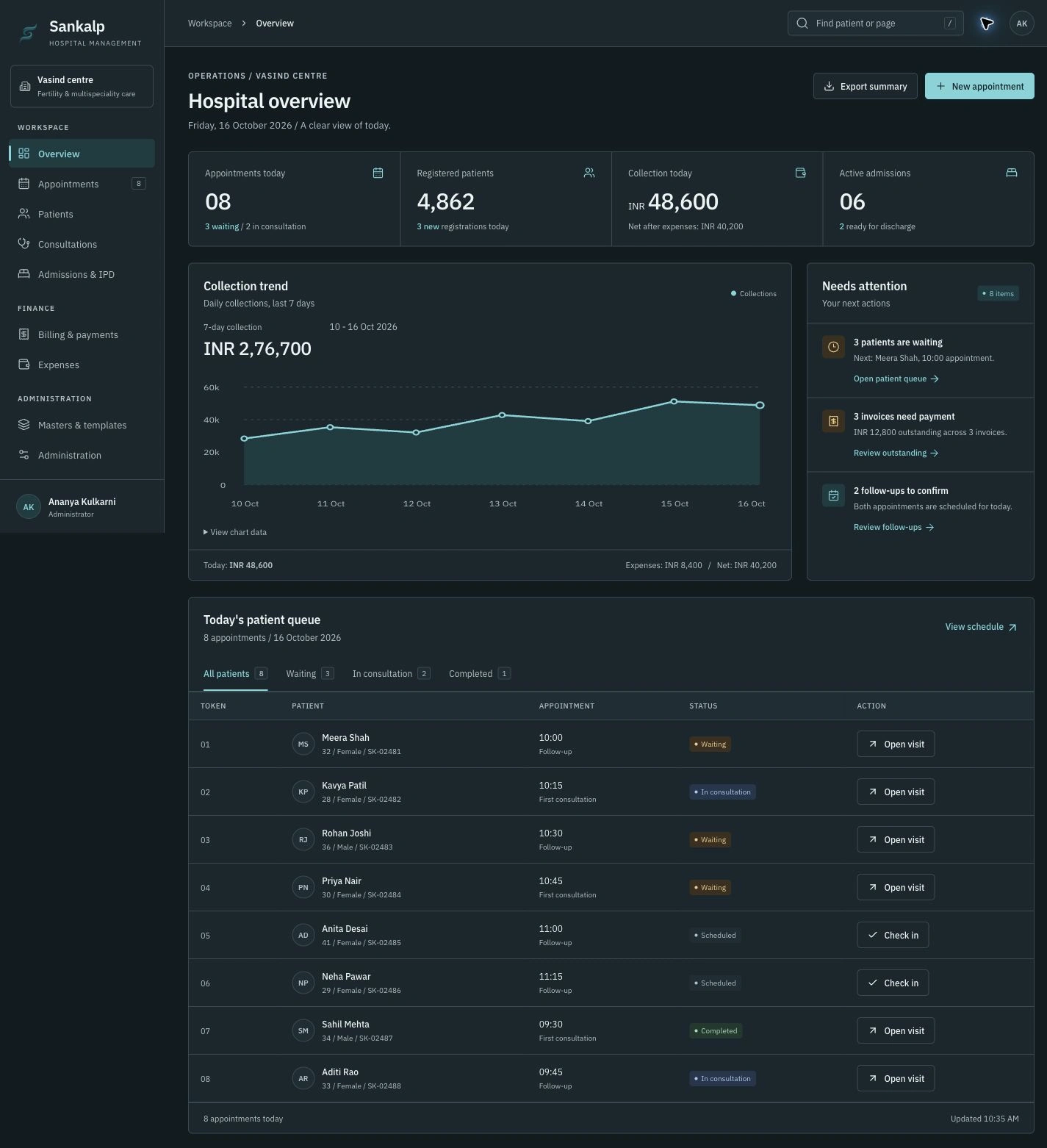
Dark-mode dashboard design prototype with the same layout and fictional sample data.
Engineering behind the application
Shared contracts: OpenAPI artifacts generate frontend types, giving the Next.js interface and NestJS API a common definition of requests and responses.
Connected records: PostgreSQL and Prisma model the relationships between patients, encounters, admissions and bills. Atomic database upserts reserve document numbers under concurrent requests.
Maintainable backend: Controllers, services, policies and repositories separate responsibilities. Cookie-based sessions use scrypt password hashing and hashed session tokens.
Technology
Interface: Next.js, React, TypeScript, Tailwind CSS, Radix UI, TanStack Query/Table, React Hook Form, Zod, Tiptap and pdf-lib.
API and delivery: Node.js, NestJS, Prisma, PostgreSQL, Swagger/OpenAPI, Docker and Docker Compose. The repository includes Vitest, Testing Library, Supertest and Playwright test tooling.
Scope and next steps
The codebase covers core hospital workflows; Lab Orders and IVF Cycles remain planned. The redesigned preview is separate from the API, and backend integration and full clinical workflow validation remain outside this visual demonstration.
Need a hospital workflow, internal tool or operations dashboard? Send me your current process, stack and priorities.
Like this project
Posted Oct 16, 2026
Hospital management with Next.js, NestJS and PostgreSQL, connecting patient care, admissions and billing. Includes a light/dark design prototype.