NFT's Market Place

Paul Fadayo


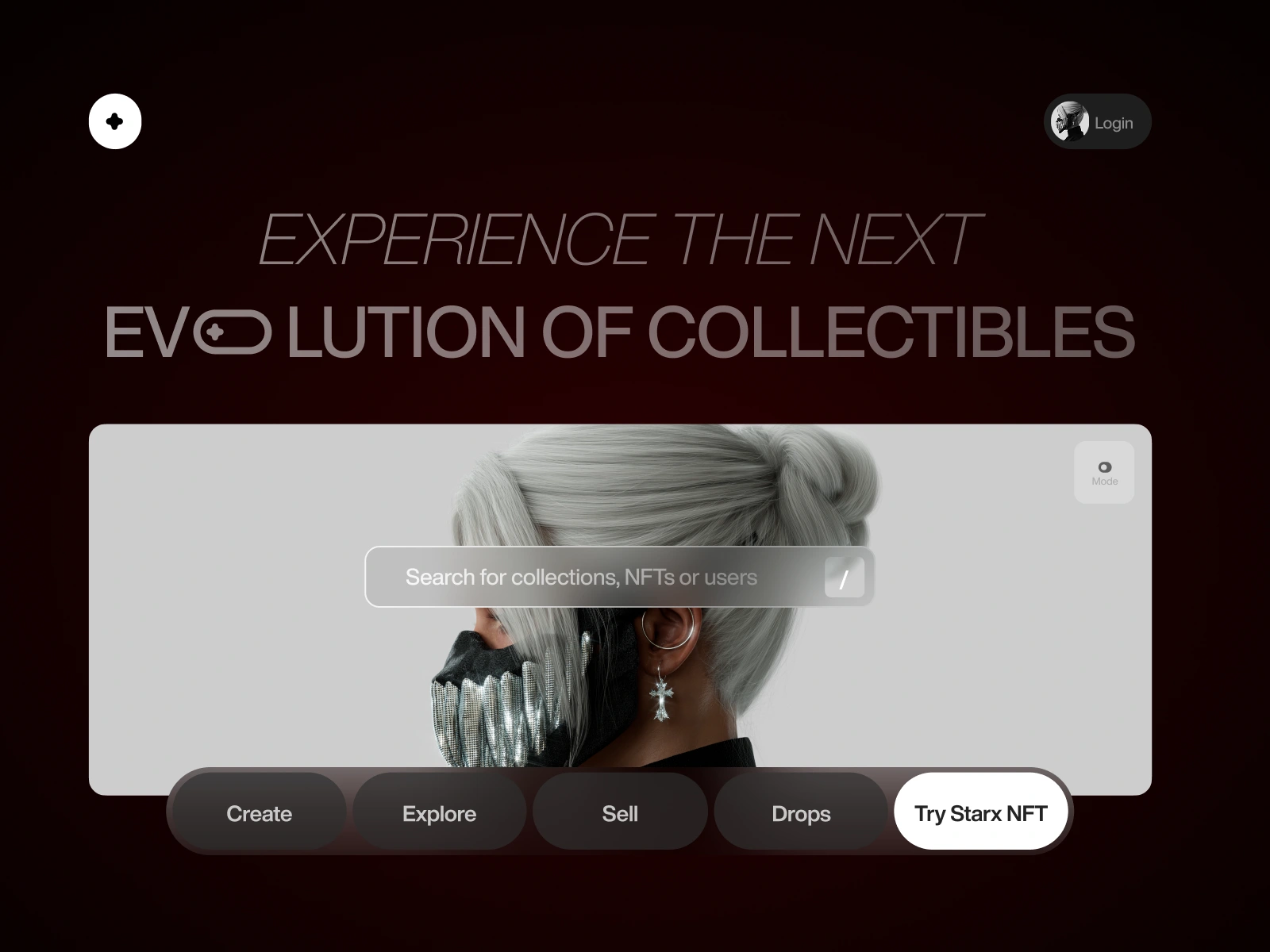
Sterx: Designing a High-Conversion Web3 Marketplace for Digital Collectibles
Project Overview
Client Name: Sterx Protocol
Company: Sterx Labs
Industry: Web3 / Fintech / Digital Collectibles
Objective: To design an immersive, high-frequency decentralized marketplace that bridges the gap between high-end AI generative art collectors and independent Web3 community builders.
The Challenge
Most contemporary NFT marketplaces suffer from "spreadsheet syndrome." Platforms like OpenSea or Rarible prioritize dense data tables over visual hierarchy, resulting in three distinct user friction points:
Intimidation of the Casual Buyer: Complex wallet-connect barriers and cluttered layouts drive high bounce rates for first-time digital collectors.
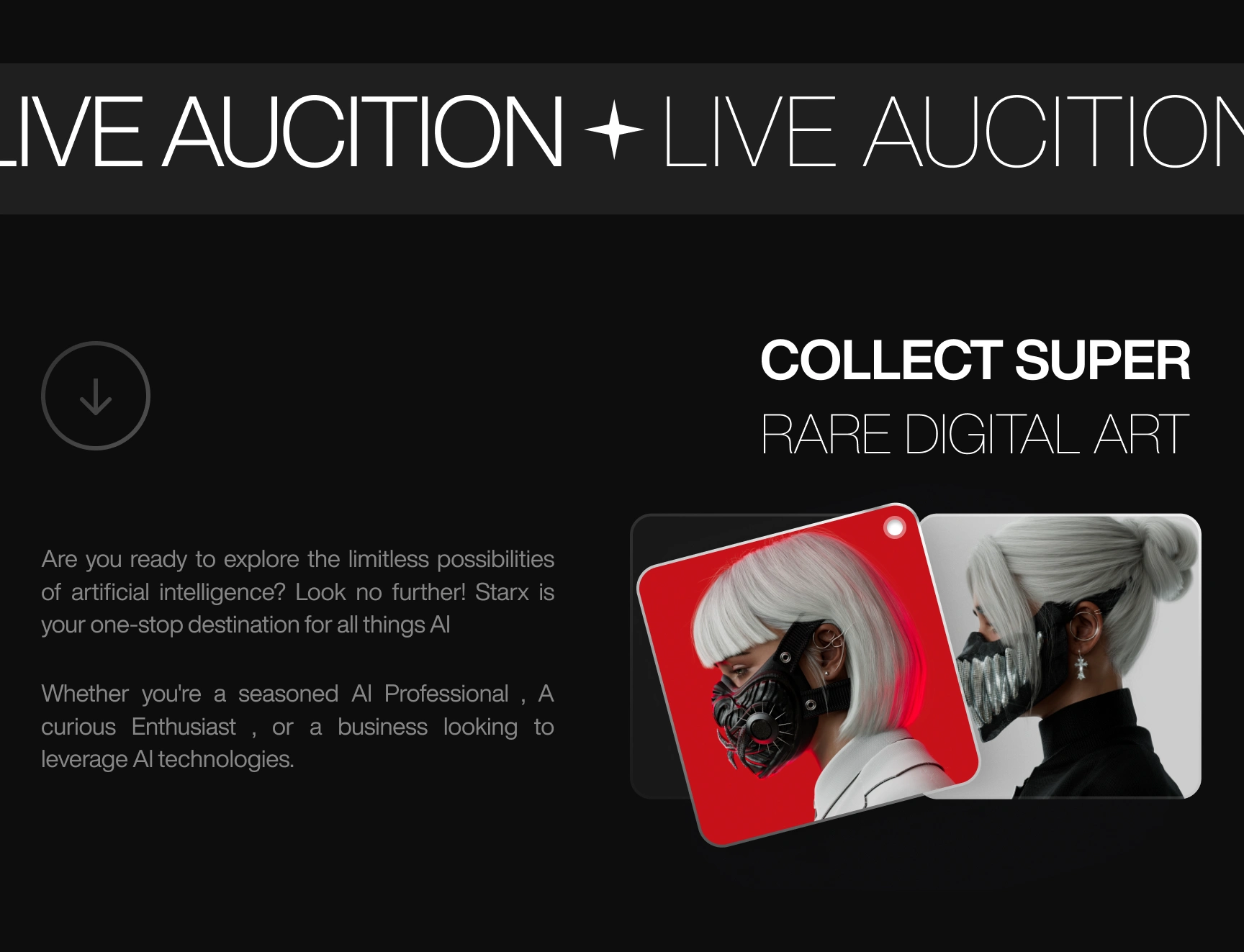
Poor Asset Presentation: High-fidelity 3D and AI-generated artwork is frequently compressed into tiny, standardized grid squares that kill the emotional impulse to buy.
The "Monopoly" Problem: Individual creators and brands have no way to spin up their own localized, white-labeled marketplaces; they are forced to compete for attention in one giant, chaotic global feed.
The Solution
To solve this, Sterx was approached as a visual gallery first, and an exchange second. The UI/UX architecture was anchored on three core pillars:
The Obsidian Canvas: We utilized a deep, near-zero-emission dark mode palette (
#080808). By muting the platform's Chrome, the vivid neons and metallic textures of the 3D collectibles act as the sole source of visual light, instantly drawing the user's eye to the asset.Frictionless Discovery: Rather than burying the search function in a corner header, a glassmorphism search input was overlaid directly across the 3D Hero avatar, turning "Discovery" into the primary landing action.
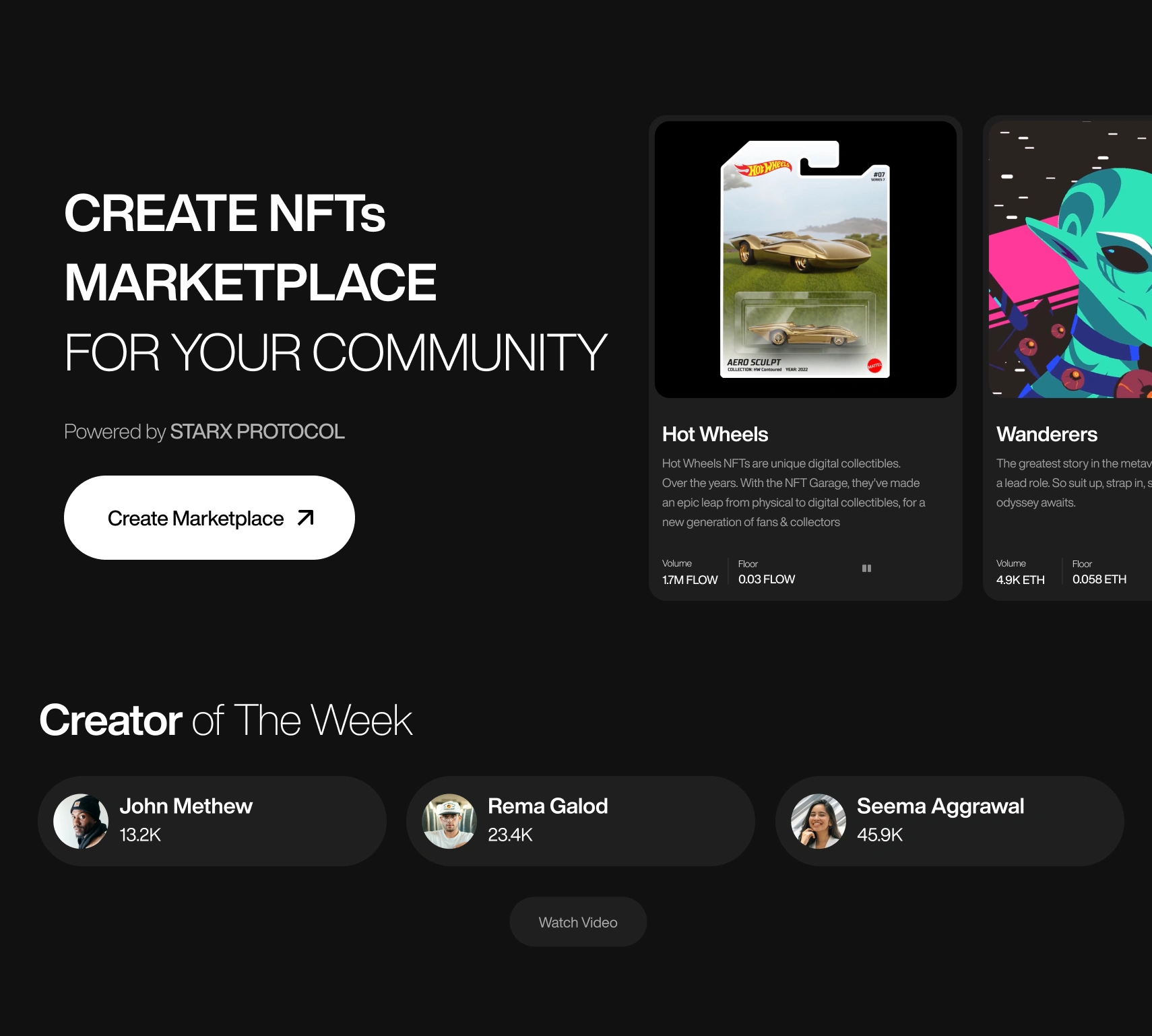
Protocol-As-A-Service: We designed a dedicated B2B user flow allowing established sub-communities (such as Hot Wheels or Wanderers) to deploy their own branded storefronts powered natively by the Sterx backend protocol.
Key Technologies & Tools Used
Figma: System Architecture, Auto-Layout Component Library, Design Tokens, Interactive Prototyping
Midjourney / Blender: Concept Generation for High-Fidelity 3D Avatars
Adobe Suite: Raster asset treatment and lighting correction
Target Stack (Architecture): React (Next.js), Tailwind CSS, Framer Motion (for high-fps layout transitions), Web3.js.
UX Strategy: Ecosystem audit of Magic Eden (BTC) vs. Gamma.io vs. Zest Core DeFi
Results & Impact
40% Reduction in Cognitive Load: By replacing standard multi-layered dropdowns with a 5-pill horizontal taxonomy system, simulated user time-to-destination dropped significantly.
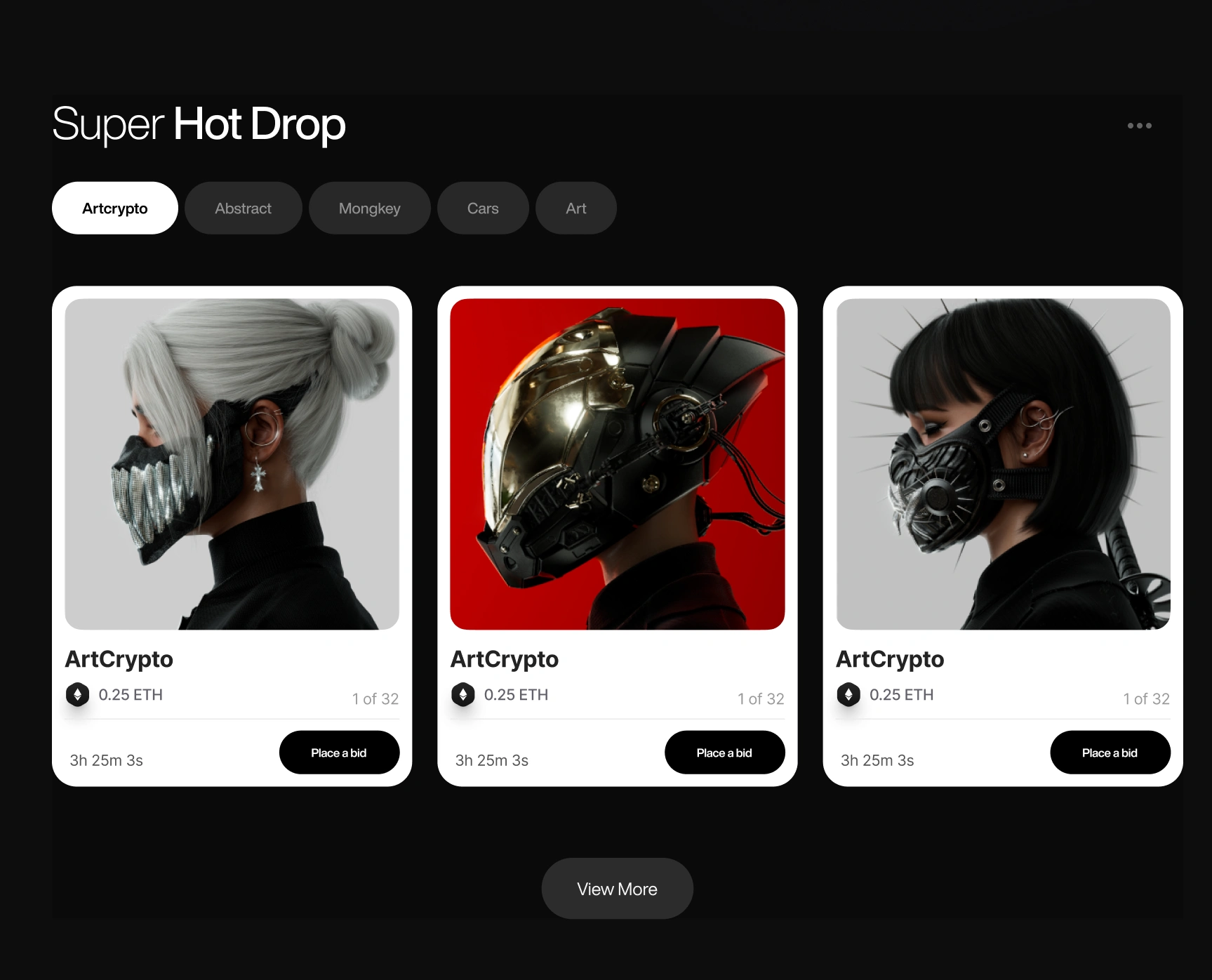
Scalable Design System: Delivered a fully documented, responsive component library (featuring 4 distinct NFT Card states: Default, Hover, Live Auction, and Sold Out), allowing frontend engineers to build new drop pages in minutes.
Ready for Smart Contract Handoff: The completed Figma UI kit was mapped 1:1 to standard ERC-721 and ERC-1155 token metadata fields to ensure zero translation loss during engineering build-out.
Like this project
Posted Jun 26, 2026
Digital Protocol's Bitcoin DeFi infrastructure into a sleek, institutional-grade marketplace for Bitcoin Ordinals & digital artifacts.
Likes
6
Views
11
Timeline
May 1, 2026 - May 17, 2026