Unified Ecommerce Integration for Enticon's Tourism Brands

Thomas Oldenburger


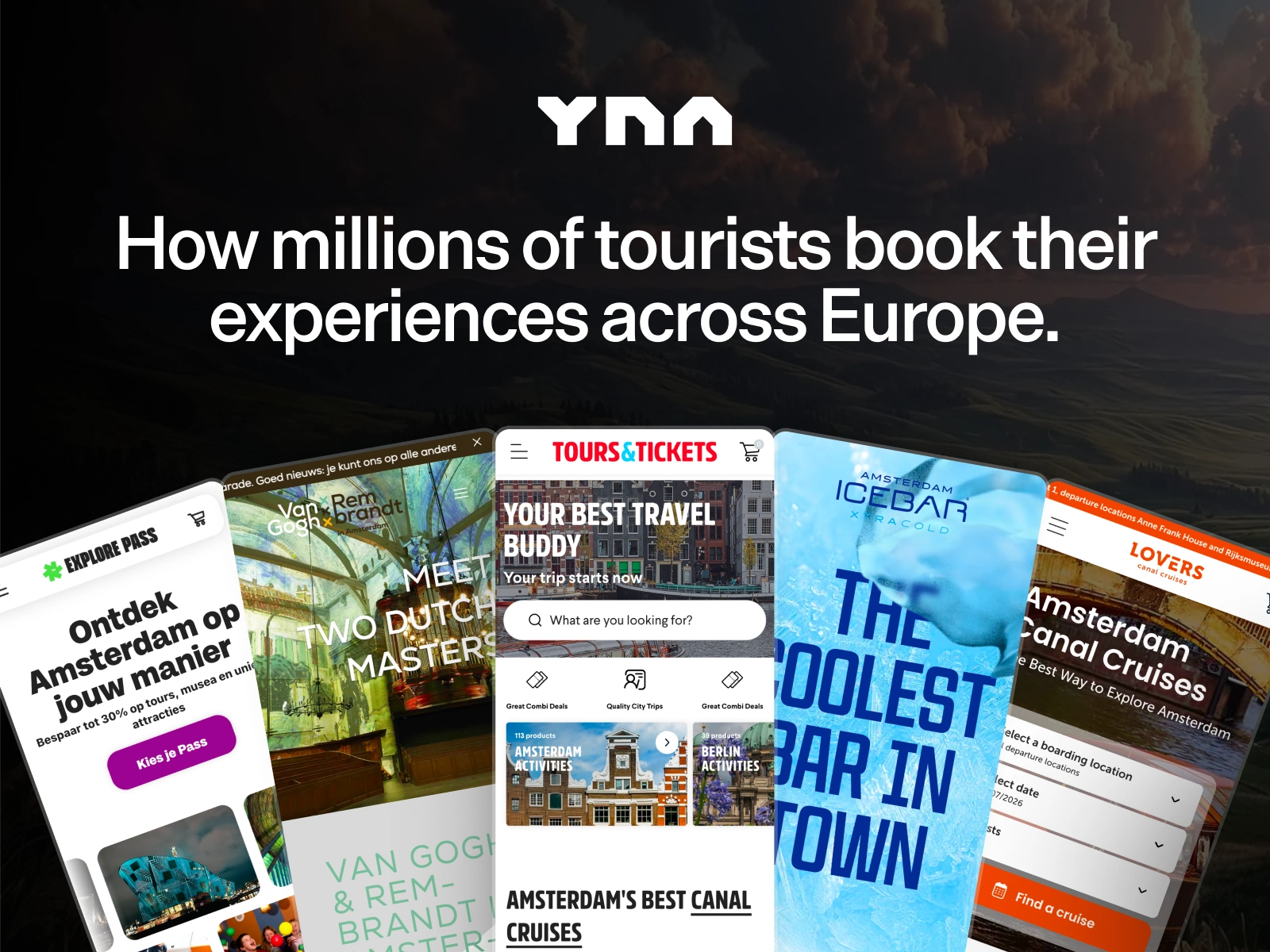
How millions of tourists book their experiences across Europe.
A canal cruise in Amsterdam. An ice bar. A 360° Van Gogh experience. A hop-on hop-off bus in Berlin. Eight consumer brands, four countries, and one integration layer connecting all of them to the same booking system.
About
Tours & Tickets. Lovers Canal Cruises. Amsterdam Icebar. Van Gogh & Rembrandt. Explore Pass. Red Sightseeing. City Sightseeing. Lovely Cruises.
To the tourists booking them, these are eight completely different days out. Some are boats, some are buses, some are museums, one is kept at minus ten degrees. Nobody books an ice bar the way they book a canal cruise.
Behind all of them sits the same ecommerce backend, run by a specialist ticketing partner. Our job was everything the customer actually sees, and the layer that connects the two.
The challenge
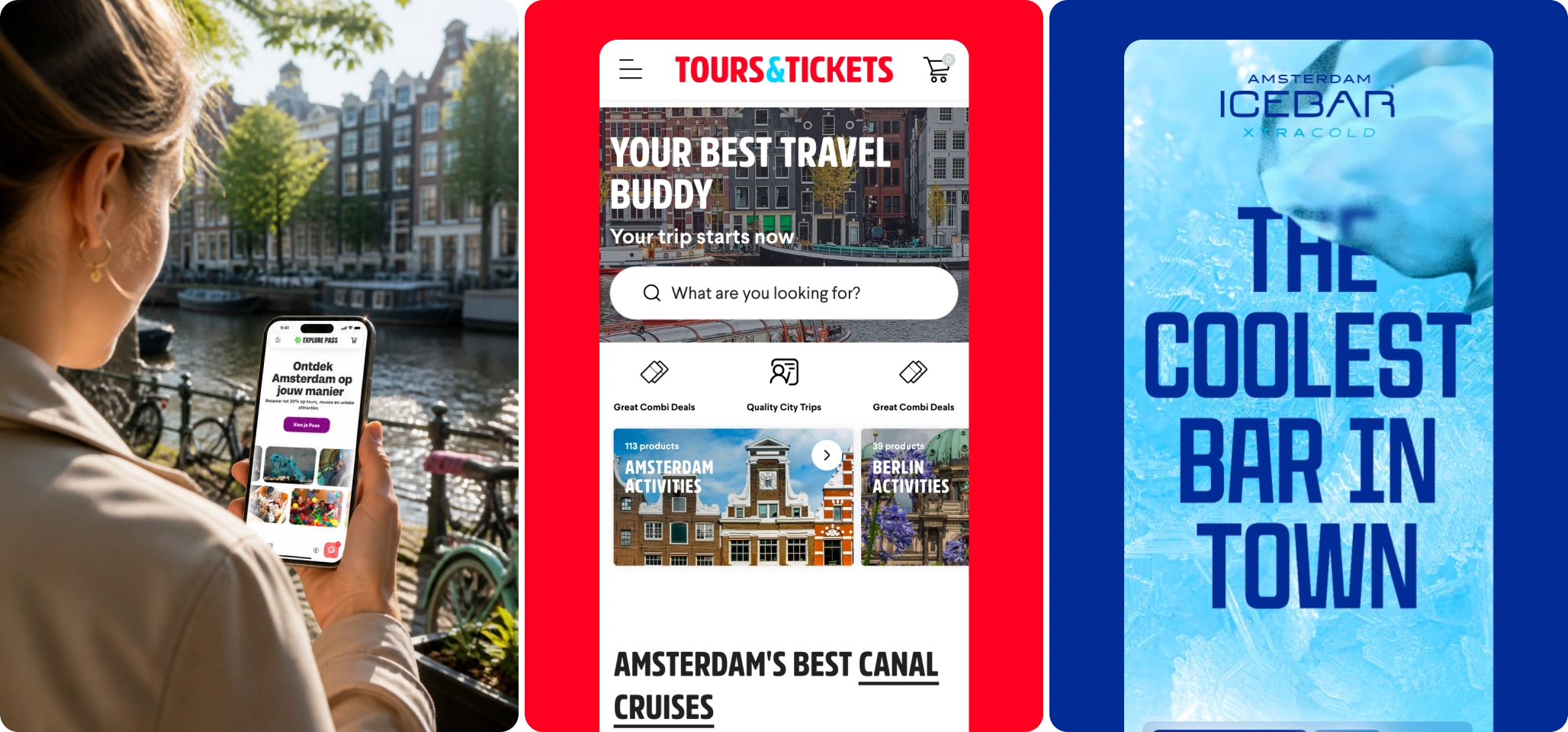
Every one of these brands has its own audience, its own look, and its own reason to exist. A 90-minute canal cruise sells on romance and skyline views. An ice bar sells on novelty. An immersive art experience sells on spectacle. Flatten them into one template and you kill what makes each worth booking.
But eight brands, four countries, and one shared booking backend is a hard combination. Every site needs live product data from the same API. Every site needs a booking flow customers can complete without friction. And every site needs its own voice on top of data that arrives in the same shape for all of them.
Do it brand by brand and you end up with eight separate integrations to build, debug and maintain — eight places for a booking to break on a Saturday in July when the queue is out the door.
What we built
One integration layer. Eight storefronts.
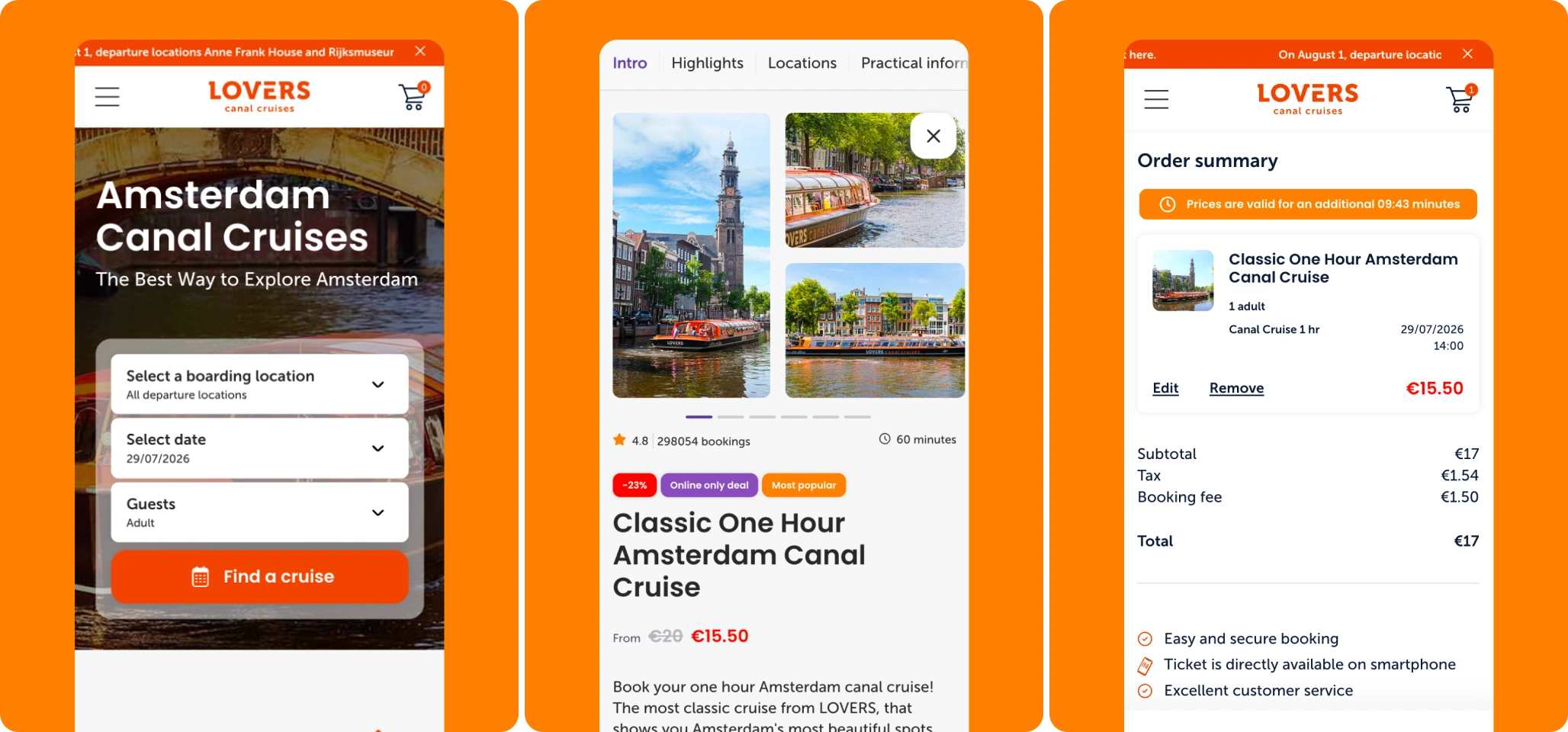
We built a plugin that sits between the ecommerce API and every one of Enticon's websites. It pulls product data through, feeds it into the product pages, enriches it with the content and imagery that makes each brand feel like itself, and carries a consistent booking flow across all of them.
The ticketing backend does what it's good at: availability, orders, fulfilment. Our layer does what it's good at: making eight very different brands present that data as eight very different experiences, and keeping the booking journey the same quality on all of them.
Build that once and every brand inherits it. Build it eight times and you're maintaining eight versions of the same thing forever.
Product data in, brand experience out
Product data from a ticketing system is functional by design: names, prices, availability, categories. What it isn't is persuasive.
So the layer enriches it. Each product page combines the live data from the API with the editorial content that actually sells the thing: photography, descriptions, practical details, the reasons someone would choose this experience over the one next to it. The commercial truth stays in sync with the backend. The story around it belongs to the brand.
One booking flow, eight brands
A timed museum entry, a seat on a boat leaving at four, a 24-hour bus pass, and a multi-attraction city pass are different products with different rules.
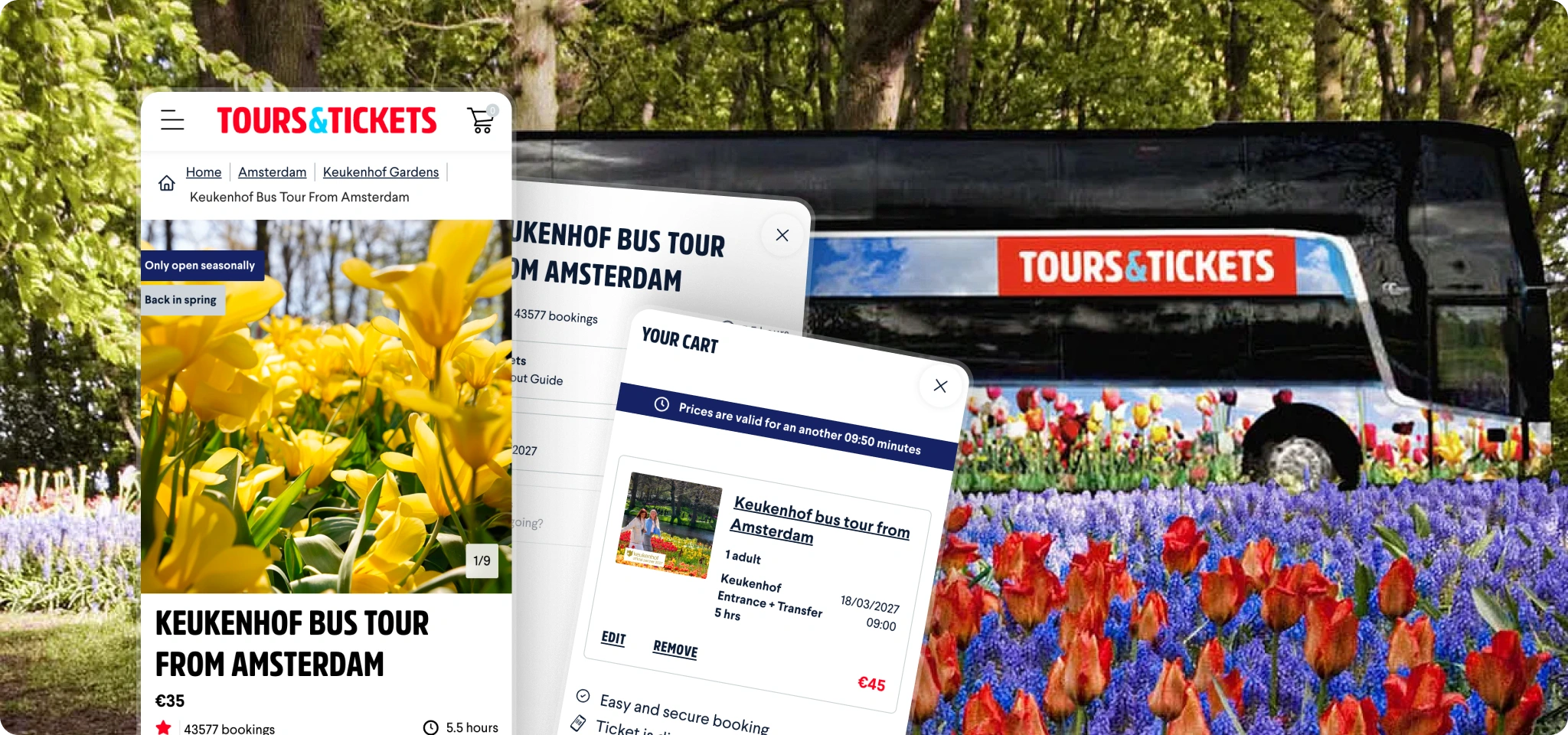
Customers shouldn't have to care. The booking flow is unified across the portfolio, so whichever brand a tourist lands on, the path from "this looks good" to "I have a ticket" works the same way and to the same standard.
That consistency is invisible when it works, and it's the first thing you feel when it doesn't.
Analytics across the whole journey
Because the same layer runs across every site, it can see the whole funnel.
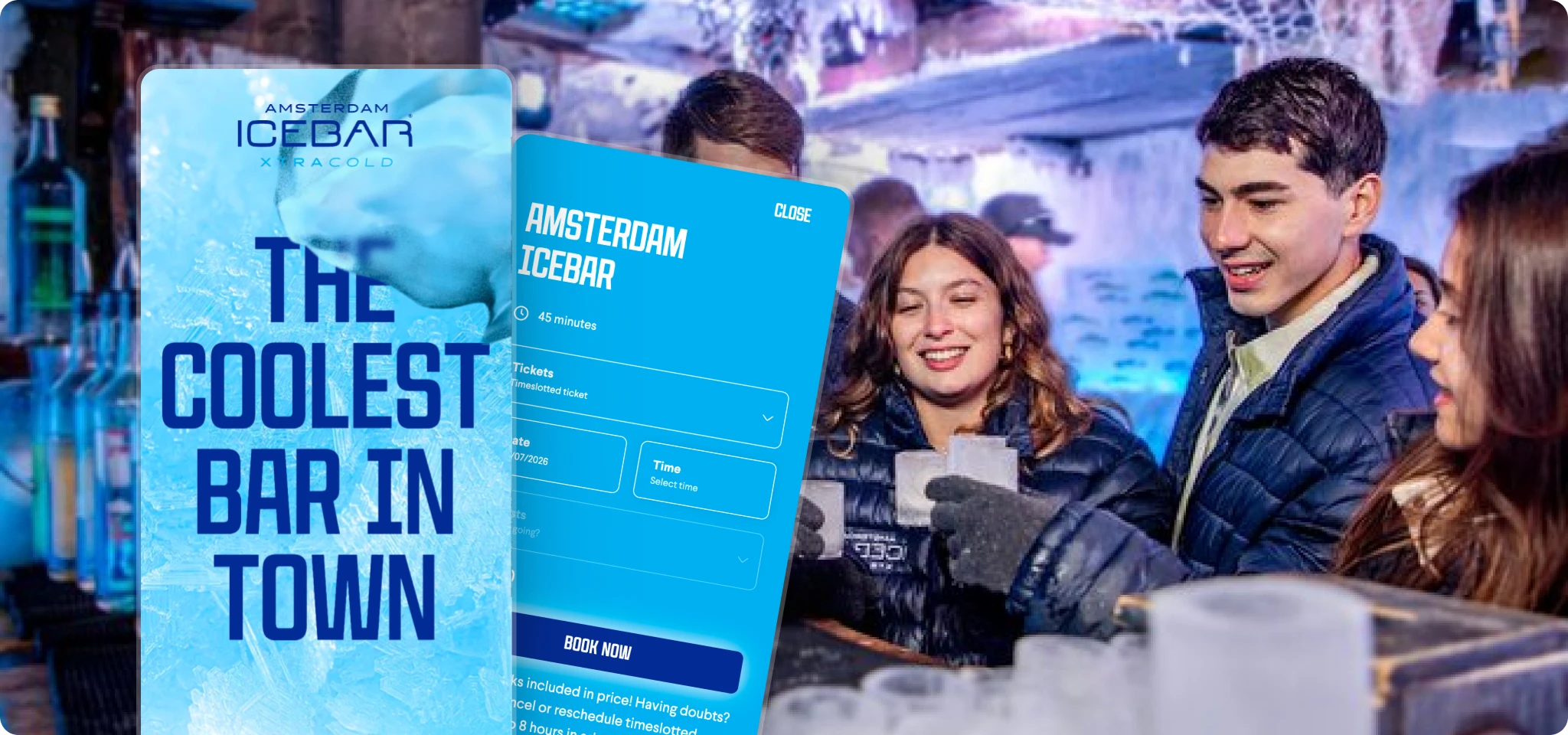
Enticon gets detailed insight into how visitors move through their sites and into the booking journey: where people arrive, what they look at, where they drop off, and which brands and products convert. Not eight disconnected analytics setups, but one consistent view across the portfolio.
For a business that runs on volume and seasonality, knowing where the funnel leaks is worth as much as the traffic itself.
Four countries, many languages
The brands run across the Netherlands, Germany, Sweden and Denmark. Each market gets content in its own language and the booking conventions its customers expect. Handled once, in the layer, rather than rebuilt per site.
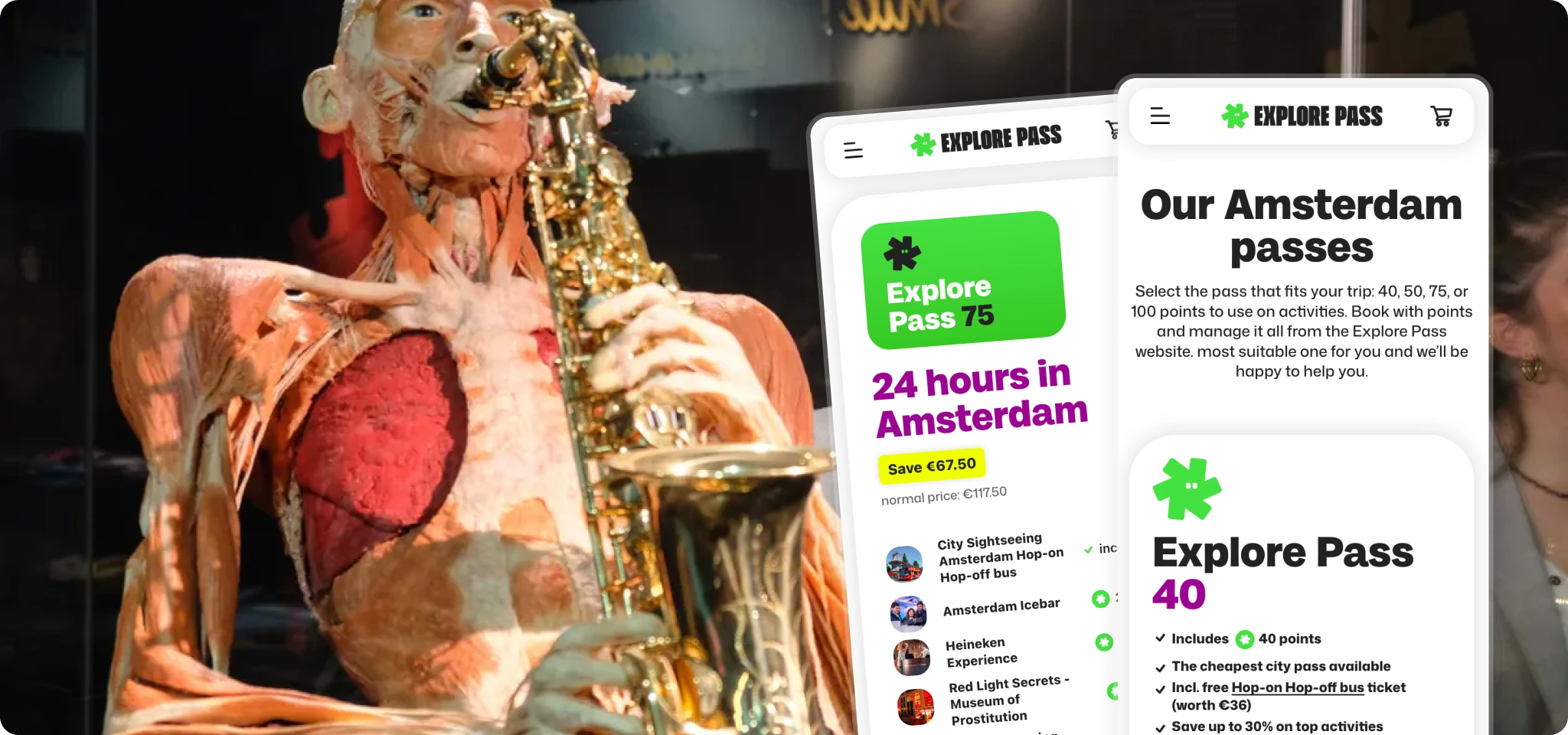
Built for a portfolio that keeps growing Enticon adds brands. That's the business model. A new brand can be stood up on the existing integration rather than wired to the API from scratch: new identity new content same connection same booking flow same analytics.
The team runs the day-to-day themselves New content new imagery, seasonal changes — no developer in the loop for the things that change every week.
The result
Millions of tourists a year book something through one of these brands. They arrive from a search, a hotel recommendation, or a poster at Centraal Station, land on a site that looks and sounds like the experience they're about to have, and book it in a couple of minutes.
Behind them, one integration layer connected all of it to the ticketing backend, in four countries, for eight brands that look nothing alike — and told Enticon exactly how the whole funnel performed.
That's the shift. Not eight websites each wired up their own way, but one layer wearing eight faces, each of them convincing.
Like this project
Posted Aug 6, 2026
One ecommerce layer under eight European tourism brands. Millions of tourists, one place to book, one system to run it all.