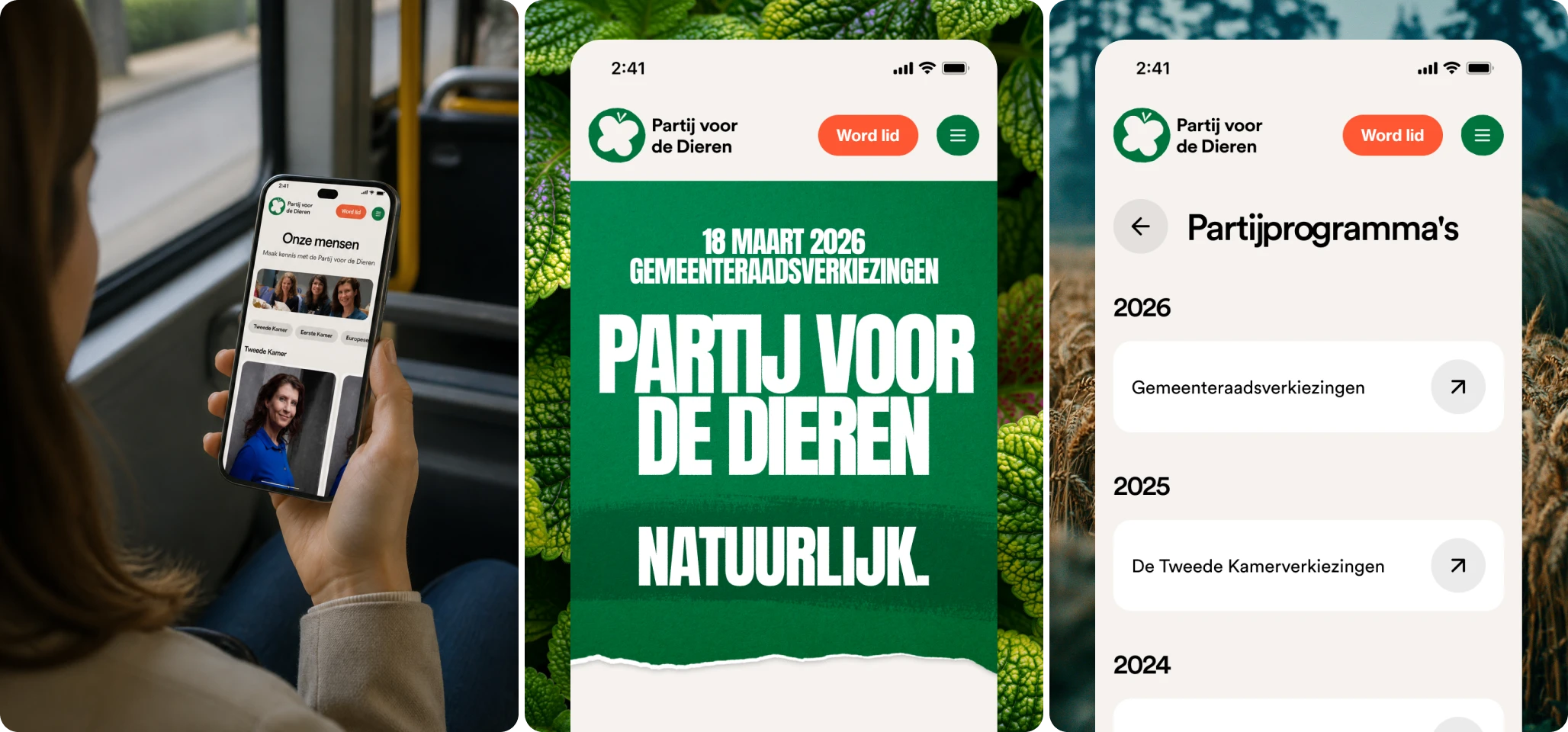
Redesign and Web Platform for Dutch National Political Party.

Thomas Oldenburger


Every layer of Dutch government.
One platform underneath.
A web platform for Partij voor de Dieren, a political party that sits at every level of Dutch government. National, provincial, municipal, water authority. One identity, one system, dozens of independent sites. Released gradually, under election pressure.
About Partij voor de Dieren
Partij voor de Dieren was the first party built around animal rights and nature to win seats in a national parliament. Today it runs at every level of Dutch government at once: both chambers of parliament, the European Parliament, all twelve provinces, municipal councils across the country, and regional water authorities.
Each of those is a separate political body, with its own representatives, its own agenda, and its own voters to talk to. That's the shape of the problem. One party, many levels, all needing a place online.
The challenge
A party at every level of government needs a website at every level. A national site. A site per province. A site per municipal branch. A site per water authority. Plus temporary campaign sites when elections come around.
Every local branch wants to speak to its own voters about local issues. But it's still one party. One name, one set of ideals, one look. Build one national site and the branches have nowhere to stand. Build dozens of separate sites and they drift apart, in design, in tech, in message, until they don't feel like the same party anymore.
Then the timeline collapsed. During the revamp, the Dutch government fell, elections were called, and what could have been a patient rebuild suddenly had a hard deadline. The party had to campaign, and it wanted to campaign on the new platform. There was no room for a big-bang launch, and no room to wait until every last site was ready.
What we built
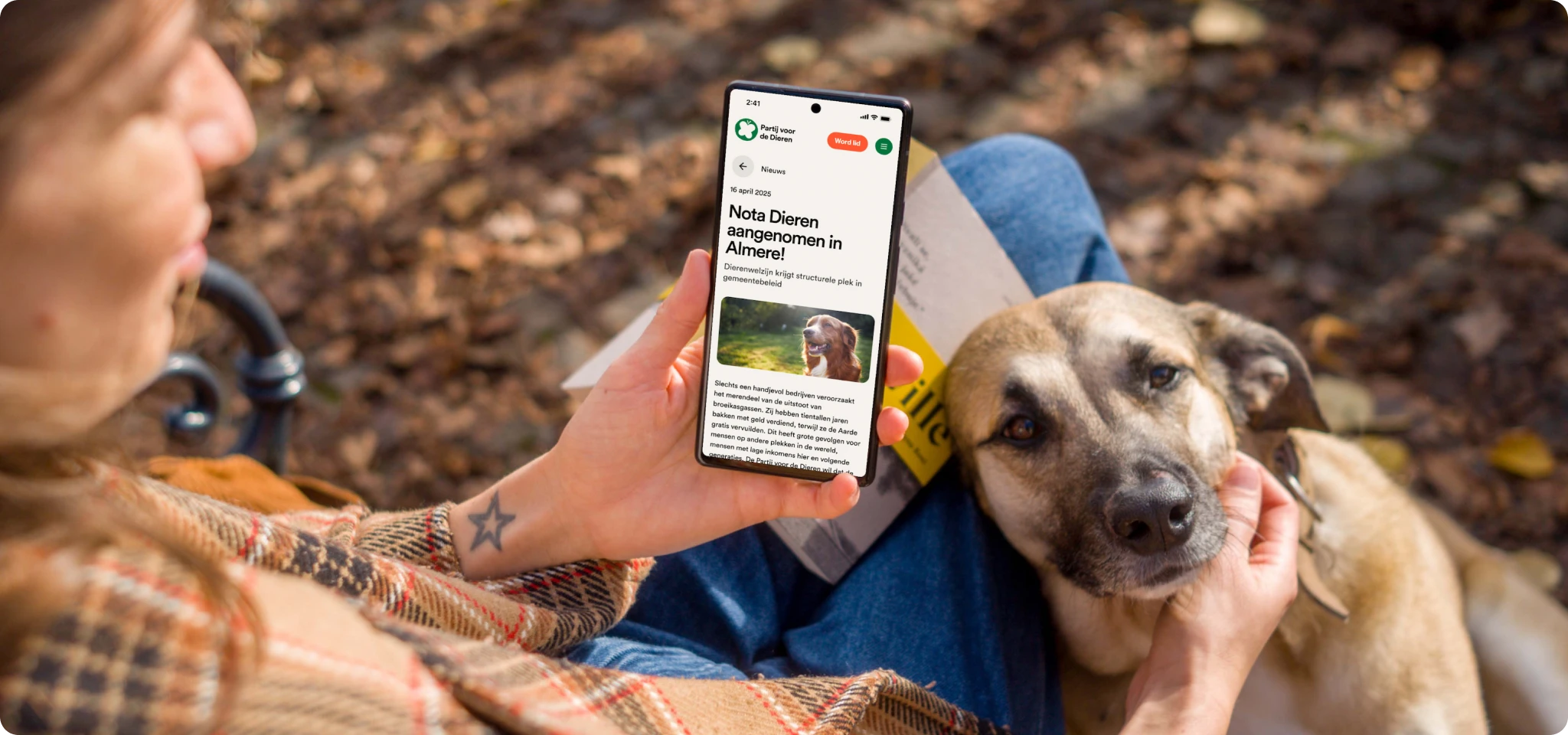
A full revamp, not a facelift. New design, new content model, new tooling underneath, across every level of the party at once. All of it runs on the same platform, the same component system, the same templates. A new local branch gets a complete site out of the box and fills it with its own content. A site switcher moves you between a local site and the national one.
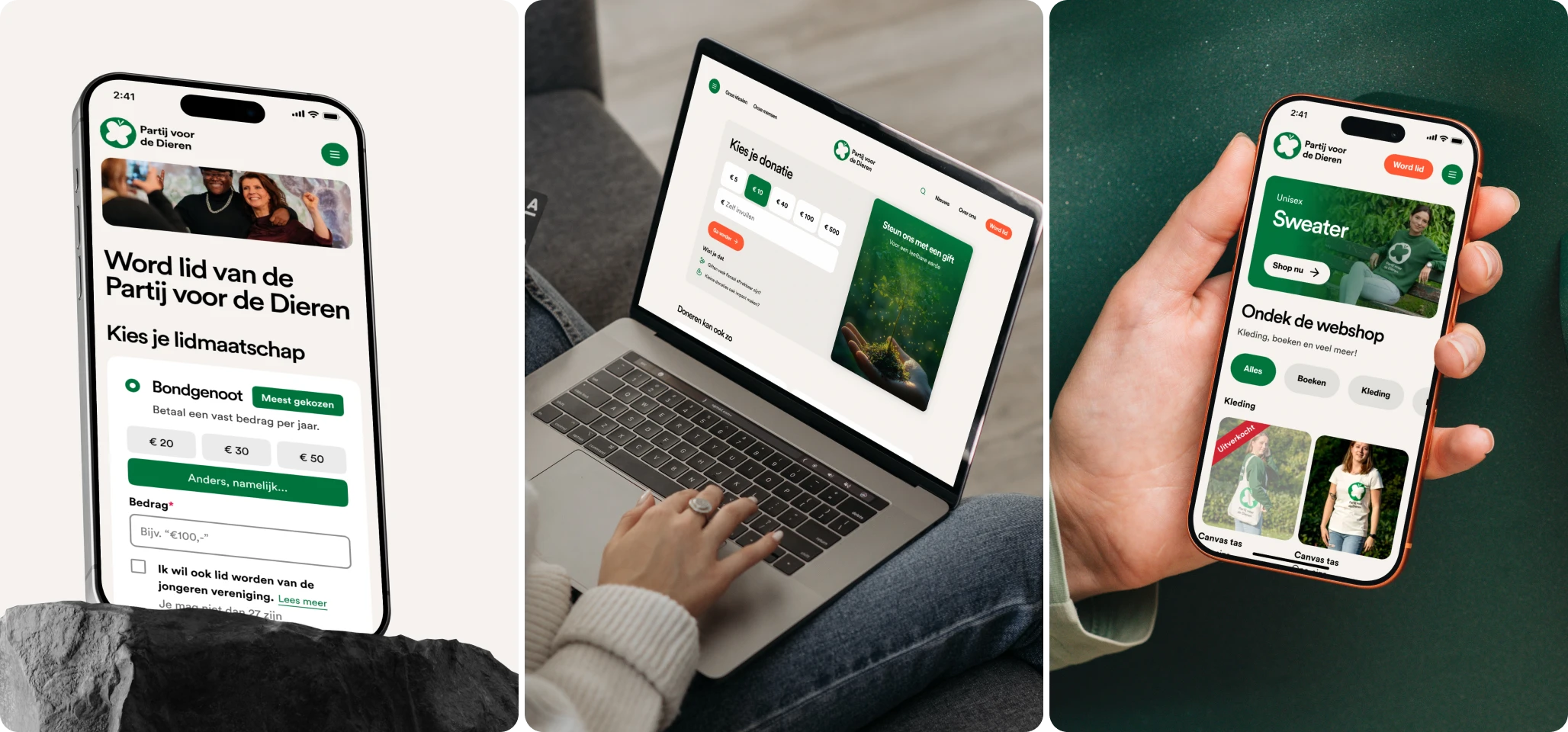
The platform runs the party's membership, fundraising and retail too: two membership tiers with a youth opt-in, a donation flow with recurring and legacy giving and the tax-deductibility that comes with charitable status, and a webshop for clothing, books and merchandise.
Shared identity, local voice. That's the whole trick, and it holds across the network.
Built to be reused
The party's ideas are organized in three tiers: ideal, theme, plan. A broad ideal like fair and sustainable food contains themes like farming in balance with nature, which contain concrete plans like pesticide-free farming. Model it once, and every site reuses the same structure instead of rebuilding it. The same goes for party programs, the people directory, and the news and events feeds. The people directory is organized by governmental body, so one template lists national MPs on the national site and local councillors on a municipal one.
Search works the same way. It runs on one site or across all of them, with a toggle between "this website" and "all sites," and results filterable by where they came from. News, events and job listings are tagged by level, so feeds pull from the whole network or a single branch.
Permissions at scale
The hard part isn't visible on the page. Dozens of subsites, an enormous amount of content, and one of the largest databases we've ever run behind a site. On top of that sits a permission model that gives each branch full control of its own site and no reach into anyone else's. A municipal editor edits their municipality. A provincial editor edits their province. National stays national. Hundreds of editors across the network, each with exactly the access they should have and nothing more.
Getting that right is what keeps the whole thing one platform instead of splintering into separate installs. Shared content where it helps, walled-off content where it matters, and a role for every kind of editor.
Finding your level
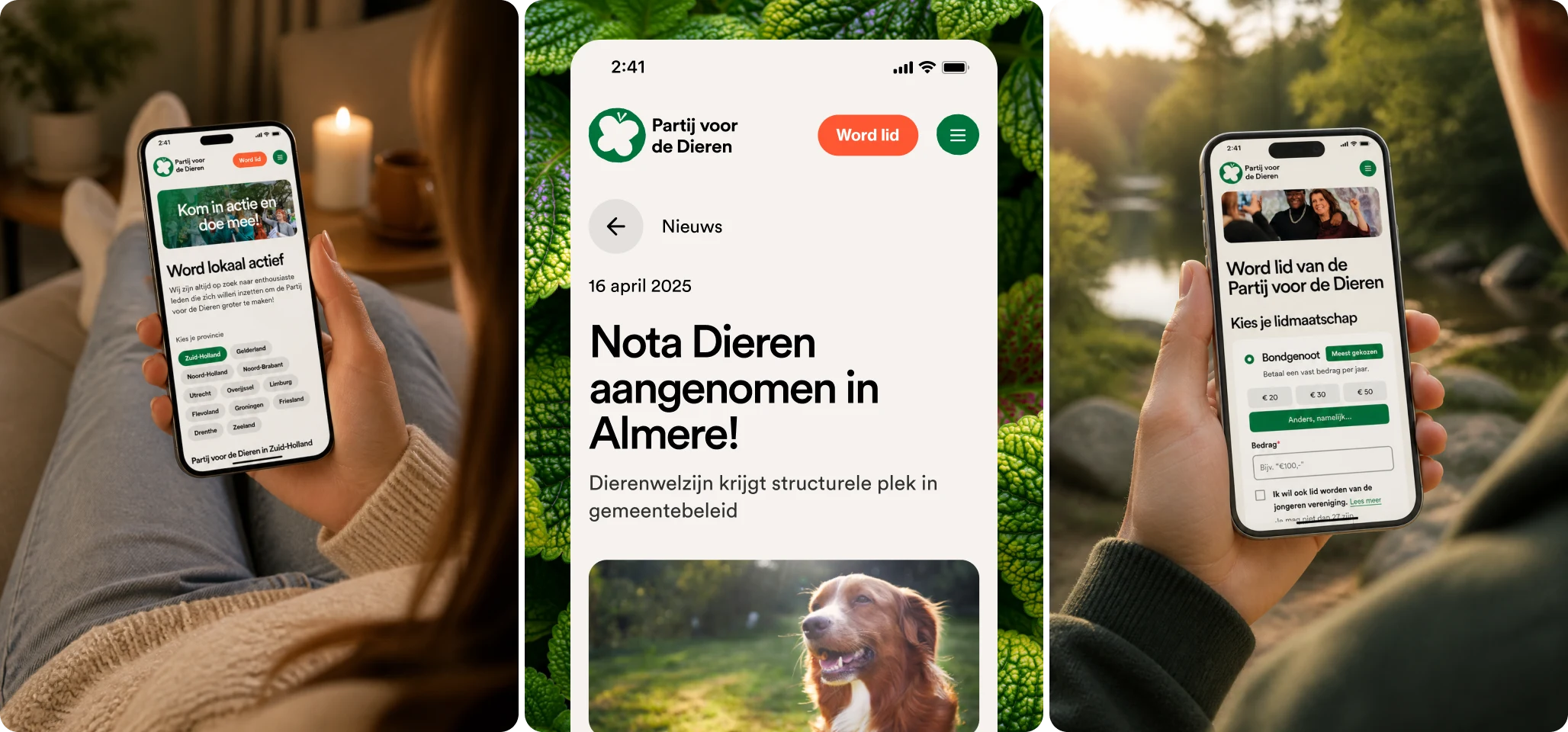
One page ties the network together. Pick your province on a map of the Netherlands and you see everything under it: the provincial site, the municipal branches, the water-authority branches, each linking through to its own site. It's how a voter anywhere in the country finds the branch that represents them, and how the national site routes people down to their level.
The political archive
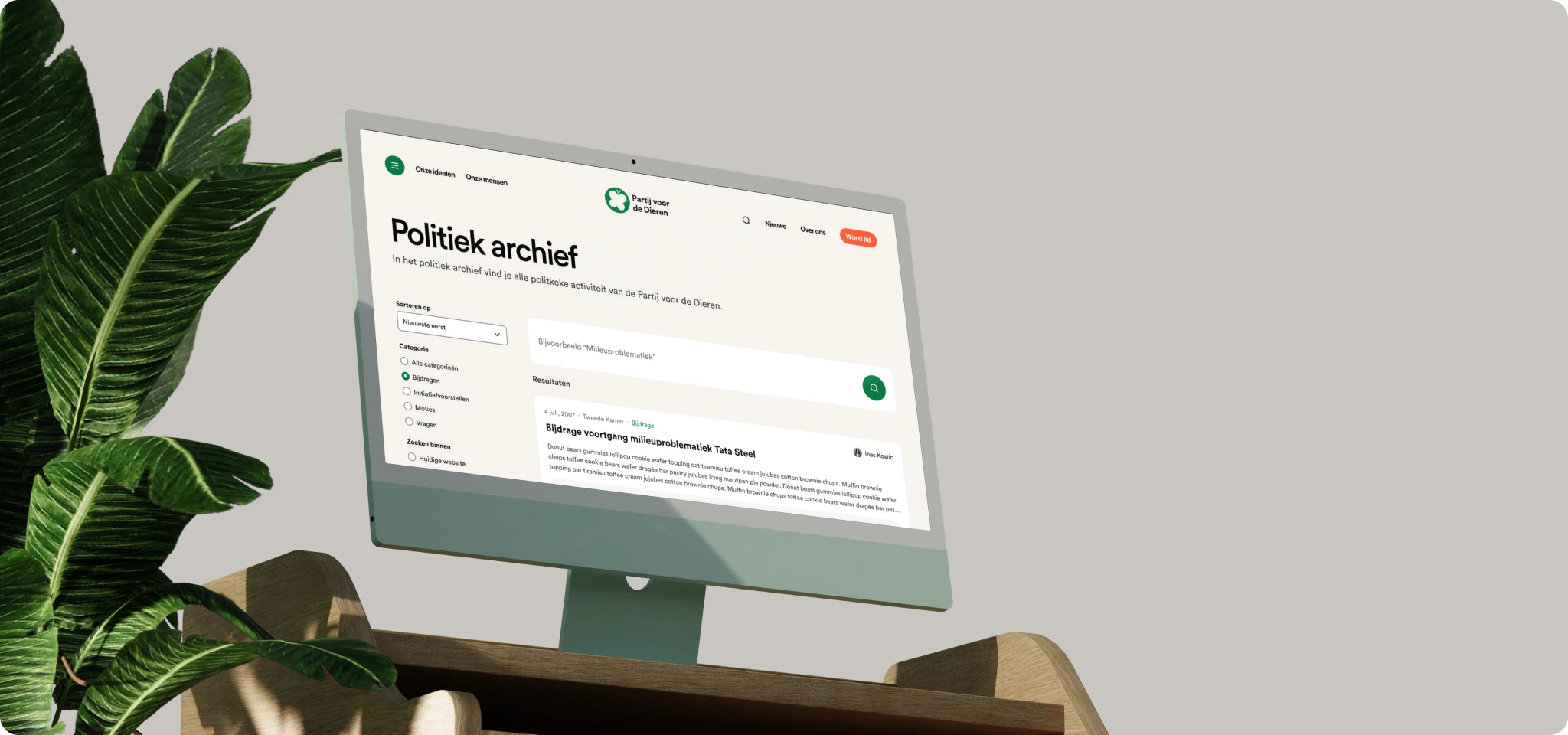
Every level of the party produces a public record: contributions to debates, motions, written questions, legislative proposals. We pulled all of it into one archive, structured and searchable across the whole network.
It became more than a public page. The party's own researchers use it to trace positions and work through the track record, and members use it to see what their representatives actually did.
Accessibility, built in
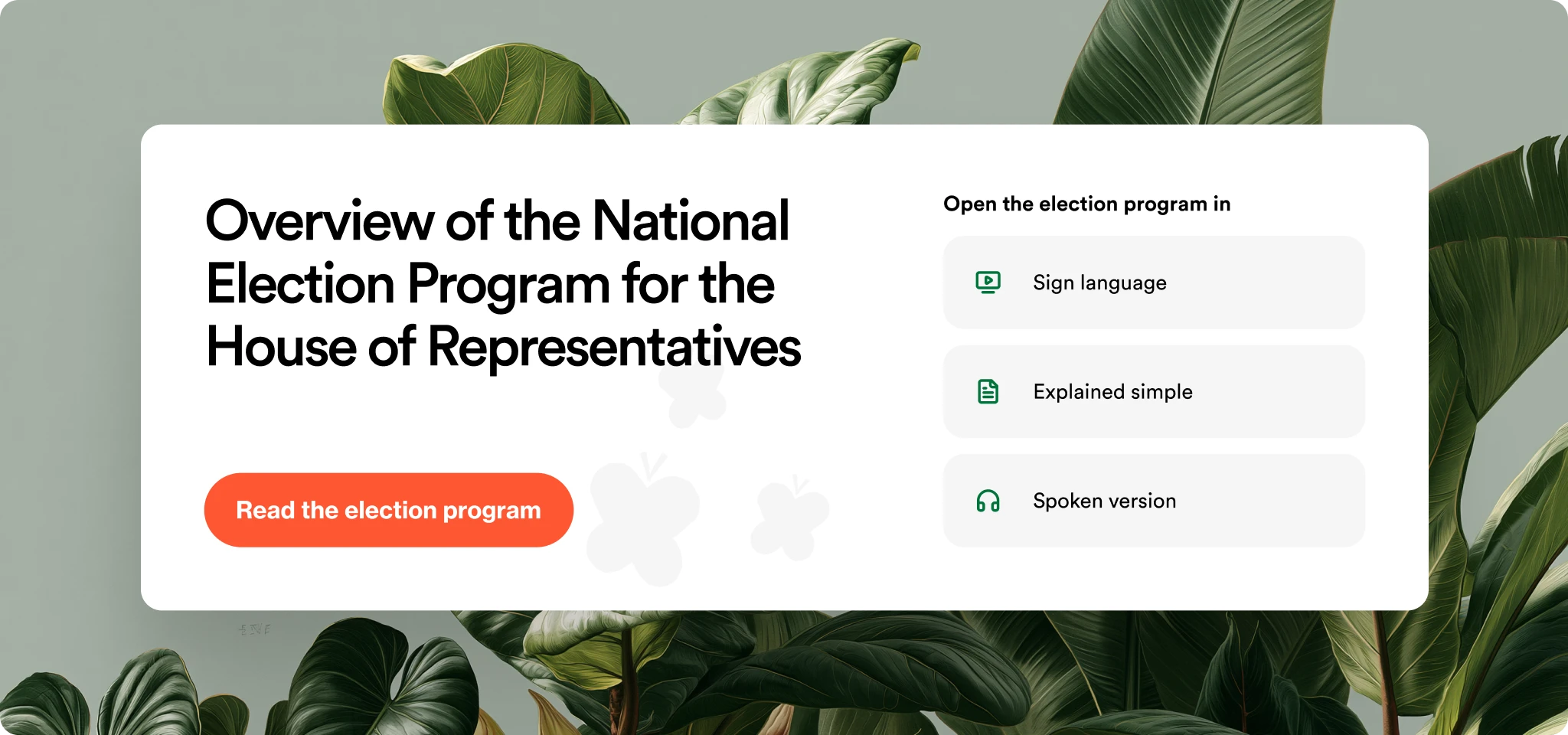
The election program isn't just a PDF. It's offered in sign language, in easy-read policy language, and as a spoken version. For a party that wants every voter to be able to read what it stands for, that matters. It's built into the content, not bolted on.
Members, donations, and a shop
The platform runs the party's membership, fundraising and retail too. Two membership tiers, an annual membership and a lifetime one, with an opt-in for the youth organization. A donation flow with preset amounts, recurring and periodic gifts, legacy giving, and the tax-deductibility that comes with the party's charitable status. A webshop for clothing, books and merchandise, categorized and filterable, physical goods and eBooks.
The gradual release
This is the part worth slowing down on.
Rebuilding a network this large in one launch is a gamble no political party should take, and with an election bearing down there was no time to try. So the platform went live and the sites moved onto it in phases, priority first: the sites the campaign needed, then the rest. Old and new ran alongside each other through the transition. There was never a single day when everything changed, and never a moment when the party's whole web presence was in the air at once.
For the party, that meant no launch-day cliff. For each branch, it meant moving on its own schedule instead of the whole network's. The rollout was an engineering decision as much as the platform was, and on a live political network heading toward an election, it was the one that mattered most.
The result
Most multi-site setups force a choice: central control that flattens every local voice, or local freedom that lets the sites drift until they're not one brand anymore. This build refuses the choice. One platform and one identity, with dozens of local sites that each run themselves.
A complete revamp, every level of the party, built and rolled out under election pressure, and live in time for the campaign. For voters, it means their question gets answered wherever they look. Someone following national policy. Someone checking what the party wants for their province. Someone looking up their own municipality, or their water authority. Each finds a site that speaks to their level and works like all the others, because underneath it is the same platform.
The party now runs all of it as one system instead of dozens. A new branch spins up a site instead of commissioning one. And when the whole network moved across, there was no bad launch day to remember, because it never happened all at once.
Running dozens of sites that should feel like one?
Tell us what you're managing now.
I'll show you what one platform could do instead.
Thomas
Like this project
Posted Aug 6, 2026
One political party at every level of Dutch government — national, provincial, municipal, water authority. Dozens of independent sites, one platform under them.