KPI Scope Builder – Decision-First KPI Planning

Amy Frank


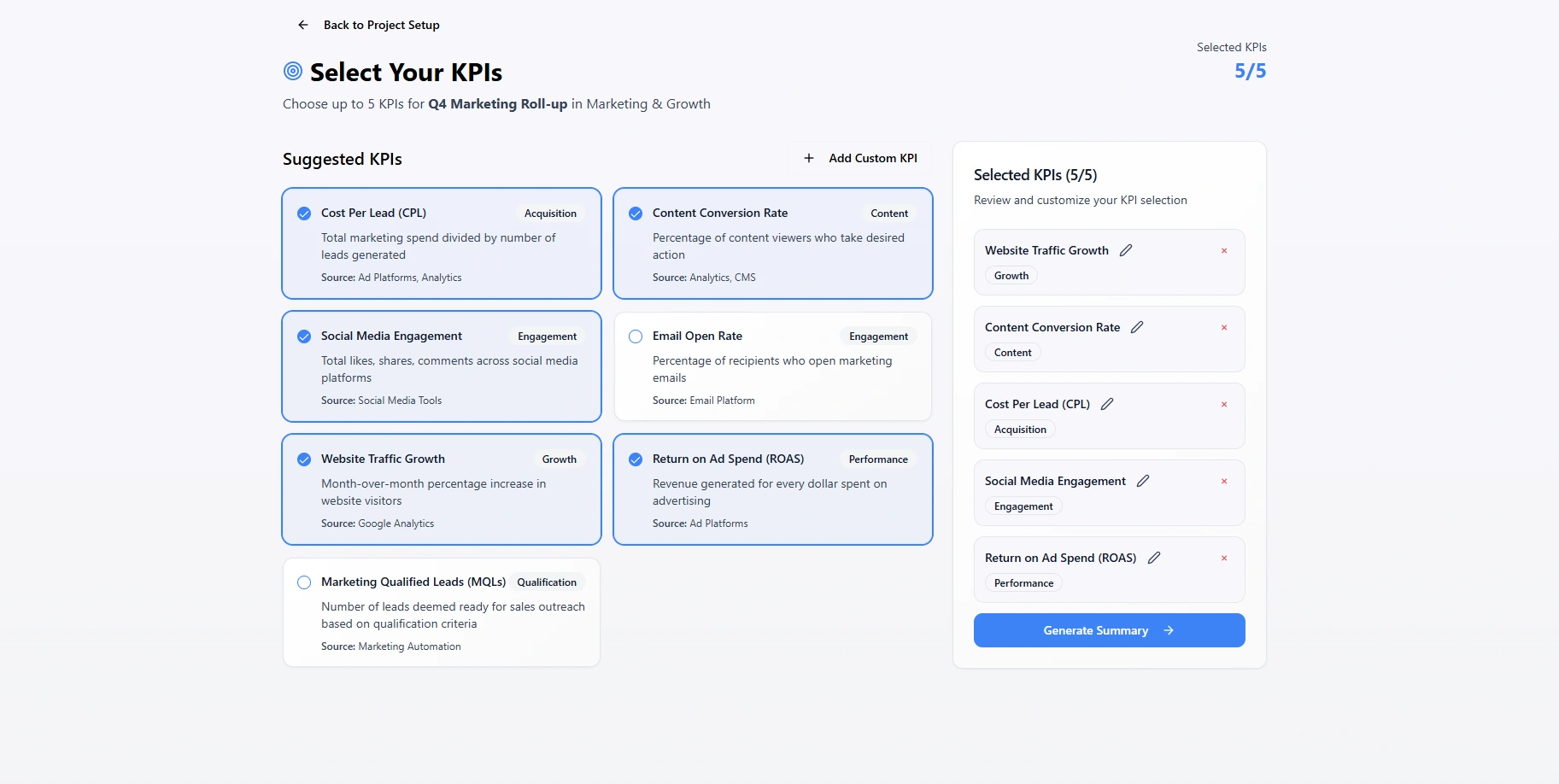
This case study highlights how the KPI Scope Builder applies decision-first systems thinking to KPI planning before analytics or CRM implementation.
KPI Scope Builder
📊 Overview
The KPI Scope Builder is a low-code web application prototype designed to help teams clarify what they are trying to decide before analytics dashboards, reports, or CRM implementations are built.
It provides a guided, repeatable workflow for defining business objectives, selecting meaningful KPIs, assigning ownership, and identifying data sources. By introducing a structured pre-analytics planning layer, the tool helps prevent misaligned metrics, reporting sprawl, and wasted development effort.
🧩 Purpose
Organizations often jump straight into dashboards or tooling without clearly defining:
What decision the data is meant to support
Who owns each metric
How KPIs will actually be used
This leads to inconsistent reporting, unclear accountability, and analytics that don’t drive action.
The KPI Scope Builder solves this by formalizing KPI scoping before analytics work begins, aligning stakeholders around a shared definition of success.
🛠️ Platform & Tools
Built with: Lovable (low-code web development platform)
Development Style: Low-code, visual drag-and-drop with relational logic modeling
Key Capabilities:
Custom entity relationships (Projects, KPI Templates, KPI Selections)
Data validation (limit of 5 KPIs per project to enforce focus)
Inline editing for KPI definitions and data sources
Project finalization with lock state and date tracking
PDF export for documentation and alignment
AI Support:
Iterative documentation and structure refinement with ChatGPT
UI and logic experimentation using Lovable’s built-in AI features
💡 Core Features
Guided project setup (objective, business area, cadence)
Custom KPI creation with definition, owner, and data source
Suggested KPI templates by category (e.g., Acquisition, Engagement, Performance)
Validation rules to enforce clarity and prioritization
Auto-generated summary for review or export
Finalization workflow to lock scope and prevent drift
Printable PDF output for stakeholder alignment
📈 Example Use Case
Project Title: Q4 Marketing Roll-up
Objective: Align on which marketing KPIs should be tracked and reviewed to evaluate campaign effectiveness and inform next-quarter strategy.
Selected KPIs
Website Traffic Growth
Month-over-month increase in website visitors
Source: Google Analytics
Content Conversion Rate
Percentage of content viewers taking desired actions
Source: Analytics, CMS
Cost Per Lead (CPL)
Total marketing spend ÷ leads generated
Source: Ad Platforms, Analytics
Social Media Engagement
Total likes, shares, and comments across platforms
Source: Social Media Tools
Return on Ad Spend (ROAS)
Revenue generated per advertising dollar
Source: Google Ads
Each KPI includes a clear definition, owner, and data source, ensuring shared understanding before any dashboards are built.
🔄 Development Process
This project followed an iterative, human-centered systems design approach:
Defined user needs and decision context
Modeled relational entities and validation rules
Built and tested MVP workflows
Refined UI clarity and reporting flow through iteration
Each cycle improved usability, scope discipline, and alignment.
📊 Project Status
Completion: ~70% functional prototype
Core features built: Project creation, KPI selection, validation, inline editing, export
Next steps: Multi-user access, role-based permissions, BI tool integrations
🚀 Future Improvements
Role-based access and multi-user collaboration
Live data integrations (Salesforce, GA4, HubSpot)
Dynamic handoff to dashboards or reporting tools
Expanded KPI libraries by function or industry
Validation prompts for incomplete ownership or data sources
While this project is presented as a systems and decision-scoping case study, the prototype demonstrates how scoped KPI frameworks can be directly implemented into low-code products, internal tools, or client-facing dashboards.
🧠 Reflection
This project strengthened my ability to translate ambiguous business needs into structured systems and decision frameworks. It reinforced the importance of scoping and alignment as foundational steps in analytics, CRM, and digital transformation work.
🖼️ Screenshots & Walkthrough
Optional Walkthrough Video
Short walkthrough demonstrating the core KPI scoping flow.
Screenshots
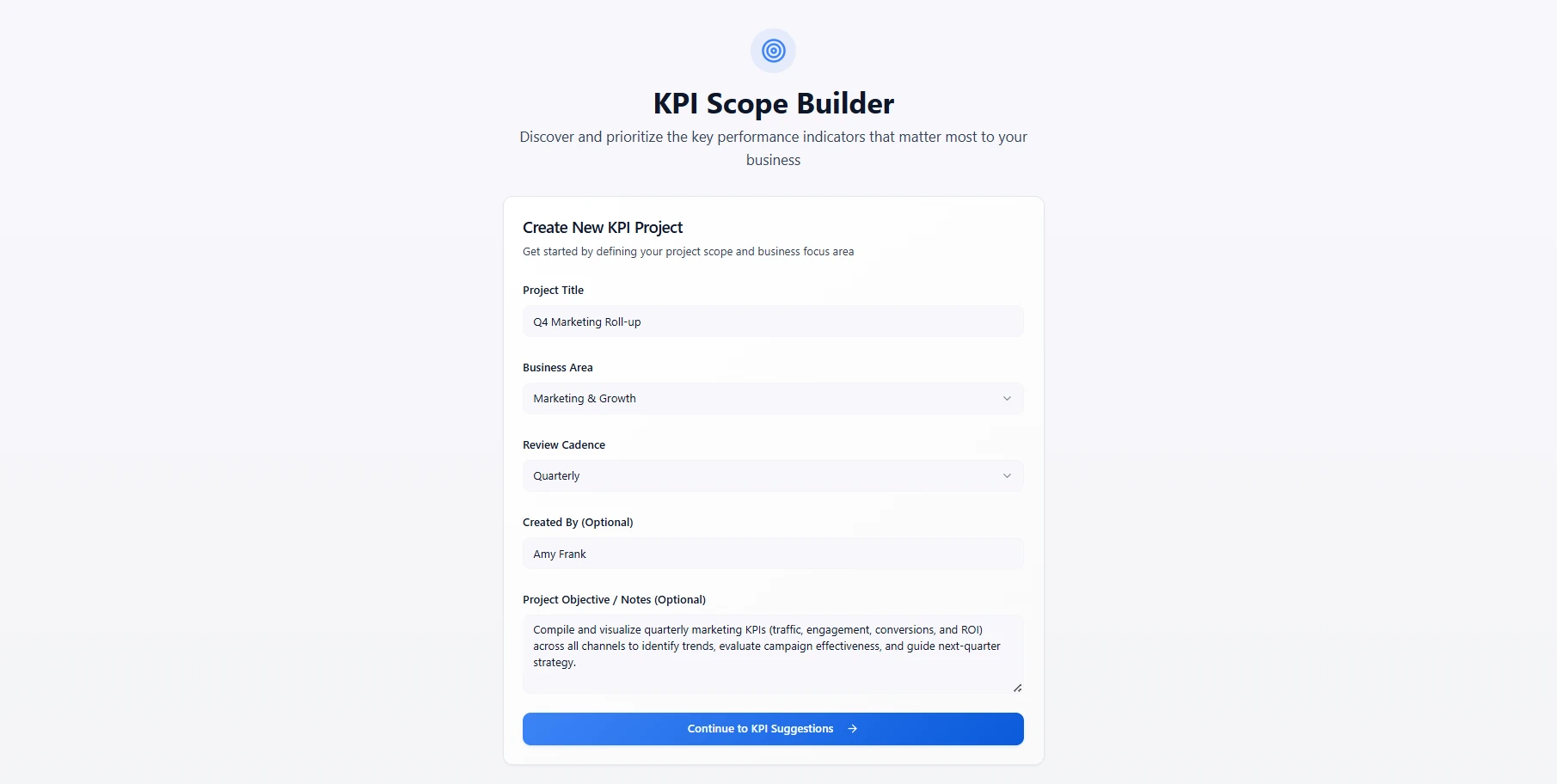
Project creation and context definition
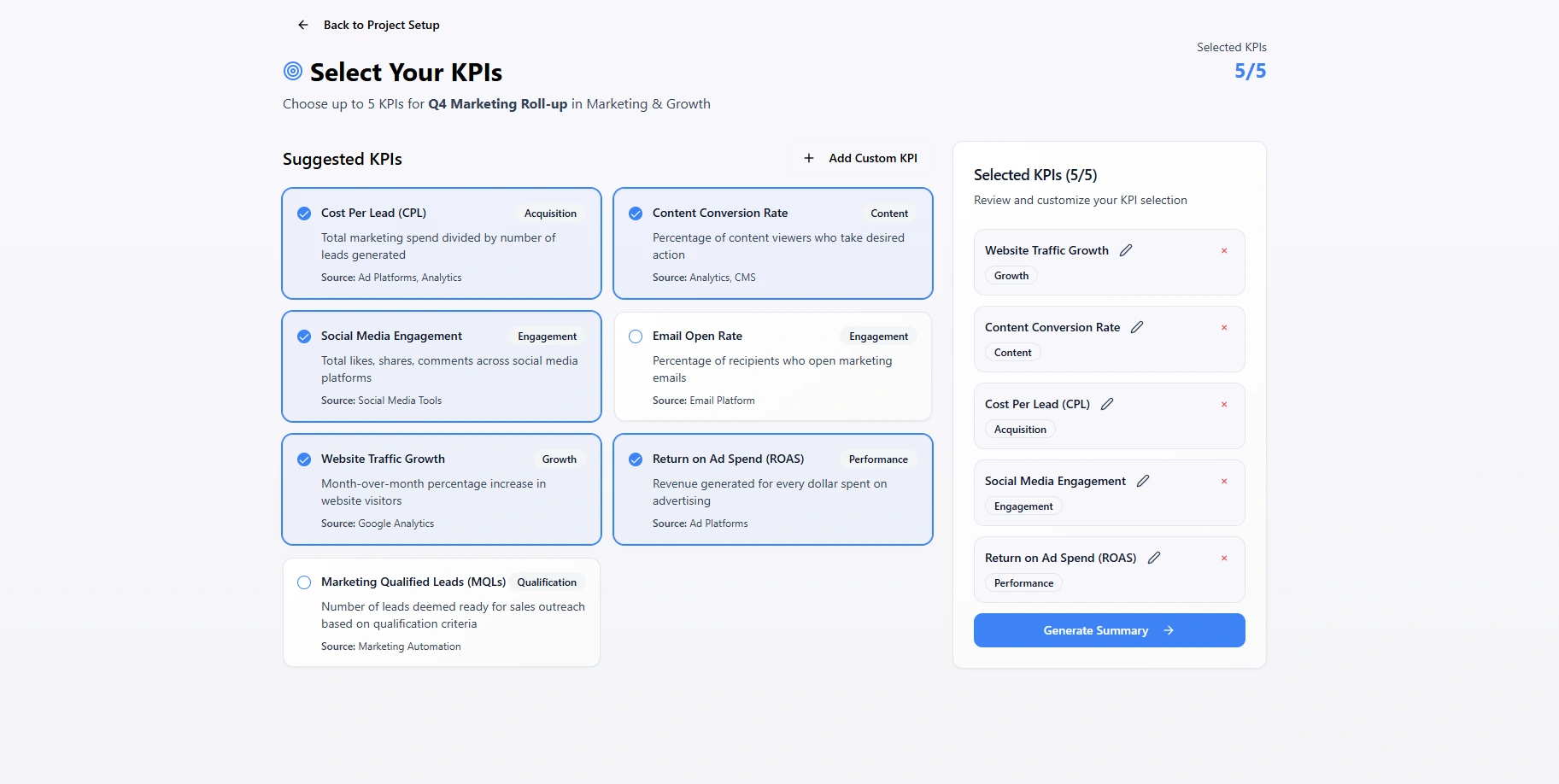
KPI selection interface with limit validation
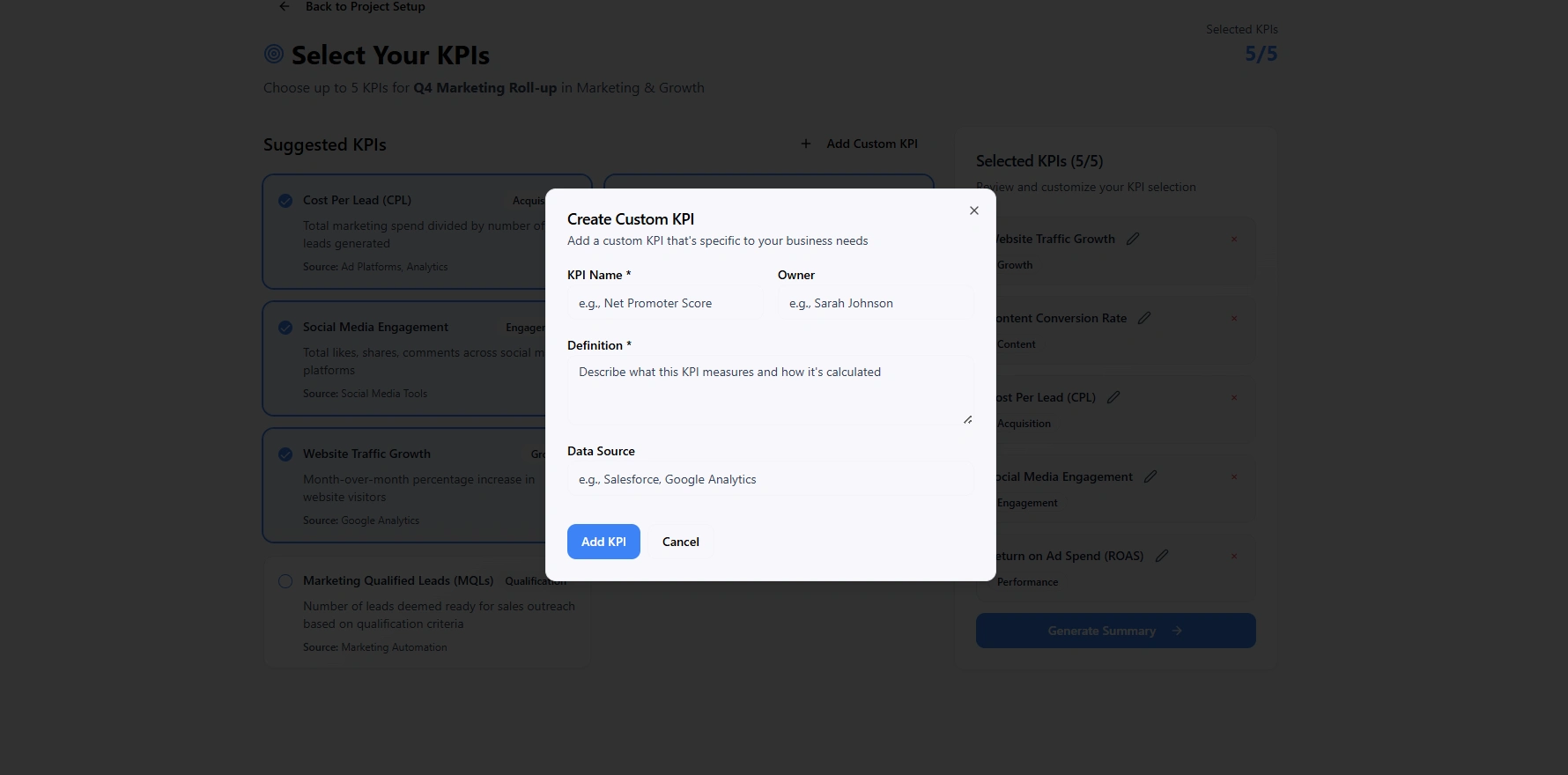
Add custom KPIs with definition, owner, and data source
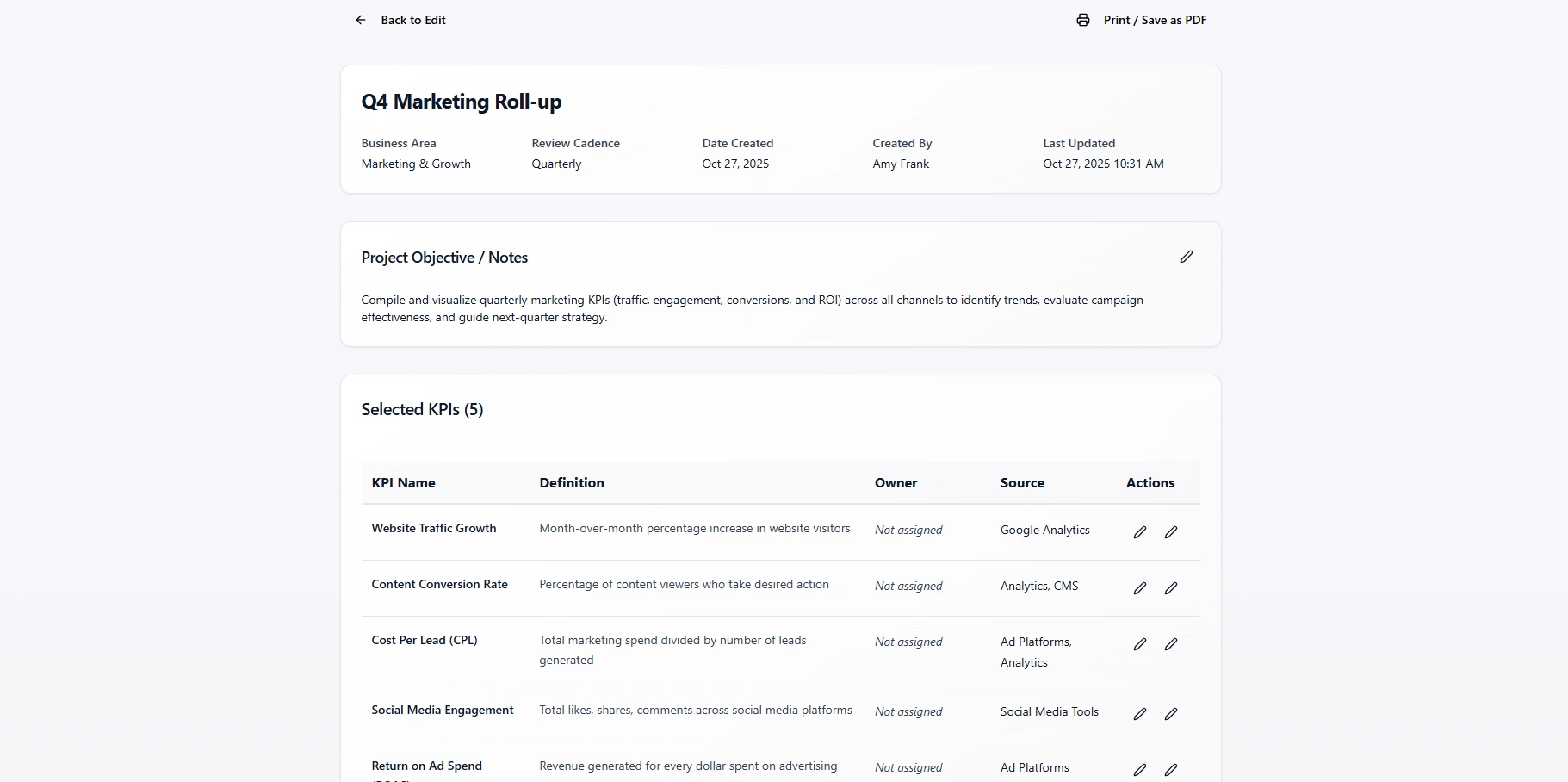
First portion of the generated KPI summary for review
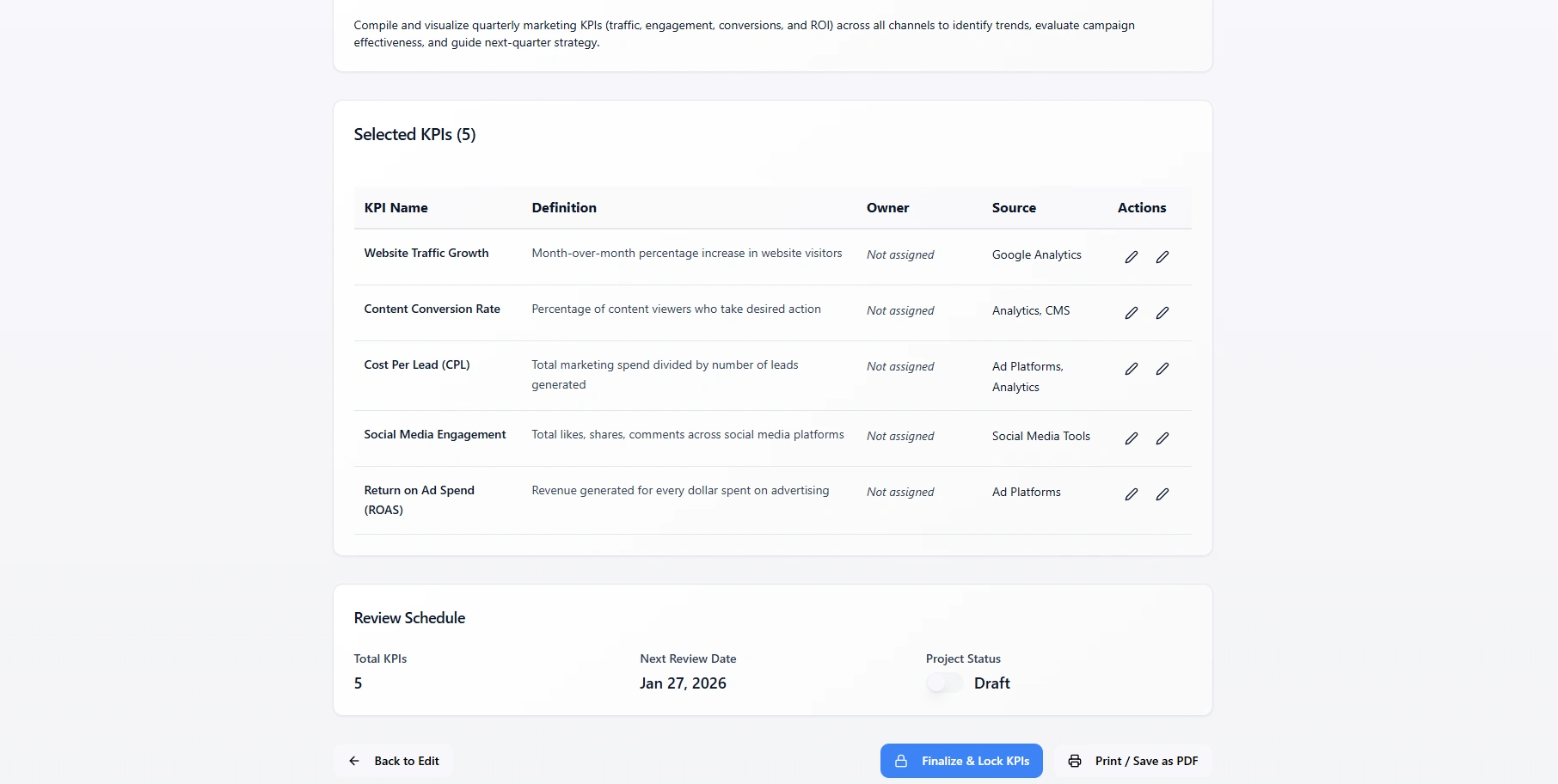
Continuation of the KPI summary showing full KPI table and review details
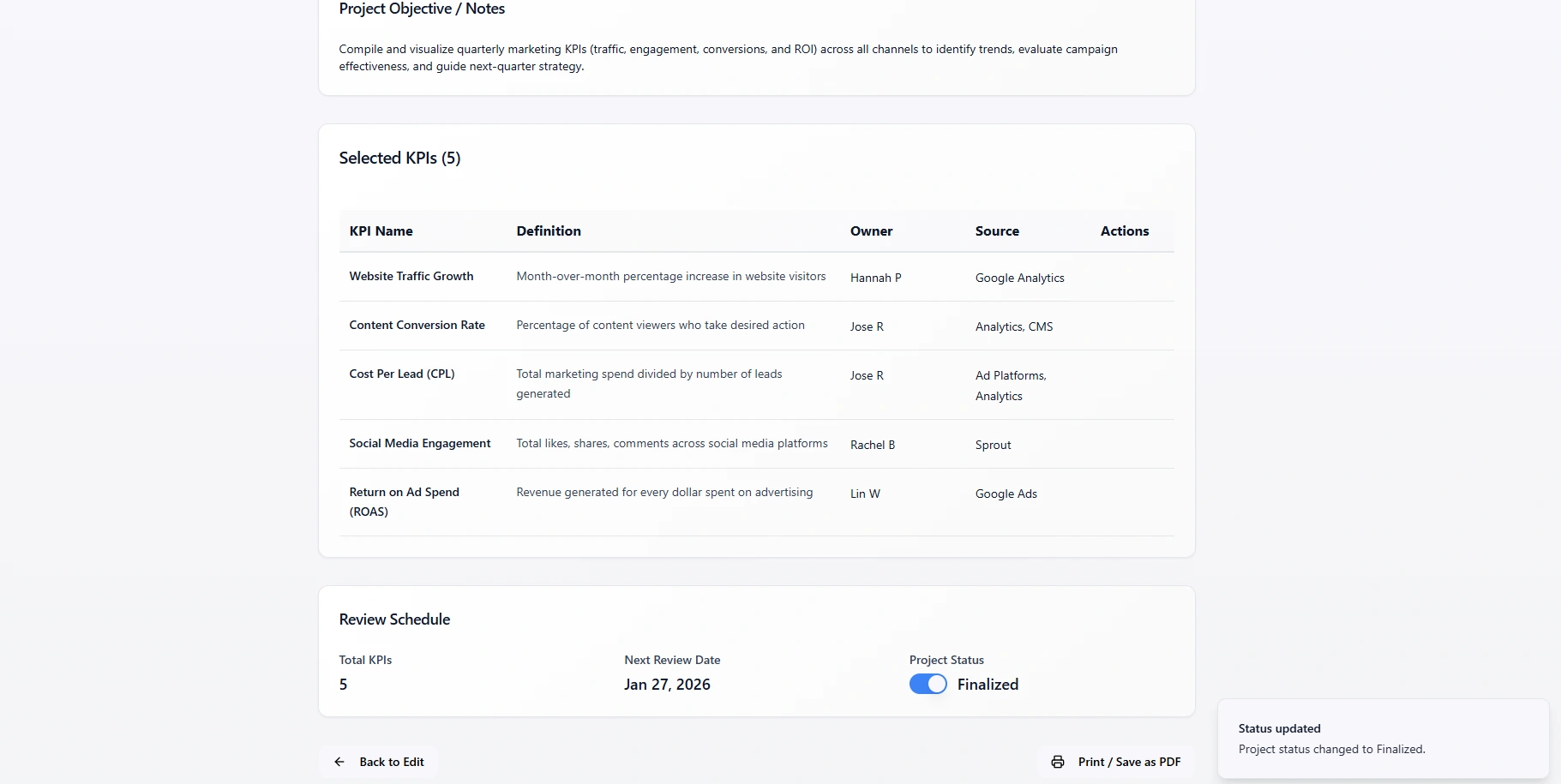
Completed project view ready for PDF export
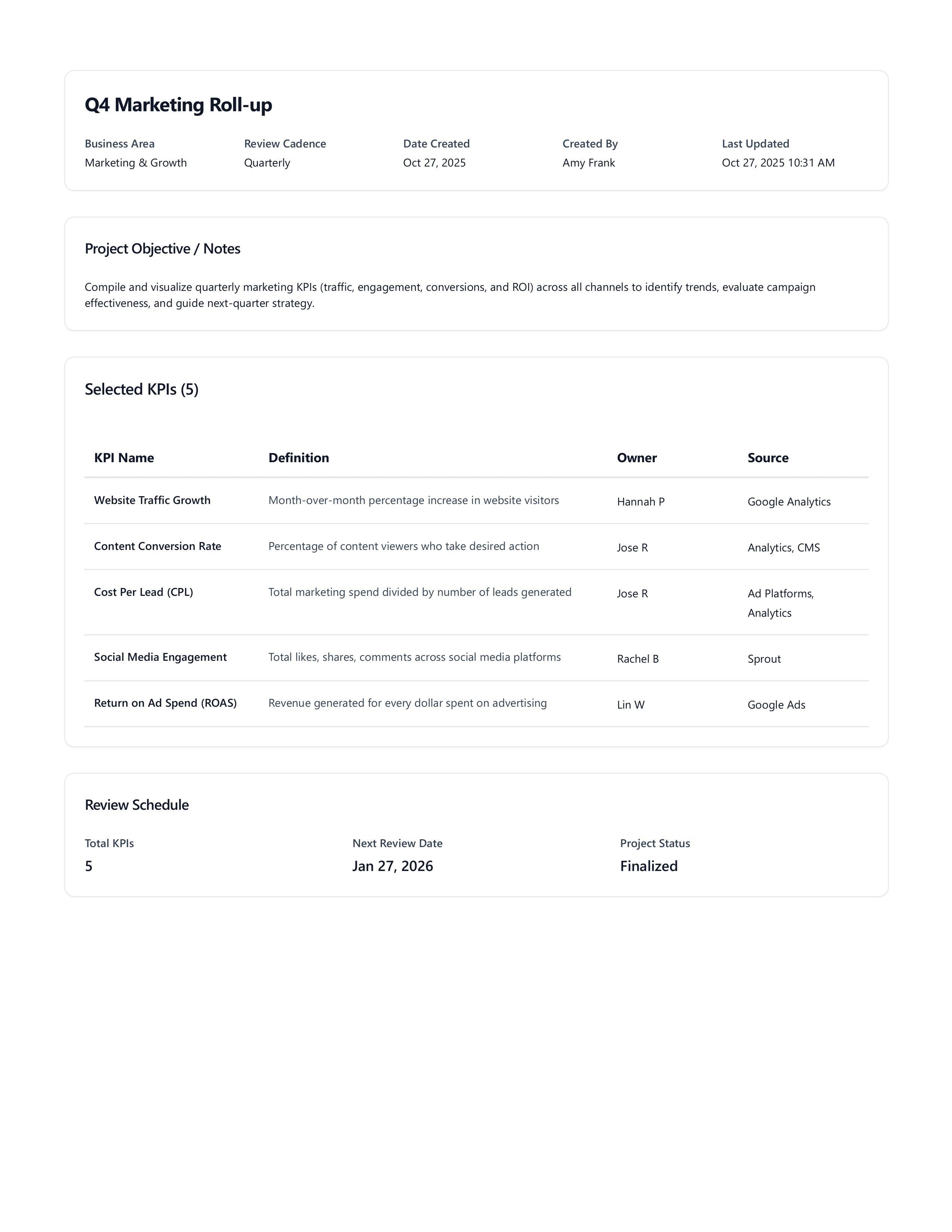
Final exported KPI summary document (auto-generated report)
📄 License
© 2025 Amy Frank. All rights reserved.
This project is shared for portfolio and demonstration purposes.
Concepts and documentation may not be reused for commercial or derivative purposes without permission.
Like this project
Posted Feb 7, 2026
A low-code web app prototype that helps teams define, align, and govern KPIs before analytics, dashboards, or CRM builds begin.