Built with Webflow
Startup: Bicycle Health Webflow and Growth Hack

Rod Acevedo


Bicycle Health
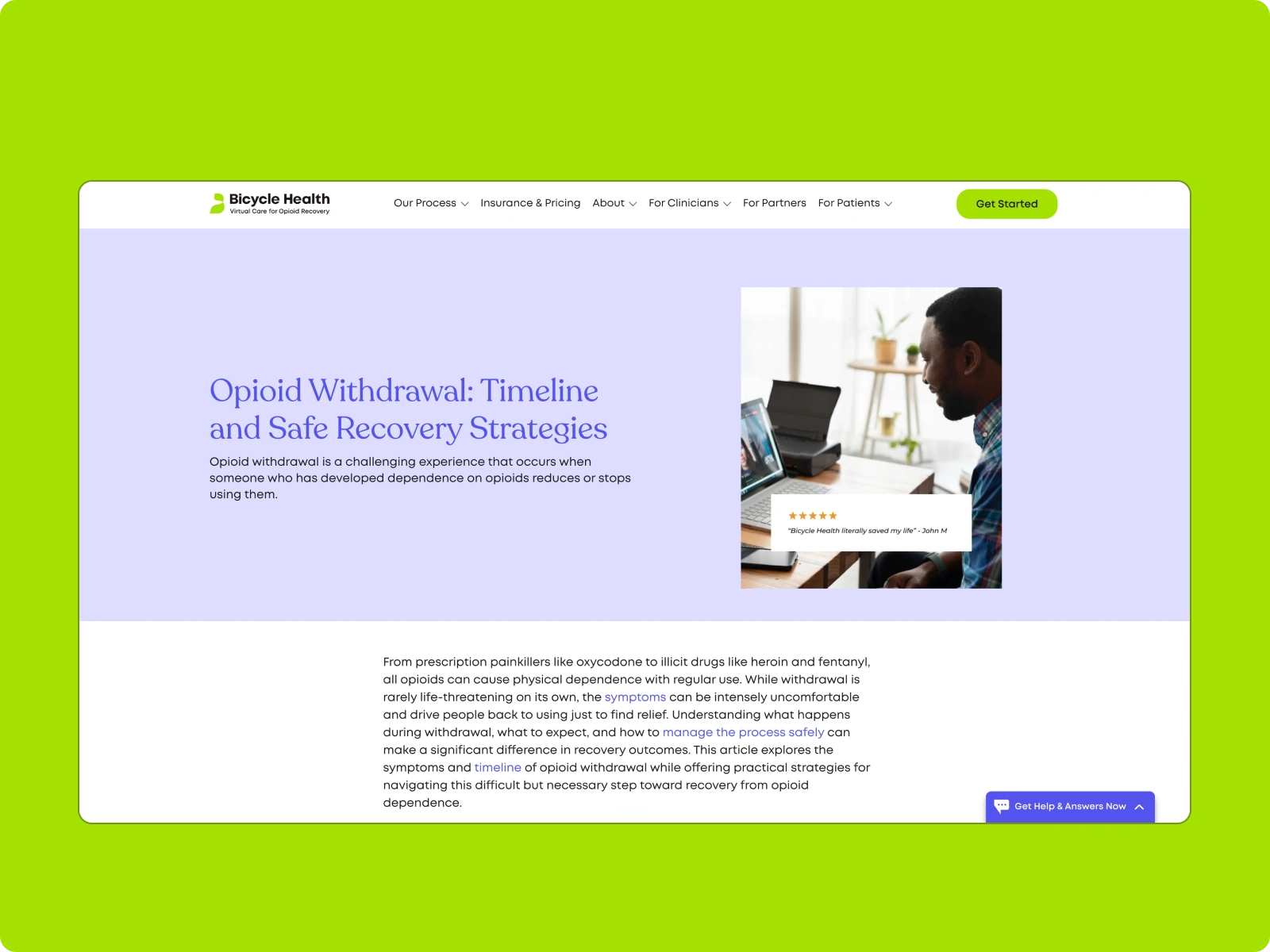
The website where someone decides whether to seek opioid addiction treatment. A four-year partnership: multiple sites and 10,000+ pieces of content consolidated into one Webflow build, certified accessible to WCAG 2.1 AA.
Bicycle Health is the largest provider of virtual opioid use disorder treatment in the United States. Their patients arrive at the website in one of the hardest moments of their lives: struggling with addiction, often carrying shame, frequently after bad experiences with a healthcare system that judged them. For most, the site is the first interaction with the brand. If it feels clinical, cold, or complicated, they close the tab. And closing the tab can cost someone their shot at recovery.
Behind the scenes, the digital estate had grown the way fast companies grow: an ageing WordPress build plus multiple mini sites, each drifting in its own direction. More than 10,000 articles, FAQs and resources that patients genuinely rely on, spread across platforms the team had outgrown.
Impact
One Webflow platform · 10,000+ pieces of content migrated · certified WCAG 2.1 AA · four years and counting
The old WordPress build and every mini site converged into a single platform the team ships on without waiting for a development cycle. An independent audit this year certified the site to WCAG 2.1 AA, territory most healthcare websites never attempt, let alone pass. And it's the front door Bicycle Health grew through: past 40,000 patients treated across 49 states, US$103 million in total funding, operating profitability, and a TIME100 Most Influential Company listing along the way. Companies don't keep a design partner for four years of that kind of growth unless the work keeps earning its place.
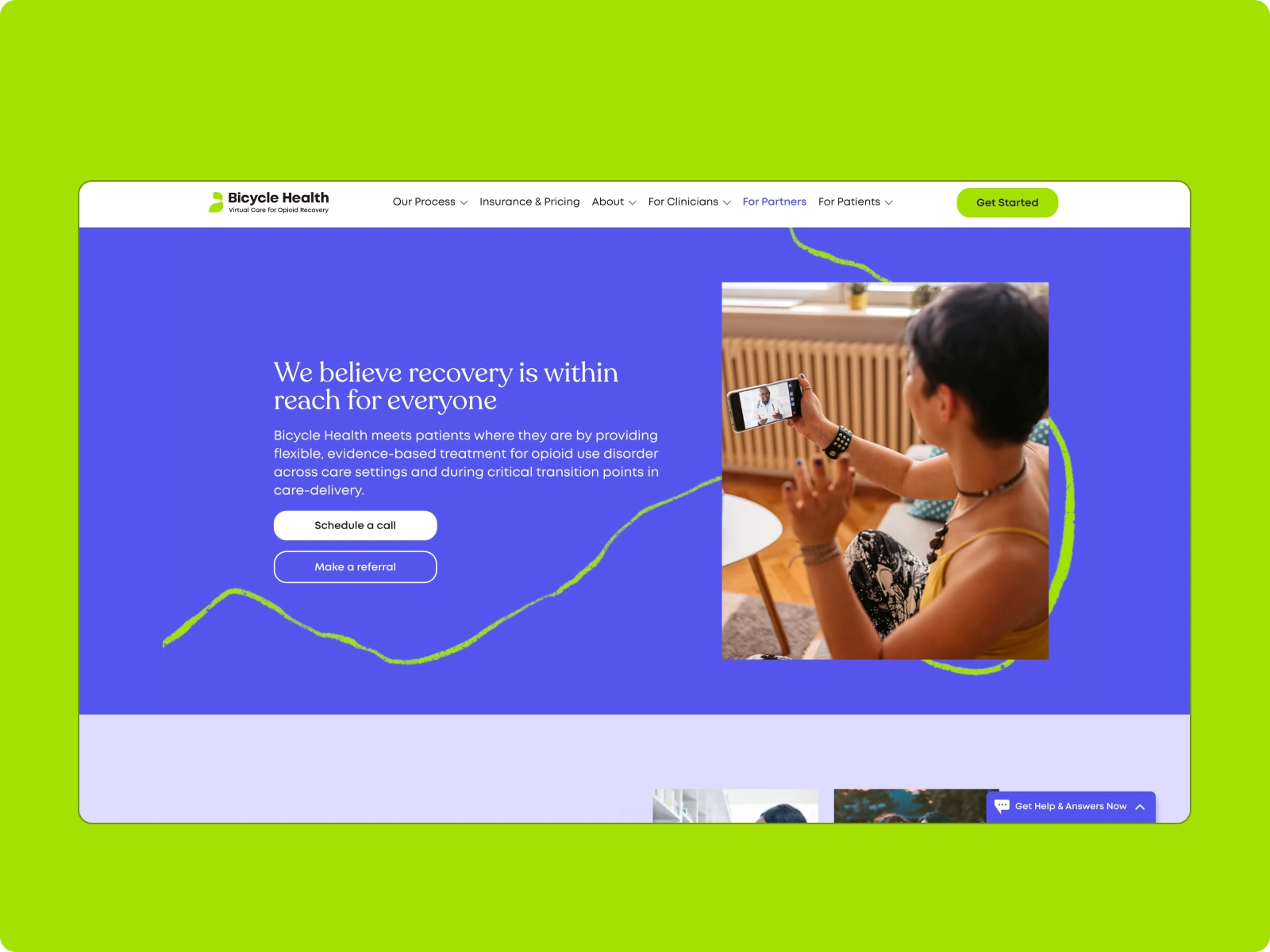
My role as design lead, accessibility lead and Webflow expert
I've led the design and the build across the whole arc: the migration itself, consolidating the mini sites, structuring 10,000+ articles and FAQs so patients can actually find what they need, and the accessibility work that carried the site through certification. I also work as a growth design lead on the acquisition side, designing and iterating landing pages to lift conversion. The site isn't just accessible and maintainable. It's a front door that converts.
Three decisions that matter
Accessible means anybody, and it's certified.
Care is the product, so the website had to practise it. Whatever a visitor's device, connection, ability or state of mind, the site works for them. That's not a claim; it's an audit result. WCAG 2.1 AA, independently audited and passed this year.
A safe space before a sales page.
Someone considering treatment for opioid use disorder is deciding whether they can trust you with the most vulnerable thing about them. Every page is built to lower that barrier: warm rather than clinical, plain language rather than medical jargon, and nothing pushing anyone faster than they're ready to go. In mental health, ease isn't a nice-to-have. It's the difference between someone starting treatment and someone giving up.
One platform the team can move on.
Converging everything into Webflow was an operating decision, not a re-platform. With 10,000+ pieces of content in one structured system, the team publishes, launches new state pages and spins up campaigns without engineering in the loop. A website attached to a company growing this fast has to move at the company's speed, and for four years it has.
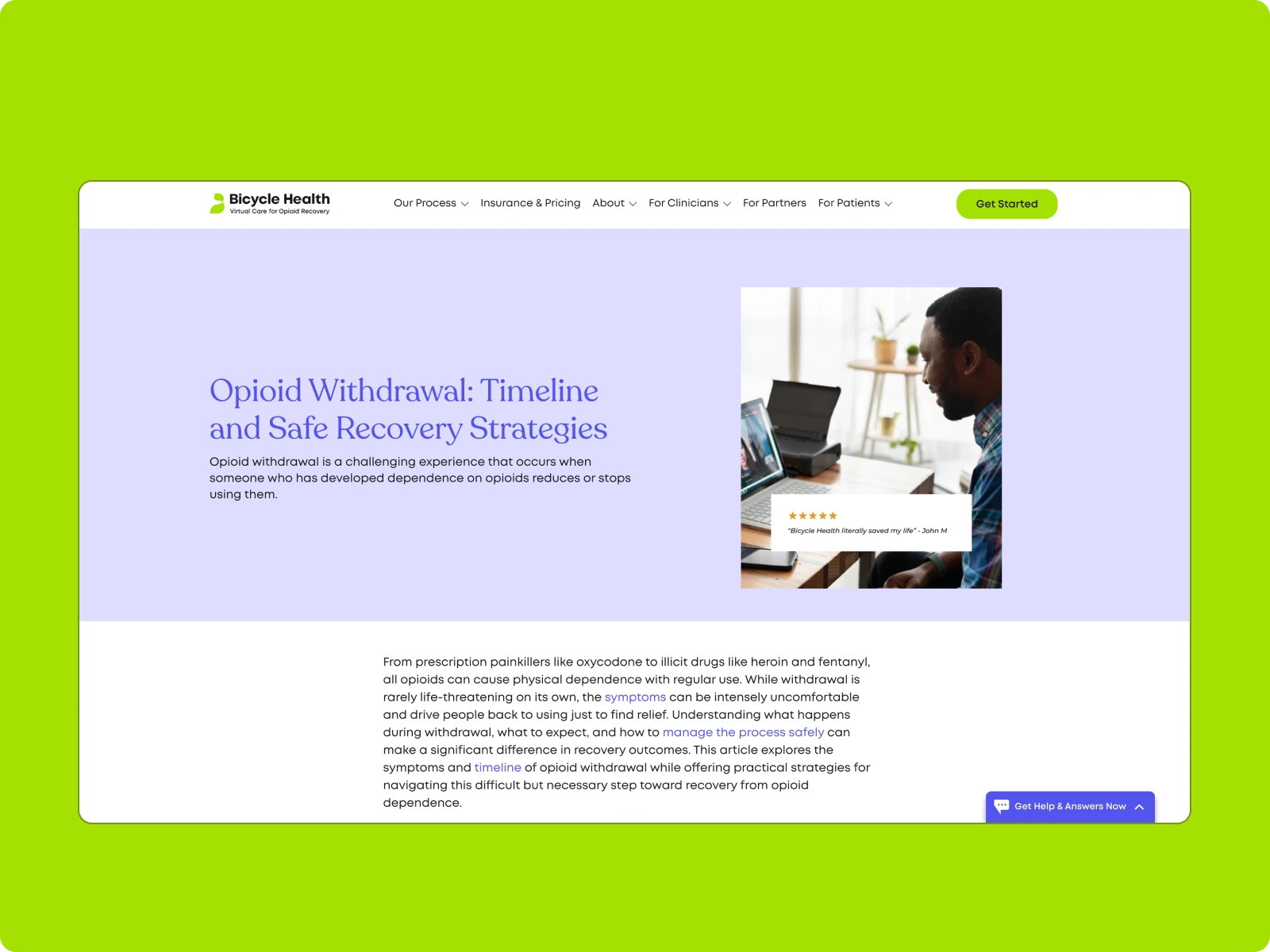
If your website is the front door to care, or your content has outgrown the platforms it lives on, this is the work I've been doing for four years at the sharp end of US healthcare.
Get in touch.
Like this project
Posted Aug 3, 2026
Redesign Bicycle Health's website, improving accessibility and scalability for this project connecting Claude MCP, Webflow, and Agents
Likes
1
Views
23
Clients
Bicycle Health