Career Forge: Award Winning Platform for Career Services

Samuel Faseun



Career Forge – Award Winning SaaS Solution for Career Services
Overview
Career Forge is a robust SaaS platform tailored to the dynamic needs of university career centers, employers, recruiters, and students. Designed to unify and streamline workflows, it provides dedicated tools for job management, coaching, event coordination, experiential learning, survey creation, and interview scheduling. This client-commissioned project spanned one year. As the Product Designer, I led the end-to-end UX and UI design process using Figma, collaborating with cross-functional teams and stakeholders across institutions.
The Problem
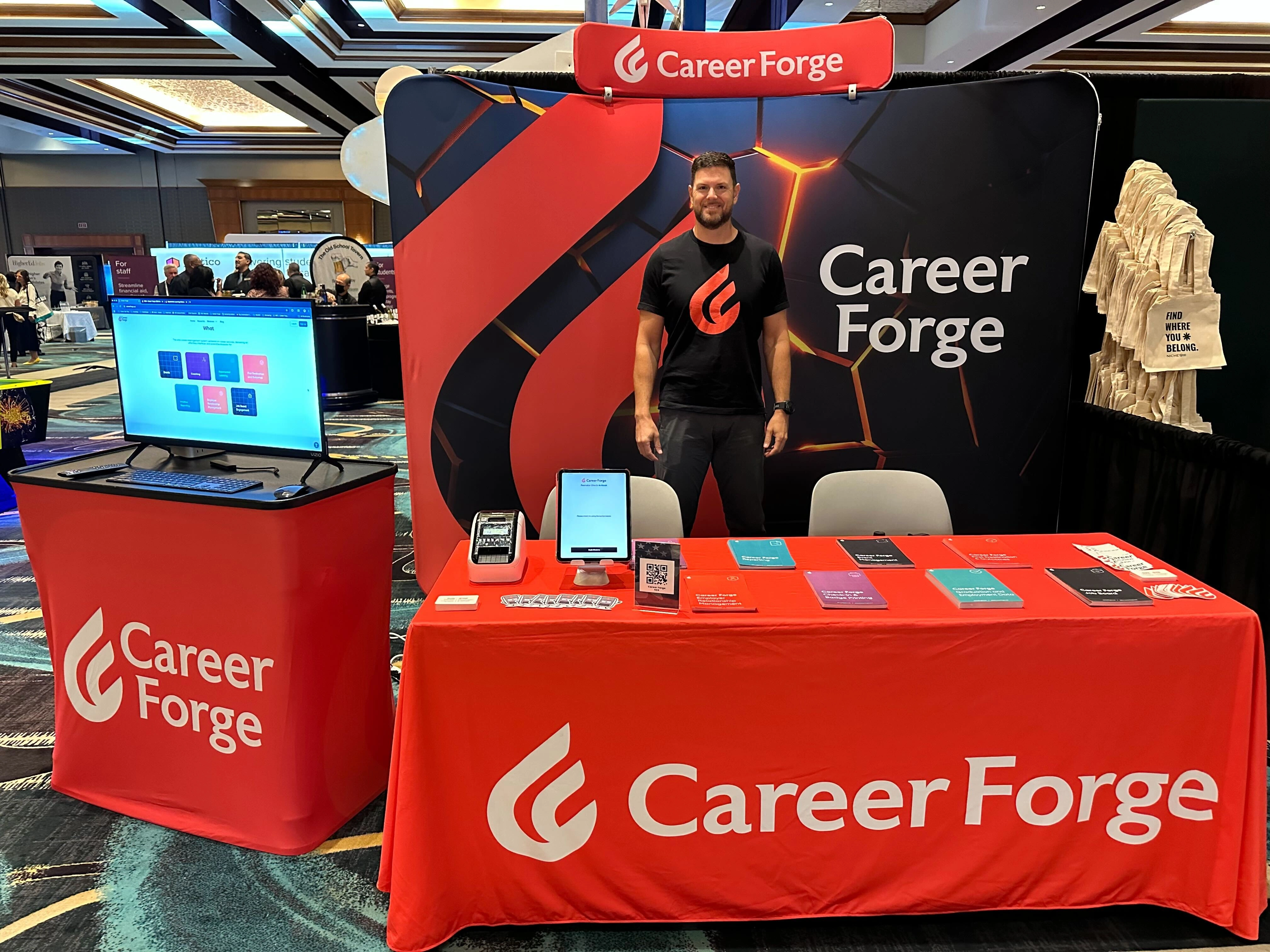
Career services often rely on generic CRMs designed for sales teams, which creates friction when managing complex workflows such as student coaching, job placement, and employer engagement. These systems lack the flexibility, clarity, and user-centered focus needed to serve diverse stakeholders effectively. Career centers were experiencing clunky, non-specialized systems that led to administrative overload, disconnected workflows for core tasks like job posting and coaching, poor student engagement, and a lack of actionable data for informed decision-making.
The overarching goal of the project was to replace these outdated systems with a purpose-built, role-based platform that centralizes interactions between students, coaches, and employers. It aimed to improve engagement, enhance job placement outcomes, and provide career centers with advanced analytics and tools for tracking success. Key performance indicators included platform adoption rates, reductions in manual workload, growth in student participation, and positive feedback from all user groups.
Research & Discovery
To ensure our design decisions were grounded in user reality, we conducted extensive research using a blend of in-depth user interviews, broad-based surveys, and a competitive analysis of other platforms such as Handshake and Symplicity. Participants included career center staff from a diverse range of institutions, students across academic levels, and employers who actively recruit on campuses.
Our findings revealed that career coaches were overwhelmed by fragmented tools and data management systems, making it difficult to support students and track outcomes. Students often felt disconnected from their career services offices and were unsure how to engage effectively. Employers, on the other hand, wanted more efficient tools to manage their campus recruiting efforts and gain visibility into engagement data.
To bring clarity to these insights, we developed detailed personas and journey maps. The user journey maps for each persona highlighted critical friction points across discovery, engagement, and feedback loops, guiding us toward actionable design priorities.
Ideation & Strategy
Our ideation phase included remote design sprints, asynchronous workshops, and stakeholder co-creation sessions. These collaborative formats enabled us to generate and validate concepts quickly, ensuring alignment with both user needs and institutional goals. A modular architecture emerged as the most effective strategy, allowing the platform to scale and adapt to various institutional requirements.
We identified six core modules essential to the user journey: Jobs, Coaching, Events, Experiential Learning, Surveys, and Interviews. Each module was mapped to specific user workflows and designed to integrate seamlessly into a unified experience. Jobs focused on postings, recruiter assignments and student applications, while Coaching enabled one-on-one scheduling and resource management. Events supported the hosting and logistics workflows, Experiential Learning to manage individualized learning outcomes that contribute meaningfully to students' academic and career development., Surveys allowed feedback and outcome tracking, and Interviews streamlined scheduling and communication.
The design strategy prioritized clarity, modularity, and adaptability. We sought to create an intuitive user interface that minimized cognitive load while offering deep functionality. The UI was designed to be clean, role-specific, and customizable, enabling institutions to turn modules on or off based on their unique requirements.
Design Execution
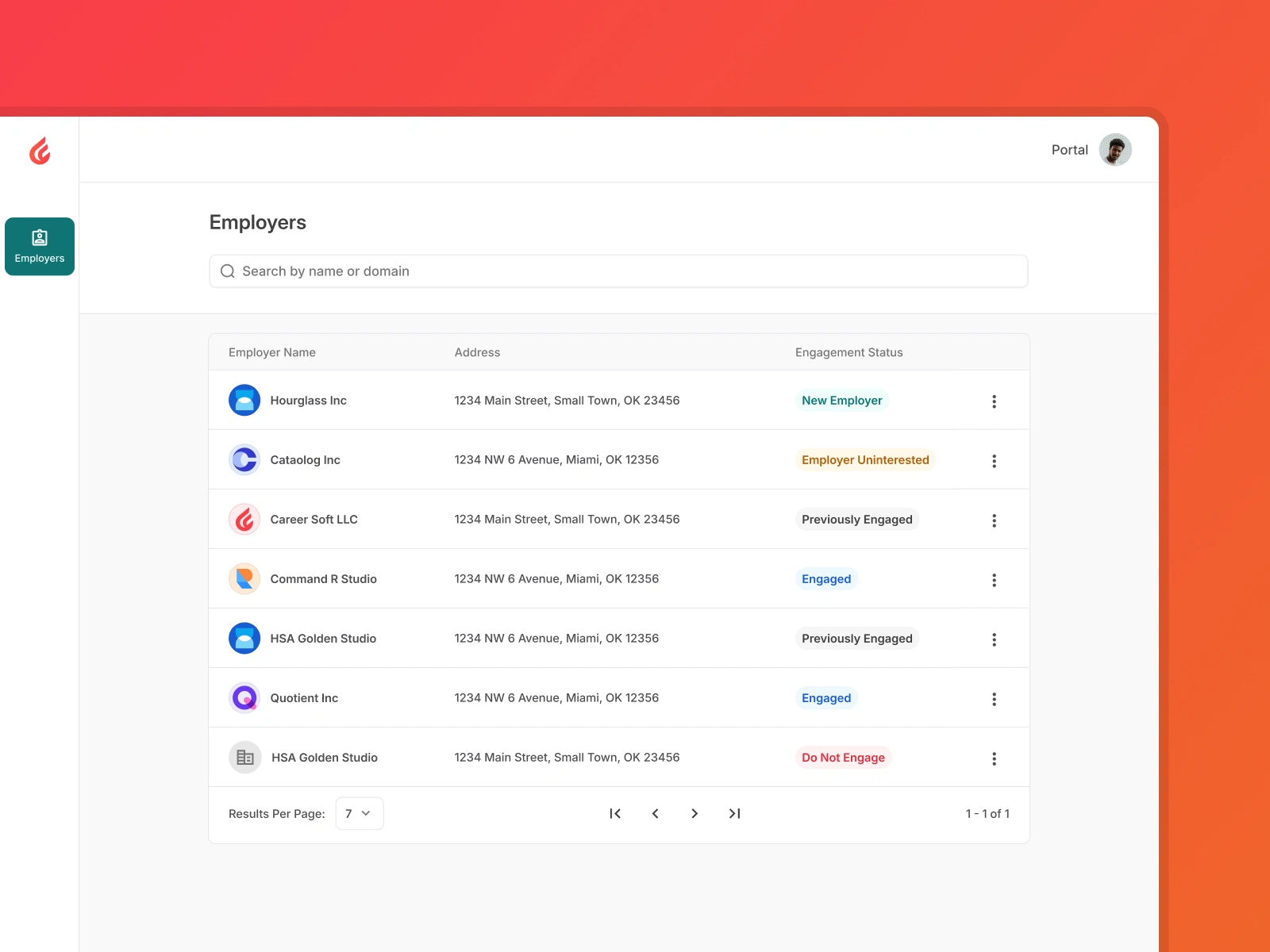
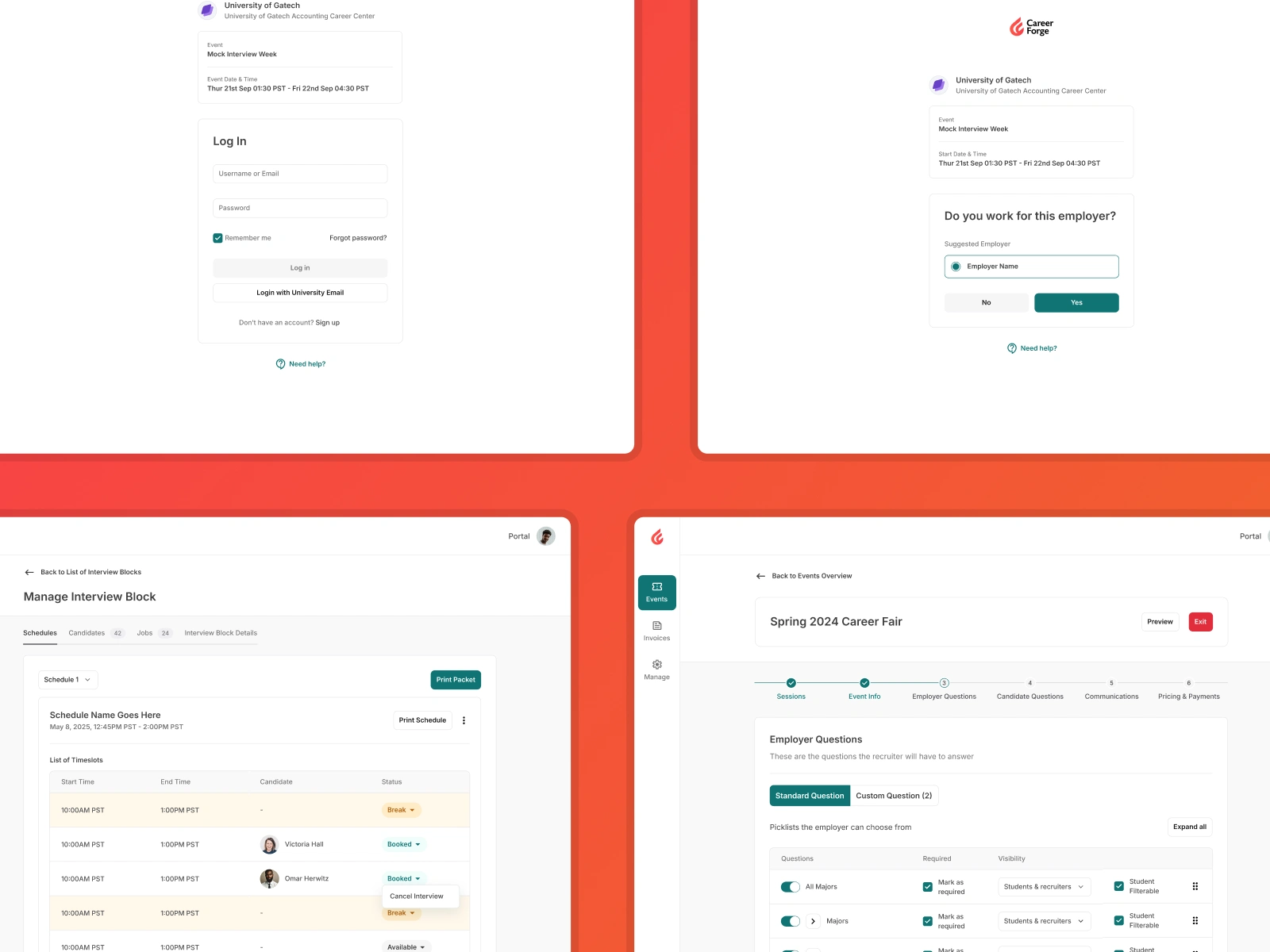
A foundational decision was to implement a comprehensive design system that would bring consistency, scalability, and efficiency to the design and development process. The system included scalable typography, interactive components like buttons and dropdowns, UI elements such as badges and modals, and layout structures for tab navigation, form design, and content hierarchy. These components were rigorously documented within Figma, and a living guide was created to ensure seamless handoff and alignment with developers.
Designs evolved iteratively. We began with low- and mid-fidelity prototypes to explore structure and functionality, refining them through feedback loops and usability walkthroughs. High-fidelity mockups brought these designs to life with realistic data scenarios, allowing us to fine-tune interactions, layout balance, and visual hierarchy.
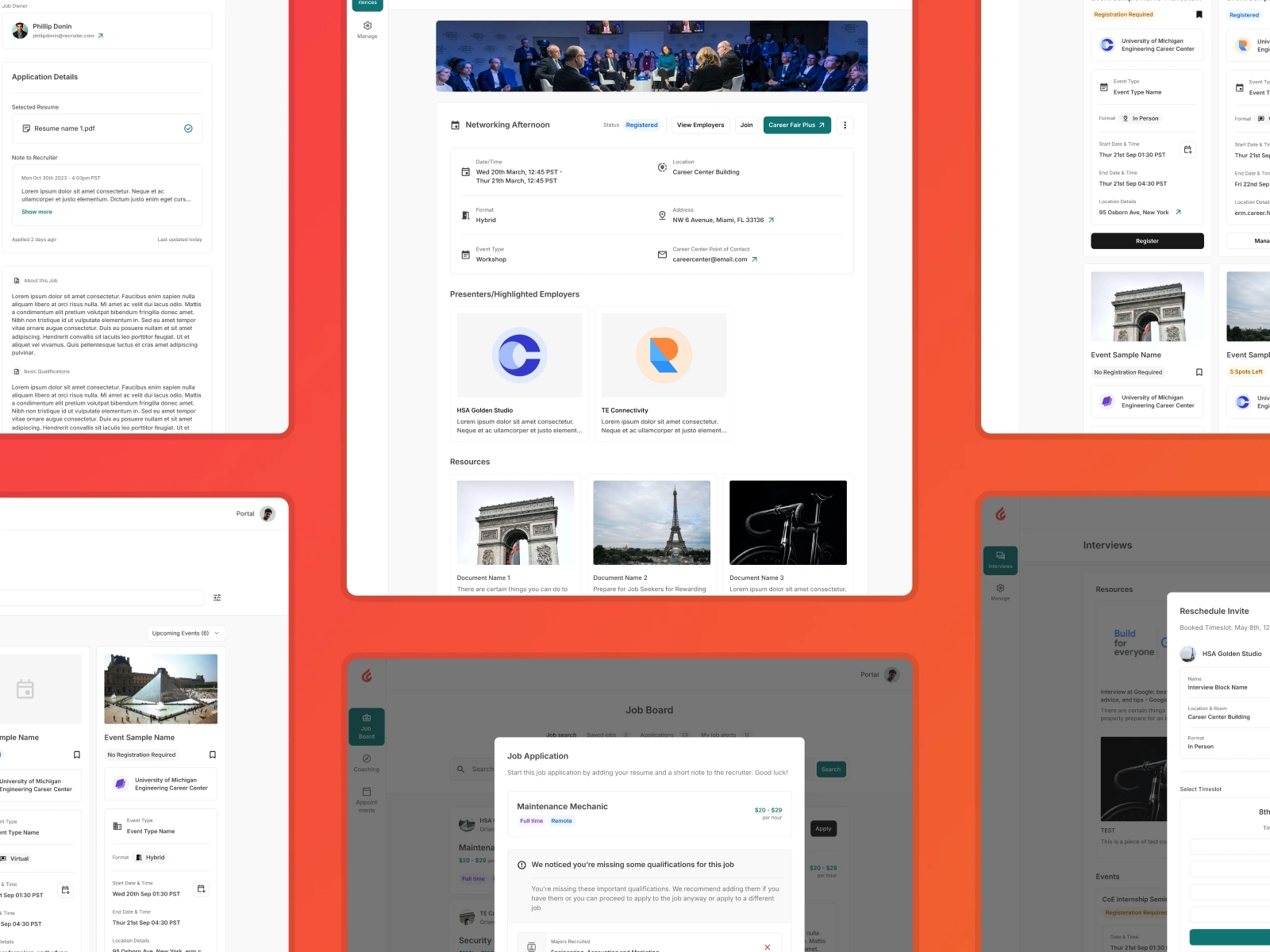
Accessibility was deeply embedded into our process. We adhered to WCAG 2.1 AAA standards to ensure the platform could be used by everyone. This meant designing for keyboard navigation, optimizing color contrast, ensuring screen reader compatibility, and implementing accessible ARIA roles for dynamic content. These efforts helped us not only meet compliance requirements but truly elevate the usability and inclusiveness of the platform.
Testing & Validation
Testing was a continuous and integral part of the project lifecycle. We conducted moderated and remote usability tests using interactive Figma prototypes with students, coaches, and employers. Each session was designed around core platform tasks and aimed to uncover usability issues, gather qualitative insights, and measure task success.
From these sessions, we identified several areas for improvement. Students found job filtering to be unintuitive, prompting a redesign of the filter interface using plain language and progressive disclosure. Career coaches wanted faster access to appointment scheduling and student profiles, which led to the addition of persistent quick-action panels. Employers experienced difficulty managing multi-institution interview schedules, so we introduced a consolidated view and calendar integration. We also improved interaction feedback across the platform—such as loading states and inline validation—to create a more confident user experience.
These insights enabled us to iteratively refine the design, reduce friction, and improve engagement across all user types.
Results & Impact
Career Forge launched successfully and saw rapid adoption across early partner institutions. The platform demonstrated significant efficiency gains for staff and increased engagement among students and recruiters.
Administrative workload for coaches was reduced by 45% due to automation and better workflow management. Student participation in coaching sessions and career events rose by 30%, driven by clearer scheduling interfaces and targeted communications. Employers reported faster time-to-fill for posted roles, thanks to improved candidate access and scheduling features. User satisfaction scores exceeded initial benchmarks, with praise for the platform’s clarity, responsiveness, and focus on real-world use cases.
Stakeholder feedback was overwhelmingly positive. One particularly impactful endorsement came from Sue E. Brien, Assistant Director of Employer Development and Relations at Duke Engineering Master’s Program, who noted that “the long-overdue platform’s features directly match what career services professionals need, especially those of us specializing in employer relations.”
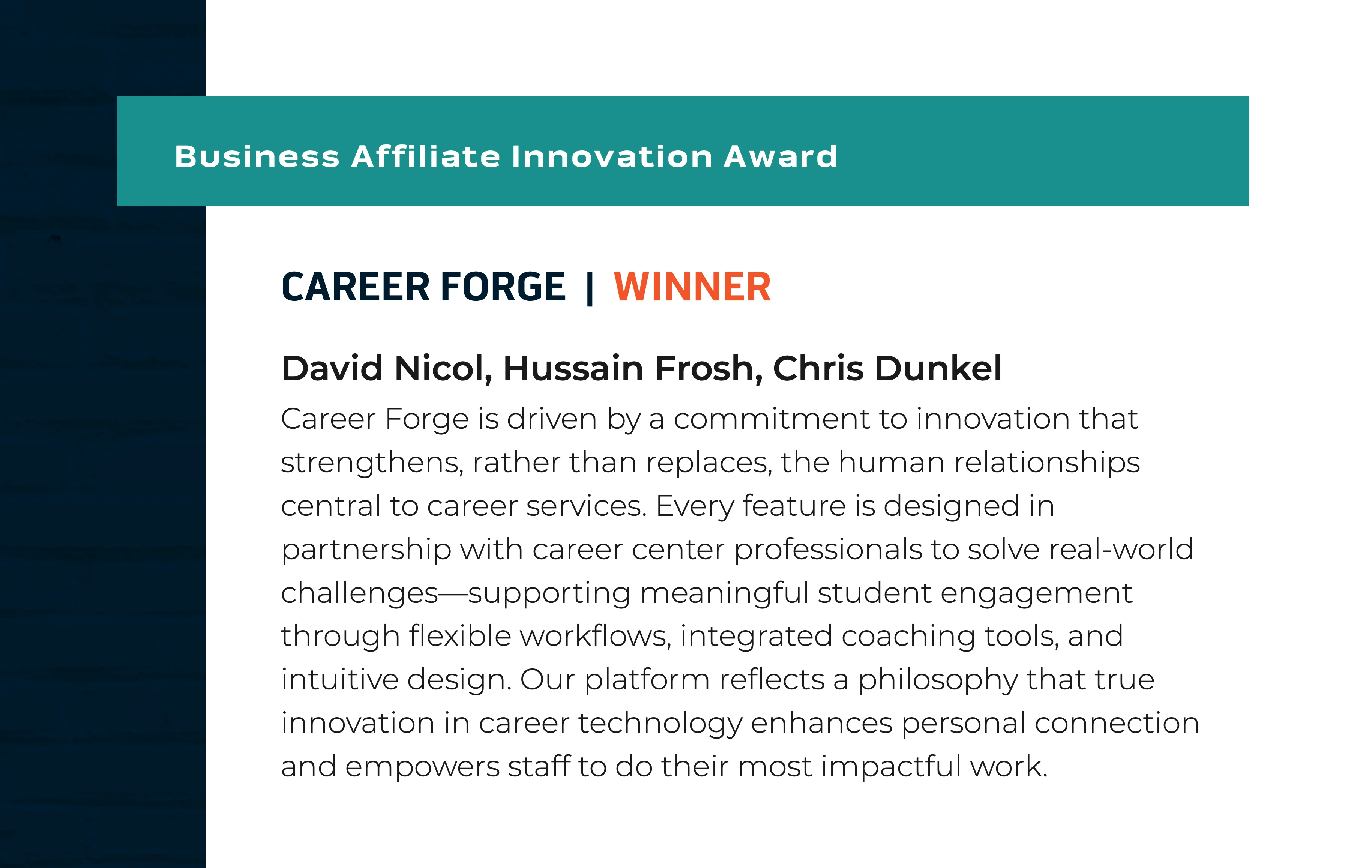
Crowning these achievements, Career Forge received the prestigious 2025 NACE Award for its innovation in career services technology. The award citation recognized the platform for its intuitive design, deep integration with user workflows, and its philosophy of enhancing—rather than replacing—the human connections at the heart of career services.
Reflection
This project was a powerful learning experience that deepened my understanding of designing complex, role-based systems. I learned how to lead with empathy, align stakeholders, and build scalable solutions grounded in real user needs. Building a detailed design system and driving cross-functional alignment taught me the importance of operational clarity in delivering consistent, high-impact UX.
If given more time and data, I would expand usability testing to include a wider range of institutions, particularly international and community colleges, to better account for cultural and infrastructural diversity. I would also explore advanced analytics capabilities that help career centers proactively identify trends and improve their services.
Above all, I am most proud of how the platform turned genuine user frustrations into a product that not only delivered real value but also received national recognition. It stands as a testament to what thoughtful, user-centered design can achieve when paired with a clear mission and strong collaboration.
Like this project
Posted Jun 3, 2025
Career management platform prioritizing and humanizing the necessary connections between students, career services staff, and employers for superior outcomes.
Likes
1
Views
9
Timeline
Mar 3, 2024 - Apr 3, 2025