Time to Feel- Timber and John Campaign

Karin Suvaryan


Case Study: Time to Feel — A Cinematic AI Brand Campaign for Timber & John
1. Introduction
Time to Feel is a self-initiated cinematic brand campaign designed for Timber & John, a brand rooted in craftsmanship, natural materials, and emotional storytelling. The goal was to reimagine how time and intimacy are portrayed in product advertising by creating a visual narrative that feels nostalgic, poetic, and quietly luxurious.
Client Goal: Create an ad campaign for Timber & John with the aim to increase performance and drive conversions on e-commerce platforms, while staying true to the brand's core values of emotional connection, craftsmanship, and timeless design.
Deliverables:
Image suite for Midjourney
Conceptual short film campaign
Voiceover script and tagline options
Shot list and camera direction
Full creative direction and moodboard analysis
Pitch and outbound strategy
Campaign Tools and Visual Ecosystem
Art Direction: Developed from scratch using cinematic composition principles, natural styling, and golden-hour palettes.
Image Generation: Dozens of iterations created in MidJourney and OpenArt to achieve styling accuracy.
Motion Design: Camera paths storyboarded and animated in Kling AI.
Creative Writing: All voiceovers and captions scripted in poetic, brand-aligned tone using my ideas and ChatGPT.
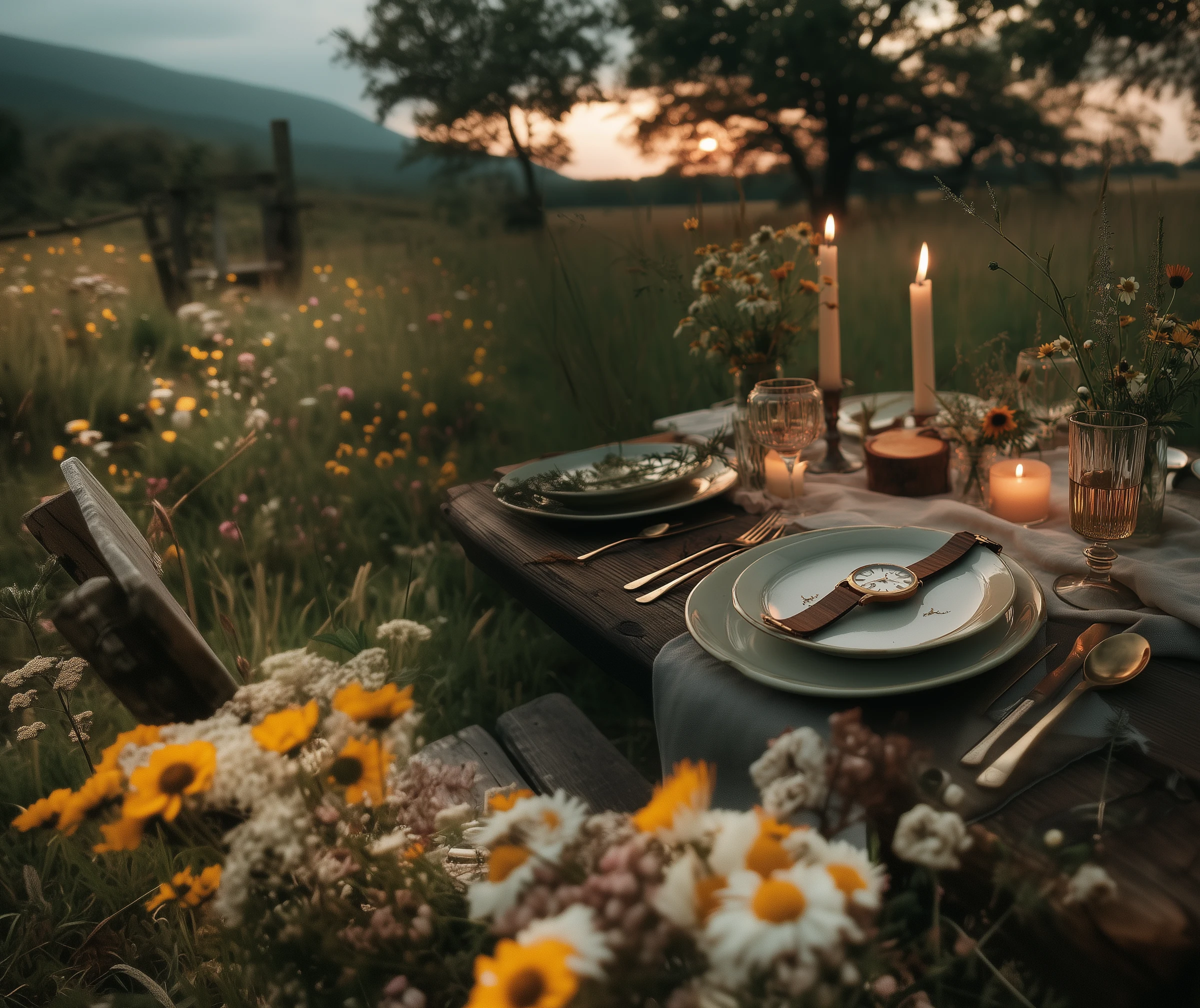
"Cinematic Dinner Table"
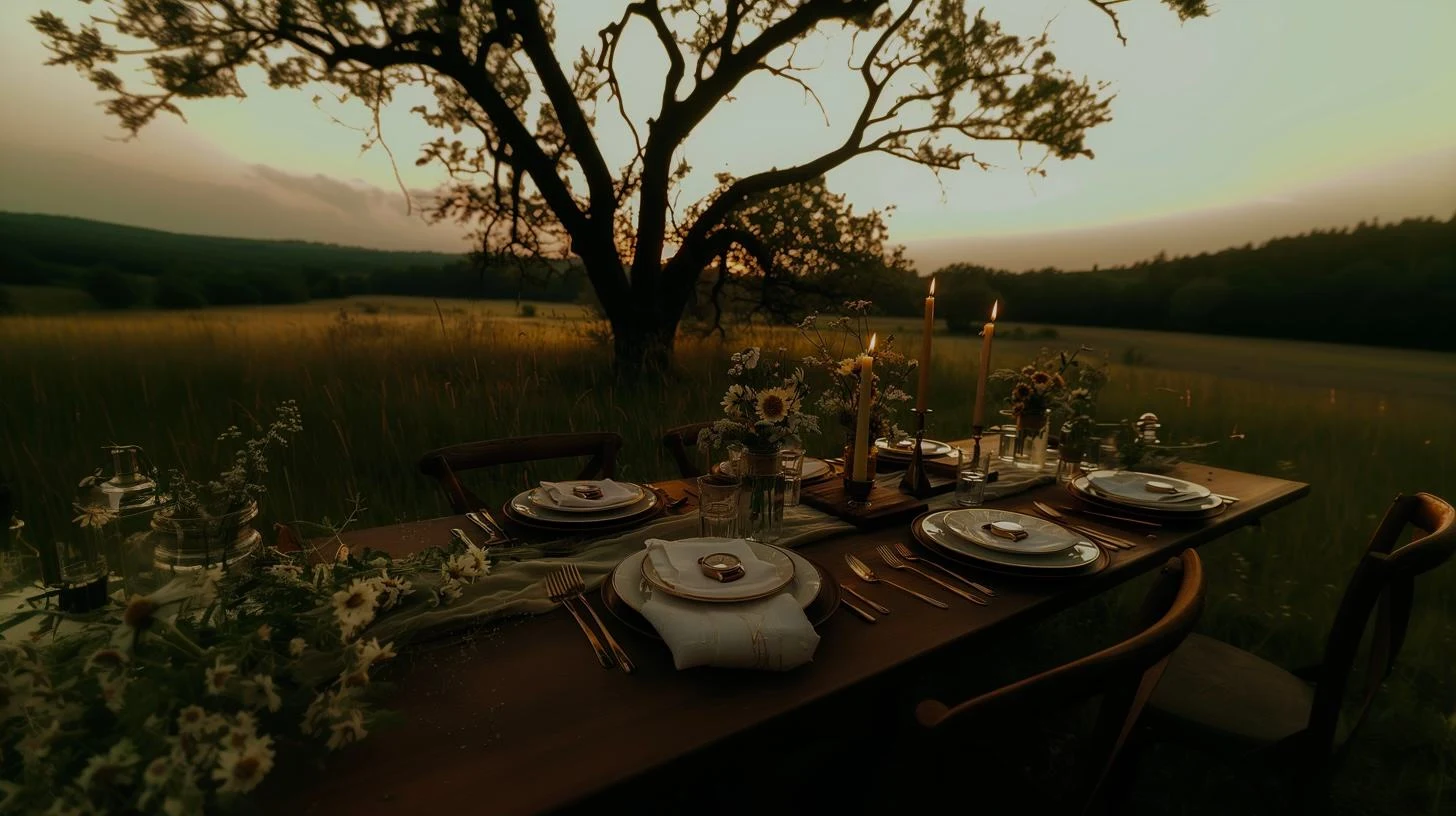
Behind the scenes - phase "Cinematic dinner table"
2. Brand Research & Analysis
Early research focused on identifying the DNA of Timber & John’s brand through a combination of moodboards, product imagery, and existing campaigns. Recurring visual themes included:
Color Palette: Warm earth tones, muted greens, oat beige, and walnut brown — reflecting natural materials like wood and alpaca wool.
Lighting: Always golden hour or diffused daylight. Intimate and ambient.
Textures & Materials: Knitted wool, raw wood, aged leather, brushed gold.
Mood: Serene, reflective, minimal, yet emotionally charged.
Their visual DNA combines Scandinavian restraint with poetic, nature-bound luxury. The brand emotion is presence. Not speed, not urgency — but ritual, warmth, and a quiet embrace of time.
Brand Emotion
Through strategic visual and tone analysis, I defined the emotional proposition Timber & John sells:
“Timber & John doesn’t just sell watches — it sells a return to slowness, to presence. A longing for time that feels intimate and unmechanized.”
3. Creative Discovery & Concept Development
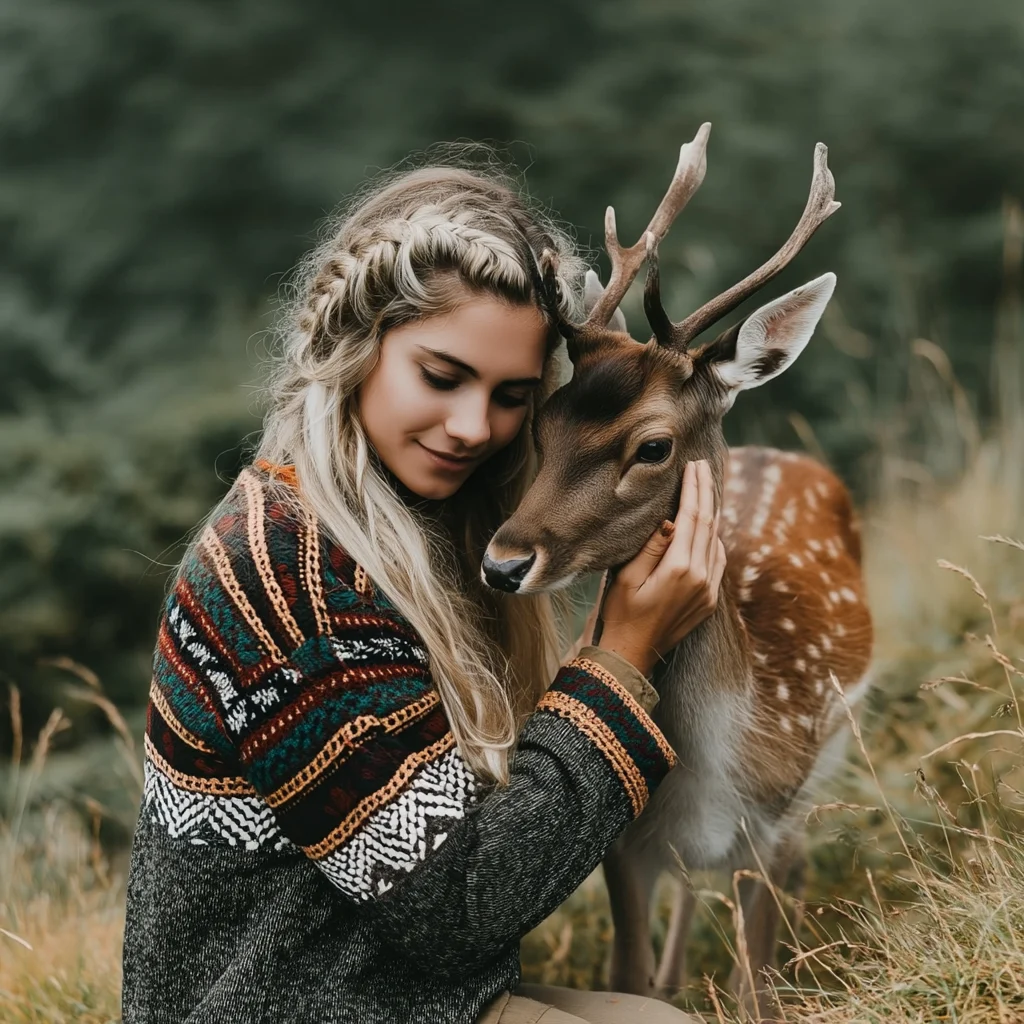
The concept began with a recurring image: a quiet dinner in the woods. As the ideas evolved through moodboarding and prompt testing, the narrative became more symbolic — centered around a woman and a deer who embody a meditative relationship with time.
Initial directions included:
Forest dinner tables
Watch gifting rituals
Intimate moments in meadows
Cinematic long takes through natural landscapes
The final concept emerged: a symbolic story about a woman who follows a deer through nature and discovers a table set with watches — time not worn, but welcomed.
Chosen Concept: Time to Feel
A short film structured around an emotional journey — a woman and a deer as visual metaphors for instinct, quiet connection, and the sacred ritual of time.
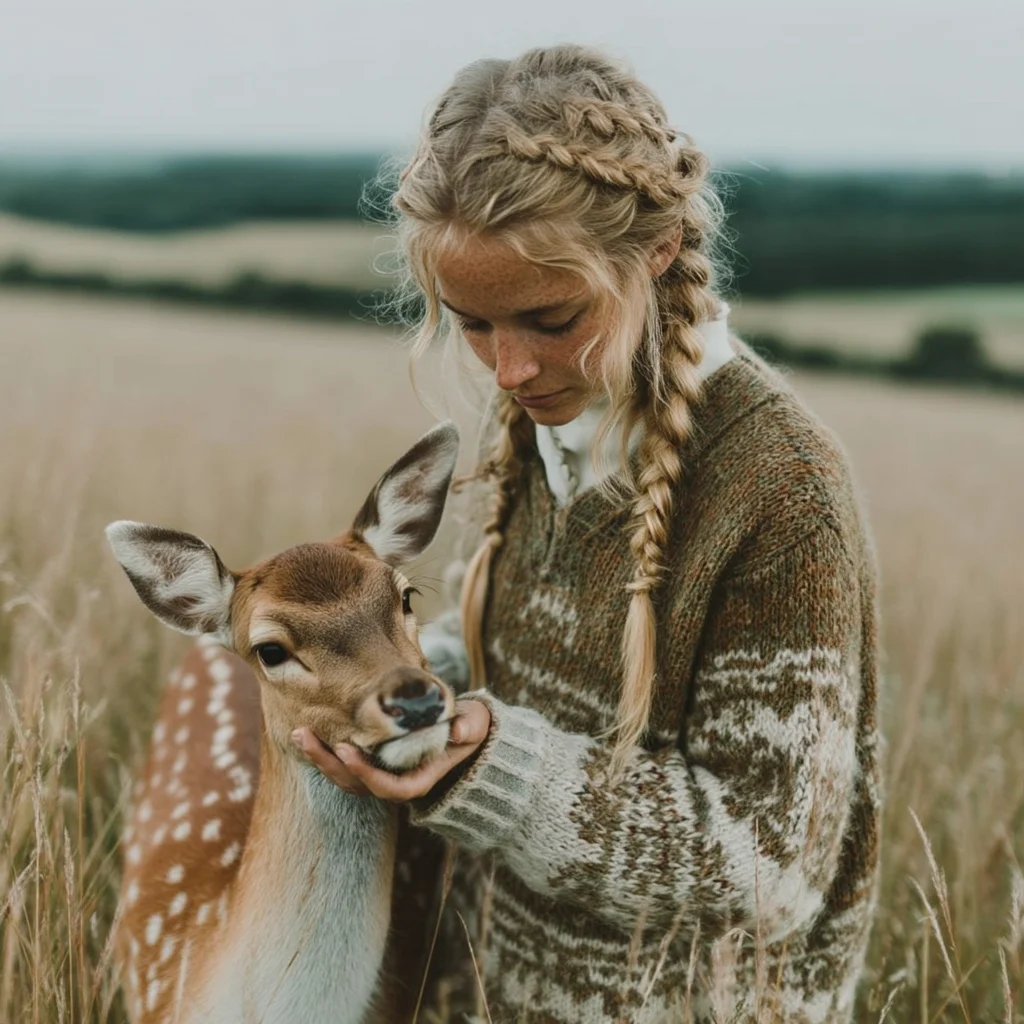
STRATEGY SHIFT: FROM PRODUCT TO PRESENCE
I moved away from the idea of conventional product shots and instead treated the watch as a sacred object — served on a plate, touched like a relic, worn not for function but for memory. The sweaters weren’t just wardrobe but story identifiers — textured symbols of place and character.
This conceptual elevation helped position the products not as merchandise but as emotional anchors in a narrative world.
Core Narrative Arc:
The woman and deer encounter one another in a meadow.
Their connection grows and becomes physical — a quiet embrace.
They run through the field together, symbolizing trust.
They arrive at a beautifully styled dinner table in nature.
The woman approaches the table, finds the watch, and sits.
They share a moment of presence, peace, and ceremony.
They walk away together — time now understood, not chased.
This concept served both emotional resonance and brand performance: sweaters were clearly worn, watches were highlighted through symbolism, and the core message — time is something you feel, not chase — anchored the emotional sell.
Campaign Message:
“What if time wasn’t running out… but returning home?”
4. Challenges & Creative Problem Solving
This campaign was created through deep iterative brainstorming:
Dozens of visual references and moodboards
Comparative analysis of Timber & John’s product photography and branding
Use of AI image tools for prototyping
Shot planning based on camera movement and emotional arcs
Adaptation of Yorgos Lanthimos–style framing and tone
Every element was refined through testing: wide shots vs. close, table-first vs. deer-first narratives, object symbolism, pacing structure, and emotional cadence.
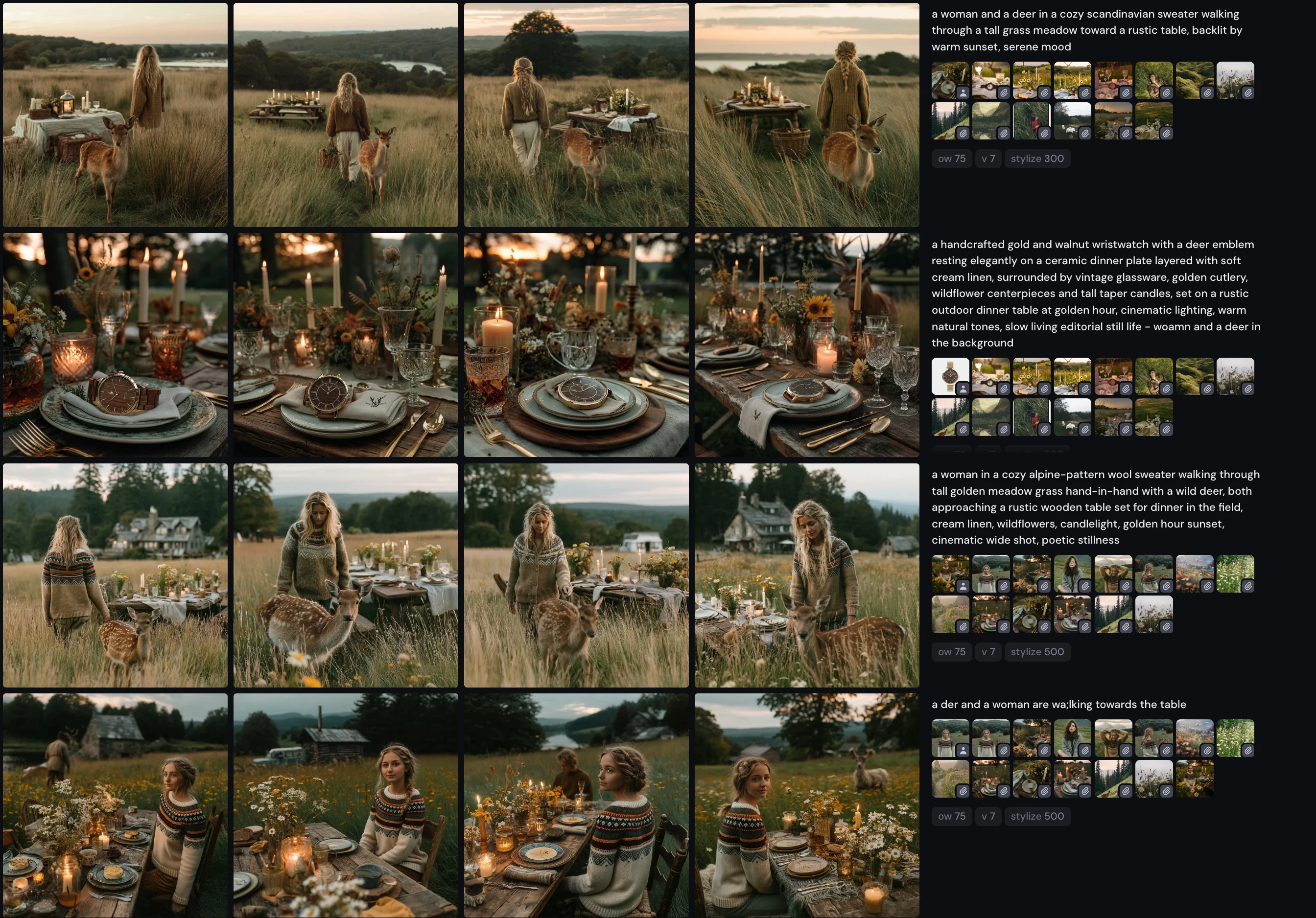
Several challenges surfaced during execution:
Product Authenticity
AI image generators rarely rendered the exact Timber & John watches or sweaters. To solve this:
Used OpenArt to edit product visuals and insert branded watches.
Generated branded-style sweaters through Midjourney with prompt tuning.
Visual Consistency
Creating one coherent cinematic world meant addressing:
Consistent light temperature (warm golden-hour tones)
Repeating character identity across frames
Matching framing and lens depth
This required rigorous testing and selection — many images were rejected or reworked.
TRIALS, ERRORS & WORKFLOW STRATEGY
A major challenge was generating visual assets that featured the actual Timber & John sweaters and watches. MidJourney often created characters in unrelated outfits or missing products altogether. To overcome this, I developed a modular creative workflow :
MidJourney — Used to develop cinematic environments, table styling, mood tests, and composition ideas.
ChatGPT — Served as Creative Director, helping shape visual logic, generate scene-based prompts, and develop cohesive narratives.
OpenArt — Enabled finer control of character appearances, re-prompting variations with clothing specificity.
Kling AI — Brought sequences to life through camera animation, motion transitions, and poetic timing.
This system allowed iteration with precision. For example, after 20+ failed attempts to showcase a woman wearing the correct sweater with a visible watch, the strategy was adapted: start from the still-life table, embed the product naturally, and THEN introduce characters.
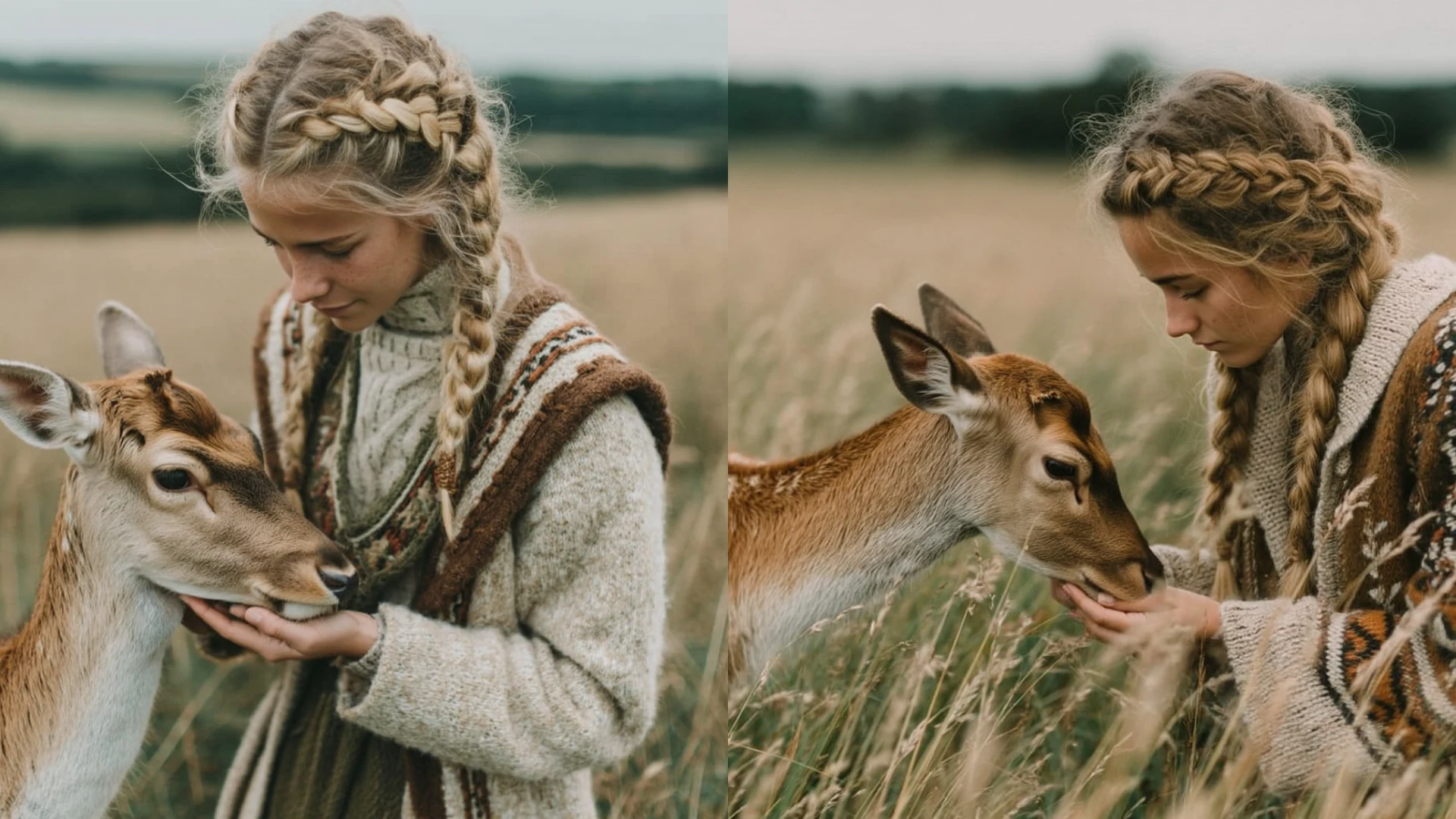
5. Workflow Pipeline
To manage complexity, a multi-tool workflow was designed:
Midjourney: Scene ideation, visual lookdev, and frame generation.
ChatGPT: Shot list development, voiceover scripting, narrative logic.
OpenArt: Watch compositing and brand alignment.
Kling AI: Animating sequences with cinematic camera movements.
This iterative loop allowed for rapid testing while refining the story.
6. Behind-the-Scenes Iteration
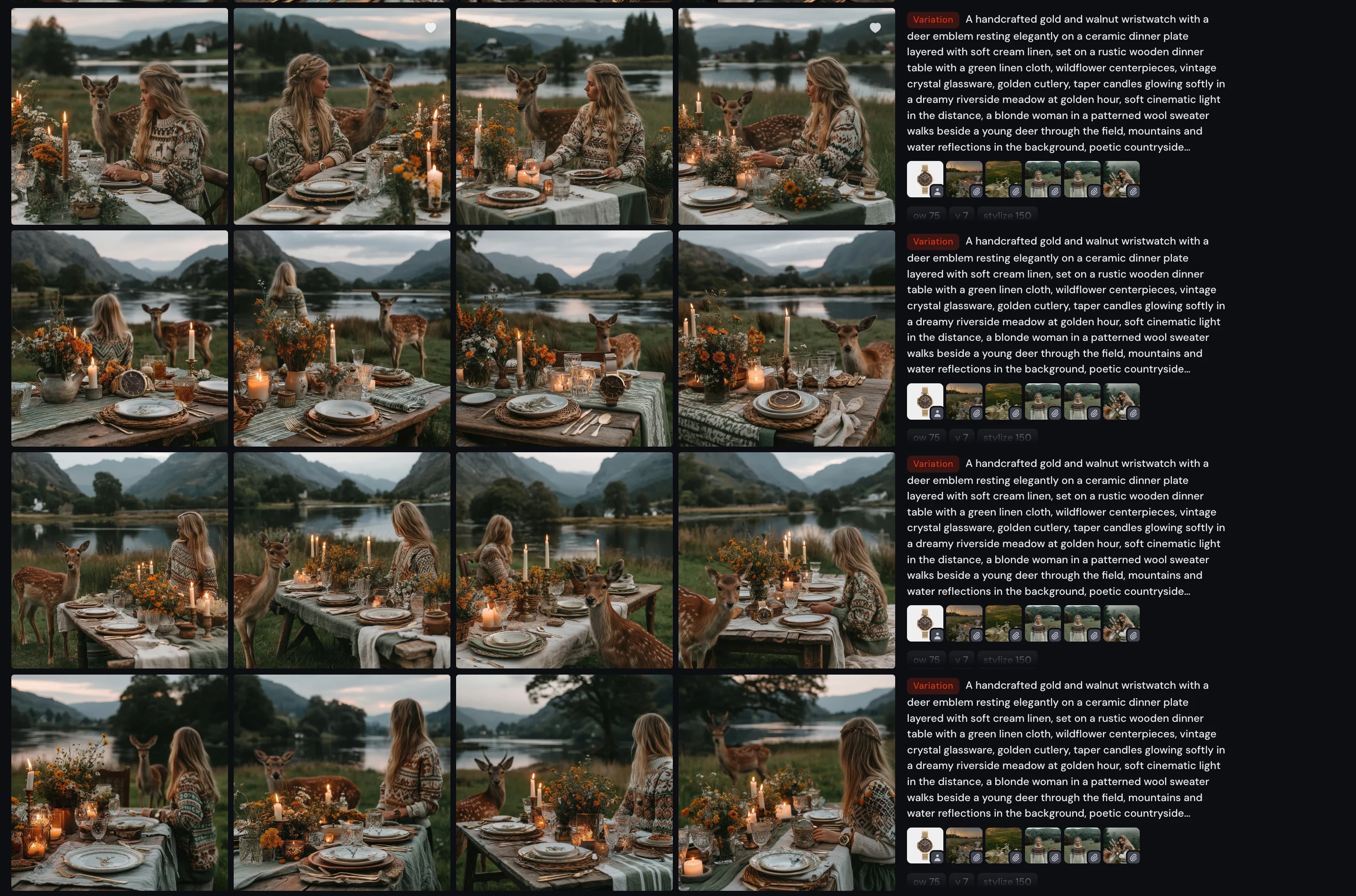
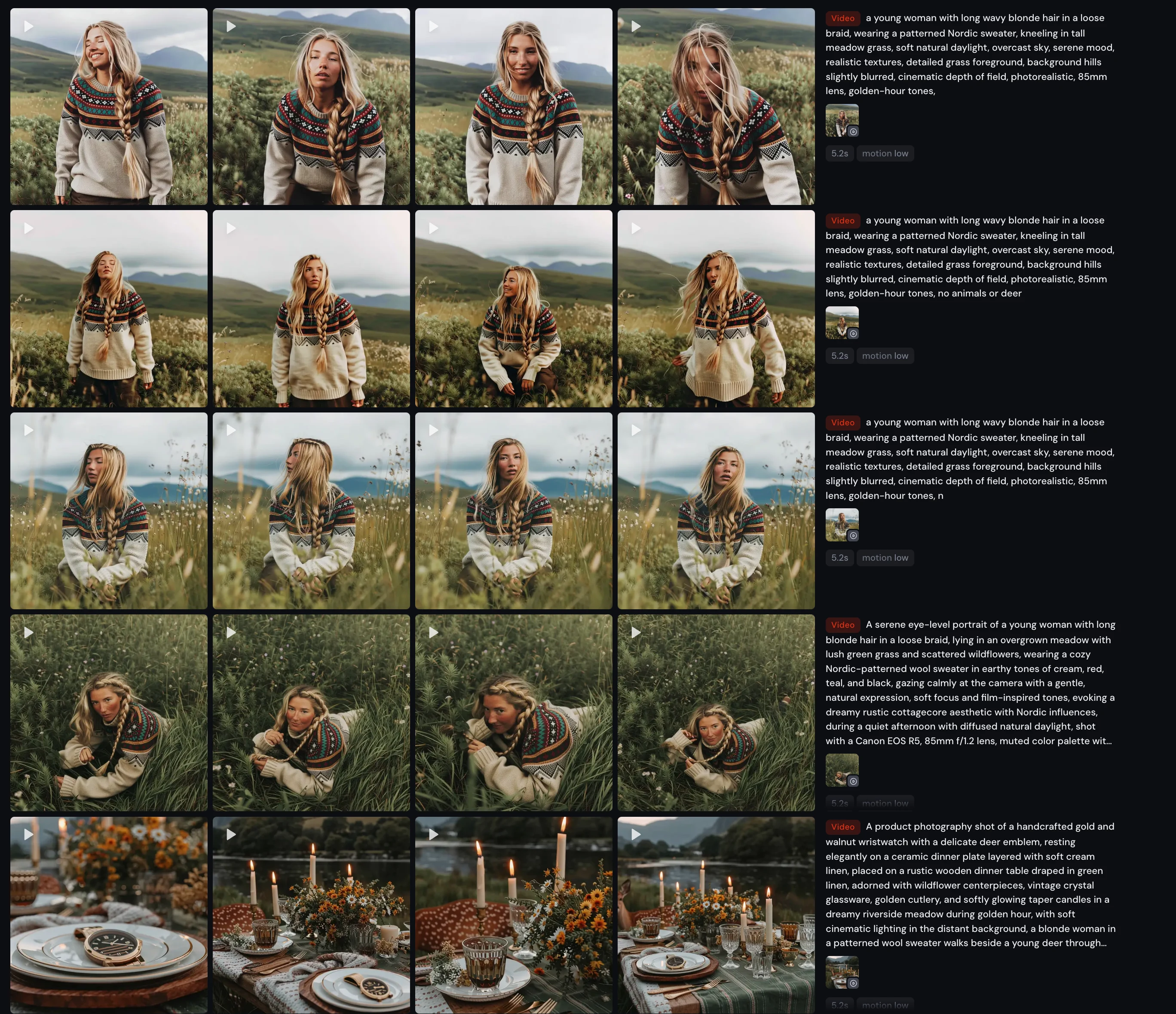
Over 80+ images were generated to achieve final alignment.
Issues addressed included:
Midjourney women not wearing branded sweaters: solution was to test variations and re-style in editing.
Watches not appearing on plates or wrists: solved via OpenArt compositing.
Character identity drift across scenes: solved through re-prompts and facial matching.
Final imagery was hand-picked to feel like film stills from the same narrative arc.
Challenge: Achieving Brand Accuracy Through Cross-Platform Editing
One of the primary challenges in this project was ensuring the sweater remained true to its original design across all generated images. Despite leveraging Midjourney's omni-reference tool to maintain consistency, the AI often produced variations that deviated from the actual product details—altering colors, textures, or structural elements of the knitwear. This necessitated a hybrid workflow where I would first generate atmospheric lifestyle scenes in Midjourney to capture the desired mood and composition, then export these images to OpenArt for precision editing. Through OpenArt's editing capabilities, I could manually correct the sweater's appearance, ensuring each final image accurately represented the product while preserving the authentic, spontaneous quality of the AI-generated environments. This two-platform approach became essential for balancing creative exploration with the commercial requirement of product accuracy.
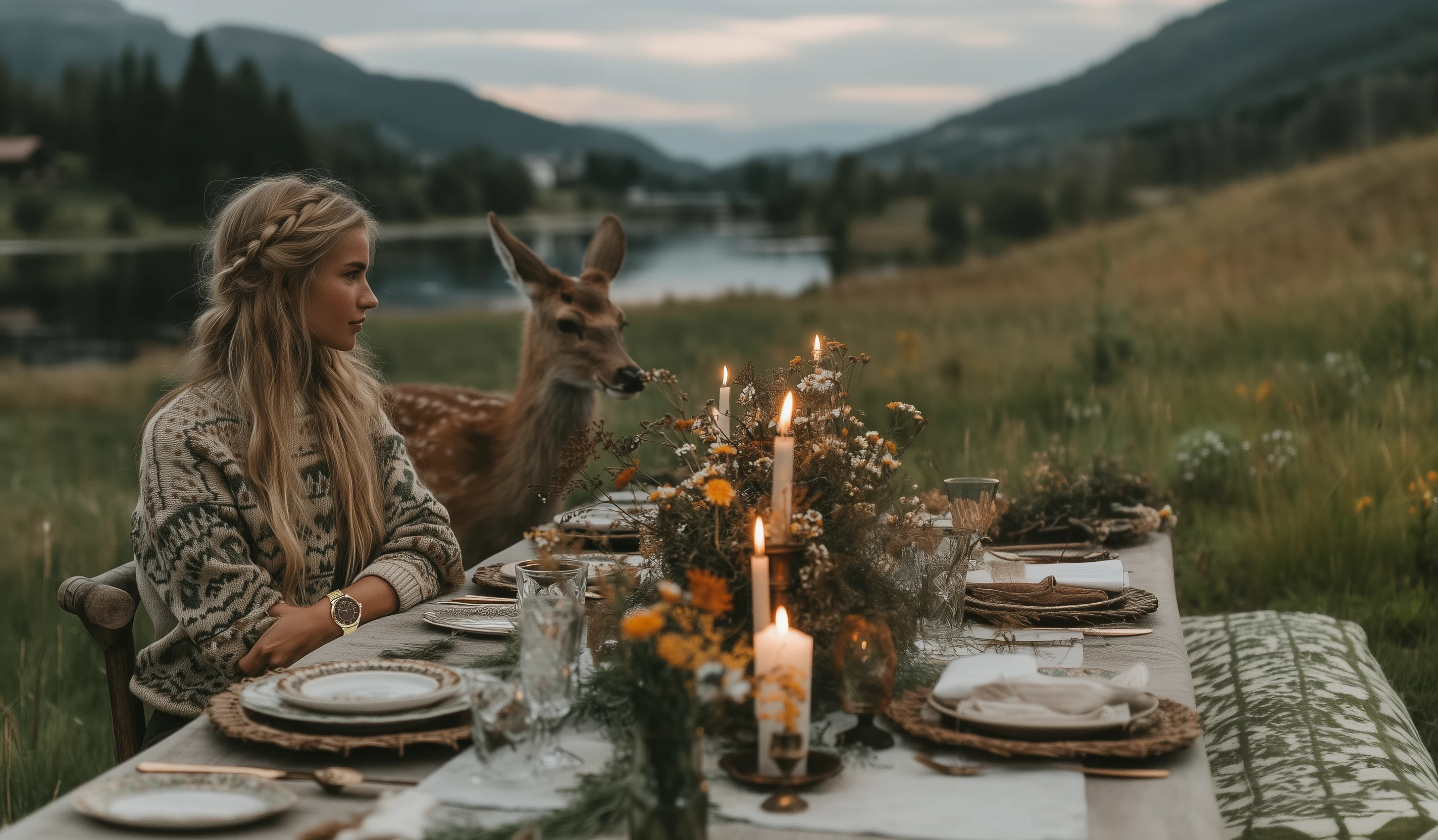
One example of a "successful" image generation which required editing since the products(the sweater and the watch) are not represented accurately
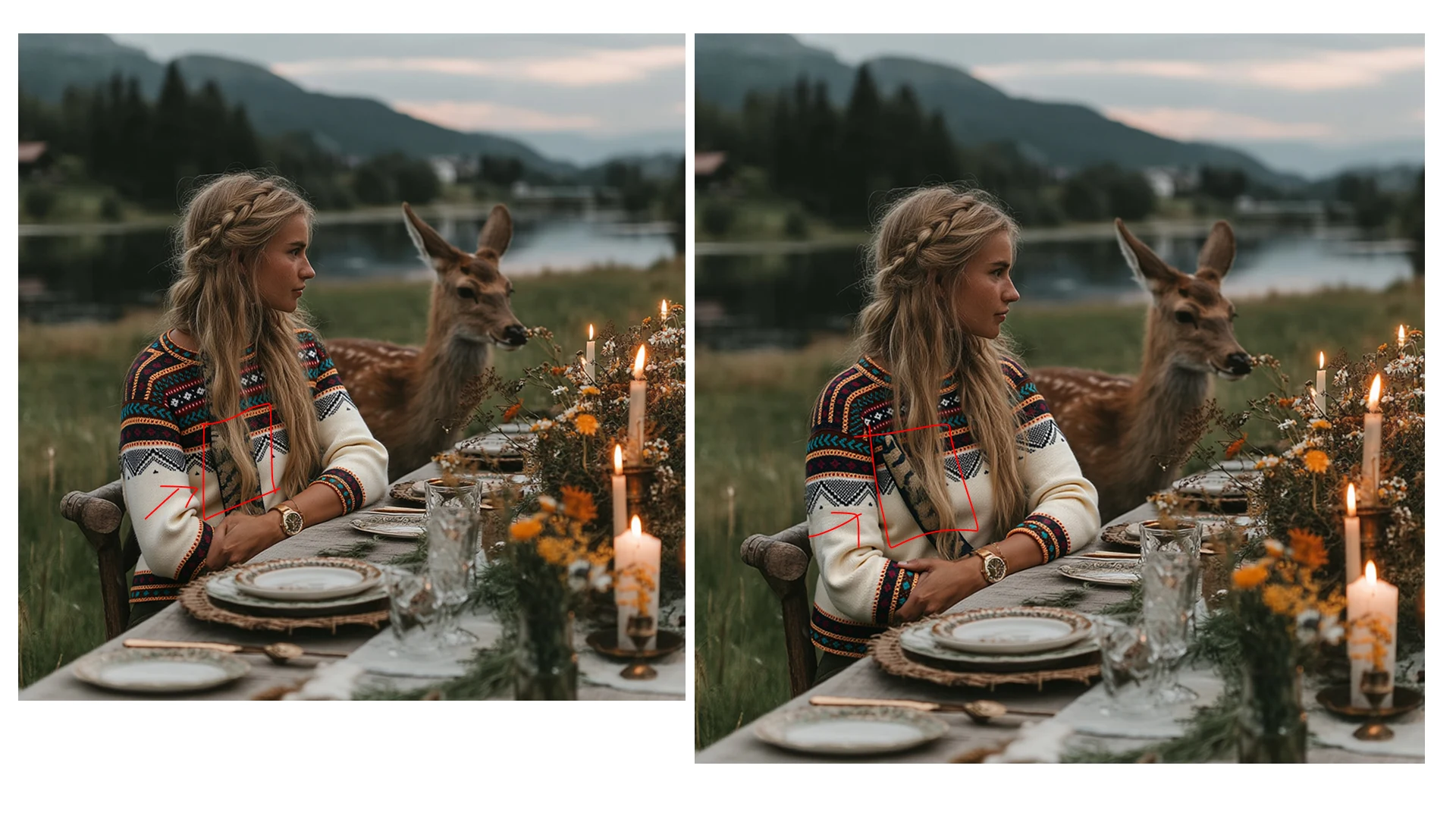
OpenArt managed to help me edit those shots - sweaters look accurate but still there are some elements which have been highlighted that are not aligned with the brand at all - which required one more round of editing
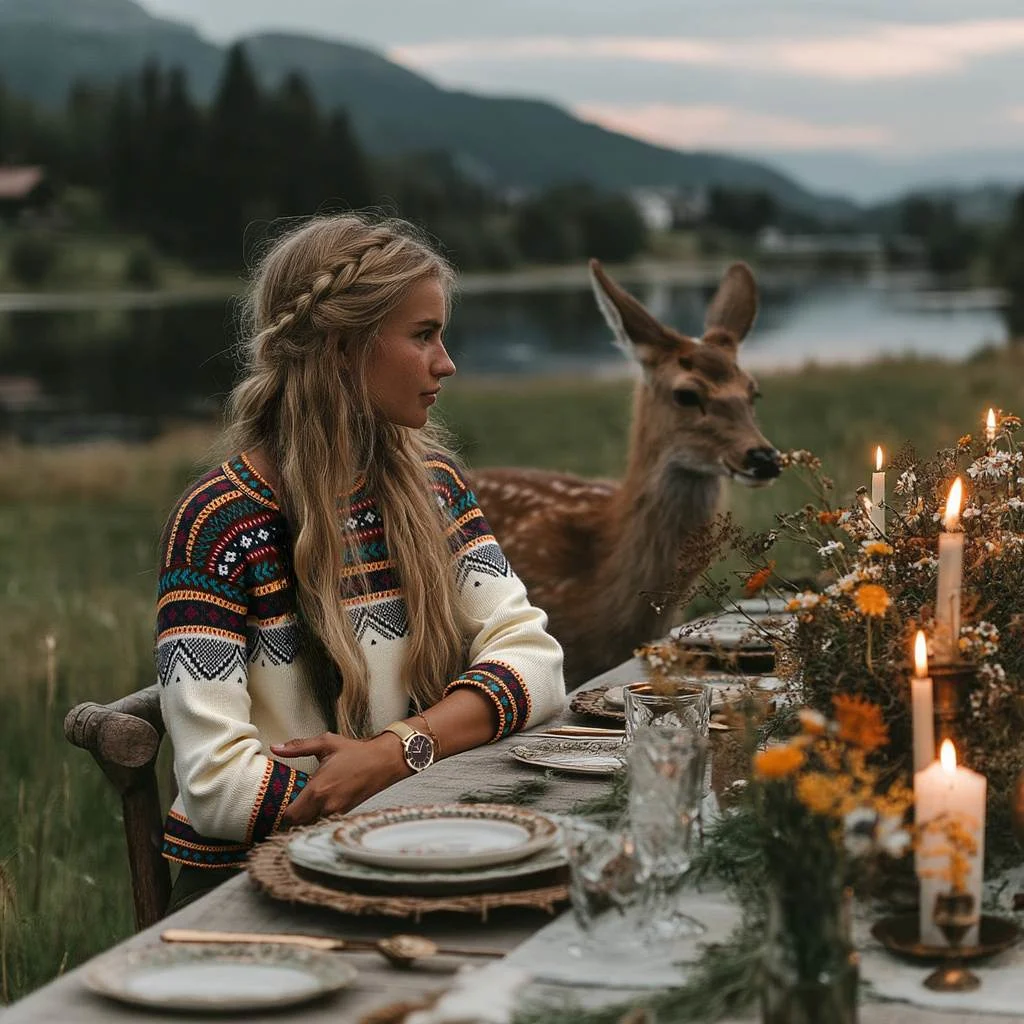
Last round of editing finally delivered the right results
In one particularly memorable attempt, I used OpenArt to replace the sweater sleeve in a specific shot—but instead of seamlessly integrating the correction, the AI literally placed an entirely new sweater on top of the existing sleeve, creating an absurd layered effect. These moments, while initially frustrating, highlighted the unpredictable nature of AI image manipulation and reinforced the need for iterative problem-solving.
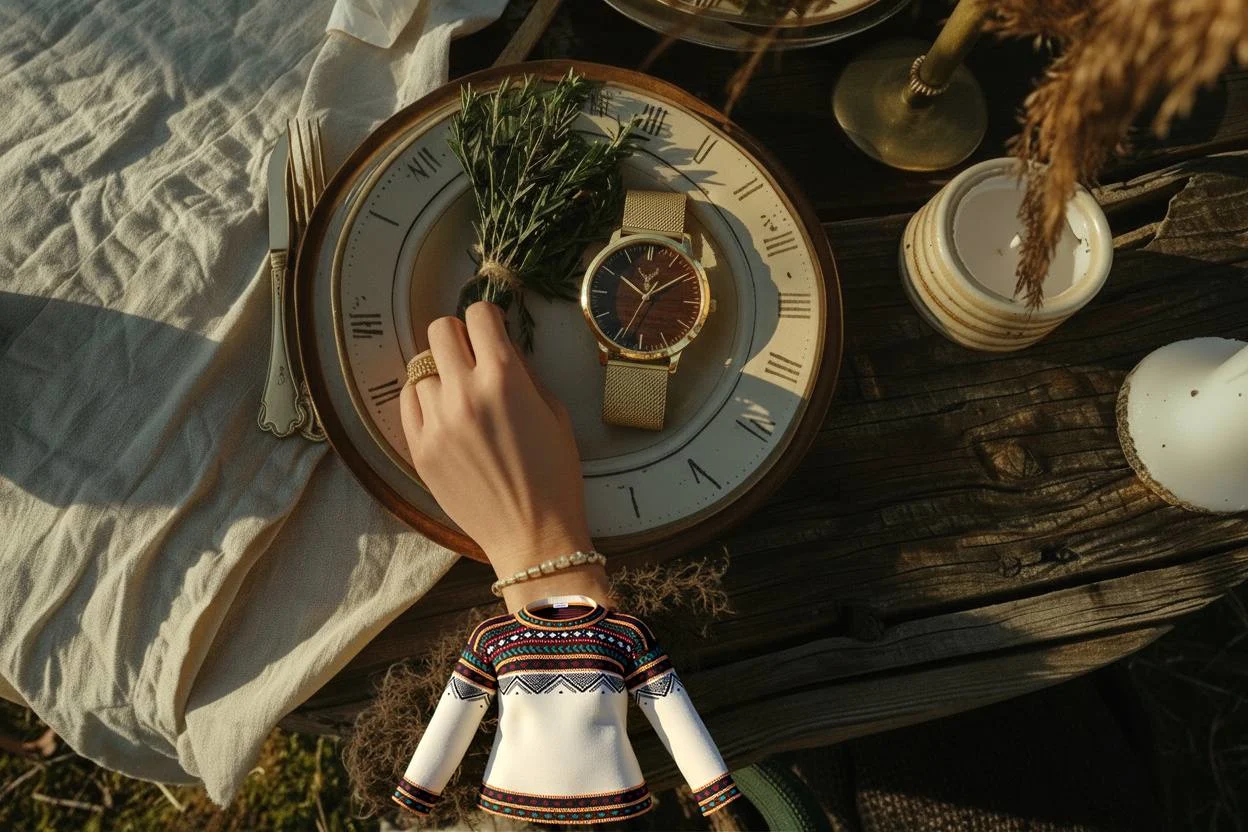
"Behind the scenes - failed product"
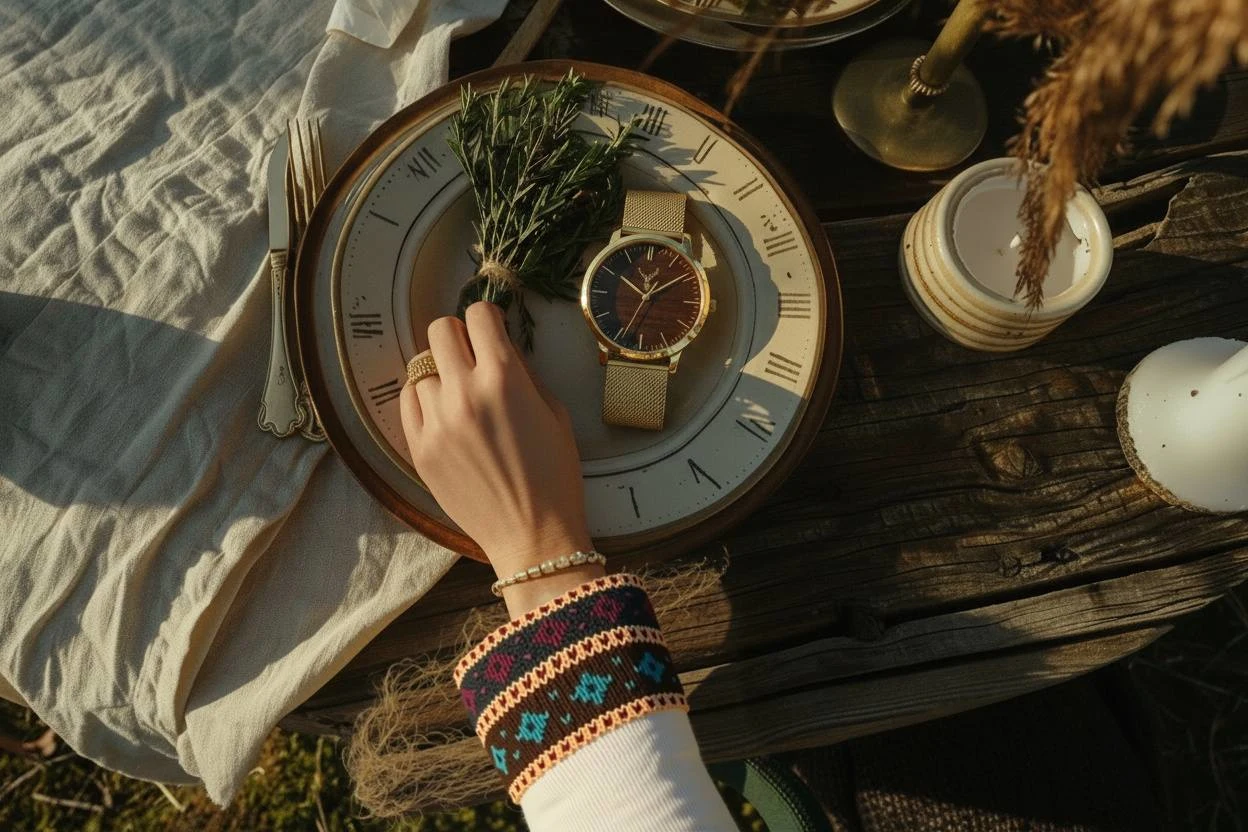
After hours of iteration finally I achieved some results
Through persistent refinement and manual corrections in OpenArt, I could eventually guide the AI to accurately represent the product while preserving the authentic, spontaneous quality of the generated environments. This two-platform approach became essential for balancing creative exploration with the commercial requirement of product accuracy.
Image Editing & Visual Coherence Strategy
Consistency: Faces, sweaters, and lighting across all shots were manually selected and edited for flow.
Watch Realism: Images of Timber & John's actual watches were composited into still life scenes using OpenArt and minor Photoshop touch-ups.
Sweater Correction: Branded Nordic patterns were strategically inpainted or merged into Midjourney-generated clothing.
Color Grading: Everything was subtly balanced to match the golden hour palette — warm shadows, dusty air, and soft contrasts.
This editorial-level control allowed the visuals to appear cohesive despite being AI-generated across multiple platforms.
Image Editing Process
This project required rigorous visual alignment between brand identity and generated content. My process:
Selected base Midjourney scenes that matched mood and pose.
Imported into OpenArt for product replacement: Timber & John watches were added to dinner plates and wrists; signature sweaters were manually overlaid onto figures.
Used lighting and texture adjustments in OpenArt to maintain coherence.
Final composites were upscaled using Topaz Gigapixel, ensuring crystal clarity for motion.
Each refined frame was then sequenced for animation in Kling, following detailed shot choreography.
This multilayered editing ensured not just style — but brand fidelity.
7. Final Campaign: Time to Feel
Narrative Arc
The Encounter – A woman meets a deer in a golden field.
The Journey – They walk and run together toward a rustic table.
The Ritual – A table full of watches awaits. The woman picks one up.
The Embrace – The deer and woman connect. A moment of stillness.
The Walk Away – Together, they leave. A circle completed.
one beautiful frame I could not use in the video
8. Outcome and Key Takeaway
This campaign challenges what performance marketing can look like — proving poetic visual storytelling can drive emotional conversion. It delivers a high-end aesthetic while staying authentic to the product's natural materials and Nordic soul.
Creative Tools Used: Midjourney, OpenArt, Kling AI, ChatGPT
Final Assets: Full short film, still campaign images, brand deck, script, and product placements.
Brand Fit: Every detail — from sweaters to watches to deer to plates — was shaped to serve the core idea: Time is not worn. It’s shared.
This was a full-spectrum creative execution:
Research and brand analysis
Visual moodboarding and prompt engineering
Storyboarding and cinematic transitions
AI video workflow via Kling
Final campaign narrative with symbolic product placement
The result is a filmic brand piece that merges emotional storytelling with product elegance — a quiet, moving invitation to feel time, not just wear it.
Tools Used: Midjourney v6, ChatGPT (Prompt Architecting), OpenArt (Compositing), Kling AI (Camera Animation)
Credits: Self-directed creative, prompt design, art direction, editing and narrative construction.
Like this project
Posted Nov 6, 2025
A cinematic storytelling campaign rooted in poetic realism and emotional depth, elevating the perception of time not as a measurement — but as a feeling.